


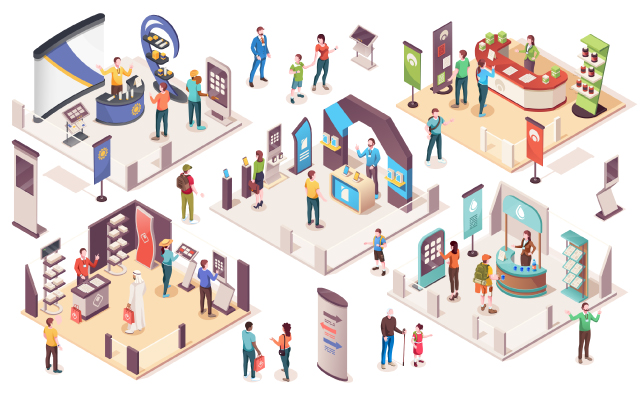
Half of the leading pharmaceutical and biopharma companies surveyed are ready to sponsor in-person events next autumn, according to a study conducted by AIM Group International.
The survey, titled Events in-person, hybrid or digital? Trends and perspectives from the Sponsors, captured the viewpoints from over 200 representatives of pharmaceutical and biopharma companies from across all therapeutic areas.
“We are at a turning point, with the reopening of in-person events from July and the planning of events for next autumn,” explained Patrizia Semprebene Buongiorno, vice president of AIM group international.
“At this juncture, we considered it would be useful to ask corporate decision-makers who sponsor events to understand their attitudes and desires and devise solutions and projects more in line with the expectations of the market. The results of the survey are very interesting and encouraging because they reveal first and foremost that companies continue to believe in the benefits of in-person events and are keen to invest in this tool going forward.”
Here are some of the key findings:
- Half of the companies surveyed are ready to sponsor in-person events next autumn, only 16% exclude it as an option, the remaining 37% prefer to decide later.
- The budget for events in 2021 will mostly be allocated to in-person or hybrid events (43%) while digital-only events were preferred by one in three companies (35%).
- Assuming participation in a hybrid event, the majority would prefer to participate in-person (52%), or both in-person and online (31%), only a small fraction (17%) would choose to attend the event online only.
- As for virtual events, a short duration is preferred, 76% chose between six and 12 hours duration.
- In the case of virtual events, sponsors definitely prefer to sponsor scientific sessions (82%) or opportunities that give visibility to the brand (82%).
Among the activities to make virtual events more effective, sponsors prefer short e-learning videos published before or after the event (60%), followed by television format scientific sessions with a professional moderator/presenter (50%), then Q&A sessions with key opinion leaders (48%) and also forms of gaming (escape room, quiz, etc.) (38%).
“From the analysis of the responses and from the dialogue that we carried out with company representatives, we clearly noticed a strong trend to favour the return to in-person events, or at least to some sort of hybrid formats. In addition, we noted that enriching virtual aspects of meetings with new engagement tools was also considered important,” explained Gaia Santoro, head of sponsorship unit of AIM Group International.
“With this in mind, we can predict that events next autumn will involve a move towards more sophisticated event features, which we are calling “an augmented event”. This combines some typical advantages of the online platform – such as access anywhere, any day and time and an expansion of the audience – combined with the strengths of in-persons events with an ability to involve delegates, transmit content more effectively and strengthen networking and relationships.”
“The pandemic will act as a gamechanger for the events market, where the experimentation, innovation, flexibility and courage evident during the pandemic, is now paving the way for new formats to evolve, adapting them even more to the specific needs of each target and client. The new formats are also drawing inspiration from different sectors such as TV, gaming, trade fairs, etc.), allowing the event organisers identify the best solution to obtain the desired results, changing not only the format (in-person, virtual or hybrid) but also the duration and schedule planning, the interaction among participants, the communication before, during and after the event.
“In short, we are seeing several positive signs that suggest that, once the pandemic is over, that events will emerge from the crisis stronger and even more effective,” concluded Buongiorno.
The whitepaper can be downloaded here.













The aircraft’s inaugural service from Doha to Milan took place on Friday (June 25), followed by routes to Athens, Barcelona, Dammam, Karachi, Kuala Lumpur and Madrid.
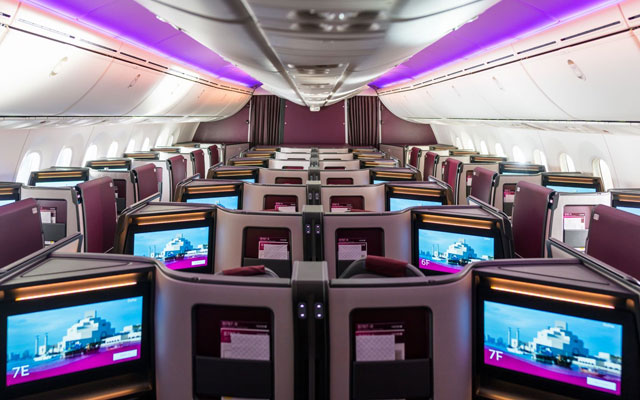
The Boeing 787-9 Dreamliner has a total passenger capacity of 311 seats – 30 business class suites and 281 seats in economy class.
Arranged in a herringbone pattern, in a 1-2-1 configuration, each business class suite has direct aisle access with sliding privacy doors. Other features include a 79-inch fully-flat bed and a dedicated phone holder, equipped with wireless charging technology that is compatible with both iOS and Android devices.
In economy class, each seat is equipped with a 13-inch Panasonic IFE touch screen in addition to a personal electronic device holder for both mobile and iPad devices.
Qatar Airways said in a statement that it has continued to fly its fleet of 30 787-8s throughout the Covid-19 pandemic due to its strong fuel efficiency and excellent reliability record. The airline added that its investment in the 787-9 once again underscores its commitment to sustainability and achieving net zero carbon emissions by 2050.