Preferred Hotels & Resorts has rolled out WHERE NEXT? Buyouts – the second phase of its global WHERE NEXT? campaign.
Corporate groups and bleisure travellers can now select buyout options inclusive of entire floors, wings, or even full property takeovers at more than 135 independent luxury properties around the world.
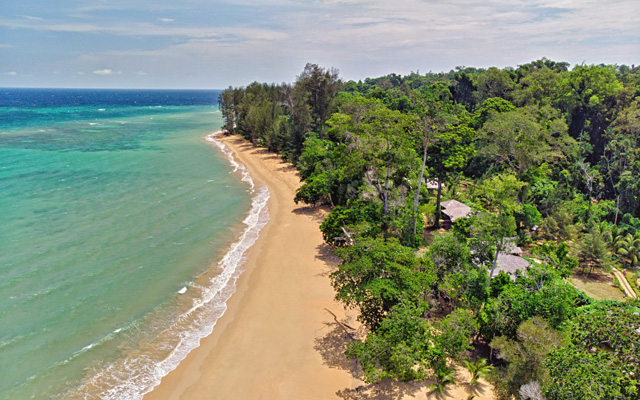
Borneo Eagle Resort in Kota Kinabalu, Malaysia
The WHERE NEXT? Buyouts offer is available for stays through December 31, 2022, with highlights in Asia including the Alma Resort in Cam Ranh, Vietnam; Borneo Eagle Resort in Kota Kinabalu, Malaysia; and The Capitol Hotel Tokyu (Tokyo, Japan).
“Our global sales team has fielded more requests over the last six months for partial or entire hotel buyouts than ever before, so we launched WHERE NEXT? Buyouts to fuel inspiration among travellers and our loyal I Prefer guests while providing them with information on each of the tailored hotel options available to them,” said Alison McDermott, executive director of global merchandising and marketing for Preferred Hotels & Resorts.
“This continuation of the WHERE NEXT? global campaign is designed to appeal to many travellers and caters to different budgets and group sizes to offer exclusive solutions to everyone ready to reconnect and create memories.”
WHERE NEXT? Buyouts follows the May launch of WHERE NEXT? Experiences – an offer for two nights’ accommodation or longer at the best available rate, which extends complimentary daily breakfast for two, a locally-inspired experience for two, and fast track to I Prefer Elite status.
SAP Concur has appointed Matthew Goss as senior vice president & general manager for Asia Pacific Japan and Greater China.
Goss, who has over two decades of experience in the IT industry, will take charge of SAP Concur overall business operations in the region, growing the company’s customer base and market share.
An 18-year SAP Concur veteran, Goss was until his latest appointment, the managing director for SAP Concur Australia and New Zealand (ANZ). In that role, he grew SAP Concur’s ANZ revenue significantly, and established the SMB (Small and Mid-market Business) in ANZ.
Prior to that, Goss was instrumental in the establishment of the Concur shared services centre in the Philippines. The industry veteran has also held regional level senior leadership positions in client delivery.
Hyatt Hotels has opened the Hyatt Regency Tokyo Bay, a newly-renovated property in Urayasu city in the Chiba Prefecture.
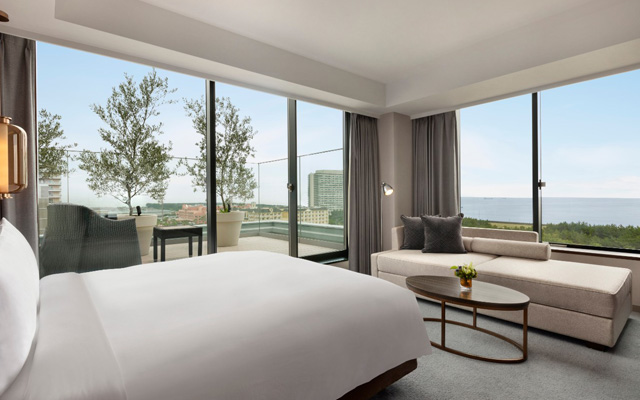
The eighth Hyatt Regency-branded hotel offers 350 guestrooms including 10 suites and 40 club rooms located on the ninth floor and above.
Terrace King Guestroom
Along with the Garden Terrace best suited for outdoor gatherings, Hyatt Regency Tokyo Bay offers two function rooms, each spanning 98m2 of event space. Equipped with projectors, audio equipment and soundproofing, the meeting spaces can be used for hosting virtual meetings and presentations.
Other on-site amenities include the Regency Club lounge, and a 24-hour fitness centre. Guests can also go for a run on the jogging paths along the seafront.
There are also four F&B options – the all-day dining restaurant The Garden Brasserie & Bar; a traditional Edomae sushi restaurant, Sushi Ema; Teppanyaki Fukitei for premium Matsusaka beef, seafood and seasonal vegetables; and a rooftop bar with a panoramic view of Tokyo Bay.
Hyatt Regency Tokyo Bay, 30 minutes by train or car from central Tokyo, stands close to attractions such as the Tokyo Disney Resort, and Makuhari Messe, one of Japan’s largest convention centres.
The Korea MICE Bureau has put forth a brand new digital marketing campaign highlighting its Korea Unique Venue programme, in an effort to showcase Korea’s business events venues virtually to a global audience.
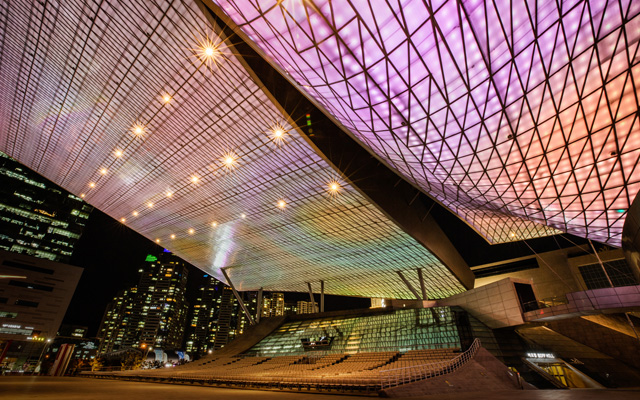
The new promotional video combines the unique charms of the venues in collaboration with dancers to highlight a specific mood and feel for each venue. For example, Busan Cinema Center transforms into a stage for ballet, while street dancers take over the tracks at Inje Speedium.
Busan Cinema Center
In addition, Korea MICE Bureau has also launched a new Korea Unique Venue microsite, which provides convenient access to information on each Unique Venue, including photos, rental facility information, service and equipment and more.
Started in 2018, the Korea Unique Venue programme comprises a list of recommended business events venues in Korea, selected based on their ability to host business events while offering unconventional settings for memorable experiences.
These locations showcase Korea’s rich history, colourful culture and tradition, and the selection includes cruise ships, traditional folk villages to national museums. The programme now comprises 39 venues, up from the initial starting list of 20.
GBTA poll shows non-essential business travel gaining but
critical functions for business continue to be impacted by global travel restrictions
More companies are reporting a willingness and actual return to business travel, with domestic travel taking the lead. However, government restrictions on international travel continue to hinder the ability for companies to conduct key business functions, according to the latest poll from The Global Business Travel Association (GBTA).
This latest poll shows a 12% increase compared to last month in companies opening travel and fewer companies suspending or cancelling all travel. Domestic business travel is now widely allowed and corporate bookings and travel spend continues to rise month on month. And three in four (77%) GBTA members and stakeholders feel their employees are ‘willing’ or ‘very willing’ to travel for business in the current environment.
GBTA poll shows non-essential business travel gaining but critical functions for business continue to be impacted by global restrictions
However, half (52%) of GBTA respondents report that government policies and restrictions relating to international business travel continue to impact their companies’ ability to conduct important business functions such as networking, business prospecting, planning and sales meetings.
“There is clearly an appetite to resume non-essential business travel and in-person meetings to promote collaboration, networking and business opportunities. And interestingly, it doesn’t appear that cost savings are necessarily a key driver in waiting to get travellers back out on the road. However, government policies and restrictions on international travel continue to hinder progress in pursuing activities so important to conducting business,” said Suzanne Neufang, CEO of GBTA.
Indicators show strong demand for business travel’s return OPTIMISM STEADY. GBTA poll respondents continue to be optimistic about the industry’s path to recovery. Half (54%) report they feel more optimistic compared to a month ago whereas two in five (40%) say they feel the same. Only six per cent say they feel more pessimistic about the industry’s path to recovery.
WILLINGNESS TO TRAVEL. Three in four (77%) GBTA members and stakeholders feel their employees are ‘willing’ or ‘very willing’ to travel for business in the current environment. The remaining members feel their employees are not willing (4%), are neutral (12%) or are unsure (7%) of their willingness to travel for business. And the desire to serve their customers is a key driver, with greater willingness to travel for sales and account management (59%) and service trips (56%).
DOMESTIC DOMINATES. Corporate positions concerning business travel vary. And GBTA respondents report that 57% of non-essential domestic business trips are usually or sometimes allowed, compared to 26% for non-essential international business trips.
GETTING BACK OUT THERE. Of the companies that suspended most domestic business trips, nine in 10 plan to resume domestic travel in the near future or are considering resuming domestic travel but have no definite plans. Three in 10 plan to resume international travel within one to three months and, half are considering resuming international travel soon but have no definite plans. One in 10 do not plan to resume international business travel in the near future.
Restrictions continue to hinder international travel and hence business functions Government policies and restrictions relating to international business travel continue to impact GBTA member companies and their ability to carry out important business functions. Over half (52%) of GBTA members and stakeholders report that networking, business prospecting (51%) and business planning and strategising (50%) are impacted by these policies.
Respondents based in Europe were more likely to cite the impact of government policies and restrictions on key business functions compared to those based in North America. And it was significantly higher regarding the ability to network, conduct sales meetings and train or develop employees.
Business travel spending, bookings and the bottom line Seven in 10 (72%) of those surveyed report their company’s business travel spending increased ‘somewhat’ to ‘a lot’ in June 2021 compared to the prior month, whereas one in five (20%) report spending remained ‘the same.’ Less than one in 10 (6%) report travel spend decreased or are unsure (1%).
Among those respondents who note their June 2021 travel spend increased from May, the average increase was 41.8%.
Seven in 10 (70%) suppliers report their bookings from corporate customers have increased from the previous week, whereas one in four (27%) report their bookings have remained the same from the previous week. Less than one in 10 (3%) report their bookings have decreased.
Changing priorities for travel programs as safety remains paramount
Over half (57%) of GBTA respondents are usually or sometimes allowed to conduct non-essential domestic business travel. Two in 10 are rarely allowed (20%) or not allowed (23%).
Non-essential international business travel continues to lag, with one in four (26%) GBTA members and stakeholders usually allowed or sometimes allowed to conduct non-essential international business travel.
Non-essential domestic business travel that can help generate revenue for the company are the key reasons for company travel requests. Seven in 10 of sales/ account management trips are usually or sometimes allowed. Similarly, seven in10 service trips are usually or sometimes allowed. Over half of non-essential trips are for sales, account management and service trips.
Seven in 10 (69%) of GBTA respondents believe that risk management and duty of care are more important than before the pandemic.
Less than two in 10f respondents indicated their employees will need to be vaccinated before travelling for business (18%) or meet with clients and customers face-to-face (16%), compared to more than half who will not. A quarter of respondents do not know their company’s vaccination policies and whether they will be required to be vaccinated for business travel or to meet with clients and customers face-to-face.
Flexible working continues as employees return to office Almost half (45%) of respondents report their company’s office(s) have re-opened but working in the office is optional. One in five (19%) say their company’s office(s) have reopened and most/all employees are required to work from the office at least one day per week. Just one-quarter (27%) report their office has not reopened and most (if not all) employees work from home.
Respondents based in Europe (53%) are more likely than those in North America (42%) to report their company’s office(s) have re-opened and most or all employees currently can choose to work from the office or work from home.
Half (52%) of GBTA members and stakeholders expect most employees will work from the office some days and work from home other days when offices fully re-open. Fewer expect most employees will return to the office full-time on most days (18%), employees will make the decision themselves (13%) or most employees will work from home most days (9%). Fewer respondents report they expect employees will have other working arrangements (6%) or are unsure (3%).
Respondents based in Europe (64%) are more likely than those based in North America (49%) to expect most employees will work from the office some days and work from home other days.
EventX, an Asia-based virtual event management company, has closed a US$10 million series B funding co-led by HTC, a virtual reality (VR) leading company, and Gaocheng Capital, a top China-based private equity fund focused on enterprise software and technology-enabled services sectors.
EventX’s capabilities include support for events that involve Mainland China attendees where its unique design architecture overcomes internet firewalls to enable the service of any cross-region events.
EventX co-founder and CEO Sum Wong
EventX has company contracts with hundreds of the world’s biggest events industry players and brands including Alibaba, PwC, GL Events, Informa, Reed Exhibition, Yahoo, government departments, and universities. Its year-on-year growth stands at over 800 per cent, and has served over five million satisfied attendees in over 20,000 online, hybrid and offline events.
EventX has also agreed to a strategic partnership with HTC VIVE, a company that has made great strides in its VR research and development.
Through the alliance, both companies will be working together to reinvent the virtual event experience with the help of VR, as well as integrate technology into core capabilities. The partnership will soon release a virtual event lite platform and opening it to NGOs, SMEs and startups to register and organise virtual events for free.
Joseph Lin, president of VIVEPORT said in a statement: “VR has the power to improve the world. At HTC VIVE we strive to create the tools to expedite VR adoption — using not only our VR devices but also computers, tablets, and smartphones — and interact effectively. The strategic alliance with EventX illustrates HTC VIVE’s continuous efforts in providing people and enterprises with the tools to meet, socialise, and learn in VR and beyond. Massive possibilities and enthusiasm can be seen in this partnership to bring people closer together without any geographical boundaries.”
“It is certain that virtual workspaces and virtual events will become the new norm. The creation of this alliance will result in a deep level of integration between our own expertise and HTC VIVE’s groundbreaking work in the VR space. This collaboration will result in EventX bringing virtual and hybrid event experiences to a brand new level of immersion and interactivity,” EventX co-founder and CEO Sum Wong added.
EventX also plans to invest heavily in products and engineering for leading the recovery of the events industry during the current pandemic, which will not only stabilise and solidify existing virtual event services but carve out new spaces and opportunities for the marketing and event industry.
In this hybrid world, data is key – and first-party data is mission critical to many businesses
The impact of Covid-19 has transformed many industries, spurring companies to create new value propositions and evolve how they deliver services and interact with customers through digital solutions.
The exhibitions industry, an industry based on face-to-face connection, has been no different. In fact, it’s one of the industries that has had to adapt the quickest to keep the communities that rely on their platforms connected in the wake of an isolating pandemic crisis.
Now, exhibitions and tradeshows are being seen as a beacon of hope for small-to-medium-sized businesses (SMEs) – which make up over 80 per cent of the industry’s fee-paying customers – as governments look to stimulate economic growth and recovery. But the way connections are being made may have changed forever – and I believe, it’s for the better.
In this hybrid world, data is key – and first-party data is critical to many businesses
Digital: In it for the longhaul
Here in Asia, we were the first region to get hit by the pandemic, and the first to see the light at the end of the tunnel. At Informa Markets, we have successfully run in-person tradeshows in mainland China and Japan since last summer, as well as in Taiwan, Thailand, and India.
The feedback from business owners who have participated is that the power of face-to-face is integral to the way they do business. Integral to rebuilding disrupted supply chains. And integral to building new business relationships.
However, in almost all these areas, travel restrictions have remained in place – and so it’s been practical for us to organise local events, serving local communities, instead of the large-scale international tradeshows we are accustomed to.
Technology has enabled us to mimic that experience, extending the reach beyond the showfloor to international audiences eager to return to connective commercial experiences. And, based on what our customers are telling us about the success of that model, the digital elements that run alongside our physical events look to become an important part of our customers’ future marketing mix.
The hybrid event model is continually evolving, but the basic premise is that buyers and sellers have the option to participate in-person at the show – or online, connecting with one another virtually before, during and after the event – or both.
This varies market by market, depending on the needs of individual communities. It might be through content-rich virtual event programmes, matchmaking services, sampling services or full-scale online marketplaces where transactions can take place. Equally, it can be a mix of these with each offering its own value proposition and bringing unique benefits.
Data: Helping us intelligently meet customer needs
The disruption the pandemic brought to the exhibitions industry was genuinely unprecedented and it made us go back to the drawing board – starting with a better understanding of what our customers really need.
It’s all well and good creating new ways for buyers and sellers to connect – but if they’re not the connections they’re looking for, then we’ve failed. We introduced non-financial key performance indicators (KPIs) around customer engagement with our virtual events and other online platforms, to help us understand what our customers want – and whether we’re delivering the value they expect.
In this hybrid world, data is key – and first-party data is mission-critical to many businesses. For us, it’s no different, and so we have bolstered our expertise in data to become better at capturing behavioural insights to profile users, enabling us to deliver a more personalised experience.
Increasingly, our exhibitions are adopting omnichannel marketing strategies – and they too need to manage data more effectively to track and nurture leads.
Moving faster forward on sustainability
Informa Markets is not alone in taking this time of disruption to rethink how we can improve upon our environmental impacts. We are working across the industry to see how exhibitions can serve as a model for green initiatives, through more sustainable design practices, such as minimising material use, reducing waste and considering indoor air quality.
FasterForward is Informa’s approach to being a sustainable business and taking tangible action to champion sustainable practice across our business and industry. Our goal is to reduce our carbon and waste footprint to ultimately be carbon neutral by 2025 and net carbon zero by 2030.
One of the ways Informa Markets in Asia is working to reduce waste is by steadily lowering exhibitor stand heights across the region to reduce the amount of material needed to build them. We are also increasing awareness of a more reusable approach of frame and fabric stands, where all elements of the frame and fabric overlay can be disassembled and reused. At a pilot at our HOFEX event in Hong Kong, for example, this halved production time and reduced the amount of wood used in construction by more than two thirds.
Elsewhere in Asia, at Children-Baby-Maternity Expo, we removed all carpet, saving around 120,000m2 of carpet a year, and our ProPak Asia show in Thailand worked with its venue’s charity partner to donate 40 cubic metres of PET plastic waste from the event, which was then recycled into medical equipment.
Ultimately, we are committed to developing new approaches to set the standard for sustainable events across the region and sharing our experience with others wherever possible.
A better tomorrow
The pandemic posed incredible personal and professional challenges, but if I can find a silver lining, it’s that it created space that allowed us to re-evaluate the value and impact we provide our customers and develop complementary experiences that improve the way we come to market, the way we connect people, and the impacts we have on our communities.
While we see the lasting value in the in-person experience, perhaps now more than ever, we also have built digital and data solutions that improve and extend connections to keep the communities we serve in business, with the right people, year-round. And that will be the differentiator in what keeps our business, and our customers’ businesses, resilient for the long-term.
Margaret Ma Connolly is president & CEO – Asia at Informa Markets. The Informa Markets business in Asia delivers over 300 exhibitions across China, India, Japan, Korea, Taiwan and South-east Asia, which include Furniture China, Cosmoprof Asia, CPhI India and Food & Hotel Asia.
Connolly joined UBM in 2008, which combined with Informa in 2018. She has extensive experience in managing diverse business portfolios and building cross-cultural high-performing teams.
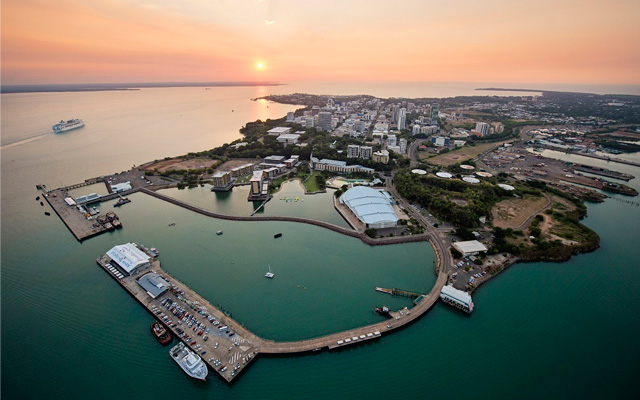
Northern Territory's capital of Darwin (pictured) will be the stage for the event
The city of Darwin in Australia’s Northern Territory has won the hosting rights for the World Conference on Ecological Restoration in 2023.
The conference will be staged at the Darwin Convention Centre, located in the Darwin Waterfront Precinct, and is anticipated to attract between 800 to 1,200 delegates from around the world.
Northern Territory’s capital of Darwin (pictured) will be the stage for the event
The Society of Ecological Restoration has members in more than 70 countries and 13 regional chapters worldwide. It advances the science, practice and policy of ecological restoration to sustain biodiversity, improve resilience in a changing climate, and re-establish an ecologically healthy relationship between nature and culture.
This global conference was secured as a result of a partnership between a number of organisations – NT Business Events as the dedicated convention bureau unit within the Northern Territory Government’s Department of Industry, Tourism and Trade, Darwin Convention Centre, and local host, the Society of Ecological Restoration Australia.
Flight Centre Travel Group (FCTG) has appointed Peter Gianusso to the role of global chief technology officer, core systems, for the Corporate Division of FCTG.
Gianusso will be responsible for overseeing the central platforms that are leveraged to power the corporate customer product offerings including those at FCM. These include the global data consolidation platform used to collect travel data from all corporate markets, a business rule & automation platform used to improve data quality and travel automation, and centralised traveller profile & API platforms that are leveraged across multiple brands and various product assets.
While new to the travel industry, Gianusso brings with him more than 25 years of technology experience, most recently holding the position of vice president, technology, transformation at Prudential Financial. His background in building shared service environments at globally diversified businesses will fit well into the travel industry ecosystem.
W Hotels, part of Marriott International, has appointed Craig Seaward as general manager of W Sydney, set to open in 3Q2022.
In this role, Seaward is responsible for overseeing all aspects of the final build, including recruitment and training of the 500+ team and managing all pre-launch activity to ensure the hotel opens to the highest standard. Upon opening, he will direct the hotel’s day-to-day operations and be accountable for the commercial and operating strategy and performance of the hotel.
He arrives in Sydney having spent the past 11 years as general manager of W Bali-Seminyak.
The experienced hotelier has spent 25 years working for premium hotels, predominantly with Starwood Hotels & Resorts, which merged with Marriott International in 2016. Previously, he held the position of general manager at Sheraton Surabaya Hotel and Towers and Pakuwon Golf and Family Club in East Java, Sheraton Perth and Westin Chosun Beach, Pusan South Korea.
The W Sydney is slated to be the largest W hotel in the world, and will feature 586 rooms, a two-storey rooftop bar, heated infinity pool, spa, gym, 1,110m2 of event space, and several F&B options.
Just 10 minutes from Phuket International Airport on the serene northern coast, this 178-key, Bill Bensley-designed resort offers delegates a quiet, tropical paradise steeped in Phuket’s tin-mining heritage
The newly-opened Ritz-Carlton, Bangkok anchors the One Bangkok development with cosmopolitan elegance. Featuring the city's largest ballroom and a spectacular new penthouse suite, it delivers exceptional hardware and deeply authentic, soulful service for business and leisure travellers alike
Behind the imposing, Brutalist concrete that defines Zurich’s Oerlikon district lies a surprising secret. While its exterior honours the neighbourhood’s industrial roots, stepping inside Mama Shelter reveals a vibrant, neon-soaked world that is a far cry from its rigid shell








 Margaret Ma Connolly is president & CEO – Asia at Informa Markets. The Informa Markets business in Asia delivers over 300 exhibitions across China, India, Japan, Korea, Taiwan and South-east Asia, which include Furniture China, Cosmoprof Asia, CPhI India and Food & Hotel Asia.