



Attention towards sustainable aviation fuel takes off

- Travel programmes are becoming part of organisations’ sustainability strategy
- Sustainable aviation fuels (SAF) has potential to drive the decarbonisation of aviation
- Production of SAF needs to scale up to commercially viable levels
Sustainability is now a growing priority for the travel ecosystem, with United Nations Climate Change noting a doubling in the rate at which businesses and local governments are committing to net-zero emissions since the start of the pandemic.
And with aircraft operations contributing to about three per cent of global emissions, an industry-wide strategy – such as looking into sustainable aviation fuels (SAFs) – to tackle climate change is critical.
Made up of grains, plants, algae and animal fats, SAFs can reduce a flight’s carbon emissions by up to 80 per cent. However, commercialising this eco-friendly fuel has been difficult due to its high price – three times higher than current aviation fuel – and the lack of manufacturing and fueling infrastructure.
To get around this obstacle, American Express Global Business Travel (AMEX GBT) and Shell Aviation are working on a plan to increase the supply and use of SAF.
“Both Shell Aviation and GBT are respectively having conversations with airlines and corporations about how we can help them tackle their emissions from aviation with SAF. Taking our alliance public allows us to make those conversations more detailed and useful, as well as to further identify any interested parties who would like to work with us,” Jo Sully, vice president APAC, of AMEX GBT, stated.
In terms of corporate take-up, Sully said “customers confirm that sustainability remains a priority for their travel programmes”. In fact, AMEX GBT now advises clients on how they can embed green policies in their programmes by choosing locations that minimise group travel emissions and sourcing from providers that minimise food wastage, food miles and single-use plastic.
In a similar move on June 5’s World Environment Day, CWT partnered with Delta to purchase enough SAF to cover the projected fuel usage from all of CWT’s travellers on Delta.
Richard Johnson, senior director, CWT Solutions Group, shared with TTGmice the motivations behind the initiative: “Sustainable aviation fuel is an exciting development in the (carbon dioxide) reduction arena because it allows organisations to focus less on offsetting and more on overall de-carbonisation. As we see a renewed focus on the environment from within our industry post-pandemic, we are observing a desire to help make SAF achieve the economies of scale necessary to become commonly viable.”
According to Johnson, CWT’s clients are asking how the TMC can help them meet their environmental objectives while achieving compelling ROI for their travel spending.
“Their travel programme is an important part of their sustainability strategy and they want their TMC to provide products and services with an improved environmental impact that will contribute to a more sustainable travel sector,” he revealed.
Sustainability gaining priority among buyers
Travel buyers in the IT and pharmaceutical sectors told TTGmice that attention is now shifting to how travel can play a bigger role in corporate strategy to mitigate climate change and grow sustainably.
Adriana Nainggolan, travel programme manager Asia-Pacific of Autodesk, said: “As a whole, our company has been participating in carbon emission reduction such as using renewable energy and helping our own customers to reduce, reuse and recycle.”
While Autodesk has been offsetting its carbon footprint, Nainggolan said that “the travel programme wasn’t emphasised because the impact might have been considered small”.
But now and for the first time, sustainability will be part of the Autodesk RFP checklist as the company looks to achieve net zero impact. Nainggolan elaborated: “We didn’t have this in our previous RFPs and will include it when we are planning to go out to bid in November this year.”
On how TMCs can support the initiative, she said: “They can support corporate sustainability programmes through reporting and setting their product offering to support a customer’s travel policy. For example, making sure that direct flights are displayed on their booking tool, or hotels listed are only green hotels, etc.”
A corporate travel manager, who has requested anonymity, said he was impressed by United Airlines’ step-by-step sustainability strategy which was shared at the recent United Airlines Asia-Pacific Corporate Forum.
In the presentation, Scott Kirby, CEO, United Airlines, pledged to reduce greenhouse gas emissions by 100 per cent – without the use of carbon offsets – by 2050.
The corporate travel manager shared: “Efforts in our company so far have been limited to manufacturing activities and the focus has not filtered down to travel and meetings. But we are keeping an eye on it. Although we are not asking our TMCs for travel and meeting sustainability reports yet, it is a matter of time as it is now on the radar.”
Meanwhile, he said his company had migrated to “a 100 per cent hybrid fleet (of cars)” in some cities and will in the next three to four years move to “100 per cent electrification” and a car-sharing model for employees.
Another anonymous corporate travel manager revealed that her company in the US was investing in and working with its preferred airline – which is setting up an oil refinery that turns food waste into SAF – and use more renewable energy. In addition, the company was also working with its airline partner on recycling initiatives.
Airlines pick up SAF focus
For corporate travel managers looking for airline partners that are on the same sustainability page, Emirates and Korean Air may just stand out. Both airlines are exploring viable SAF avenues on their own.
This year, Emirates operated flights powered by SAF from Sweden and Norway where local programmes made it accessible. The airline has also received its first delivery of an A380 that is partially powered by SAF.
While Emirates has yet to partner with a TMC on this initiative, a spokesperson said the airline has taken steps towards emission reduction such as operating fuel-efficient aircraft, and implementing fuel-efficient practices where possible.
Meanwhile, Korean Air recently signed a Memorandum of Understanding with Hyundai Oilbank, a petroleum and refinery company in South Korea, for the manufacturing and usage of SAF. Both companies will be developing a foundation for biofuel manufacturing and its usage; exploring opportunities for SAF usages in the market; raising awareness on SAF; and proposing relevant policies.
Korean Air is no stranger to SAF, for in 2017 it became the first airline in South Korea to mix biofuel extracted from plants such as corn with jet fuel.
Despite the airlines’ grand intentions, SAF availability is a challenge.
The Emirates spokesperson detailed: “In 2019, fewer than 200,000 tonnes of SAF was produced globally, which is less than 0.1 per cent of the jet fuel used by commercial airlines. According to the World Economic Forum report on SAFs, if all SAF projects that have been publicly announced are completed, capacity would only reach one per cent of expected global jet fuel demand in 2030.”
As such, an appropriate mix of incentives and policies will be needed for SAF production to scale up to commercially viable levels. Over the next decade, the development of ‘power-to-liquid’ fuels, which are made from hydrogen and carbon dioxide, will give a huge boost to the supply of SAF, the spokesperson noted. – Additional reporting by Caroline Boey
Full speed ahead

What does recovery look like for the Asia Pacific (APAC) events industry?
Our latest global survey, the “Global Barometer” forecasts above average growth in the exhibition industry in APAC for 2021. Globally, we expect exhibition revenues to grow by 106 per cent in 2021 compared to 2020. For APAC, we expect 121 per cent growth.
Compared to 2019, this will be a return to around 60 per cent of revenues compared to 2019 for APAC, slightly ahead of the global average of 58 per cent.
There is a general consensus that, in major parts of the world, the industry can reach pre-pandemic levels again by 2024 – pending further pandemic developments.
Right now, governments and stakeholders need to understand the systemic role that exhibitions and business events have to play in the post-pandemic recovery. As organised meetings, tradeshows are not generic mass gatherings – they can be managed safely in everyone’s interests, and events professionals are well versed in doing that, based on global guidance and good practices that organisations like UFI have developed.
Governments can activate exhibitions and business events as the fastest of fast tracks for economic recovery – as the industry builds and operates the marketplaces and meeting places that every industry, every sector needs to recover from the impact of the pandemic.
What should the various countries do to get their government’s help to build confidence in the exhibitions industry again?
Vaccinations and testing are key elements. We need globally harmonised procedures on how to document these – the European Union’s Digital Vaccination Certificate is such an initiative. It reopens travel across the continent and makes it easy for citizens to show their vaccination status as they enter events.
In addition, as stated above, it is key that the local/regional/national health authorities clear exhibitions and business events, agreeing on proven health & safety frameworks. Two examples for those are the “UFI Global Framework for reopening exhibitions” and the “All Secure Standard”. These have been the blueprint for national regulations in countries like Italy, the UK, or Spain.
How much has the pandemic changed a customer’s value and expectations of exhibitions?
If anything, it has proven and reiterated the value of meeting face to face. In our “Global Recovery Insights” research done with Explori, 86 per cent of both visitors and exhibitors at digital trade shows declare that the face-to-face format is superior compared to a digital-only event.
As show floors reopen around the world, we see especially small and medium enterprises return to the shows with urgency. For them, this is the dominant sales channel, and accordingly, their key expectations are focused around the “trade” in “tradeshow”.
What are some major trends expected to shape the exhibitions industry over the next five years?
Initially, we expect that a lot of focus will be on the traditional core function of the tradeshow – to be the place where business is done, where orders are written, where deals are signed.
Beyond that, the pandemic has accelerated developments that we have seen pre-2020: A regionalisation from one global show into a portfolio of regional shows under the same brand around the world; a growing number of digital products and services to support the attendees at the physical event a lot of investments into sustainability and low carbon to carbon-neutral events productions.
A new emphasis will be put on connecting the physical tradeshows and business events with year-long offers to support the business success of the communities that a trade show is serving – a lot of this will be digital, but also through focused local and regional events throughout the year.
What are some of UFI’s initiatives that are helping with industry recovery?
We continue to operate and update a designated Covid-19 web presence at www.ufi.org/coronavirus. We were the first MICE industry association to do so, to our knowledge. The page is constantly being updated with new material once it becomes available.
In addition, we have repurposed the UFI Blog to carry announcements and core messages from UFI member associations around the world, as well as case studies around events that are taking place and their production.
Through the European Exhibition Industry Alliance (EEIA), we drive ongoing advocacy work in Brussels. In the US, UFI joined the newly formed Exhibitions & Conferences Alliance (ECA), which is setting up an office in Washington, DC, to likewise provide ongoing advocacy work for the industry on a daily basis.
Core UFI activities and materials on the issue include:
Research:
• Global Assessment of Covid-19’s economic impact on tradeshows and exhibitions, globally and by region for the full year 2020
• Good Practice Guide: Addressing Covid-19 Requirements for Re-Opening Business Events (Third edition in March 2021)
• Good Practice Guide: Convention/Exhibition Centers as Temporary Vaccination Centres
• Case studies on shows taking place
Advocacy:
• UFI Global Framework for the Reopening of Exhibitions and B2B events
• Global market reopening tracker
• Overview of the different Government Support Programmes for the industry by region
• Position Papers with EEIA (Europe) and ECA (USA)
What prospects do you see in the mid-to-long term for the business events industry?
In the short term, as the industry restarts, we need to ensure that supply chains remain intact, and that the ecosystem of skilled service providers of the industry can be reactivated well. Re-skilling and upskilling will be key here.
Mid- to long-term, we expect the sector to not only return to pre-Covid levels, but to significantly grow beyond it. Future growth will be driven by the new value we create and the benefits we provide in between our face-to-face events for the communities and industries that we serve.
We will also evolve as an industry around the challenge to combat climate change – bringing people together to work together and to trade together is the most energy-efficient way compared to decentralised travel and countless one-to-one meetings, or to energy-intensive digital processes.
GBTA relaunches Certificate in Corporate Travel Execution

The Global Business Travel Association (GBTA) has relaunched the GBTA certificate in corporate travel execution (CCTE) in partnership with Cornell University Executive Education and the Cornell SC Johnson College of Business’s School of Hotel Administration.
The CCTE curriculum is designed for corporate buyers and suppliers either overseeing a managed travel programme or offering travel-related products and services. The programme is recommended for those with at least three years of experience in the business travel industry and focuses on critical business travel topics including accounting and finance, human resources, sales strategy, risk and legal issues and travel procurement. The course will be taught by Cornell University professors who teach and research in business, travel and hospitality.
For the first time, the course will be delivered virtually enabling more GBTA members from around the world to participate. On completion of the program, delegates receive the CCTE certificate from GBTA and Cornell University.
“The CCTE programme is an industry-recognised qualification for business travel professionals,” said Suzanne Neufang, CEO, GBTA. “We are delighted to be able to partner with Cornell University to offer a premium education opportunity to GBTA members aspiring to advance their knowledge in travel and business best practices.”
Partial scholarships are available for GBTA and GBTA Chapter members.
Business Events Perth extends Event Here Now funding

The Western Australian business events sector will get a further boost, with Business Events Perth’s latest announcement of a limited six-month extension of its Event Here Now fund.
Through the fund, business event organisers planning a new business event in Western Australia can apply for sponsorship of up to A$15 (US$11) a delegate, to a maximum of A$10,000, for new in-person events.
Eligible events include conferences, exhibitions or tradeshows, workshops and seminars, as well as corporate meetings and incentive group events with a business event programme.
Business Events Perth chief executive Gareth Martin said feedback on the Event Here Now initiative, since it launched in August 2020, had been overwhelmingly positive, and it was important to continue to support the local industry.
“The purpose of this initiative was to support the recovery of the Western Australian business events industry, after major disruption to the sector caused by the global pandemic,” Martin said.
So far, Business Events Perth has supported 202 state-based events from Kununurra to Albany through the Event Here Now initiative, bringing more than 100,000 delegates together.
“While there are positive signs for the local industry, with the lifting of local venue capacity restrictions, we’re aware that the transition ahead will be challenging, so we’re extending our support to the end of this year.”
Event Here Now sponsorship is valid only for new business event bookings to be held in Western Australia prior to December 31, 2021.
The total funding support is determined by the event duration and number of delegates attending the event in-person.
Dorsett Putrajaya welcomes new GM
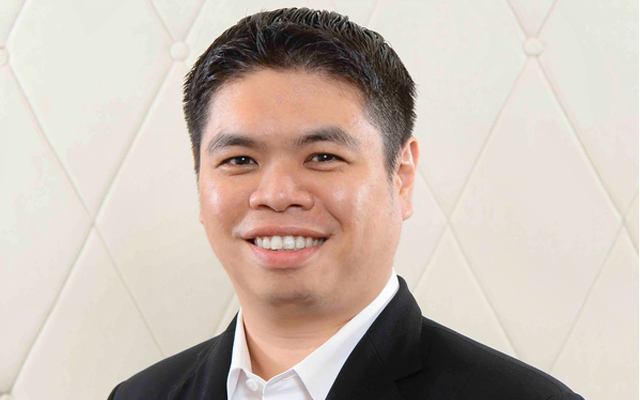
Michael Tang has joined Dorsett Putrajaya in Malaysia as general manager.
In his current role, Tang has been tasked with ensuring the profitability and sustainability of Dorsett Putrajaya’s operation, a role he takes on during this challenging period of Covid-19.
The seasoned industry professional has over 25 years of hospitality experience, and is no stranger to group, having been the general manager of Upper View Regalia Hotel, Kuala Lumpur since 2018; a hotel owned and managed Mayland Group of Companies and affiliated to Dorsett.
The Malaysian first began his hospitality career in 1996 in his hometown in Penang with the Casuarina Beach Resort, where he learnt sales and marketing. In 2001, he took up his next sales position with Equatorial Cameron and was based out of Kuala Lumpur.
Other positions he has held include associate director of sales for Concorde Kuala Lumpur, then a stint in Berjaya Hotels & Resorts where he took charge of four of the group’s properties, and HPL Hotels & Resorts as director of sales & marketing.
Sands Resorts Macao Introduces new Maximise Your Meeting offer
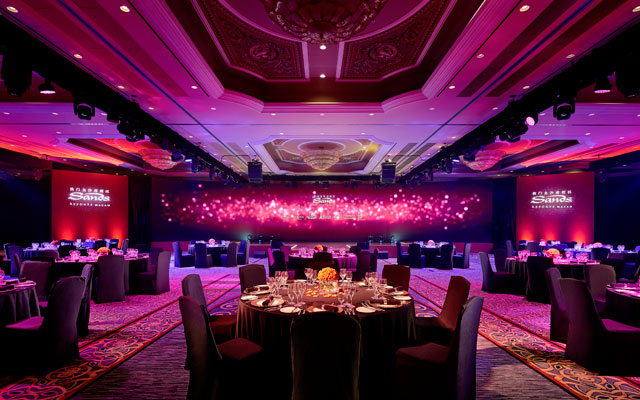
Sands Resorts Macao has unveiled the Maximise Your Meeting offer, available to book from now until December 31, 2021, for events taking place between now and June 30, 2022.
Benefits under this offer are:
- Five per cent discount on master bills
- One complimentary room for every 20 rooms booked
- One complimentary room upgrade for every 20 rooms booked
- 15 per cent discount on Gondola Rides, 25 per cent discount on Eiffel Tower experience and 50 per cent bulk-buy discount on teamLab SuperNature Macao tickets (20 tickets and above)
- Up to 50 per cent discount on selected in-house entertainment
- MOP 10,000 (US$1,250) credit on in-house audio-visual equipment rental and service
The more rooms booked, the more benefits. Event planners can enjoy all of the above six benefits when reserving over 151 rooms on a minimum of one of the nights within their stay period. In addition, the following benefits further apply:
- Book 20-50 rooms daily and enjoy three benefits
- Book 51-100 rooms on peak and enjoy four benefits
- Book 101-150 rooms on peak and enjoy five benefits
Located at the heart of Cotai Strip, Sands Resorts Macao offers approximately 12,500 rooms and suites, and 150,000m2 of flexible meeting spaces.
The Maximise Your Meeting offer is available at Sands Resorts Macao hotels including The Venetian Macao; The Parisian Macao; Four Seasons Hotel Macao; Conrad Macao; Sheraton Grand Macao; and The St. Regis Macao.
Email sales@sands.com.mo to book.
Serko releases Trip Budget feature in Zeno booking tool
Serko, a New Zealand-headquartered online travel booking and expense management for businesses, has rolled out its latest Trip Budget feature in Zeno, its travel booking and expense management tool.
With Trip Budget, maximum spend amounts can be configured for business trips and require approval when the total cost of a booking exceeds that limit.
Trip budget amounts can be configured by:
- Policy type (e.g. spend limits can be configured for each part of a trip booking, including air, hotel, rental car, etc.)
- Policy category (e.g. domestic, regional or international travel)
- Traveller profile (e.g. employee type)
When the total cost of air, hotel or ground transport booking exceeds the total trip budget, it will be highlighted to the booker, who will need to provide an ‘out of policy’ reason before the booking can be confirmed.
With the implementation of Trip Budget in Zeno, organizations can proactively manage spend before a trip is booked, empowering travel managers to deliver more savings and greater spend control to stakeholders.
Trip Budget is available to Zeno TMC reseller partners immediately.
Event sizes scaled down as Singapore brings back Covid restrictions
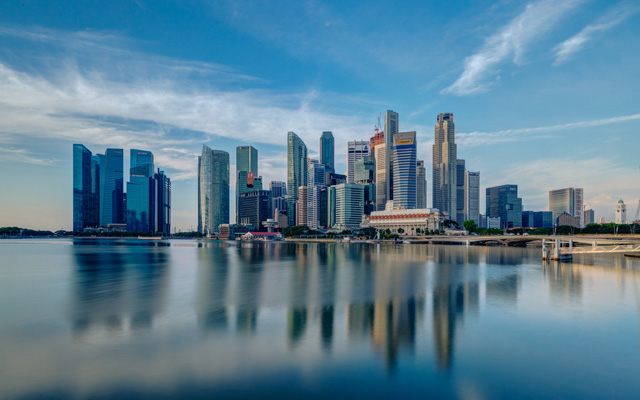
In-person business events and live performances will scaled down and event size caps will be reduced from July 22 until August 18, as Singapore further tightens movement restrictions in response to a surge in Covid-19 community cases.
For live performances and business events, up to 100 persons may be allowed with pre-event testing, and up to 50 persons without testing. For spectator and participatory sports events, up to 100 persons may be allowed with testing. Testing would not be required if there are 50 persons or less.
The latest requirements include suspension of dining-in at F&B establishments, reduction in group sizes for social gatherings from five to two, and reduction in operating capacity at attractions and museums to 25 per cent from the current 50 per cent,
In announcing the updated Phase 2 (Heightened Alert) measures, the Ministry of Health (MOH) said a review would be done two weeks after implementation, and measures would be adjusted further based on the infection situation at that time.
The Covid-19 multi-ministerial task force decided not to differentiate the measures for those who are fully vaccinated, but will consider doing so when vaccination rates are higher or when the situation has stabilised, a Channel NewsAsia report quoted task force co-chair Gan Kim Yong as having said during a press conference on Tuesday.
The multi-ministry task force had earlier announced a tightening of community measures under Phase 3 (Heightened Alert) from July 19 to August 8, in response to growing Covid-19 clusters at KTV lounges and nightclubs. Since then, more clusters linked to a wholesale fish market and hawker food centres have emerged.
MOH said that unlike the KTV cluster, the current wave of infection affects a wider spectrum of the population including many seniors.
“At the current rate of transmission, it is likely that infection cases will rise sharply, and many people in the community will catch the virus. While close to 50 per cent of the population have completed their vaccination regimen, there remains a number of vulnerable individuals, such as our seniors, who have yet to take up vaccination,” the ministry said.
“Unvaccinated individuals are at higher risk of being infected, and higher risk of being seriously ill if infected. Hence, in the meantime, we must act decisively to contain the current outbreak and minimise the risk of our hospital capacity being overwhelmed, while we race ahead to vaccinate those who have not completed or started their vaccination.”
According to MOH, Singapore remains on track to having two-thirds of its population complete the vaccination regimen by National Day on August 9.
TTG Conversations: Five Questions with Lina Ang, Sojern

Changes in consumer’s travel preferences, media diet and media channels along with continued pandemic challenges require travel and tourism marketers to take a different approach to target audience engagement, says Lina Ang, managing director APAC, Sojern.
In this new episode of TTG Conversations: Five Questions video series, Ang discusses how travel intention has failed to match up with actual search and bookings here in Asia-Pacific, where travel restrictions remain while national vaccination programmes are still a work-in-progress; challenged marketing budgets for travel and tourism companies and the impact on advertising activities; and the rise in social media marketing.
Ang also dispenses numerous tips for travel and tourism marketers looking to stretch their dollar, make sense of what the end of third-party cookies will bring, effect call-to-action amid a pandemic, and more.
Reviews
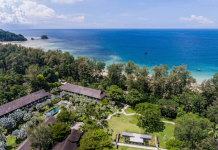
The Slate Phuket
Just 10 minutes from Phuket International Airport on the serene northern coast, this 178-key, Bill Bensley-designed resort offers delegates a quiet, tropical paradise steeped in Phuket’s tin-mining heritage
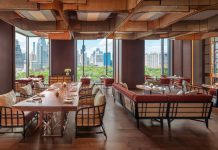
The Ritz-Carlton, Bangkok
The newly-opened Ritz-Carlton, Bangkok anchors the One Bangkok development with cosmopolitan elegance. Featuring the city's largest ballroom and a spectacular new penthouse suite, it delivers exceptional hardware and deeply authentic, soulful service for business and leisure travellers alike

Mama Shelter Zurich
Behind the imposing, Brutalist concrete that defines Zurich’s Oerlikon district lies a surprising secret. While its exterior honours the neighbourhood’s industrial roots, stepping inside Mama Shelter reveals a vibrant, neon-soaked world that is a far cry from its rigid shell


Thirty-four individuals and organisations which have shown extraordinary resilience by adapting their business models and products to the changing landscape of tourism amid the Covid-19 pandemic were recognised at the Singapore Tourism Awards 2021, which took place virtually for the first time on Friday (July 23).
Organised by the Singapore Tourism Board (STB), this year’s ceremony was graced by minister for trade and industry Gan Kim Yong. There were 77 finalists nominated across the award categories of Experience Excellence, Enterprise Excellence and Customer Service.
Xperience DMC’s Fascinating World of Aviation PLUS Exclusive Hangar tour was one of two winners of the Outstanding Tour Experience under the Experience Excellence (Leisure) award category, for presenting Singapore’s unique aviation history with a special focus on Seletar Aerospace Park.
The other winner was Tribe Tours, whose Chinatown Murders tour was recognised for its use of gamefication and storytelling to bring a precinct tour to life.
Messe Berlin and Milken Institute Asia Center were both named Outstanding Event Organiser under the Experience Excellence (MICE) award category. The former was recognised for testing the hybrid event prototype for safe business events with TravelRevive, while the latter for combining virtual and holographic components with an in-person event at the Milken Institute Asia Summit 2020.
Sentosa Development Corporation (SDC) was one of two winners for the Outstanding Marketing Idea under the Enterprise Excellence award category, which recognised businesses that displayed agility and innovation with new marketing campaigns to engage audiences despite the challenging environment.
SDC’s Virtual Sentosa campaign allowed homebound travellers to digitally explore Sentosa island through Sentosa Crossing, a digital reimagination of the holiday island, its own version of the popular Nintendo Switch game, Animal Crossing. The campaign became Sentosa’s top-performing campaign in 2020.
The other winner, Skypark Sentosa by AJ Hackett (Bungy Holdings Singapore), was recognised for its No Scream Challenge campaign, where participants who resisted a scream got their next jump free, and those who screamed received an ice-cream treat.
This year’s ceremony also featured three new awards – Special Award for Sustainability, Special Award for Most Exemplary Employer, and Special Award for Community Care (Business and Individuals). Seven organisations and two individuals were honoured under the Special Recognition category.
Mandai Park Holdings and Resorts World Sentosa were each awarded the Special Award for Sustainability for their contributions to environmental sustainability.
Wildlife Reserves Singapore and Gardens by the Bay were each conferred the Special Award for Most Exemplary Employer for developing and implementing impactful policies to retain and retrain employees during the pandemic.
Marina Bay Sands, Resorts World Sentosa and SATS-Creuers Cruise Services & Star Cruises received the Special Award for Community Care (Business) for stepping up as leaders for positive change during the pandemic and displaying care and selflessness for the wider community.