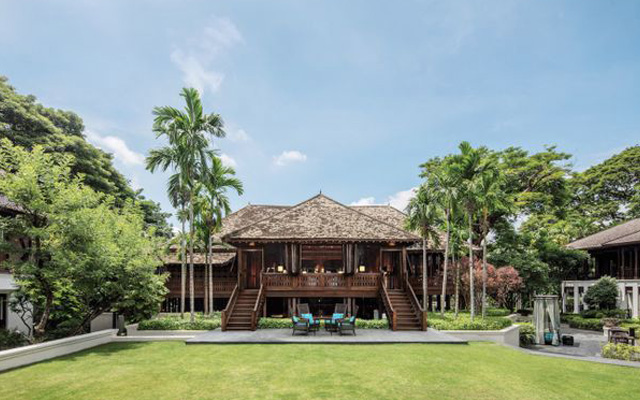
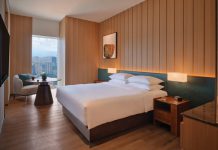
137 Pillars House is built around the original colonial teak homestead which dates back to the late 1800's
Boutique hotel 137 Pillars House in Chiang Mai is offering corporate groups exclusive use of the entire property when booking a minimum of 15 suites for three or more nights.
Rates start from 13,263 baht (US$428) nett per suite per night and are inclusive of breakfast for two. A minimum of 15 suites for three or more nights is required to qualify for the exclusive use option which is subject to availability and seasonality and valid to December 20, 2021.
137 Pillars House is built around the original colonial teak homestead which dates back to the late 1800s
Set on 8,000m2 of land with a lush tropical landscape, the layout of the property naturally lends itself to abundant personal space and privacy, made even more necessary during this pandemic.
Suites range from 70m2 to 135m2, and include the Louis Leonowens Suites which have private plunge pools, and the David Fleming McFie Suites which have an additional sleeping area and can accommodate a group of up to four.
On-site amenities include a multifunctional events space, 25m-long pool, Jack Bain’s Bar, a restaurant, gym, and Nitra Spa & Wellness. Yoga, taichi, meditation, muay Thai and Thai cooking classes can also be arranged for the group.
Costa Cruises has made two leadership appointments in preparation for the resumption of its cruises and its long-term growth.
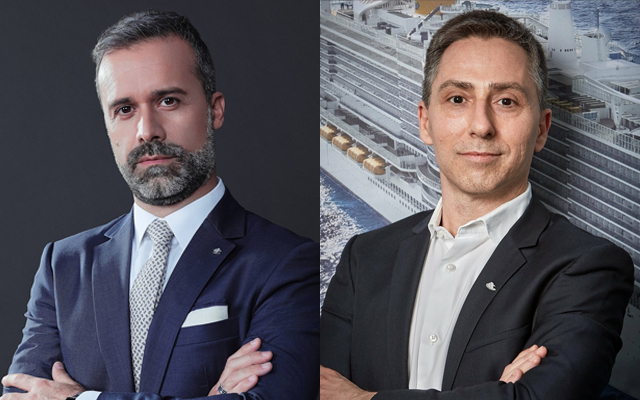
Mario Zanetti has been promoted to president of Costa Cruises, taking a role that had been temporarily filled by Michael Thamm, group CEO, Costa Group & Carnival Asia.
From left: Mario Zanetti, Roberto Alberti
In his new position, Zanetti will oversee Costa as a unique brand across the world, including Asia, with the aim of guiding Costa to strengthen its leadership in Europe, South America and Asia, and ensure profitable and sustainable growth in the long-term.
Zanetti started his journey with Costa back in 1999 in the revenue management unit. In 2017, he was named president of Costa Asia; and since July 2020, he has been back in Genoa, as chief commercial officer (CCO) of Costa Cruises Europe.
Meanwhile, Roberto Alberti has been appointed CCO of Costa Cruises, a position previously held by Zanetti. Alberti will be responsible for the overall commercial operations, including sales, revenue management and marketing worldwide, reporting to Zanetti.
With a career in Costa Cruises spanning over 15 years, Alberti worked his way up through various positions in Italy and abroad. In 2016, he joined the CEO Office, reporting to Thamm. After the position of vice president strategic development, in 2019, he was appointed senior vice president and chief strategy officer of the Costa Group, contributing to the definition of a sustainable development plan, the global source market strategy and brand positioning.
Both Zanetti and Alberti will be based in Costa Cruises headquarters in Genoa.
Business-to-business events and live performances in Singapore will be able to have increased capacity limits from next month if pre-event testing is implemented for their attendees.
Pilot business-to-business events approved by the Singapore Tourism Board will be allowed to have up to 750 attendees in zones of 50 attendees, if pre-event testing is implemented. These events currently can have up to 250 attendees in zones of 50.
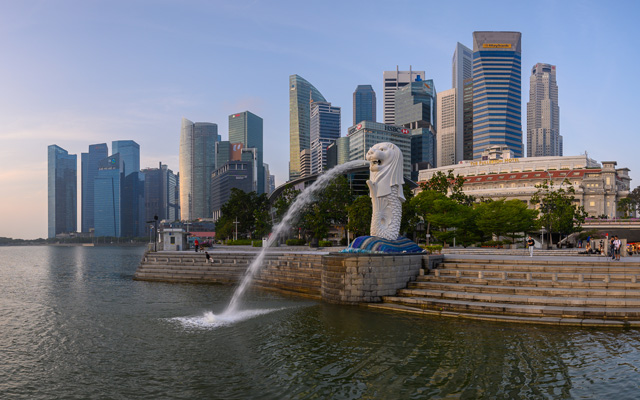
Singapore is in the controlled process of resuming activities, among them exhibitions and tradeshows
Meanwhile, the capacity limits for live performances will be increased to 750 people if pre-event testing is in place. Events that do not implement testing can have 250 attendees.
Seated spectator sports events are currently being piloted and approved by SportSG. They will also be allowed to have 750 spectators if pre-event testing is put in place. Similarly, those without pre-event testing will be allowed to have up to 250 spectators.
Attendees who have taken both doses of a Covid-19 vaccine at least two weeks before the event will not need to be tested as well.
Meanwhile, the Singapore government is considering broader guidelines for those who have been vaccinated, beyond the exemption from pre-event testing.
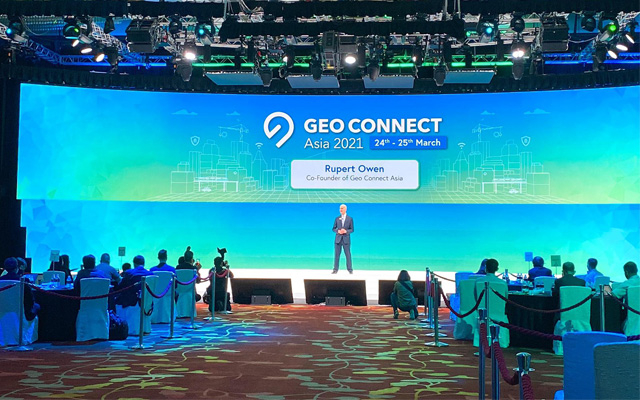
opening ceremony, with Geo Connect Asia co-founder Rupert Owen giving the opening address.
Geo Connect Asia (GCA) 2021, South-east Asia’s inaugural geospatial and location intelligence technology conference and Singapore’s first large-scale hybrid event of the year, kicked off today at the Marina Bay Sands Expo & Convention Centre.
There were nearly 1,000 professional visitors on-site and a virtual audience of up to 1,200 international and local attendees.
Geo Connect Asia co-founder Rupert Owen giving the opening address
On-site visitors at GCA 2021 were greeted by a range of innovative features designed to maximise visitor safety while providing an authentic, interactive tradeshow experience.
These include the conversion of ballrooms into exhibition booths to create two Geo Suites, where each Geo Suite featured 16 meeting pods, allowing visitors to conduct private business meetings safely, and minimise intermingling between different cohorts. Meeting pods are fitted with plexiglass to separate the exhibitor and buyer, with microphones on both sides for a better auditory experience.
A host of safety management measures were also in place including automated check-in through facial recognition and temperature-sensing wristbands.
Business travellers to Thailand would benefit from no quarantine, as opposed to a shorter quarantine; Bangkok skyline pictured
Business event professionals in Thailand are giving a lukewarm response to the government’s reduced mandatory quarantine, saying that inbound trips and events to the Kingdom would still be too tedious and pricey.
Sumate Sudasna, managing director of CDM (Conference & Destination Management) Thailand, explained that most foreign business arrivals to Thailand are for short meetings, and so any form of quarantine would be frowned upon.
Business travellers to Thailand would benefit from no quarantine, as opposed to a shorter quarantine; Bangkok skyline pictured
Furthermore, quarantines will also add to their cost.
Sumate believes that reducing the mandatory quarantine period is not an effective plan to win back large groups of international business travellers, much less general tourists.
He told TTGmice that since December 2020, CDM Thailand had facilitated visits from some 10 groups of business travellers, mostly from Japan, South Korea, the US, Australia and the Netherlands, to check in on their factories and line production in the country. Most travellers did not serve quarantines, but all had to obtain pre-arrival approval from Thailand’s Centre for Covid-19 Situation Administration and medical teams. They were also closely monitored throughout their trip in Thailand.
Boontawee Jantasuwan, CEO of Events Travel Asia Group and president of SITE Thailand, opined that even if the quarantine period was shortened by half, it could only attract some incentive groups.
Arriving groups would have to extend their itineraries to accommodate the quarantine, resulting in higher costs. As such, larger events, such as conferences and exhibitions, would likely skip Thailand, Boontawee added.
Industry players believe that Thailand’s business events and business travel sectors would only recover with the absence of mandatory quarantines.
Currently, the Thai government is considering ceasing all quarantine requirements in October, a decision that is subject to zero domestic infections and control over the pandemic.
However, Boontawee expects a six-month lag for international travellers to restart their travel plans to Thailand, which would mean a return in international business events only in mid-2022.
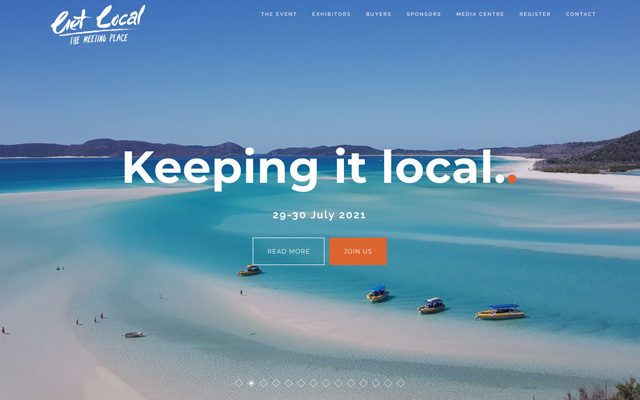
Get Local format of Get Global, a highly successful industry exhibition focussed exclusively on the international market
Business events expo Get Local, will be holding its inaugural event face-to-face, at ICC Sydney from July 29-30, 2021.
Get Local will provide event managers, PCOs, meeting planners and incentive organisers the opportunity to learn more about the domestic offerings across Australia, New Zealand and the Pacific.
Get Local is based on the format of Get Global, an industry exhibition focused exclusively on the international market; screenshot from the Get Local website
The open floor plan of Get Local will encourage trade visitors to plan their own day and connect with the suppliers they want to see. There will be venues, hotels, bureaux, AV, technology and other suppliers to the business events sector across Australasia present.
Meanwhile, the show’s partners include Destination New South Wales (NSW), Hunter Valley, Central Coast and the Orange region.
Gary Bender, co-founder of Get Local, said in a press statement that the domestic industry “needs this event”, and it will be a place to “reconnect and do business which we need more than ever in 2021″.
“The power of person-to-person events is a proven fact. A comprehensive survey, undertaken by Business Events Sydney and the University of Technology, of delegates attending five separate meetings found 91 per cent of delegates agreed that the face-to-face meeting exposed them to new and innovative ideas.
“Businesses need ideas and to innovate, and it can’t continue to be done in isolation,” added Donna Kessler, the other co-founder behind Get Local.
“We know that the recommencement of business events will be crucial in rebuilding and supporting the industry, and the NSW Government is focused on making sure event planners know about the many great locations and venues that regional NSW has to offer,” said NSW minister for jobs, investment, tourism and Western Sydney, Stuart Ayres.
UFI, the Global Association of the Exhibitions Industry, has launched a new UFI-accredited qualification: the UFI Certified Professional (UCP).
The launch of the UCP designation is the next step in UFI’s evolution of its educational offers. In 2017, UFI and the Venue Management Association (VMA) began offering the UFI-VMA Venue Management School in Asia. And in 2020, the association launched the UFI-Exhibition Management School, where the first classes have already taken place for Asia, the Middle East and Africa region.
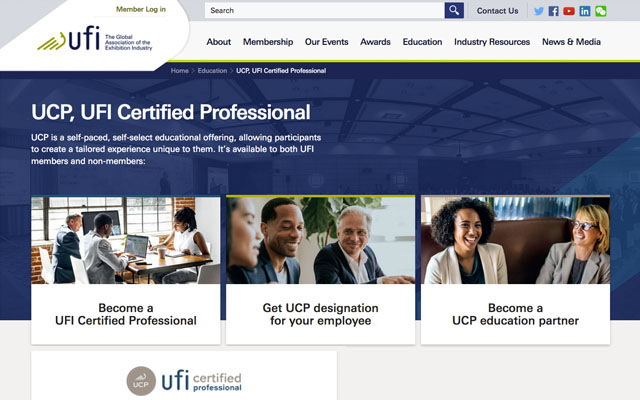
A screenshot from the UFI website
Both programmes will form the core of the UFI Certified Professional designation, which is available to industry professionals who complete 10 credits’ worth of training across various topics. Participants need to complete either the UFI-VMA Venue Management School or the UFI-Exhibition Management School programmes.
Participants can achieve the remaining credits from specialisation modules. These can be picked from educational offers provided both by UFI and its UCP partners, where the modules vary in topic, allowing the programme to be flexible according to participants’ individual interests and professional goals.
In time for the UCP launch, an initial group of three educational partners have been selected for the programme: MBB-Consulting Group (UK), Virtual Events Institute (US) and Rego (UK).
The UCP is a self-paced programme, meaning there is no time limit or minimum duration. It is fully customisable, allowing participants to choose the timelines, topics and locations that suit them best. Additional benefits beyond the classroom include networking, specialisation and career development.
Kai Hattendorf, UFI CEO and managing director, said in a statement: “Our members have been requesting an UFI endorsement of our education, so they can signal to employers and peers that they have obtained outstanding industry training. Therefore, we are very pleased to introduce the UCP designation, a new, flexible approach in our industry serving different educational needs around the world.”
Brisbane’s Park Regis North Quay, part of the StayWell Holdings hotel property portfolio, has launched a flexible working and event space, Hive Club.
Located on the property’s ground floor, Hive Club is available to both in-house guests and locals looking for a communal space to work. A range of working solutions from desks-on-demand to breakout spaces are available, as well as separate dining and outdoor relaxation zones.
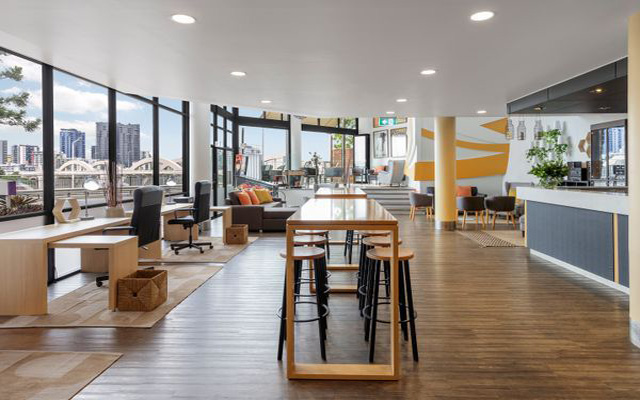
The interior of Hive Club
Workspaces are available from 07.00 to 19.00 every day, including weekends, and can be rented for the day, week, or by the month. Dedicated and communal workstations are available, and access to the hotel’s meeting rooms and boardrooms are also accessible to Hive Club members.
In addition, Hive Club offers a continental self-serve breakfast from 07.00 to 11.00; an all-day grazing menu from 11.00 to 19.00; free-flow non-alcholic beverages, coffee and tea; unlimited Wi-Fi; alongside wireless chargers, printers and stationery.
This is the Group’s first step into the co-working industry, and Hive Club will potentially act as a blueprint for additional concept roll-outs across the StayWell portfolio.
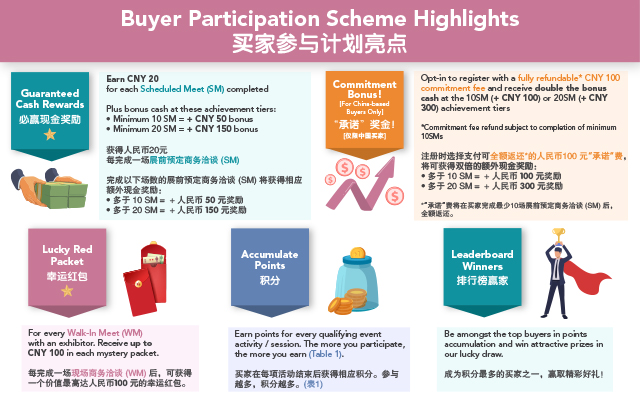
More details of the buyer incentive scheme for IT&CM China and CTW China 2021
The organiser of IT&CM China and CTW China, TTG Asia Media, has opened registrations for buyers.
Slated to take place from June 22-24, 2021, the virtual event will be powered by Dragon Trail Interactive’s The Next Travel Market platform.
More details of the buyer incentive scheme for IT&CM China and CTW China 2021
Buyers visiting the exhibition section will be able to meet suppliers from across China and the world in the show’s 2.5D virtual environment. The English-Mandarin interface can be accessed via a PC, mobile or a WeChat mini programme, providing single-entry access for both international and China-based delegates.
Buyers will also be able to download sales resources, view product presentations, swap e-business cards, leave messages, and schedule an appointment.
Video calls and chat rooms with two-way automated translation will also be on hand to facilitate networking sessions. Each buyer will receive up to 24 x 20-min pre-scheduled appointment slots over three days. These appointments can be supplemented with unlimited walk-in meetings, where a buyer can request for a “walk-in” without a prior appointment from 09.00 to 18.00 daily (GMT +8).
Buyers can also stand to earn cash incentives or win prizes by completing event missions.
For example, for every Walk-In Meet with an exhibitor, buyers have the chance to receive up to 100 yuan (US$15.30) in each mystery packet, while every Scheduled Meet completed will earn them 20 yuan, plus bonus cash if they complete 10 or 20 Scheduled Meets.
All cash rewards can be withdrawn to a buyer’s WeChat Pay account, or they can receive a cash voucher after the event is over. Cash rewards for international buyers will be converted from Chinese yuan to US$ at the organiser’s prevailing exchange rate.
On the conference end, there will be MICE and Corporate Travel knowledge sessions helmed by industry partners, while destinations and corporate brands will also be giving updates and developments under the Brand Showcase section.
The Buyer Procurement Showcase segment also returns, which will see business, association and corporate buyers sharing their procurement requirements with relevant and interested destination and supplier leads.
Aside from receiving a digital certificate of participation, all content will be made available at dedicated times from June 22, with on-demand access for all delegates until the end of the event.
Preferred Hotels & Resorts has promoted Jonathan Newbury to executive vice president of Asia Pacific.
Newbury brings 30 years of international independent hotel experience to his new position, which carries the responsibility to drive the strategic direction and evolution of the Preferred brand in Asia Pacific, ensuring the success and retention of more than 150 member properties across the region, and overseeing the company’s associates who are based in offices across 10 cities.
As part of this transition, Newbury recently relocated from Chicago to Singapore with his family.
Newbury first joined Preferred in July 2008, intially serving as vice president of brand development and most recently as senior vice president of strategic development. During his time as senior vice president, he spearheaded a variety of global development initiatives that helped fuel a 20 per cent growth in the brand’s hotel portfolio over the past decade.
In addition to his development work, Newbury served as Preferred’s vice president of E-Commerce & Technology from July 2010 to March 2012.
Prior to joining Preferred, Newbury spent three years as vice president of global development for Small Luxury Hotels of the World. He has also served as operations director for VIP SKI, which operates luxury chalets, hotels, and resorts across the French and Austrian Alps, and held on-property sales and marketing positions with both The Langham Hotels and Resorts and Thistle Hotel brands.
The newly-opened Ritz-Carlton, Bangkok anchors the One Bangkok development with cosmopolitan elegance. Featuring the city's largest ballroom and a spectacular new penthouse suite, it delivers exceptional hardware and deeply authentic, soulful service for business and leisure travellers alike
Behind the imposing, Brutalist concrete that defines Zurich’s Oerlikon district lies a surprising secret. While its exterior honours the neighbourhood’s industrial roots, stepping inside Mama Shelter reveals a vibrant, neon-soaked world that is a far cry from its rigid shell
A polished urban retreat designed for business travellers, Hyatt Regency Kuala Lumpur at KL Midtown combines thoughtful design, seamless service, and exceptional facilities.