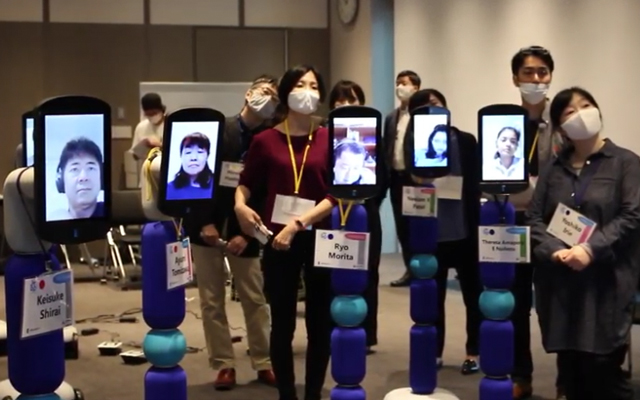
Avatars "joining in" the J-TOP conference with their in-person colleagues
Avatars could play a part in Japan’s business events and conferencing future following the success of a pilot project that brought the technology to a Tokyo-based workshop.
Fifteen participants from South Korea, Taiwan, the Philippines, and three US states used Avatarin’s avatars to attend the Japan Team Oncology Program (J-TOP) workshop at the Muromachi Mitsui Hall and Conference Center. They were joined by 25 in-person participants.
Avatars “joining in” the J-TOP conference with their in-person colleagues
The technology allows the user to move backwards, forwards, as well as left and right, by using their computer’s four directional keys. The user can therefore control what to view, whom to speak with, and where to move about in the room.
Shuhei Chiba, communications manager at Avatarin, said the “newme” avatars allowed remote attendees of J-TOP’s workshop “to experience the venue as if they were there themselves”.
Such technology is expected to grow in demand as the pandemic continues to place limits on the number of attendees at events, as well as hinder the ability of participants to travel to attend. It also offers peace of mind to those who prefer to attend events remotely until Covid-19 is brought under greater control.
Avatarin, which is part of ANA Holdings, developed the “newme” avatar video conferencing robots shortly after its establishment in April 2020. The J-TOP pilot marks the company’s first step towards the realisation of its “avatar MICE” project designed to contribute to the development of business events in Nihonbashi by making avatars available. The initiative is supported by Mitsui Fudosan, the real estate company behind the Nihonbashi Revitalization Plan.
Building on the success of the initial venture, “avatar MICE” will be rolled out and made available at other facilities in Nihonbashi including Nihonbashi Mitsui Hall and business space X-Nihonbashi.
As safe distancing measures raise the profile of private dining groups and exclusive gatherings, One Farrer Hotel in Singapore has leveraged this demand to transform an entire level of suites offerings into a private dining offering.
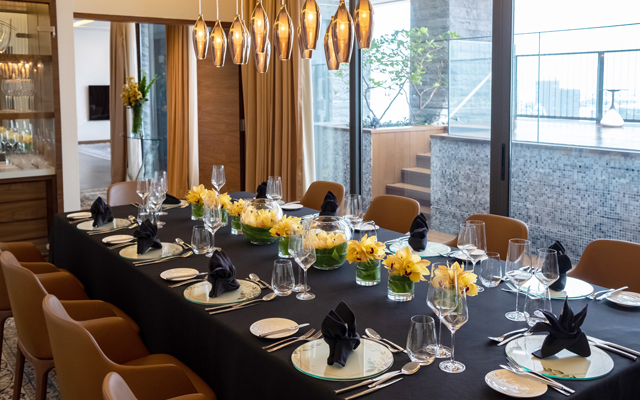
The Nest at One Farrer
The Nest at One Farrer, on level 20 of the hotel, comprises 13 safe dining environments that each accommodate between four and 12 diners. Guests may enjoy curated set menus or a bespoke selection of cuisine as part of the experience.
Since Singapore softened its group gathering and event restrictions last year, the hotel has hosted several small-scale meetings, launches and classes, with the Nest providing breakout rooms with in-room smart TVs enabling live streaming of the main event hall. After the conferences, keynote speakers and VIPs dined at the Nest with five diners per room.
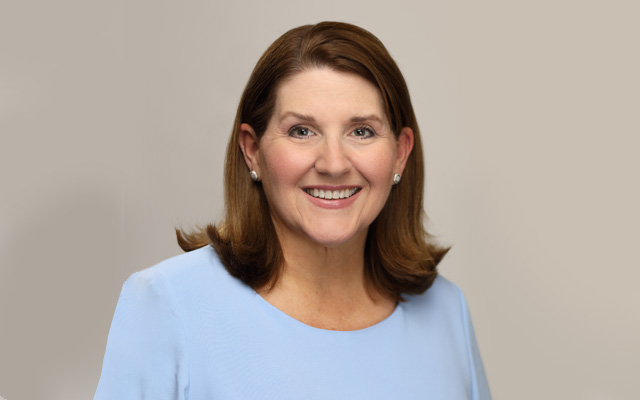
CWT, the Business-to-Business-for-Employees (B2B4E) travel management platform, has appointed Michelle McKinney Frymire as CEO with effect from May 1, 2021.
Incumbent Kurt Ekert will be stepping down and will take on the role of senior advisor to the company.
Frymire joined CWT in 2019 and has over 20 years’ travel industry experience. Previous leadership roles include CFO at Starwood Vacation Ownership and Delta Technology (a division of Delta Airlines), as well as Continental Airlines and Delta Air Lines. In addition, she held senior executive positions at several private equity portfolio companies where she led strategy, technology, HR, corporate development and finance.
She currently serves on the Board of Directors for Family Gateway in Dallas, Texas and was appointed CWT’s president, strategy & transformation and CFO in October 2020.
The Pacific Asia Travel Association (PATA) has appointed Liz Ortiguera as its next CEO effective May 17, 2021.
She succeeds Mario Hardy who will finish his term at the end of May.
Liz Ortiguera is a senior executive with over 25 years of global experience and expertise in general management, marketing, business development, and partner network management.
Her career spans several industries – travel/lifestyle, technology, financial services, and pharmaceuticals. She has also cut her teeth at both multinational corporations including American Express and Merck, and start-up environments in software as a service (SaaS), e-commerce, and ed-tech.
For 10 years she was the general manager for Amex’s Travel Partner Network in Asia-Pacific, managing partnerships with top travel management companies, MICE, and leisure agencies in the region.
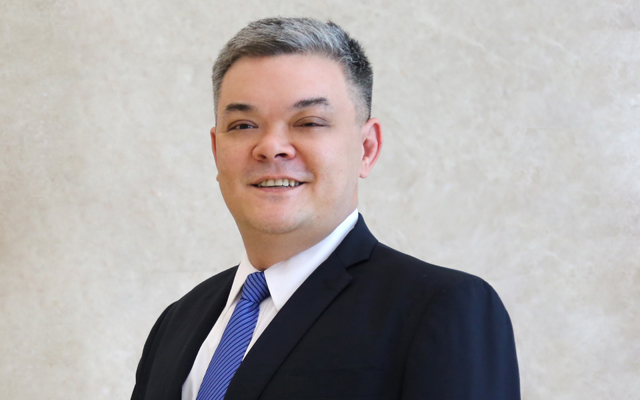
Hong Kong SkyCity Marriott Hotel has named Khan Sung as its new general manager.
A seasoned hotelier, Khan Sung joined Marriott International Corporate Headquarters in 2002, and had his first on-property assignment at JW Marriott Hotel Hong Kong serving as director of revenue strategy in 2005. Transitioning to operations in 2010, his first assignment as general manager came in 2013 at the JW Marriott Hotel Chongqing.
Since then, Khan has led his teams of associates through both operations and openings of hotels in China, including the opening of his most recent property, Sheraton Beijing Lize Hotel.
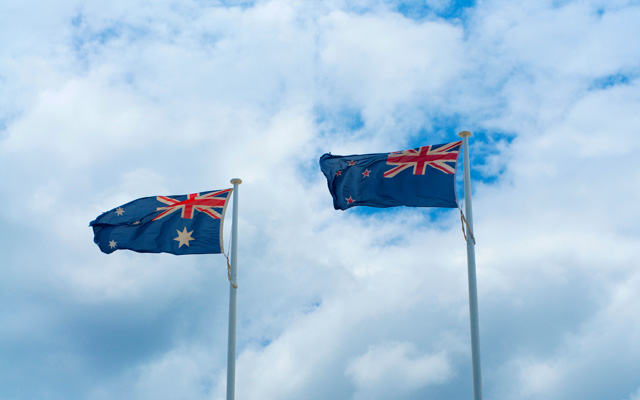
Australia and New Zealand have been successful in suppressing the spread of COVID-19, reinforcing both countries’ already reputation for safety; and supporting the case for a trans-Tasman travel bubble
With the two-way, quarantine-free travel bubble between New Zealand and Australia kicking into gear since April 18, business events industry players are upbeat and optimistic that this will bode well for bilateral trade.
Speaking to TTGmice, Lisa Hopkins, CEO of Business Events Industry Aotearoa (BEIA), expressed confidence in the benefits that the travel bubble pact will have on the industry. “Confidence is the fuel that feeds the sector, and this will support organisers and decision-makers by giving them the assurance to proceed with their planned events,” she said.
Australia and New Zealand have been successful in suppressing the spread of Covid-19, reinforcing both countries’ already reputation for safety; and supporting the case for a trans-Tasman travel bubble
“We know that there is demand to travel to New Zealand. On the day that the announcement was made, Air New Zealand had one of its busiest sales days in history,” Hopkins added.
Tourism Australia’s executive general manager of events, Penny Lion, shared: “We are quietly optimistic. From what we are hearing from clients, Australia’s business events industry will probably start to see business from New Zealand returning in late 2021 and early 2022.”
According to ongoing research conducted by Tourism Australia, measuring Australian corporate decision-maker attitudes to restarting events, confidence for business events and travel is returning. In the latest research wave, 66 per cent of decision-makers said they were planning events in the next six to 12 months.
In a reflection of this shifting sentiment, face-to-face business events are resuming across the country. Last month, Tourism Australia held its annual Destination Australia conference in Sydney, which saw a record in-person attendance of 450 guests. Over in Victoria, 900 tourism operators gathered in-person for the Victorian Tourism Conference at Melbourne Convention and Exhibition Centre last week.
New Zealand has also already conducted several in-person industry events such as BE Reconnected. But when it comes to organising events, Hopkins encourages groups to make use of a PCO, saying that it would make a “tremendous difference” in providing information and support, should business events travellers get stuck due to a sudden border closure.
When quizzed on the possibility of more travel bubble arrangements, both Hopkins and Lion noted that their governments are constantly looking at other countries and their management of the pandemic to explore the viability of a bubble.
For New Zealand, a confirmed Cook Islands bubble is on the horizon in May. Meanwhile, BEA plans to continue inspiring planners via its marketing and communications activity through Australia Next, its incentive magazine on what’s new and interesting in Australia’s business events industry. The latest edition for South and South-east Asia will be available on the website from early May.
But despite the apparent optimism, Hopkins cautioned: “The situation globally is volatile and until we have some degree of mass vaccination, a worldwide return to international business events is likely to be next year, according to various experts.”
Regardless, this safe travel zone has “enormous potential as a proof of concept model”, and is the first step towards resuming inbound travel from other key international markets, Lion pointed out. For now, she sees a “significant opportunity to encourage Kiwis to choose Australia for their next business event”.
Dorsett will continue to closely monitor and improve health and safety measures
Dorsett Hospitality International will be installing High Efficiency Particulate Air (HEPA) UV-C air purifiers on guest floors to improve and disinfect air circulation at all nine of its Hong Kong hotels.
As of this announcement, Dorsett Wanchai, a Designated Hotel for Quarantine for inbound travellers (outside of China), has already placed a Smart IoT UV-C HEPA Air Purifier on every guest floor.
Dorsett will continue to closely monitor and improve health and safety measures
The Momax Smart IoT UV-C Air Purifier (AP8S) has H13 HEPA and Active carbon filters which are 99.95 per cent efficient at capturing and removing airborne particles that are no more than 0.3 microns in diameter, including harmful particulates such as PM 2.5 and other allergens, dust, mould and pollution from the air.
It also provides Ultraviolet-C sanitisation which is 99.9% efficient in disinfecting the air and killing germs. The built-in PM2.5 high-sensitivity laser sensor allows the hotel to accurately and carefully monitor the standard of air quality on each floor and ensure air is being circulated and disinfected regularly 24/7.
The purifier was selected from a list advised by The Working Group and Hong Kong government.
In addition, since the onset of Covid-19, Dorsett has worked closely with Ecolab, a global leader in infection prevention solutions, to provide hospital-grade disinfectant designed to kill pathogens. Each hotel room has its own independent pipe, which connects to the main fan on the roof of all hotels, allowing fresh air to be drawn from the outside to each room, and through an air filter disinfected with Ecolab.
Victoria successfully held a 900 delegate conference at the MCEC recently
About 900 tourism operators gathered for the Victorian Tourism Conference held at Melbourne Convention and Exhibition Centre (MCEC) on April 21 and 22, in the Australia state’s attempt to reboot the tourism and events sector.
The conference highlighted industry sector updates, marketing workshops and innovation stories, as well as an evening function that allowed delegates to reconnect. According to organisers, the face-to-face only event was Australia’s biggest in-person conference in more than a year.
Victoria successfully held a 900 delegate conference at the MCEC recently
This comes as gathering restrictions in Victoria were eased to allow venues to operate at 100 per cent capacity for events under 1,000. MCEC, where the conference was held can now host up to 10,000 attendees, at up to 75 per cent capacity per event space.
“To get this turnout is phenomenal, given everything Victoria went through in the second half of last year,” said Julia Swanson, CEO of the Melbourne Convention Bureau (MCB), referring to the lockdowns in Melbourne – the longest of which lasted for almost four months.
“It’s symbolic of the industry starting to turn into a recovery chapter,” she said. “Visit Victoria has also gone through a big restructure with a new strategy set up for the future so it was important to share insights, get people connecting again and paint a sense of optimism.
“Businesses are slow to rebuild and confidence has got to be rebuilt – that’s just the reality. But the appetite is coming back and events like this are a moment in time where you can demonstrate how good it is to be back and (show) what can be done,” she continued.
Two weeks ago, MCB also launched a national business events programme offering interstate event organisers up to A$25,000 (US$19,438) to support hosting costs for events in Melbourne, with 50 per cent payable before the event starts to help with upfront expenses.
The move was met with “an incredible response” generating about 100 enquiries already, revealed Swanson.
She also shared with TTGmice the outlook for international business is healthy. “We’ve probably got the biggest pipeline we’ve had in a long time. We kept our teams overseas fully operational all through the pandemic and we’ve won bids (from) now until 2028. In Asia, our teams in Shanghai and Kuala Lumpur are busier than ever speaking to clients,” she said.
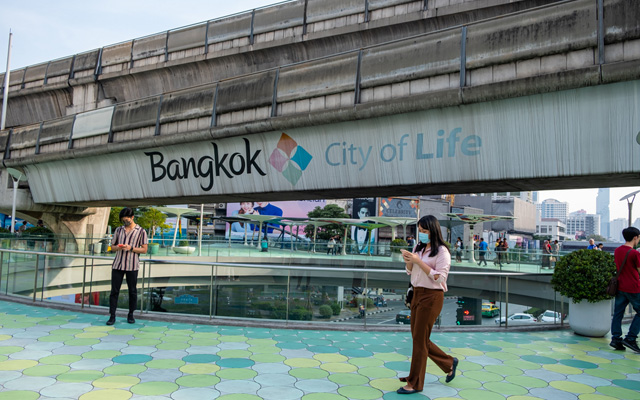
Infections spike, with Bangkok seen as epicentre of third wave; skywalk at National Stadium BTS station pictured
In its latest effort to stymie the province’s third wave of Covid-19 outbreak, the Bangkok Metropolitan Administration (BMA) will be limiting in-person meetings and gatherings to 20 people or less for the next two weeks.
Effective until May 9, the limitations apply to all events, with film or television shootings, religious ceremonies, or family meetings with more than 20 participants.
Infections have spiked in Bangkok over the last few days; skywalk at National Stadium BTS station pictured
The BMA has also ordered the closure of several public venues, including meeting venues, over the next 14 days. These include meeting and banquet venues both in and outside of hotels, exhibition halls, convention facilities, sports stadiums, and outdoor event facilities such as concert stages, outdoor cinemas, and Thai folks theatres.
Additional measures include the compulsory wearing of face masks in both indoor and outdoor public spaces in Bangkok and 44 other provinces, subject to a 20,000 THB (US$637) fine for violations. Shopping mall hours in 18 red zone provinces have been limited to between 11.00 and 20.00, and convenience store hours from 05.00 to 22.00 until May 2.
Schools, bars, and massage parlours have been closed since a week ago. Many agencies and companies are currently working from home until the end of April.
The capital has reported the highest number of cases out of all of Thailand’s provinces, with 8,175 confirmed cases since the third outbreak began earlier this month.
On Sunday, Thailand logged 11 Covid-19 deaths and 2,438 new cases Sunday nationwide. The latest outbreak, catalysed by the highly-contagious B.1.1.7 variant, has now led to 24,000 cases and 35 deaths in less than a month.
Thailand is among the countries that have faced delays in its vaccination efforts. Of its population of 66 million, only a little over one million have been vaccinated to date.
The positive momentum continues for return to business travel
The Global Business Travel Association (GBTA) has found in its recent poll that nearly one-quarter of its respondents have shared that their company has resumed non-essential business travel, or that the company has in place a plan to resume travel.
These findings and more in GBTA’s 18th Covid-19 poll reveal multiple positive signs for business travel recovery, including an increase in willingness to travel, a decrease in trips cancelled, and a more optimistic view towards returning to the road as travel bookings continue to increase.
The positive momentum continues for return to business travel
Positive momentum for business travel
About one in 10 (9%) poll respondents say their company already has resumed non-essential business travel, while an additional 13% report their company now has in place a fully developed travel-resumption plan.
Additionally, 31% of respondents say their company is actively working on a travel-resumption plan, while 20% say their company has begun the process, but has more work to do. Only 18% report no formal planning underway, while 7% reported being unsure.
Two-thirds (65%) of poll respondents feel their employees are ‘’willing’’ or ‘’very willing’’ to travel for business in the current environment, an increase of 11 percentage points from the March 2021 GBTA poll results. The remaining corporate travel buyer and/or procurement respondents feel their employees are not willing (12%) or neutral (12%) in terms of their willingness to travel for business. In addition, one in 10 (11%) are unsure.
Positive signs in the United States were further underscored by responses to the April 2, 2021, travel guidance update by the Centers For Disease Control, which recommended “that fully vaccinated people can travel at low risk to themselves.” More than six in 10 U.S. respondents said the new CDC guidance makes them much more (29%) or somewhat more (32%) comfortable travelling for business. Another third (32%) report the CDC announcement has not changed their opinion. Only four per cent feel less comfortable travelling for business.
Half of U.S.-based corporate travel buyer and procurement respondents feel recent CDC guidelines will have a ‘major’ or ‘some’ influence on their company’s timeline for resuming non-essential domestic business travel. Another one-third say the new guidelines will have a minor (18%) or no influence (15%) on their company’s timeline. One in 10 (14%) say they are unsure.
Globally, suppliers and travel management company respondents see optimism about the industry’s path to recovery. Half (50%) say they felt more optimistic than they did last month with four in 10 (43%) saying they feel the same as they did last month. Less than one in 10 (8%) say they feel more pessimistic about the industry’s path to recovery than they did last month.
Half (50%) of supplier respondents say their bookings from corporate customers have increased in the past week, while two in five (38%) report their bookings have remained the same from the previous week. One in 10 report their bookings have decreased (11%).
Three quarters (75%) of respondents who report cancelling or suspending most or all trips to a specific region/country are considering resuming travel in the near future (one to three months) or are considering resuming travel in the near future but do not have definite plans. Among those companies, 16% report plans to “resume all travel in the next one to three months,” while 59% report that they are considering resuming all travel in the near future, but have no definite plans as yet.
Seven in 10 (71%) poll respondents think issuing government-issued digital health verification (or digital green certificates and/or vaccination passports) is either “very effective” or “effective” in terms of resuming business travel. Just one in 10 thinks it is “ineffective” or “very ineffective” or are unsure (10%). Few are indifferent (7%) about the policy.
Respondents from Europe are more likely (81%) than respondents from North America (68%) to say issuing digital health verification (or digital green certificates and/or vaccination passports) is effective in terms of resuming business travel.
More flexibility in working arrangements
Eight in 10 poll respondents say their employees will have “much more” (35%) or “more” (47%) flexibility to work from home than they did before the pandemic. An additional one in 10 (14%) say employees will have equal flexibility and only three per cent say employees will have less flexibility.
Respondents based in Europe (88%) are slightly more likely than respondents in North America (81%) to say they expect their company’s employees will have more/much more flexibility to work from home than before the pandemic.
Among those who think their company’s employees will have more flexibility to work from home, half believe their company is “very likely” (16%) or “somewhat likely” (35%) to revise travel and expense policies to account for an increase in remote working. One in five report their company is unlikely (18%) or very unlikely (4%) and an additional one in 10 do not have an opinion (13%) or are unsure (15%).
As domestic business travel resumes, two in five (44%) poll respondents expect more business meetings with clients and customers will be held in non-traditional settings such as restaurants, bars, coffee shops, flexible office spaces and/or hotels. One in four (27%) do not expect this to become more common and one in three (29%) do not know.
Company-wide functional collaboration on planning for return To travel and offices
Four in 10 (39%) respondents report buyer and procurement members are involved with key aspects of their company’s planning for return to offices. However, fewer report they are involved with their company’s remote working policies (23%) or their company’s approach to managing a decentralized workforce (18%).
Over half (56%) of poll respondents say their company’s planning on return to business travel is led by a cross-department committee or working group (which could include travel, human resources, security, legal and other departments). One-quarter (25%) of respondents say their company’s planning for return to business travel involves another, singular department such as the C-suite, security, or human resources. Only one in 10 (11%) say the travel department or other areas (8%) are leading the effort.
Half (49%) of poll respondents say their job responsibilities have changed due to the pandemic, whereas half (51%) say their responsibilities have not changed. Poll respondents in Canada (63%) and the US (50%) are more likely than respondents from Europe (36%) to report their job responsibilities have changed.
Among those who say their job responsibilities have changed due to the pandemic, most report their responsibilities have increased (72%) and travel policy decisions involve more people and departments (31%). In addition, one in 10 say they report to a different person or department (17%), have fewer direct reports (16%), or need to receive approval from more people/departments to enact travel policy changes (15%). Few respondents say they have more direct reports (8%) or have had responsibilities taken away from them (5%).
“It is encouraging to see key indicators all pointing towards a return to business travel, as organisations collaborate internally across multiple functions to ensure a safe return for their travellers and commuters,” said Suzanne Neufang, CEO of GBTA. “Many companies have also revisited their work-from-home policies due to the pandemic, and in many cases are making a permanent change that will remain in effect even after the pandemic. It’s clear the way we manage and conduct business will be noticeably different moving forward.”
Just 10 minutes from Phuket International Airport on the serene northern coast, this 178-key, Bill Bensley-designed resort offers delegates a quiet, tropical paradise steeped in Phuket’s tin-mining heritage
The newly-opened Ritz-Carlton, Bangkok anchors the One Bangkok development with cosmopolitan elegance. Featuring the city's largest ballroom and a spectacular new penthouse suite, it delivers exceptional hardware and deeply authentic, soulful service for business and leisure travellers alike
Behind the imposing, Brutalist concrete that defines Zurich’s Oerlikon district lies a surprising secret. While its exterior honours the neighbourhood’s industrial roots, stepping inside Mama Shelter reveals a vibrant, neon-soaked world that is a far cry from its rigid shell










Dorsett Hospitality International will be installing High Efficiency Particulate Air (HEPA) UV-C air purifiers on guest floors to improve and disinfect air circulation at all nine of its Hong Kong hotels.
As of this announcement, Dorsett Wanchai, a Designated Hotel for Quarantine for inbound travellers (outside of China), has already placed a Smart IoT UV-C HEPA Air Purifier on every guest floor.
The Momax Smart IoT UV-C Air Purifier (AP8S) has H13 HEPA and Active carbon filters which are 99.95 per cent efficient at capturing and removing airborne particles that are no more than 0.3 microns in diameter, including harmful particulates such as PM 2.5 and other allergens, dust, mould and pollution from the air.
It also provides Ultraviolet-C sanitisation which is 99.9% efficient in disinfecting the air and killing germs. The built-in PM2.5 high-sensitivity laser sensor allows the hotel to accurately and carefully monitor the standard of air quality on each floor and ensure air is being circulated and disinfected regularly 24/7.
The purifier was selected from a list advised by The Working Group and Hong Kong government.
In addition, since the onset of Covid-19, Dorsett has worked closely with Ecolab, a global leader in infection prevention solutions, to provide hospital-grade disinfectant designed to kill pathogens. Each hotel room has its own independent pipe, which connects to the main fan on the roof of all hotels, allowing fresh air to be drawn from the outside to each room, and through an air filter disinfected with Ecolab.