Asia/Singapore Sunday, 21st December 2025
Page 512

TTG Conversations: Five questions with Carl Jones, vice president and head of travel, SAP Concur Asia Pacific and Greater China

0

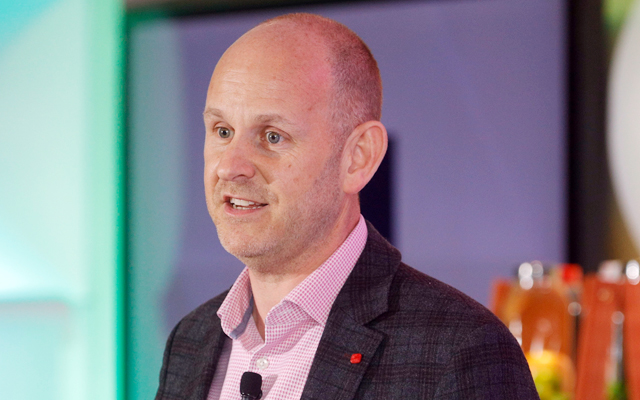
Travel will continue to be a necessary activity in meeting critical business needs, notes Carl Jones, vice president and head of travel, SAP Concur Asia Pacific and Greater China, in reference to the company’s latest research.

However, corporate travellers now have new concerns as they prepare for the resumption of travel assignments.

In this new episode of TTG Conversations: Five questions video series, Jones talks about how future corporate travel policies should look to answer new traveller concerns, the relevance of travel management companies as travellers seek greater control over their own trips, the rising importance of AI and data science in travel management, and more.

TTG Conversations: Five questions with Gregg Wafelbakker, Tourism New Zealand

0

Destination communications and market presence must not fade out even when tourism is restricted, opine Gregg Wafelbakker, general manager Asia with Tourism New Zealand.

In this new episode of TTG Conversations: Five questions video series, Wafelbakker shares his views on how destination marketing strategies and the role of a national tourism organisation have to evolve with present challenges.

Meliá Koh Samui welcomes new wellness manager

0

Kantima Chompoolad has been hired as Meliá Koh Samui’s wellness manager.

In her new role, Chompoolad oversees Meliá Koh Samui’s health and safety measures to combat Covid-19 as well as YHI Spa’s daily operations.

Under the Stay Safe With Meliá global programme, which involves the introduction of sweeping measures at Meliá Koh Samui in response to the pandemic, Chompoolad is tasked with verifying the resort’s programme compliance and taking care of guests’ emotional wellbeing.

Kantima Chompoolad, Wellness Manager, Meliá Koh Samui

In addition to developing YHI Spa’s menu, she will introduce wellbeing programmes that include spa therapies, healthy cuisine, as well as activities such as yoga, meditation, tai chi, and Muay Thai boxing.

With more than 15 years of hospitality wellness experience, the Thai national spent the last decade serving as the spa manager at Hansar Samui, also located on the Koh Samui Island.

New GM for Sheraton Grand Mirage Resort, Gold Coast

0

The Sheraton Grand Mirage Resort, Gold Coast has appointed Keith Massey as its general manager.

Boasting over 25 years’ experience in the hospitality industry, Massey was most recently the general manager of the JW Marriott Khao Lak Resort & Spa in Thailand. Prior to that, he has held various positions across the globe in Singapore, China, India, France, Hong Kong and Malaysia.

International SOS offers Covid-19 impact map to help businesses plan corporate travel

0
Careful considerations need to be made when it comes to business travel during the pandemic

International SOS has launched a new map representing the impact of Covid-19 on health, security and logistics for domestic operations, aimed at helping multinational organisations navigate the pandemic.

Careful considerations need to be made when it comes to business travel during the pandemic

This first of its kind map brings together intelligence and analysis of business-critical indicators impacted by Covid-19, and is publicly accessible at International SOS Risk Map. The Covid-19 Impact Map complements International SOS’ suite of risk analysis maps, including Security, Medical and Road Safety.

The scales in the map represent the following business operations impacts due to Covid-19:

The country-level insight are updated daily and take into account analysis the Covid case activity 14-day moving average; underlying health and security threat environment; domestic travel restrictions and international outbound travel restrictions; and mitigation measures in place and the efficacy of these.

Neil Nerwich, group medical director, assistance worldwide at International SOS commented: “While we all strive to return to full operations, access to up to date and accurate information is vital as the effects of Covid-19 continue to fluctuate. We know that this can potentially make the difference between returning to sustainable or to extremely limited operations.

“While we cannot fully pre-empt the course of the pandemic or its wide-ranging impacts, being agile enough to quickly implement strategies based on insights will help minimise business impact and, critically, protect the workforce.”

Mick Sharp, group director security services at International SOS added: “Along with COVID-19, organisations should also be mindful of layered risks. Natural disasters, political tensions, elections and civil unrest will continue, with some of these exacerbated as a result of the pandemic. A balanced approach is needed to assess overall risk and implement appropriate strategies to protect and strengthen business.”

CWT reveals new operating structure

0
Patrick Andersen is appointed President, RoomIt & Commercial, Niklas Andréen is appointed President, Traveler Experience & Customer, and Michelle McKinney Frymire is appointed President, Strategy & Transformation, Chief Financial Officer.

CWT, the business-to-business-for-employees (B2B4E) travel management platform, now has a new operating structure.

With immediate effect, Patrick Andersen is president, RoomIt & commercial; Niklas Andréen is president, traveller experience & customer, and Michelle McKinney Frymire is president, strategy & transformation, chief financial officer.

From left: Patrick Andersen, Niklas Andréen, and Michelle McKinney Frymire

The three newly-created global operating units these leaders will oversee comprise:

• RoomIt & commercial: global supplier management, RoomIt, marketing, product, partnerships, external communications, and solutions group;

• Traveller experience & customer: traveller experience, global sales, and customer engagement, including oversight of all industry verticals;

• Strategy & transformation: finance, technology, talent & performance, enterprise projects and strategy.

Along with these changes, Kelly Kuhn has decided to step back from her operating role of chief customer officer to assume the newly created role of Special Advisor, while remaining on the Executive Leadership Team. She has spent thirty-plus years in various positions at CWT.

Lauren Aste, chief legal officer; Catherine Maguire-Vielle, chief human resources officer; John Pelant, chief technology officer, and Chris Vukelich, strategic advisor, remain in their roles and on the Executive Leadership Team.

CWT has taken a number of additional steps to weather the challenges of the pandemic and position for the future. The company recently announced a successful capital raise of US$250 million, a strong support from its bondholders, lenders and shareholders.

Operating costs have been managed mainly through temporary furloughs and pay reductions, and more recently also through voluntary programs offered by the company.

How to design an engaging webinar and improve lead generation

0
Webinars
Webinars can be extremely effective tools, but one challenge is to hold the attention of the audience

In this time of lockdowns and work-from-home measures, the webinar has come into favour as a safe, simple and low-cost way to collect target audience data and generate leads.

But many are finding that the format’s popularity may be its undoing. Consumers are simply becoming annoyed by the clutter of invitations flooding their inboxes every day, and turned off by the numbing sameness of the webinars themselves.

The effects of webinar fatigue are precisely the results marketers don’t want: a growing drop-off rate, eroding customer satisfaction and poorer brand perception. But there are ways to fight it off.

Here are a few tips for creating webinars that actually deliver the goods.

1. Time for effect
In April to June 2020, I personally observed that the turnout rate for webinars held during office hours was commonly 70 per cent or more. Since July, with lockdown rules being relaxed and working from home becoming the new normal, the turnout rate has dropped to 30-40 per cent.

The lesson here is that timing is critical. Rather than slotting your webinar in during the audience’s office hours, consider whether they may be more receptive to an evening or weekend session.

2. Talk with, not to
Nobody likes being preached to, and an online audience is especially prone to just switch off the moment they feel you’ve droned on for too long. Treating your webinar as a dialogue, inviting interaction through Q&A sessions, live chat, polls, etc, will help keep your audience awake and interested.

3. Make data decisions
Webinars offer a fantastic scope for data collection. Every data point from every part of the journey can be tracked, helping you to follow up leads, reach more potential clients, accurately analyse customers, and generate useful remarketing data. It’s all yours – if you collect the right data.

So what should you collect? Start by developing a clear idea of what insights you wish to gain. For example, if your webinar’s ultimate objective is to attract potential clients and generate business, a simple question on the registration form about respondents’ key concerns might yield what you’re looking for. There’s no reason to limit yourself to the usual ‘name, company, email address’ questions.

4. Exploit the medium
A major cause of boring webinars is a failure of their creators to think of them as anything more than a sales pitch that happens to be online. In fact, the medium offers limitless scope to get imaginative and give the audience a compelling experience that will create real marketing value.

Think of it as a movie. Have you ever watched one so absorbing that you couldn’t tear yourself away from the screen? Why shouldn’t a webinar audience feel the same way? So let’s extend the cinematic theme into a framework for webinar success:

All of the above show how building a personal experience can pay off for marketers.

5. Make it interesting from the start
Now picture yourself receiving a drop-shop webinar invitation pack. Once you’ve registered, a photo-realistic avatar is custom-created for you and transported into the ‘movie scene’ that you can share on social media.

Then as you enter the webinar, you find yourself exploring a whole virtual world – it could be anything from a playground in the clouds to an indoor beach or haunted house – while you learn more about the content along the way.

6. Leverage technology to interact with your audience
In some webinars, you might be invited to take out your phone and co-create the launch mechanism through augmented reality. The one-hour session might end with a lucky draw to ensure you leave smiling.

For webinars and live events alike, planning and vision are the keys to success. Throw away the cookie-cutter and those stale sales pitches and get thinking about creating something that stands out, that uses the medium, and that’s honed in every respect to deliver the outcome you need.

Breaking into a digital stride

0

What was the experience like, moving from offline to online, and on such a large-scale?
The initial stages of converting ConnecTechAsia2020 to a pure-play virtual event was not easy as it took some time for the industry to accept the fact that physical interactions were not possible this year.

The MICE community – including exhibitors, sponsors, delegates, speakers and attendees alike – were initially hesitant because many were hopeful that the situation might improve in a few months’ time. They were also not familiar with virtual tradeshows and digital events, and it took time to convince them otherwise.

However, once everyone realised that the situation was here to stay, at least for the near future, and began embracing the shift to doing business exclusively online, we were then able to start making some headway in bringing everyone on board.

On picking a platform to build the ConnecTechAsia virtual edition, we want to deliver best in class, state-of-the-art, technology-driven content and value-added insights that our community would not get at a physical event. There is a vast range of platforms to choose from, and we had to be very picky, to make sure we can deliver an enhanced experience for our community. Once confirmed, we had to make sure we communicated its benefits and value-add to our audience clearly, on what the platform can do and how it works.

The show has over 200 exhibitors, how did you manage to land new ones in such times?
When we first started reaching out, our exhibitors, like others in the MICE community, were not sure of the possibilities and merits of a virtual trade show. However once they came around to doing business online, and realised that the platform we are using for ConnecTechAsia is one of the best out there, it helped boost their confidence. They became more receptive and made it possible for us to land new exhibitors and participants.

What are some of the ways that you are deploying to keep attendees engaged, as it is known our online attention spans are shorter?
Before the event, we must educate our community on the virtual platform, how it works, and how they can achieve a value-added event experience in their various capacities as speakers, exhibitors, delegates and visitors.

We have also made it a top priority to provide very tailored and relevant content at our conferences and seminars for our attendees. At the exhibition halls, we run a number of activites, and calendarise live exhibitor presentation across the event days. We have worked very closely with our exhibitors to make sure they have engaging content and activities which we then promote to our visitors before the event opening.

Through close collaboration, open communication and consistent walk-throughs, the community can anticipate, get creative and plan ahead to get the most out of the event with the limited time they have.

One important component of this year’s ConnecTechAsia is the availability of data for our community. For instance, if an attendee stops by a booth for just one second, sponsors can access and capture this data on the backend system at any point in time, and do the necessary follow-ups during or after the event. This will solve the challenge of shorter online attention span, and can also allow for a full networking experience that many believe can only be done at physical events.

How do you ensure ROI?
Any event, be it physical or virtual, needs a minimum critical mass of exhibitors and high-quality conference tracks to ensure a good turn out. Like the physical event, virtual event organisers, on top of picking the right technology to ensure an enhanced online experience, also need to focus on delivering this to achieve good ROI and value for all stakeholders.

Some may think going virtual is cheaper. To some extent, this may be true; some platforms are more affordable than others. Once that is done, the other costs are the same, if not higher.

The focus should be on promoting the event so the community can get a high ROI on their participation. And to do this, you need to at least maintain if not increase – the marketing and public relations, operating and staff budget. Overall, there is no silver bullet, and you need to invest the time, effort and dollars to build the strongest possible event.

There is agreement hybrid events are necessary, but for example, will ConnecTechAsia2020 return to being a physical event once possible?
Before the pandemic, my three-year plan included a virtual component for 2021, but we had to fast-track and go fully virtual in 2020 due to the circumstances. However, once the situation improves, the virtual component will be supportive of the overall value proposition of ConnecTechAsia rather than a decisive. It will be helpful to attendees who are unable to travel and enable exhibitors to reach a much wider audience.

But ultimately, it will not replace the physical event, as the community still prefers a platform where they can meet, shake hands, exchange name cards and drive long-lasting relationships.

What is your take on face-to-face meetings?
When people say going fully virtual is the ‘new normal’, I tend to disagree – I think it’s abnormal.

As human beings, we definitely prefer face-to-face interaction. It’s a significant social factor in our way of life and is not going to change because of the pandemic. While virtual tradeshows are important in 2020, the physical component will return eventually, because that is just how humans work.

Any words of advice for the industry?
Depending on the size of the event or where the company is in the industry, try to invest in the future. Some companies may be in survival mode, and would cut costs to try and weather the storm. For those who can invest, they should do so now because those who do are the ones who will emerge stronger on the other side of this. Get excited about the opportunity in this new environment, and embrace the possibilities of going virtual as much as possible.

Hybrid and virtual corporate events gain more ground in Malaysia

0
Digital and virtual learning programmes were already on the rise, but has become a staple now

Hybrid and virtual teambuilding events are becoming more widely accepted with event organisers in Malaysia, as the country works its way towards normalcy.

Mark Stanley, a training consultant at Asia Ability based in Kuala Lumpur, said the company has seen a growing number of enquiries for hybrid events from corporate companies and event management companies from Malaysia.

Digital and virtual learning programmes were already on the rise, but has become a staple now

In August alone, Asia Ability’s office in Kuala Lumpur handled three hybrid teambuilding events, which had both an onsite teambuilding component with social distancing, and a remote component.

He said the traditional teambuilding format, with participants gathered at a venue and working on tasks together has some event organisers wondering about the feasibility of having such programmes in the future, especially when the group sizes are big. Previously, onsite teambuilding events average between 200 to 800 participants, but group sizes now typically range between 20 to 30.

Stanley also pointed out that it isn’t easy to ensure large groups adhere to the Standard Operating Procedures for the good of everyone as well.

Hence, he is all for virtual and hybrid solutions, pointing out that going online brings with it substantial cost savings in terms of rental venue, transportation of delegates and accommodation.

Dee Dee Quah, director, Medical Conference Partners, noted that medical conferences she has handled this year have also taken on a virtual format. Similarly, teambuilding also has gone virtual, but the success of this she warned, was dependent on having an energetic facilitator who is able to hype up participants.

Dee also opined that for the next year, conferences, teambuilding and meetings will most likely take on a hybrid format.

First Mondrian hotel rises in Asia-Pacific

0
Cleo

Accor has opened the Mondrian Seoul Itaewon in South Korea, the first Mondrian in Asia Pacific, and fifth in the Modrian portfolio after Los Angeles, New York, South Beach and Doha.

The Mondrian Seoul Itaewon boasts 296 guestrooms, as well as event spaces such as the 867m2 ballroom with an integrated LED screen and five meeting rooms.

There is also an outdoor pool with a viewing deck that overlooks the city, the Cleo restaurant – the brand’s blend of Miami vibes and Mediterranean cuisine – and several watering holes ranging from the rooftop bar to the Rumpus Room.

More Mondrian hotels are slated to open in Bordeaux and Cannes next year, and the brand expects to grow its portfolio to approximately 15 properties by 2022.

Reviews

Hyatt Regency Kuala Lumpur at KL Midtown

A polished urban retreat designed for business travellers, Hyatt Regency Kuala Lumpur at KL Midtown combines thoughtful design, seamless service, and exceptional facilities.

A versatile powerhouse

Arena @ Expo, a multipurpose concert hall at the Singapore Expo is a flexible space for high octane concerts and lifestyle events.

Amari Bangkok

The five-star property excels in backing its expansive facilities with seamless service and personalised attention, setting the benchmark for luxury in Bangkok.