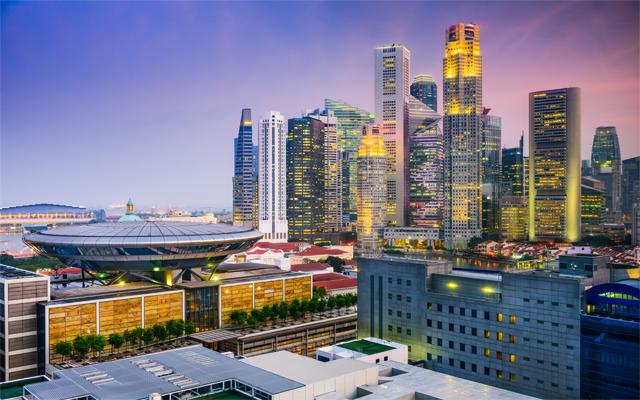
The World Economic Forum (WEF) has postponed its Special Annual Meeting in Singapore from May to August 2021, as the world continues to struggle with Covid-19 containment.
In a statement released on February 3, WEF said: “Although the WEF and Government of Singapore remain confident of the measures in place to ensure a safe and effective meeting, and local transmission of Covid-19 in Singapore remains at negligible levels, the change to the meeting’s timing reflects the international challenges in containing the pandemic.”
WEF 2021 will now be held in August 2021
It expressed challenges in planning for and delivering an in-person event against a backdrop of continued global travel restrictions and differing quarantine requirements.
Earlier in January, WEF had announced a postponement of the high-profile meeting of political, business and academic leaders from May 13-16 to May 25-28.
Singapore’s continued agility in adapting to contingencies and commitment to reimagining business events with innovation and technology came to the fore with its successful hosting of PCMA Convening Leaders 2021.
The conference was held for the first time outside North America in its 64-year history at Sands Expo and Convention Centre’s hybrid event broadcast studio. This remains the largest physical turnout of close to 300 delegates since MICE pilot events commenced last October.
A trusted destination
The state-of-the-art hybrid event broadcast studio offers broadcast-quality live-streaming capabilities and hologram functionalities (Credit: PCMA/CPJ)
Singapore’s position as a key MICE hub and its pivot towards a safe resumption of business events were key reasons why the city state was selected as the host city for the conference.
Sherrif Karamat, President and CEO, PCMA, emphasised how Singapore was a natural choice; as the country has stayed ahead of the omnichannel events game by birthing innovative solutions such as the Sands Expo and Convention Centre hybrid event broadcast studio to ensure better engagements with a global audience.
With the association’s background in delivering digital experiences, Karamat believes such technologically advanced studios with mixed reality capabilities are necessary moving forward because they offer flexible participation and will support the new format of meetings for a long time to come.
“Singapore has capitalised on its stellar track record in staging prominent world-class events in helping us amass and work with speakers from a regional and global level that will garner international attention and attendance.
The protocols and safety protections that Singapore has implemented – not just to contain the virus – are industry and world-leading. This has enabled PCMA and its members to meet in a very safe environment in Singapore,” noted Karamat.
Unlocking new possibilities through innovation
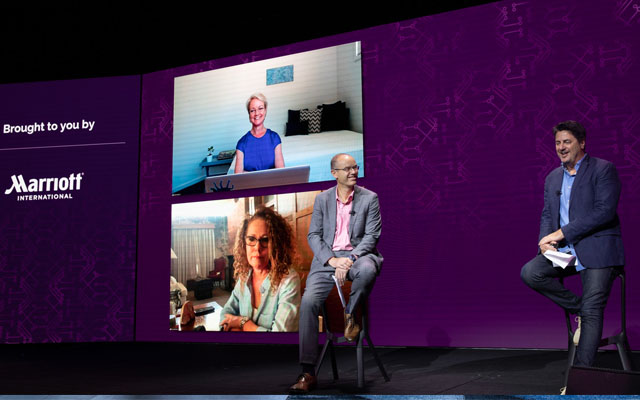
Koh envisioning the virtual conference as one of hope, inspiration, community and connection at his welcome address (Credit: PCMA/GPJ)
Attending the hybrid conference as a panellist, Prof Chan Heng Chee, Ambassador-at-large and Chair, Lee Kuan Yew Centre of Innovative Cities, also noted how virtual experiences can facilitate international trade activities, as businesses progress toward a new normal at the age of travel restrictions.
“Digitalisation brings people together, it moves beyond boundaries, and it even moves beyond the state.
Using technology to compensate for that inability to travel, I’ve noticed a lot of (hybrid) events can bring in the rock stars of that particular field, when it is normally very hard to get so many to travel to one place,” said Prof Chan.
Echoing a similar sentiment, Dr Edward Koh, Executive Director, Conventions, Meetings & Incentive Travel, STB, noted that the advent of hybrid events aid in better catering to a larger global audience, while satisfying the consumers’ desire for physical events.
In the face of a changed meetings landscape, Dr Koh added how event organisers have aligned and familiarised themselves with the latest operational regulations, as well as augmented technology (such as touchless solutions and digital implementations) to complement work processes, which “augurs well for the future”.
Destination safety
Onsite Antigen Rapid Test (ART) make for the safe resumption of business events
Singapore’s progress towards the resumption of economic activities comes with clear measures that prioritise public health and safety.
As part of the Event Industry Resilience Roadmap (IRR) which serves to establish a national standard for the implementation of STB’s Safe Business Events (SBE) framework, strict safety management measures were put in place by the organisers, venues and suppliers to ensure utmost safety without compromising too much on the event experience.
At PCMA Convening Leaders 2021, SMMs include pre-event communication, pre-event Antigen Rapid Tests, issuance of TraceTogether tokens to foreign delegates for contact tracing, and a strict cohorting system to minimise inter-mingling between delegates.
Chan said: “I never for a moment thought it was unsafe to come to an event in person, where you would have about 300 people, because of the trust I have as a Singaporean in our competent government and agencies. I was asked to take an Antigen Rapid Test, and it was reassuring to know that every participant in person was taking it.”
Delegate Sophie Mokthari, head of travel, Riot Games Singapore, said the thorough pre-event communications, Antigen Rapid Tests, social distancing and event care packs all made her feel safe about physically attending the conference.
“With so much thought being put into a single event, I hope that the industry can build on this model (for recovery). I look forward to going back to having (in-person) conferences and events on a regular basis,” Mokthari added.
As Singapore looks to redefining business events in a post-pandemic world, Koh concluded: “Our ability to assure delegates, event organisers, and others on what we can do for them in terms of safety, creative experiences and innovative platforms are offerings that have attracted them our way. This will be illustrative of what we can do for other events going forward.”
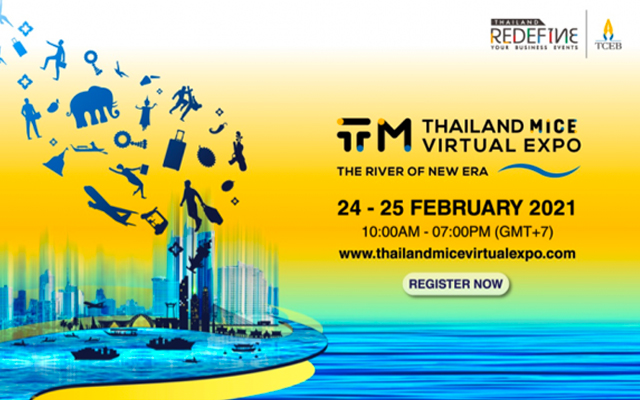
TCEB brings forth the inaugural Thailand MICE Virtual Expo on February 24 to 25, 2021, matching 30 local exhibitors with international MICE industry buyers.
With a pulse on delivering business events for the new norm, the event aims to showcase Thailand’s readiness in progressing towards face-to-face meetings; as well as redefining business events when international travel resumes.
Webinars and panel discussions are lined up to provide delegates with insights into a variety of industries – including – business events, and digital technology; food for the future; circular economy; health and wellness; logistics and hospitality.
The online workshops will showcase extraordinary experiences revolving the Thai culture. Bon appetite with world-renowned Thai foods and desserts, work up a sweat with Thai boxing, rejuvenate with traditional massages, freshen minds with Chiang Mai’s floral art, and exercise one’s imagination with Thai puppetry. To sweeten the experience, there will be great prizes up for grabs.
Seize this opportunity to learn the new face of Thailand as a business events destination. For more information and registration, visit www.thailandmicevirtualexpo.com.
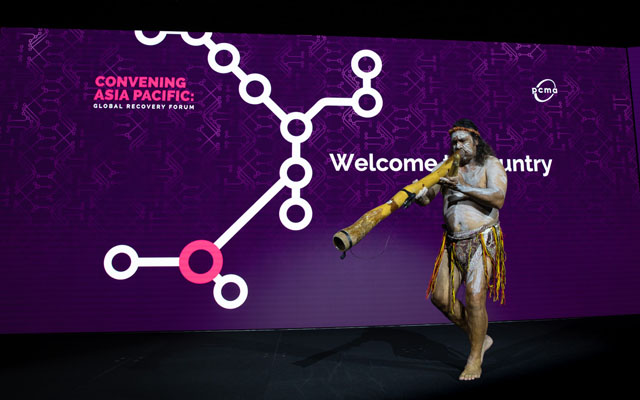
PCMA Convening Asia Pacific: Global Recovery Forum
1 of 5
Event brief
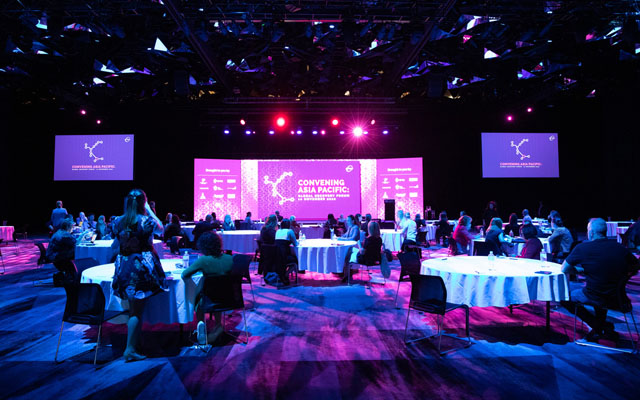
Convening Asia Pacific: Global Recovery Forum, was PCMA’s first hybrid event in Asia Pacific, that was broadcasted from ICC Sydney.
The hybrid model was decided upon as a result of the recovery strides the region was making including social distancing guidelines, alongside strict health and safety policies. It was also seen as a beacon of possibility on how business events could be safely hosted in a face-to-face environment.
The forum was designed based on insights gleaned through months of research, interviews and consultations carried out through 2020. The information collected revealed what skills and information the events community needed to survive and thrive in a Covid-19 and post-Covid-19 world.
From this, an intensive four-hour programme was co-created by event planners and the industry, and centred on change, challenge and transformation through a pandemic.
Event highlights
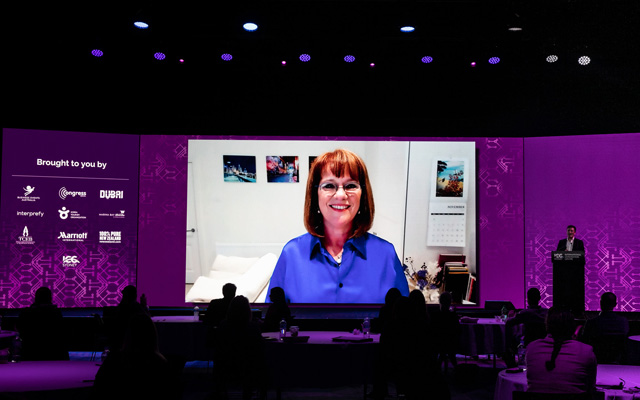
Brand experience experts, event organisers, marketers, technology specialists and creators were either in Sydney or beamed in from around the world, including Singapore, Tokyo, and New York. They shared practical advice, strategies and results already achieved in a Covid-19 world to inspire and motivate the PCMA community to adapt to the new normal.
The face-to-face event upheld the Covid-19 restrictions on venue capacity such as having 4m2 per person, QR Code registrations upon entry into ICC Sydney, heat-detecting cameras and social distanced tables.
Held during the physical lunch and networking breaks, digital attendees had the chance to partake in six interactive deep-dive sessions with key industry leaders via ‘Conversations with the Experts’. These conversations were designed to provide practical and key insights into managing and innovating business events in the Covid-19 era.
PCMA also engaged Interprefy to deliver live and simultaneous translations of the presentations from English into Japanese, Korean and Mandarin, for the entirety of the event.
Digital audiences were given the chance to provide instant feedback via polls and chat directly with everyone online.
Challenges
PCMA’s team, already dispersed throughout the globe and unable to travel, meant engaging third party organisers and relying on partners to assist in the delivery of the live event. A strict lockdown regulation meant even managing director APAC, Karen Bolinger, was unable to attend the event in person.
But creating content to engage both a virtual and live audience comes with its own set of opportunities. Balancing the needs of the in-person attendee, such as breaks, F&B and networking all while keeping the virtual audience tuned in was nothing short of a team effort. Leaning on the skills of PCMA’s education experts to curate content was top priority.
Meanwhile, understanding the effect of “screen fatigue” and how to combat it took the combined knowledge and talent of everyone working on the event. There was also a steep learning curve regarding the platform and technology used, how to brief suppliers, engage partners and offer value to all who participated.
While PCMA has offered hybrid learning during larger conferences for many years, it was traditionally a small piece of the programming. This was the first time an entire event’s success rested on the ability to engage two different audiences during the same four-hour period.
However, building a virtual and live schedule side by side was a helpful visual in understanding where gaps may lie for each group.
The content streams were based on specific insights from PCMA research. As these were ‘of the moment insights’ such as how to develop new business models for events, learn to increase your digital skillset, or understanding how to drive value, the team needed to get creative and look for companies who had already adapted and were able and willing to discuss their learnings with an audience.
Although PCMA had produced smaller in-person events previously within the region, Convening Asia Pacific was a new event and it was critical to its success that the team create and cement the brand with the intended audience, as well as sell tickets.
Event Convening Asia Pacific: Global Recovery Forum Organiser PCMA Venue ICC Sydney Date 10 November 2020 Attendance 100 (physical), 300 (virtual)
The organiser of IT&CM China and CTW China, TTG Asia Media, has affirmed its partnership with Dragon Trail Interactive (DTI) as both parties prepare to stage the upcoming 2021 virtual edition.
Slated to take place from June 22-24, 2021, the virtual event will be powered by DTI’s The Next Travel Market (TNTM) platform.
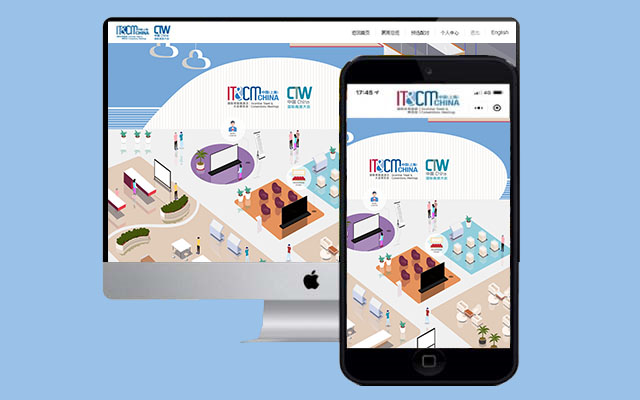
This year’s show will be built in a 2.5D virtual environment
Delegates visiting the exhibition section will be able to meet suppliers from across China and the world in the show’s first-ever 2.5D virtual environment. The English-Mandarin interface can be accessed via a PC, mobile or a WeChat mini programme, providing a single-entry access for both international and China-based delegates.
Delegates will be able to download sales resources, view product presentations, swap e-business cards, leave messages, and schedule an appointment.
Video calls and chat rooms with two-way automated translation will also be on hand to facilitate networking sessions. Each exhibitor or buyer will receive up to 24 x 20-min pre-scheduled appointment slots over three days. These appointments can be supplemented with unlimited walk-in meetings, where a buyer or seller can request for a “walk-in” without a prior appointment.
On the conference end, there will be MICE and Corporate Travel knowledge sessions helmed by industry partners, while destinations and corporate brands will also be giving updates and developments under the Brand Showcase section.
The Buyer Procurement Showcase segment also returns, which will see business, association and corporate buyers sharing their procurement requirements with relevant and interested destination and supplier leads.
All content will be made available at dedicated times from June 22, with on-demand access for all delegates until the end of the event.
After a hard day’s work, delegates will be then able to wind down by participating in interactive games, with prizes to be won. Buyer-only rewards will also be available, where buyers can stand to earn cash incentives or win prizes by completing event missions.
Mandarin Oriental Hotel Group has launched a new global initiative to help corporate and meeting travellers maintain a healthy lifestyle and mindful balance while on the road.
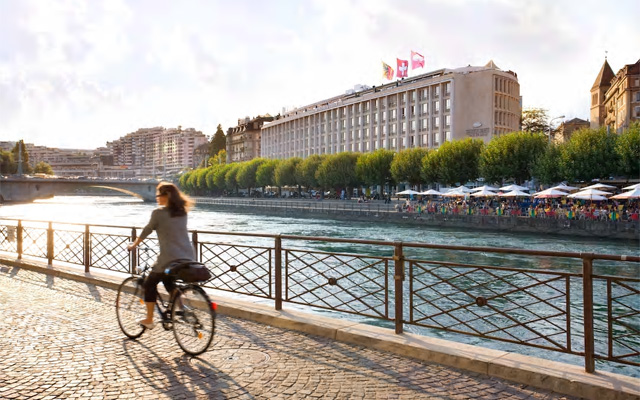
Mandarin Oriental, Geneva
The initiative is exclusively designed for the Group’s corporate partners, providing guests with access to a variety of wellness and mindfulness techniques, platforms and experiences which give benefit both when travelling and when working from home.
Wellness on the Road benefits include access to:
Wellbeing, movement, rest, and nutrition videos, tips and reading resources
A complimentary wellness consultation either in person or online
Complementary elemental oils and tipsheet when staying in-house
A minimum saving of 10 per cent on spa treatments
Digital or print pressure point tip sheet
60-day trial of Blinkist Premium app (read or listen to key ideas from bestselling non-fiction in 15 minutes)
60-day trial of the Grokker Wellness & Fitness app
“Wellness on the Road is a natural evolution of Mandarin Oriental’s health and safety assurances. The Group’s ‘We Care’ programme provides specific reassurance for all guests of our attention to the importance of their health and safety. This programme goes further by providing additional benefits for corporate travellers that can be accessed while staying with us, while travelling or while at home,” said Jill Kluge, Mandarin Oriental Hotel Group’s chief marketing officer.
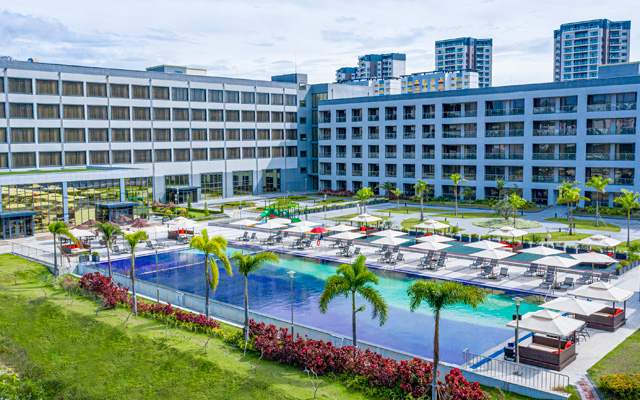
Hilton has opened the 308-room Hilton Clark Sun Valley, located within the Clark Freeport Zone, a 12-minute drive from Clark International Airport.
The new-build features over 1,800m2 of meetings space, comprising a Grand Ballroom and seven meeting rooms equipped with the necessary technical facilities. The pillarless Grand Ballroom is its largest space, and at 1,010m2, can accommodate up to 1,200 guests in theatre-style seating.
Private gatherings can also be held in the hotel’s Chinese restaurant XI, which has three private dining rooms that can hold up to 30. Other F&B options include all-day dining Olive; and Treat, a cosy space that evolves from a coffee stop in the day to a lounge area at night.
After a day of meetings, delegates will be able to relax at the fitness centre, swim in the outdoor pool, or walk and jog along the walking path. A wellness centre will also open soon.
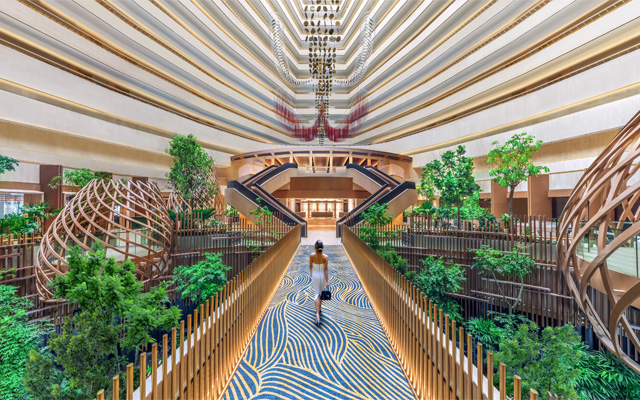
The country’s first ‘Garden-in-a-Hotel’, Parkroyal Collection Marina Bay, Singapore, boasts of extensive lush greenery which functions as natural air purifiers and sinks for carbon dioxide
Pan Pacific Hotels Group, has launched an eco-centric meeting package entitled Meet Lite, Feels Right.
Available at PARKROYAL COLLECTION Pickering and PARKROYAL COLLECTION Marina Bay, this package is available for bookings between now and December 31, 2021, and is valid for meetings from now until March 31, 2022.
The recently-renovated PARKROYAL COLLECTION Marina Bay is home to more than 2,400 trees, shrubs and plants
Meet Lite, Feels Right offers meetings with eco-friendly practices such as eliminating single-use plastics by serving filtered water in carafes, offering a flipchart made from recycled paper, and introducing stationary ‘stations’ where participants can help themselves to bamboo pens and recycled paper pads on a need basis.
The eco-friendliness also extends to the food, where morning and afternoon tea breaks will feature Rainforest Alliance-certified coffee beans and ingredients from hotel’s urban farm; while the farm-to-table working lunch will feature locally-sourced ingredients and plant-based meat alternatives.
Packages cost S$120++ (US$90) per delegate, and offerings differ slightly at each property.
Additionally, participants at PARKROYAL COLLECTION Pickering have the option of signing up for an architecture tour to learn more about the hotel’s sustainability initiatives or joining an early-morning Pilates class, while those at PARKROYAL COLLECTION Marina Bay will be able to try out the hotel’s pedal-powered juice blender bikes or participate in a Sunrise or Sunset Yoga session.
Building a network of suppliers and contacts is paramount in the MICE industry. But as members of the business events community are unable to meet face-to-face in this current climate, virtual networking has taken its place.
Here are some tips for event planners to help get the conversations flowing.
• First, select the technology to engage virtual attendees. For better networking, you want tools to enable one-on-one meeting scheduling, private video calls and chat within sessions.
• Also check to ensure breakout rooms are part of the platform. Then, curate small breakouts based on attendee interests. Ask experts to moderate sessions and encourage participation. Attendees can engage in real-time through two-way video calls and public and private chat.
• Provide a networking area, where attendees can jump in and have conversations with each other between sessions. Options abound, such as networking lounges, group chats, virtual coffee bars, mobile event apps, video meet-ups and more.
• For smaller groups, create brief interactive segments. Choose from team trivia challenges, meet-the-expert opportunities, moderated chat channels, happy hours, mini-yoga sessions, live deejays, standup comedians, gamification, themed parties and more.
• For experiential segments like cooking classes, consider sending kits of supplies before your event. Use online polls to determine attendee preferences and make sure the items you send are ones they will enjoy.
• Track attendee engagement. Capture metrics like page views, digital networking, session selection, dwell time, question submissions, polls, downloads, social media likes, and more.
• Then, connect like-minded participants. Modern digital event platforms use artificial intelligence to match delegates with experts and peers who share their interests. The technology also recommends sessions, exhibitors and networking opportunities based on an attendee’s preferences and event goals to facilitate meaningful interactions.
• Make it easy for attendees to connect. For example, create a searchable database with attendee profiles that are optional to fill out. You’ll help attendees connect with like-minded peers.
• Finally, don’t limit engagement to the day of your event. Create small networking groups beforehand that align with attendee preferences. On the day of your event, group members can convene in a networking session. Post-event, continue the conversation, sharing customised content with attendees.
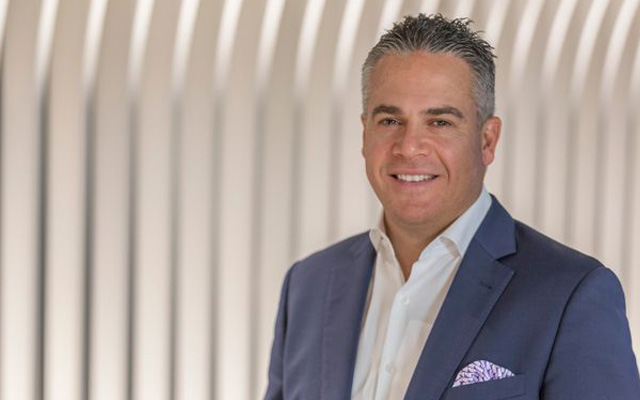
Wayne Taranto has been appointed as the director of operations for Ovolo Group in Australia.
Based in Sydney, Taranto will be responsible for all operations across the group’s Australian hotel portfolio, including the Ovolo South Yarra slated to open this year.
With 26 years’ hospitality experience, Taranto honed his skills at Event Hospitality & Entertainment managing various Rydges Hotels & Resorts’ on the east coast of Australia. He has also served as food and beverage director for the Australian Accor Hotels network, as well as general manager of the Sofitel Sydney Wentworth.
In recent years, Wayne was responsible for establishing Crown Group’s hotel division, Skye Hotel & Suites; and managing d’Albora, Australia’s largest marina group, as CEO.
The newly-opened Ritz-Carlton, Bangkok anchors the One Bangkok development with cosmopolitan elegance. Featuring the city's largest ballroom and a spectacular new penthouse suite, it delivers exceptional hardware and deeply authentic, soulful service for business and leisure travellers alike
Behind the imposing, Brutalist concrete that defines Zurich’s Oerlikon district lies a surprising secret. While its exterior honours the neighbourhood’s industrial roots, stepping inside Mama Shelter reveals a vibrant, neon-soaked world that is a far cry from its rigid shell
A polished urban retreat designed for business travellers, Hyatt Regency Kuala Lumpur at KL Midtown combines thoughtful design, seamless service, and exceptional facilities.