Asia/Singapore Tuesday, 14th April 2026
Page 512

Hard Rock Hotel Desaru Coast gets new GM

0

Hard Rock International has appointed Murray L. Aitken as the general manager of Hard Rock Hotel Desaru Coast, situated in the Malaysian state of Johor.

Boasting 30 years of hospitality experience, Aitken will lead the team in driving strategies for continued growth and implementing programmes that prioritise guests’ health and safety during their stay.

In his previous stint with Six Senses Hotels Resorts Spas, Aitken played an integral role in opening the company’s first-ever luxury urban properties in Singapore’s Chinatown.

Aitken’s portfolio also includes running his own hospitality consulting and advisory company, as well as helming leadership roles with various luxury hotel groups around the world, including Raffles in South-east Asia, Rosewood in Indonesia, and several properties across South Africa.

GHM welcomes new VP for operations

0

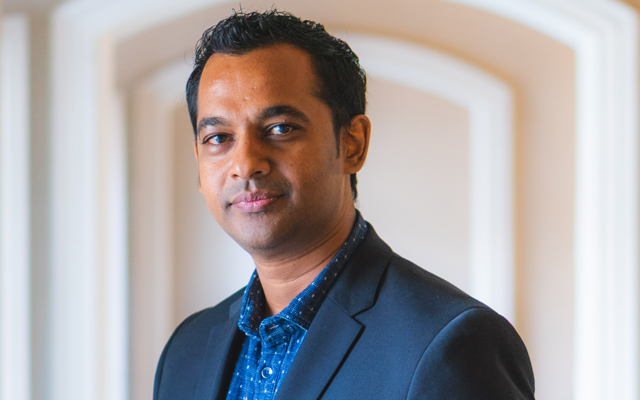
General Hotel Management (GHM) has moved Ilkin Ilyaszade into place as vice president of operations and pre-opening services.

He will oversee the development of up-and-coming properties such as The Chedi Aquarius Koh Chang, Thailand and The Chedi Khorfakkan, UAE.

An Azerbaijani national, Ilyaszade is a seasoned Asia hand, having opened 10 hotels and resorts across Asia and the Middle East for Banyan Tree and Pan Pacific over the past 15 years.

As resort manager, he led the Four Seasons Resort at Jimbaran Bay in Bali – the brand’s flagship and largest operation. Prior to that, he spent 11 years with Banyan Tree, in the Maldives, Thailand, Sri Lanka and Singapore.

FCM beefs up duty of care services by adding Digital Health Credential Programme

0

FCM Travel Solutions has tied up with two partners to offer an end-to-end integrated offering to corporate travellers on the move in this current pandemic.

The TMC has partnered with Fullerton Health to enable corporate travellers to access competitive PCR/Serology test fees, and embarked on a Digital Health Credential programme initiative with Affinidi, a Temasek-backed technology company.

FCM aims to help business travellers get back on the road in a safe and seamless manner with the help of technology

Through the partnership with Fullerton Health, FCM customers will get access to affordable rates for PCR and serology tests that are one of the lowest in the market.

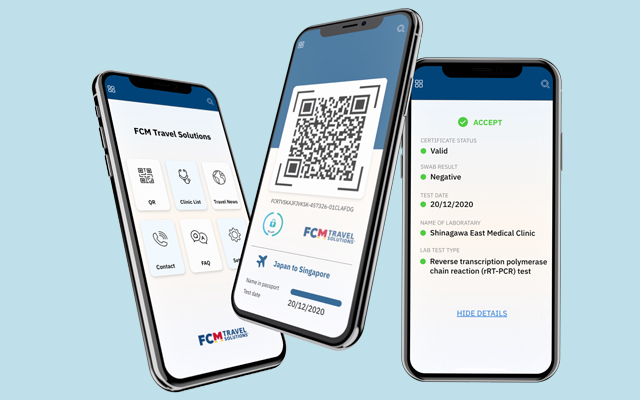
Meanwhile, Affinidi has helped to develop a FCM Travel Portal that will sport a Digital Health Wallet. The wallet is also designed to function as a consolidated traveller profile system which allows FCM customers to display their issued digital health certificates and vaccination results, potentially allowing for faster immigration clearance. Travellers will also have access to a list of accredited healthcare institutions that are able to issue such digital health certificates.

Bertrand Saillet, managing director for FCM Travel Solutions in Asia, said that the collaboration will help its customers use FCM as “a one-stop-shop to not only make flight and accommodation bookings for their trips but also PCR and serology tests”.

Walter Lim, deputy managing director (Singapore), Fullerton Health, added that the company hopes to “play its part at supporting the reopening of economy and at the same time facilitating safe travel”. Moreover, Fullerton has a presence in nine Asia-Pacific markets, making it easier for business travellers to obtain Covid-19 testing.

With specific Covid vaccines recently approved by various countries, travellers who choose to be vaccinated will also be able to include their vaccine status in the portal. The Travel Portal is expected to be launched in January 2021.

New Zealand’s MEETINGS 2021 confirms date

0
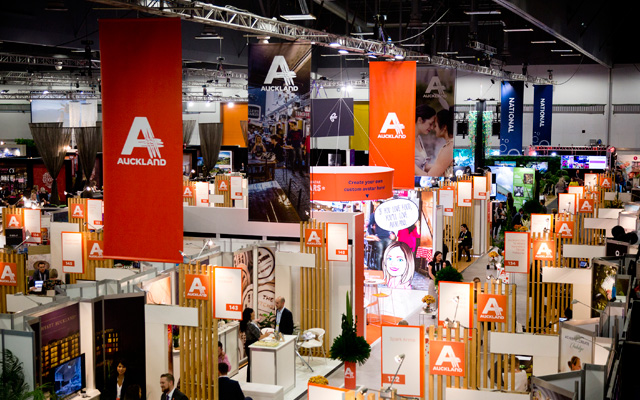
The buzzing showfloor at the 2019 edition of MEETINGS

MEETINGS 2021 has been confirmed for June 2 and 3 in Auckland, with its Hosted Buyer Programme launching in early 2021.

Organised by Business Events Industry Aotearoa (BEIA), the tradeshow will be held at ASB Showgrounds Auckland.

The showfloor at the 2019 edition of MEETINGS

For the first time this year, all MEETINGS’ Hosted Buyers will have the opportunity to experience more of New Zealand with eight regions on offer for MEETINGS’ pre- and post-familiarisation programme.

“We will have as many buyers as possible in person, but we will also have opportunity for the rest of the world to connect with exhibitors in a digital format. Business events are years in the planning, so we must continue to keep our future visitors engaged and focused on bringing their event to New Zealand,” BEIA chief executive, Lisa Hopkins, said in a statement.

Hopkins added that MEETINGS 2021 will be critical for reigniting the industry and updating buyers on the latest venues and unique experiences across the country.

“Our industry has continued to stage a large number of successful business events in New Zealand since restrictions lifted, bringing a huge level of confidence back into the industry. Now we are setting our sights on the return of international business events to destinations around the country, with the positive economic and social benefits they bring,” Hopkins stated.

The following year, in 2022, MEETINGS will be hosted in Ōtautahi Christchurch at the city’s new convention centre, Te Pae Christchurch.

Singapore, Malaysia abort High Speed Rail project

0
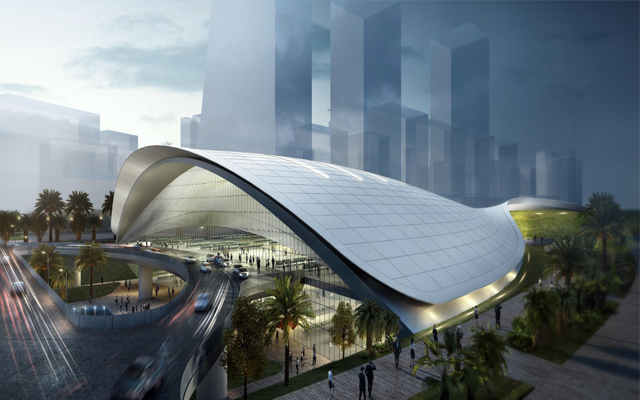
Malaysia to compensate Singapore for costs incurred in the Singapore-Kuala Lumpur rail link project following its termination

The High Speed Rail (HSR) project between Singapore and Malaysia has been terminated, after both countries failed to reach an agreement on changes sought by Malaysia due to the economic fallout from the pandemic.

The announcement was made in a joint statement by the prime ministers of both countries on Friday (January 1), following their meeting via videoconference on December 2, 2020 to review the status of the HSR project, including changes proposed by Malaysia.

Malaysia to compensate Singapore for costs incurred in the Singapore-Kuala Lumpur rail link project following its termination

“In light of the impact of Covid-19 pandemic on the Malaysian economy, the government of Malaysia had proposed several changes to the HSR project,” read the joint statement by the leaders.

“Both governments had conducted several discussions with regard to these changes and had not been able to reach an agreement.”

Following the termination, Malaysia has to compensate Singapore for costs already incurred, said Singapore’s Transport Ministry.

Singapore and Malaysia had signed the Kuala Lumpur-Singapore HSR Bilateral Agreement in 2016. In September 2018, both parties agreed to postpone the construction of the HSR until May 2019.

In June 2020, Singapore’s then-transport minister, Khaw Boon Wan, announced that Malaysia had requested for another seven-month extension to allow both countries to discuss Malaysia’s proposed changes to the project. Both parties had also agreed then to a final extension of the suspension period to December 31.

The proposed rail link would have cut travel time between Singapore and Kuala Lumpur to 90 minutes, as compared to over four hours by car.

Diversification, digitisation and duty of care to drive APAC’s business travel recovery

0
technology will play a key role in the recovery and preparation for the new world of business travel

A revival in Asia-Pacific’s (APAC) business travel will vary across sectors and will accelerate revenue diversification and digitisation in the industry, according to executives from business travel agencies.

The perspectives were shared in Amadeus’ new report “Reboot. Recharge. Rethink Business Travel”, that explores the factors and trends influencing the timeline for global business travel recovery. The report’s insights were based on interviews conducted with almost 100 executives from business travel agencies across the world, on their priorities, needs and businesses strategies in 2021 and beyond.

Technology will play a key role in the recovery and preparation for the new world of business travel

In Asia-Pacific, the majority of executives were optimistic that business travel would resume first (38%) or at the same pace as leisure travel (47%) as more travel bubble arrangements are established between key markets such as Singapore and Hong Kong. Business travel is expected to vary across sectors, with 70% of APAC executives agreeing that marine and energy companies would resume travel first.

When asked about what the future of business travel would look like, there was consensus among APAC executives on the need for beyond-air content. To manage safety regulations and changing flight availability, 18% of executives said hotels content would increase in demand, alongside insurance (15%), new ancillary services (9%), and car rentals (9%).

But the “most voted” business travel evolution in APAC was the shift from unmanaged to managed travel. With travel restrictions and border closures changing frequently across markets, most executives believed that there would be strong business need for real-time information on quarantine requirements, schedule changes and route management tied to the establishment of travel bubbles.

When asked about what factors would help to drive business travel demand, many executives felt the factors were beyond the control of TMCs, such as international policies and travel regulations. More than one third (39%) said the removal of mandatory quarantine periods would be critical for a significant business travel rebound, coupled with the widespread availability of an effective vaccine.

Whereas travel budget was undoubtedly a key driver for business travel in the pre-Covid-19, APAC business travel executives believe price will be less important, with duty of care, risk management and traveller safety taking priority. Companies in APAC are expected to prefer “larger travel brands” that have robust and regulated safety standards – a trend observed across the whole travel industry. Interestingly, only 24% believe travel policies will be a key driver, compared to 48% on global average.

The report also revealed that business travel agencies’ most imminent challenge is survival. Given low business demand, many face significant cash flow concerns and a need to tightly manage costs. The main recovery strategy for executives in the APAC region was clear: 64% said cost optimisation would be their top priority in the mid-term, with a focus on operational optimisation using automation and digitization. This was closely followed by building critical workforce capabilities to manage new technology and deliver better journeys.

For more global and regional insights, click here.

The future that is hybrid events

0

How will this trial period of hybrid events lead to further transformation of the event industry and the way it approaches digital transformation?
These trial hybrid events are giving us a lot of data points on what works, and what doesn’t work. For example, if we look at the latest hybrid event trial, TravelRevive, there were a lot of learning points with regards to what’s working.

Over a period of two days, there were around 1,000 people who attended the event in staggered batches. It showed how cohorting of people – how to risk-manage large groups of people coming in – could be successfully managed with good planning, relevant safety measures and digital tools.

At the same time, we’ve been seeing what the challenges are. How do you draw leads on the tradeshow floor; how do you justify that to sponsors?

These, at the moment, are still unsolved problems, but hybrid events are giving us “practical dry runs” on these aspects. Hybrid is the future, and the current trials are giving us the opportunity to refine the direction the industry goes.

On the topic of digital transformation, the whole industry is being forced to undergo the path of digital transformation. “Digital transformation” means different things for different stakeholders.

Let’s look at venues to start. Venues are being forced to equip themselves today with the relevant hardware, connectivity and even software to enable hybrid events. We see what Marina Bay Sands is doing with things like holographic telepresence.

Today, it is possible to hold a meeting or an event with someone joining remotely with a hologram – and the organiser doesn’t have to fork out the cost of the hardware and equipment and even the software, as that is provided out-of-the-box of the organiser.

On that note, organisers are being forced to undergo digital transformation, to better understand: Who is where, when? Who is meeting who?

This has been a question the industry has been debating for a long time. At a physical event, how do we track who is meeting with who, what is the crowd at a certain booth, or at a specific session? In the past, this was done in a somewhat clunky manner, but now, safety measures have forced organisers to adopt contact tracing solutions. Today, it’s primordial to generate reports on who met with who. The spinoff of that is that it gives organisers the data that they’ve always been talking about, but before didn’t have the hardware or software to acquire.

How does the hybrid model break new ground, and what value does the hybrid model add to the events landscape?
To answer this question, it is necessary to understand hybrid events.

Hybrid combines both physical and digital. Digital components of events are not something new; it’s been happening for a long while, with many events – especially tech events, like Google IO – livestreaming their main sessions for many years now. But, the experience has never been great on the digital side of things.

Now, the industry has been forced to make the experience of both the physical and digital sides good. This, in return, opens up new opportunities. Now, conferences with hundreds of physical attendees can draw in online audiences of thousands or even tens of thousands. Hybrid events break new boundaries by reaching out to new audiences, some which the event may not have been previously contemplating.

How can hybrid events distinguish themselves from purely digital or purely physical events?
It is important to note that hybrid events are harder to organise. It’s a new model. You can’t just focus on one component; it’s more like running two events concurrently. You need two teams to run a hybrid event on both ends. Its initial costs rises, you need more skillsets, and the complexity increases.

But hybrid events distinguish themselves from purely physical or digital events by bringing the best of both worlds. We saw that with TravelRevive: It was a set of different events happening on the digital and physical stage. Physical attendees could network and mingle with their industry partners and colleagues; the face-to-face interaction that events are all about.

At the same time, the digital side had a reach of even more people, who were able to personalise their experience – joining specific sessions that they are interested in and then returning to their busy schedules, without the commitment and resulting time drain that traditional events demand.

What do you think of the hub and spoke (i.e. satellite events) like the ICCA Congress?
When we talk about hybrid, the simplistic way of looking at it is just a physical event with a digital component. But, what’s happening now is that we’re seeing the concept of satellite events emerge – some of which have been successful.

For example, there is BestCities Global Forum. It was meant to bring the top cities together, but this year the physical aspect couldn’t happen. This year, they had a main event geared towards a European audience happening at a European timezone. At the same time, we had a Singapore version – a physical event held at Marina Bay Sands, with speakers joining physically on-stage that was streamed live in Europe.

Speaking of Asia-Pacific, what are some of the MICE trends you foresee?
Outside of hybrid events, developments will be more on the digital side of things. There will be many categories of events that will remain fully digital for the time to come: meetings, educational conferences, partner conferences where more corporate companies are going fully digital to minimise risks to employees.

As such, one of the new things coming up is: How do we improve the experience in the digital realm? So far, we have been preoccupied with pragmatic concerns: How do we get speakers onto the conferencing platform, how do we make sure attendees can hear them, and so on.

That’s why interest in conferencing platforms like Zoom shot up. That’s starting to change now, as people consider: How do I create a better digital experience online? As a result, we see more emerging applications of 3D, augmented reality, mixed reality, and more venues being equipped with these capabilities.

As we move away from pragmatic concerns, another new focus that is coming back is: How do we make events fun for those joining us digitally? Things like gamification are nothing new, but it’s coming back to the forefront.


Robin Hu takes on top role at SingEx Holdings

0
Robin Hu

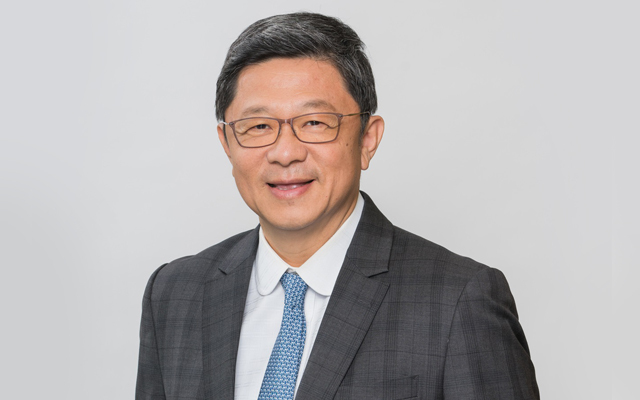
SingEx has appointed Robin Hu as the chairman of SingEx Holdings; previously its deputy chairman.

Hu is currently head, international policy & governance at Temasek International. Before joining Temasek in 2016, he was the CEO of the South China Morning Post Group in Hong Kong. He was also previously the senior executive vice president, Chinese newspapers and newspaper services at Singapore Press Holdings.

Robin Hu

Hu replaces Bob Tan Beng Hai, chairman of the SingEx Board since 2010. During his tenure, Tan oversaw the growth and expansion of SingEx’s venue management business, and the expansion of SingEx’s trade-events organising business such as the Singapore Fintech Festival and Industrial Transformation ASIA-PACIFIC, as well as the establishment of regional offices in Indonesia, India and China.

New tourism minister for Indonesia

0

Stepping forward

0

The rapid take up of hybrid events in 2H2020 has not gone unnoticed across Accor’s business events properties in Singapore, Indonesia, and Malaysia.

MGallery Singapore

And as this trend is expected to continue even when borders eventually reopen. As such, Accor is poised to meet this demand with souped-up technology and reimagined spaces that allow for the comfortable hosting of hybrid and virtual events.

Garth Simmons, CEO, South-east Asia, Accor, pointed out that the hotel company now has to be more creative in how they package hybrid events and reimagine events spaces, as well as provide the right technology to allow the “virtual world to blend seamlessly with its live elements”.

“It is also important to have flexible cancellation policies to give people reassurance that should things change, they could cancel or postpone their event if necessary, without a big penalty,” he added.

In light of the pandemic where hygiene is of the utmost priority, Accor also launched ALLSAFE, its cleanliness and prevention label centred around a range of actions including more rigorous cleaning and sanitation, temperature screening, reinforced food safety procedures and social distancing in common areas.

“Event organisers need assurances that enhanced safety measures are in place,” Simmons noted.

For a greater peace of mind, Accor has also partnered with insurance company AXA to offer free tele-medical consultations for all guests staying or meeting onsite.

This hygiene ethos and technology shift will carry on to two new properties opening soon in South-east Asia.

For example, the Pullman Bandung Grand Central in Indonesia will feature two ballrooms, 16 function rooms and meeting technology such as a giant video wall, built-in multiscreen video walls and digital flipcharts.

Meanwhile, MGallery Singapore is set to open next year with 168 keys. It will boast natural furnishings, lush gardens and a cantilevered rooftop pool to evoke a feeling of wellness, which also doubles up as unique spaces. Guests will be able to enjoy health and medical treatments provided by Fullerton Healthcare Group.

Reviews

The Ritz-Carlton, Bangkok

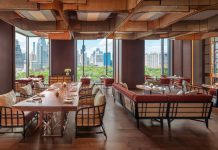
The newly-opened Ritz-Carlton, Bangkok anchors the One Bangkok development with cosmopolitan elegance. Featuring the city's largest ballroom and a spectacular new penthouse suite, it delivers exceptional hardware and deeply authentic, soulful service for business and leisure travellers alike

Mama Shelter Zurich

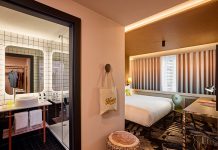
Behind the imposing, Brutalist concrete that defines Zurich’s Oerlikon district lies a surprising secret. While its exterior honours the neighbourhood’s industrial roots, stepping inside Mama Shelter reveals a vibrant, neon-soaked world that is a far cry from its rigid shell

Hyatt Regency Kuala Lumpur at KL Midtown

A polished urban retreat designed for business travellers, Hyatt Regency Kuala Lumpur at KL Midtown combines thoughtful design, seamless service, and exceptional facilities.