Capella Hotels and Resorts’ first property has opened in the Thai capital, situated within the Chao Phraya Estate in Bangkok.
Event planners have several choices of meeting spaces within, ranging from the smallest space, the 45m2 Atelier II, right to the 747m2 Ballroom.
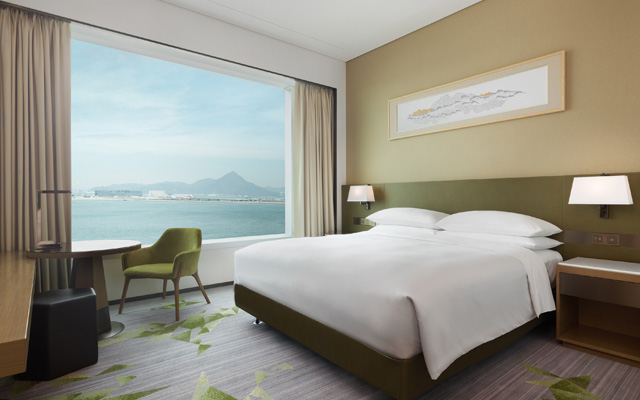
After a day of meetings, corporate groups can retreat to their five-star lodgings. There are 101 guestrooms, suites and villas on offer, ranging from 61m2 lead-ins up to 595m2 villas. Regardless of lodging, each accommodation has been fitted with floor-to-ceiling windows and a balcony or verandah that opens out to Thailand’s Chao Phraya river.
Facilities include a 24-hour fitness centre, and the Auriga Wellness spa
with its seven treatment suites and a wellness pavilion. There is also a Capella Culturist onsite, who can help arrange activities according to a guest’s interest.
There are also four culinary options, such as regional Thai restaurant Phra Nakhon, and Côte by three-Michelin-star chef Mauro Colagreco which serves traditional recipes from the French and Italian Riviera.
The Tourism Authority of Thailand (TAT) has promoted two of its executives to the position of deputy governor, effective since October 1.
Kitsana Kaewthamrong has been named deputy governor for domestic market. In his new role, he oversees the domestic travel promotions, and is in charge of coordinating with relevant sectors and communities to boost domestic tourism in Thailand.
From left: Kitsana Kaewthamrong and Apichai Chatchalermkit
He was most recently the executive director of the Advertising and Public Relations Department, where he served for more than 20 years.
Elsewhere, Apichai Chatchalermkit has now become deputy governor for digitalisation, research and development. In his new position, he is tasked to oversee the Digital and Information Technology Department as well as Research and Development Department.
Prior to his new role, he served as executive director for the central region and has experience in domestic marketing, tourism products, as well as online campaigns.
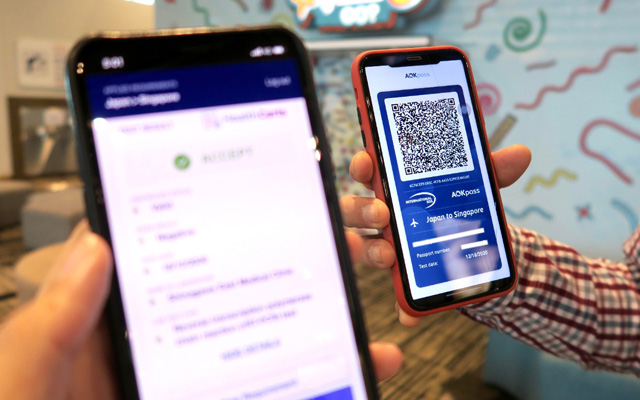
Singapore will be negotiating air travel bubbles with safe countries and regions that have comprehensive public health surveillance systems, as well as low rates of Covid-19 infection.
This arrangement is meant for general travellers and does not require a controlled itinerary. They are also different from reciprocal green lane arrangements meant for business and official travellers.
The Singapore government is working towards general travel resumption with safe countries and regions
Travellers will have to apply for Air Travel Passes before their journeys, to allow Singapore to plan for their arrival and lower numbers if the epidemic situation changes.
Hong Kong has announced its intention to establish such bubbles with several countries, including Singapore.
The announcement by transport minister Ong Ye Kung comes on top of other recent measures such relaxed border restrictions, and are part of Singapore’s plans to revive her air hub and bring back jobs.
The minister also addressed other steps the country has to take to open up its borders and revive air travel.
Singapore will continue to pursue reciprocal green lane arrangements, which will come with compulsory swab tests before departure and on arrival to ensure travellers do not carry the virus, as well as controlled itineraries to minimise risk of community spread.
Countries currently under this arrangement are China, Japan, Malaysia, and South Korea.
Changi Airport will also continue to facilitate transfers. There are now about 2,500 transfer passengers weekly, according to The Straits Times.
Also, Singapore should also be prepared to lift her border restrictions to countries and regions that are deemed safe. As a precaution, these travellers will be tested for Covid-19.
Singapore unilaterally opened its borders to travellers from Brunei and New Zealand last month, and more recently to those from Vietnam and Australia – excluding the state of Victoria.
Commenting on the minister’s announcement, International Air Transport Association’s regional vice president for Asia Pacific, Conrad Clifford, said: “Establishing travel bubbles for general travellers and replacing the 14-day quarantine with Covid-19 testing would be positive steps (to) help with the recovery of the aviation sector.
“Imposing a quarantine has the same effect as closing borders. In a recent 11-market survey of travellers commissioned by IATA, 83 per cent of respondents indicated that they will not travel if there is a chance of being quarantined at their destination.”
The Pacific Asia Travel Association (PATA) and TTG Asia Media are collaborating on a series of articles that will look into the travel and tourism industry’s future, and provide guidance to stakeholders on how a responsible, meaningful and sustainable development could be achieved.
To provide these insights and advice, the series of six articles will draw inputs from industry leaders, policymakers and influential institutions, such as the Asia-Pacific Economic Cooperation Tourism Working Group, World Economic Forum, Association of Asia Pacific Airlines, and Asian Development Bank, etc.
The series will be published at the PATA Crisis Resource Center website, with the first out today. The first article, titled A Turning Point: Crafting Tourism’s Future Together, looks at what what major regional travel and tourism bodies are doing to steer recovery, and how their efforts are backed by institutions beyond tourism’s usual boundaries.
Commenting on the initiative, PATA CEO, Mario Hardy said: “Our Crisis Resource Center was established earlier this year as a leading platform to assist travel industry trade at this critical time. By collaborating with a partner as knowledgeable and as insightful as TTG Asia, we are excited to bring some new and unique perspectives into this the current pandemic and what it means for our regional stakeholders.”
The pandemic has brought numerous changes to the way meetings are conducted. With hybrid meetings on the rise, event houses need to expand their business models to accommodate and better manage the influx of tech-reliant events.
As making new hires may be out of the question during these tough times, the best choice, for now, is to constantly help your team members learn and grow.
In this new episode of TTG Conversations: Five questions video series, Harry shares his thoughts on how the business events industry can navigate these rough waters, the new business opportunities brought about by the pandemic, and the challenge of delivering quality events over the screen.
Inbound demand for experiential travel is set to grow once Malaysia reopens her borders to foreign tourists, so will interest for nature-based destinations, predicts Tan Kok Liang, president of the Malaysian Association of Tour & Travel Agents.
In this new episode of TTG Conversations: Five questions video series, Tan points out that the travel trade should start developing more immersive and sustainable packages in order to take advantage of new travel trends in the post-Covid-19 era.
Through pictures, he shares successful, immersive community-based tourism packages in off-the beaten tourist areas in Sabah which tour operators are selling to the domestic market currently, and later, when the border reopens, to international inbound tourists. He believes such packages will also appeal to the niche, high-end travellers looking for hidden gems.
Starting from 23.59 on October 7, Wednesday, Auckland will be joining the rest of New Zealand in Covid-19 Alert Level 1.
This move is great news for the business events industry and will give decision-makers confidence across the country, said Conventions and Incentives New Zealand’s (CINZ) chief executive, Lisa Hopkins.
CINZ MEETINGS 2019 exhibition in Auckland
Auckland’s Alert Level was previously at Level 2 and 3 after the virus was detected in four family members in Auckland in the middle of September.
The announcement will “dispel all confusion about who can meet and where”, and with Auckland’s green light, the country is now fully open to domestic groups, pointed out Hopkins.
“Now is the time to rebuild the industry, and deliver confidence back to organisers who have been holding off planning and booking their events. Our message is it is safe to hold a conference, seminar, workshop, or team recognition event,” she reiterated.
CINZ has opened registrations for BE Reconnected, a free industry exhibition and networking day in Auckland on December 1 aimed at the throwing the spotlight on this NZ$5 billion (US$3.3 billion) sector and rekindling vital industry relationships.
Sarawak; Sarawak State Legislative Building (DUN Sarawak) and colorful Darul Hana Bridge during sunset.
Some 31 events with an estimated RM106 million (US$25.5 million) in total economic impact have been confirmed for Sarawak, Malaysia, between January and September this year. They will be held over the next four years.
According to a press statement by Business Events Sarawak (BESarawak), the events will also contribute to RM58 million in direct delegate expenditure, RM6.4 million in tax collection, and 8,480 jobs across various sectors.
Sarawak has secured 31 hosting wins; Sarawak State Legislative Building and the Darul Hana Bridge during sunset
Announcing the achievement at Sarawak Convention Bureau’s Business Events Tribal Meet event, Sarawak’s minister of tourism, arts and culture and minister of youth and sports, Abdul Karim Rahman Hamzah, said the 31 event wins were made possible by the Business Events Planners Incentivised Packages.
“The packages lend extensive support which injects additional funding, as well as other financial incentives, to help organisers get back on their feet and continue their planning processes,” he said.
In an email interview with TTGmice, BESarawak’s acting CEO, Amelia Roziman, said the total economic impact from the new events would continue to rise, as there were more contracts in the pipeline. Another update will come towards the year-end.
There is no comparison available for 2019 and 2020, as the value of events executed last year was calculated based on direct delegate expenditure. The formula to determine total economic impact takes in legacy measurements, as well as the full economic impact of the industry.
However, Amelia noted that 2019’s performance had far exceeded expectations – the destination achieved RM122.7 million in direct delegate spend through events when the target was only RM76 million.
Although online and hybrid events affect in-destination delegate spend, Amelia said BESarawak remains supportive of such gatherings.
“Our Business Events Planners Incentivised Packages support hybrid events. Two of them – Tribe Acceleration (for supported events) and Tribe Elevation (for major business events) provide financial help to cover extra items, especially the virtual platform for hybrid events, which can be costly,” she shared.
“Our goal is not just to achieve delegate numbers and spending, but to support the interest of the Sarawak government in terms of sectoral, economic and social development. We are focusing on business events that are aligned with Sarawak’s 7 Key Focus Areas, being Urban Development; Social Development; Environmental Development; Re-engineering Economic Growth (previously known as Sarawak Corridor of Renewable Energy – SCORE); Rural Transformation on Agriculture Development; Service Industry; and the Digital Economy.
“In addition, we want to ensure that associations that bring their conventions to Sarawak can build their legacy impacts to transform sectors, communities and the economy,” she elaborated.
Amelia added that Sarawak’s ability to support and facilitate hybrid events would reflect well on the destination, which is “gunning towards being a digitalised state”.
The World Trade Center Metro Manila (WTCMM) in the Philippines is gearing up to resume business as Metro Manila transitions to Modified General Community Quarantine.
This comes after six months of operating as a temporary quarantine facility for the national government.
World Trade Center Metro Manila is undergoing thorough cleaning to prepare for business
Currently, the Office of Civil Defense (OCD) will head and supervise a series of activities prior to the turn-over of the WTCMM building to ensure a safe and fit-for-occupancy status.
For the entire month of October, the WTCMM building will undergo aeration, thorough decontamination and disinfection of all indoor and outdoor areas. This includes aircon ducts and filters, disinfection of walls and surfaces, siphoning of septic tanks, hauling out of infectious wastes, among others. Pull out of all installations, build-down, and repairs of damages to restore the WTCMM building to its original state will be completed within the month.
WTCMM will also be launching BE (Business Events) Safe, a safety programme that will ascribe to the new protocols and guidelines released by the Department of Tourism and Inter-Agency Task Force. BE Safe aims to communicate WTCMM’s implementations on how it will operationally achieve a safe business events venue amid Covid-19.
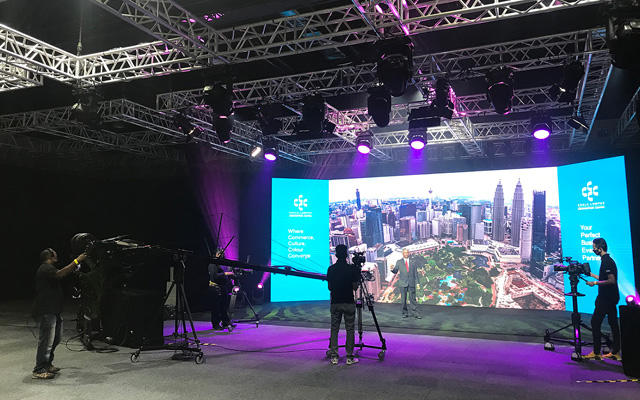
ICC Sydney Connect is an expansion of ICC Sydney's virtual event services, ICC Sydney's Virtual Event Studio pictured
A new virtual event platform, ICC Sydney Connect, has been made available at International Convention Centre Sydney (ICC Sydney), to provide event organisers with end-to-end virtual and hybrid solutions.
The new service will be delivered by ICC Sydney’s expert Audio Visual and ICT teams, enabling clients to broadcast their virtual events from ICC Sydney’s state-of-the-art studios with a customisable interface.
ICC Sydney Connect is an expansion of ICC Sydney’s virtual event services, ICC Sydney’s Virtual Event Studio pictured
ICC Sydney Connect comprises:
Registration: Management of the online delegate registration process and event check-in
Security: A secure online environment through its two-factor authentication process
Sponsorship and marketing opportunities: Programmable event marketing and reminders, increased sponsor value through sponsor branding opportunities, sponsor call outs and lead capture functionality.
Engagement tools: Attendees can access live Q&A sessions, video, networking opportunities, live chat, and survey capabilities – all within an interface that can be branded and tailored to an event
Insights: To measure engagement, the platform gives organisers access to real-time data and key metrics across attendance tracking, engagement with sessions, on-demand video, live stream, file download, custom ads, lead capture, featured speaker, sponsor and exhibitor content and activities engagement analytics
Since March this year, ICC Sydney has delivered more than 100 online events including the MEALIVE Awards 2019, Stand Tall 2020, Australian Olympic Committee Wellbeing Week and The Sydney Morning Herald Sustainability Summit, all of which were live-streamed from the venue’s studios. Many of the events hosted were reimagined into a virtual format for the first time this year.
The newly-opened Ritz-Carlton, Bangkok anchors the One Bangkok development with cosmopolitan elegance. Featuring the city's largest ballroom and a spectacular new penthouse suite, it delivers exceptional hardware and deeply authentic, soulful service for business and leisure travellers alike
Behind the imposing, Brutalist concrete that defines Zurich’s Oerlikon district lies a surprising secret. While its exterior honours the neighbourhood’s industrial roots, stepping inside Mama Shelter reveals a vibrant, neon-soaked world that is a far cry from its rigid shell
A polished urban retreat designed for business travellers, Hyatt Regency Kuala Lumpur at KL Midtown combines thoughtful design, seamless service, and exceptional facilities.
The Tourism Authority of Thailand (TAT) has promoted two of its executives to the position of deputy governor, effective since October 1.
Kitsana Kaewthamrong has been named deputy governor for domestic market. In his new role, he oversees the domestic travel promotions, and is in charge of coordinating with relevant sectors and communities to boost domestic tourism in Thailand.
He was most recently the executive director of the Advertising and Public Relations Department, where he served for more than 20 years.
Elsewhere, Apichai Chatchalermkit has now become deputy governor for digitalisation, research and development. In his new position, he is tasked to oversee the Digital and Information Technology Department as well as Research and Development Department.
Prior to his new role, he served as executive director for the central region and has experience in domestic marketing, tourism products, as well as online campaigns.