Asia/Singapore Thursday, 9th April 2026
Page 539

How to design an engaging webinar and improve lead generation

0
Webinars
Webinars can be extremely effective tools, but one challenge is to hold the attention of the audience

In this time of lockdowns and work-from-home measures, the webinar has come into favour as a safe, simple and low-cost way to collect target audience data and generate leads.

But many are finding that the format’s popularity may be its undoing. Consumers are simply becoming annoyed by the clutter of invitations flooding their inboxes every day, and turned off by the numbing sameness of the webinars themselves.

The effects of webinar fatigue are precisely the results marketers don’t want: a growing drop-off rate, eroding customer satisfaction and poorer brand perception. But there are ways to fight it off.

Here are a few tips for creating webinars that actually deliver the goods.

1. Time for effect
In April to June 2020, I personally observed that the turnout rate for webinars held during office hours was commonly 70 per cent or more. Since July, with lockdown rules being relaxed and working from home becoming the new normal, the turnout rate has dropped to 30-40 per cent.

The lesson here is that timing is critical. Rather than slotting your webinar in during the audience’s office hours, consider whether they may be more receptive to an evening or weekend session.

2. Talk with, not to
Nobody likes being preached to, and an online audience is especially prone to just switch off the moment they feel you’ve droned on for too long. Treating your webinar as a dialogue, inviting interaction through Q&A sessions, live chat, polls, etc, will help keep your audience awake and interested.

3. Make data decisions
Webinars offer a fantastic scope for data collection. Every data point from every part of the journey can be tracked, helping you to follow up leads, reach more potential clients, accurately analyse customers, and generate useful remarketing data. It’s all yours – if you collect the right data.

So what should you collect? Start by developing a clear idea of what insights you wish to gain. For example, if your webinar’s ultimate objective is to attract potential clients and generate business, a simple question on the registration form about respondents’ key concerns might yield what you’re looking for. There’s no reason to limit yourself to the usual ‘name, company, email address’ questions.

4. Exploit the medium
A major cause of boring webinars is a failure of their creators to think of them as anything more than a sales pitch that happens to be online. In fact, the medium offers limitless scope to get imaginative and give the audience a compelling experience that will create real marketing value.

Think of it as a movie. Have you ever watched one so absorbing that you couldn’t tear yourself away from the screen? Why shouldn’t a webinar audience feel the same way? So let’s extend the cinematic theme into a framework for webinar success:

All of the above show how building a personal experience can pay off for marketers.

5. Make it interesting from the start
Now picture yourself receiving a drop-shop webinar invitation pack. Once you’ve registered, a photo-realistic avatar is custom-created for you and transported into the ‘movie scene’ that you can share on social media.

Then as you enter the webinar, you find yourself exploring a whole virtual world – it could be anything from a playground in the clouds to an indoor beach or haunted house – while you learn more about the content along the way.

6. Leverage technology to interact with your audience
In some webinars, you might be invited to take out your phone and co-create the launch mechanism through augmented reality. The one-hour session might end with a lucky draw to ensure you leave smiling.

For webinars and live events alike, planning and vision are the keys to success. Throw away the cookie-cutter and those stale sales pitches and get thinking about creating something that stands out, that uses the medium, and that’s honed in every respect to deliver the outcome you need.

Breaking into a digital stride

0

What was the experience like, moving from offline to online, and on such a large-scale?
The initial stages of converting ConnecTechAsia2020 to a pure-play virtual event was not easy as it took some time for the industry to accept the fact that physical interactions were not possible this year.

The MICE community – including exhibitors, sponsors, delegates, speakers and attendees alike – were initially hesitant because many were hopeful that the situation might improve in a few months’ time. They were also not familiar with virtual tradeshows and digital events, and it took time to convince them otherwise.

However, once everyone realised that the situation was here to stay, at least for the near future, and began embracing the shift to doing business exclusively online, we were then able to start making some headway in bringing everyone on board.

On picking a platform to build the ConnecTechAsia virtual edition, we want to deliver best in class, state-of-the-art, technology-driven content and value-added insights that our community would not get at a physical event. There is a vast range of platforms to choose from, and we had to be very picky, to make sure we can deliver an enhanced experience for our community. Once confirmed, we had to make sure we communicated its benefits and value-add to our audience clearly, on what the platform can do and how it works.

The show has over 200 exhibitors, how did you manage to land new ones in such times?
When we first started reaching out, our exhibitors, like others in the MICE community, were not sure of the possibilities and merits of a virtual trade show. However once they came around to doing business online, and realised that the platform we are using for ConnecTechAsia is one of the best out there, it helped boost their confidence. They became more receptive and made it possible for us to land new exhibitors and participants.

What are some of the ways that you are deploying to keep attendees engaged, as it is known our online attention spans are shorter?
Before the event, we must educate our community on the virtual platform, how it works, and how they can achieve a value-added event experience in their various capacities as speakers, exhibitors, delegates and visitors.

We have also made it a top priority to provide very tailored and relevant content at our conferences and seminars for our attendees. At the exhibition halls, we run a number of activites, and calendarise live exhibitor presentation across the event days. We have worked very closely with our exhibitors to make sure they have engaging content and activities which we then promote to our visitors before the event opening.

Through close collaboration, open communication and consistent walk-throughs, the community can anticipate, get creative and plan ahead to get the most out of the event with the limited time they have.

One important component of this year’s ConnecTechAsia is the availability of data for our community. For instance, if an attendee stops by a booth for just one second, sponsors can access and capture this data on the backend system at any point in time, and do the necessary follow-ups during or after the event. This will solve the challenge of shorter online attention span, and can also allow for a full networking experience that many believe can only be done at physical events.

How do you ensure ROI?
Any event, be it physical or virtual, needs a minimum critical mass of exhibitors and high-quality conference tracks to ensure a good turn out. Like the physical event, virtual event organisers, on top of picking the right technology to ensure an enhanced online experience, also need to focus on delivering this to achieve good ROI and value for all stakeholders.

Some may think going virtual is cheaper. To some extent, this may be true; some platforms are more affordable than others. Once that is done, the other costs are the same, if not higher.

The focus should be on promoting the event so the community can get a high ROI on their participation. And to do this, you need to at least maintain if not increase – the marketing and public relations, operating and staff budget. Overall, there is no silver bullet, and you need to invest the time, effort and dollars to build the strongest possible event.

There is agreement hybrid events are necessary, but for example, will ConnecTechAsia2020 return to being a physical event once possible?
Before the pandemic, my three-year plan included a virtual component for 2021, but we had to fast-track and go fully virtual in 2020 due to the circumstances. However, once the situation improves, the virtual component will be supportive of the overall value proposition of ConnecTechAsia rather than a decisive. It will be helpful to attendees who are unable to travel and enable exhibitors to reach a much wider audience.

But ultimately, it will not replace the physical event, as the community still prefers a platform where they can meet, shake hands, exchange name cards and drive long-lasting relationships.

What is your take on face-to-face meetings?
When people say going fully virtual is the ‘new normal’, I tend to disagree – I think it’s abnormal.

As human beings, we definitely prefer face-to-face interaction. It’s a significant social factor in our way of life and is not going to change because of the pandemic. While virtual tradeshows are important in 2020, the physical component will return eventually, because that is just how humans work.

Any words of advice for the industry?
Depending on the size of the event or where the company is in the industry, try to invest in the future. Some companies may be in survival mode, and would cut costs to try and weather the storm. For those who can invest, they should do so now because those who do are the ones who will emerge stronger on the other side of this. Get excited about the opportunity in this new environment, and embrace the possibilities of going virtual as much as possible.

Hybrid and virtual corporate events gain more ground in Malaysia

0
Digital and virtual learning programmes were already on the rise, but has become a staple now

Hybrid and virtual teambuilding events are becoming more widely accepted with event organisers in Malaysia, as the country works its way towards normalcy.

Mark Stanley, a training consultant at Asia Ability based in Kuala Lumpur, said the company has seen a growing number of enquiries for hybrid events from corporate companies and event management companies from Malaysia.

Digital and virtual learning programmes were already on the rise, but has become a staple now

In August alone, Asia Ability’s office in Kuala Lumpur handled three hybrid teambuilding events, which had both an onsite teambuilding component with social distancing, and a remote component.

He said the traditional teambuilding format, with participants gathered at a venue and working on tasks together has some event organisers wondering about the feasibility of having such programmes in the future, especially when the group sizes are big. Previously, onsite teambuilding events average between 200 to 800 participants, but group sizes now typically range between 20 to 30.

Stanley also pointed out that it isn’t easy to ensure large groups adhere to the Standard Operating Procedures for the good of everyone as well.

Hence, he is all for virtual and hybrid solutions, pointing out that going online brings with it substantial cost savings in terms of rental venue, transportation of delegates and accommodation.

Dee Dee Quah, director, Medical Conference Partners, noted that medical conferences she has handled this year have also taken on a virtual format. Similarly, teambuilding also has gone virtual, but the success of this she warned, was dependent on having an energetic facilitator who is able to hype up participants.

Dee also opined that for the next year, conferences, teambuilding and meetings will most likely take on a hybrid format.

First Mondrian hotel rises in Asia-Pacific

0
Cleo

Accor has opened the Mondrian Seoul Itaewon in South Korea, the first Mondrian in Asia Pacific, and fifth in the Modrian portfolio after Los Angeles, New York, South Beach and Doha.

The Mondrian Seoul Itaewon boasts 296 guestrooms, as well as event spaces such as the 867m2 ballroom with an integrated LED screen and five meeting rooms.

There is also an outdoor pool with a viewing deck that overlooks the city, the Cleo restaurant – the brand’s blend of Miami vibes and Mediterranean cuisine – and several watering holes ranging from the rooftop bar to the Rumpus Room.

More Mondrian hotels are slated to open in Bordeaux and Cannes next year, and the brand expects to grow its portfolio to approximately 15 properties by 2022.

Meet with Confidence at Crowne Plaza Changi Airport

0
Crowne Plaza Changi Airport - Hopea

Crowne Plaza Changi Airport, an InterContinental Hotel Group property, in Singapore has released a new Meet with Confidence offer.

For event planners who book 10 to 50 rooms for their next event, the hotel is offering no cancellation fees; no attrition fees for rooms that are not booked; up to five per cent rebate towards the master bill; and IHG Business Rewards points.

Crowne Plaza Changi Airport – Hopea

Bookings must be made by Decemb er 31, 2020, with stays or meetings to be completed by June 30, 2021.

The hotel has also reiterated its commitment to the highest levels of cleanliness, to ensure the wellbeing of all attendees.

Email evelyn.suah@ihg.com

Goco promotes Clive McNish to group operations director

0

Clive McNish, former general manager of Glen Ivy Hot Springs, has assumed the new position of group director – operations at Goco Hospitality’s headquarters in Bangkok.

In his new role, McNish will be ensuring the successful opening, operation and management of all Goco Hospitality-branded spas and retreats.

Having worked for GOCO Hospitality in various roles since 2014, McNish first joined as general manager of a Goco wellness resort project in Beijing, China, before becoming the company’s corporate general manager. He then assumed the general manager role at Glen Ivy Hot Springs, America’s oldest hot springs resort acquired by Goco Hospitality in 2016.

At Glen Ivy Hot Springs, McNish led a three-phase, multi-million dollar renovation project that included a global repositioning, alongside new amenities and services.

Previously, McNish served for four years as wellness director and general manager at Kamalaya Wellness Resort in Koh Samui, Thailand.

Pacific World bids goodbye

0

TUI Destination Experiences will cease operations of Pacific World globally this November, a decision made as a result of the disruption to the business events industry caused by the Covid-19 pandemic.

Pacific World will shut 26 offices worldwide in November and retreat from the MICE industry

Some 150 employees directly involved in Pacific World Meetings & Events activities would be impacted by the decision that was announced in the early hours of September 1. A TUI Group spokesperson also told TTGmice that while the company was “keen to keep as much people as possible”, most of the Pacific World staff would be leaving.

Affected Pacific World staff globally will receive support from the parent company “for the next chapter of their life”, added the spokesperson.

In a press statement, TUI Destination Experiences said the “Pacific World brand has continued to innovate and has been recognised globally as one of the leading Destination and Event Management companies with strong family values at its core”.

“Trust, passion, and excellence are at the heart of the culture that has brought the brand to great heights over the years. Pacific World has been dedicated to delivering over 40,000 exceptional event experiences in the past 10 years in over 100 destinations around the world.”

The parent company paid tribute to the Pacific World’s staff, stating that it was the “creativity, professionalism and inclusive culture of our team (that) brought the customer experience to the next level. These talented teams are not only savvy event strategists; their skills make them incredible business entrepreneurs”.

This announcement came on the heels of the company’s decision in mid-August to shut down Pacific World Hong Kong operations from September 14.

This is an updated version of the post published on September 1, 07.59.

Gangwon: a teambuilding haven

0

Brought to you by Gangwon Provincial Office

Cultural appreciation

Jeongseon Arirang Center (Jeongseon)

Jeongseon may be host county to a huge number of tourist amusement and recreational facilities in Gangwon Province today, however, it was the Jeongseon Arirang – originally a poem pledging allegiance to the Goryeo Dynasty –  which elevated the destination’s prominence across the entire Korean peninsula. Now translated into a quintessential folk song, its mellow tune tells of bittersweet emotions, and resilience of the Korean people in times of adversities.

The Jeongseon Arirang Center was founded for the preservation, education and creative development of Jeongseon Arirang; which has been recognised by both UNESCO and Gangwon Province as an intangible cultural asset. Visitors will have the opportunity to feast their eyes on “Ari Arari”, a musical performance documenting the song’s illustrious history and unique melody. The provincial and county offices are also on hand to organise tailored programmes for incentive groups to learn the Jeongseon Arirang.

For a blast to the past, visit the nearby Jeongseon Arirang 5-day market, which opens on the 2nd, 7th, 12th, 17th, 22nd, 27th of every month. Groups will have the opportunity to experience the nostalgic feel and bustle of a traditional Korean market while shopping for local produce and mingling with the vendors. For an atmospheric experience, the acclaimed Arirang will also be performed at the market as an additional treat for visitors.

Ojukheon House / Ojuk Hanok Village (Gangneung)

Their portraits may be prominently featured on South Korean banknotes (50,000 KRW and 5,000 KRW, respectively), but just how acquainted are we with these historical figures?

The answer can be found at Ojukheon house, the family home of Shin Saimdang, widely hailed as an icon of feminine virtuosity; and her son, Yi I, a leading politician and neo-Confucian scholar. Built during the early Joseon Dynasty, it remains as one of the oldest wooden residential buildings in Korea. Corporate groups may soak out the experience by donning traditional costumes, as well as engaging in guided tours showcasing Korean history and lifestyles through the different eras.

Linking Ojukheon house is Ojuk Hanok Village, a one-stop facility that offers visitors further insights into the traditional Korean way of life.

In this 14,000m2 space, are a multipurpose building capable of housing 40 people for conferences, lectures and seminars, cooking studio, futsal field, and 51 Korean-styled dwellings (hanok) that can accommodate up to a total of 240 guests– adding to its allure of attracting larger corporate retreat groups.

Onsite activities include hanbok wearing, calligraphy and cooking lessons, as well as traditional games and crafts showcases.

For the foodies

Jeonggangwon (Pyeongchang)

Love Korean food and want to learn more? One would imagine their arrival at Jeonggangwon (The Institute of Traditional Korean Cuisine), the country’s largest traditional food culture experience hall.

The facility offers plenty of hands-on experiences with an exhibition hall, cooking studio and a fermentation room, spanning a total area of about 33,000m2. A popular corporate incentive idea is the preparation of a large Bibimbap, where participants find joy in mixing the variety of ingredients together as a teambuilding activity while learning about the intricacies of its unique food ingredients.

Also catering to smaller groups – starting with 6 participants – Jeonggangwon offers other experiential cooking activities, such as the preparation of classic dishes and liquor brewing, all in the name of elevating research efforts, preservation, distribution and publicising the values and merits of traditional Korean food culture to the world.

Farm to table

In the summer months of July and August, head to peach farms in Chuncheon and Wonju; with the latter renowned for producing the best peaches in all of Korea. As well, winter months from December to April bring about the harvesting season for strawberries – another popular export from South Korea – in cities such as Gangneung, Chuncheon and Sokcho.

For a rewarding team building event, consider going on a fruit picking experience in these farms, where friendly hosts provide harvesting guidance and participants get to go home with their delectable picks.

Team workout

Gangneung Curling Center (Gangneung)

With all the culinary expeditions, work up a good sweat with curling. Likened to a game of chess on ice, the sport gained traction when South Korea female curling team went viral in the PyeongChang 2018 Winter Olympic Games.

Requiring dedicated teamwork, players must endeavour to slide their team’s stone to the epicentred target as close as possible to garner a higher score than other participating teams.

Gangneung Curling Center is popular with corporate groups who want to run curling competitions as a form of team bulding exercise, with instructors on hand to provide basic training sessions.

Click here for more information on other destinations and activities in Gangwon.
Email: kim.nuri@ymail.com.

Gangwon(ENG)

Rising to the challenge

0
Bolinger

What motivated PCMA to come up with the Business Events Compass, an actionable framework of insights and strategies for business event professionals to move forward during the pandemic and beyond?
The Business Events Compass is core and central to PCMA’s business events industry global recovery plan and is the starting point for what we call the ‘Recovery Discovery’ journey.

The motivation behind Compass was to not only understand how our industry has been impacted by Covid-19, but to determine what our members and industry need to recover, and how we as an association can support our members by giving them the things they need now: high-value information, relevant courses and a community of support.

Compass has been the result of a consolidation of thousands of people from all over the world – PCMA members, DMO leaders, brands, delegates and industry stakeholders. It was developed through a series of surveys undertaken by PCMA Insights – PCMA’s global consulting practice – where data was captured and analysed across six Think Tanks with 130 global business event leaders; interviews with global brand and association leaders; and a consideration of the global econometric recovery models.

It aims to be the pre-eminent source of data that business events leaders can use to inform their decision making.

How does having this actionable framework help the event industry?
What we are seeing from across Asia-Pacific are different speeds of recovery in and among the different verticals in our sector. What people need, whether they run businesses that are small or large, is access to excellent data and insights to help them make decisions on how to rebuild their business. Usually, information of this calibre is only available to bureaux, government bodies and large multinationals.

However, PCMA wants to ensure that all members of the industry have access to this information.

What trends in the business are you seeing, aside from hybrid events that will become the norm?
Hybrid events are definitely on the agenda. Until people feel safe enough to go to face-to-face events again, and restrictions are eased to accommodate larger numbers of people, events will need to have an online element. However, this is also providing a great opportunity, as associations and brands are reaching far greater numbers than before.

We recently analysed the results from the APAC Recovery Dashboard Survey which demonstrated the real impact the pandemic has had on the industry, the appetite to recover and the uncertainty of what to do now.

One of the main concerns to come out of the results from Asia Pacific was that planners aren’t sure how to plan or budget for a hybrid or digital event. That’s why we have been sure to infuse this into our Digital Event Strategist course, as we want to ensure we give our members the tools to succeed in the current environment.

Other trends we predict we’ll see:
• Increase of skills and demand for an all-rounder
• Localised smaller events
• New technologies and advancements in the production and delivery of online events

You took on the managing director APAC role in April, in the thick of Covid-19. Why did you agree to taking up this mantle, and how are helping to improve the MICE landscape?
After having a year out of the industry, I was ready to get back to work, and business events has always been a passion of mine. I have been involved with PCMA for quite some time, most recently sitting on their Regional Advisory Board. When the pandemic hit, I knew the struggles and hardships my colleagues and friends would face. When PCMA approached me, the timing was right, and I felt I could make a difference in supporting the industry.

In my new role, I knew I could help guide and strengthen PCMA members in the Asia-Pacific region and it was an opportunity to bring together PCMA’s great education programs and successes, localise them for the Asia-Pacific region, and really add value to the benefits PCMA delivers to their members.

PCMA’s core customer is the event planner from associations, corporates and agencies. In Asia-Pacific, there has been a gap in their professional development which needed to be filled. PCMA looks forward to helping train, reskill and upskill, and initiate conversations around how we adapt to this new MICE landscape – we can’t go back, so it’s about finding ways to work forward.

How soon do you think the travel industry can get out of this slump?
I think the Asia-Pacific region is on the road to recovery faster than the rest of the world. Having said that, there is still a long way to go with countries recovering at different rates and setbacks as a result of second waves of infection.

The BE Compass predicts that in 3Q2021 we’ll start to see some green shoots of growth. However, we are largely at the mercy of this virus, how our authorities manage it and the development and distribution of a vaccine.

At play are also factors such as our customers’ appetite to travel, their company’s travel policies and their risk profile. This will influence the speed and scale at which we return. I think realistically it will be 12 months before people are willing to travel outside of their own country. But I’d love to be surprised and have the travel industry recover sooner.

What message would you like to share with the MICE sector?
It’s a tough time right now for many of us with so many emotions and practicalities in play that change daily, and a lot of it is out of our control. This causes us to lose confidence and hope.

What I do know is that taking care of your health and wellbeing is important and the MICE community is a large family that cares; so reach out to your MICE network to provide support and seek support. Also, do explore outside the sector for inspiration to rebuild within the sector. I’m an optimist and always say out of adversity comes opportunity.

Daryn Hudson to helm Four Points by Sheraton Phuket Patong

0

Four Points by Sheraton Phuket Patong Beach Resort has appointed Daryn Hudson as its general manager, ahead of the hotel’s opening this October.

The Australian brings a wealth of experience to the role, having joined Marriott International for the first time in 2005 as director of F&B at the Surfers Paradise Marriott Resort & Spa.

Having moved to South-east Asia to take up senior roles at Marriott hotels in Manila and Bangkok, Hudson achieved his first general manager role in 2013 at Marriott Executive Apartments Sathorn Vista, Bangkok. He also spent time as general manager at the Courtyard by Marriott Seoul Pangyo.

Most recently, Hudson was at the helm of The Stones Hotel – Legian Bali, Autograph Collection. During his career, Hudson also successfully completed a series of Marriott leadership programmes, including Executive Leadership training in Asia-Pacific and the US.

Reviews

The Ritz-Carlton, Bangkok

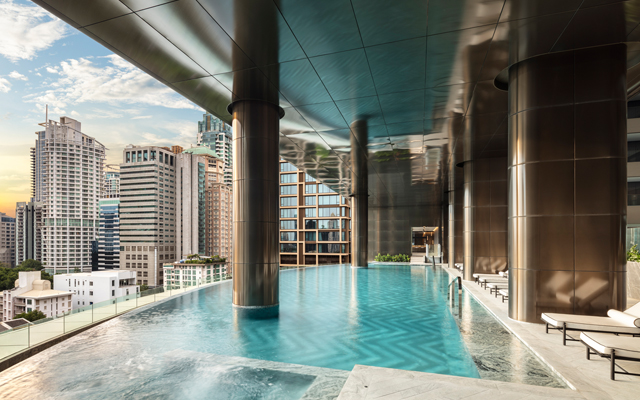
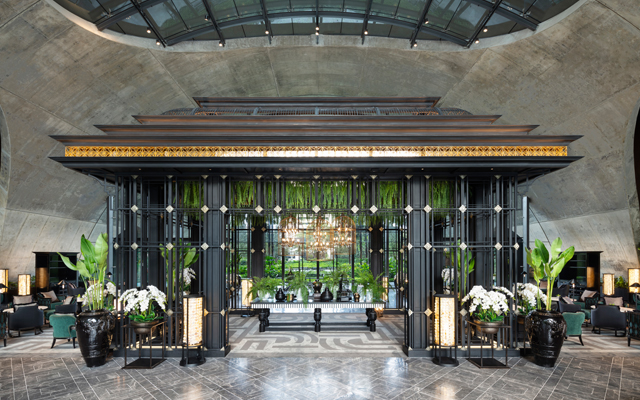
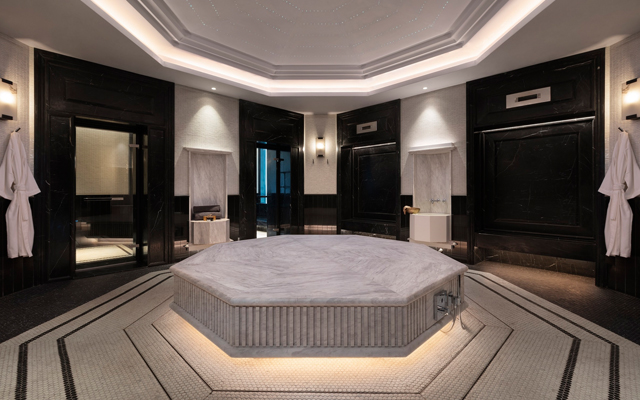
The newly-opened Ritz-Carlton, Bangkok anchors the One Bangkok development with cosmopolitan elegance. Featuring the city's largest ballroom and a spectacular new penthouse suite, it delivers exceptional hardware and deeply authentic, soulful service for business and leisure travellers alike

Mama Shelter Zurich

Behind the imposing, Brutalist concrete that defines Zurich’s Oerlikon district lies a surprising secret. While its exterior honours the neighbourhood’s industrial roots, stepping inside Mama Shelter reveals a vibrant, neon-soaked world that is a far cry from its rigid shell

Hyatt Regency Kuala Lumpur at KL Midtown

A polished urban retreat designed for business travellers, Hyatt Regency Kuala Lumpur at KL Midtown combines thoughtful design, seamless service, and exceptional facilities.