


Thailand has decided not to reopen its international borders this year for most inbound and leisure tourists. How can MICE players move forward strategically and with confidence?
We are all going through a very uncertain period. What makes it more difficult is that we cannot plan ahead as no one knows when this pandemic will end. However, the MICE and hospitality industries have shown amazing resilience.
The government has a range of support and relief assistance for tourism businesses and operators, (and we) have been very cooperative with all its programmes. (There was a) significant number of hotels and guesthouses that participated in the We Travel Together campaign as well as the Safety and Health Administration (SHA) certification project.
Moving forward, MICE venues must be more flexible and dynamic with their business models. Venues must also be in constant touch with their guests and customers to understand their concern and address those issues. Right now, the focus is on the domestic market.
How different is the domestic MICE market from the international ones?
The Thai MICE market is more price-conscious, more inclined towards modern venues and accommodation, and has shorter lead times. Taking into account that delegates of these groups will be travelling locally, venues need to ensure that ample parking spaces are available.
As Thai people tend to travel with their families when attending local events, venues with wide-ranging facilities would be more attractive.
Finally, venues have to keep in mind that the local market is more conscious of safety standards and would feel safer in venues that abide by the government’s safety requirements. Receiving the SHA certification and achieving the Thailand MICE Venue Standard can greatly enhance the confidence of both local event organisers and visitors.
What is Royal Cliff Hotels Group doing to attract domestic business events?
We have developed Royal Cliff’s Prevent and Protect Program, which consists of strong measures that would assure planners that our venues are safe. We are also using the government app Thai Chana…to help with (contact tracing).
We have upgraded our technology infrastructure to support video conferencing. We are entering an era of hybrid meetings where people meet physically and virtually (so) we have designed our meeting rooms and venues to accommodate this style of events.
As a large resort with abundant spaces, we facilitate outdoor meetings and functions. Such setups eliminate concerns of being around other participants in an enclosed space. For those who prefer to stay in their room and attend the functions virtually, we have supporting in-room technology, be it Zoom, Microsoft Teams or Google Hangout. We also have fast Wi-Fi speed for online meetings to run smoothly.
Our accommodation and meeting packages are offered at very competitive rates.
What’s the biggest lesson you have learnt during this period?
We need to continually improve our digital knowledge and diversify. We are using this time to explore new business models, experiment and try new things by asking ourselves what we are good at and how we can take that online. During the lockdown, we built a platform for online food delivery and was able to gain significant revenue from this new initiative.
Another important lesson is to be flexible and never give up. There is always a way out if you persevere.








Infrastructure development across Labuan Bajo, East Nusa Tenggara in Indonesia has carried on in earnest even as the Covid-19 pandemic disrupts travel and tourism businesses, to ensure the destination is ready for both the ASEAN Summit and the G-20 Summit come 2023.
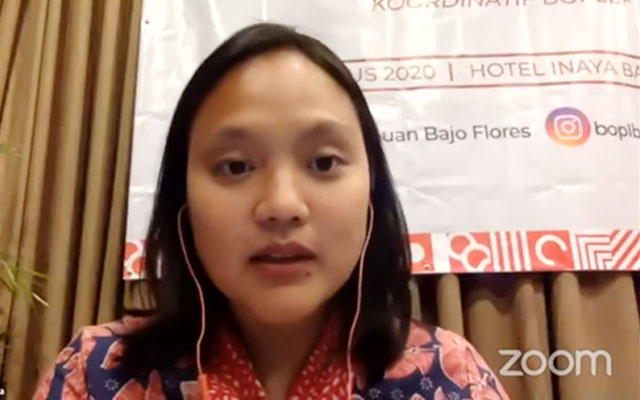
Shana Fatina, president director of the Labuan Bajo Flores Tourism Authority Agency (BOP), said that infrastructural works include new roads and airport runway extensions.
Service excellence is also on the agenda, and the government is working with regional peers and experts, such as Changi Aiports International, Changi Airports Mena, Cinta Airport Flores and Cardig Aero Services, to manage Komodo Airport and to make it an international airport by February 2021.
Meanwhile, development of the Labuan Bajo marina area has been accelerated, allowing it to accommodate up to 125 yachts or cruise ships by end-2020.
On the accommodation side, Indonesia Tourism Development Corporation (ITDC) has been appointed to oversee Tana Mori’s development into a high-end resort destination similar to Bali’s Nusa Dua.
Edwin Darmasetiawan, ITDC’s director of development, said the Tana Mori masterplan was now complete and works could begin. The plan includes the construction of two five-star hotels and one four-star hotel to accommodate delegates of the two Summits.
Funding has been proposed through state equity participation, in addition to private investment.
“I am very optimistic that we can finish latest by 2022,” remarked Edwin.
“The event will be in 2023 but our obligation is to prepare the venue with all supporting aspects, both property and infrastructure by the end of 2022,” he added.
Susilowani Daud, president director of Pacto Convex, opined that the project underlined the government’s commitment to developing destinations in the country for business events, which would send a positive signal to investors.
She added that while private investors might remain conservative now due to economic uncertainty, interest could soar once business recovery begins.
Susilowani hopes the government would also invest in tourism and business events education for the local workforce, to establish a strong human resource foundation that would support the future developments in Labuan Bajo.