Global DMC Partners (GDP), a leading global network of independently owned DMCs, is launching Together at Home, a brand-new weekly webinar series.
Each week, GDP will host a featured subject matter expert with topics ranging from resiliency and leading through change to health and wellness and financial management. This was launched in response to combat social isolation due to work from home orders, as well as educate the business events sector.
Global DMC will unveil one webinar weekly
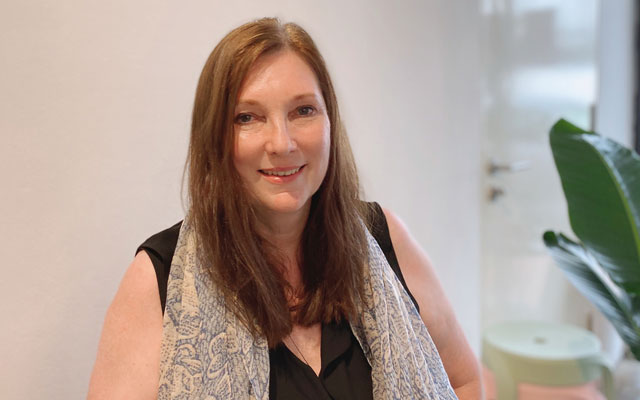
The first of the “Together at Home: Engage & Educate” webinar series will kick off on Tuesday, March 24, at 10.00 EDT and 14.00 EDT. Certified personal trainer, precision nutrition coach and iPEC life coach, Ela Dugan, will share five ways to increase one’s physical and mental immunity during a crisis. Ela will discuss simple methods to regain control during these challenges times by strengthening physical and mental immunity.
Global DMC Partners president & CEO Catherine Chaulet shared: “We at GDP have decided to dedicate this time to engage and educate meeting and hospitality professionals via a new, uplifting webinar series. We believe in using this time wisely, and learning new skills will help prepare us for better days ahead.”
Travelogix has developed an application to provide its TMC clients with mission-critical tools, information and communications services that will help maintain their operations during the Covid-19 outbreak.
Travelogix aims to provide business-critical data relating to Covid-19
The application is provided free of charge to Travelogix clients running the Analytix or Farecast platforms, and was made available from last week. This temporary platform will provide clients with up-to-date information relating to the Covid-19 outbreak and data related to travellers who have travelled, are travelling in, or due to travel to affected regions.
Moving forward, Chris Lewis, CEO and founder of Travelogix, hopes that as and when the industry eventually recovers, the application can also be used to assist TMCs.
modern and smart travel, expense and rewards application for business. EzBizTrip c
Launched last month, EzBizTrip is a new integrated travel management platform targeted at corporate customers from small- and medium-sized enterprises.
Apart from sending trip requests to their management teams, corporate travellers can create itineraries on EzBizTrip with a Smart Suggestion system. Underpinned by recommendation engines, the system provides travellers with personalised results that allow them to book swiftly and with certainty. They can also accurately record and submit all expenses on the go by snapping a photo of receipts and uploading them onto the platform. Furthermore, travellers can easily keep track of their expenses through automated expenditure reports and ensure they do not go beyond the budget.
EzBizTrip bills itself as a modern and smart travel, expense and rewards application for businesses
The business travel platform also rewards employees with products and services after redeeming points earned from cost savings when they use the programme. By encouraging smarter savings through rewards, companies can better manage budgets for corporate trips and overall financial spending.
“On average, business travellers spend at least 20 minutes trying to file and manage their expenses from a three-day work trip,” shared Takaya Tomose CEO of EzBizTrip, who has reached out to travellers from Singapore, Vietnam and Indonesia.
He said that time could have been better spent on “doing actual work and being productive”.
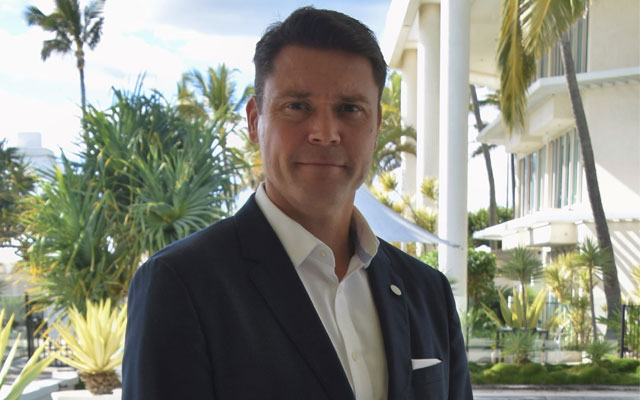
Azizskandar Awang has joined Meliá Koh Samui as executive chef.
Before joining Meliá Koh Samui, Azizskandar was the executive chef at Anantara Lawana Koh Samui Resort for almost four years. He was also dispatched to Anantara properties in the Maldives and Portugal to manage large teams of chefs for several months at a time.
In all, the Malaysian has 20 years of experience under his belt, having first embarked on his career as a commis chef at the Renaissance Palm Garden Hotel in 2000.
Since 2006, Azizskandar has been based on the island of Koh Samui, where he has worked for Renaissance Koh Samui Resort and Spa, The Briza Beach Resort, Karma Royal Group Resort, Rocky’s Boutique Resort and The Scent Hotel Relais & Châteaux.
Singapore’s Ministry of Health has set in place stricter distancing measures that will now require all events and gatherings with 250 or more attendees to be suspended between now and June 30, 2020.
The announcement came yesterday evening, and is an expansion of the previous requirement for ticketed cultural, sports and entertainment events to be limited to fewer than 250 participants.
All events and gatherings in the nation with more than 250 attendees must be suspended between now and June 30
For events and gatherings with fewer than 250 attendees, organisers and event venue operators must implement necessary precautionary measures to ensure separation of at least a metre between participants, such as through spaced seatings and reduced social interactions. Other required measures include improving ventilation and advising participants to reduce contact with others; putting in place temperature and health screening measures, and turning away persons who are unwell; and facilitating contact tracing, such as obtaining contact details of participants.
Operators of public venues will need to ensure separation of at least a metre between patrons.
Companies are also urged to defer non-critical events and scale down critical work events to allow no more than 250 participants at any point in time and put in place measures to ensure physical separation.
The latest set of restrictions are made in tandem with Singapore’s efforts to tighten her borders, and to quarantine and ring-fence infection clusters to suppress the spread of COVID-19.
At press time, Singapore has 254 active cases, of which 190 are imported and 238 are in stable condition.
The city-state has stopped short of a complete shutdown of her borders. Yesterday, national development minister Lawrence Wong has also put paid to rumours about an impending lockdown this weekend.
Within hours of the announcement, the Singapore Association of Convention & Exhibition Organisers & Suppliers (SACEOS) issued a circular, urging members “to be fully appraised of these latest set of enhanced precautionary measures and adhere to the advisory immediately”.
Similarly, the Singapore Tourism Board (STB) has also issued guidelines to help tourism stakeholders make sense of the ministry’s latest order.
STB makes it clear that STB non-compliant tourism stakeholders will be reported to the relevant regulatory authority for appropriate action, and may be struck off access to government grants and loan assistance.
Meanwhile, Singapore’s main convention and exhibition venues remain open.
André Kretschmann – a pioneering GHM properties general manager – has rejoined the organisation to lead its flagship property in the Maldives, The Chedi Kudavillingili, later this year.
This new appointment will see Kretschmann’s 25-year career with GHM come full circle from his beginnings as general manager at The Financial Club Jakarta, then a GHM property. After two years, he took charge of The Chedi Phuket in Thailand, before opening The Chedi Muscat in 2003. He then moved to Sri Lanka for another two-year assignment on a GHM interest in Colombo.
During this time away from GHM, Kretschmann held stints as general manager with Leading Hotels of the World (Koh Samui) and Shangri-La Boracay. He was also director for hotel openings at LVMH Hotel Management for six years, where he managed the debut of properties in the Maldives, Oman and Egypt.
He returned briefly to GHM in 2015 for a one-year assignment in Bali and has worked since 2016 as the director of the Bangkok-based resort and villa operator, TempleTree International.
Covid-19 has resulted in empty event venues and million dollar losses
Covid-19 has resulted in empty event venues and million-dollar losses
Malaysian and Philippine venues forced to obey strict lockdown orders, while freedom of choice remains for venues in Singapore and Indonesia
Venues that remain open enforce stringent hygiene procedures and health checks
City lockdowns and other measures restricting gatherings are deemed tough but necessary
Silence has befallen several MICE venues in Asian cities as the fight against the spread of Covid-19 heats up.
Major convention and exhibition centres in Malaysia and the Philippines, where strict lockdown orders have been issued, have temporarily shuttered.
The Malaysia International Trade & Exhibition Centre (MITEC) and Kuala Lumpur Convention Centre in Kuala Lumpur, Setia City Convention Centre in Selangor, and Setia SPICE Convention Centre in Penang have closed and will reopen on April 1 in accordance with the government’s Movement Control Order which kicked in at midnight on Wednesday. At press time, the Order is expected to conclude on March 31, 2020.
MITEC staff is working remotely, while the two Setia venues will maintain a few operational employees on site to cover security and maintenance.
Over in the Philippines, the entire Luzon island, which Metro Manila is part of, and 41 other destinations in the country have imposed community quarantine in varying degrees and length of time.
The Philippine International Convention Center (PICC) will be temporarily closed from March 17 until April 14, 2020 to abide by the Enhanced Community Quarantine, which orders stringent social distancing and prohibition of mass gatherings, among other requirements.
Roberto A Garcia, deputy general manager of PICC, said: “We shall undertake minor repairs and maintenance, and conduct another round of disinfection and sanitation while there are no scheduled events if restrictions are eased up in the coming days.”
Shortly after a government advisory last week to implement social distancing in Indonesia, the Indonesia Convention Exhibition (ICE) has decided close off its venues until mid-April and is implementing split shifts for its staff. During the closure, ICE will carry out periodic disinfection.
Open and cautious
The Singapore government has so far resisted a lockdown order, allowing convention and exhibition centres to remain open. Latest measures to combat the spread of Covid-19 included social distancing at public venues, entertainment venues and tourist attractions as well as deferment or cancellation of all ticketed cultural, sports and entertainment events with 250 participants or more.
But Singapore’s venues are by no means lackadaisical about the situation. Cleaning and sanitisation were stepped up as soon as the first bout of infections were reported, and thermal scans were deployed when the city-state raised its DORSCON (Disease Outbreak Response System Condition) alert to orange – the second-highest level of alert – on February 7.
Aloysius Arlando, CEO, SingEx Holdings, told TTGmice: “Singapore EXPO & MAX Atria hosts a wide range of events each year – and these include smaller events the likes of corporate meetings which will continue to take place while the venue remains open. We stand by the social distancing guidelines from the local authorities and will continue to take the necessary precautions in adherence to the advisory for events and gatherings.”
Illustrating the precautions taken by his venues, Arlando said: “When the DORSCON alert was raised to orange, we limited access to Singapore EXPO & MAX Atria to just three main entry points with temperature and health screening stations.
“Medical protocols to assess the conditions of unwell visitors are in place; individuals who are unwell with fever or respiratory symptoms will be turned away from Singapore EXPO & MAX Atria. However, if deemed necessary, we will refer unwell individuals to the hospital for further medical assessment.
Arlando: all necessary precautions taken as venue remains open
“We will also work closely with our event partners to facilitate contact tracing measures during event days. Further, we will ensure that event participants are reminded to reduce contact with others, avoid shaking hands and consider adopting alternative greetings instead. These measures that we have been implementing since Covid-19 came to light are now part of our operational consciousness.”
Similarly armed with the freedom of choice, the Jakarta Convention Center (JCC) in Indonesia has also chosen to continue with operations.
Despite having no events on the books in the coming month, Hosea Andreas Rungkat, director of convention services, said JCC would use the time to carry out repairs and cleaning – something the hugely popular centre was rarely able to do due to a packed schedule.
As the outbreak unfolded across the region, JCC established a staff clinic to tackle medical emergencies and conducted staff training to ensure everyone was aware of critical Covid-19 preventive procedures.
Bali Nusa Dua Convention Center (BNDCC) has also chosen to remain open for business, and is accepting requests for site inspections.
Yasinta Hartawan, general manager of BNDCC, said the venue has “taken good measures to ensure the well-being of the community”, such as making hand sanitisers easily accessible everywhere around the compound, establishing temperature screening at the entrance, and increasing the frequency of cleaning spraying disinfectant at public areas.
Brutal blood loss
According to an impact study published by UFI, The Global Association of the Exhibition Industry, earlier this month, massive tradeshow postponements and cancellations are costing the global industry losses of €23 billion (US$26.3 billion).
Asia-Pacific is the hardest hit, with lost orders worth around €13 billion.
As additional events continue to be postponed, UFI expects these numbers to rise further in the weeks to come.
But as business events have a significant impact on the global economy, influencing direct spend, creating jobs and promoting knowledge and trade exchange, among other benefits, the actual losses as a result of tradeshows not happening as planned are more extensive.
Kai Hattendorf, UFI managing director/CEO, said: “Globally, the fact that more than 500 tradeshows have not taken place in recent weeks is creating an escalating ripple effect for whole industries.”
As an industry, the exhibitions industry generates a total economic output of €22.9 billion per month globally on average, translating into more than 270,000 full-time equivalent jobs.
Based on the current numbers and size of the events not taking place, €14.4 billion of economic output have already been lost, noted the UFI study. In Asia-Pacific, the economic loss is in excess of €8.4 billion.
Gunther Beissel, MITEC CEO, said: “To date, Malaysia has had to cancel or postpone most of, if not all of its business events.”
Beissel noted that the outbreak has not only disrupted events, it has also dealt a “massive negative” blow on the national economy.
A statement issued by the Malaysian Association of Convention and Exhibition Organisers and Suppliers (MACEOS) yesterday estimated a total loss of over RM1.5 billion (US$343 million) to date for the Malaysian business events sector.
It said that in just three months – between February and April 2020, a total of 47 business events were cancelled with another 62 were being postponed nationwide.
And as the fasting month for Muslims approaches (for a month from April 23 this year), JCC is bracing for a “tough two months”. The venue will be quiet until after Eid al-Fitr on May 23 and 24.
A necessary evil
While city lockdowns are among the harshest responses a government can take in battling a pandemic, venue chiefs have voiced their support for the measure.
Beissel: tough measures absolutely necessary
Gunther Beissel, MITEC CEO, said: “The Restricted Movement Order by the Government is not only a necessary move for tourism which includes the MICE/business events industry, but it is for the nation to get back on its feet. It plays an integral role in ensuring we are all and healthy during this pandemic.”
Arlando, who is also the president of the Singapore Association of Convention and Exhibition Organisers and Suppliers, agree that the tough measures are necessary.
“Despite the current impact on the MICE industry, these measures are necessary given the health and safety risks that come with large gatherings – as displayed by recent happenings around the world. MICE events bring together attendees from all over the world. We are therefore supportive of the hard but critical measures the world is taking, to help slow down the transmission of the Covid-19 virus and hence, speed up outbreak containment. Just one day of practicing social distancing can help reduce the burden of cases,” he explained.
As Ryan Adrian, president director of Indonesia International Expo, owner of ICE, puts it simply: “We need to save people’s lives to keep the business running. It is when everyone is safe and sound that business will rebound.”
Far from recovery
With tradeshows and exhibitions requiring a longer planning lead time, are venues in Asia starting to see stirrings of “revenge consumption”, where pent-up demand for travel, business meetings and trade events leads to a flurry of MICE activity when the outbreak is contained?
Beissel said nothing in that direction was showing up yet.
“As a matter of fact, industry key-stakeholders are now focusing on eradicating the pandemic. When the country gets back to normal, we are hopeful that business will pick up at an acceptable rate,” he said.
However, Beissel said the outbreak has changed the way MITEC does business. “Moving forward, technology applications are becoming even more important in conducting business,” he said.
Arlando has also identified opportunities amid the business slowdown. “In times of crisis, there is always opportunity,” he opined.
“SingEx will be making use of this downtime to work on strengthening our company’s fundamentals in preparation for the upturn, focusing strongly on talent development and operational excellence and readiness,” he said. – Additional reporting by Tiara Maharani and Rosa Ocampo
Indonesia suspends visa-free and visa-on-arrival arrangements for a month; Soekarno-Hatta International Airport pictured
The Indonesian government has suspended the visa exemption policy for a short-stay visit, visa on arrival, and diplomatic/service visa-free facilities for all countries for a period of one month as of March 20, to further curb the spread of Covid-19.
In addition, the government has denied entry or transit in Indonesia for visitors who have travelled to Iran, Italy, Vatican, Spain, France, Germany, Switzerland and UK in the last 14 days. Earlier measures taken for visitors from China, and South Korea’s Daegu City and Gyeongsangbuk-do Province remain in effect.
Indonesia suspends visa-free and visa-on-arrival arrangements for a month; Soekarno-Hatta International Airport pictured
Retno Marsudi, Indonesia’s minister of foreign affairs, announced yesterday: “All foreigners/ travellers who wish to visit Indonesia must obtain a visa from Indonesian missions in accordance with the purpose of their visit. Upon permission, applicants must provide a health certificate issued by relevant health authorities in their respective countries.”
Upon arrival at an Indonesian airport, all visitors must complete and submit a Health Alert Card to the Port Health Authority.
“Should the travel history indicate that the person has travelled to the countries above in the last 14 days, such a person may be refused entry to Indonesia. For Indonesian citizens who have travelled to the countries above, additional screening shall be carried out by the Port Health Authority upon arrival.”
A 14-day observation in a government facility will be applied if the additional screening shows initial symptoms of Covid-19, otherwise, returning Indonesians are strongly recommended to have 14-day self-quarantine.
Travellers holding a Short Visit Pass which may have expired and who are already in Indonesia may request for an extension.
The whole of Luzon goes into lockdown; Mahatao Tayid Lighthouse in Batanes province pictured
The entire Luzon island in northern Philippines – not just Metro Manila – is on a month-long lockdown which began on March 17, following the sharp increase in the number of confirmed Covid-19 cases in the Philippines.
The enhanced community quarantine measures now includes strict home quarantine for all households; suspension of mass public transport facilities and limited use of private vehicles; and restricted land, air and sea travel; temporary closure of establishments like malls and gaming; among other restrictions. Outbound passengers have also been given three days to leave.
The whole of Luzon goes into lockdown; Mahatao Tayid Lighthouse in Batanes province pictured
Hotels and similar establishments are also to remain closed during the lockdown, the Department of Tourism (DoT) said yesterday, except those with foreign guests that have existing bookings as of March 17; those with long-staying guests; and those accommodating employees from exempted establishments.
However, foreign tourists, overseas Filipino workers, and visiting Filipinos will be allowed to leave any time during the Luzon lockdown provided they travel only to the airport within 24 hours of their departure time, the DoT added.
Tourist destinations in Luzon apart from Metro Manila include Tagaytay, Batangas, Clark, Zambales, Baguio, Sagada, Batanes, and Ilocos and Bicol regions.
But since the previous community quarantine was announced in Metro Manila on Monday – which didn’t include home quarantine and the suspension of mass public transport then – destinations like Visayas and Mindanao have followed suit.
As the situation becomes more dire with 142 confirmed Covid-19 cases, majority of which are in Luzon, the Tourism Congress of the Philippines (TCP) has listed seven additional recommendations to ensure the industry’s survival, one of the sectors hardest hit by the pandemic.
On March 6, TCP had already proposed to the DoT fiscal and other measures to help the tourism sector. On March 13, TCP’s president Jojo Clemente added six more proposals.
These additional recommendations are a minimum six-month moratorium on bank loan payment, credit card payments and corporate income tax fee reduction for accredited tourism industry stakeholders, subject to review of prevailing business conditions; grants, low-interest loans, subsidies and so on for tourism industry workers who will lose their jobs; and suspend for a minimum of one month the payments for water, electricity and Internet; office rental; and value-added tax on basic commodities.
Taiwan has indefinitely banned the entry of all foreign visitors, excluding foreign resident permit holders and diplomats, from midnight on Wednesday as part of Covid-19 countermeasures, following a sudden surge in imported cases.
The new restrictions exclude foreign resident permit holders and diplomats, but all people entering Taiwan will have to serve a 14-day home quarantine.
Taiwan shuts borders to foreigners to stem imported Covid-19 cases
The government has also urged its citizens to avoid any non-essential travel.
Taiwan has been lauded by health experts for its successful efforts to stem the spread of the virus since early January, but it is now seeing a sudden spike in cases to 77, mostly from people returning to the island from other countries, especially Europe.
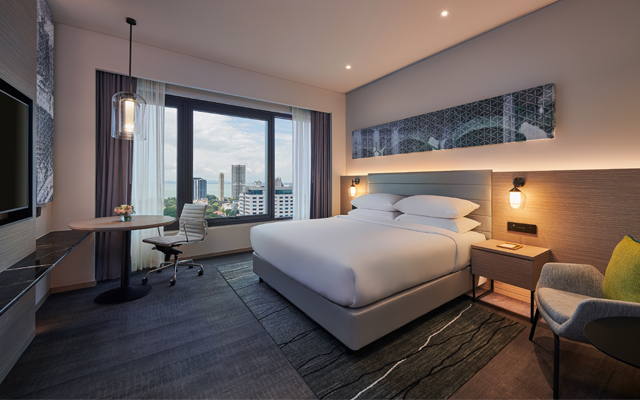
A polished urban retreat designed for business travellers, Hyatt Regency Kuala Lumpur at KL Midtown combines thoughtful design, seamless service, and exceptional facilities.
The five-star property excels in backing its expansive facilities with seamless service and personalised attention, setting the benchmark for luxury in Bangkok.