Asia/Singapore Sunday, 14th June 2026
Page 583

MEHK outlines strategy to jumpstart Hong Kong’s MICE sector

0
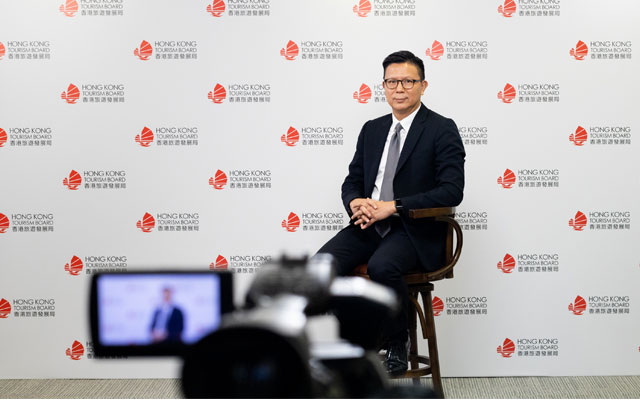
Wong: getting all the groundwork laid out so that Hong Kong can jump at the chance to be first-movers in overseas markets

On May 25, Meeting & Exhibition Hong Kong (MEHK) outlined recovery plans and developed a host of targeted promotions for the various business events segments to restart a sector that has been held captive by the Covid-19 pandemic.

These include some brand-new initiatives like Asia’s first-ever virtual business networking platform for destination promotion; a new campaign; a new hotel funding scheme; as well as fresh itineraries with a focus on CSR and wellness activities.
Wong: ensure groundwork is laid out so that Hong Kong can jump at the chance to be first-movers in overseas markets

For instance, the MeetON@HK campaign was created, and to complement this, a new online business events matching platform will be launched. This online marketplace will be a place for business events stakeholders will be invited to promote their products, as well as make appointments with potential buyers.

So far, the platform boasts over 70 hotel partners and Cathay Pacific, featuring products such as meeting packages for small business events groups. There will be flight offers by Cathay Pacific, alongside hospitality offers from attractions.

MEHK also believes that incentive travel will continue to be a motivating tool in the post-Covid-19 business environment, although event planners are predicted to favour shorter trips, as well as CSR and wellness themes.

New themed itineraries that were specially developed for incentive groups include agricultural tours in Tai O, Lantau Island; guided forest bathing or tea pairing in Taipo; a floating party at sea; or having dim sum in the dark to support the visually-impaired.

MEHK has also set up a new funding scheme for over 300 licensed hotel partners to capture small-size corporate meeting and conventions. It will be rolled out in June.

According to Kenneth Wong, Hong Kong Tourism Board’s (HKTB) general manager, MICE & cruise and regional director, Europe, no concrete timeline has been announced for the launch of the recovery plans, as there are a number of conditions that MEHK needs to monitor.

These include watching the number of confirmed Covid-19 cases, quarantine requirements, border controls, lockdown measures, air capacity, etc.

Wong said: “We are now focused on planning ahead and getting all the groundwork done. When the time is right, we want to have first-mover advantage, head to overseas markets, start our promotions, and try to recover our business as quickly as possible.”

Judging from the current situation, Wong pointed to Mainland China, and shorthaul markets like Taiwan, South Korea, and Thailand, will most likely be the first few markets to recover. As such, these initial destinations are where HKTB is planning to resume business events promotions.

As Hong Kong was hit by a double whammy of social unrest and Covid-19, overnight business event arrivals registered a drop of 14.2 per cent to 1.7 million, and over 70 events have been postponed or cancelled – representing a loss of 370,000 visitors – this year.
Event organisers predict return of exhibitions from September

0
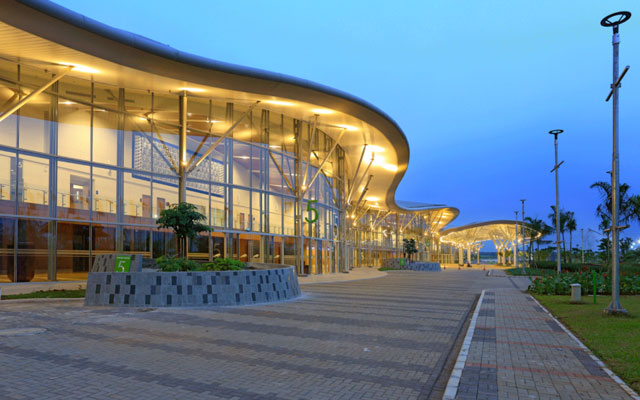
Indonesian business events stakeholders are optimistic that exhibitions are able. to return soon, with safety protocols in place; Indonesia Convention Exhibition pictured

Exhibition organisers in Indonesia are confident that business will resume in September, as the government eases large-scale social restrictions (PSBB) next month, and plans to restart economic activities.

The Greater Jakarta authority has announced that June 4 could be the last day of PSBB, depending on the results of the third phase of Jakarta’s PSBB.

Indonesian business events stakeholders are optimistic that exhibitions are able. to return soon, with safety protocols in place; Indonesia Convention Exhibition pictured

Febriana Wiriadi, vice chairman of the Indonesian Exhibition Companies Association (IECA), indicated this was a “very positive signal”. He cautioned the industry will be entering a new normal, where activities are limited, but remained confident the situation will gradually improve, with the exhibition industry returning to normal in September.

Currently, many Indonesian PEOs are eager to restart businesses, although some are hesitant as the government permits are still unclear, Febriana shared.

Based on a recent IECA survey, at least 40 organisers have confirmed that they are planning to hold an exhibition in 3Q and 4Q2020. Several shows that have announced intentions to proceed include the Indonesia International Furniture Expo, Jakarta Indonesia Pet Show, Inacraft, Gaikindo Indonesia International Auto Show (GIIAS), Allpack Indonesia, Allprint Indonesia, and Sial Interfood.

Romi, president director of Seven Events, is confident that GIIAS will be held this year, pending permits from the authorities. The event was originally planned for August 7-17, but has been pushed to October 22 to November 1.

Romi expressed: “With the easing of the PSBB (in June), we hope by July 2020, the new normal (would have begun), and slowly the economy will come back, so that in October, GIIAS can be held as planned.”

As it preps for the show, Seven Events have contacted all exhibitors to reconfirm their participation.

“While most have confirmed they will continue to participate, some have requested for a reduction in exhibition booth space, and have indicated they will not be launching a new car,” he revealed.

When asked whether sales will be affected, Romi shared that they have had experience in holding motor shows during a state of crisis, such as the 2019 election.

“People predicted a decline in purchasing power due to the election, but GIIAS’ transactions actually exceeded the target. Surprisingly, people have been enthusiastic to visit the exhibition, seeing it as a recreational (activity),” he said.

Similarly, another exhibition organiser, Mediatama Binakreasi, is also awaiting on an all-clear permit by the government to hold Inacraft, one of the biggest arts and craft exhibitions in the country. If green-lit, Inacraft will take place from September 2-6.

As the new normal will have numerous precautionary and preventative measures to ensure the safety of exhibitors and attendees, both Seven Events and Mediatama Binakreasi have been kept busy.

Umi Noor Wijiati, president director of Mediatama Binakreasi, shared that as 10 per cent of exhibitors have pulled out of Inacraft, the exhibition layout has been revised for the safety of visitors. Paths have been enlarged, and distances between booths, widened.

“We will also arrange visitors’ movement flow so that the crowd does not build up,” Umi said.

On the other hand, Romi added that his company has coordinated directly with the Global Association for the Exhibition Industry to get a reference of what should be considered in an exhibition in a new normal. Aside from looking into technology, other health and safety protocols will also be implemented.

Meanwhile, IECA is also developing a set of health protocols to renew confidence in the industry. These include the use of masks in the exhibition area, strategic placement of hand sanitisers, increasing booth areas, limiting booth activities, and leveraging e-payments.

These protocols will be developed in collaboration with the Jakarta city government, and will adhere to WHO standards. This will also become a reference for organisers to carry out activities in the new normal.

HKCEC demonstrates readiness to welcome events

0

The Hong Kong Convention and Exhibition Centre (HKCEC) recently hosted the city’s first exhibition since the Covid-19 outbreak, the 98th Hong Kong Wedding Fair from May 22-24, with a series of preventive measures in place.

The Hong Kong Convention and Exhibition Centre (Management) (HML) team partnered with the organiser to implement preventive measures such as floor plan design, queuing logistics at washrooms, ticket counters, and F&B outlets, etc. All arrangements complied with the requirements imposed by the local authority, and made reference to industry guidelines and best practices.

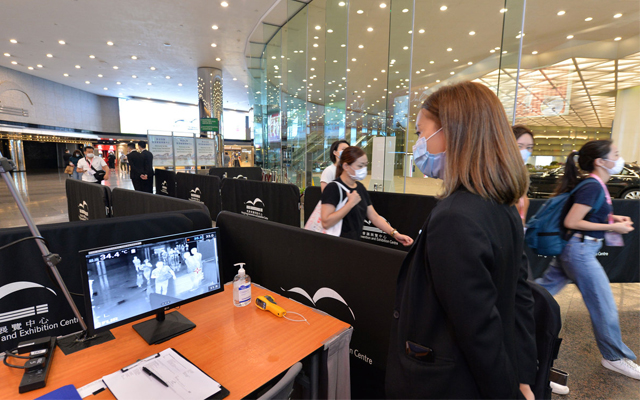
Temperature screening was required for all visitors, exhibitors, contractors and staff before entering the HKCEC

All visitors, exhibitors, contractors and HML staff members were also required to wear face masks at all times and had their body temperature screened before entering HKCEC.

In addition, sanitation and disinfection were carried out by HML staff regularly to ensure venue hygiene. Public facilities and furniture such as escalator handrails, doorknobs, lift panels, tables and chairs in the exhibition stands, etc. were sanitised frequently. The exhibition hall was disinfected at the end of each show day.

Monica Lee-Müller, HML’s managing director, is excited about the industry’s recovery.

She said in a statement: “HML is all set to welcome events back to the HKCEC. Health, safety and well-being of staff members and visitors have always been our top priority. The HML team has been working closely with organsiers to reschedule events impacted by the pandemic, and to implement necessary measures to address health and hygiene concerns.

“With the success of the Hong Kong Wedding Fair, we can demonstrate our commitment of providing professional services and customer care for event organisers and attendees.“

MCEC focuses on relaunching business; hires director for the role

0
The MCEC team

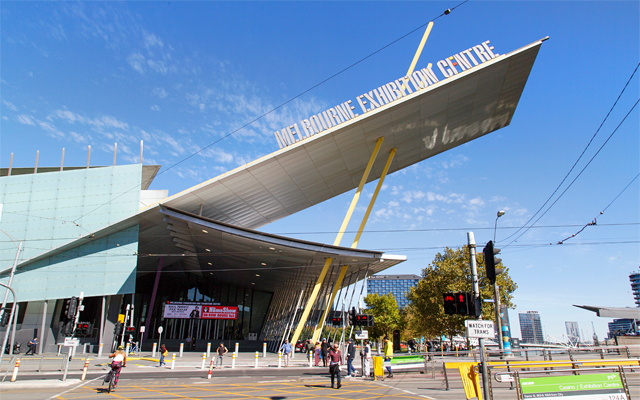
Melbourne Convention and Exhibition Centre (MCEC) is turning its focus to the future to ensure the business is set up for ongoing success post-Covid-19.

This includes exploring new business models, products and revenue streams across local, national and international markets.

MCEC is preparing to restart its business events

To lead these efforts, MCEC’s chief executive Peter King has appointed Helen Fairclough to the role of director of business relaunch in the interim.

Formerly acting chief operations officer, and prior to that director of people, culture and improvement at MCEC, Fairclough has been with the organisation for close to six years and is a board member of the Victorian Chamber of Commerce and Industry.

“Like many in the event sector, we have found ourselves in the position of not being able to perform our core business at this time, and the immediate loss of revenue has proved challenging,” King said.

He added that Fairclough has been given “the licence to be unrestrained in what we explore as a business”.

“This is an exciting time to navigate through the change ahead. Even when MCEC is able to reopen its doors, we must accept that the world has and will continue to change. For this reason, MCEC must change too,” said Fairclough.

While the Business Relaunch is in early stages of exploration, in the coming months MCEC will be inviting customers and partners across the industry to collaborate.

“We hope to have many updates to share with you about new projects and initiatives over the coming months,” Fairclough said.

MCEC is a major contributor to Victoria’s economy, with more than A$1 billion (US$664.4 million) in economic impact last year alone.

Singapore’s latest Fortitude Budget continues to support beleaguered MICE industry

0

While most businesses in Singapore will reopen by July, its aviation and tourism industries face a longer wait to reopen fully, predicted deputy prime minister Heng Swee Kiat in a parliament session yesterday.

To support these affected businesses, the Singapore government has rolled out its fourth budget, dipping into another S$33 billion (US$23 billion) of the country’s reserves.

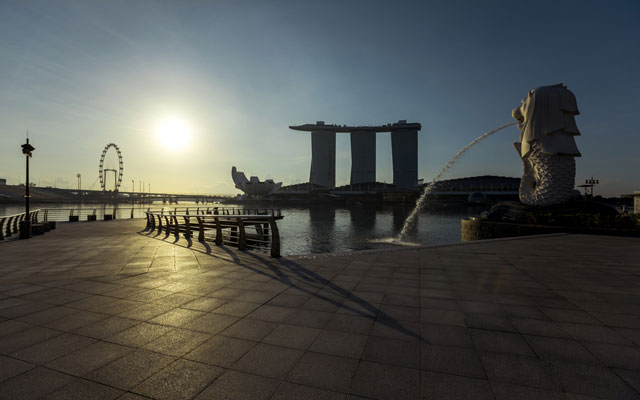
Marina Bay, Singapore

The Fortitude Budget will provide another S$3.8 billion to augment its Job Support Scheme for businesses. Under the scheme, it will extend the duration of payouts to August 2020, and continue to provide 75 per cent of wage support until August 2020 to businesses that cannot open after the Circuit Breaker measures end on June 1.

This includes companies in the business events sector.

Aloysius Arlando, SACEOS’ president, said he was “glad the government has extended the default Enhanced JSS to include the MICE and event organisers and suppliers with the support tier dependent on the company’s SSIC”.

As well, the government will increase the level of support for sectors that have been severely impacted. For instance, workers in the retail industry will now receive 50 per cent wage support, up from the previous 25 per cent. The payouts will be made by July 2020.

Heng urged firms to use this support to “retain staff and train workers”. For the aviation and tourism sectors, he added, the government “will consider providing additional help depending on the situation and longer-term shape of these industries”, as well as the reopening plans for the economy.

SMEs affected by rental concerns will also receive support as the government will pass a bill mandating landlords to grant rental waivers to tenants with significant revenue loss. Further, the government will provide S$2 billion in cash grants to offset the rental costs for qualifying SMEs over one to two months.

Other tenants, including hawkers and commercial, can now receive up to five months’ rental waiver.

For unemployed workers, the government also slated the creation of 100,000 job opportunities in the public and private sectors for first-time and mid-career job seekers under a trio of SGUnited incentive packages.

The Fortitude Budget also includes another S$285 million in financial support to promising start-ups, as well as more than S$500 million to encourage businesses to embark on digital transformation during this period.

Finally, the government has launched a series of National Innovation Challenges, which urge inter- and intra-industry partnerships to develop solutions for the safe reopening of the economy.

In total, Singapore’s four Covid-19 support budgets have amounted to nearly S$100 billion, or almost 20 per cent of the country’s GDP. In addition to this, the government anticipates that a total of S$51 billion will be withdrawn from the country’s past reserves in this financial year.

It will also bolster its Contingencies Fund – from the usual S$3 billion set aside every year to S$16 billion this year – in order to respond quickly to “unforeseeable developments” that may arise, said Heng.

ICCA, TCEB join up for forward-looking webinar series

0

ICCA and the Thailand Convention & Exhibition Bureau (TCEB) have come together to produce a trio of ICCA Conversations: Beyond the Curve webinars that seek to provide useful visions, knowledge and action plans for stakeholders of the meetings and conventions industry to navigate the new norm post-Covid-19.

The first webinar was conducted on May 26, focusing on an associations audience. It featured speakers Greta Kotler of the American Society of Association Executives and The Centre; Carola van der Hoeff of the International Pharmaceutical Federation; Chainarong Monthienvichienchai of Serra International; Richard Simcott of Polyglot Conference; and with El Kwang of Untangled as the moderator.

(From left) TCEB’s Nichapa Yoswee, GIS Group’s Jason Yeh, and MCI Group’s Oscar Cerezales

The second webinar will take place on June 2 from 16.00 to 17.30 (GMT +8), focusing this time on the intermediary community.

Four industry leaders will attempt to project some plausible future scenarios through logical analysis, shedding light on possible implications and the solutions meetings and conventions suppliers can take down the road.

The panellists for this session are Nichapa Yoswee of TCEB; Jason Yeh of GIS Group; and Oscar Cerezales of MCI Group; with Karen Yue of TTG Asia Media as moderator.

Registration is now open.

Details on the third session will be made available soon.

AIPC, ICCA and UFI release good practices guide for events in the new normal

0

AIPC, the International Association of Convention Centres; ICCA, the International Convention and Congress Association; and UFI, the Global Association of the Exhibition Industry, have joined forces to release a new guide that identifies and promotes globally emerging standards, protocols, and good practices to help business events sectors restart.

Titled Good Practice Guide: Addressing COVID-19 Requirements for Re-Opening Business Events, this is a third in the series of Covid-19 related guides being shared with the associations’ respective memberships.

Event organisers and venue operators need to put respective measures in place that create safe environments for participants

It supports their work to create conditions and safeguards that will enable the safe reopening of their activities while observing the needs and expectations of relevant governments and health authorities.

“International meetings and events are organised gatherings of professionals with specific, known and controlled attendee participation and need to be considered this way by global authorities, as opposed
to other mass gatherings such as festivals and sporting events. It is our challenge to convince local governments, associations and event attendees that our venues can be highly-controlled and safe environments.

“By sharing information and best practices between our global industry association partners, we hope we will be contributing to a more integrated approach, so that the international meetings industry can play its crucial role in economic and social recovery sooner rather than later,”
said ICCA president James Rees.

The guide complements two earlier publications – Good Practice Guidance to COVID-19 for Convention and Exhibition Centres and Good Practice Guidance for the Use of Centres as Temporary Emergency Facilities – which were produced and distributed in March and April of this year.

The publication was created as a collaborative project among different parts of the overall industry. It has been developed through the direct, practical experiences and expertise of members that are dealing with the impacts on a day-to-day basis.

Following distribution, the partner associations will be scheduling an online event to facilitate the implementation of the guidance provided in this publication and to assist members in interpreting its content into local actions.

10 tips on how brands can stay interactive online

0
With face-to-face physical meetings out of the question, online is the only medium available to reach one's audience
With face-to-face physical meetings out of the question, online is the only medium available to reach one’s audience

Increasing online visibility is a challenge for many, more so in this current time and space when all experiences have to be temporarily moved online, as well as compete against each other for more eyeballs.

Here are some tips for companies to rethink how to connect with their online audience.

  1. Be agile.
    Uniplan has reinvented and reconfigured part of their Hong Kong office by turning it into a livestreaming studio to help their clients launch products and hold events online.
  2. Deepen collaborations.
    We’ve seen luxury brands looking to their partnerships with hotels and resorts to create exclusive events and experiences for their guests in a safe environment.
  3. Offer a unique experience.
    Xiaomi, Huawei and other Chinese technology brands have temporarily moved their product launches online in order to avoid cancellations. Yet, brands should always think of how to create unique experiences by leveraging advanced technology such as augmented reality, 360-degree video content, so that virtual events can also convey brand messages effectively.
  4. Explore live broadcasting.
    Since Covid-19, Chanel has introduced live broadcasting of their fashion shows, resulting in a democratising of the whole fashion show participation experience.
  5. Consider online sales.
    Shanghai Fashion Week went fully online for this spring’s edition by collaborating with Tmall, which allowed them to generate online sales like never before. It also demonstrates that brands can consider collaborating with well-established e-commerce platforms in maximising sale channels.
  6. Don’t ignore your international audience.
    As conferences and corporate events resume in China among global travel restrictions, event organisers have stepped up effort in creating strong live connections with guests abroad and working with satellite venues in other countries for foreign guests to participate. Brands are advised to think of effective stage management/setting such that international guests can be well engaged.
  7. Consider omni-channel solutions.
    Physical pop-ups are taking place again but with reduced numbers of visitors allowed in at the same time. Developing an online platform together with the physical pop-up will allow guests to book their visit. The brand will also be able to collect personal data and engage consumers online before, during and after their visit.
  8. Make use of social media platforms and KOLs.
    The Ritz-Carlton has invited different guests such as yogis to stay in the hotel and do a photo series and live stream their practice to their followers using the brand’s location tag and showing the venue off to more niche audiences.
  9. Digital consolidation.
    Ensure marketing campaigns align offline and online. Guests that frequent a hotel’s restaurants and bars can be invited to see what is happening behind the scenes whether is a chef or bartender recreating an iconic recipe or showing the audience how to reheat a favourite takeaway dish at home.
  10. Stay informative.
    If you want to keep engagement, your audience needs a reason to be on your platforms and following your news. Hotels such as Upper House are hosting live panels at the hotel for guests to tune into from the comfort of anywhere.

Macau casino pioneer Stanley Ho passes away

0

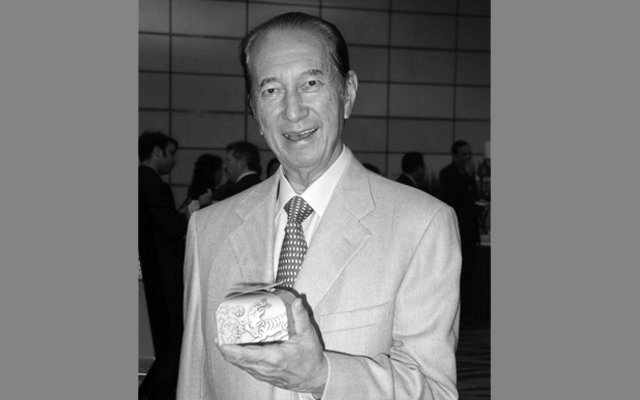
Macau’s casino mogul Stanley Ho Hung-sun passed away peacefully yesterday, surrounded by his family members, at the Hong Kong Sanatorium and Hospital. He was 98.

He is survived by three of his wives and 14 of his 16 children.

Stanley Ho Hung-sun

Founder of Shun Tak Holdings and SJM Holdings, Ho almost single-handedly steered the revolutionary development of Macau’s gaming and entertainment industry over the past five decades.

When Macau’s colonial government decided to nurture tourism to rescue the declining manufacturing industry in 1961, the Eurasian debonair won the sole concession for gaming and built his casino empire that lasted 42 years.

This lasted until the handover to China in 2000, where the new administration later decided to open up the gaming segment by splitting the licences and issuing three franchises. He later linked up with US-based MGM Resorts International to be in a better position to compete with his rivals.

Ho was also a pioneer in the Hong Kong-Macau high-speed passenger ferry operations, and established one of Asia’s largest ferry fleets, and helped to connect the Pearl River Delta which propelled developments in the region.

Apart from an influential figure in many industry sectors, most notably in tourism, leisure entertainment and property development, Ho was also known for his generosity, regularly giving back to the communities by actively providing aid to the needy, supporting disaster relief, cultural and technological advancement, and Chinese heritage conservation.

Investments in diversity

0

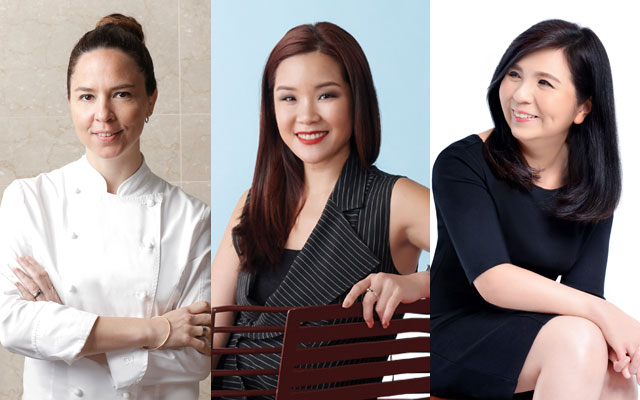
As the number of Accor’s properties in Asia-Pacific grows, so has the number of female heads, as the company dedicates significant resources into helping them develop professionally.

The group is committed to having at least 35 per cent women general managers in its hotels by end-2020; it currently stands at 25 per cent. To date, out of 300,000 employees worldwide, 42 per cent department heads and 29 per cent of general managers are female.

From left: Anne-Cecile Degenne, Chidchanok Pasinpong and Jacqueline Poey

But there are still challenges women have to overcome, for instance, cultural perceptions and dated mindsets, in order to fix the gender imbalance present in the hospitality industry.

“Social norms in Asia-Pacific still place high expectations on females to be the main home carer for the family. This expectation makes it difficult for female leaders to balance family commitments and a career in hospitality,” said Christine Rumble, chief talent & culture officer, Accor Asia Pacific.

Chidchanok Pasinpong, general manager of SO Sofitel Hua Hin, opined that the cultural shift can only happen when people stop assigning gender roles at a young age.

“We need to empower girls so that they know they can pursue their passion and excel in any field they choose when they grow up, be it a male-dominated role or not. On the flipside, there are departments such as human resources and housekeeping that are dominated by women. There needs to be a shift in thinking that these are women’s jobs,” she said.

Anne-Cecile Degenne, executive chef with Raffles & Fairmont Makati, believes that equality is crucial in any workplace, but “mentalities are difficult to change entirely” and there are still people who believe that “high positions belong to men”.

The good news is, with more women performing well in their roles as compared to their male counterparts, perceptions are changing, suggested Jacqueline Poey, hotel manager of Fairmont Singapore and Swissotel The Stamford.

Poey told TTGmice that Accor has helped her develop professionally. She recalled: “I was fortunate to be given the opportunity to attend a leadership training session only meant for vice presidents, high-potential general managers and corporate directors.”

The opportunity to go for greater goals was not unique to Poey. After helping Hotel Des Arts win the 2016 World Luxury Hotel Awards, Accor sought Degenne’s expertise to helm the kitchens at Raffles Makati and Fairmont Makati.

Meanwhile, Chidchanok is paying it forward by getting involved in RiiSE, Accor’s diversity network, by supporting other female employees through mentoring and training programmes.

Riise aims to share knowledge of solidarity and combat stereotypes. Its membership stands at 14,000, and nearly half are men. Other Accor initiatives include the International Hospitality Management Programme and GM Pass to fast-track star talent to general manager roles; as well as specific learning paths in different areas of management. These do not have gender quotas, and all participants are evaluated based on merit.

Recognising that there is also inequality in the F&B departments, Accor has launched a new network WILD F&B – Women in Leadership Disrupting Food and Beverage to bring female F&B leaders together to challenge and support one another.

Although gender imbalance has definitely improved in recent times, there is still room for improvement.

Chidchanok said: “We are definitely heading in the right direction but I don’t feel we have achieved a gender balance yet. On the property level, there’s a healthy mix in the executive committee. In corporate offices across the hospitality industry though, a majority of the executive committee is made up of men.”

As for Degenne, she hopes the call for female leaders in F&B be louder, as the strengths of a woman are usually compared to that of men. She wants to close the gap in gender inequality by sharing with fellow women her experiences as a woman and mother succeeding in the industry.

“Men and women are different and this needs to be recognised and celebrated. We need all types of people in our team – different gender, age and nationality. Diversity encourages everyone to perform better, by challenging status quo,” Rumble concluded.

Reviews

The Slate Phuket

Just 10 minutes from Phuket International Airport on the serene northern coast, this 178-key, Bill Bensley-designed resort offers delegates a quiet, tropical paradise steeped in Phuket’s tin-mining heritage

The Ritz-Carlton, Bangkok

The newly-opened Ritz-Carlton, Bangkok anchors the One Bangkok development with cosmopolitan elegance. Featuring the city's largest ballroom and a spectacular new penthouse suite, it delivers exceptional hardware and deeply authentic, soulful service for business and leisure travellers alike

Mama Shelter Zurich

Behind the imposing, Brutalist concrete that defines Zurich’s Oerlikon district lies a surprising secret. While its exterior honours the neighbourhood’s industrial roots, stepping inside Mama Shelter reveals a vibrant, neon-soaked world that is a far cry from its rigid shell