Asia/Singapore Thursday, 9th April 2026
Page 586

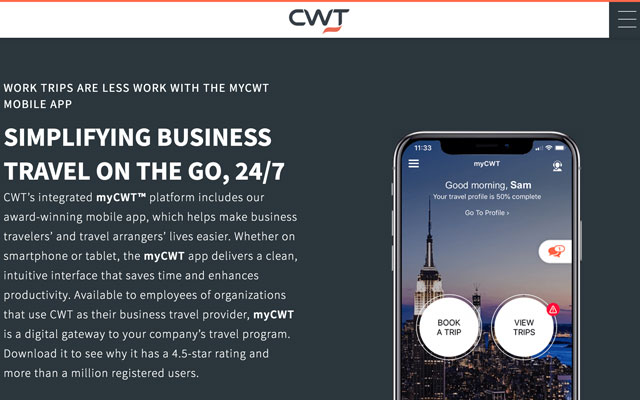
CWT adds web-based bookings to myCWT platform

0
A screenshot of the myCWT app from the website

CWT has introduced web-based flight and hotel booking capabilities to its global travel management platform, myCWT.

This means that travelling employees can now book flights and hotels through any of CWT’s servicing and booking channels, including web, mobile, email, telephone and messaging for their corporate travel. This is in addition to using their company’s chosen online booking provider.

A screenshot of the myCWT app from the website

Offered to 25 countries and 13 languages as a start, the extension will be rolled out in phases through 2020 for clients in these countries. It is set to give corporate travellers the convenience of one-stop booking for both flights and hotels across more channels.

According to Niklas Andreen, chief traveller experience officer, CWT, the increased convenience led to a marked rise in policy-compliant hotel bookings during the beta testing of the extension. During the pilot phase, the percentage of digital transactions made using myCWT app and web channels jumped to double digits.

In the future, CWT intends to roll out more functions to complement the extension of the service, such as the ability to cancel flights via the web and mobile app.

ICCA moves second APAC summit to Yokohama later in the year

0
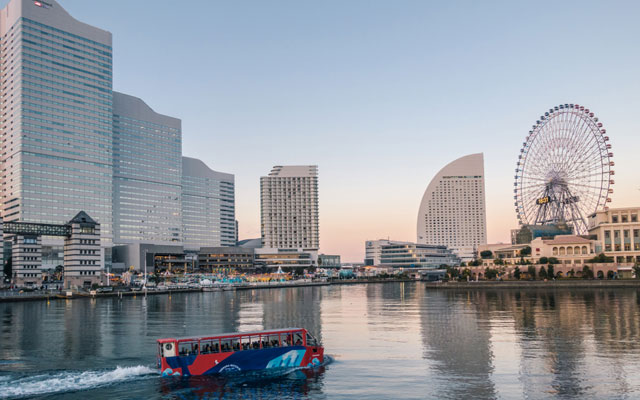
Yokohama will host ICCA's second conference later this year

The ICCA Asia Pacific Chapter 2020 summit has been postponed in light of the Covid-19 pandemic.

Initially scheduled to take place from July 23-24 this year in Xiamen, China, the event has now been postponed to December, and will be held in Yokohama, Japan.

Yokohama will host ICCA’s second conference later this year

In recognition of Xiamen’s support, ICCA will host the third edition in Xiamen come November 2021.

Specific dates will be announced once the situation settles.

Covid-19 snuffs out lights on Vivid Sydney 2020

0
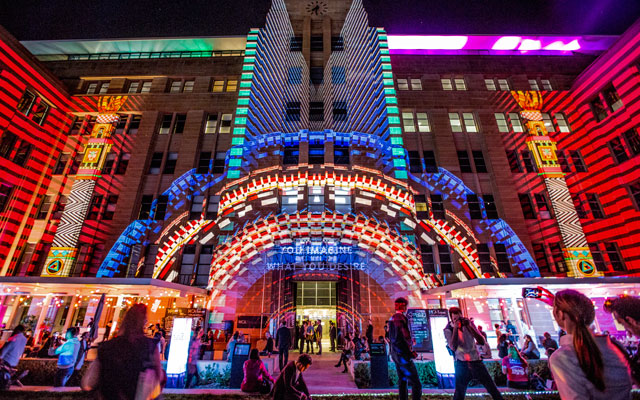
A previous edition of Vivid Sydney

This year’s 11th edition of Vivid Sydney, the city’s annual light, music and ideas festival, has been cancelled, following recommendations by the federal government and health authorities to limit non-essential organised gatherings to under 500 people.

The event, which was originally slated to run from May 22 to June 13, 2020, at various locations around Greater Sydney, will not proceed at any of its planned locations.

A previous edition of Vivid Sydney

Destination NSW, the NSW Government’s tourism and major events agency, said in a statement: “While the cancellation of the event is disappointing and another major setback for the tourism industry, it is the right thing to do to control the spread of infection and keep people safe.”

A spokesperson for Destination NSW added: “Vivid Sydney is a bright star of Sydney’s event calendar so the decision to cancel was not taken lightly. As the event owner, we must follow the advice of health officials to ensure the health and safety of our citizens and everyone involved with Vivid Sydney.”

In 2019, Vivid Sydney attracted a record 2.4 million attendees, and generated A$172 million (US$106 million) for the NSW economy.

Destination NSW has assured that the event would return in 2021.

This is how we do it

0

In many national and regional conferences in Asia, meeting organisers have recognised that attendees are demanding more interaction and engagement.

As such, this is changing the way conferences are executed, with many incorporating a meeting design that focuses on audience engagement, and sporting clear meeting objectives and desired outcomes.

Dee Dee Quah, director, Medical Conference Partners, explained: “The demographics of the audience are changing as young people enter the workforce and attend conferences. To engage with the younger audience, speakers have had to adapt and change their presentation style. Many organisers are moving away from having conferences wholly made up of traditional one-way lectures with limited time for Q&A at the end.”

Quah further explained that “activity-based learning such as workshops and masterclasses have become very popular”, as the audience – regardless of age – are more interested in learning from experiences as opposed to textbook reading. Another popular format is the inclusion of case studies in programmes.

“Speakers are also incorporating event technology apps such as Slido into the presentation to engage the audience during their presentation, and get live feedback,” revealed Quah.

Mona Abdul Manap, founder and CEO of Place Borneo and Place Business Events, concurred that event apps have become increasingly popular over the last few years.

She elaborated: “It is especially effective in multigenerational conferences, especially in Asia. Young people are usually fearful of asking the speaker or panellists questions using a microphone when there are more experienced audience members present. With Slido and other event apps, questions can be posed anonymously.”

Jay Ishak, event specialist, trainer and consultant at 6E-Events – a PCO-based in Kuala Lumpur that manages national and regional conferences – shared that her company places great emphasis on the delivery of content as that is the essence of any conference.

“We always advise our clients not to have any session beyond 30 minutes, unless the speakers and their topics are very interesting or in-demand. We are one of few PCOs who will run through speaker presentations prior to the event to make sure it is not off topic, and that it can be delivered within the allocated time,” Jay shared.

She added that 6E-Events will also run through the delivery styles with speakers, and advise them on various issues like how not to stereotype, projecting enthusiasm, and engaging the audience better with eye contact.

On how receptive her speakers have been to her suggestions, Jay related: “We have found that even experienced speakers are willing to adopt our suggestions and try something new which they had never done before. Ultimately, it is about ensuring that the audience benefits.”

Meanwhile for Mona, she finds it a challenge sometimes, when it comes to convincing clients to use a format that is more inclusive than a lecture, such as a fireside chat or fishbowl forum.

“But once we are able to convince them and the conference turns out to be a success, they are more receptive to try new meeting concepts we propose at future events,” she said.

Aside from meeting formats, Jay’s clients also look for ideas on how to help their audience make the most out of the networking opportunities.

“At any conference, there are experienced delegates in their areas of expertise, less experienced ones, newbies and perhaps even students in a particular field. Many young ambitious delegates want to build their networks, but not all may feel comfortable approaching someone whom they regard as a key opinion leader in their field of expertise or senior individuals. This is a cultural thing, especially in Asia.”

To get over this hurdle, Jay incorporates ice breakers and friendly contests early on in the programme or during networking sessions.

Roy Sheppard, specialist conference moderator, concluded: “Good conferences are those where the speakers and organisers know how to manage the interest, energy and engagement of everyone in the audience. Adult learning is most effective when there are elements of fun as part of the meeting design and this helps to engage the audience, which in turn increases the likelihood that they learn new things.”

New country manager for Scoot Australia

0

Scoot has promoted Kirsty Lucas to country manager Australia, sales and partnerships, after almost two years with the airline.

Her new designation will involve growing Scoot’s Australian market through strategic partnerships, including trade opportunities. She takes over from former Scoot general manager, Jared Simcox.

With over a decade of travel and tourism industry experience, Lucas was most recently regional manager, Australia at TravMedia and has previously held positions in a variety of tourism-based businesses.

Singapore widens border restrictions, ceases port calls for cruises in Covid-19 fight

0
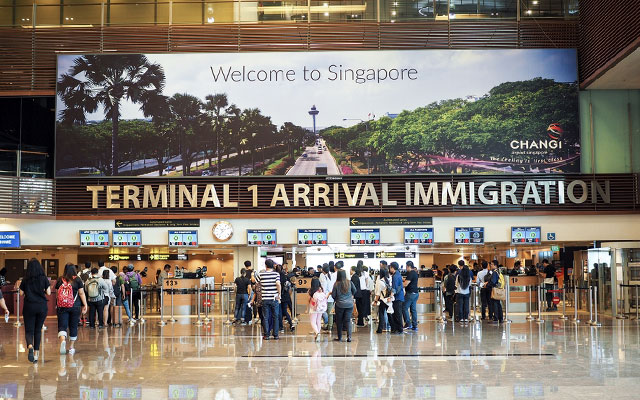
Passengers arriving at Changi Airport's Terminal 1

Singapore has implemented a range of sweeping measures, including wider border restrictions, social distancing measures, and ceasing port calls for all cruise vessels to curb the spread of the Covid-19, after it was declared a pandemic by the World Health Organisation on Wednesday.

The measures include additional travel advisories to Singaporeans against non-essential travel to countries hard hit by the coronavirus.

Passengers arriving at Changi Airport’s Terminal 1

From 23.59 on Sunday (March 15), all visitors who have been to Italy, France, Spain and Germany within the last 14 days will be banned from setting foot in the country, according to a Ministry of Health (MOH) statement released today.

As well, from 23.59 on Sunday, Singaporeans and permanent residents who have been to Italy, France, Spain and Germany within the last 14 days will be issued a stay-home notice (SHN), which means they will be required to stay home at all times for 14 days upon return to Singapore.

The notice will also apply to long-term pass holders with recent travel history to these countries within the last 14 days.

Furthermore, travellers showing any signs of fever or respiratory symptoms at the checkpoints will need to serve a 14-day SHN, even if their swab test results for Covid-19 were negative.

Singapore will also cease port calls for all cruise vessels with immediate effect.

As well, all ticketed events with 250 participants or more are to be cancelled or postponed, including cultural, entertainment and sporting events, in line with the government’s social distancing measures.

For events that have already been committed to, like in the case that tickets have been sold, organisers must adhere to precautionary measures set by MOH before they can proceed.

Participants could be seated at least one metre apart from one another, and reduce contact with others such as by not shaking hands, said MOH in the release.

Employers are also advised to put in place measures to reduce close contact, such as implementing telecommuting and video-conferencing, staggering work hours, and allowing employees to commute at off-peak hours. Seating in meeting rooms and work stations could also be spaced apart.

For public venues, measures to reduce close contact by patrons or customers could include setting seats at least a metre apart at dining venues. Entertainment venues and tourist attractions, including casinos, cinemas, theme parks, museums, and galleries, could limit the number of visitors at any one time, and increase spacing among visitors.

In addition, sports centres with indoor facilities, such as gyms and private academies, could limit the number of patrons, introduce physical separation measures, increase the frequency of cleaning, as well as issue advisories to reduce unnecessary contact, and practice public hygiene.

The measures were announced by minister for health Gan Kim Yong and minister for national development Lawrence Wong, who chair the multi-ministry task force on tackling the virus.

Gan said that the island country is increasingly seeing more imported cases, and warned that more are expected with the surge in cases globally, highlighting the importance of border control restrictions.

He added: “But even as we continue to tighten, we know it is not possible to close borders, we need to ensure measures are sustainable in the long term, and that life can go on.”

Kaydee George to manage Wyndham’s Fiji flagship property

0

Kaydee George has been appointed general manager to Wyndham’s flagship property in Fiji, Club Wyndham Denarau Island.

Prior to this move, she was area general manager Gold Coast, based at Wyndham Surfers Paradise.

George first joined Wyndham in 2012 as a conference and events manager in Dunsborough, Western Australia, before being promoted to various resort management roles in Australia and New Zealand.

She is also part of the Queensland Government’s Young Tourism Leaders programme, which provides influential and inspiring role models to encourage young people to consider a career in the tourism industry.

More work needed for Indonesia to become one of APAC’s top MICE destinations: experts

0

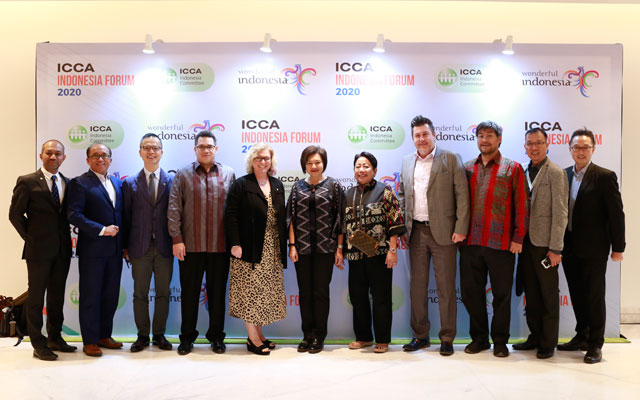
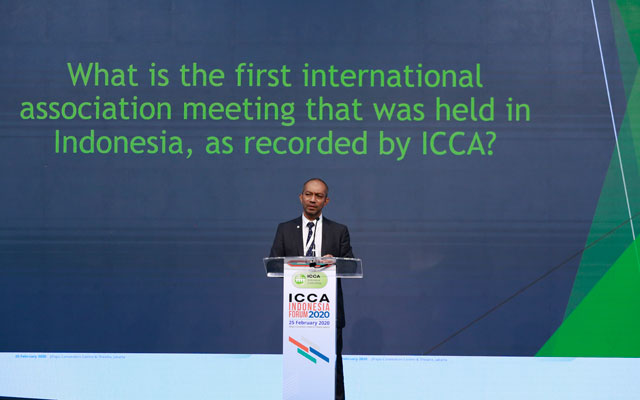
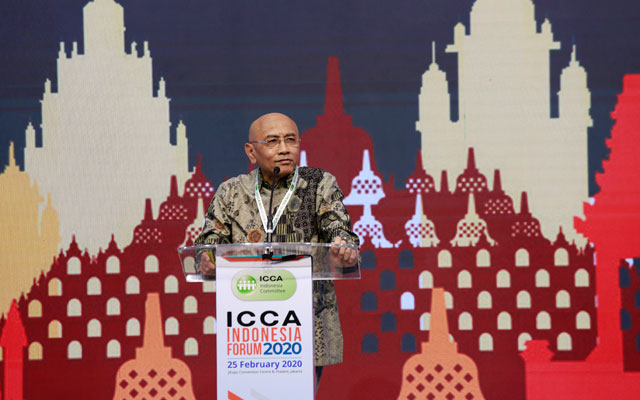
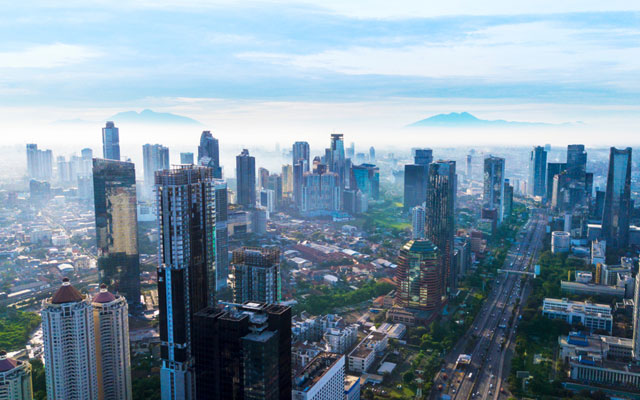
Indonesia has the opportunity to rise and become one of Asia-Pacific’s top business events destinations, but stakeholders have a lot of catching up to do, said speakers at the inaugural ICCA Indonesia Forum in Jakarta.

One reason for this is because association meetings have drifted away from Europe to Asia-Pacific and are chances that Indonesia can capitalise on. In addition, Indonesia has several industry-leading sectors that international business events are interested in.

Raty Ning, chairman of ICCA Indonesia Committee, said: “(The fact that) more international events are held in Asia-Pacific, while at home, (the government) is now giving more focus to business events sector, is good momentum for Indonesia, which still sits below Malaysia, Thailand and Singapore, in attracting association events.”

Jason Yeh, ICCA’s vice president and chair of Asia-Pacific chapter, added: “The government is in the industrial revolution. With Indonesia 4.0, there is a focus on factory and technology…. (which is where the opportunities for attracting events lie).”

Yeh pointed to leading sectors in Indonesia such as F&B, coffee production, textile and apparel had related international events the country could tap into. “In the automotive industry, for example, there is the International Conference on Automation and Electrical Engineering,” Yeh pointed out.

However, there are challenges the country’s business meetings industry has to overcome.

Aman Pulungan, president of Asia Pacific Pediatric Association and president of the Indonesian Pediatric Society, elaborated: “There are many health societies and associations here. The opportunity is there and the market is big, but it is tricky to host an event in Indonesia. For example, Jakarta was flooded on my way (to this event), and it took me two hours to get here.”

This is as he shared in his address that there were numerous meetings, conferences and symposiums within the pediatric society. In Indonesia alone, there were 26 chapters with an event taking place almost every week, where participants ranged from hundreds to 4,000 when there is a national congress.

Other issues that Aman pointed out were the difficult in obtaining safety guarantees, or assurance from local governments.

For example, two years ago when his association was planning to host a conference in Bali, an earthquake struck Lombok. “We could not get any safety guarantees from anyone to help us decide whether we should continue or postpone. I had to go to Lombok myself to assess the situation, report back, and convince participants the event could carry on.”

“Guarantee and assurance from the government are important as cancelling an event costs (host and organiser) a lot of money,” he noted.

Other issues Aman pointed out include the need for convention centres in appointed business centres

Connectivity is also an issue. Aman elaborated: “I am not just talking about international direct access. Even people in Kalimantan don’t have direct access between cities on the island. Participants from (Balikpapan in East Kalimantan, for example) have to fly to Jakarta to connect to a flight to Banjarmasin in South Kalimantan. This doesn’t make sense!”

He encouraged stakeholders to share all this with the local government, so that it can be “acted upon” and the business will not be wasted.

Meanwhile, Noor Ahmad Hamid, ICCA’s regional director, touched on the importance of being able for the private sector to collaborate with the government, and “speak the same language” so that the goals. are aligned.

He shared: “You cannot do things without government support. If you are bringing 4,000 to 5,000 delegates you have to take them through the immigration counter. Who owns it? The government, so there needs to be collaboration. “

For instance, Noor pointed out the chief minister in Sarawak fully supports business events, hence the convention bureau is funded by the government, while the chief minister ensures that all ministries support the bureau, and understand that business events are not part of the tourism sector.

“Business events are part of the knowledge economy. Every time the bureau goes out for a bid, the respective ministry will give their full support, making it easier for the bureau to bid,” said Noor.

Noor also pointed to using data to help with the bidding process. For example, Japan has many city convention bureaus and to compete internationally, they make use of data to differentiate themselves.

“Kobe, being the K supercomputer city – the fastest computer after China and the US – will bid for events relevant to their city. When talking about snow, (bids) will go to Sapporo, while (education-related subjects) are (channelled) to Sendai as it has the universities with the highest population of international students,” he elaborated

He also suggested that Indonesia create a strategy to develop second- and third-tier cities.

“Not all associations have the funding to go to big cities. Going to the second-, or third-tier cities will also bring benefit. A conference with 400 delegates is small for Jakarta but to Batam and Palembang, you have the whole town for yourselves. That’s the dynamic of an international conference,” he said.


Jakarta suspends permits for large gatherings

0
Jakarta

Anxiety has befallen business events stakeholders across Jakarta, following Jakarta governor Anies Baswedan’s decision to temporarily suspend the issuance of permits, and reviewing issued permits, for mass gatherings in the city due to Covid-19.

In response to the governor’s instruction to raise awareness about Covid-19, One-Stop Integrated Services Agency (BPTSP) issued a circular that suspended permits for large-scale gatherings.

Permits for large gatherings in Jakarta are being suspended, currently issued permits will be reviewed

The suspension is not only for outdoor activities, such as bazaar, camps, sports and youth events, but also indoor ones, including business events, – although BPTSP did not mention business events in its circular – according to Cucu Kurnia, head of Jakarta Tourism and Creative Economy Agency.

The governor’s instruction has raised the eyebrows of lawmaker Evita Nursanty. Evita, who has a business events background, argued that the ban could kill the meeting industry and worsen the country’s economy.

And while she agreed the Jakarta administration needed to raise awareness on the risks of the spread of coronavirus, the government also needed to keep the country’s economy alive.

Evita warned that this particular regulation could oppose the policy of Indonesian president Joko Widodo who called for the holding of more business events, especially in regions, to bolster domestic tourism and mitigate Covid-19’s impact on the tourism sector.

Hosea Andreas Runkat, chairman of the Indonesia Exhibition Company Association, said: “We should fight Covid-19 with the spirit of moving the tourism and creative economic sector (forward), avoid pessimism in the business events industry and spread optimism instead.”

He added that instead of terminating all permit issuance, the Jakarta government should allow events – that could fulfil the more stringent requirements set by the Ministry of Health and WHO – to proceed.

Susilowani Daud, president director of Pacto Convex, added: “Indonesia has handled epidemics before. Venues like hotels, convention centres and professional organisers like us will not be reckless under this circumstance and will refer to guidelines set by the government. Therefore, it is not necessary for the governor to bar all types of gatherings. This regulation will just create more fear.”

And as fear is contagious, Susilowani was concerned that other city governments would follow suit.

As for the reviewing of issued permits, Cucu explained to TTG Asia that the Jakarta government has decided that not all business events will be suspended, and low-risk events will still be able to proceed.

“We have created two criteria, high risk and low risk, based on the room space. (The event can proceed) one person has a 1m2 space in the room. For example, if the event has 500 people participating, the room must at least be 500m2. If it is less than 500m2, the event is identified as high risk.”

“But I think that business events will not be in a high-risk category. Events like music concert are in the high-risk category,” he said. Cucu added that business events that are given the green light to proceed also had to implement tighter SOPs, such as providing hand sanitisers, a suitable isolation room, as well as the checking of the body temperature of all visitors. – Additional information by Mimi Hudoyo

€23 billion of lost revenue for global exhibition industry: UFI study

0
UFI releases first global assessment of economic impact Covid-19 is having on tradeshows and exhibitions

UFI, The Global Association of the Exhibition Industry, has released data that reflect how much tradeshow postponements and cancellations are costing both the industry and exhibiting companies.

“Globally, the fact that more than 500 tradeshows have not taken place in recent weeks is creating an escalating ripple effect for whole industries”, noted Kai Hattendorf, UFI managing director / CEO.

UFI releases an assessment of economic impact Covid-19 is having on tradeshows and exhibitions globally

Based on UFI data, the orders that exhibiting companies are currently not securing already add up to €23 billion (US$26.3 billion) globally. Of this, UFI estimates lost orders of around €13 billion euros in Asia-Pacific, and €9.7 billion in Europe. As additional events continue to be postponed, these numbers are expected to rise further in the weeks to come.

As an industry, the exhibitions industry generates a total economic output of €22.9 billion per month globally on average, translating into more than 270,000 FTE jobs.

Based on the current numbers and size of the events not taking place, €14.4 billion of economic output have already been lost. Hardest hit is Asia-Pacific, where the impact is already reaching more than €8.4 billion. In Europe, with an ongoing wave of postponed and/or cancelled shows, the impact is already reaching €5.8 billion. Calculations for other regions are underway.

Many of the events that are not taking place this quarter are being postponed – and rescheduled to take place later in the year. This may help to reduce the mid-to-long-term impact.

“But even short-term postponements have an immediate impact because they delay scheduled business and revenues. This poses an existential risk, in particular for small and medium-sized companies”, said Christian Druart, UFI research manager.

“These numbers stress the critical importance exhibitions play in any economic recovery – market places and meeting places are the fastest fast track to drive any economic recovery”, said Hattendorf.

“We rely on the joint efforts from policymakers and global leaders to ensure that the companies that organise these events, creating those necessary market and meeting places, will be able to continue to fulfil that role in the future. All of these companies are already suffering massively under the current wave of postponements and cancellations”, he concluded.

Reviews

The Ritz-Carlton, Bangkok

The newly-opened Ritz-Carlton, Bangkok anchors the One Bangkok development with cosmopolitan elegance. Featuring the city's largest ballroom and a spectacular new penthouse suite, it delivers exceptional hardware and deeply authentic, soulful service for business and leisure travellers alike

Mama Shelter Zurich

Behind the imposing, Brutalist concrete that defines Zurich’s Oerlikon district lies a surprising secret. While its exterior honours the neighbourhood’s industrial roots, stepping inside Mama Shelter reveals a vibrant, neon-soaked world that is a far cry from its rigid shell

Hyatt Regency Kuala Lumpur at KL Midtown

A polished urban retreat designed for business travellers, Hyatt Regency Kuala Lumpur at KL Midtown combines thoughtful design, seamless service, and exceptional facilities.