Asia/Singapore Thursday, 9th April 2026
Page 596

Yamaman goes to Myanmar

0
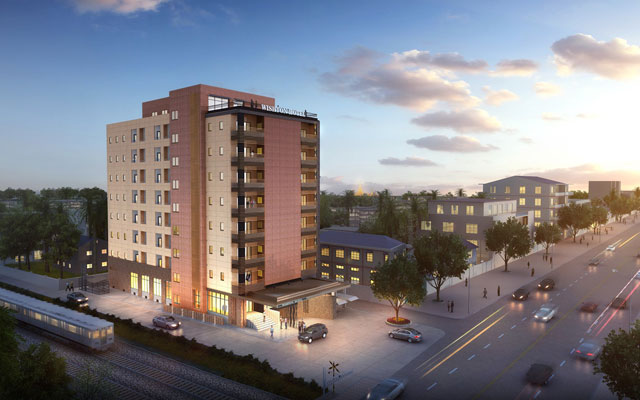
Wishton Hotel Yangon will be opening its doors this month

Japanese realtor Yamaman will be making its first foray overseas, with the launch of a hotel in Myanmar on February 17.

Situated in the Yankin area between downtown Yangon and Yangon International Airport, the Wishton Hotel Yangon will be operated by Yamaman’s Myanmar arm, Hotel Yamaman.

Wishton Hotel Yangon will be opening its doors this month

The Japanese-style accommodation will be supported by Japanese-speaking staff. Each of the 91 rooms will be equipped with a bath, with prices ranging from US$70-80 per night. Half of the rooms are designed for long-term stays, and feature a kitchen and washing machine. Guests can also enjoy a Japanese breakfast buffet.

By offering affordable, diverse accommodations near the international airport, Yamaman hopes to attract tourists, business travellers and long-term guests to the hotel, which will become the company’s test case for expansion in Myanmar.

Sanae Tani, Yamaman overseas operations department executive, told TTGmice: “We decided to open the hotel (in Yangon) because of the potential for future growth in Myanmar and the warm personality of the Myanmar people.”

Tani said that Yamaman’s mix of Japanese hospitality and ability to accommodate longer-stay guests is filling a gap in the market.

“In Myanmar, the number of serviced apartments for long-term stays has increased dramatically, but there are still few Japanese-style facilities and services available, especially for Japanese businesspeople,” she said.

Although no concrete plans are in the pipeline, the company is eyeing more hotel ventures outside Japan.

“We would like to open five or six hotels in Myanmar and hope to develop our business in other South-east Asian countries too,” Tani said.

Funding the future

0

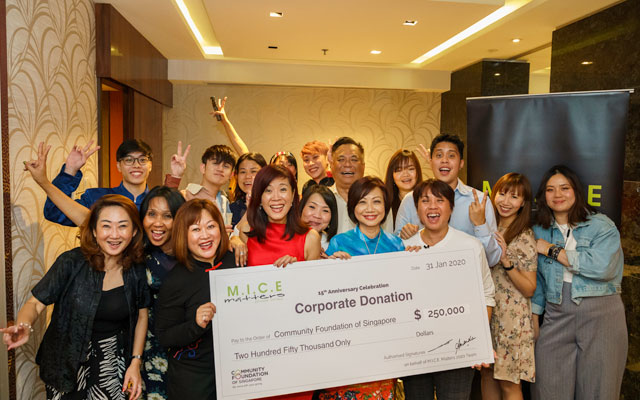
I learnt from the Community Foundation of Singapore (CFS) that this is the first donor-advised fund that has been established for a company in the travel and hospitality sector. Also, S$250,000 (US$180,157) is a rather large donation coming from a company with just 20 people. Did you know that?
I was actually quite shocked to find out, but you know what? We’re really happy to do it.

Why did you set up this foundation?
Actually, CSR has always been part of our DNA. During our yearly Christmas office party, when we invite our partners and suppliers, we encourage our guests to donate (to charity). We are a little notorious (laughs).

But the mood is generally light and cheerful, and for every dollar they put in the bag, we match it. The final amount will then be donated to a single charity organisation such as Make-A-Wish Singapore, and through the past 15 years, I’ve seen the final amount range from between S$3,000 to S$10,000.

This year (because of our company’s 15th anniversary), I think we got a little bit emotional and sentimental (laughs). We wanted to do something different to celebrate our 15 years in the industry. When Mitch (MICE Matters’ co-director, Michelle Seet) and I look back all these years, we realised we just lived year-by-year and basically rocked and rolled our way through it. We will never ever forget how we started.

So how are the funds dispersed?
We have placed S$250,000 with CFS, which partners more than 400 charity organisations in the country. The administrative work is done on their end, and they will in turn identify which charities are in dire need of funds and inform us accordingly. Then, we will decide whether to donate or not.

We have decided that a bulk of the money will go into the bursaries, but we have not allocated the percentages or the exact amount. That’s the beauty of this arrangement.

We will soon have a first-round discussion, with a group of people from both CFS and Singapore Polytechnic, to sit down and talk about the amount they need for their bursary programme.

Also, we wanted our team members to have a say in where the money goes; as everyone has their own favourite charity. For instance, someone would like to donate to Children’s Cancer Foundation, while another would want some of the money to go to an animal welfare project instead.

There’s no fixed timeline on when this money should be used, but we’re hoping to allocate it to the appropriate charities over the next two years.

Why the big focus on bursaries?
We are in the travel industry, and we want to give back to the industry. This is why we want a large portion of the money going to students taking courses in travel and hospitality. Education is very important to us, and it’s close to my heart.

There is a difference between scholarships and bursaries. With scholarships, the recipient must be really smart and may not have the money to study. But bursaries will provide the money to a student with financial difficulties, even though he may not be as bright. This will allow us to help more students.

We are also planning to stretch (our assistance) even further. For example, after they complete their education, we want to give them an internship with MICE Matters. We want to show our commitment to the industry while helping these students develop further.

Do you think the sector needs more young blood?
Absolutely. There is a lack of young blood in the industry right now, but it’s a good thing that MICE has been slowly introduced into the travel and hospitality syllabus in schools in recent years.

You know, the MICE sector is not the most glamorous, and not the most well-paid industry. You really need to have passion and interest in it. I’m actually an accountant by training, and stumbled into the industry. But I stayed on all these years because I found that I was passionate about it.

I think we are in dire need of good people in the industry and that’s why I think future professionals can benefit from the bursaries. I hope that they will be able to see a clear MICE career path upon graduation, and enjoy working in the industry.

Any closing thoughts about the MICE sector here in Singapore?
I think the MICE sector in Singapore is constantly developing. There is a need for education, and for more young professionals to join the industry. Even as technology is becoming more rampant, face-to-face is still very important in the business. The MICE industry is very people-centric at all levels.

I know this segment is going to stay, and will remain relevant for a long time to come. Maybe not at this time during the virus outbreak, but the segment is going to grow. And from a business perspective, the sector needs people who have the passion to be running in this particular industry. The learning curve is steep, and the industry can be complex, but the strategy is always to be event-centric, and give clients a reason to keep coming back to you.

Positive operating profits for 2019; 2020 uncertain due to Covid-19: UFI

0
UFI's Global Barometer confirms positive operating profits for 2019 - Turnover expectations for 2020

UFI, the Global Association of the Exhibition Industry, has released the latest edition of its flagship Global Barometer research.

Notably, the report confirms strong industry performance for 2019, but also a higher level of uncertainty when looking towards 2020 in many countries, especially in the Asia-Pacific region and Latin America.

UFI’s Global Barometer confirms positive operating profits for 2019 – Turnover expectations for 2020

The survey reveals a positive result in terms of operating profit, with at least 70% of companies in each of the four regions maintaining a good level of performance in 2019 compared to 2018.

The majority of companies from all regions also expect an increase in gross turnover. However, there is uncertainty in many countries, even prior to the coronavirus issue.

Results also indicate that the key issue for the industry remains the “state of the economy at home” (selected by 26% of all respondents). This is ahead of “competition within the industry” (20%) and “global economic developments” (19%). In recent editions of this long-running UFI research, there has been a trend towards this focus on the national/regional economy over global economic development.

In terms of strategy, in all regions, a large majority of companies intend to develop new activities, either with classic exhibition industry initiatives and/or by moving outside current product portfolios. In terms of geographical expansion, on average globally, more than one company out of three declares an intention to develop operations in new countries.

The survey also tackles the evolution of the exhibition business model and to what extent specific features are implemented. The results indicate a major use of “conference stages on and near the show floor” (3.6 out of a scale of 5).

“Exhibitions grew again in 2019, but a slowdown is expected for the beginning of 2020. The Novel Coronavirus outbreak, which has already led to many shows being postponed or cancelled in China and Asia, will impact this as well. We all hope this situation settles quickly, as the exhibition industry is using these results to shape its general development plans and how it’s adapting to the continually evolving classic business model ,” said Kai Hattendorf, UFI’s managing director and CEO.

Size and scope
This latest edition of UFI’s bi-annual industry survey was concluded in January 2020 and includes data from a record 438 companies in 70 countries and regions.

The study delivers outlooks and analysis for 18 countries and regions: Argentina, Australia, Brazil, China, Colombia, Germany, India, Indonesia, Italy, Japan, Macau, Mexico, Russia, South Africa, Thailand, the UAE (for the first time), the UK and the US. In addition, it analyses four aggregated regional zones.

Economic developments
In all regions, the majority of companies (those in a position to assess their turnover), expect an increase in gross turnover. Eight of the selected countries have, for the three periods surveyed, a majority of companies declaring an increase in turnover: Australia, Brazil, Germany, India, Indonesia, Russia, the UAE and the US.

However, significant levels of uncertainty over the period are recorded in Argentina, China, Macau, Japan, Mexico and the UK.

In terms of operating profit, the highest proportion of companies declaring an increase of more than 10% are observed in the USA (62%), Brazil (50%), Germany (42%), Thailand (42%) and India (41%). Conversely, the lowest proportion of companies are in Indonesia (29%), Russia (29%), Australia (28%), South Africa (24%), the UAE (11%), Macau (0%) and the UK (0%).

Key business issues
As in previous surveys, around 80% of all answers relate to the following four issues: “state of the economy at home” (26% in the current survey, up 2% compared to six months ago); “competition within the industry” (20% in the current survey, up 1% compared to six months ago); “global economic developments” (19% in the current survey, same as six months ago); “internal challenges” (16% in the current survey, down 1% compared to six months ago), where “human resources” are named as the most important aspect.

Strategy
Seventy-nine per cent of companies in the Asia-Pacific region, 87% in the Middle East and Africa, 90% in Europe and 93% in the Americas intend to develop new activities, in either the classic range of exhibition industry activities (venue/organiser/services) and/or moving outside current product portfolios.

In terms of geographical expansion, 36% of companies on average declare an intention to develop operations in new countries, and this is the case for the majority of companies in seven of the 22 markets analysed: Germany (73%), the UK (73%), South Africa (64%), “other Middle Eastern countries” (56%), Brazil (50%), Italy (50%) and the US (50%).

Evolution of the exhibition business model
The 24th Global Barometer survey looked into how the exhibition model is evolving, by questioning companies as to what extent specific features are implemented, as well as the share of available space used for these features.

Results indicate a major use of “conference stages on and near the show floor” (3.6 out of a scale of 5), followed by “open meeting spaces” (2.9) and “catering/designated food spaces” (2.8). “Off main site events” are, by comparison, less common (2.0). These features occupy on average less than 10% of the total space of the exhibitions. The survey results reveal various stages of development and diverging focal points across different markets and regions.

The 24th Global Barometer survey, conducted in December 2019 and January 2020, provides insights from 438 companies in 70 countries and regions. It was conducted in collaboration with 14 UFI Member Associations.

The full results can be downloaded at www.ufi.org/research.

The next UFI Global Barometer survey will be conducted in June 2020.

Managing data is a minefield, but it’s one your TMC must negotiate – here’s how

0
Lewis: Companies can mine and analyse travel and expense (T&E) data to inform decision-making around spend, manage negotiated rates and prepare for rising hotel costs

How many times did you read last year that we are in the midst of a data revolution? That data is part of your value and it’s the currency of the future? You may well have read or heard it and then thought this is all very interesting but it’s not my responsibility, and even if it was, I haven’t got the time or resources to look into it.

The thing is that managing data does seem like a daunting task, a mammoth job that could open up a whole new set of problems and issues that will make you wish you’d never started.

Like everything else however, if you break it down into manageable chunks then suddenly it doesn’t seem like you’re trying to scale a mountain. This is how you do it.

Lewis: Companies can mine and analyse travel and expense (T&E) data to inform decision-making around spend, manage negotiated rates and prepare for rising hotel costs

Objectives
Just like every other task, start with a clear set of objectives and goals that sit within with your corporate policy. Now look at your KPIs and how you can achieve cost savings and more effective spending. This is the important bit and without it, you will have no idea if your data management strategy is working for you or not.

Some good KPIs may include:

  • Travel percentage of company revenue
  • Travel percentage of company expense
  • Total average cost per trip
  • Travel cost per employee
  • Travel cost per department/cost centre or project
  • Strategy

Once you have agreed this with your team, your thoughts should then turn to your data and what you’re collecting. Look closely at the data you have and then consider what you need to achieve your objectives – expenses, HR feeds, purchasing, meetings management and so on. You need real-time access to this to measure your goals, but don’t make the mistake of looking at this data in isolation. Checking across the information you have exposes other variables that you would not see by looking at individual data. There are plenty of data sources that travel managers need to have access to and your chosen partner will be able to help you with that.

Travel and expense managers must have a strategy and a set of tools that can report effectively on all of this data and it needs to be clean. A strategy is imperative to optimise the specific elements that will have the largest impact on your budget. Data quality is paramount. The information you gather needs to be accurate in order to make the correct business decisions.

You need tools that your team will use and feel comfortable with, so look for partners who understand your business, as well as the travel industry in general – specifically how it is trending and changing. Communicate your goals. A great relationship with your selected partner is crucial so choose wisely and carefully and agree your parameters.

Consolidate
So, how do you bring all of your data sources together in one consolidated location? Make sure you collect what you need and only that. Don’t overcook the problem or make it too complicated. Make sure you are consistent across all partners.

Data exists in many locations and in a variety of formats. With purchasing and travel data for example, the primary sources are usually:

  • Booking engines
  • TMC invoicing/back office
  • Travel request and/or the approval system
  • Credit card/ billing accounts
  • Human resources systems

By bringing all of this data together, your business can start to predict and analyse behaviour and spending habits. Be clear on what you want to measure, what must be delivered and what data is required to meet your objectives. Collect information from all of your vendors and identify how often they can provide this data and in what formats. Take a look at your entire organisation to fully understand what can be improved.

Measuring up
Make sure that you’re able to provide measurable results which meet the objectives of your organisation. Plenty of intelligence tools produce the data but they don’t know or understand your business. Define the type of data analysis you will be conducting and use the tools to evaluate where you are at today. Set your goals clearly – focus on where you are and where you want to go.

If this needs tweaking or changing, don’t be afraid to do so. There is useful data within your organisation that can show trends, so exploring and playing with numbers will present new opportunities. This will give you a better insight into your overall travel data picture.

The things to remember are:

  • Collect what you need; work backwards from the reports to the data source
  • Ensure consistency across all partners to capture critical data points
  • Accurate reporting

Your business must have an easy tool to use. You may have all the data you need, but you’ve now got to make it work for you. Tools that are easily deployed and usable to many users of differing skill levels are vital to ensure that they are used. Don’t waste your budgets on overly complicated software and make sure you try a live demo of any reporting/analytics.

Phocuswright reported last year that corporate travel is solidly and steadily increasing. With that in mind, data is one of the most valuable enterprise assets you have, but it must be actively managed. With a systematic and methodical approach, it will be a much easier task to face in 2020.


Chris Lewis is the founder and CEO of Travelogix, a company which provides TMCs and travel managers with quick, easy access to business travel data. Lewis is highly experienced in the travel, and IT, industries. He was previously sales director at Micros Travel and responsible for developing automation systems for corporate travel. Lewis is also a regular speaker at travel industry events.

Klang welcomes its first internationally-branded five-star hotel

0
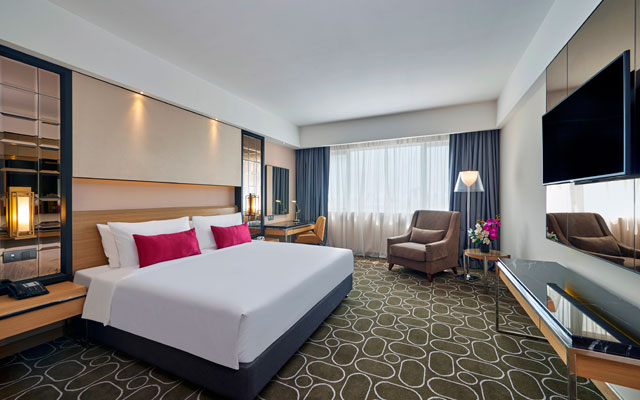
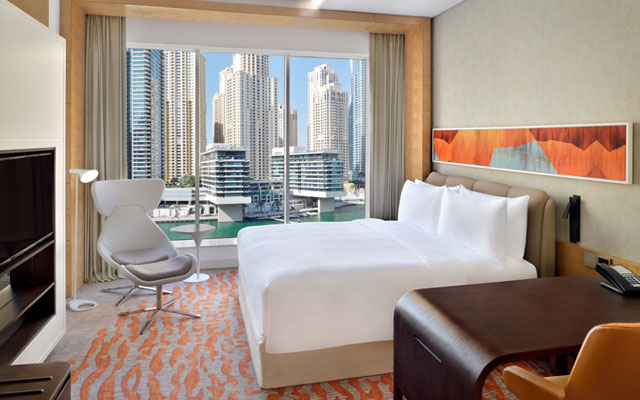
Deluxe King

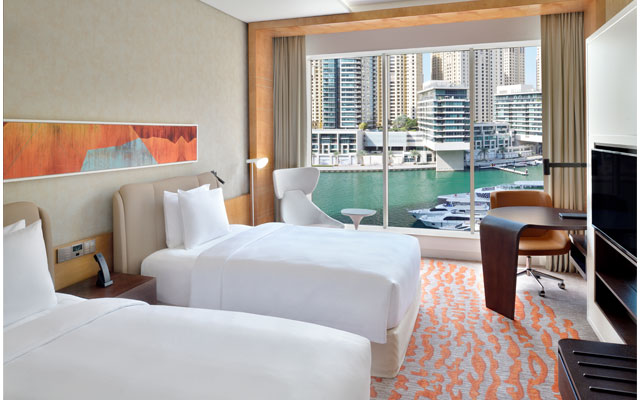
Wyndham Hotels & Resorts has opened the upscale Wyndham Acmar Klang, located a 30-minute drive from Kuala Lumpur, Malaysia.

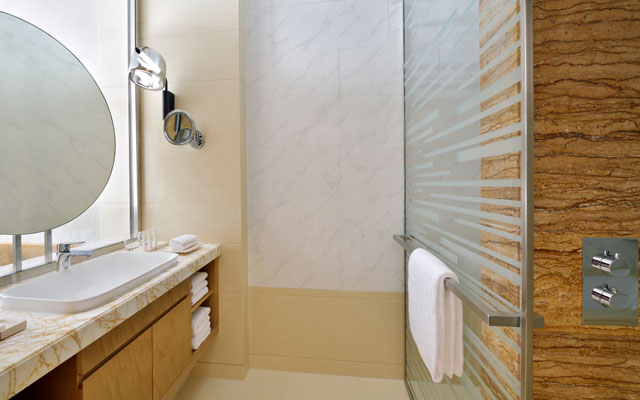
Managed by Wyndham’s international hotel management arm, the five-star property will have 488 rooms. Meeting amenities include a business centre, and a total of 11 meeting rooms equipped with state-of-the-art audiovisual systems.

Deluxe King

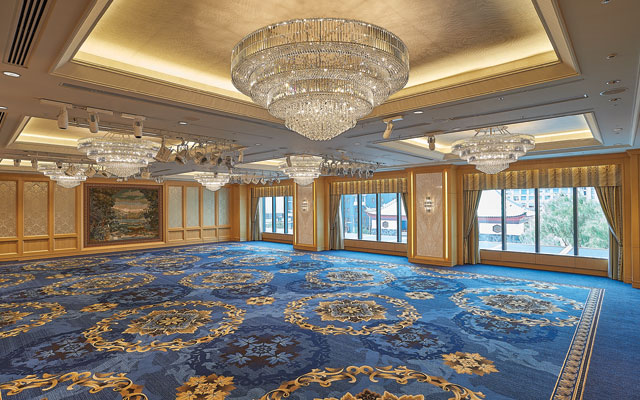
The Grand Ballroom, as the largest venue on-site, is able to accommodate up to 2,200 guests for seminars and dinner functions. It is furnished with LED screens and grand chandeliers.

Other facilities include an outdoor pool, spa, fitness centre, and four F&B venues ranging from a Chinese restaurant serving dim sum to a deli offering coffee, pastries and cakes. Families of business travellers will also be able to make use of a local shuttle service, babysitting services, or the kids’ club.

The Okura Tokyo

0
The Maple function room sports a grand European design

Rooms
The Okura Heritage Wing and The Okura Prestige Tower sit under The Okura Tokyo banner, adjacent to each other and connected by an indoor walkway.

The Prestige Room at The Okura Prestige Tower was my home for five nights, a 48m2 expansive space with an oversized bath area and walk-in wardrobe that can be separated by sliding wood-panelled doors from the generous sleeping quarter, work area and lounge.

A minimalist interior dominates, with use of warm woods, classic marble, textured fabrics and a soothing palette of white and sand. In space-scarce Tokyo, hotel rooms of this size is a dream. My room further pleases with splendid views of the city.

MICE facilities
The Okura Tokyo was clearly designed with events in mind, with The Okura Prestige Tower positioned as the hub for gatherings. There are 19 venues spread across levels one, two, seven and 41. Some boast traditional Japanese design elements while others bear European signatures.

The Maple function room sports a grand European design

The Heian Room, at 1,968m2, is the largest in the collection, capable of accommodating a 2,300-pax conference or a 900-pax banquet. Perfect for international meetings, this venue comes with an overhead simultaneous translation office.

When combined with the Akebono and Chitose rooms, the entire space can take in about 2,800 guests. Located altogether on the first floor, these rooms also have their own entrance, which grants event delegates privacy.

Elsewhere, the western-style function rooms are perfect for corporate meetings, product launches and banquets.

Within a month of its opening, these venues hosted several high-profile events, such as the Rugby 2019 pre-game festival and a two-week-long VIP client event by a luxury brand.

Other facilities
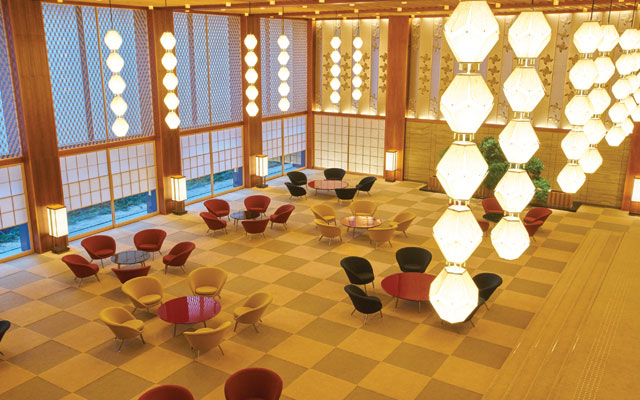
The Okura Tokyo is an attraction itself, with beautiful public spaces rich in traditional Japanese design elements, an impressive selection of excellent dining destinations, and its very own art museum.

Within The Okura Heritage Wing are Yamazato which serves fine Japanese cuisine in a traditional ambience and offers five private rooms and Chosho-an tea ceremony room with a private zen garden; and Nouvelle Epoque, a new twist to the former La Belle Epoque French restaurant.

Over at The Okura Prestige Tower are Orchid, the hotel’s cavernous all-day dining destination; Toh-Ka-Lin, which is reputed as Japan’s first Cantonese restaurant managed by a hotel; and Sazanka teppanyaki restaurant.

In addition to these, the Orchid Bar and Starlight are perfect for intimate gatherings over quality libation.

Event planners can easily weave Japanese tea ceremonies, sake tasting and wine appreciation workshops into their programme, leveraging on the hotel’s own tea ceremony masters and award-wining chief sommelier and network of famed wine critics.

The Okura Museum of Art, located within the hotel grounds, should not be missed. Opened in 1917 and part of the hotel’s elaborate renovations, the private museum houses a valuable collection of pre-modern Japanese and East Asian artworks belonging to Kihachiro Okura.

An elegant lobby greets guests at The Okura Prestige Tower

Service
While the physical aspects of the hotel have changed, its heart remains the same – staff are attentive without being intrusive, and come across as being sincerely welcoming. When I asked for directions to hotel facilities and the nearest convenience store, staff made the effort to walk me down the right way.

Verdict
It would be a shame if one visited Tokyo for a meeting and not get to experience the destination. However, should time really be lacking, The Okura Tokyo could plug that gap, with its omotenashi, authentic dining experiences and cultural activities.

Number of rooms 508
Contact details
Website: https://theokuratokyo.jp/en

Beyond Asia: Crowne Plaza Dubai Marina; Aventri and VenueBook; and NCC Süd

0

Crowne Plaza Dubai Marina opens
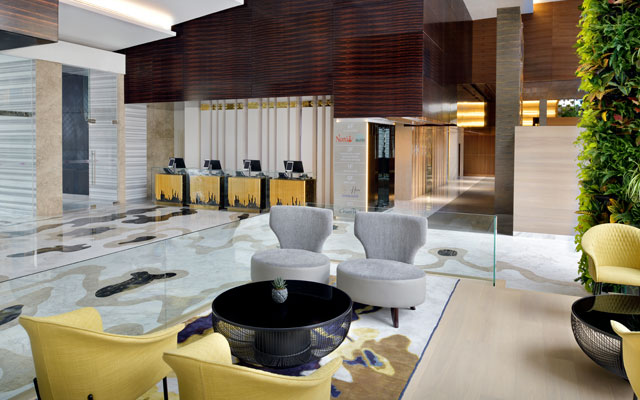
IHG (InterContinental Hotels Group) has opened the Crowne Plaza Dubai Marina, a 20-minute drive from the Expo 2020 site.

Located on the banks of Dubai Marina with direct access from the promenade, the 24-storey building boasts 273 guestrooms including 61 Club Rooms and 32 suites. A club lounge on the fourth floor is available exclusively for Club guests.

Meanwhile on the second floor are a number of meeting and conference rooms, spread across 460m2, including the Marina’s first ballroom with natural light. Recreational facilities include a 24-hour gym, outdoor swimming pool, and six dining concepts ranging from a Thai restaurant to Nara, an outdoor Arabic-style shisha lounge.

Aventri and VenueBook ink partnership
Aventri and VenueBook have teamed up to integrate VenueBook’s direct booking technology and database of 1,500 non-traditional venues in the US with Aventri’s enterprise event management software (EMS) platform.

The VenueBook database includes more than 1,500 non-traditional venues in the New York, Chicago, San Francisco, Denver and Washington DC markets, with expansion planned in 2020 to multiple additional US markets.

The solution will enable planners to manage the entire procurement process – from sourcing and negotiating to contracting, paying and reporting – through a single, secure platform.

The integrated platform will be available as part of Aventri Strategic Venue Sourcing. Planners will access VenueBook’s non-traditional event space and booking engine directly through the Aventri dashboard.

The new partnership expands Aventri’s range of venues that currently ranges from vineyards and wineries to breweries and boutique hotels. Such venues are able to accommodate gatherings from intimate board retreats to large-scale events for up to 6,000 people.

NürnbergMesse to build fourth convention centre
Germany-headquartered trade fair company NürnbergMesse has announced that it will be building the NCC Süd exhibition venue, with work commencing in 2024.

The new facility means that, following the 2021 runs of the Spielwarenmesse and HOGA, the Messe’s present Hall 3 will become a construction site.

The new NCC Süd will be the fourth events centre at the site and will be flanked by neighbouring Exhibition Halls 3A and 3C. Providing around 32,000m2 of gross exhibition space, the NCC Süd will form the capstone of the overall 400m-long complex designed by Zaha Hadid Architects.

Like Halls 3A and 3C, NCC Süd will also aim for certification from the German Sustainable Building Council, the DGNB. The total investment for NCC Süd is expected to come in around €300 million (US$326 million).

Andy Flaig helms Wyndham’s development in SEAPR region

0

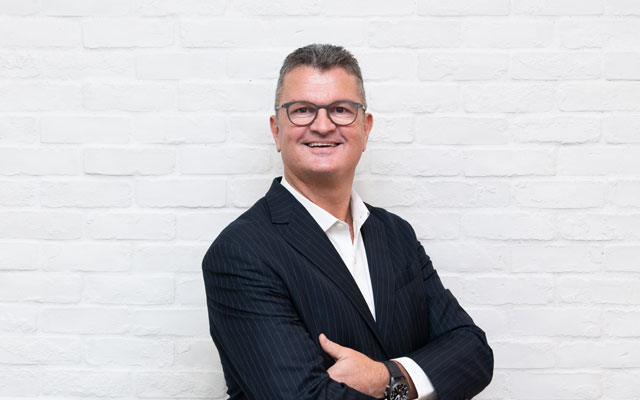
Wyndham Hotels & Resorts has appointed Andy Flaig as head of development for the South-east Asia and Pacific Rim (SEAPR) region.

He replaces David Wray who has completed his transition agreement with the hotel company and will remain with Wyndham Destinations Asia Pacific.

Andy Flaig

Based in Singapore, Flaig will lead a team of developers to drive the development strategies for Wyndham Hotels & Resorts through the expansion of its brands and portfolio of managed and franchised hotels across the SEAPR region.

Flaig joins Wyndham Hotels & Resorts with more than three decades of experience in the hospitality sector. He served in multiple senior leadership roles within the industry and was most recently the group chief development officer at Next Story Group where he was responsible for the growth of their hotel and lifestyle co-working brands.

Previously, he also spent four years with Carlson Rezidor Hotel Group as executive vice president, development and technicalsServices for Asia Pacific, and eight years as managing director of Jones Lang LaSalle’s Hotels and Hospitality Group’s Advisory business in Asia.

Outlook 2020

0

The global economy is in a challenging state, faced with the threat of ‘slowbalisation’, where the world is turning against globalisation, and rising geopolitical risks, according to Andrew Staples, global editorial director of the Economist Corporate Network, The Economist Intelligence Unit.

Staples, who shared this observation at the inaugural SG Tourism Leaders Engagement Series in November, an event co-presented by TTG Asia Media, said this was an “age of anxiety, due to VUCA (volatility, uncertainty, complexity and ambiguity)”.

“On the one hand, economic growth in financial markets like the US are doing pretty well, at record levels even, and unemployment is in multi-decade lows. In terms of monetary policies, interest rates are virtually zero in most advanced economies around the world. Yet on the other hand, there is a lot of uncertainty around the world,” he said.

Closer to home, prolonged demonstrations in Hong Kong are hurting regional economic performance.

Staples highlighted that global GDP had slowed to 2.3 per cent in 2019, down from 2.8 per cent last year, with Brexit hurting investment confidence and Germany flirting with recession. “Global trade (in 2019) is expected to post some of the lowest growth rates we’ve seen in the past 11, 12 years since the global financial crises of 2007 and 2008,” he said.

Amid the dreary outlook, Staples offered a sliver of hope through data that pointed to continued economic growth in Asia, albeit at a slow pace for some markets.
India is expected to post stronger year-on-year GDP growth in 2020 at 6.7 per cent; while China (six per cent), South-east Asia (4.3 per cent) and Japan (0.4 per cent) are expected to see slower advancement.

Within South-east Asia, Myanmar (7.1 per cent), Laos (6.5 per cent) are expected to put in the strongest GDP performance, while Singapore (1.2 per cent) and Brunei (1.5 per cent) will see slight year-on-year improvements. Malaysia and Indonesia are expected to maintain their GDP growth at 4.4 per cent and 5.1 per cent, respectively. Thailand (2.1 per cent), Cambodia (6.4 per cent), Vietnam (6.5 per cent) and the Philippines (5.2 per cent) will see slower year-on-year GDP growth.

Staples concluded: “You (tourism players) are in a really good sector. All the predicted drivers of growth – emerging economies, growing affluence, greater adoption of technology – are in your favour.”

Hopeful data
Jameson Wong, Asia-Pacific business development director of global travel intelligence agency ForwardKeys, agreed that the outlook for Asia’s tourism industry is still bright.
“Asian economies are still performing and there is growing affluence (in the region). At the same time, low-cost carriers (LCCs) are expanding in Asia along with an Internet proliferation which has made travel purchase far more accessible to everyone. These factors are feeding tourism growth,” said Wong.

ForwardKeys data has recorded growth of at least 12 per cent in travel bookings issued for the period November 2019 to April 2020 for all countries, with the exception of Hong Kong and Sri Lanka. Vietnam sees the strongest forward inbound booking growth at 33 per cent, followed by Japan at 27 per cent.

“We do not foresee a decline in these numbers, as many countries are stepping up promotions and opening up new destinations for tourism. For cost-conscious travellers, Asia is always a more affordable option than longhaul destinations. Furthermore, regional business travel will remain fairly constant,” he added.

Wong believes Asian businesses will continue to be a major driver of tourism traffic in the region.

“Asia sees a lot of intra-regional business travel. Business trips have to be made in good times or bad, although companies will relook their way of travel. In the event that business class and full-service airlines are cut, this region has many LCC options to keep people flying,” he said, adding that intra-Asia travel takes up approximately 65 per cent market share of global travel annually.

Corporate meetings and events specialists are also maintaining an air of optimism around performance in this segment for 2020.

The 2020 Global Meetings and Events Forecast, published in September 2019 by American Express Meetings & Events, found that meeting professionals are bullish about 2020, as steady growth across all meeting types is predicted for the fifth consecutive year.

Total meeting spend for 2020 is expected to rise by 1.3 per cent in Asia-Pacific, with respondents here saying they plan to do more with less in the region, while always keeping the attendee experience in central focus. Client/customer advisory board meetings and conferences/tradeshows are expected to be held most frequently in the new year, with a 2.3 per cent and two per cent growth respectively over 2019. The number of incentives/special events are only expected to grow nearly one per cent in 2020.

CWT Meetings & Events’ 2020 Future Trends Report has projected an eight per cent growth in the US$840 billion meetings industry in 2020 despite geopolitical and economic headwinds.


“All the predicted drivers of growth are in your (tourism players’) favour.”

Andrew Staples
Global editorial director, Economist Corporate
Network, The Economist Intelligence Unit


Right attitude
Asian business event leaders emphasised that an ability to adapt quickly to challenges and see opportunities in obstacles will tide businesses through.

Antonio Codinach, regional business director Asia Pacific, at Professional Convention Management Association (PCMA), encouraged optimism among his industry peers. He said: “We are the most agile, fastest-growing region in the world. This is also a region that is the most stable and where opportunities are.”

Codinach said one’s attitude will shape one’s reaction to the projected future. “So, I choose to see the future with positive eyes. We need to be agile and adaptable to changes, and make a commitment to the industry or the destination we represent.”

Also upbeat about the future is Bruno Simões, managing director of DOC DMC Macau & Hong Kong, despite describing his business as being “in a situation” now, hurt by the social unrest in Hong Kong and soft event spend in major market China which is “locked in a trade stand-off with the US”.

His confidence is fuelled by his observation that “most corporate clients are ready for events and many associations are ready to grow (in this region)”.

He said: “Across the years, Asia’s business events industry has proven to be (strong in the face of technology disruption and crises). Hong Kong will recover very quickly, as she has done in previous crises.”

Jason Teh, managing director of Pico Malaysia, is optimistic too, due to a string of mega events happening around the world in 2020 and which Pico Group is involved in. “Most of our corporate clients are spending a bit more in the coming months. Business events is part of marketing, which will go on no matter the state of the economy,” explained Teh.

Business leaders were unanimous in the belief that the ability to turn a challenge into an opportunity will allow businesses to come up victorious.

Citing an example, Prashant Yadav, CEO, Liberty International India, said his company – which typically delivers outbound Indian events – moved swiftly to support Indian companies that have chosen to keep their events on home ground against a backdrop of a soft Indian economic growth.

“At least five companies that usually do annual incentives for 600 to 1,000 people to longhaul destinations chose to stay in the country. We turned the reluctance to leave India into a business opportunity for us and for India,” shared Yadav.

He added that some clients were also quick to capitalise on destinations in turmoil, when tourism products were offered at the best value for money.

For Simões, a business slowdown presents the opportunity to “do things we never had time to do because work in events is intensive”.

“So, now is the time for us to sharpen our weapons. There are constant challenges to business – technology disruption, talent crunch, etc. When you are busy delivering events, you barely have time to stop and think about how to deal with these problems. This is now the best time to stop, look at what competitors and peers are doing, draw up an agenda to take the business forward, and learn,” he elaborated. – Additional reporting by S Puvaneswary


APAC destinations high on casualty list as global travel confidence dips

0
Travel confidence has dipped overall, with APAC destinations being cut; Taipei's Ximending pictured
  • Destinations with confirmed infections are the worst-hit
  • Domestic alternatives a saviour for some event planners
  • Full refunds not guaranteed for affected events
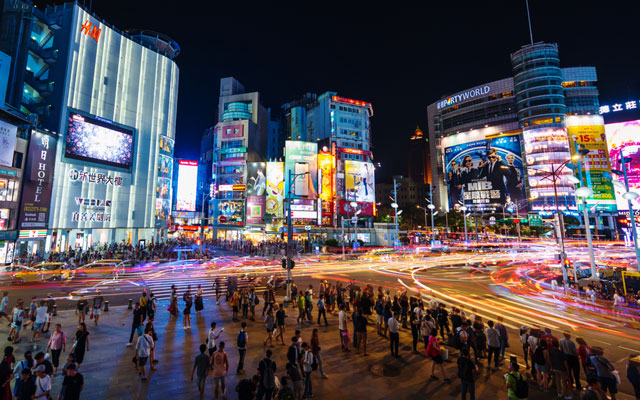
Travel confidence has dipped overall, with APAC destinations being cut; Taipei’s Ximending pictured

Event houses in Asia-Pacific are reporting cancellations or postponements of outbound events in the next few months as corporates suspend non-essential travel and travel confidence plunge over the Novel Coronavirus outbreak.

Destinations with confirmed Novel Coronavirus cases – across Greater China and South-east Asia – are the worst hit, found event specialists who are taking postponements for trips that are supposed to happen over the next few months; decisions around events planned for the later part of the year are now in limbo.

The extent of damage is similar across markets, with most event specialists reporting most, if not all, gatherings being axed or rescheduled.

Dynasty Travel Singapore, for instance has seen 80 per cent of outbound business events scheduled for February and March 2020 being cancelled, while India’s A T & Seasons Vacations Travel has reported business to China has been “completely wiped off” along with cancellations for other Asian destinations like Hong Kong, Malaysia, Singapore, Taiwan and Macau.

Simon Er, general manager business events & marketing of Singapore-based Global Travel, told TTGmice that the reactions are due to “the fear factor of being in a confined space like an aircraft over a period of time”.

Destinations further afield relatively unscathed
Longhaul destinations have remained unscathed, with some rare exceptions.

“It is business as usual for Europe and the US. We are telling corporates that they can opt for these destinations (instead of Asia) if their budget can be increased,” said Chander Mansharamani, managing director, Alpcord Network Travel & Conferences. He added that the Middle East or CIS destinations were “similarly-priced” alternatives to Asia.

At FCM MICE, clients are considering the Middle East for events in the later months of April and May, taking South-east Asia off their shopping list, observed Manpreet Bindra, brand leader.

Sunflower Holidays Malaysia’s managing director Mint Leong said some clients had chosen to can their programmes in Europe this March and April despite the continent having comparably few cases than Asia.

While Melvyn Nonis, director of Singapore-headquartered MICE Matters, which specialises in mainly European and US programmes, expressed relief that he had only two cancellations so far – a very low percentage of his total business, he acknowledged that “decisions may change as things change”.

He added: “I think the crucial time is this month, in the next few weeks. Most of our longhaul groups are departing in April, and for now there are no cancellations yet. Groups that are leaving in June or later in the year, are taking a wait-and-see approach.”

Domestic events an option
For some event specialists, not all is lost as clients are choosing to shift their overseas gatherings to their own backyard.

Raaj Navaratnaa, general manager of New Asia Holidays Tours & Travel in Malaysia, said two out of eight affected meetings and incentive programmes were redirected to local destinations.

Gotz Travel Malaysia’s managing director, Sheikh Awadh Sheikh Abdullah, has reported the same. Two 100-pax incentive groups, one to Vietnam and the other to Thailand, are now looking at shifting their April trips to within Malaysia.

Some clients of Yento Chen, CEO of Destination Tour Indonesia, are also considering turning to destinations like Bali or Raja Ampat.

Reassurance is key
Not willing to take a hit without a fight, some Indonesian stakeholders are trying their best to dissuade clients from cancelling.

Vidya Hermanto, managing director Orange Panorama, told TTGmice that a 4,600-pax incentive group from Indonesia was on the brink of cancelling its programme in South Korea. In response, his team produced an informative video that explained the situation at attractions and public spaces, and the steps that local governments have taken, along with other positive messages.

While he managed to save that piece of business, others fell through.

Willy TM Sihombing, managing director at Sedona Holidays Tour and Travels in Indonesia, had also gone down the education track, choosing to inform clients of government efforts in dealing with the outbreak, in addition to promising them the flexibility of changing event dates and destination.

“People are panicking and their confidence in travelling is low (due to extensive coverage) of the outbreak,” he noted.

Earnings for 2020 badly hit
Stakeholders across the board agree that losses are to be expected for 1H2020, with some optimistic that business in the later half of the year will help to make up for it.

Dynasty Travel’s Seah expects losses in the first half, but “pent-up demand for 2H2020″ should turn things around. Her confidence is based on about 80 per cent of enquires for 3Q2020 that are now on hold.

Leong is hopeful of breaking even this year as long as the virus can be contained by April.

Raaj, who is bracing for a 50 per cent decline in earnings this year vis-a-vis 2019, said recovery will not come immediately. A “gestation period of two to three months” needs to be taken into account after the virus is finally under control, as “organisers will want to wait and ensure there are no more new cases of infected people being reported,” he explained.

Full refunds not guaranteed
While travel and event suppliers are understanding and supportive of clients whose event plans have been uprooted by city-wide lockdown and travel suspensions imposed by the Chinese government, and have offered full refunds, the same cannot be expected elsewhere in destinations that are still open for business.

Events specialists explained that without government-issued travel advisories against a destination, suppliers will insist that visits are still possible and safe, and therefore there are no reasons for full refunds.

FCM MICE’s Bindra shared that suppliers in destinations like Thailand and Singapore are not giving any refunds.

Nonis intends to “rely on goodwill built up with our suppliers to negotiate on behalf of our clients”.

Additional reporting by S Puvaneswary, Rohit Kaul and Tiara Maharani

Reviews

The Ritz-Carlton, Bangkok

The newly-opened Ritz-Carlton, Bangkok anchors the One Bangkok development with cosmopolitan elegance. Featuring the city's largest ballroom and a spectacular new penthouse suite, it delivers exceptional hardware and deeply authentic, soulful service for business and leisure travellers alike

Mama Shelter Zurich

Behind the imposing, Brutalist concrete that defines Zurich’s Oerlikon district lies a surprising secret. While its exterior honours the neighbourhood’s industrial roots, stepping inside Mama Shelter reveals a vibrant, neon-soaked world that is a far cry from its rigid shell

Hyatt Regency Kuala Lumpur at KL Midtown

A polished urban retreat designed for business travellers, Hyatt Regency Kuala Lumpur at KL Midtown combines thoughtful design, seamless service, and exceptional facilities.