Asia/Singapore Thursday, 9th April 2026
Page 595

Philippine agencies given clearance for public events

0
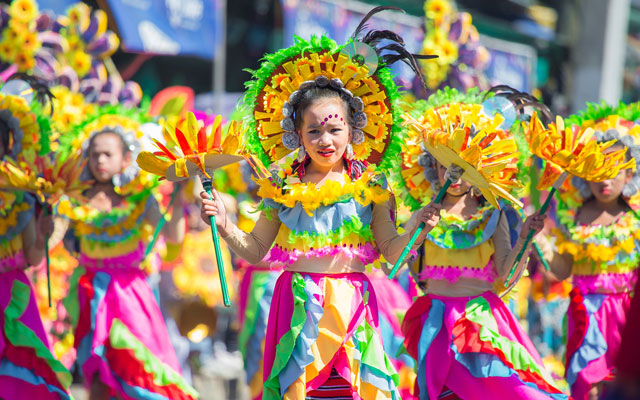
The Panagbenga flower festival was one of the major cancellations this month

A joint statement from three Philippine agencies was issued today to approve the staging of large-scale public events, following an earlier Department of Health advisory against organising and attending concerts and events with huge crowds last week.

The Department of Health advisory, which was issued in a bid to contain the Covid-19 outbreak, had resulted in a number of events being cancelled and rescheduled.

The Panagbenga flower festival was one of the major cancellations this month

Tourism undersecretary Arturo Boncato Jr said in a press briefing at the Malacanang presidential palace yesterday that the message to be conveyed now is that large events and activities can proceed for as long as all the health and safety protocols and precautionary measures are in place.

Department of Education (DepEd) secretary Leonor Briones hopes that the clarificatory statement will bring about the continuation of various events.

Briones noted that the DepEd is a “big contributor to local tourism” because its events usually have large delegations with numerous spectators, contributing not only to the venue but also to hotels, food and suppliers of equipment.

Briones said the Palarong Pambansa, DepEd’s flagship sports programme to be held in May can easily attract 30,000 people, adding that with the clarificatory statement, the some local governments may also change their mind about canning student graduation ceremonies.

Cancelled events this month include the DepEd’s National Schools Press Conference, National Festival of Talents, and the National Science and Technology Fair.

The Philippine Sports Commission also cancelled several events including the National Sports Summit 2020, Philippine National Games, and Youth Games Batang Pinoy, while recommending the postponement of the 2020 ASEAN Para Games slated for next month in Clark, Pampanga.

Meanwhile, the Cultural Center of the Philippines earlier cancelled events happening this month and next such as the Pasinaya Festival, considered the country’s biggest multi-arts festival; the three-week-long Baguio’s Panagbenga flower festival; and the month-long celebrations for Davao Day.

TCEB plans to action recovery programme for M&I this May

0
Nooch:

New destination marketing messages and a series of promotional packages, to expedite the recovery of Thailand’s inbound meetings and incentives business are in the works, towards a possible launch at IMEX Frankfurt this May.

In an interview with TTGmice last Thursday, Nooch Homrossukhon, director – meetings & incentives with the Thailand Convention and Exhibition Bureau (TCEB), revealed that a meeting with industry stakeholders was called on February 5 to brainstorm next steps.

Nooch: TCEB is hard at work muscling up recovery plans, country has already been working to reduce reliance on China market since before Covid-19 happened

TCEB is presently working with its agencies and industry stakeholders on an execution timeline for the efforts.

However, Nooch admitted that “it is really hard to tell” when the right time would be, as new infections are still being reported in and outside of hotzone China.

“During our discussion (on February 5), we agreed that more clarity around the virus will come towards the end of February. That’s the message Chinese health officials are saying. From then on, we can make further, firmer plans on how to move forward,” she said.

Nooch added that times of crisis have brought the meetings and incentives industry players closer and there is a strong sense of camaraderie.

While TCEB typically subsidises roadshow participation for the private sector, requiring only “a minimal registration fee”, Nooch said stakeholders are now offering to chip in financially should the bureau face budget limitations in any of their upcoming roadshows.

Going forward, TCEB will continue to work on a spread of source markets, with significant attention paid to Asian markets.

Nooch said TCEB was aware of the need to reduce Thailand’s reliance on the China meetings and incentives market since three years ago, which led to the bureau investing more in India, particularly in tier-two and tier-three cities.

Despite the efforts, China remains Thailand’s top market for inbound meetings and incentive programmes. “China is a very big volume market so it is hard to beat,” she explained.

China, India and Malaysia were Thailand’s top three source markets for meetings and incentives in fiscal year 2018, while Malaysia overtook India in the first quarter of fiscal year 2019.

“I think Malaysian planners suddenly saw great value in Thailand. As you know, the Malaysian ringgit has been weak, so groups have had to consider nearby destinations that are more affordable, or that bring them greater value. Thailand makes a great option in this case,” she said. Meeting and incentive arrivals from China and Malaysia now have a 20 per cent gap.

Nooch also hopes that the active SITE Thailand Chapter will muscle up TCEB’s recovery plans and make Thailand a more prominent choice among global incentive professionals.

The Chapter, which was set up last year after the SITE Global Conference 2019 in Bangkok, was awarded the Rising Star Award for 2019 at SITE’s 2020 Global Conference in Vancouver, Canada earlier in January.

At the same time, chapter president Max Boontawee Jantasuwan was presented with the Kevin Forde Spirit Award 2019 from SITE for his dedication to the industry and volunteerism.

“Both awards bring us a lot of joy because we put in a lot of effort to get the SITE Global Conference 2019 off the ground in Bangkok, as well as maintain the momentum of industry engagement after that. The feedback from SITE is that we are the only destination that keeps conducting activities for its members after our event,” she said.

Accor Indonesia draws domestic events with unique venues and personalisation

0
Accor Live Limitless Hotel & Wedding Fair

Accor hotels in Indonesia are positioning their venues as being unique, flexible and allowing tailor-made experiences to attract the domestic corporate market, a move that hoteliers exhibiting at the ALL – Accor Live Limitless Hotel & Wedding Fair last weekend said was helping to keep business coming despite Covid-19 fears.

The event, which showcased Accor properties across Indonesia, offered discounts of up to 40 per cent for events package and room bookings. It attracted more than 1,000 corporate visitors in addition to member of the public.

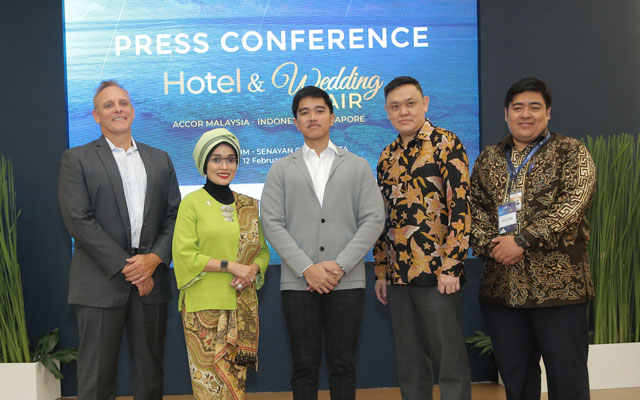
From left: Accor’s Garth Simmons; Nia Niscaya, Indonesia’s deputy of tourism marketing and creative economy, tourism and creative economy agency; Ternakopi’s Kaesang Pangarep; CIMB’s Niaga Noviady Wahyudi; and Accor’s Adi Satria. Photo: Tiara Maharani

Garth Simmons, chief operating officer, Accor Indonesia, Malaysia, Singapore and South Asia, described the Indonesian domestic market as being “extraordinary” and is the “backbone” for Indonesia’s tourism and hotel industry.

Accor hoteliers told TTGmice that Indonesian corporate clients are drawn to experiential events, personalised services, flexibility, and custom products, and they are keen to demonstrate that their properties are able to satisfy these requirements.

Shelly Darcy, director of sales and marketing with Movenpick Resort & Spa Jimbaran Bali, said meetings at her hotel leverage on the “atmosphere of Bali” to create a relaxing, tropical vibe.

Darcy believes that the trend towards one-of-a-kind themed party and corporate events that take on a vibrant lifestyle setting will be here to stay, and many hotels are responding by crafting signature events that will be the talk of the town.

Both Hotel Fairmont Jakarta and Ibis Bandung Trans Studio are hoping to attract experience-focused planners through customised services. There are opportunities to personalise menus for each event participant, for instance.

Photo of the day: Uncover Melbourne rolls out red carpet for AIME guests

0

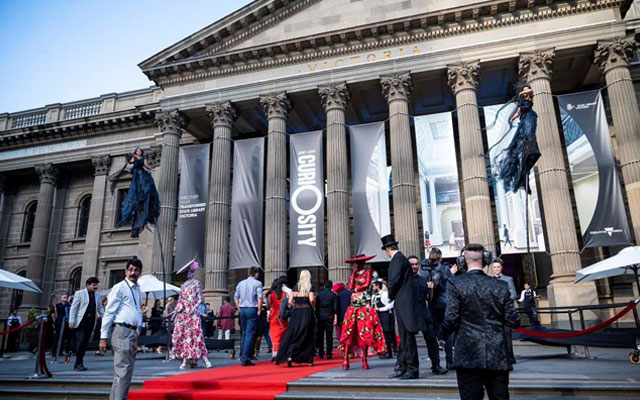
Hosted buyers and media attending the 2020 Asia Pacific Incentives & Meetings Event (AIME) experienced a night full of glamour at the Uncover Melbourne Gala on February 16 at Melbourne’s newest venue – the Ian Potter Queens Hall, the jewel in the State Library Victoria’s collection of unique heritage spaces.

Reopened in December 2019 as part of the Vision 2020 project, the space has returned to its former glory as Melbourne’s an impressive gala event venue, unveiling its historic architecture and celebrating its 19th-century decorative scheme.

Entertainment kept going during the event, which included a gospel choir, performers in the sky and Melbourne’s famous band, The Huxleys. Another highlight of the night was the menu on offer. The feast included roving canapes, an Australian cheese station and an oyster bar.

The event is part of MCB’s AIME programme, Uncover Melbourne, designed to showcase Melbourne’s world-class business events capability.

Pullman heats up hotel scene in Rotorua

0

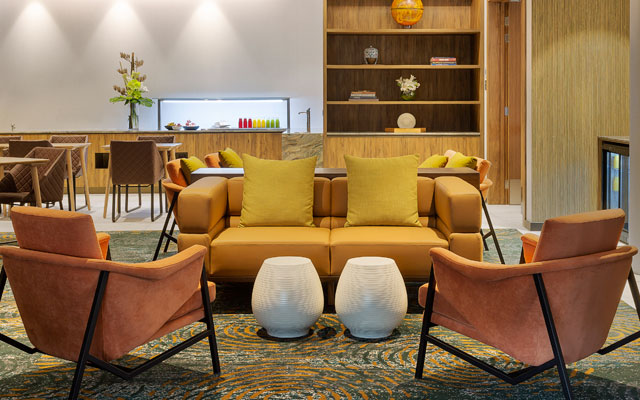
Accor has brought the first international five-star hotel to New Zealand’s Bay of Plenty region, in the form of Pullman Rotorua.

The new-build offers 130 rooms across five categories, some of which offer panoramic views of the city and lake area.

Meeting planners will be able to avail the four event spaces – the largest of which is 155m2 and can hold up to 120 people theatre-style – and a boardroom which doubles up as a private dining area.

Aside from the Barrel & Co Bar and Grill, other amenities on-site include an executive lounge, bar, and gym.

Pullman Rotorua is the second Pullman hotel in New Zealand, joining the existing Pullman Auckland.

Trends to watch

0

CORPORATE TRAVEL
Akshay Kapoor
Senior director, multinational customer group, Asia Pacific, CWT

What is trending?
To win the talent war, organisations recognise the need to provide a holistic employee experience. Business travel contributes to employee satisfaction and productivity, leading to a higher overall return on investment for the company.

Business travel programmes have become more focused, and many are also seeking sustainability and reporting requirements from suppliers.

How will these trends impact the way suppliers and buyers work?
Low margins in the airline and hospitality industry, and antiquated systems have led to a need for evolution in distribution and content. For business travel, increased complexity with private channel content creates a need for buyers and suppliers to work closely across the value chain to provide a highly customised experience for the traveller while creating an efficient shopping experience.

We are seeing increased consolidation across the supply chain. With travel buyers becoming more cautious, suppliers are expected to see pricing and cost becoming a bigger priority in buying decisions.

CORPORATE MEETINGS AND EVENT
Milton Rivera
Vice president, global business development & strategy, American Express Global Business Travel

What is trending?
Attendee experience continues to be a focus across the globe (and) face-to-face meetings continue to be a defining feature of activity in Asia-Pacific, with 13 per cent of meeting planners reporting they do not use any virtual or hybrid meetings.

Sustainability is a key area of focus. Also, as companies are highly aware of managing their corporate reputation, compliance continues to be a recurring theme in countries across the region.

How will these trends impact the way suppliers and buyers work?
With the focus on attendee experience and making personal connections a priority in the region, planners and travel buyers will have to find smarter solutions to deliver memorable events.

That may translate into decisions about different destination and/or the style of the event being delivered; smarter supplier sourcing like finding the right suppliers who share the values of the organisation; while delivering cost efficiencies without sacrificing the quality and experience of the event.

EXHIBITIONS
Kai Hattendorf
Managing director and CEO, UFI

What is trending?
The exhibitions industry continues to grow faster than the world economy. However, growth has slowed as trade barriers have gone up. This has led to growth in new markets, with a number of Asian markets benefitting.

Overall, Asia is the fastest-growing region with regards to exhibitions. While mergers and acquisitions will continue in our industry, many leaders are now focusing on customer experience and customer-centricity, leading to an ongoing evolution of the traditional tradeshow business model.

What factors are driving these trends?
Trade barriers and tariffs impact the way the world economy works. Millennials entering the boardrooms are influencing the ways marketing investments are viewed and prioritised.

The key for exhibition organisers here is to maintain – or regain – trust in their shows by being transparent about the values and ROIs that they offer. With more and more private equity investments coming into our industry, the current focus on “getting things right” is undoubtedly here to stay.

How will these trends impact the way suppliers and buyers work?
Nothing will replace the value of face-to-face meetings and interactions. But UFI research, drawn on the global input from more than 13,000 tradeshow visitors, shows that suppliers are expected to provide more than just the trade and the conversation at their booth.
The “confex” and “festivalisation” trend means that exhibitions are also expected to (provide) a memorable experience.

ASSOCIATION CONGRESSES
Octavio B Peralta
President, Asia-Pacific Federation
of Association Organisations

What is trending?
I see three cross-cutting themes trending in the association congress space.

They are: more experiential events, developing meaningful connections, and providing sustainability, which are largely driven by technological innovation, purposeful creativity, and social responsibility, respectively.

It is about return on experience – ROE – and not only about ROI. It is not only about networking, but of connecting people for a purpose and in memorable settings. It is about being mindful about doing events that contribute to the destination’s environmental, social and economic well-being.

How will these trends impact the way suppliers and buyers work?
More than ever, I think association buyers and suppliers need to “converge and immerse” themselves into these trends and work closely together for greater impact. Association buyers have to spell out clearly in their RFPs, what their expectations are, for example, of a green event, so suppliers can also make suggestions in terms of say, energy-efficient transportation options, farm-to-table dining choices, or reusable event materials, among others.

Jeane Lim to head up Grand Park City Hall

0

Grand Park City Hall, the flagship property of Park Hotel Group, has appointed Jeane Lim as the hotel’s new general manager.

In her new role, Lim will steer the team to accomplish a new level in brand representation and awareness, guest experiences and financial results. Her immediate responsibilities include evaluating the current processes with the various heads of department and offer clear directives and effective support to maximise performance and financial results, while strengthening the cohesiveness of the team.

With more than 30 years of hospitality experience, Lim was most recently the general manger of Parkroyal on Pickering.

Prior to that, she has also served as director of sales in Grand Hyatt Singapore, general manager in Copthorne King’s Hotel and Destination Singapore Beach Road, and vice president of global sales at Millennium Hotels and Resorts.

Tough times don’t last, tough people do

0

Now that businesses have reopened, what is China’s MICE industry facing?
Members of the tourism industry including those handling MICE, are still working from home online.

On February 12, China Star had its first online meeting using DingTalk – a free professional office tool, developed by Alibaba, used very widely in China, as well as used by more than five million enterprises and organisations globally.

When speaking with my China counterparts, the opinion is that the Covid-19 impact on the MICE industry is probably the most severe ever. Most inbound events have been cancelled, have changed destination or have been postponed; while all domestic events taking place in February have been cancelled.

A couple of event technology companies have also downsized manpower by about 10 per cent.

What are the industry’s main concerns and why?
Personally, I believe that the number one concern is cash flow. China’s MICE industry operates on a low-profit margin and event companies usually have no pledged assets, like a property, to apply for a bank loan.

The fact is very few small event companies like to borrow money from the banks as the interest and repayment would put them under a lot of pressure.

What interim and recovery strategies are you taking?
Companies have to watch their cash flow and reduce expenditure and create a good training plan with clear targets in mind. Leaders have to identify weaknesses and take the opportunity to train staff to be ready to compete when business gets back to normal.

Meanwhile, MICE companies have to keep connecting with clients and offer accurate information about the situation in China.

China Star has been able to refund clients for events that have been cancelled, and is trying its best to protect the client relationship by building trust to resume the partnership whenever the situation is back to normal.

We are also taking this “unusual opportunity” to do research and create new and better products and reorganise the company’s database to be able to do a more efficient job later.

Last but not least, as industry insiders, we must try to share China’s MICE story with the outside world. Don’t underestimate the power of an individual. One of my posts about Shanghai on LinkedIn has received more than 120,000 page views.

What specific support does the industry hope to get from the government for it to recover?
The most practical support is for the government to return the Quality Guarantee Deposit of RMB1 million (US$143,259) to travel companies with an outbound business license and RMB600,000 to those only involved in domestic travel.

The deposit is bigger for large companies, and the government has decided to return 80 per cent of the deposit to help them with their cash flow. The first 15 travel companies in Beijing have received RMB11.7 million of the Quality Guarantee Deposit.

Other government support includes giving a tax cut, refunding the unemployment insurance, reducing office rent, etc.

As a private company, however, I don’t expect that the government can do much. I have to rely on my own resources.

What I would like to suggest is for the government to make a bigger effort to promote China as a very attractive MICE destination once Covid-19 is contained.

There is no single government department taking care of the MICE industry, and it has never done enough to promote the destination.

The government should start investing in MICE professionals to attend selected MICE shows, build beautiful booths with scheduled activities of Chinese culture experiences, and create a platform for them to meet hosted buyers.

The world is now focusing on China because of the bad news. We should turn the negative into a positive if we can create and showcase the new image of China at tradeshows. We can also invite journalists, really influential ones, to visit China and to report on what they experience, and the government should entrust China’s MICE professionals to organise these fam trips.

Could you share some examples of what the MICE industry is doing to help itself?
SITE China Chapter will be helping second- and third-tier cities to improve their services for event management. The plan is to invite young professionals to be part of the team at events handled by established event companies in Beijing and Shanghai in 2H2020. And we will give priority to those in Wuhan.

In Wuhan, quite a number of MICE professionals are working as volunteers to help those in need. Some venues have been converted into hospitals.

Personally, I cannot do much. But I promised in an ICCA China WeChat group that the first city I will visit after the Covid-19 situation is contained is Wuhan to do whatever I can to help the industry recover.

How different is the situation today compared to SARS in 2003?
I had just started the company with no money in the bank, a 13-year mortgage, a son in middle school, old parents living with me and a small new team of employees.

I made up my mind after SARS that, no matter what in future, China Star had to accumulate enough cash flow to survive any disaster.

Seventeen years later, China Star is much calmer because of that decision. If I could survive then, someone else in my situation now can survive because China today is stronger.


Asian appetite

0
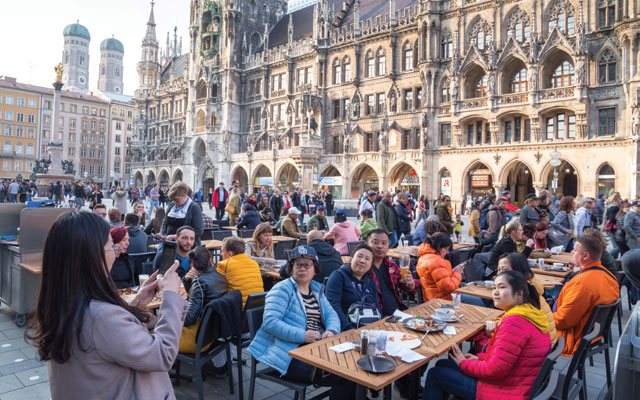
Chinese outbound incentive trips are expected to rise in 2020; Chinese travellers enjoying the moment at Marienplatz in Munich, Germany

China
China industry observers report sustained growth in 2020 for outbound business events and travel, driven largely by the need to cater to the country’s millennial workforce and businesses impacted by the US-China trade war.

Chinese outbound incentive trips are expected to rise in 2020; Chinese travellers enjoying the moment at Marienplatz in Munich, Germany

Julien Delerue, general manager of meetings and events procurement solutions company 1000meetings, said demand “is expected to increase”, adding that companies are more inclined to explore destinations further afield or newer ones.

Delerue continued: “The trend in 2019 was already showing more demand for off-the-beaten-track destinations compared to renowned and established ones of the past. There is interest in the Mediterranean islands off Spain, or beach destinations in Vietnam such as Nha Trang, with more companies incorporating teambuilding or ecotourism elements to their meetings, incentive and conventions trips.

The number of incentive trips and conventions are expected to increase as more companies expand their businesses internationally.

“Overall, outbound is expected to grow a minimum 20 per cent, but with businesses stringent on cost management as a result of the prevailing world economic outlook,” Delerue remarked.

Starry Wong, deputy general manager, Shangpin Tour Shenzhen, part of the Century Holiday Group, said “educational” trips were expected to grow rapidly in 2020, as more Chinese businesspeople saw the need to attend exhibitions to market their products.

Aggressive destination campaigning by foreign CVBs in China will “have a positive impact on outbound business”, noted Vivian Zhang, director, MCI China.

However, optimism is being tempered by the US-China trade war where travel to the US has dropped, and strong currency exchange rates that have made travel to Europe expensive.

Zhang noted: “Business performance in the past year will impact event budgets for 2020. For example, China’s direct selling market, a major outbound spender, has undergone large-scale administrative reform which has put the whole industry at stake in the past year.”

Wolfgang Georg Arlt, CEO of COTRI China Outbound Tourism Research Institute, said spending in 2020 was expected to grow at the same rate as travel. The corporate meetings sector would fare the best in 2020, he projected, as China was establishing many new business contacts to replace those in the US, in places like Brazil, Iran, and the European Union and in industries such as high-tech. – Caroline Boey


Indonesia

Signs of business recovery are clear for 2020, following a challenging 2019, as stability returns to the Indonesian political environment and new policies by President Joko Widodo are put in place to prioritise development.

Donny, managing director of Adonta Group, a local event and travel company, shared that client budgets will “be back to normal” this year, allowing his company to enjoy a “robust 2020 and beyond” that would be unlike 2019 when many clients cancelled their events due to political concerns.

Pauline Suharno, managing director of Elok Tour, said incentive programmes will grow in numbers, driven by infrastructure, pharmaceutical, automotive and insurance industries.

Fuelled by business confidence, Indonesian companies are turning to longhaul destinations to reward and motivate their staff and partners.

Eddy Efendy, director of Synergy Production Travel and Events, said Eastern European destinations are winning hearts with their exotic appeal and affordability compared to the more established Western European cities.

Ary Leonardo, vice president for the incentive department of AntaVaya, said the new year has gone off on a great start, with bookings for incentive trips secured until the end of 1Q2020. He will be handling a group of 20 top achievers from a cosmetics company to Greece and Turkey in March, and a 150-pax reward trip by an insurance firm to Dubai in April.

Ary observed that more Indonesian companies are favouring experiential programmes. – Tiara Maharani


Japan
Against the excitement and shine of the 2020 Olympic and Paralympic Games in Tokyo, Japanese outbound event agencies are bracing themselves for reduced overseas activities in the new year as local companies choose to stay home and weave Games-related programmes into their incentive and teambuilding events.

Working against Japanese outbound event agencies is also a weakened event budget for 2020.

A sales representative for Tobu Top Tours, who requested for anonymity, said 2020 budget for overseas events is lower than that of 2019.

His revelation was echoed by Lucky Morimoto, president of Event Services Inc., who told TTGmice that budgets for 2020 are “flat.”

Destinations with a higher chance of winning these limited budgets are those with a strong reputation for safety and security, have a good selection of unique venues, and can offer a strong package of activities and experiences via local companies, he said.

Tobu Top Tours’ sales representative agrees that destinations must offer “something out of the ordinary” to score Japanese corporate movements, and pointed out that Hawaii is a firm favourite, while Cambodia and Vietnam are gaining popularity.

Morimoto predicts that Japanese incentives, ceremonies, galas and teambuilding activities will perform the best for overseas destinations. He also expects strongest business opportunities to lie in the IT, financial, insurance and automobile sectors. – Kathryn Wortley

Malaysia
Demand for outbound business events will continue to be soft in 1H2020, say Malaysian agents whose projections are influenced by ongoing trade tensions between China and the US; Brexit; a weak Malaysian currency; and other global uncertainties impacting the business environment.

Asian female traveller in Japan

Mayflower Holidays general manager, Abdul Rahman Mohamed, is expecting “smaller incentive group sizes partly because there are fewer people who were able to meet their sales targets (in 2019)”.

He also noted that clients were paying more attention to the price of the programme and not so much on the experience. “In the past, companies used to ask for quotations from four players, usually the ‘big boys, during the bidding process. Now, it is not unusual for them to ask from eight players as companies shop around for the cheapest offer. Travel companies desperate for business are also dumping rates.”

Budgets for incentive programmes have been cut by some 10 to 15 per cent compared to 2019, he added. As a result, fancy optionals, such as a gala dinner or a Michelin-star feast, have been abandoned.

Syed Razif Al-Yahya, managing director of Sutra Group of Companies, shares a dull outlook for 2020, as his expectations of a local economic rebound in 3Q2019 had failed to happen.

He said Malaysian companies had cut costs in 2019 due to uncertainties in the business environment as well as lower profits – an unfortunate development that he predicts will continue into 2020.

“(Besides slashing event budgets for 2020), companies are reducing the number of staff attending events, as well as being more picky with airfares and hotels,” Syed Razif said.

He added: “Sectors like insurance and financial sectors are still fulfilling their obligations to top achievers, but Small and Medium Enterprises (SMEs) have yet to even determine a destination for their reward trips. Some SMEs are looking at destinations in the region, while others are rewarding staff with cash incentives instead of all-expense paid incentive trips.”

Raaj Navaratnaa, general manager, New Asia Holiday Tours & Travel, has also seen a small number of SMEs opting for cash incentives, and he believes this may catch on with multinational firms in the future. – S Puvaneswary


Philippines

Outbound business events from the Philippines – still comprising mostly incentive travel – is expected to remain robust, influenced by several positive changes in the marketplace.

These changes include destinations like Europe becoming more affordable; NTOs actively promoting their packages; non-traditional carriers like Saudia and China Eastern providing better accessibility to far-flung destinations at affordable rates; and the advent of low-cost carriers that fly from many parts of the country.

Long-established MICE destinations of Thailand, South Korea and Japan will remain on the radar because aside from granting attractive perks to corporate groups, they also dangle the lure of new products, activities or locations.

Turkey will remain in the rat race given its jaw-dropping promotions in the Philippines, direct Manila-Istanbul flights, as well as affordable packages made possible by government subsidy for hotel operators and earnings from optional tours that cover low net rate and service fee, said Angel Ramos Bognot, owner of Asian Afro World Events.

Bognot also expects newcomer Vietnam to be one of the most-favoured South-east Asian destinations because of its extensive marketing promotions and planner incentives in the Philippines, while Malaysia is seen to follow Thailand’s lead of offering cash subvention depending on the size of the event group.

Other corporations, however, are looking for new and exotic destinations. Israel, Kazakhstan, Georgia, Armenia, Morocco, and Russia, among others, have come up on their shopping list.

Budget remains a major factor for corporate outbound and this has been factored in clients’ 2020 programme. Benjie Bernal, Sharp Travel Services tour operations manager, said the event budget varies among their clients, but as travelling becomes more affordable, there are also company heads that bring along their lower-ranking staff on more focused programmes. – Rosa Ocampo


Singapore

As the waves of economic downturn crash onto Singapore’s shores, local business confidence has taken a hit and companies are clamping down on discretionary spend, of which the MICE sector is largely considered a part. Planners and agents alike report tightening travel budgets across the board, shrinking the distance and scale of events and incentive trips.

This is compared to last year’s buoyant forecasts, whereby 80 per cent of planners in Asia were found to have expanded event budgets, according to the 2019 Cvent Planner Sourcing Report Asia Edition. Now, Singapore’s companies are retreating into more conservative travel spending for 2020.

Diana Ho, general manager of Royal Wings Travel, observed: “Companies are tightening their travel budgets and cutting down on longer trips. Groups that used to go longhaul are now looking at nearby destinations.”

Popular destinations include perennial favourites like Thailand, Vietnam and Malaysia, while some TMCs report a growing interest in Cambodia and Myanmar.

“(Besides being accessible), these destinations have infrastructure to support mid- to large-scale events at a cost-effective price, which allows planners to achieve better return on objectives with lower investments,” explained Petrina Goh, director, Singapore, CWT Meetings & Events.

Whether MICE spend and travel distance will bounce back in 2020 will depend on the status of geopolitical developments.

Goh noted: “We’ve noticed that the list of approved destinations for outbound business events has been shrinking. Event planners naturally want to avoid cities or countries that are at greater risk of being impacted or do not have adequate infrastructure to cope with such incidents.” – Pamela Chow

Thailand
Thai MICE groups, armed with a stronger currency and therefore greater buying power, have become the darling of many destinations.

Dave Chang, managing director, Asia MICE Planner, said Japan and other South-east Asian destinations stand to benefit most from Thai corporate travel, and DMCs and hotels are “happy to offer competitive rates to attract more business from Thailand”.

“While the 2020 budgets of upscale clients have remained consistent with last year’s, (cost-conscious clients) are trying to save even more money,” Chang observed, adding that for the latter group, travel budgets for European destinations have shrunk.

Corporate clients are also increasingly relying on social media to make their travel decisions, although airfare and the safety of the destination remain the most critical decision influencers.

Meanwhile, Addy Ritthirong, managing director of Eventage (Thailand), is keeping his eye on political and economic developments in the world as well as new destinations in season, festivals and national grand sales, which he believes will impact 2020 outbound MICE demand for his Thai clientele. – Anne Somanas


Vietnam

As Vietnam’s business event offerings continue to grow, infrastructure improves and domestic air routes expand, the domestic market has emerged as the destination’s biggest source of business events.

Jackie Han, deputy director general of Hoa Binh Group, said: “The majority of events are still planned for within Vietnam. There are many new exciting destinations, venues and opportunities opening that (local corporates) want to explore.”

Bruno Simoes, executive director of smallWORLD Experience, also noted an increase in domestic-driven demand. He said Hanoi remains a “trendy” destination, with the company receiving a rise in enquiries for the Vietnamese capital in 2020.

For Vietnamese firms that do consider overseas events, regional destinations are favoured.

Han said destinations closer to Vietnam are most popular “in order to meet clients’ budgets”, budgets which have risen slightly for 2020.

Pham Ha, CEO of Luxury Travel Vietnam, noted that outbound MICE is a “rapidly growing segment”, with growth seen in 2020 compared with 2019. He added: “Big enterprises now have a combination of travel with seminars and accompanying events.”

Simoes said the main factor expected to impact Vietnam’s outbound MICE market in 2020 is the Chinese economy. He said: “We are quite concerned with the current economic 2020 outlook in China. The economy is slowing down and the whole world’s economy, namely South-East Asia, will be affected.” Ha added that the currency exchange rate may also have an impact. – Marissa Carruthers

Singapore anticipates more eventful 2H2020; government reassurance key

0

Stakeholders are expecting Singapore’s MICE industry to make a comeback in 2H2020, after the spread of Covid-19 is stemmed, and international meetings and events resume regular programming.

The destination enjoyed a solid year of events in 2019, and initially had “a robust pipeline for the next two years” queued up, said Aloysius Arlando, president, Singapore Association of Convention & Exhibition Organisers and Suppliers (SACEOS).

MICE business for Singapore will tumble this year, but stakeholders are hopeful that things will bounce back in 2020

However, the Covid-19 outbreak that erupted over the past few weeks has given MICE businesses in Singapore – many of which are SMEs – “a very rough start” to the year, said Arlando.

Numerous global and regional events, such as the Sweden-Southeast Asia Business Summit; the World Association of Newspapers and News Publishers’ inaugural Asian Media Leaders Summit; Aviation Festival Asia; and the second SG Tourism Leaders Engagement Series 2020, have placed their bookings on hold or postponed them.

In addition, arrival numbers for Singapore are expected to worsen, with the STB projecting that international visitor arrivals (IVAs) to the country will slide by 25 to 30 per cent this year, shared chief executive Keith Tan on Tuesday.

This drop is more severe than the decline seen in 2003 as a result of the severe acute respiratory syndrome (SARS) outbreak, which dented Singapore’s IVAs by 19 per cent.

Tan continued: “At this point, we estimate that every day, we are losing an average of 18,000 to 20,000 IVAs into Singapore. Most of these are Chinese, since we have stopped all visitor arrivals from China, but leisure and business travellers from other countries are also deferring or cancelling their travel plans to Asia.”

However, the MICE sector is banding together to work towards a swift recovery once this blows over.

Arlando shared: “(The SACEOS) team is working with organisers to see how best we can manage the cancellations and postponements. However, not all players are at the (same) level of understanding and preparedness (for the crisis). What we want to do is to level up the baseline, to make sure that precautionary measures are in place.”

He added that 2H2020 will see a “bunching up” of postponed events – many have been rescheduled to the period from May to July – and advised MICE companies to consider “how to best manage” this flood of business when it arrives.

Tan reassures MICE stakeholders the government is doing what they can to retain confidence

Some hospitality players have implemented the strategy of turning their attention to long-needed refurbishment works in anticipation of eventual recovery, said Kwee Wei-Lin, president, Singapore Hotel Association.

STB’s Tan also assured that the organisation has been engaging with other global associations, such as at the UFI Global CEO Summit 2020 in Rome, where leaders have expressed “a high level of trust” in Singapore’s safety and success of recovery.

“We don’t see any reason for other countries to impose travel advisories (on travel to and from) Singapore. We’re very confident in the measures that our government has taken. Our foreign ministry will work very closely with other countries who indicate that they wish to (impose travel advisories on Singapore),” he continued.

Reviews

The Ritz-Carlton, Bangkok

The newly-opened Ritz-Carlton, Bangkok anchors the One Bangkok development with cosmopolitan elegance. Featuring the city's largest ballroom and a spectacular new penthouse suite, it delivers exceptional hardware and deeply authentic, soulful service for business and leisure travellers alike

Mama Shelter Zurich

Behind the imposing, Brutalist concrete that defines Zurich’s Oerlikon district lies a surprising secret. While its exterior honours the neighbourhood’s industrial roots, stepping inside Mama Shelter reveals a vibrant, neon-soaked world that is a far cry from its rigid shell

Hyatt Regency Kuala Lumpur at KL Midtown

A polished urban retreat designed for business travellers, Hyatt Regency Kuala Lumpur at KL Midtown combines thoughtful design, seamless service, and exceptional facilities.