Asia/Singapore Friday, 29th May 2026
Page 6

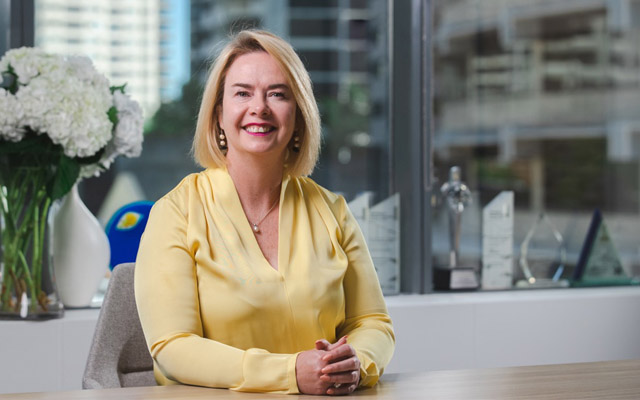
TTG Conversations: Five Questions with Renee Elliott, EventsAir

0

Event planners are facing increased complexity, rising attendee expectations, and having to deliver on tasks with leaner teams. In such an environment, event management system specialist, EventsAir, sees AI as the solutions for improved efficiency and productivity.

In this episode of TTG Conversations: Five Questions, Renee Elliott, vice president of product with EventsAir, details the company’s new chapter in AI deployment through its new Air Intelligence system and how it will take events management and attendee experience forward without making human hands obsolete.

Singapore boosts MICE competitiveness with fresh funding, industry alliances, and infrastructure plans

0
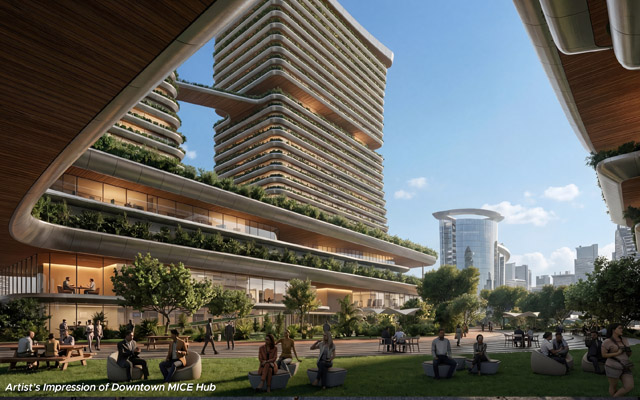
Artist's impression of the Downtown MICE Hub

Singapore’s business events industry demonstrated exceptional momentum last year, with 2025 tourism receipts surging over 35 per cent from the previous year to reach S$2.3 billion (US$1.8 billion).

To capitalise on this growth, Grace Fu, minister for sustainability and the environment and minister-in-charge of trade relations, announced at the annual Tourism Industry Conference last Friday, that the Straits View area near Marina Bay has been earmarked as a potential location for the Downtown MICE Hub (DMH).

Artist’s impression of the Downtown MICE Hub

Fu elaborated: “The DMH will complement other MICE venues in the city such as Raffles City, Suntec City, and Marina Bay Sands, all located within a three-kilometre radius, creating a vibrant MICE cluster that blends work and play, encouraging more bleisure travellers to extend their stay.”

To move the project forward, Singapore Tourism Board’s (STB) chief executive Melissa Ow confirmed that an industry engagement session is scheduled for May 15, followed by a Request for Information exercise and a formal Request for Proposal in 2027.

The city’s appeal for extended bleisure stays will be further bolstered by upcoming lifestyle landmarks, including the Therme Singapore wellness attraction at Marina South (opening by 2030), and a new five-hectare wetlands precinct at Gardens by the Bay, which will house a teamLab museum.

Singapore’s business events sector continues to navigate recent global geopolitical volatility. According to Ow, while the onset of conflict triggered initial flight adjustments, the industry has “remained largely resilient”.

This year, the city has successfully hosted several high-profile gatherings, including ITMA ASIA + CITME Singapore, which attracted over 26,000 international visitors. Other record-breaking events included Asia Pacific Maritime (20,000 attendees), and Milipol TechX.

Looking ahead, the pipeline is secured with numerous “first-in-Asia” fixtures, such as Passenger Terminal Expo Asia 2026, Breakbulk Asia 2026, and major sustainability forums like the World Hydrogen Energy Conference.

To ensure long-term competitiveness, STB is focusing on attendance building with a new S$5 million fund designed to help event organisers market to secondary cities and new markets.

Ow explained: “We hope to encourage tourism stakeholders to diversify and go into new secondary cities. It may not immediately yield results, but it’s critical as they build resilience and competitiveness in the mid-to-long term.”

Additionally, the INSPIRE Global 3.0 and SMAP 5.0 programmes have been refreshed to offer more diverse lifestyle options and deeper digital integration with partners like Expedia, Grab, and Klook.

The industry is also seeing unprecedented private-sector synergy. Twenty-two hotels, representing 25 per cent of Singapore’s total room stock, have launched the Singapore Hotels Incentives for Business Events (SHINE) initiative.

“These hotels are not concentrated in one area, but are all over Singapore such as Chinatown and Sentosa. We believe that the industry can benefit from this synergy,” noted Ong Huey Hong, assistant chief executive, industry development group, STB.

She emphasised that the strategy is built on the country’s long-term vision. “Our aim is to triple our MICE receipts by 2040, so we need to ensure that our infrastructure is future proof.”

Asia emerges as MICE anchor amid global uncertainty

0
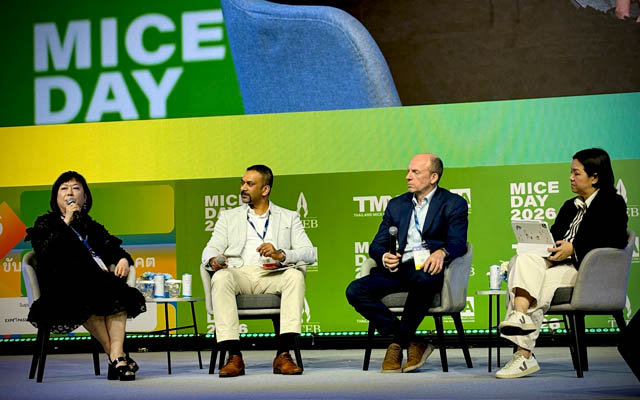
From left: AsiaWorld-Expo’s Enid Low; Koelnmesse’s Prakash Ramajillu; Informa Markets’ Ian Roberts; and TCEB’s Jaruwan Suwannasat; photo by Anne Somanas

As global volatility rises and international crises reshape the landscape, event organisers are reprioritising their strategies, placing a premium on rigorous contingency planning and increasingly looking to Asia for long-term stability.

This topic took centrestage during the recent MICE Day panel, The Future of MICE: Global Trends & Leadership Insights. Hosted by the Thailand Convention and Exhibition Bureau (TCEB) at Bangkok’s Queen Sirikit National Convention Center and moderated by Jaruwan Suwannasat, senior vice president of TCEB, the session brought into focus how leadership is navigating these immediate global impacts.

From left: AsiaWorld-Expo’s Enid Low; Koelnmesse’s Prakash Ramajillu; Informa Markets’ Ian Roberts; and TCEB’s Jaruwan Suwannasat; photo by Anne Somanas

Ian Roberts, senior vice president Asia, at Informa Markets – which operates over 70 tradeshows – noted that current disruptions in the Middle East have forced organisers into a familiar, pandemic-era pivot.

“It’s similar to Covid. What we’ve done for our April and May shows is moved them to the back end of the year. We’re also seeing a lot of cancelled shows,” Roberts explained, citing compounding challenges like higher costs, inflation, and logistical bottlenecks.

Consequently, crisis management is no longer an afterthought.

Enid Low, chief strategy officer at AsiaWorld-Expo in Hong Kong, revealed that venues are now actively stepping in to help organisers design robust contingency plans.

“It’s not easy for an organiser to plan an event ahead in a crisis zone. As a venue partner, we always try to think about how we can accommodate the organiser to relocate events. Asia has become the first priority for contingency plans,” Low said.

While global disruptions pose immense logistical hurdles, they have simultaneously accelerated Asia’s rise as a reliable business events destination.

“We’re seeing multiple crises all at once; you really have to think out of the box,” observed Prakash Ramajillu, general manager at Koelnmesse.

He added: “It was a very strategic decision to enter Asia when we did, and now South-east Asia is becoming an anchor. We don’t need to expand everywhere; we just need to be more relevant in the places we are right now.”

Roberts echoed this sentiment, highlighting South-east Asia geopolitical position as a “friend to all countries”, making it an attractive stage for global players from the US, China, India, and Europe.

“We bounced back straight after Covid in this part of the world. South-east Asia certainly, but also Hong Kong, China, the rest of Asia, is really in demand at the moment,” he said.

However, capitalising on this influx requires strong local ecosystems. When asked by Suwannasat about the role of government support in making business events a good long-term investment, Roberts was candid.

He noted that while organisers consistently ask for more funding and cheaper rent, the ultimate goal is delivering events that are sustainable in the long run. He lauded the proactive backing from regional authorities, specifically pointing out that destinations like Hong Kong and Thailand are leading by example with exceptional government support.

Ultimately, the panel agreed that the region should not just serve as a backup plan.

“Nowadays, Asia is quite different. Asia has become a major market for MICE events, and we already have a lot of good venues. But the most important thing is that we (continue to be) efficient and stable,” Low emphasised.

“In the long run, we are not just talking about short-term substitutions. We want organisers to develop their events in Asia, especially in Thailand and Hong Kong,” she concluded.

Association leaders urged to prioritise transparency and accountability

0
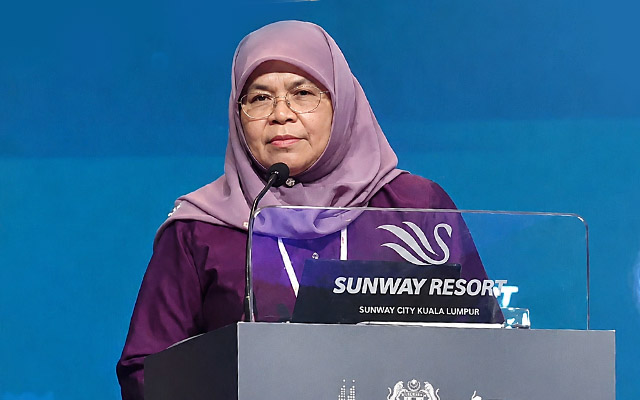
Maimunah: trust and credibility are the ultimate currencies for an association

Association leaders must move beyond activity-driven management and focus instead on purpose, governance and measurable impact if they want to remain relevant in an increasingly complex operating environment.

Delivering her keynote address at the recent Association Day 2026 – held at Sunway Resort Hotel and organised by the Malaysia Convention & Exhibition Bureau (MyCEB) – Maimunah Mohd Sharif, property advisor at Petronas and who was also the former executive director of the United Nations Human Settlements Programme (UN-Habitat), challenged associations to rethink how they define success and value.

Maimunah: trust and credibility are the ultimate currencies for an association

Maimunah opined that many associations fail not because they are inactive, but because they become consumed with activities without clearly understanding their purpose or impact.

She shared: “They are busy but unclear. They run programmes but cannot explain their impact,” adding that many organisations focus heavily on statistics and event numbers without properly measuring outcomes.

She stressed that associations must constantly ask themselves why they exist and what unique role they play within their industries and communities.

She also emphasised the importance of governance, transparency and accountability in maintaining credibility and member confidence.

“Trust once weakened, takes sustained leadership and credible governance to rebuild,” she remarked.

Drawing from her experience leading UN-Habitat between 2018 and 2024, Maimunah recounted how she inherited an organisation facing an US$8 million deficit, governance challenges and declining trust among member states.

She revealed that 797 projects within the organisation lacked financial closure when she first assumed office.

“Do you think that the member states will continue funding the organisation if 797 projects have no financial closure?” she said.

Maimunah further explained that restoring confidence required difficult decisions, tighter financial controls, stronger reporting discipline and greater transparency with stakeholders. By the time she left the organisation, UN-Habitat had reportedly moved from an US$8 million deficit to a US$6 million surplus.

She also introduced what she described as the “4W1H test” for sustainable associations. This is questioning why the association exists, whom it serves, what value it delivers, when it leads, and how decisions and finances are governed.

The keynote reflected the wider objectives of MyCEB Association Day 2026, which brought together association leaders, policymakers and business events stakeholders to discuss governance, leadership and collaboration within Malaysia’s association ecosystem. This year’s conference theme was Governing with Purpose. Leading with Impact.

In his opening remarks, secretary-general of the Ministry of Tourism, Arts and Culture, Shaharuddin Abu Sohot, described associations as strategic partners that drive knowledge exchange, industry excellence and global connectivity.

He also noted that Malaysia’s business events industry continues to play an important role in supporting economic growth and international positioning, with MyCEB having secured 3,575 international business events that generated RM26.8 billion (US$6.8 billion) in economic impact since it was established in 2009.

IPOS-X marks a decade with pivot to Venueloka-led digital ecosystem

0
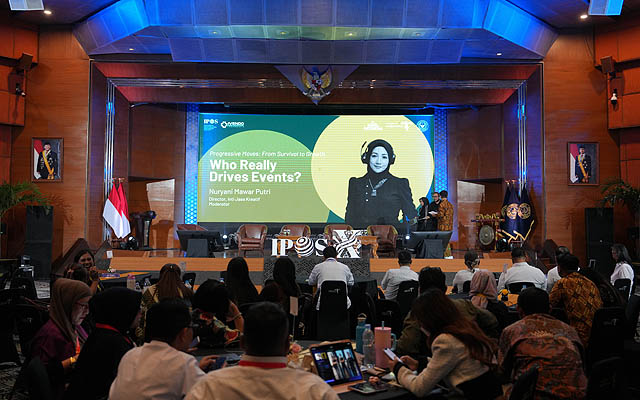
IPOS-X 2026 in session

The Indonesia Professional Organizers Summit (IPOS) has announced a radical transformation of its business model, marking a historic decade in the industry.

At the 10th edition of IPOS-X , Harry Nugraha, IPOS founder, shared that the organisation was moving beyond its traditional annual B2B event forum format to become a continuous, data-driven digital ecosystem.

IPOS-X 2026 in session

The cornerstone of this evolution is the soft launch of Venueloka, a digital platform designed to bridge the gap between physical events and year-round online business connectivity.

For over 10 years, IPOS has developed the country’s business events ecosystem, however, Harry noted that the once-a-year interaction model is no longer sufficient to keep pace with a rapidly changing global economy.

“The industry is undergoing a structural shift,” Harry stated during the forum. “We are moving from being event organisers to becoming intelligence systems. Data that was once ‘locked’ within a three-day (IPOS) event is now being harnessed into a 365-day platform.”

Data from IPOS-X this year showed 454 business leads originating from 1,798 potential events, representing a projected revenue of over 396 billion rupiah (US$22.7 million) for 2026. Venueloka aims to ensure these opportunities are captured and nurtured through continuous engagement and data-driven matchmaking, rather than leaving them to chance following a physical gathering.

The transition signals a broader industry trend toward Tourism Mathematics, where success is measured by high-value deal density rather than attendance numbers. IPOS is also putting forward a business-first philosophy, stripping away the high costs of elaborate booths and visual gimmicks to focus on conversion and ROI,

“Efficiency is the new competitive advantage. In the new era of ‘Event Intelligence’, the question is no longer ‘How many people attended?’ but ‘What was the business impact?,” Harry said.

The move to a digital ecosystem also levels the playing field for small and medium-sized enterprises (SMEs) and regional players. By reducing the financial barriers associated with traditional exhibitions, IPOS and Venueloka allow independent organisers and local brands to access decision-makers at a fraction of the cost.

Furthermore, the new model addresses the vulnerability of the event industry to external shocks, such as economic shifts or climate events. By establishing a Resilient by Design framework, IPOS is providing the industry with a more stable, platform-based foundation that can withstand global uncertainties, explained Harry.

Supported by the Ministry of Tourism and in collaboration with the Indonesia Event Industry Council, IPOS-X attracted 43 seller companies comprising of hotels and resorts, DMOs, transportation, aviation services, insurance companies, tax consultants and event support. Buyers totalled 83 companies, comprising of associations, corporates, educational institutions, tours and travel, events and business events industries.

Cathay Pacific unveils flagship lounge overhaul

0
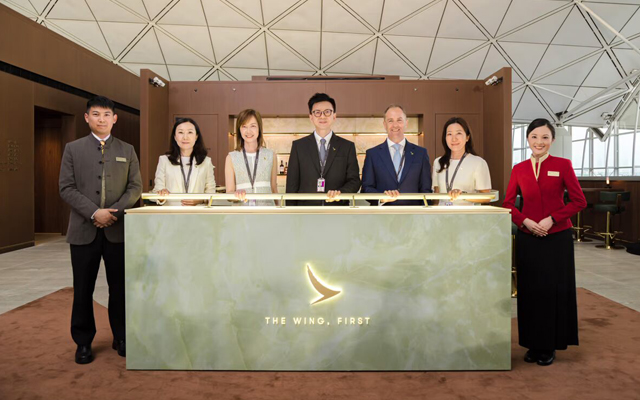
Cathay Pacific opens its newly-redesigned flagship lounge The Wing, First at Hong Kong International Airport

Cathay Pacific has unveiled the redesigned The Wing, First lounge at Hong Kong International Airport, marking a significant step in its HK$100 billion (US$12.7 billion) investment programme.

Located in Terminal 1, the flagship space officially reopened to passengers on April 22, 2026, following an extensive overhaul led by London-based design firm StudioIlse. This launch follows recent renovations at The Bridge in Hong Kong and the airline’s Beijing lounge.

Cathay Pacific opens its newly-redesigned flagship lounge The Wing, First at Hong Kong International Airportd

The new design evolves the airline’s signature residential aesthetic by blending familiar materials with more refined textures. While the iconic green onyx remains a focal point, walnut wood has been introduced as the primary timber, complemented by granite flooring that pays homage to traditional Chinese architecture. The lounge also serves as the debut for a custom collection of signature furniture and lighting created exclusively for Cathay Pacific’s spaces.

Functional zones within the lounge have been reimagined to offer greater flexibility and privacy. The Atrium serves as a central social hub, housing a signature bar and a self-serve pantry that adjusts its menu from breakfast through to evening bistro-style dining. For formal meals, the Dining Room provides full à la carte service, featuring a menu of international favourites alongside regional Chinese dishes developed in collaboration with Mott 32.

Wellness and productivity are also prioritised through dedicated spaces. The Retreat offers seven private booths for foot and neck massages, while reimagined shower suites utilise new water and lighting technologies to customise the environment. For business travellers, The Bureau introduces a fully enclosed workspace with adjustable lighting modes for deep focus.

As The Wing, First returns to service, the adjacent Wing, Business will now close for its own renovation, with a scheduled reopening in 2027. This cycle of upgrades will continue later this year when Cathay Pacific opens its first-ever dedicated lounge at New York JFK’s Terminal 6.

Courtyard by Marriott Mumbai International Airport appoints new rooms division leadership

0

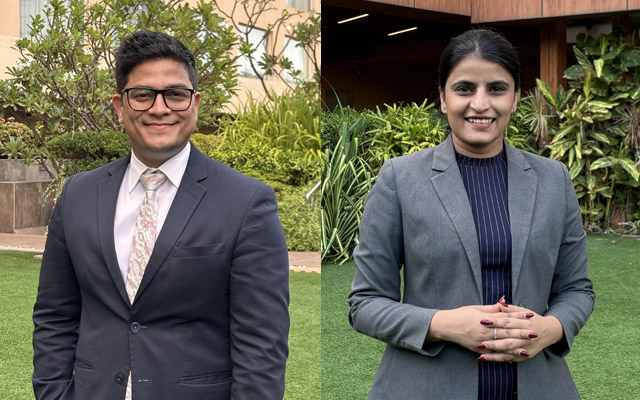
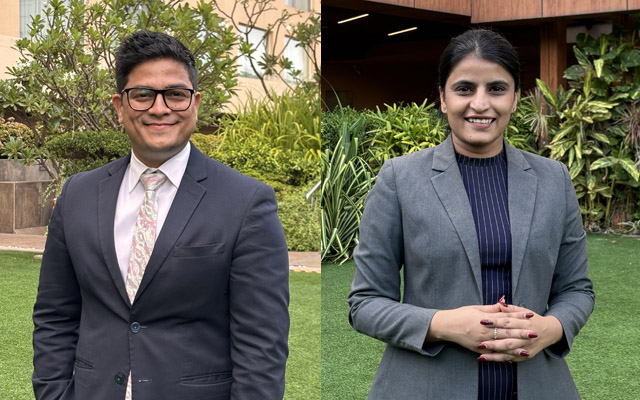
Courtyard by Marriott Mumbai International Airport has promoted Avinash Chandola to rooms division manager and appointed Anju Rathore as front office manager, strengthening its rooms division leadership team.

Chandola was most recently front office manager at the property and brings over 16 years of experience, with a focus on front office operations and guest satisfaction.

From left: Avinash Chandola and Anju Rathore

Rathore joins with more than 12 years of experience in front office operations and guest experience, having led high-volume operations and service delivery across hospitality settings.

Running a different race

0

You have seen the events industry ride a rollercoaster since Covid. With the escalation of the Iran conflict, what changes have you observed in client decisions, behaviour, or event planning?
We have really put an emphasis on future-proofing since pandemic, so while it is another challenging time, we’re not caught off guard. What I am seeing is a clear trend: clients, especially large international associations, are delaying their big decisions.

Short term, some are pausing vital decisions like opening registrations or major marketing pushes because they don’t want to send messages into a period of uncertainty or have people scared off by volatile airfares. Medium term, it is about when to make a call on formats and resourcing. Long term, they are weighing what this means for their future event mix and where their delegates will realistically come from.

Hybrid remains an option, and we have all proven we can switch if we have to. But in the association world, everyone still strongly prefers in-person for networking, learning, and community-building. Practically, we are seeing a stronger focus on Asia Pacific for the short term, regionalised marketing, and some clients explicitly positioning Australia as a safe, stable destination.

How is this affecting event planners and decision makers?
It is really about risk mitigation, taking as much uncertainty as possible out of the equation for clients.

Since Covid, we have all developed a kind of resilience, and expectations of our partners are higher. Relationships with venues and suppliers were stress-tested during the pandemic, so we now lean on those who proved they could respond under pressure. There is less appetite for re-learning those lessons with untested partners.

Many of our contracts were already signed before this latest crisis, so we have important “shock absorbers” in place. We’re building in 20 to 30 per cent buffers in budgets, because we know margins are being squeezed by things like fuel costs and unexpected items.

Crucially, we are not seeing panic conversations about slashing supplier prices yet. Instead, it is about scenario planning, contingency, and using the resilience and relationships we built during Covid rather than starting from scratch.

Have recent disruptions affected international attendance and event budgets, compared to domestic events?
Yes, but it is not uniform. On the international side, we have been quite fortunate. After AIME, we signed a partnership with Singapore Airlines, so we are channelling European delegates via Asia rather than the Middle East, which reduces perceived risk and pricing volatility.

Out of North America, we have seen airfares at levels not seen for a decade, thanks to recent sales, which is encouraging for attendance. Across Asia-Pacific, including India, China, and South Korea, we are seeing strong traction, helped by the fact that many of these markets are within an eight-hour flight to Australia.

The big issue is that around 70 per cent of the cost for someone coming to Australia is in the air, not on the ground. So any shock to fuel prices or air routes hits international attendance more than domestic.

For the next six months, we are seeing some organisations send fewer delegates or tighten travel budgets, but for events further out, many are assuming conditions will stabilise and are planning accordingly.

You said some clients are “going harder” to Asia Pacific. What does that look like?
We are seeing clients reduce their presence at European meetings and redirect that investment into Asia Pacific.

One energy client, for example, recently told us to stop all work connected to events in Paris, Spain, and Germany, and instead focus our efforts for the next three months on India, China, and South Korea. They will then reassess.

More broadly, we are prioritising marketing and engagement in markets within an eight-hour flight radius. Clients are choosing to be physically present where travel feels more straightforward and where they can still grow delegate numbers and impact.

Would you say Australia and Asia-Pacific are actually benefiting from this crisis?
Absolutely. I often quote Churchill: “Never let a good crisis go to waste.” We are not trying to out-compete Europe or North America on their terms. We are running our own race in Asia Pacific.

A good example is how we co-locate. When Melbourne hosted a vasculitis conference that typically draws around 1,000 international delegates, we co-located it with the Australian and regional (Malaysian and Singaporean) groups. Instead of the usual numbers, we exceeded 1,500 delegates. Our European colleagues were surprised. We showed that when you bring the global meeting into our region, you unlock a whole new cohort of participants who rarely travel to Europe.

So yes, while there is disruption, Australia and Asia-Pacific benefit from being perceived as safe, stable, and regionally connected, and from tapping into new “global citizens” who have not previously been part of those international communities.

How is the uncertainty affecting international speakers? Are you seeing increased hesitation?
Definitely, particularly among UK and Western European speakers. North Americans, interestingly, are much less hesitant to travel to Australia right now.

We are responding by building flexibility into the system: fully flexible airfares where possible, renegotiated hotel cancellation terms for key speakers, and extending decision deadlines. For one robotics event in July, for example, we’ve agreed on a clear cut-off date of June 2, 2026, for speakers to confirm whether they will travel.

If they are unable to, we will pivot to hybrid delivery with live streaming or pre-recorded sessions. Because we have done this many times since Cpvod, it no longer feels like an emergency measure, but we still work to keep virtual content to around 25 per cent of the programme to preserve the in-person experience.

If the conflict drags on, what are the major risks for hosting international business events in Australia?
The biggest risk is commercial, not just attendance numbers. Most associations rely heavily on their flagship conferences for revenue.

If commercial partner support softens – something we’re not seeing yet, but which is a real possibility – that is when you start having difficult conversations about viability.

That could mean postponements, hybrid formats where necessary to meet professional development requirements, or in some cases, reshuffling destinations. There are already discussions in some international associations about swapping a planned Middle East congress with another confirmed destination like Melbourne, to avoid asking people to travel into a conflict zone.

So I feel deeply for organisers in the Middle East right now. They will likely be forced into virtual or heavily hybrid formats. For Australia, the risk is more about knock-on commercial and programmatic decisions within that global calendar than about safety perceptions.

With all these challenges, how do you maintain your problem-solving skills and keep a positive mindset?
Some of it comes from my background. I have an honours degree in organisational psychology, which definitely helps. But a lot of it is structured practice.

Event organisers love control, and these situations take a lot of that away. My response is to share the load. We regularly bring the whole company together, no matter the role, and lay out the challenges of the day, week or month. Then I will ask everyone to contribute ideas, which we can then assess and refine.

I also invest heavily in planning with my senior leadership team, who have been with me on average 15 years. Twice a year, we step out of the office for several days purely to work on the business, not just in it. We game out scenarios and develop response plans.

So when a crisis like this hits, we are not starting from zero. We are pulling a plan from the “filing cabinet”, adapting it with current data, and then using weekly check-ins to coach younger team members through real situations. That is how you move from coping to actively seeking opportunities, finding new markets, new formats, and new value for clients.

What is your takeaway for others in the industry navigating similar uncertainty?
Solidarity really matters. You are not the only one dealing with these problems, even if it sometimes feels lonely. There will be a time when we’re no longer talking about this conflict, just as Covid moved from dominating news to background context.

The key is to accept that crises are coming more frequently, every 18 months or so. It is a good idea to build resilience, data-driven decision making, and flexible partnerships into your standard operating model.

Spend some time on the problem, but spend much more time on the solutions. That is how you stay ready to deliver value for your clients and seize the opportunities that come with change.


JW Marriott Mussoorie Walnut Grove Resort & Spa names director of operations

0

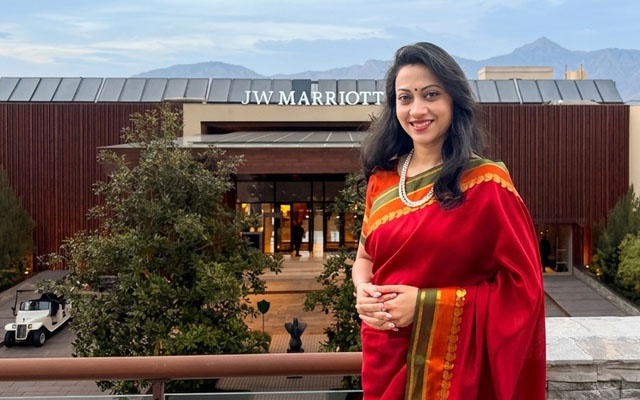
JW Marriott Mussoorie Walnut Grove Resort & Spa has appointed Kashmira Sahu as director of operations, who will oversee all hotel functions and key operational departments.

She most recently held senior leadership roles including director of rooms, with experience across Marriott International, Indian Hotels Company and The Leela Palaces and Resorts.

With nearly two decades in luxury hospitality, she brings expertise in operational efficiency, revenue performance and guest services.
Switzerland eyes China’s MICE rebound with budget hike and tailored roadshows

0
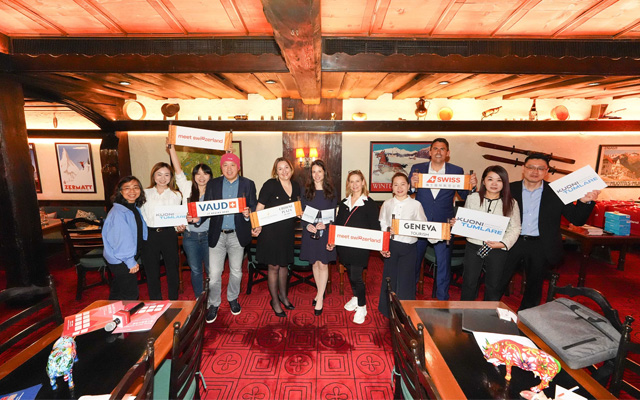
SCIB roadshow in Hong Kong; photo by SCIB

The Switzerland Convention & Incentive Bureau (SCIB) has increased its marketing budget by 10 per cent this year to accelerate growth in the China market.

To capture this demand, SCIB is showcasing more creative programming to Chinese agents, with a specific focus on integrating Switzerland’s iconic public transportation – such as trains and cable cars – directly into the incentive experience.

SCIB roadshow in Hong Kong; photo by SCIB

“The transfer is already part of the journey and the experience,” said Barbra Albrecht, head of meetings & incentives worldwide for SCIB. “Business events contribute significantly to our Travel Better initiative. Because these groups often travel during the low season, they benefit from better availability, more space, and more competitive rates. That is why longhaul markets like China and Hong Kong are so vital for us.”

Albrecht recently led SCIB’s annual roadshow through Beijing, Shanghai, and Hong Kong, marking her first visit to the region in 14 years. The delegation included six Swiss trade partners, ranging from DMCs and airlines to local hotels.

According to Albrecht, the nature of Chinese incentive travel has evolved. In 2025, China ranked as the number three market for incentive traffic, with the average length of stay surging from 2.6 nights in 2024 to 4.5 nights.

“Incentive demand from China is back to 2019 levels, but the requirements have changed. Group sizes have shifted from massive 1,000-pax delegations to smaller groups of 50 to 200. This is perfect for us, as we can accommodate them much more effectively. People no longer want to spend all their time sitting on a bus or trying to combine too many countries,” Albrecht noted.

She added that the modern Chinese traveller now prefers a hub-and-spoke model. “They want to stay four nights in one place and dive deeper. As a premium, compact destination, Switzerland is ideal for this. You can experience the mountains in the morning, a lake in the afternoon, and a gala dinner in a vineyard by evening.”

To support, SCIB relies on local specialised staff who understand the nuances of Chinese culture while maintaining Swiss expertise.

In addition, the bureau’s strategy is highly tailored. For example, during the roadshow, the delegation visited Amway China’s headquarters in Shanghai, hosted a C-level VIP dinner for agencies in Beijing, and partnered with Kuoni Tumlare in Hong Kong for an exclusive event targeting insurance and direct-selling firms.

While global conflicts have impacted some markets, Albrecht noted that the China market remains resilient. In contrast, the Indian market has seen flight capacity issues due to transit dependencies in the Middle East, leading to some postponements into late 2026, though cancellations remain low.

Looking ahead, SCIB plans to expand its 2027 roadshow to include Macau (Greater Bay Area) and Taipei, continuing a decade-long tradition of deep engagement with the region.

Reviews

The Slate Phuket

Just 10 minutes from Phuket International Airport on the serene northern coast, this 178-key, Bill Bensley-designed resort offers delegates a quiet, tropical paradise steeped in Phuket’s tin-mining heritage

The Ritz-Carlton, Bangkok

The newly-opened Ritz-Carlton, Bangkok anchors the One Bangkok development with cosmopolitan elegance. Featuring the city's largest ballroom and a spectacular new penthouse suite, it delivers exceptional hardware and deeply authentic, soulful service for business and leisure travellers alike

Mama Shelter Zurich

Behind the imposing, Brutalist concrete that defines Zurich’s Oerlikon district lies a surprising secret. While its exterior honours the neighbourhood’s industrial roots, stepping inside Mama Shelter reveals a vibrant, neon-soaked world that is a far cry from its rigid shell