ITB Berlin 2020 has been cancelled due to the rapid spread of the Covid-19, said Messe Berlin in a press statement late Friday evening.
This is the first time in the show’s 54-year history that it has been cancelled – a move made by the organisers following recommendations by the Federal Ministry of Health and the Federal Ministry of Economics.
Messe Berlin said in a statement that yesterday evening at 18.27 (local time), the health authority of the district of Charlottenburg-Wilmersdorf in Berlin imposed significantly tighter restrictions on holding the event, which was supposed to take place from March 4 to 8, that led to the show’s cancellation.
Among its requirements, the authority stipulated that each participant would need to prove to Messe Berlin that they were not from a designated risk area or had not been in contact with a person or persons from a risk area. It is “not possible” to fulfil those requirements, said the organisers.
Messe Berlin had for weeks made it known that a decision on holding or cancelling large-scale events would only be taken based on the recommendations or instructions of the relevant specialist authorities, as only they possess the necessary information and specialist knowledge required to draw the right conclusions.
Christian Göke, CEO of Messe Berlin GmbH, said: ”With more than 10,000 exhibitors from over 180 countries, ITB Berlin is extremely important for the world’s tourism industry. We take our responsibility for the health and safety of our visitors, exhibitors and employees very seriously. It is with a heavy heart that we must now come to terms with the cancellation of ITB Berlin 2020.”
Roger Brantsma is now the general manger of Hilton Tokyo, the brand’s flagship hotel in Japan.
He was most recently the general manager of Hilton Tokyo Bay, a post he has held since January 2017.
Brantsma brings to the role a wealth of experience, having spent over 20 years with Hilton Hotels and Resorts. He began his career in the F&B department in Hilton Amsterdam, before moving into roles like director of operations in Hilton Sharks Bay Resort, Hilton Phuket Resort & Spa, and Hilton Sydney.
His first general manager appointment was at Hilton Chennai in 2011, before he moved to New Zealand to the post of cluster general manager for Hilton Auckland and Hilton Lake Taupo.
Just as China’s open Belt and Road Initiative (BRI) has spurred Chinese cities to aggressively court international association meetings, the Middle Kingdom’s own industry associations are making firm moves to build business exchange and knowledge-sharing platforms with their country partners and international peers.
To prepare Chinese associations going international, the China Association For NGO Cooperation (CANGO) – under the Ministry of Civil Affairs – and the China Council for the Promotion of International Trade (CCPIT) Commercial Sub-council launched the China Congress of Associations and Chambers of Commerce in 2018.
Held on October 17 to 18, 2019, the congress welcomed associations, investment promotion and commercial bureaus and meetings management suppliers from China and beyond, national and city-level convention and exhibition bureaus, as well as CCPIT chapters.
Alicia Yao, the event’s organising committee chairman, said the event aimed to “guide associations’ management of research institutions, conference development and investment promotion, help trade associations to carry out brand building, establish a cooperation mechanism between the Belt and Road trade associations, and provide a platform for international and domestic cross-border exchanges”.
Emphasising the Chinese government’s full support of the local associations’ move to go beyond their borders, Yao pointed to the issuance of the Notice on Fully Hearing the Opinions of Chambers of Commerce and Industry Associations in the Process of Formulating Administrative Regulations and Regulations Administrative Standardization Documents by The General Office of the State Council in March 2019.
Vivian Zhang, director of event specialist MCI China, observed many Chinese domestic associations had begun to market themselves as international entities that were committed to being academically authoritative, raising the influence of the industry and having a strong voice.
Zhang said: “Chinese industry associations have resources and academic status. The challenge is how to make use of these resources to develop healthily.”
She observed that Chinese association heads were now younger and more exposed internationally, adding that association communication had also changed from one-way – external to internal – to two-way.
Citing an example, she said the China Infection Control Annual Conference of the China Association for Infectious and Preventive Medicine had Chinese experts and scholars deeply involved in the planning stage of the International Academic Annual Conference.
For long-established associations to grow, Zhang said new strategies and professional support were needed.
Faced with limited staff headcount, Chinese associations must re-examine their core focus, advised Zhang. Her suggestion is to outsource operations to a professional management team and for the association to concentrate on building its core content.
Mike Williams, senior partner and consultant at GainingEdge, an agency that advises the convention and meetings industry, also suggested that Chinese association executives attend training by Union of International Associations (UIA) and International Convention and Convention Association (ICCA) held in China on governance, financial management, membership growth, and case studies of association best practices.
While Chinese associations are eager to do more, the ongoing US-China trade war could impact their efforts, opined Kitty Wong, president, K&A International and past-president, World DMC Alliance.
She explained that associations needed “approval” from the central government to organise any event. With China tightening up surveillance, Wong opined the national associations cannot do much without approval and may not even consider bidding for international conferences to be held in China.
She added: “Without a local organising committee to back them up to obtain approval and/or sponsorship, there is no reason for international NGOs to bring a conference to China.”
Still, she encourages Chinese associations leaders to attend international congresses, conventions and seminars outside China “to make friends and exchange ideas with colleagues in their own fields globally”.
“Don’t be shy in connecting with the world,” she advised.
This article was first published in TTGassociations January 2020, a sister publication of TTGmice
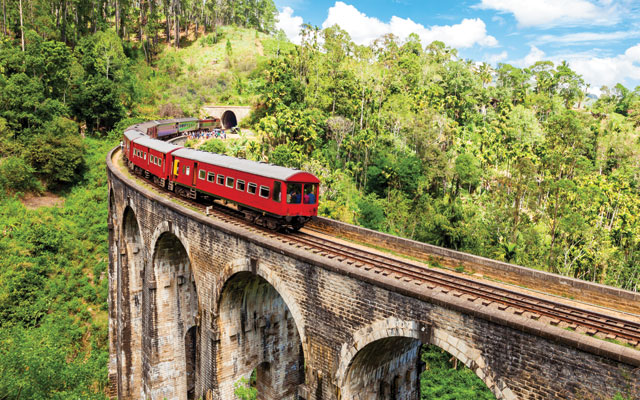
A train ride over the Nine Arches Bridge near Ella city is a trip highlight
The shadow that had been cast on Sri Lanka’s MICE sector due to last year’s Easter Sunday bombings is now a fading worry, as the country marches into 2020 with renewed confidence from event organisers.
Five months after the attacks, Colombo hosted mega congregation Ashara Mubaraka in September. The sermon received 21,000 members of the Dawoodi Bohra community from 40 regions and countries including South-east Asia, Australia, Middle East, East Africa, Europe, the US and Canada.
A train ride over the Nine Arches Bridge near Ella city is a trip highlight
This year, Colombo is set to host a healthy line-up of international events, including the Global Academic Research Institute’s International Conference on Leisure and Tourism in March; the 6th World Conference on Women’s Studies in May; and the World HR Congress in July. This uptick is an optimistic turn compared to the aftermath of the April attacks, when some 90 per cent of business events bookings for May and June were postponed, cancelled or put on hold.
Now, armed with a change in leadership from the November re-elections, the tourism trade is rallying for quality growth in 2020. Already more than 160 million rupees (US$2.2 million) have been pumped into an aggressive promotional campaign at the World Travel Mart (WTM) London in November, and Sri Lanka is readying for visits from travel associations from Italy, Belgium and the UK in coming months.
Under newly-elected president Gotabaya Rajapaksa, Prasanna Ranatunga has been appointed as the new minister of tourism. Sri Lanka’s industry players are now urging the new administration to develop a blueprint for the industry that prioritises quality tourism over quantity.
“The private companies have been working together to promote tourism for Sri Lanka. Right now, what we need is more support from the government,” remarked Ruwan Fernando, manager – Asia, Diethelm Travel Sri Lanka.
Other industry leaders, such as Aitken Spence Travels’ managing director Nalin Jayasundera, have expressed the need for the new administration to kickstart the country’s long-belated global marketing campaign, which was originally slated to commence last November.
The campaign was aimed at promotions in India, the UK, Germany, France, Italy, China, Japan, Russia, Australia, Benelux, Poland and Ukraine. The authorities were also planning to appoint PR agencies in 13 markets to assist with market intelligence, market analysis and key stakeholder contacts.
Old Colombo charms
Holding strong as the commercial capital of Sri Lanka, Colombo City has continued to draw high demand for meetings and conferences thanks to the lasting power of reputable hotels such as Hilton Colombo and The Kingsbury.
Christopher Zappia, cluster commercial director, Hilton Colombo & DoubleTree by Hilton Weerawila Rajawarna Resort, said: “In 1Q2019, Sri Lanka was doing very well, but after the attacks, business came to a screeching halt. Now, corporate business is slowly starting back up.”
Even Shangri-La Hotel, Colombo, whose main restaurant was hit by the bombings, has since retained near-maximum occupancy, with the restaurant having been given an overhaul, said its assistant manager, sales – leisure (Sri Lanka), Yohan Liyanage.
He elaborated: “Even after the chaos, demand for our hotel is very strong. The majority of our guests – about 85 per cent – are corporate travellers.”
These hotel brands and properties are forging fearlessly ahead and will present shinier offerings this year.
Hilton Colombo has scheduled phases of refurbishment throughout 2020, while the chain has seven more properties planned for Sri Lanka in the next two to three years. Meanwhile, Shangri-La Hotel, Colombo, welcomed an adjoining mall complex in October 2019 and will open two residential towers by mid-2020. Also, The Kingsbury recently completed reconstruction of its first floor, and now features a renovated lounge and a seafood restaurant.
As for Colombo, the city will welcome even more significant development in the following years.
The area surrounding Beira Lake and Galle Face will soon be populated by integrated developments featuring upscale and luxury hotels, such as the five-star local brand Cinnamon Life, The Ritz-Carlton and JW Marriott by 2024; while the raved port city with convention halls and shopping malls is slated for completion by 2025.
Affordable coasts
Just 30 minutes from Bandaranaike International Airport, Negombo is often overlooked as a transit city en route to Colombo.
The sleepy seaside city in fact offers MICE groups an affordable getaway from the bustling hub, with hotels lining the shoreline of the Laccadive Sea.
Rooms and ballrooms here are lower in cost, with unique spaces and suites affording sweeping views of the coastline. For example, the 139-key Heritance Negombo – a local brand along main road Lewis Place and popular leisure spot Browns Beach – is a large and stylish property featuring a main banquet hall for up to 250 pax, and a smaller divisible hall for up to 130 pax. Groups seeking a venue to relax and enjoy a cold bottle against the sunset can book out the See Lounge on level two of the main hotel building.
Another local hotel chain Jetwing also operates a number of properties in Negombo, such as the neighbouring upscale resort Jetwing Beach and family-style Jetwing Blue. These properties are favourable for medium-sized groups, where upper management or top performers can be placed in the more premium suites of Jetwing Beach.
Further south along the west coast, the shores of Kalutara are dotted with numerous resorts that offer a more peaceful environment, compared to Colombo and Negombo. Groups searching for privacy and sprawling facilities can consider resorts such as The Blue Water Hotel, Turyaa Kalutara and the upscale Anantara Kalutara Resort.
However, planners should note that not all hotel ballrooms and venues are fitted with built-in audiovisual systems. While some hotels can provide basic mobile projectors, presentations that require greater audiovisual capabilities may necessitate an external supplier, which can be sourced for a fee.
Strong incentives push
Bespoke solutions and memorable experiences are a strong suit of Sri Lanka that industry players are marketing to incentive groups.
As expressway accessibility in the country is limited to the airport and the main cities, local operators and DMCs still play a pertinent role in providing seamless group tours, explained Rashonitha Lilendva, customer relations executive of MICE.lk.
These tours run the gamut of safaris to a 260-year-old unsolved murder mystery, and can include corporate fine touches like VIP welcome performances, teambuilding activities and other tailor-made requests. Possibly the most prolific experience is a cross-country ride in a 19th-century steam train, on which groups can enjoy dining in a luxury carriage with a view of Kandy’s rolling hills.
Even groups staying put in Colombo City can enjoy unique pre- and post-event tours. For example, Aitken Spence offers a “dodgy bar” guided tour of historical watering holes in the city.
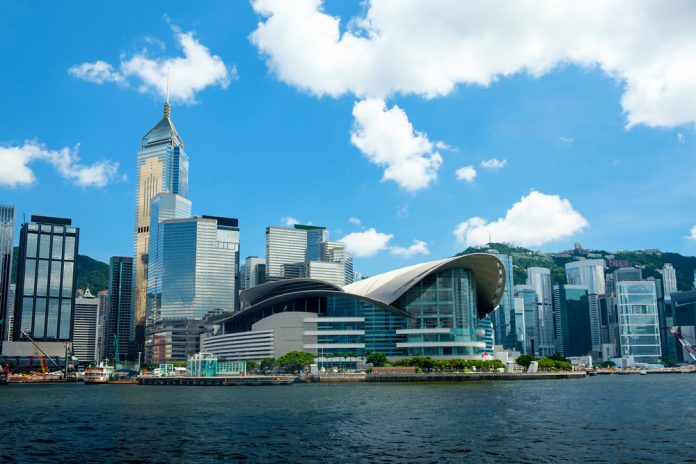
that it is business as usual in the city; Hong Kong Convention and Exhibition Centre pictured
The Hong Kong government has pledged a subsidy of over HK$1,020 million (US$130 million) to support exhibition and convention organisers and participants in the city that have been affected by the coronavirus outbreak.
International events booked at Hong Kong Convention and Exhibition Centre will receive government subsidies on venue rental this year
Event organisers with planned exhibitions and international conventions (with over 400 participants and at least 50 per cent from outside of Hong Kong) at Hong Kong Convention and Exhibition Centre (HKCEC) and AsiaWorld-Expo (AWE) will have their venue rental cost fully subsidised.
Implementation date of this scheme, with a coverage period of 12 months, will be announced soon.
Monica Lee-Müller, managing director of Hong Kong Convention and Exhibition Centre (Management), the company responsible for the daily operations of HKCEC, welcomes the move.
She said: “We appreciate the financial support from the (Hong Kong) government, which serves as a timely relief measure for the industry that has been greatly affected by the public activities in the second half of 2019 and the recent outbreak of Covid-19.
“It recognises the significant contribution of the exhibition and convention industry to the economy of Hong Kong, and sends a positive message to international event organisers that Hong Kong welcomes their return.
We are confident that the measures will encourage organisers with postponed events to confirm their new schedules, and new organisers to confirm their plans.”
Hong Kong Convention and Exhibition Centre (Management) shared that a few exhibitions and conferences originally scheduled at HKCEC between February and April 2020 have been postponed or cancelled, and the company has been working closely with event organisers to help with rescheduling plans.
It is hoped that this subsidy will ease the financial pressure on event organisers, many of which have spent extra money on marketing and logistics to retain exhibitors and ensure smooth operation of their events, expressed Lee-Müller in a press statement.
Furthermore, exhibitors and conference delegates participating in exhibitions and major conventions (with over 400 participants) organised by the Hong Kong Trade Development Council will have half of their participation fee (subject to a cap of HK$10,000) subsidised. Again, this scheme has a 12-month coverage.
A spokesperson of AWE told TTGmice that the government’s relief measures are appreciated, and the company is looking forward to the benefits these schemes can bring to the exhibition and event industry as well as other related sectors such as retail and tourism.
Indonesia has shifted its focus inwards in its efforts to boost the economy and cushion the economic fallout due to Covid-19 – by urging cabinet ministers to conduct governmental meetings and conferences on home ground.
Speaking at a limited cabinet ministers’ meeting in Jakarta earlier this week, Indonesian president Joko Widodo shared that instructions have been passed to cabinet ministers to have their events in tourist regions hardest hit by declining arrivals, such as Bali, Batam and Manado.
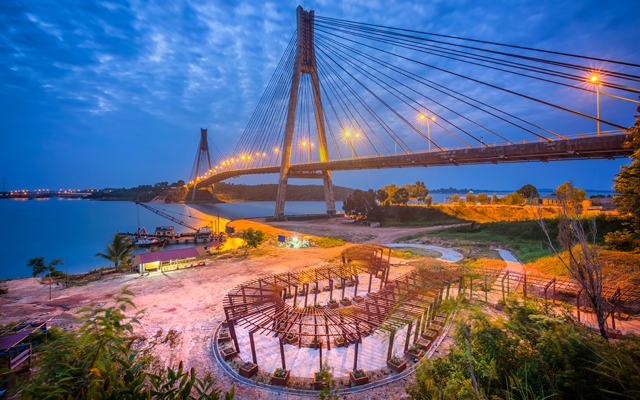
Indonesia government meetings and events will prioritise local tourism cities over others; Batam’s Barelang Bridge pictured
Emphasising that several cities, beyond the popular tourist destinations, are affected by lost tourism and events business, local business events stakeholders hope the government will consider spreading their supporting wider.
Ralph Scheunemann, deputy chair of the Jakarta International Expo (JIExpo), said: “The market is suffering, and the government can help maintain industrial stability by holding local seminars at venues such as JIExpo or the Jakarta Convention Centre, in addition to venues located in Bali and Manado.”
Scheunemann revealed that JIExpo has lost 50 per cent of events scheduled up to May 2020. Auto Parts (INAPA) exhibition was one of the impacted events. Slated for March 2020, the event was cancelled due to the outbreak.
To minimise losses, Scheunemann is exploring potential collaborations with production houses, as well as “engaging with local organisers to stage events”.
Ultimately, he felt that the government’s support would be key to JIExpo’s ability to ride out the storm as the venue’s effort alone would not be able to fill the empty halls.
Reza Abdullah, president director of the Royalindo Convention International, opined that the government should be even more active and aggressive in attracting selected international trade events to the country.
“Government events, such as the ASEAN summit, cannot be cancelled and can only be moved. The government should take the opportunity to bid, and move the event to Indonesia,” he explained, adding that government events are easier to win over.
“They are unlike association meetings that require a lot of effort and have a long bidding process,” he said.
Nara is strengthening its image as a business events destination, with a bid for a world forum, a dedicated MICE Promotion Office and a new state-of-the-art facility.
Activities will begin in fiscal 2020 (April 1, 2020 to March 31, 2021), building on groundwork laid by the central Japan prefecture in 2019; it joined the International Congress and Convention Association and was selected by the Japan Tourism Agency as Japan’s bid city for the UNWTO (United Nations World Tourism Organization) World Forum on Gastronomy Tourism in 2022.
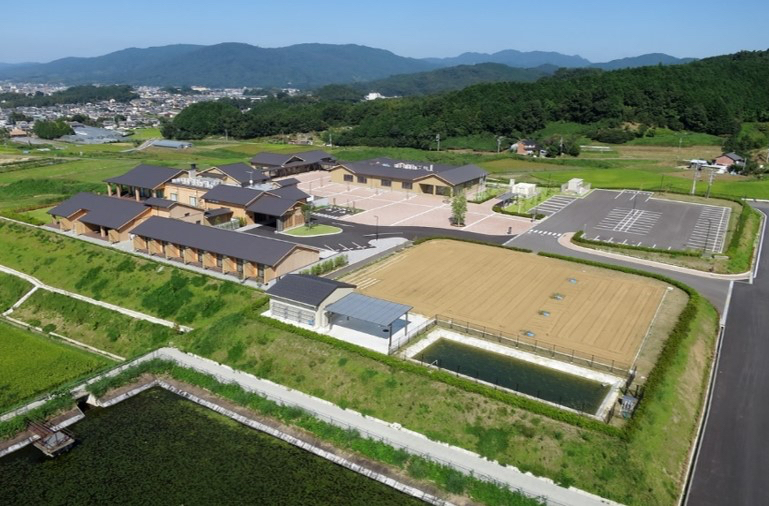
Nara Agriculture and Food International College (pictured) is working with local farmers and chefs to improve the prefecture’s food culture
Nara was chosen because it was the ancient capital of Japan and first home of the emperor.
Yoshiaki Tanaka, assistant director of MICE promotion in the Tourism Promotion Division of the Nara Prefectural Government, told TTGmice: “Nara was the origin of Japanese cuisine and it was from here that it spread across Japan.”
Tanaka says attracting the forum is part of a broad push to promote gastronomy tourism. Repeated surveys by the Japan National Tourism Organization show that Japanese cuisine is a key draw for travellers to the country.
He and his team are encouraging hotels and restaurants to develop their F&B offerings and focus on ingredients sourced in Nara Prefecture. Work is also underway with Nara Agriculture and Food International College, including providing support for farmers and chefs to work together to improve the area’s food culture.
These steps are designed to boost Nara Prefecture’s attractiveness for culinary-related international events as well as business events in general.
On April 1, the prefecture’s new MICE Promotion Office and Nara Prefectural Convention Center will open. Located between Nara Park and Heijo Palace, just 90 minutes by bus from Kansai International Airport, the centre can host 2,000 delegates. It has a 2,100m2 convention hall, 14 conference rooms as well as indoor and outdoor multi-purpose spaces.
Alongside efforts to attract large international conventions, particularly those related to food, Nara will also work this year to promote its attractions and excursions.
“We will promote activities and experiences that can be enjoyed only in Nara,” said Tanaka.
The 3rd edition of ProWine Asia (Singapore) will take place from July 13 to 16, 2020 at Singapore Expo, re-scheduled from its original dates of March 31 March to April 3.
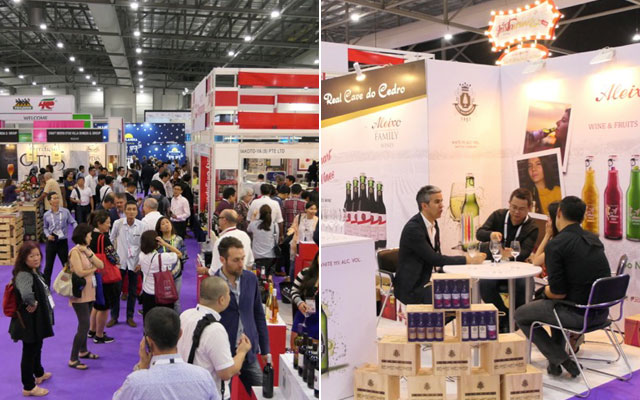
ProWine Asia (Singapore) was last held in the city-state in 2018
Co-organised by Messe Düsseldorf Asia and Informa Markets, the event will now co-locate with FHA-HoReCa which was also moved from March to July.
Beattrice J Ho, project director for ProWine Asia (Singapore), Messe Düsseldorf Asia, said the combination of the wines and spirits showcase with products and technologies serving the food and hospitality sectors “make for a dynamic pairing and an unrivalled marketplace for cross-sector contacts”.
Ho added: “The national pavilions and country groups, as well as major exhibitors, have expressed commitment to returning during the new dates and to working closely with us to deliver yet another successful trade fair once again. We will continue to extend the necessary support to all exhibitors, partners and visitors to ensure a seamless transition and successful participation.”
Martyn Cox, event director, hospitality, food & beverage – Singapore, Informa Markets, also weighed in on the benefits of the co-located shows. He said: “From a show perspective, we believe that the addition will add a generous amount of excitement to the show floor and expand the scope for FHA-HoReCa attendees.”
As a regional event of ProWein Düsseldorf and part of the ProWein World Series of leading wines and spirits trade fairs, ProWine Asia (Singapore) is a trade-focused platform for international wine producers to tap on the growth prospects of South-east Asia and to reach out to key importers, distributors and suppliers. The largest trade fair of its kind in the region, this year’s highlights include specially curated experiences and itineraries – from yet-to-be-discovered delights to Old World wonders, to the ever popular Champagne Lounge Asia (Singapore), and WSET Level 1 Awards in wines and spirits.
ProWine Asia (Singapore) will welcome some 300 exhibitors from 30 countries/regions, 15 national pavilions and country groups as well as more than 20 masterclasses and seminars. The co-location with FHA-HoReCa 2020 is expected to draw over 48,000 trade attendees from around the world.
Hong Kong, Singapore and the Philippines have ordered restricted access to South Koreans, though at varying degrees, as the number of confirmed Covid-19 infections in the country continues to grow.
Travellers from South Korea are affected by travel bans
Hong Kong has a blanket ban on all arrivals from South Korea, as well as travellers who have been there in the past 14 days. Returning Hong Kong residents will be placed under medical surveillance for 14 days, while those returning from virus-hit cities including Daegu and North Gyeongsang will be placed under a 14-day quarantine at quarantine centres.
In Singapore, travellers from Cheongdo county and Daegu city will be denied entry. Returning Singapore citizens, permanent residents and long-term pass holders with a travel history to Cheongdo and Daegu within the last 14 days will be issued a stay-home notice to serve a 14-day quarantine.
According to a PhilStar report, Philippines is banning all travellers from North Gyeongsang province, while permanent residents, students, and overseas Filipinos living and working in South Korea will be permitted to set foot in the Philippines on the condition that they submit a written affidavit acknowledging the possible health risks, said Philippine health secretary Francisco Duque III.
Korean channel KBS World had on February 24 noted that 15 countries have so far banned or restricted entry of South Korean nationals or foreigners who have been to South Korea.
At press time, the Japanese government was deliberating a potential access ban on foreign nationals who have visited Daegu and Cheongdo.
Cross Hotels & Resorts has appointed Buzz Travel Marketing India as its exclusive GSA in the South Asian country.
In a press statement, Paul Wilson, executive vice president, commercial at Cross Hotels & Resorts, underscored the importance of the Indian travel market, noting that “more than 50 million people (are forecasted) to take overseas trips this year”.
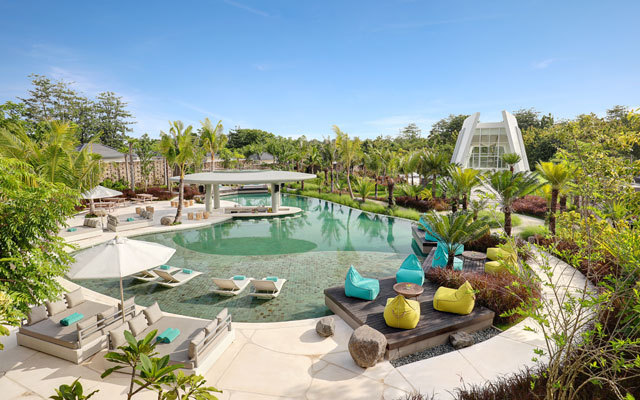
X2 Bali Breakers Resort
“For many years, India has been a key source market for Thailand and the South-east Asian region. Indian business and leisure travellers contribute to a diversity of segments that include weddings, MICE, leisure, FITs and group travel. In 2019, Thailand alone received 1.9 million Indian arrivals, setting a new record for tourism trade between the two countries,” said Wilson.
The hospitality group’s partnership with Buzz Travel Marketing, which has more than 25 years’ experience in the travel business, will help to boost its global distribution network and propel its presence in India.
“Working to garner a first-rate response from the India market for Cross Hotels, Buzz Travel Marketing will channel its vast experience in the field of tourism in providing an agile and personified service, backed by an expert team of professionals,” Wilson added.
The brands currently under the group’s portfolio which will be available to its Indian guests include X2 (Cross To), five-star hotels and resorts; X2 Vibe, lifestyle hotels and resorts; and Away Resorts and Villas, casual resorts and retreats.
Currently, Cross Hotels & Resorts operates 24 properties across Thailand, Indonesia and Vietnam, with a further 2,000 rooms under development.
Just 10 minutes from Phuket International Airport on the serene northern coast, this 178-key, Bill Bensley-designed resort offers delegates a quiet, tropical paradise steeped in Phuket’s tin-mining heritage
The newly-opened Ritz-Carlton, Bangkok anchors the One Bangkok development with cosmopolitan elegance. Featuring the city's largest ballroom and a spectacular new penthouse suite, it delivers exceptional hardware and deeply authentic, soulful service for business and leisure travellers alike
Behind the imposing, Brutalist concrete that defines Zurich’s Oerlikon district lies a surprising secret. While its exterior honours the neighbourhood’s industrial roots, stepping inside Mama Shelter reveals a vibrant, neon-soaked world that is a far cry from its rigid shell