Tourism Promotions Board (TPB) chief operating officer Marie Venus Tan has left barely two years into the plum post, a move that sent shock waves through the Philippine travel trade that thinks highly of the veteran tourism official.
“I am gratified that my more than 30 years in government service that started with the Philippine Tourism Authority ended still in service to the tourism industry that I love with passion,” Tan wrote in a farewell message posted on TPB’s Facebook page.
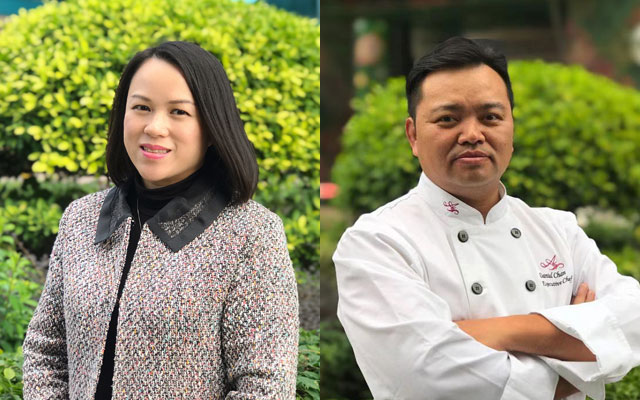
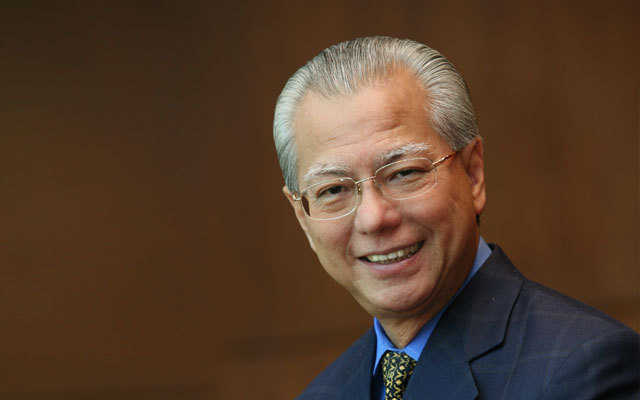
From left: Marie Venus Tan; and Maria Anthonette Velasco-Allones
“I would never trade the opportunity I was given, as Department of Tourism’s (DoT) Tourism Attache in Europe, to show the world how beautiful our country is and how charming the Filipinos can be – given the chance to meet them up close and personal.
“What gave me a sense of fulfilment too was working with our communities as DoT regional director, highlighting their awesome natural treasures, being a bridge that provided them with livelihood and entrepreneurial skills in the tourism value chain, giving them pride of place and, ultimately, enabling them to become beneficiaries of the developments that tourism brings.”
Bruited to replace Tan next month is Maria Anthonette Velasco-Allones, a lawyer and currently executive director of the government agency Career Executive Service Board.
Velasco-Allones did not reply an email from TTGmice asking confirmation of her appointment to the top TPB post.
She clocks 22 years of public sector service, including stints as assistant secretary of National Defense and the Department of Labor and Employment and later, resident ombudsman of the Department of Labor and Employment.
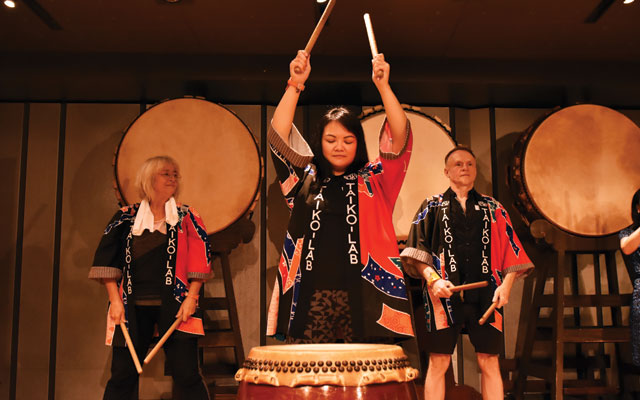
A Japanese taiko drum performance is one of the most invigorating and soul-stirring traditional experiences foreigners could experience in the destination.
When seated close to taiko drummers – a special arrangement possible when the performance is reserved for a private group – the beats of the drum become almost tangible and the audience can feel their skin throb with every rise and fall of the performers’ arms.
A private taiko performance as part of a business event programme can be organised by Taiko-Lab, one of Japan’s largest and most active specialists in the traditional percussion instrument. Taiko-Lab represents a number of local taiko troupes that put up around 150 traditional and contemporary performances around the world annually.
One of its troupes to watch is the three-men Mugen, a multi-talented team that brings a young and chic vibe to the performance. Another star troupe is Yuza-rakuza, whose four members are no strangers to the world stage.
Through six main branches and 14 studios across five cities in Japan, such as Tokyo, Kyoto and Osaka, Taiko-Lab also conducts energetic and fun-filled drum lessons for corporate groups. Participants are given happi coats to wear and taken through the basics of taiko drumming on their own drum by enthusiastic coaches, before coming together to stage a performance. Plenty of laughter and squeals are promised along the way!
Corporate groups can also choose to combine a professional performance with a hands-on experience. Such a combination runs for 60 to 90 minutes.
From April 9, Emirates will start a new daily service between Singapore and Penang.
EK 348 will arrive in Singapore from Dubai at 14.05 before departing again at 15.35 and arriving into Penang at 17.15 on the same day. The return flight EK 349 will depart Penang at 22.20, arriving in Singapore at 23.50. The flight from Singapore will then depart at 01.40 the following day, bound for Dubai where it will arrive at 04.55.
The fifth-freedom route will be operated by a Boeing 777-300ER aircraft in a three-class configuration.
Penang will become Emirates’ second destination in Malaysia after its capital, Kuala Lumpur, which the airline currently serves with three flights a day, and is a route that has been operating since 1996.
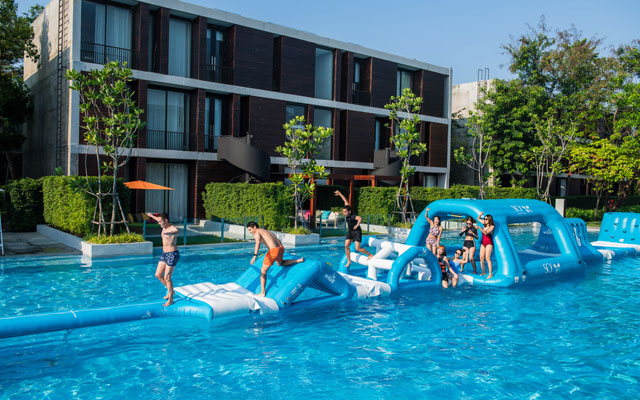
SO Sofitel Hua Hin's Wibit adventure inflatable course
In celebration of SO Sofitel Hua Hin’s fourth anniversary, the beachfront resort – 2.5 hours away from Bangkok – has unveiled a Creative Escape programme for corporate groups’ teambuilding sessions.
Corporate groups will be able to enjoy access to the resort’s 60m-long pool anchored by a Wibit adventure inflatable course, as well as the SO Wonderland Minigolf, a 3,600m2 enchanted forest through which players embark on a mission to help Viola the Witch bring stone animals back to life. SO Wonderland can be also privatised for an immersive dining experience with a personalized 18-hole, 18-course set menu.
SO Sofitel Hua Hin’s Wibit adventure inflatable course
Other programmes outside of meetings include beach yoga, aqua aerobics, traditional Thai boat racing, and biking along the resort’s 2.2km track, as well as volleyball, basketball and tennis facilities.
For planners that choose the 109-room hotel, they will be able to avail benefits such as one complimentary room for every 20th room booking; one complimentary room upgrade to the next category; complimentary corkage for 6 bottles; and one complimentary voucher for a SO Comfy room inclusive of breakfast for two.
Should expenditure be more than 400,000 baht (US$12,929) or above, event planners will also be able to receive a complimentary voucher for a two-bedroom SO Pool Villa inclusive of breakfast for four people.
Booking period for this package is from now until March 31, 2020, with stays and meetings to be completed by October 31, 2020. Blackout dates apply, and there’s a minimum spending of 200,000 baht, as well as a minimum guarantee of 10 rooms per night.
Hotel Alexandra, a soon-to-open 840-key property in Hong Kong, has appointed Rosa Wong as director of event management, and Daniel Chan as executive chef.
From left: Rosa Wong; and Daniel Chan
Wong will oversee all events hosted or procured by Hotel Alexander. Her event career has spanned 15 years in various establishments such as the Harbour Grand Kowloon.
Meanwhile, Chan will be overseeing and operating various events and Café A. Born and bred in Hong Kong, Chan began his culinary journey at the young age of 15, a passion he has kept well alive for over 30 years.
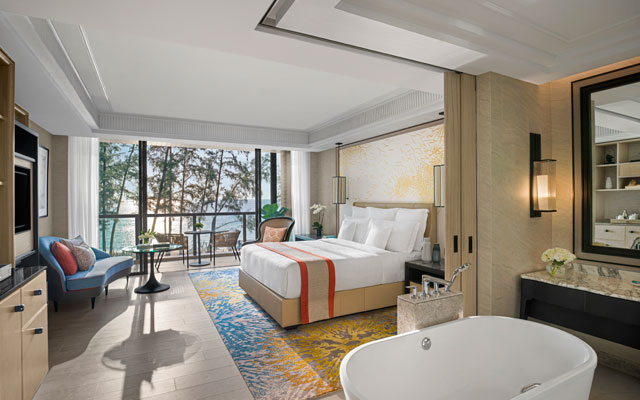
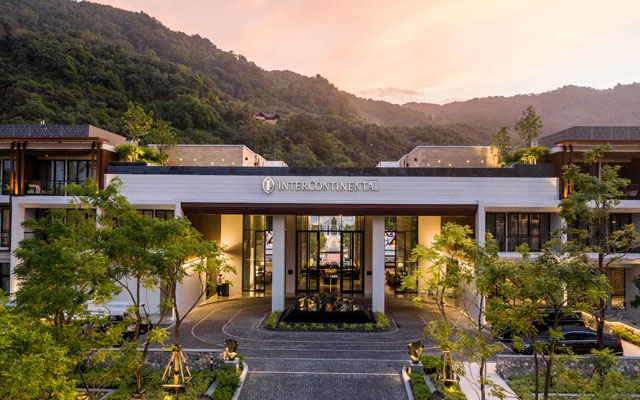
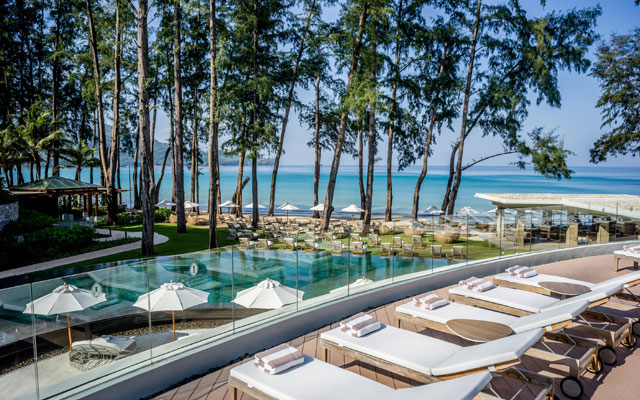
IHG (InterContinental Hotel Group) has opened the InterContinental Phuket Resort on Kamala Beach.
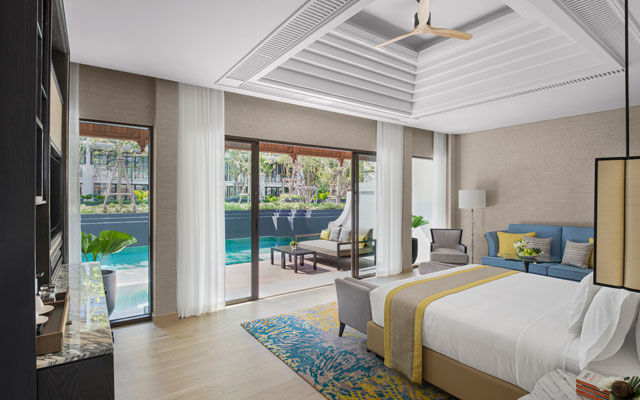
The beachfront resort on the western coast of Phuket features 221 rooms and villas with panoramic views of the Andaman Sea. Club guests will be able to access the second-floor lounge complete with its own private sundeck and infinity pool.
InterContinental Phuket Resort
1 of 7
Lobby
Club Ocean View
Club Lagoon Villa
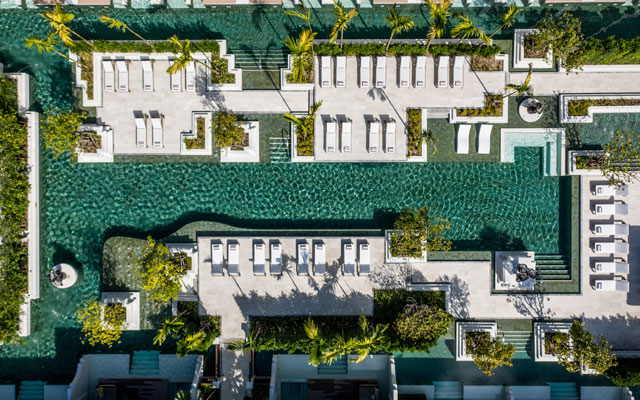
Lagoon Pool
Jaras
Sawan Heavenly Pavilion
Event planners may avail the five meeting spaces, which includes a ballroom good for 200 pax banquet-style.
F&B options are numerous, ranging from the modern Thai Jaras and international cuisine restaurant Pinto. There is also a beach bar and lounge, as well as a Sawan Beans and Leaves Bar serving handpicked teas from Chiang Mai and single-origin roasted coffee from local farmers.
Other resort facilities include five swimming pools, a fitness centre, tennis court, Planet Trekkers Kids Club, and a spa with eight treatment rooms and a full-service nail salon.
What are your recollections of SARS?
I lived through SARS (Severe acute respiratory syndrome) when it emerged in November 2002 and ended in July 2003.
Those were certainly challenging times, as many events were postponed or cancelled. We (Conference and Exhibition Management Services) were affected, but I can no longer remember which of our events were impacted.
In terms of tourism performance, hotel room occupancy rate (in Singapore) stood at just 20 per cent and many hotels closed off their rooms because nobody was using them.
It was an anxious time for the survival of businesses and for personal survival; everyone was worried about being infected ourselves.
How did industry players respond to it?
As SARS started to recede, the Singapore Tourism Board called for a small meeting that involved some 20 captains of the industry, to brainstorm the best ways forward to overcome business challenges and bring tourists back to Singapore. I recall distinctly that it was chaired by Gerald Lee (then chief of business operations).
At that time, I proposed that we should march right into China and promote Singapore, instead of waiting for the Chinese to be ready to start travelling again and come back to us.
Subsequently, I made a trip to Beijing to meet with local tourism officers, and I secured their approval for the inaugural Beijing International Tourism Expo (BITE) in 2004.
In a big way, the event eventually helped to bring many Chinese tourists back to Singapore, and opened up the Beijing market for Singapore. Till today, it is still one of the leading Chinese outbound tourism shows in Beijing.
Between SARS and Novel Coronavirus, what is the one difference that worries you most, from a business perspective?
With SARS, the symptoms were clear. With Novel Coronavirus, symptoms may sometimes only appear after two weeks. This has created uncertainty among people – should they continue to travel for leisure or work?
What can event planners learn from the SARS epidemic to better cope with business fallout now due to the novel coronavirus?
It is still early days with the Novel Coronavirus. Health authorities are still trying to understand the characteristic of the virus. As event players, we can only remain vigilant and have crisis contingency plans in place.
I suspect many events in China may be postponed or cancelled. Perhaps the first casualty from the outbreak is the Guangzhou International Travel Fair 2020, which has just announced that it will be suspended due to the spread of the virus. That is understandable, because it was due to take place very soon in February and there are now many travel advisories against non-essential travel to China.
Several event owners and organisers in Greater China are taking a wait-and-see approach for their upcoming activities. At what point should event planners decide whether or not to proceed with their event?
At this point, I do not see a need for event planners to abort their events, unless the events are imminent and taking place in China.
Event planners (elsewhere) need to consider the profile of their event – who the participants are and where will they come from.
If the event attracts many people from countries affected by the outbreak, then heightened precautions must be taken. If this is an exhibition that is attended by mostly Chinese sellers, the organiser must consider eventual turnout because many of them may not even be able to leave the country due to the Chinese government’s ban on travel.
Conversely, an event with minimal Chinese attendees will have far lower risks, and should carry on.
What sort of precautions should be bare-minimum?
Surgical masks should be worn, and thermal screening should be carried out. However, access to such equipment may not come easy. Where possible, work closely with the local health ministry to have all the right precautionary measures in place. The key is to be prepared and to not overreact.
Today, besides traditional channels, news are spread through social media, something that the world did not have during the SARS epidemic. Do you see the headlines, be it real or fake, impacting business travel sentiment? Should event owners and organisers have communication procedures to deal with this?
I invited a friend from Canada to come speak at my event in Singapore, but he has rejected me. From the news, he knows that Asia is being inflicted by the Novel Coronavirus and he has concerns.
Invariably, people will make a personal assessment of the situation.
Yes, there is fake news around the outbreak, so we have to be careful to sieve out the real news by assessing multiple sources of information and form our own judgements.
For our own events, we send out updates to our partners and attendees that reference information from top-level agencies – the government and health ministry.
It is important to be calm and clear about the situation.
Editor’s note: Singapore’s first SARS patient was detected on February 2003. The virus was spread to 238 people, 33 of whom died, by the time it was finally contained in May 2003. In the ongoing Novel Coronavirus outbreak, Singapore has seven confirmed cases as of January 28, 2020.
must evolve in order to lure attendees to their events
China’s meetings industry is bracing itself for a tough two months ahead and sentiment is that 1H2020 could be a write-off due to cancelled and postponed events because of the Novel Coronavirus outbreak, first reported in Wuhan a few weeks ago and which has since spread outside the country.
Many meetings and events scheduled in China for 1H2020 have been cancelled or postponed
However, industry players TTGmice contacted are confident the controls and measures which have since been put in place to stem its spread will be effective and are optimistic business can start to return to normal after 2Q2020.
Now in the midst of a week-long Spring Festival break, which has been extended to early-February, regional governments in the country have closed scenic spots and touristic activity is at a minimum.
A PCO director said the company needed time “to make an official announcement and there is nothing else I can say at this moment”.
“I am treating the situation seriously. Personally I think the MICE industry will be badly impacted in 1H2020,” she added.
A regional corporate travel manager shared that “all large gatherings have stopped”, in accordance with the government’s travel ban on travel in and out of China.
He added: “The start-work date for the Spring Festival break has been extended to early-February to give businesses time to put in place measures to handle the situation like disinfecting offices, setting up temperature checks at the entry, distributing masks, allowing staff to self-quarantine after returning from a trip, work from home, etc.
“We are also making plans for expatriates and families in the event the situation escalates.”
Shu: China’s MICE business could begin recovery in 2Q2020 if the spread of the virus is curtailed
Even though Patrick Chen, director of marketing & promotion, Shanghai Municipal Administration of Culture & Tourism, said it was difficult to comment on how things will pan out, he believed the situation would be controlled soon.
“Most of us in Shanghai have already stopped moving about and are staying at home for two weeks to stop the spread of the virus.”
Commenting on the short-term outlook, Roger Shu, deputy general manager, Hangzhou Convention Exhibition & Travel, forecast the industry could start recovering in the second-quarter if the spread of the virus is curtailed.
But because China’s economy is facing “growth pressure”, there could be uncertainty.
Shu noted that if the impact was worse than expected, fiscal policy relief for the industry in the form of government funds and taxes might be needed.
Catering mainly to a western clientele, Sarah Keenlyside, founder and managing director, The Bespoke Travel Company, said: “A number of clients – mostly from the US and one booking from Israel – coming in February and March have decided to postpone until they have a clearer picture of what is going on.”
Keenlyside added that a corporate group of about 30 people had cancelled, but “clients planning to come in April have decided to keep their original plans so far”.
She continued: “Some clients are unfazed, but some don’t want to take the risk. For us, the bigger problem now is logistics. The fact that all tourists sights have been closed down leaves little for visitors to do.
“But we are pleased by the severity of the response. We are all hoping that it is short-term pain for long-term gain. The sooner the government can get the virus under control, the sooner things can go back to normal, and they are doing an impressive job so far.
“On the ground it feels as though everyone is really pulling together. There is a sense of solidarity among locals and foreigners; employers and employees; those in the travel industry – everyone – to work together to stamp this thing out as soon as possible.
“You won’t be surprised to hear that the main source of communication is WeChat, with all numerous group chats everyone is part of, which has proven invaluable.”
Founder of China Star Liu Ping shared the same optimism.
She said the PCO and DMC with events booked in March are giving clients the option to cancel, while those with dates further out were still mulling over what to do.
Even though the industry is facing a tough time now, she was confident of its resilience and did not foresee the current situation causing businesses to fold.
She added that the Chinese government was demonstrating the political will and capability to put in controls and measures to effectively tackle the situation.
Liu opined: “Compared to battling SARS, I am more optimistic, and that we won’t repeat the same mistakes.”
At press time, Liu was in Vancouver for a SITE meeting, said she shared with fellow participants her belief the outbreak could be controlled within the next two months and the spread reduced thereafter.
Even though she anticipated 1H2020 losses, Liu said China Star was in good shape and would not need to retrench staff, noting that the current crisis provided a good learning experience for her younger team members.
“The meetings industry is big and valuable and I am confident the tourism authorities will introduce the necessary support for its recovery,” she commented.
An emergence of cultural tour operators in Macau in recent years is paving the way for more quality and insightful destination experiences for visitors, and providing greater opportunities for planners to satisfy their delegates’ desire for unique and memorable destination experiences during business events.
One of the pioneers in this specialisation is CoForte Organisation Development, which started offering cultural tours focusing on art, history and culture for special groups since 2016.
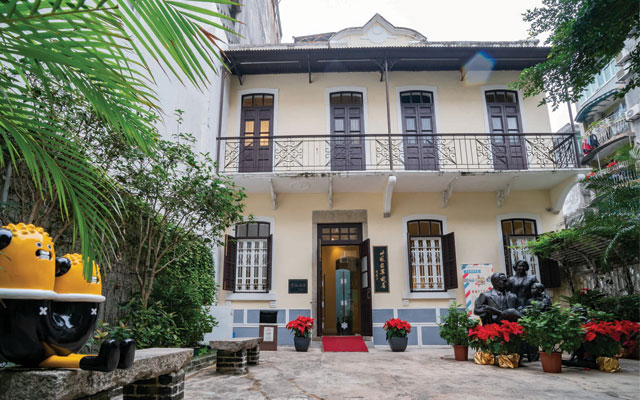
General ye Ting’s Former Residence offers a peek into his life and old Macau
Brian Yau, the company’s vice president for creative strategy, sustainability and CSR, told TTGmice that the demand for cultural tour inclusions is on the rise among his corporate clients.
“More than 60 per cent of our clients would choose cultural tours when they select Macau as their event destination. They favour indoor activities such as azulejos (Portuguese ceramic tiles) painting as well as art and music jams,” he said.
CoForte works with DMCs by designing and offering experiential activities for the corporate client, leaving the DMC to take care of supporting logistics.
Yau thinks that unique, experiential activities are growing on the back of “homogeneous MICE products”, forcing planners and event attendees to crave “more special and in-depth tours”.
Another player that is leading the cultural experiences revolution in Macau is Macau Explorer Cultural Travel, established in 2014. Its managing director, Manuel Wu, was an urban planner before he made a career switch to the travel industry and took a chance at specialising in walking tours that spotlighted Macau’s 400-year history. He never looked back, and today offers cultural experiences to corporate and association groups.
Despite the presence of these cultural tour specialists, Macau’s ability to offer truly immersive destination experiences for event delegates is hampered by capacity limitations and a lack of variety.
Wu said traditional facilities in Macau tend not to be able to accommodate large corporate and association groups.
“For instance, a Portuguese baking class in a local cake shop will not be able to take more than 70 people at once,” he explained.
Olinto Oliveira, director for live communications with MCI Group, added that “the local market has yet to offer a wide variety (of authentic local content) from multiple suppliers”.
“Our clients do not want a standard tour, they prefer something that is organically embedded into their programme, such as classes on baking Portuguese egg tarts, Asian tea ceremony masterclasses and azulejo painting workshops,” he added.
A vague understanding of what experiential tours mean has also led travel agents to offer the usual sightseeing tour around a heritage area of Macau plus a narration of its historical background, and nothing else.
Industry leaders acknowledged that such tours were not experiential at all, might be of poor standards, and would put the destination’s image at risk.
To tackle this challenge, the Macau government, through the Macau Government Tourism Office (MGTO), has curated the Step Out, Experience Macao’s Communities walking tour series. Eight walking tour routes are available, with details on the route and featured attractions for each captured on its website and a dedicated mobile app. The latter guides visitors down the routes, allowing for independent exploration and is perfect for business event attendees looking to extend their trip in Macau for leisure.
The walking tours vary in duration, from 25 minutes to 40 minutes, and tell different stories of Macau’s culture and heritage.
For instance, the Crossroads of China and Portugal route takes 24 minutes to complete and introduces the participant to eight sights such as Senado Square, Mandarin’s House. It focuses on architecture and districts with a strong Chinese and Portuguese influence.
“MGTO has been doing a good job (in this aspect), but it is not enough,” opined Bruno Simões, president of the Macau Meetings, Incentives and Special Events Association.
“Macau has limited alternative programmes and experiences to offer. This is clear to see when you compare Macau with other destinations listed on TripAdvisor. Much more must be done to develop these programmes and support companies and individuals that work in this area.”
Yau sees an opportunity for MGTO to work closely with tour specialists like CoForte to expand the destination’s portfolio of experiential tours.
He said: “We could develop the tours together while MGTO could exercise quality control and promote good quality tours.”
It remains to be seen if the Wuhan flu outbreak will affect Chinese tradeshows
Two event organisers with upcoming projects in Greater China are keeping close tabs on the rapid development of the Novel Coronavirus which has spread beyond origin Wuhan city in Hubei province to other provinces and countries, saying that they will, for now, maintain status quo.
It remains to be seen if the Wuhan flu outbreak will affect business events in China
Kai Hattendorf, managing director and CEO of UFI, told TTGmice that UFI Asia-Pacific Conference 2020 and the preceding Digital Innovation Forum will proceed as planned in Macau from March 5 to 6 and March 4 respectively.
The main event, which is still open for registration, typically attracts around 300 exhibition industry leaders from organisers, venues, associations, service providers and government bodies.
Having said that, Hattendorf recognised that the outbreak “is a fluid, evolving situation” and emphasised that “the health and safety of our delegates and staff (will come) first”.
While UFI’s plan is to proceed with both events, an assessment will be conducted after the Chinese New Year holiday.
The Novel Coronavirus erupted just before the Chinese New Year, a time of massive Chinese migration within and beyond China for family reunions and holidays. The festive travel is expected to expedite the spread of the virus, which has as of this evening infected 830 and killed 26 people in China.
According to various news sources, Chinese authorities are said to be examining 1,072 suspected cases of the virus.
Beyond China, there are confirmed cases in Singapore, Japan, Thailand, South Korea, Taiwan, Vietnam and the US.
ICCA, which on January 17 announced Xiamen as the host city for its second Asia Pacific Chapter Summit from July 23 to 24, 2020, has declined to comment on the status of the event as well as whether registration numbers will be affected by fears of infection.
Registration for the Summit will open mid-February.
Noor: ICCA’s top concern presently is of the well-being of its China members
Noor Ahmad Hamid, regional director Asia Pacific with ICCA, said: “Our concern right now is for the safety of our members and their families, in particular those in Wuhan and China. ICCA currently has six members in Wuhan. We know that the authorities are doing their best to handle this outbreak.”
Informa Markets, a major events organiser in China, has four concurrent tradeshows in Shenzhen from February 24 to 26, 2020 – Digital Signage, Sign China, Commercial Integration and Retail China, as well as China Window Door Façade Expo in Guangzhou from March 5 to 7. An email enquiry on the status of these events this morning failed to get a response by press time.
Julien Delerue, founder and CEO of 1000meetings, an RFP technology platform with a database of hotels across China, remarked that “at this stage it is too early to evaluate if it (the outbreak) will translate into cancellations/postponement or relocation of some corporate events”.
He said decisions on event continuity will likely be held back until the end of the Chinese New Year break.
“The outbreak and travel ban (imposed by the Chinese government on Wuhan and 11 nearby cities in Hubei province) to restrict the spread of infection) practically happened while the majority of corporate event organisers were already on leave. As a consequence, we have not received any coronavirus related cancellation notice and will not (see any) before everyone resumes work in early February,” Delerue said.
**
Update, January 27, 11.53am: Informa Markets has responded to say that its regional headquarters in Hong Kong and major offices in China are closely monitoring developments of the coronavirus.
Its spokesperson said: “The safety of our staff and customers is always our top priority. As such, we are taking precautions and safety measures as recommended by the local Departments of Health in Hong Kong and China as well as the World Health Organisation seriously. As the developments of the coronavirus further materialise, rest assured we shall also update our plans and communications with stakeholders.”
Over the Chinese New Year holidays which started on Friday, Chinese authorities have reported more than 2,300 confirmed cases of Novel Coronavirus infections and more than 80 related deaths as of this morning.
The government said most deaths involved the elderly or people with pre-existing health conditions.
Just 10 minutes from Phuket International Airport on the serene northern coast, this 178-key, Bill Bensley-designed resort offers delegates a quiet, tropical paradise steeped in Phuket’s tin-mining heritage
The newly-opened Ritz-Carlton, Bangkok anchors the One Bangkok development with cosmopolitan elegance. Featuring the city's largest ballroom and a spectacular new penthouse suite, it delivers exceptional hardware and deeply authentic, soulful service for business and leisure travellers alike
Behind the imposing, Brutalist concrete that defines Zurich’s Oerlikon district lies a surprising secret. While its exterior honours the neighbourhood’s industrial roots, stepping inside Mama Shelter reveals a vibrant, neon-soaked world that is a far cry from its rigid shell