Asia/Singapore Saturday, 11th April 2026
Page 641

Spotlight: Nichapa Yoswee

0
Nichapa Yoswee
Nichapa Yoswee

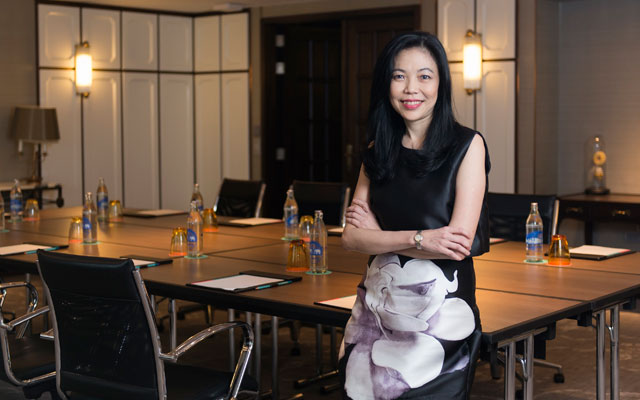
There was a recent change in TCEB’s status as an official government body. Tell me about this.
In the beginning, TCEB was set up by the government to bring positive economic impact to the country using business events as a marketing tool. We acted as the facilitator and promoter, which meant we needed a local host to bring any event into the country.

A new government decree has fast-tracked TCEB’s work. On top of working together with local hosts, we can now act as the host ourselves and bid for events directly. It gives us a lot of freedom, especially in acting as the official bidder for events relating to the 12 key industries identified by the government’s Thailand 4.0 economy policy.

Because of global competition for good business events, TCEB needs speed to market. If we miss this turn on a convention, we may have to wait five or 10 years for it to rotate back to the region. So, the autonomy is good for TCEB.

I do not think there are other Asian CVBs with the same level of autonomy as ours, being legally authorised to bid independently.

How does the ‘Thailand Redefine Your Business Events’ brand fit into this new environment?
I launched this new brand, replacing Thailand Connect, to convey three layers of messages: to the customers, to local operators and to TCEB itself.

To customers, it is a promise to them that whatever business event they bring to Thailand, they will get a refreshing experience and engagement, and that their event will be very successful.

To local operators, the message is that they must be able to better themselves and be very creative in order to accommodate international events and leave a lasting impression.

And to TCEB, we need to step up. We are a very good facilitator but it is a safe role to play. I came from Reed, the private sector, so I don’t like playing safe. We must be a co-creator, a thought leader, a good promoter and collaborator.

We need to raise the local capability to bring Thailand to the next level. We have been working hard with local MICE associations, which also have to step up. TICA (Thailand Incentive and Convention Association) has been a great voice for the MIC segments, just as TEA (Thai Exhibition Association) is for exhibitions. TICA, TEA and TCEB together can allow Thailand to be a solid destination when we go out and pitch.

How are you faring at capability development?
We have been doing a very fine job. Thailand has the highest number of certified professionals in the exhibitions, meetings and incentives sectors. They are certified through international programmes. We also have the highest number of ISO certified venues.
Using these standards to raise the profile of Thailand and Thai MICE players is critical.

As well, TCEB has a close relationship with local universities. TCEB initiated the MICE Academy, and worked with MICE associations to develop curriculum built on international content with local applications. There are more than 200 local universities and vocational schools that teach these programmes. Graduates have basic MICE knowledge and understand the value chain of the industry, allowing them to fast-track into proper operations the moment they step into their job.

I believe that Thailand is the only country (in Asia) with the most number of schools that teach MICE.

Do you think enough foreign organisers know about these strengths of Thailand?
We are not so good at promoting ourselves. That is one of Thailand’s weak points. Customers want a peace of mind and standards can help achieve that, but they ultimately want to work with an operator that not only boasts of global standards but also knows their needs.

Thailand now ranks fifth on ICCA’s charts (2018 country rankings for Asia-Pacific, released June 2019), which is great (in demonstrating our capability).

This year, we managed to attract 17 new exhibitions. Usually, we get only five or six new ones. The leap in new wins is due to Thailand 4.0, which has given us a very clear focus on the type of shows we need to go for. With that focus, we are able to design a precise campaign and incentives to help organisers bring their shows to Thailand.

Speaking of incentives – or subventions as they are also known, how relevant are they for foreign organisers?
They are very important for certain industries, and especially for SMEs. We have different sets of incentives – financial and non-financial – to offer events of various sizes and purposes.

For instance, L and XL (in reference to size of events) operators do not need financial support. They need ease of doing business, access to relevant government agencies, and delegate boosting.

As well, different events have different needs. For exhibitions, TCEB’s 360 Degree Exhibition Success provides support right from the start. That means subsidy for site inspection, setting up meetings with government bodies and local operators, and more to help them discover Thailand as a possible event destination. Once they decide on Thailand, we bring on the next stage of incentives.

Do you think TCEB’s generosity with subventions has helped to make Thailand this successful?
Yes, I think so! We want local operators to step up and be ready for global competition. Their prime concern is always, if they invest this much (in attracting overseas events), what will be their returns.

As a government body looking after local operators, we need to help them invest. We invest by providing programmes that convince overseas shows to come here. Once they bite, local operators can focus on developing quality programmes that will engage the audience and show them the best of Thailand.

This isn’t unconditional support. Their activities in Thailand must result in legacy for the local community. For example, conventions getting TCEB’s support must announce certain collaborations or set up certain operations in Thailand, at the end of the event. Global exhibitions getting our support must work with local businesses, run at least three editions here, and partner Thai organisers.

When SITE Global Conference came (to Bangkok, from January 11-13, 2019), their promise was to set up SITE Thailand Chapter at the end of the event.
This ensures that money invested in attracting business events to Thailand will create a meaningful return for our local players. They cannot simply come here, make a profit and leave.

Regional competition for MICE is so hot now. Is it keeping you awake?
I see it as healthy competition which forces us to look carefully at what we can do better. But at the same time, we need to work as a team. TCEB has been talking with some ASEAN members about the possibility of bringing meeting groups in Thailand to other South-east Asian destinations for pre- or post-tours. We could rotate the programme, of course.

This idea was once discussed at the first ASEAN MICE Forum at IT&CMA, but it has been slow to take off.
I’d imagine that this would be very hard to execute across Singapore, Malaysia and Thailand because we compete like crazy. (Laughs)

TCEB is working with CLMV (Cambodia, Laos, Myanmar and Vietnam). Travelling to and from these countries are easier for delegates attending events in Thailand, and these destinations offer something very different from what Thailand has.

We are testing this concept. We have started a visitorship programme – the ASEAN+6 Privilege where all regional visitors attending an event in Thailand can be partially subsidised. If this is successful, we can organise trade mission extensions to nearby countries for groups bound first for Thailand.

So far, TCEB has organised roadshows for certain PCOs and PEOs to go onwards to CLMV cities.

Down the road, if Singapore or Malaysia likes this model and wants to work with Thailand the same way, great. Customers today want new ideas and variety, and there’s nothing to stop us (South-east Asian countries) from working together to offer different experiences.

Four Seasons welcomes new Mumbai GM

0
Sunil Narang

Sunil Narang has been appointed general manager of Four Seasons Hotel Mumbai.

With a career in hotels spanning over 20 years, Narang first started out as a front desk receptionist at Four Seasons in Boston before moving through various departments within the rooms division.

Sunil Narang

Narang’s career has taken him to Four Seasons in Maldives, Toronto and subsequently, Scottsdale, where he was promoted to director of rooms. In the same role, he relocated to Maui before a promotion to hotel manager took him to Four Seasons Hotel Las Vegas.

Previously, Narang has also taken up the mantle of hotel manager in Singapore and a leading role in the region’s rooms council, as well as general manager of Four Seasons Hotel Shenzhen.

New play on a heritage city

0
Ayutthaya City Park shopping mall now boasts a convention centre

Phra Nakhon Si Ayutthaya province – better known as Ayutthaya – was cast into the limelight in 2012 when the Thai government approved the destination’s bid to host World Expo 2020. Although Ayutthaya lost the bid, the global media had done its job and the former capital of the Kingdom of Siam was impressed into the minds of both local and international visitors.

Besides ancient allures at the Ayutthaya Historical Park, an archaeological site, the province boasts the Rojana Industrial Estate where high-tech productions reside. Ongoing urbanisation works are also helping to reinforce Ayutthaya’s readiness for business events.

Ayutthaya City Park shopping mall now boasts a convention centre

Ayutthaya City Park, the destination’s largest shopping mall in operation the past two decades, expanded recently with a large convention centre. Simply named The Hall Convention Centre, the venue is about to begin courting international business events.

Somphon Rattchathapimolchai, CEO of Klong Suam Plu Co., operator of Ayutthaya City Park, said: “We are the first and only to operate a hybrid lifestyle centre in the province. Our new 2,000m2 convention hall can accommodate hundreds of guests. We also offer four meeting rooms, as well as a large outdoor space for up to 10,000 attendees.”

The Hall Convention Centre aims to capitalise on the province’s rising popularity among business event planners. So far it has been serving the domestic market, with events coming from neighbouring cities such as Ang Thong, Saraburi, Pathum Thani and Bangkok.

Although new, The Hall Convention Centre has earned its outdoor events space a Thailand Mice Venue Standard certification from the Thailand Convention and Exhibition Bureau. With this, the venue can expect to see more business event enquiries, especially from overseas markets.

Somphon believes that the new convention centre will be a game-changer for the province. He noted that Ayutthaya presently draws mostly small and medium-sized events through the Ayutthaya City Park, where 80 events were held in 2018. Those events included concerts, product launches, consumer fairs and seasonal events. With the new venue, the province will be able to gun for more large and international events.

It has a conservative target of increasing events business by 20 per cent this year, which translates to hosting at least five international events. Within the next three to five years, Ayutthaya City Park aims to become one of the busiest convention centres in Thailand’s central region, based on traffic and number of events.

Klong Suam Plu Co claims that Ayutthaya’s location and transportation convenience are major factors that will attract multinational companies to use Ayutthaya City Park as a venue for their product showcases. It argued that Ayutthaya does not have the same traffic congestions that plague capital city Bangkok.

Business travellers landing at Don Mueang Airport and Suvarnavhumi Airport are able to reach The Hall Convention Centre within an hour by car.

Besides, with the closure of Queen Sirikit National Convention Centre for major renovations and Bangkok venues typically being overbooked, event planners can consider moving their shows to Ayutthaya.

Rinyaphat Chaiaukkarawitt, managing director of Neramit Event Co, observed that more events are spreading into the provinces, especially favouring popular shopping malls. Such events are mostly marketing activations aimed at consumers.

As such, Rinyaphat believes that a mall and convention centre combination is the way to go for future event venues.

Sumate Sudasna, managing director of Conference and Destination Management Co, expressed confidence in Ayutthaya rising up in Thailand’s business events arena, largely due to its close proximity to Bangkok. Both cities are linked by highways.

Sumate opined that a single day meeting in Ayutthaya would be a viable option for companies based in Bangkok.

As Ayutthaya also offers many attractions and recreational facilities, planners have the flexibility to plan a programme as fun or as solemn as they wish.

An appealing way to bring groups to Ayutthaya is to cruise them over from Bangkok.

Fun additions to Ayutthaya include the Krunsri Night Market where one could don a traditional Thai costume for just 100 baht (US$3) and enjoy local food and beers.

The Ayutthaya Retreat may be favoured by hurried business event delegates. Built in Thai architectural style and boasting a soothing garden, Ayutthaya Retreat offers hotel rooms and a cafe that serves up healthy cuisine. It welcomes private social events too.

For staff retreats that include accompanying family, planners can consider the Rabbit Water Park. Foam parties can be arranged at this new theme park.

New cluster GM for Anantara’s two Phuket properties

0

Minor Hotels has appointed James Hewitson as the new cluster general manager of two of the group’s Thailand properties – Anantara Mai Khao Phuket Villas and Anantara Vacation Club Phuket.

Prior to his Thailand move, he oversaw the pre-opening and running of the Al Baleed Resort Salalah by Anantara in Oman for four years as general manager.

Born and raised in the UK, Hewitson has climbed up the ranks since joining Minor in 2010. He started in Koh Samui in Thailand, before moving to the Anantara Dubai The Palm in the UAE, and then onto a general manager position at Anantara Kihavah Maldives Villas.

Veteran hotelier takes charge of The Anam, in Vietnam’s Cam Ranh

0

Philippe Cavory has been appointed to the helm of The Anam, in Cam Ranh, Vietnam.

The French national comes to the resort after four years with YTL Hotels, during which he oversaw a collection of five-star resorts in Malaysia as area general manager.

The seasoned professional possesses almost four decades of experience in the luxury hospitality industry across four continents. He has worked in senior management roles for companies including Cheval Blanc Randheli and Soneva Fushi in the Maldives, Banyan Tree properties in the Maldives, Morocco and Laos, and at Lux Grand Gaube in Mauritius.

In addition to Asia and Africa, his career has taken him across Europe and to the US. Along with hotel management, he has substantial experience with hotel openings and renovations.

At one point, Cavory was a sommelier based in Miami with Royal Caribbean Cruises, as well as an F&B consultant for the Eastern and Oriental Express in Singapore, Malaysia and Thailand, before rising through the ranks at various luxury hotels.

MBEW 2019 DRIVES PROGRESSIVE MOMENTUM FOR MALAYSIA’S BUSINESS EVENTS INDUSTRY

0
Token of appreciation between YBhg Datuk Zulkefli Haji Sharif, Chief Executive Officer of Malaysia Convention & Exhibition Bureau and YB Tuan Muhammad Bakthiar Bin Wan Chik, Deputy Minister of Tourism, Arts and Culture Malaysia.

Brought to you by MYCEB

More than 220 delegates participated on the one day packed MBEW 2019.

Officiated by YB Tuan Muhammad Bakhtiar Wan Chik, Deputy Minister of Ministry of Tourism, Arts and Culture Malaysia (MOTAC), the flagship event of Malaysia Convention & Exhibition Bureau (MyCEB), MBEW 2019 recently took place on the 28 August at Shangri-la Hotel Kuala Lumpur and saw nearly 200 local and international delegates attending the event.

Token of appreciation between YBhg Datuk Zulkefli Haji Sharif, Chief Executive Officer of Malaysia Convention & Exhibition Bureau and YB Tuan Muhammad Bakthiar Bin Wan Chik, Deputy Minister of Tourism, Arts and Culture Malaysia.

The event was also graced by the presence of YBhg. Datuk Isham Ishak, Secretary General of MOTAC as the panelist.

“This year is special for us as MBEW is held in conjunction with the World Tourism Conference (WTC) 2019. The WTC 2019 is a signature event of Ministry of Tourism, Arts and Culture (MOTAC) where tourism will have an even bigger voice to amplify its importance for the country and its people,” said Datuk Zulkefli Hj. Sharif, Chief Executive Officer of MyCEB.

He continued, “Business events is a major contributor to the country as a destination and its people in terms of economy. Last year, MyCEB together with our industry partners managed to secure 152 future events comprising of international conferences, incentive groups, association meetings, and trade exhibitions that will translate into an estimated economic impact of RM 1.58 billion and the arrival of 102,211 international delegates. It is an undeniable force to be reckoned with”.

The theme “Progressive Momentum” carries the significance of ensuring that Malaysia forges ahead progressively as Asia’s Business Events Hub. This momentum is powered by dynamic collaborations, the courage to constantly push limits and the constant need for every player to remind themselves that the industry professionalism bar must be continuously raised.

A line of business events’ formidable speakers was part of the MBEW 2019 includes Jonathan Low, Global Speaker, Leadership Success Coach of Global Success Learning Academy Sdn Bhd; David Fotheringham and Mark Stanley, both representing their organisation, Asia Ability.

MBEW is held annually and is a strategic platform built for industry stakeholders to converge, communicate and debate issues that impact the future growth and sustainability of the business events industry.

Among the objective can be achieved by participating MBEW 2019 include custom designed programme featuring series of talks by the professional industry experts. This will enable participants to get exposed with variety points of view, ideas and trends concurrently create better collaboration and networking opportunities. Hence, this will improve individual self-development which leads to new ways of conducting more productive business and a great way to maximise your brand.

Moving towards sustainable event practices to reduce the usage of plastic and non-recyclable item, MBEW 2019 featured a new initiative with the introduction of its new hashtag campaign #mbeNOWASTAGE. As the initiative highlighted, participants are encouraged to bring their own water bottle throughout the day.

To be part of this highly anticipated event in the future, visit www.mbew.com.my or email mbewsec@myceb.com.my. Interested parties can also be in touch with MyCEB at www.myceb.com.my or social media channels on Facebook, LinkedIn and Twitter (@MyCEB).

GM Ronan Henaff helms Capella Shanghai, Jian Ye Li

0

Ronan Henaff has been appointed general manager of Capella Shanghai, Jian Ye Li.

In this role, Henaff has been placed responsible for all aspects of Capella Shanghai’s operations, enhancing employee development and guest satisfaction, strategic planning and brand recognition.

The Frenchman joins Capella Shanghai from The Shanghai Edition, where he led the hotel’s opening.

Henaff has some 25 years of hospitality experience, having started his hospitality career in the US in 1994, before moving on to work for recognised brands such as Ritz-Carlton, Rosewood and Setai Hotel Group.

Hilton names global head for LXR Hotels & Resorts

0

Hilton has appointed Feisal Jaffer as global head of LXR Hotels & Resorts, the company’s newest luxury brand launched in 2018 as a collection of independent hotels worldwide.

In his new role, Jaffer will be based in Hilton’s global headquarters in McLean, Virginia, and will report directly to Martin Rinck.

Jaffer possesses nearly 20 years of global experience growing businesses and brands across the hotel, real estate and technology sectors in Asia-Pacific, the UK and the US.

Prior to this, Jaffer served as senior vice president, business development, of Singapore-based Capella Hotel Group – which is part of Pontiac Land Group – where he was responsible for originating and executing new hotel management and investment opportunities. He was also part of the core team that incubated a new premium lifestyle brand and forged strategic partnerships to augment guest experiences.

In addition to this role, he also served as senior vice president, acquisitions & development at Pontiac Land Group to lead the international expansion of marquee hotel developments in Australia, the Maldives and the US.

Jaffer has also held investment and business development roles with Host Hotels and Fairmont-Raffles Hotels International respectively.

Let corporate travel and events have a hand in reducing poverty

0

Poverty and tourism has long had an interesting and important relationship. Pro-poor tourism, common in many countries, has also featured prominently in South-east Asia.

Poverty is often a much-talked about topic that is also poorly understood. In its different aspects, poverty has different causes; besides referring to having little or no money, it also refers to the loss of cultural resources, lack of skills and knowledge, and absence of basic services, etc.

Corporate travel has certain features which may represent advantages for tourism to tackle poverty related issues. Corporate travel is often repeated, non-seasonal (sometimes), and may involve people travelling in numbers. The fact that higher-end hotels and resorts are favourite choices of accommodation for this travel segment, means they can put pressure on such businesses to look into having more corporate social responsibility (CSR) initiatives as part of their operations.

Business travellers and event attendees/organisers should demand for locally sourced products to support local communities

Corporates can and should pressure accommodation businesses to do more to support local producers, thereby creating demand for local supply of goods and materials. These products can range from embroidery and paintings in the guestrooms, to food reflective of the local cultures.

Ashley, Goodwin and Boyd (2000)1 argued that pro-poor tourism that happens on a community level with active participation from local people and the government can help reduce economic leakage in destinations. And so, the power that lies in corporate travel which can put pressure on accommodation and other travel and tourism industry businesses to explore creative ways to engage local people should be tapped, to make linkages happen and reduce leakages. This is especially important in developing countries where such initiatives are new and often not considered mainstream.

Ethical business increasingly espoused by corporates through their staff travels will bring about a chain effect of ethical, socially conscious way of doing business across the tourism industry’s numerous sectors.

As well, the events industry have a lot to offer in reducing multiple aspects of poverty.

Business events are often staged these days with increased pressure on tangible returns on investments. Event planners and organisers tend to take into account local issues when planning events – protecting dying cultures, using local materials, having topics in the event that revolves around local concerns and issues.

Enabling small local businesses to benefit from the staging of business events is a good start, even if it often comes with some challenges. These small businesses understand the local culture, employ local people and tend to use local materials. One of the challenges might be to meet quality standards required by many business events.

Tour operators can use their travel itineraries to bring about tangible benefits for the locals. Itineraries potentially can influence and shape how benefits can flow into local economies. Also, choosing to use local suppliers, and working with local businesses to overcome issues in standards and quality, is increasingly being seen as the responsibility not just of the bigger, more powerful tour operators, but the sector as a whole.

There is a need for corporates and business event groups to leverage their characteristics and advantages to develop creative solutions for poverty. As poverty becomes more complex to address and continues to be made worse by external forces, new ways of doing things need to be explored.

Corporate travels and business events should therefore embrace a new way of travel, as Mak (2004)2 argued, to distinguish the notion of efficiency from equality. More intentionally designed travel that puts the welfare of the locals first, rather than improved efficiency, will be consistent with equality.

References
1: Hugo, N. C., Nyaupane, G. P. (2000). Poverty Alleviation in Third World Countries through Tourism Development: A Comparison Study of Costa Rica and Nicaragua. Travel and Tourism Research Association: Advancing Tourism Research Globally.

2: Mak, J. (2004), Tourism and the Economy: Understanding the Economics of Tourism, University of Hawaii Press, Honolulu, Hawaii, in Croes, R. (2014). The role of tourism in poverty reduction: An empirical assessment. Tourism Economics, 20(2), 207-226.


Kevin Phun is a lecturer and occasional practitioner in the area of Responsible Tourism. He lectures in various private educational institutes in Singapore and is a regular adjunct lecturer for Murdoch’s tourism programme in Singapore, through Kaplan School of Higher Education.

Phun is occasionally involved in consulting work in ecotourism and community-based tourism work and writes for various organisations like Mekong Tourism and PATA. He supports training initiatives with the Asian Ecotourism Network.

He has been in the tourism industry for over 17 years, working in various sectors in his younger years and is now involved in the sustainability aspect of the industry.

Maldives suits up for business events

0

Known for decades as a luxury holiday destination, the Maldives has now decided to pursue business events and is in the midst of creating a marketing plan to realise its new goals.

The nation’s Maldives Marketing and Public Relations Corporation (MMPRC) last week announced plans to diversify Maldives tourism to attract business events, as well as special interest groups keen on culture and sports.

The Maldives is welcoming more hotels and resorts with event facilities

“We are working with a consultant to formulate these strategies for the year 2020,” said MMPRC managing director Thoyyib Mohamed.

The move was welcomed by the trade, with Howard Brohier, general manager at Diethelm Travel’s Maldives office, saying that the destination can continue to maintain its luxury travel status while attracting event visitors.

Brohier said: “I think the potential for business events is great now that the Maldives has new products such as Crossroads Maldives and other resorts with conference facilities.”

Crossroads Maldives is an integrated leisure and entertainment development that is slated to open in late-2019.

Andrew Ashmore, COO of Coco Collection Hotels, opines that the Maldives will make a world class MICE destination.

“Some of the new resorts being built in 2019 to 2021 are starting to feature event facilities. When it becomes ready, it will change the face of the Maldives forever,” Ashmore added.

Currently business events are held in capital city Male where there is a small convention centre. Two nearby resorts – Kurumba Maldives and Bandos Maldives – also feature facilities for conferences and meetings.

Ashmore sees a rise in pure incentive events – those without meeting components – to the Maldives. In May 2020 his group will welcome an 80-pax pure incentive group from the UK.

Meanwhile, arrivals to the Maldives are said to be climbing this year on the back of intensive destination promotions. By the end of August, MMPRC had participated in 15 international travel fairs in 12 markets and held five roadshows in 13 markets.

Reviews

The Ritz-Carlton, Bangkok

The newly-opened Ritz-Carlton, Bangkok anchors the One Bangkok development with cosmopolitan elegance. Featuring the city's largest ballroom and a spectacular new penthouse suite, it delivers exceptional hardware and deeply authentic, soulful service for business and leisure travellers alike

Mama Shelter Zurich

Behind the imposing, Brutalist concrete that defines Zurich’s Oerlikon district lies a surprising secret. While its exterior honours the neighbourhood’s industrial roots, stepping inside Mama Shelter reveals a vibrant, neon-soaked world that is a far cry from its rigid shell

Hyatt Regency Kuala Lumpur at KL Midtown

A polished urban retreat designed for business travellers, Hyatt Regency Kuala Lumpur at KL Midtown combines thoughtful design, seamless service, and exceptional facilities.