Destinations International, a global community of over 5,000 professionals from 600 destinations around the world, has signed an MoU with the Association of Australian Convention Bureaux (AACB).
The MoU is the first stage in a long-term collaboration, which will enable the two organisations to share knowledge, connections and research.
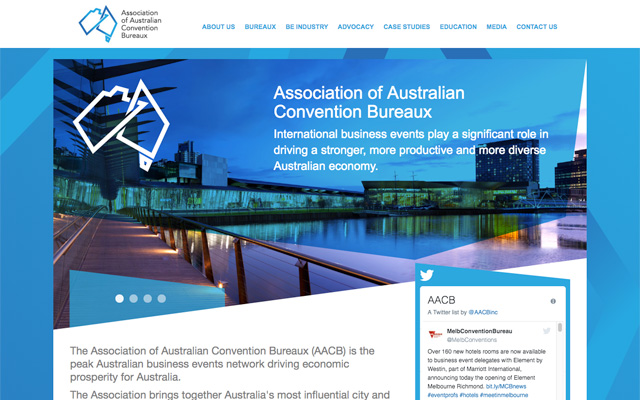
A screenshot from the AACB website
Together, Destinations International and AACB will join forces with Tourism Economics to develop and deliver an Australian version of the Event Impact Calculator (EIC). The tool allows destinations to analyse the economic value of an event or convention and quantify the return on investment.
The EIC evaluates events over three modules – business events, and sports and cultural festivals – and is currently used by over 300 destinations worldwide. The Australian Event Impact Calculator will provide AACB’s members with a tool for benchmarking and performance, and deliver critical data needed to understand and further showcase the value that events bring to a destination when connecting with external partners, funders, and other key decision makers.
Andrew Hiebl, CEO of AACB, said: “While many of Australia’s convention bureaux are world leading from a bidding and research perspective, the globally recognised Event Impact Calculator will provide our members with a nationally consistent model, allowing for best practise analysis and benchmarking – a priority for the AACB.”
Global Association Hubs Partnerships (GAHP) has appointed former ICCA head Martin Sirk to lead it into a new era as its international advisor, following the retirement of Hervé Bosquet.
In his new role, Sirk will provide executive guidance and leadership to the partnership, building on the positive impact and progress made over the first three years of its existence, underlining GAHP’s commitment to helping associations achieve their strategic goals.
He will officially assume this new role on June 1.
Germany: Country’s exhibition centres get €1 billion boost
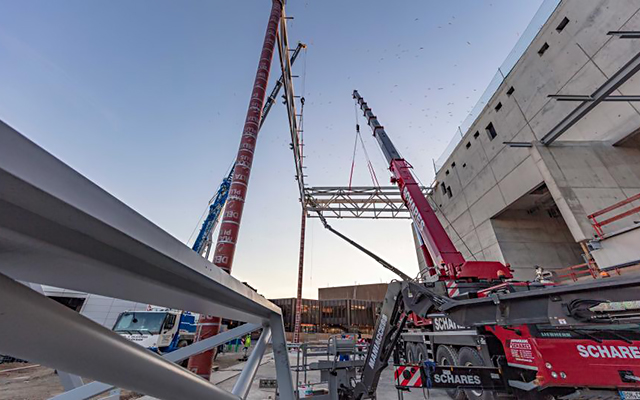
AUMA, the association of the German trade fair industry, has revealed that more than €1 billion (US$1.1 billion) will be spent to replace, renovate and modernise exhibition halls in Germany from now until 2023.
This decision was made after an AUMA survey earlier this year found that German exhibition centres of national significance had 2.8 million square metres of hall space at the start of 2019, which was approximately 1.4 per cent less than in the year before.
AUMA said the report put the decrease in hall space down to some capacities being discontinued and also construction work. As such, the drop has prompted them to invest in the upgrade and replacement of old halls.
In 2018, more than €400m were invested in Germany’s major exhibition centres and hall capacities are expected to increase by 29,387m2 by 2023 (+1%), with 22,558m2 coming online in the course of 2019.
Germany currently has a total 3.2 million square metres of hall space for exhibitions, according to AUMA.
Denmark: Denmark to drive stronger outreach benefits for global meetings Four Danish destinations – under the umbrella alliance MeetDenmark – have banded together to launch a new programme designed to make international conventions more impactful for both associations and destinations.
Launched at the recent IMEX Frankfurt, the outreach programme’s stated vision is: “Destinations and associations will define innovative partnership models, through meetings and congresses, aiming at creating value for both the participants and the local stakeholders.”
Bettina Reventlow-Mourier, deputy convention director and head of congress for Wonderful Copenhagen, said in a statement: “We want to create a significant value-add for international associations coming to Denmark. We are focused on helping associations achieve greater impacts in fulfilling their own goals and missions while also strengthening the value of visiting congresses for Danish society beyond the traditional direct economic benefits. We’re looking to develop a powerful nexus between community goals and association goals.”
“We want Denmark to be seen as world-leading in terms of proactively building meeting impacts and legacies. And, we think that associations will be interested in what we have to offer. We want to help them find new ways of engaging with our communities, because we think there is an opportunity to do things in a much different way,” added Allan Tambo Christiansen, head of conventions for Visit Aarhus.
Besides hoping to leave a lasting positive impression on meeting attendees, Christiansen wants his community to “maintain the relationship with the associations after the meeting has come and gone, and to keep working on achieving key outcomes”.
The members of MeetDenmark are the Ministry of Business Industry and Financial Affairs and the tourism organisations VisitAalborg, VisitAarhus, Inspiring Denmark and Wonderful Copenhagen.
Argentina: UFI goes to to Buenos Aires
UFI has announced that the 2nd UFI Latin American Conference will be held in Argentina, in the last week of April 2020.
Taking place at the new Centro de Convenciones de Buenos Aires, the event will be hosted by La Rural and co-located with the 17th Expoeventos Latinoamerica, one of the major exhibition industry events in the region.
The two-day programme will focus on regional-specific topics including: digital impact, the future of venues and events, talent management, market opportunities in the region, and participants will have the opportunity to discuss common strategies for different realities in Latin America.
Radisson Hotel Group has opened its doors to its first Radisson property in Hangzhou, Zhejiang.
The upscale Radisson Hangzhou Qianjiang offers 186 guestrooms and suites, ranging from the 34m2 Superior Rooms to the 106m2 Executive Suite.
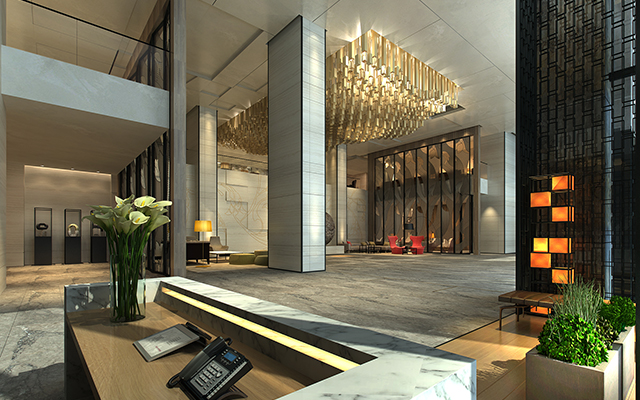
Lobby
F&B options on-site include the Sky Pavilion, a speciality Chinese restaurant with private dining rooms for corporate groups; all-day restaurant Shang Café; and a Lobby Lounge. Guests also have access to a heated indoor pool, as well as a fitness centre.
Event planners may avail several flexible function spaces, ranging from the Grand Ballroom which can host up to 740 guests for large-scale conferences, as well as a divisible Qianjiang Room for seminars with up to 120 delegates. There is also a smaller meeting room and VIP room.
Located in the new city center of Qianjiang Century City, the hotel is a 20-minutes drive away from Hangzhou’s Xiaoshan International Airport.
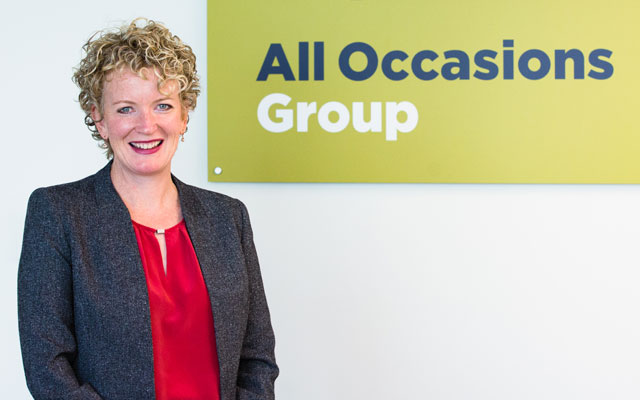
Your company just turned 20 years and is a leading conference organiser in South Australia. How did you get started?
I studied tourism and hospitality at University of South Australia and interned at the Adelaide Convention Bureau. I was there for six years and had a small stint in a PR company before starting All Occasions. I was in my late 20s when I launched the company. I learnt along the way by working with different clients, and handling different situations.
What motivates you to stay in this business?
When people appreciate the role that you play, and the skillset that you bring, it gives me a sense of accomplishment and achievement because I am helping somebody else deliver on their target and ambitions. If we can do that successfully and put on a really good conference, showcase Adelaide, and also achieve the financial outcome, that will give me a great sense of satisfaction.
Anne Marie Quinn
You have the International Astronautical Congress and World Fisheries Congress among your clients. What’s your secret in staying competitive in a challenging environment?
I think you’ve got to be a risk taker as there is a lot to manage. Make sure you create a well-balanced team that covers a lot of different skills. I know the specific areas that I am good at and stick to that. I also don’t micro-manage people; I think you need to be able to trust people.
What is the biggest risk you’ve taken so far?
We recently took on a financial risk for a smaller conference by working with a professor by underwriting it. It turned out to be very successful and we made a reasonable profit at the end of the day. But for that to work, we had to have majority control over decisions, and how money was being spent. In that instance, we had a contract that clearly defined our expectations. That is certainly something that I see happening more and more, that requirement to financially underwrite something. You’ve got to be astute to know how to make that assessment, whether to underwrite an event or not.
How has the market changed in the past two decades?
There’s been a merger of associations, so there are probably less associations out there. I think that they have become a lot more business savvy, so for accountability, they are now run like businesses. Therefore, transparency is now more important. That is critical because we find that clients sometimes have been burnt in previous experiences and are not as willing to hand over control.
So how do you convince a burnt client to trust you?
Trust takes time to build so I think you need to be honest and straight talking, and have discussions about why you recommend certain courses of action or certain decisions.
Are you concerned though about the associations sector shrinking?
I think it is a reality, and it is important to have strategies in place for how to deal with it. The PCO market will naturally shrink and grow depending on the amount of business. A lot of the associations are also employing in-house PCOs now. In some instances, opportunities are reduced, but that naturally cleans out the industry. So I’m not as concerned as we’ve got a good strategy and process in place as
to how we win business.
The International Society for Professional Innovation Management (ISPIM) has confirmed its first meeting in Japan. How did this decision come along?
I’ve never heard of Fukuoka before my meeting with Fukuoka Convention and Visitors Bureau (FCVB) at IT&CMA 2015. It turned out to be the best prepared convention bureau I’ve ever met.
They came to our meeting with all the materials and information that I’ve always wanted. They provided a report on business innovation in Fukuoka, a list of industries in the city, names of all the universities in the city, etc. They even had a person from Fukuoka at the booth who could answer my questions about the city.
I was so impressed at the end of the meeting (that) I told myself that I’ve got to do an innovation event in Fukuoka.
Iain Bitran
So did you decide right away that Fukuoka’s the one for the next ISPIM meeting?
Well, no. The next step for me (after the meeting at IT&CMA 2015) was to plan a trip to Fukuoka to get prepatory work done, with a view of doing an event in 2019 or 2020.
However, things accelerated when FCVB informed me that ICCA will be doing something in the city in June (ICCA Associations Meetings Programme, June 29 to July 1, 2017). I have been doing a lot of stuff with ICCA recently and my involvement would take me to Fukuoka. So I arrived a few days earlier for a site inspection, and realised that 2018 was free on their calendar. I decided then to do Fukuoka in 2018 instead of waiting till 2019 or 2020.
But before the trip to Fukuoka I caught up with my friend Roy (Palmer, executive director) of the Association of International Seafood Professionals (AISP). I told him about my meeting with FCVB. Roy had done events in the past in Japan, in Kagoshima in 2013 which went very well. So he proposed that we co-locate our events in Fukuoka, where his association will run a track on innovation in the seafood industry at my summit (in addition to AISP’s own programme) and both associations will co-host social events. It was the perfect arrangement.
So Roy and I went on the site inspection of Fukuoka together in June, and extended two days in Hiroshima. We hope to do a one-day post trip to Hiroshima, a city most people have heard so much of. Japan has an amazing power of recovery and ability to create success out of disasters. Not just Hiroshima (Atomic bombing, 1945) but also cities like Kobe (Great Hanshin earthquake, 1995) and Sendai (Tohoku earthquake, 2011). There’s so much our innovation colleagues can learn from Hiroshima.
My hope is that following our 2018 event in Fukuoka, we could return to other parts of Japan for yet another event, say in Hiroshima or Kobe or somewhere else.
What were your first encounters with other convention bureaux like?
Some convention bureaux will give you only maps, others will give you money (for hosting your meeting there) but that’s just the sum of their involvement.
But what does an association want from a convention bureau? For ISPIM, we see the convention bureau as the first port of call whenever we consider taking an event to a city. The convention bureau has to become our partner and provide us with local connections.
We know every city has hotels and venues, but what we don’t know is the local innovation community, the relevant government agencies, the presence of innovation incubators in the city and state of the local start-up scene. We need the convention bureau to make these local connections for us. If they can’t, why should we take our event to the city?
So you don’t care much for financial subsidies?
It helps to some extent, of course. Our events must be affordable for everyone because we attract academics and non-academics. To get a programme going, we need sponsorship which is more and more difficult to find these days, so some local subvention always help. Money we save in some areas can be used elsewhere to offer a better programme.
But between the two – great local connections and generous subventions from a convention bureau, I’d rather have local connections. That is far more important to us. Somehow, we will always find ways to make things happen, even without any financial support.
I’ve been so impressed with the materials FCVB had prepared for me, that I’ve been showing them to other convention bureaux, telling them that this is best practice. Those materials have also enabled me to think broader and discover ways to work with another industry association to enhance content. It was through them that I learnt that there are five main industry sectors in Fukuoka, one of which is seafood – and that sparked collaboration possibilities with AISP.
FCVB understands what needs to be done to attract an association event. Not only did the representatives come to our meeting with the right materials, they had also proactively gone out to meet some of ISPIM members in Japan to understand what our event is like and what issues are important to us.
Do you think that there are enough convention bureaux that are doing it right?
No. Many talk endless about their city’s infrastructure and ask how big my event is, do I use a convention centre and do I use a DMC or PCO. They then pass me a list of all that. That’s not what I want. For ISPIM, the connection with the local innovation community is critical. Without that, we are just tourists in a destination and nothing more will happen after the meeting ends.
A lot of associations are talking about legacy these days; what do you leave behind after attending a conference in a destination. I don’t think convention bureaux look at this particularly well.
There are some exceptions, of course. Auckland is very good at looking at event legacy, which is understandable because the convention bureau sits right under the national economic development agency.
The fact that we could say we’ve been to a city and left something (knowledge) behind, will enable us to consider the city again for future events. Because if we don’t (establish a legacy), there is no measurement of our achievement, and we will just move on to somewhere else, another city that will want to help us make the right connections and bring benefit to the local economy and community.
In many cases, convention bureaux are just concerned about bringing that one event in.
Do you think the rotational nature of association meetings encourage such one-off relationships with the convention bureaux?
Maybe. But associations speak to one another and we become ambassadors of certain destinations.
Let’s talk more about local connection. Why is this critical?
For ISPIM, a successful event needs to have 25 per cent local delegates and 75 per cent international. We can showcase innovation in the host city, look at the various industry clusters and discuss the challenges the local community faces.
Nobody wants to hear only how good things are. That isn’t beneficial. They want to understand challenges and share possible solutions. A question may be asked and somebody from a different part of the world, from a different industry, may have an answer to that or suggest a different way of approaching the problem. We want people to share knowledge and are always thinking of ways to engage our people. Our conferences have evolved in this manner.
But to achieve this high level of engagement, we need to know how to interest the local community.
What could poor local connections do to your events?
In 2016, our summit in Kuala Lumpur drew around 140 people. We usually aim for 200 people at least. It was a relationship issue with this event. The CEO of the Malaysia Foundation for Innovation left his position when we started promoting Kuala Lumpur at our event in Brisbane a year before.
Originally we talked about doing something together with the Foundation, but after the CEO’s departure we were told that the collaboration was off. The foundation was going to bring in 50 delegates, which would have placed our attendance at 190, closer to our 200 target. To make things worse, the foundation put up a free innovation event a day after ours. A lot of the government delegates went to that event instead.
Additionally, many speakers from the local companies only showed up for their presentation slot at our conference and did not bring their people with them. The local involvement was very weak – barely 25 per cent of our total delegate numbers, which is our usual target.
Here’s another lesson – when we did our 2014 event in Singapore, we worked with a professor in the Singapore Management University. I got a little lazy and relied only on his network, which meant that our attendance in 2014 was smaller than the one we had in 2008.
Since then, we have decided to postpone our 2017 Singapore event to 2019 and use these couple of years to know people in agencies like A*STAR (Agency for Science, Technology and Research), SPRING Singapore (a government agency supporting local enterprises), National Research Foundation, National University of Singapore, etc. I want them to be enthusiastic about our event, and to want to participate in it with quality speakers and content. Without them, I’m relying on one person’s network again.
So what’s did you learn?
We learnt that we must have more than one local partner. That is why I told FCVB that they may have done an excellent job impressing us, but the real work starts now. I’ve asked them to host a half-day event where people from the local innovation community will be invited to talk about content, speakers, venues, promotions and delegate incentives, everything. The event has to benefit everyone – ISPIM and the local stakeholders. I want to know what is it they want out of the conference so I can build it into the programme sooner.
It is also important to ask the right questions to the convention bureau. Singapore Tourism Board (STB) is helping me with delegate boosting now. It didn’t in 2014 because I didn’t know to ask them.
Would you agree that an association’s relationship with the convention bureau could be a better one if associations came prepared too?
Well, yes. The association must know what it wants and engage the convention bureau in the right manner for a successful relationship. If we were able to say exactly what we wanted, then we would hope the convention bureau could find the right people to help achieve what we need to do.
What I used to do at tradeshows, was to have a draft RFP (Request For Proposal) showing what I needed. I realised that made us talk mostly about (the city’s hotels, venues and attractions) and not about other critical driving factors that I’ve mentioned earlier.
So in the past year we have changed our approach to enable us to better articulate what we need from the city to host an event there.
ISPIM has events around the world. How is it different building delegate numbers in the different regions?
ISPIM Conference had 120 delegates in Athens 2006, over 400 in Vienna 2009, and over 500 in Barcelona 2012. After that we capped our European conferences at 500 pax. Europe is a lot more compact, making it easier for us to form communities.
In 2008 we started our first non-European event in Singapore (ISPIM Innovation Symposium), with 180 delegates or so. We moved it around the world, but there was no real connection. One year it was in Canada, the next in New Zealand, and they are not quite neighbours.
After the sixth ISPIM Innovation Symposium in Melbourne, 2013, where we got 201 delegates, we decided to kill it and split our conferences by regions – Europe, North America and Asia-Pacific.
We have been building up momentum in North America and the delegate numbers are growing.
But it is more problematic in Asia-Pacific, which is a large geographical region. The countries and culture are so unique that it is more challenging to create communities.
We thought of having a conference for just the South-east Asia region, but eventually ditched that to focus only on big innovation cities in Asia-Pacific like South Korea, Japan, Taiwan, Singapore, New Zealand and Australia.
You’ll notice that I’ve left out China because at this moment it is just too much hard word to for us to grow there (laughs).
An event destination has to be easy for people to go to, without having to struggle with visa, and easy for associations to hold an event, without having to struggle with getting the right licences. The barriers to entry are high in China, and some ways in India too.
So you have two biggest populations, two biggest markets in the world that are not quite accessible to us right now. But we will get there eventually (laughs).
Bitran (left) catches up with FCVB representatives at AIME 2017 in Melbourne
An innovator at heart
Iain Bitran is the executive director of ISPIM, the International Society for Professional Innovation Management. It is an association of members from research, industry, consulting and the public sector, all sharing a passion for innovation management – how to successfully create new products, processes and services from ideas to stimulate economic growth and well-being.
Formed in Norway in 1983, ISPIM has members in over 70 countries and is the oldest, largest and most active innovation network in Europe, expanding rapidly in the Americas and Asia-Pacific.
As well, since 1993, Bitran has been the co-founder and chief technology officer of Enterprizer Technologies, the provider of intelligent decision management solutions driven by Enterprizer, an innovative enterprise modelling system. He worked on many client projects with enterprises, governments and NGOs. As lead designer of Enterprizer, Bitran trained consultants to use Enterprizer and was been involved in many EU and UN funded projects. In 2017 Enterprizer Technologies split into two main business areas, Enterprizer Consulting and Enterprizer Events, with Iain becoming CEO of the latter.
This article was first published in TTGassociations January 2018, a sister publication of TTGmice
The St Regis Bangkok has welcomed a new director of sales, Prachaya Basset.
In her new role, she will work closely with both revenue and marketing teams to develop strategic customer segments and maintain overall positioning of the hotel.
Basset brings with her more than 15 years of experience in the hospitality sector, joining from her most recent stint at Mandarin Oriental, Bangkok.
No stranger to the hotel, she was previously with The St. Regis Bangkok as account director from 2012-2013. She has also worked with a number of other luxury brands such as Conrad and InterContinental in Bangkok.
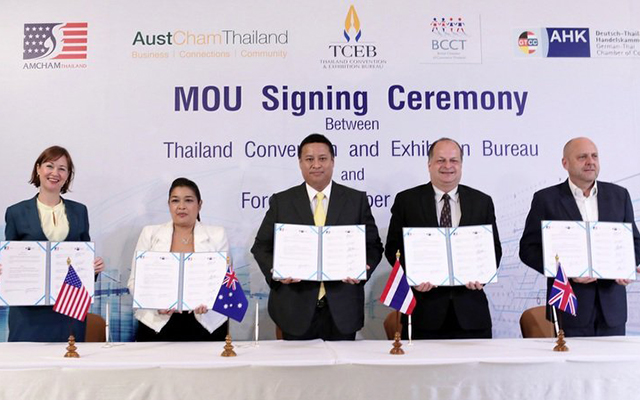
Thailand recently signed an MoU with the FCA (Foreign Chamber Alliance; representing Australia, Germany, US and UK) to push the development of the country’s MICE business in longhaul markets.
Chiruit Isarangkun Na Ayuthaya, president of Thailand Convention and Exhibition Bureau (TCEB), shared: “(The) FCA has more than 20,000 members that include businessmen, investors, entrepreneurs from business, industrial and service sectors, such as Minor Hotels Group, AccorHotels Group, Marriott Hotels Group, convention centres business, as well as oil, mining, pharmaceutical, automobile and other industries.”
TCEB’s president Chiruit Isarangkun Na Ayuthaya (centre) alongside the four FCAs
Calling these “high potential business groups”, Chiruit believes that they will help propel the national economy as they have already been included among the S-curve targeted industries that the Thai government is eyeing, in line with its 4.0 policy.
This is the very first time that the Foreign Chamber Alliance has signed an MoU with a Thai government agency.
With this MoU, the framework for the development of the business events sector will comprise five areas of operation, including exchanges of statistics and MICE events, MICE business development, MICE market promotion, MICE business research, and MICE personnel development.
TCEB’s next step is to discuss with FCA on the preparation of Phase I work plan, which will last two years.
From January 2019 to March 2019, Thailand’s business events sector has been ranked by ICCA at number four globally for international conventions in Asia – after Japan, China and South Korea – with 193 events.
According to The Bangkok Post, Thailand welcomed more than eight million corporate business travellers in the second quarter of fiscal 2019, an increase of 2.9 per cent year-on-year. International MICE travellers during the period which ended in March stood at 353, 256, up 11 per cent.
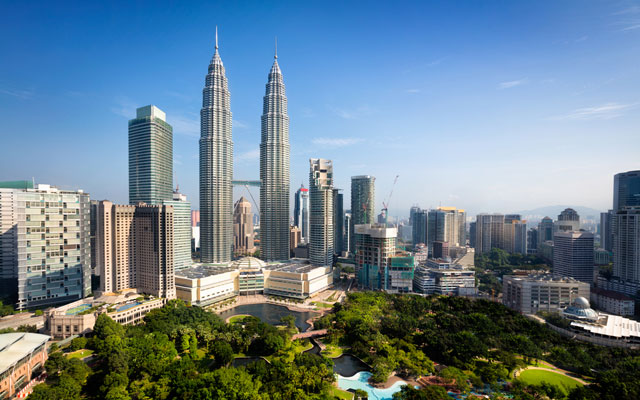
The capital city has a successful track record in attracting and hosting large-scale congresses
Two congresses will be heading to Kuala Lumpur next year in 2020, the 46th ITA-AITES World Tunnel Congress (WTC) and the International Congress on Infectious Diseases (ICID).
Taking place between May 15-21, 2020, the WTC event will bring together more than 1,500 engineers, designers, and construction professionals to Malaysia, and generate an economic impact of approximately RM 21 million (US$5 million). It will be held at the Kuala Lumpur Convention Centre (the Centre).
The capital city has a successful track record in attracting and hosting large-scale congresses
The theme of the seven-day event will focus on multiple technical paper presentations, tunnelling training courses, poster presentations, the ITA-AITES General Assembly, technical visits to ongoing tunnelling projects in Malaysia, and interesting exhibitions by companies from all over the world presenting their latest tunnelling solutions, innovations and technologies.
Another conference to be held at the Centre in 2020 is the ICID international congress. Over 3,000 medical professionals from 102 countries are expected to attend ICID 2020, and the event is expected to deliver a RM14.5 million economic boost to the country.
Both congresses are supported by the Malaysia Convention & Exhibition Bureau (MyCEB).
DMZ Spy Tours has rolled out two new experiences for corporate groups
South Korean tour company DMZ Spy Tour is promoting two new experiences for corporate groups that give participants a clearer understanding of the relationship between North and South Korea.
This tour aims to educate travellers, so that they would spread the word back home that there is peace in the Korean Peninsula.
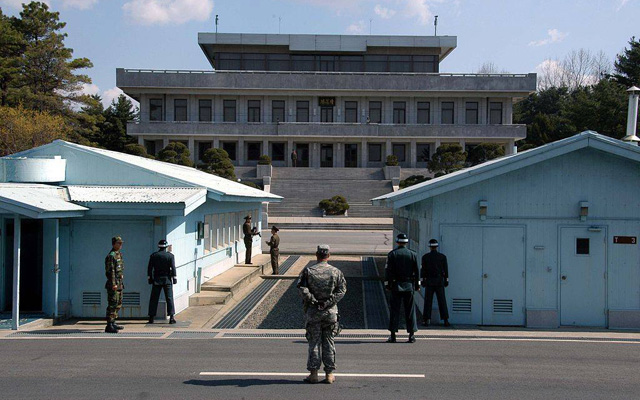
DMZ Spy Tours has rolled out two new experiences for corporate groups
The tour company specialises in tours at and around the DMZ – the Korean Demilitarized Zone which exists on the border between North and South Korea.
Shrek Lee, head director of DMZ Spy Tour, explained that as tensions between the two Koreas rose last year on the back of news reports on North Korea’s nuclear weaponry, foreigners were hesitant to visit the South as they thought there was unrest in the Korean Peninsula.
“So I approached the Korea Tourism Organization (KTO) and the South Korea army agencies, and told them we needed to do something to show travellers how we are able to defend ourselves and that there is peace at the border,” Lee said.
As a result, the signature DMZ Spy Tour, with an angle tailored for corporate groups, was born. The tour comprises activities at the South Korean army camp, a conference opportunity at an indoor venue, an outdoor barbecue and entertainment in the form of a K-pop cover concert or jazz concert.
The other corporate tour is a boardgame-based teambuilding activity built around the Korean War, and a private tour along the North Korean Spy Commando Invasion Route.
Both are good for groups of up to 70 pax.
Lee claims that the signature DMZ Spy Tour is offered exclusively by his company, and has so far been popular among American and Singaporean holidaymakers. “Bookings from OTAs out of Singapore alone (numbered at) 80 last year, bringing us an estimated revenue of US$50,000,” he said.
For the MICE spin-offs, Lee said promotion work has only just started, through fam trips organised with KTO, but feedback has been positive.
“Buyers who went on these experiences were pleasantly surprised that the border is so peaceful and that meetings can even be held near the border,” he added.
The newly-opened Ritz-Carlton, Bangkok anchors the One Bangkok development with cosmopolitan elegance. Featuring the city's largest ballroom and a spectacular new penthouse suite, it delivers exceptional hardware and deeply authentic, soulful service for business and leisure travellers alike
Behind the imposing, Brutalist concrete that defines Zurich’s Oerlikon district lies a surprising secret. While its exterior honours the neighbourhood’s industrial roots, stepping inside Mama Shelter reveals a vibrant, neon-soaked world that is a far cry from its rigid shell
A polished urban retreat designed for business travellers, Hyatt Regency Kuala Lumpur at KL Midtown combines thoughtful design, seamless service, and exceptional facilities.