Asia/Singapore Thursday, 7th May 2026
Page 686

Want to make your business meetings and events truly outstanding and memorable?

0

Brought to you by SACEOS
In today’s exciting and ever evolving digital landscape, the business meetings and events industry has to keep reinventing itself to stay relevant and innovative. We have to adopt creative ways to engage our audience and build sustainable value for the future. Some of the important and key questions we need to ask ourselves include these:

  • How do we create more purposeful events with innovation and inclusivity?
  • What kind of meaningful moments can we offer our audience and make our events and meetings powerful, impactful and memorable?
  • How can we best incorporate new technology such as AI, to better engage our clients and foster greater interactions amongst them?
  • How do we achieve strategic synergies with blending design and digital to produce spectacular user experience? What ideas can we borrow from other industries that can be applied to events and meetings?
  • What are the key global trends and developments in event spaces and immersive experiences that we need in order to stay ahead of the curve?
  • How do we get wired for the future? Wired for growth, to the right community and for authenticity?
  • How can you build greater rapport with your online community?

As our customers demand a “return on engagement”, and to ensure that they derive optimal value from their participation in the business events, it is imperative for us as organizers to plan and execute a well-designed interplay of online process and onsite experiences that represent a perfect blend of design, digital and community.

We are pleased to present SMF2019: Wired for The Future, SACEOS annual flagship event and most respected platform for the industry to gain deeper insights and true stories on journeys taken by rising stars and luminaries from both core and adjacent industries. SMF2019 (www.smfconference.org) will present a high value content program and a focused discussion on design, digital and community engagement for tomorrow’s business success. Presenters will share strategies and road maps on game changing ideas and how the industry can be wired for future success.

Here is a glimpse of what to expect at the event. SMF2019: Wired for The Future (25-26 July 2019, Singapore) will be an immersive experience for all participants, to model what the event of the future will be like.

The organizing team at SMF2019 invites professionals in the business meetings and events industry as well as those from the related fields of travel, hospitality, event venue and destination operators to join in this exciting journey to dream, act and grow as an ecosystem of dreamers and builders of the future. At this platform, discover new opportunities to collaborate with key industry Associations, technology partners and all relevant stakeholders from the industry.

To participate, please contact us at smf@saceos.org.sg or register online at http://smfconference.org/registration/
Take advantage of STB’s Training Industry Professionals in Tourism (TIP-iT) scheme to lower the cost of participation. Apply here.

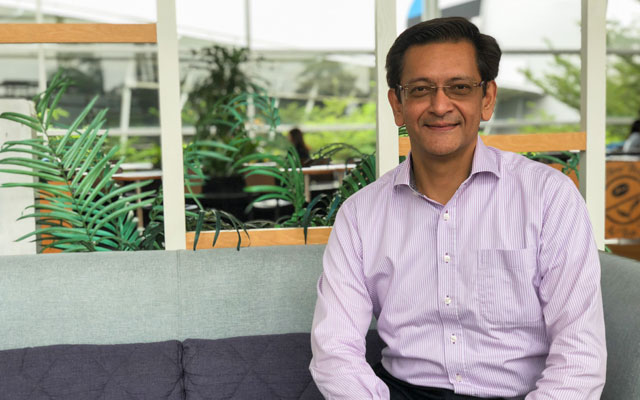
Over coffee with Aloysius Arlando

0
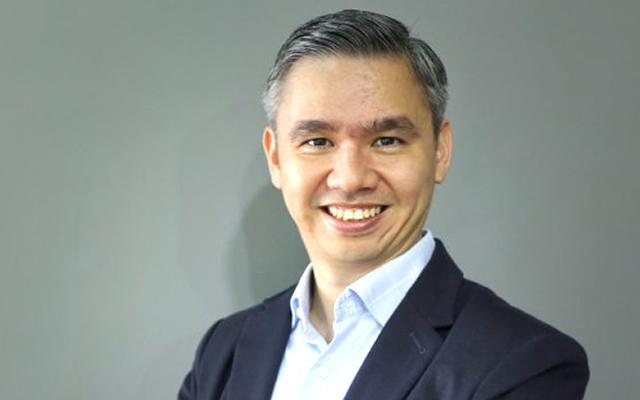
Aloysius Arlando

SingEx Venues issued a S$50 million (US$36.9 million) tender proposal to STB for the venue management of Singapore Expo. What convinced STB to pick SingEx again?
As a product, Singapore Expo started off with an exhibition focus. We need to bear in mind what attendees and organisers’ changing needs and expectations are. It’s (no longer) just about a space for play, but it has to move towards a solutions focus.

A key point that I hope worked in our favour was a very clear demonstration that we know the business well; we know what the undercurrents, trends and opportunities are; and that we are moving towards (providing) a suite of solutions that (anticipates and meets) the unmet and varying needs of our customers.

Aloysius Arlando

What does this mean for SingEx’s direction going forward?
Being the incumbent, we don’t take competition lightly. That’s why we need to ensure that we are customer-focused, understand the customer journey well, know the marketing and operating environment and then we can establish a suite of solutions that cater to the customers’ and their customers’ needs.

We now try to understand why our clients want a certain design, and what objectives they’re trying to achieve. We’ve become a business event consultant of sorts, and we’ve put in certain investments based on our customers and the feedback we received.
We are also applying some of our learnings – rethinking how the F&B scene should be like – in some of the new services we are rolling out.

Venue management has changed with the evolution of the business events industry. What trends are dominating the market now?
We have new industries coming up and emerging regional opportunities led by burgeoning economies in South-east Asia. Also, because of digital disruption, industries are intersecting more than ever.

This is going to lend itself very well to new events, event design and event platforms, in order to cater to the varied needs of event attendees.

How is SingEx responding to this?
This is where we believe in bringing different communities – the core and adjacent communities – together, to create “aha” and “wow” moments. This is how we designed the FinTech Festival as a platform for the intersection of industries.

You’ve spoken about the festival concept and events “opening up” – is this the future of trade exhibitions?
I think we need to demystify “festivalisation”. It’s very easy to say it means “to spice things up”, but it’s not about being frivolous. The spirit of festivalisation is to activate the senses – whether through visual discourse, physical touch or music – so that the engagement is not just a mono-experience. It’s to make the attendee feel shiok (great).

It’s about what the customer is trying to achieve, and what will make it memorable for their customers. Typically, they have two objectives: to expand their network and have a taste of what the destination has to offer. When you blend business and destination appeal, it collectively becomes an experiential arrangement.

It’s about the different ways to ensure the engagement is welcome. Whether it is done by festivalisation or a more traditional way, it depends on what the event objectives are.
For example, we introduce things like all-day dining, where we let the customer decide when to eat and how much to eat. Food is a conversation starter, and from this simple application, it helps to foster exchange and get conversations going.

What critical concerns are you hearing from the industry?
The baseline provision of services has risen. Merely providing the space and the key to the client is no longer going to cut it. Eight years ago, everybody was talking about free Wi-Fi as the rage; now, it’s commonplace and expected, like electricity.

As clients get more exacting and sophisticated, what is the baseline now?
Key considerations are Wi-Fi, F&B, flexible spaces and providing a range of services. They’re also looking into community engagement and social responsibility – and soon, these are going to be what we call “the new basics”.

What else? That will depend on the operating environment. Some can be plug and play, but in more advanced economies like Singapore, for example, just having a transactional moment is not going to be enough. You need to have the space and the programme to facilitate collaboration, workshops and labs on site.

Tell us about your plans as incoming president at SACEOS. What changes can the trade look forward to with your involvement?
My main objective is to build on the good work and effort that’s been put in by the exco of today and yesteryears. Moving forward, it’s important to look at what key factors are at play in developing the industry – like communities, technology, capabilities, ecosystems and new businesses that are emerging.

The way forward cannot be done by ourselves; it’s a partnership with government agencies and global associations.

I am working on how we can stay connected to these key associations, and build up Singapore as an incubation or pilot-testing base for these associations to reach out to the Asia-Pacific region.

This will also provide business opportunities for our members. Now, it’s about making sure that we can rally the different sectors of the industry to be a force to be reckoned with.

Major UN conference postponed as countries heighten travel warnings for Sri Lanka

0
CITES secretariat working to ‘try and honour’ the arrangement

Organisers have postponed the world’s largest wildlife conference – Sri Lanka’s biggest ever – in the aftermath of Easter Sunday bombings which killed 253 people, as the country braces for another week of tight security and armed guards at key economic centres including hotels as security forced hunted for more Muslim extremists.

Sri Lanka was scheduled to host the 18th Conference of the Parties to the Convention on International Trade in Endangered Species of Wild Fauna and Flora (CITES) from May 23 to June 3 drawing 3,000 delegates from nearly 200 countries.

CITES secretariat working to ‘try and honour’ the arrangement

But Geneva-based CITES Secretary-General Ivonne Higuero said in statement on Friday that the event has been postponed “out of respect for the victims of the recent attacks and the recognition by the Standing Committee, the Secretariat and the United Nations Department of Safety and Security of the time needed for the government of Sri Lanka to address the current situation in the country”.

This came as several countries heightened their travel warnings. The US Embassy in Colombo said State Department has “ordered the departure of all school-age family members of US government employees in kindergarten through 12th grade. The Department also authorised the voluntary departure of non-emergency US government employees and family members”.

Stating that terrorist groups continue plotting possible attacks in Sri Lanka, the advisory also urged US citizens to reconsider travel to Sri Lanka. It added: “The US government has limited ability to provide emergency services to US citizens in Sri Lanka due to the security environment.”

India and China, Sri Lanka’s largest tourism source markets, as well as the UK and Canada were among other countries urging their nationals to avoid non-essential travel to the country.

Tourists arrivals are set to drop by 30 per cent and result in a loss of US$1.5 billion in revenue this year owing to the attacks, finance minister Mangala Samaraweera told reporters on Friday. Tourism is the country’s fastest growing economic sector.

Prior to the Easter Sunday atrocities, Sri Lanka’s tourism industry was showing healthy growth, Forwardkeys analysis revealed. Flight bookings to Sri Lanka in 2019 (January 1 to April 20) were 3.4 per cent up on the same period in 2018. The tourism highlights were Russia, Australia and China, which showed visitor increases of 45.7 per cent, 19.0 per cent and 16.8 per cent respectively.

But a tidal wave of cancellations has hit Sri Lanka in the aftermath of the Easter Sunday terror attacks, according to ForwardKeys. In the three days immediately after the bombings, cancellations of existing bookings surged 86.2 per cent whilst new bookings fell away. Forward bookings for July and August, which had been running 2.6 per cent ahead of last year, as of April 20, fell to 0.3 per cent behind as of April 23.

John Keells Holdings, owner of the affected Cinnamon Grand hotel in the April 21 blasts, noted that the latest incident will have a negative impact on the tourism industry and other sectors of the economy. “We call upon the relevant authorities to take urgent steps to prevent a recurrence of these heinous acts,” it said in a statement.

Cinnamon Grand, the Shangri-La and the Kingsbury Colombo were the hotels where suicide bombers, also at three churches, detonated bombs on Easter Sunday. Other than the Shangri-La which has been closed indefinitely, the other two hotels alongside other luxury hotels on the same stretch of road in Colombo were operating amidst tight security. Hotel car parks have been closed for security reasons.

Forty tourists died in the blasts, including foreign nationals from Australia, Bangladesh, China, India, Denmark, Japan, the Netherlands, Portugal, Saudi Arabia, Spain, Switzerland, Turkey, the UK and the US.

CLMV roadshow delivers record results for Thai MICE industry

0

The Thailand Convention and Exhibition Bureau (TCEB) has reported record results from its recent CLMV (Cambodia, Laos, Myanmar, and Vietnam) Road Show 2019.

The roadshow generated nearly 70 new leads, valued at approximately 400 million baht (US$12.5 million) in revenue from business events originating from Cambodia, Myanmar and Vietnam between January and March this year.

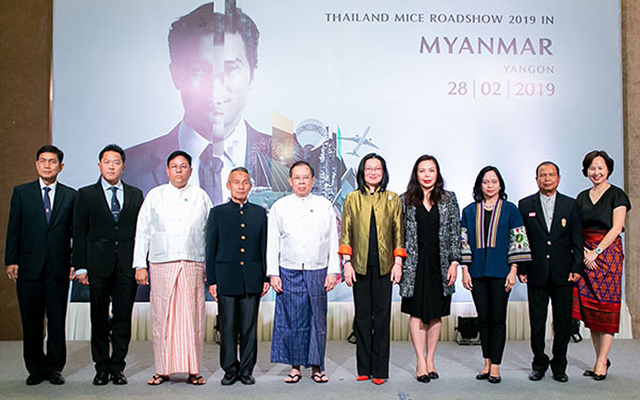
TCEB’s Nichapa Yoswee (fifth from right), and executives from TCEB and Myanmar’s MICE industry, at a Thailand MICE Road Show in Yangon, Myanmar

Nichapa Yoswee, TCEB’s senior vice president – business, said that the roadshows held have “exceeded our expectations in terms of leads”, but the real work begins now to convert those leads into business.

“We are pleased to see results from our Fly and Meet Double Bonus – Redefined and ASEAN+6 Visitor Privilege campaigns. The response from CLMV countries has been very gratifying and gives us something to build on,” she added.

In total, meeting and incentive leads from Cambodia totalled 13 groups with 1,681 participants from the beverage, pharmaceutical, insurance and direct selling industries, with an estimated revenue of 122 million baht. MI leads from Myanmar totalled six groups with 580 participants from medical and agricultural industries, valued at about 42 million baht in revenue. From Vietnam, MI leads totalled 28 groups with 2,810 participants from the pharmaceutical, medical, banking and media sectors, valued at an estimated 203 million baht in revenue.

For the exhibition sector, leads from Myanmar totalled seven groups, each with at least 10 trade visitors, with an estimated 5.5 million baht in revenue. They are signed up for business negotiations at international exhibitions organised in Thailand, in the medical and pharmaceutical, food processing and packaging, retails, logistics, sport and tourism industries. From Vietnam, leads totalled 15 groups with 250 participants for food and agriculture, construction, infrastructure, health and wellness, retails, lifestyle and automotive trade exhibitions, with an estimated revenue of 20 million baht.

The ASEAN+6 Visitor Privilege campaign targets business mission organisers including chambers of commerce, federations, trade associations, industrial publications and non-profit organisations seeking to enhance their member’s business opportunities through tradeshows. Members of these organisations will connect with the enterprises that enable their success in this segment by engaging in business meetings at Thailand’s tradeshows with the aid of TCEB subsidies and accommodation.

To qualify, delegations must have at least 10 persons hailing from the ASEAN+6 countries of Brunei, Cambodia, Indonesia, Laos, Malaysia, Myanmar, Singapore, the Philippines, Vietnam, China, Hong Kong, Macau, Taiwan, Japan, South Korea, India, Australia and New Zealand. They must commit to three meetings per person, or a total of 30 meetings across the group.

Orchard Hotel Singapore completes refurbishment

0
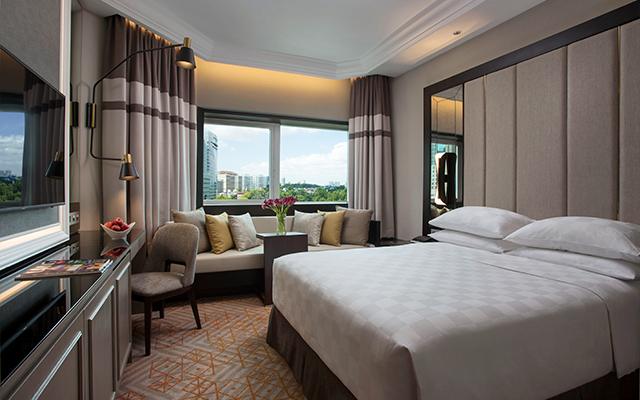
Deluxe Queen

Millennium Hotels and Resorts’ Orchard Hotel Singapore has recently emerged from a multi-million, nine-month-long enhancement programme that includes a makeover of key facilities.

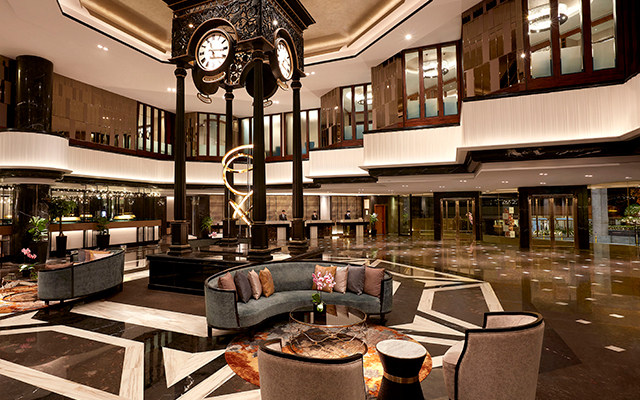
The revamped property now boasts an enlivened lobby interior, which sports a contemporary chandelier-inspired art sculpture. The two F&B restaurants in the lobby – Orchard Cafe and Bar Intermezzo – have also received facelifts.

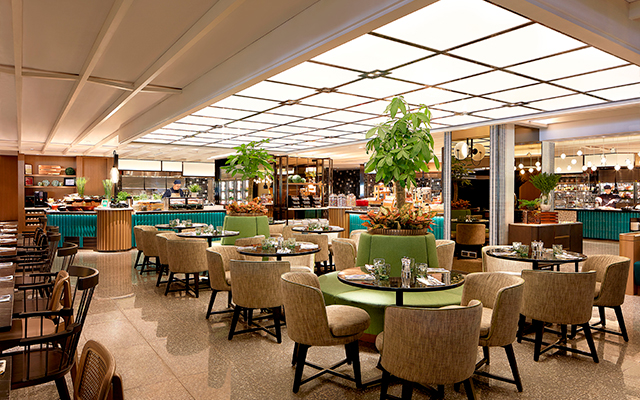
The Orchard Cafe now sports a new style and Signature Class buffet showcasing heritage-inspired creations and chef-curated classics. Meanwhile, Bar Intermezzo features an inviting interiors and contemporary botanical-influenced cocktails that toast to Orchard Road’s past. Overlooking the lobby from the second floor is Cantonese fine dining Hua Ting Restaurant, which received an extensive makeover in 2018.

Out of its 656 rooms and suites, its 260 Grand Deluxe guestrooms in the hotel’s Orchard Wing have been refurbished to boast upgraded amenities including the Handy smartphone that offers unlimited mobile data for local and select international calls; six USB ports and both wired and wireless high-speed Internet; and a Smart TV. Some Grand Deluxe rooms also come with luxurious Japanese soaking tubs.

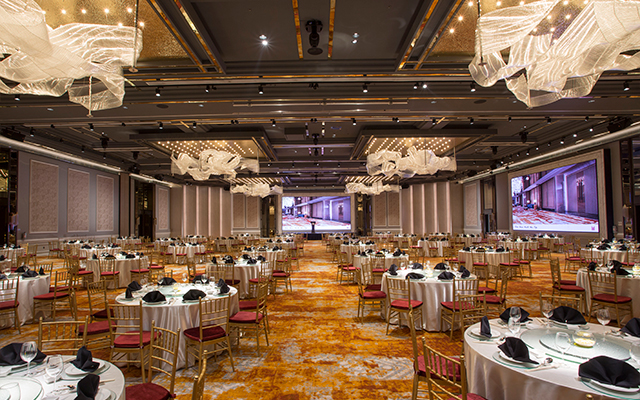
Among Orchard Hotel’s 11 refurbished conference and function spaces, a highlight is The Orchard Grand Ballroom. Occupying over 920m2 and six metres high, the space has been refitted with a fresh new look, two floor-to-ceiling LED walls (a first in Singapore), statement lighting, state-of-the-art audio-visual capabilities, and a foyer lined with floating Orchid-inspired chandeliers. It boasts a capacity of up to 1,000 guests.

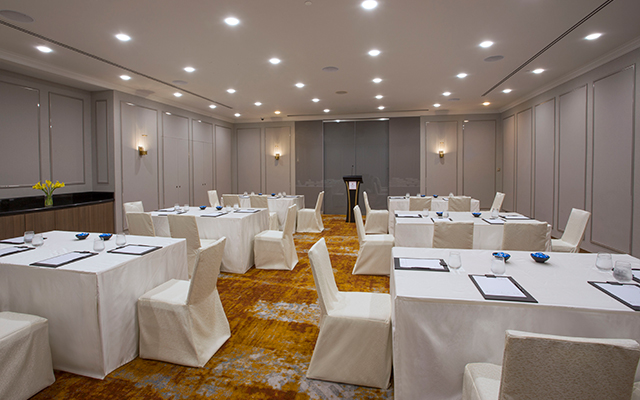
The conference centre has also been redesigned with five intimate meeting rooms and upgraded meeting facilities. Event planners will now have more catering options from the hotel’s four culinary concepts – Hua Ting Restaurant, The Orchard Cafe, Mon Bijou and Bar Intermezzo – as well as a halal-certified kitchen.

The property also offers other facilities such as a 25m-long outdoor pool and fitness studio.

Kempinski launches in Bali

0
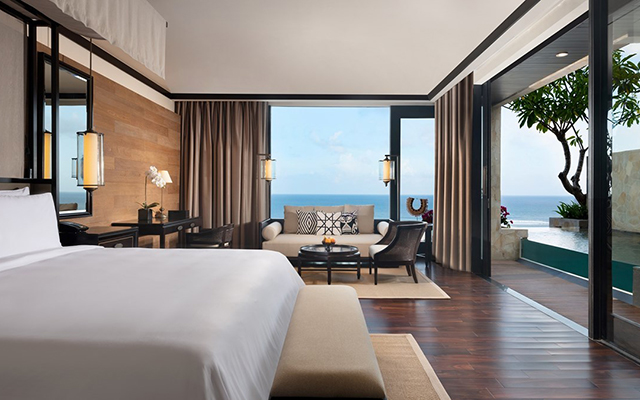
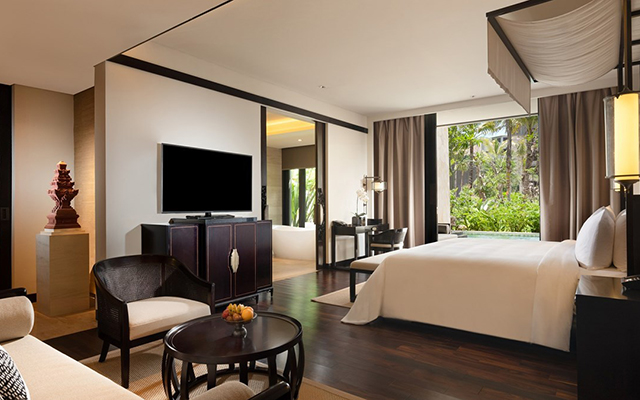
Ocean Suite

Kempinski Hotels has opened its first property on the Island of the Gods, in the upmarket Nusa Dua area.

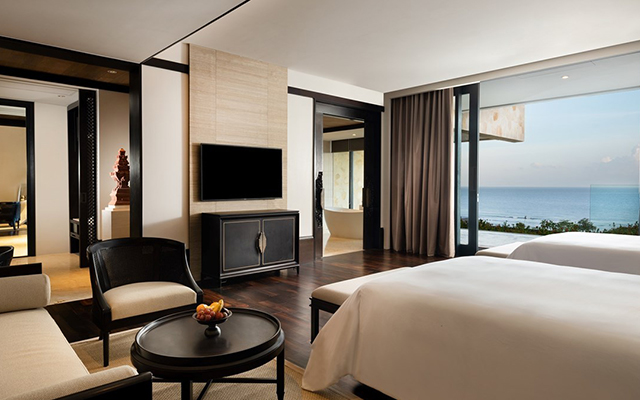
The property offers 475 keys, starting with 256 Grand Deluxe Rooms ranging 65-80m2 in size, followed by 162 Junior Suites and 14 Specialist Suites with private plunge pools in the next category. Guests in the suites also have access to the Cliff Lounge and its pools.

At the upper end, a selection of 43 One-, Two- and Three- Bedroom Exclusive Villas offer up to 1,379m2 of space, with private pools and lounge areas, tropical gardens with outdoor showers and access to the Villa Lounge.

Amenities on the hotel grounds include six restaurants, bars and lounges; an ocean-facing spa; fitness centre; and a 60m-long swimming pool.

For meetings and corporate events, The Apurva Kempinski Bali offers a range of meeting rooms which includes 1,076m2 pillarfree ocean-view Grand Ballroom which can accommodate 900 delegates. There are also outdoor event spaces, such as a 2,200m2 ocean-facing lawn for al fresco cocktail receptions.

The Apurva Kempinski Bali is the second Kempinski property in Indonesia, and follows the opening of The Capitol Kempinski Hotel Singapore.

MICE hurdles for inner cities

0

Asia-Pacific is seeing an upward trend in inbound business events, with average meeting sizes up three per cent, according to CWT’s Meetings & Events’ 2019 Meetings & Events Future Trends report.

Naturally, this has whet the appetite of both second- and third-tier cities – especially those that already enjoy healthy leisure arrivals – eager to carve out a slice for themselves in the ever-growing business events pie.

However, the path to success is not easy for some of these less-prominent cities, as they have to tackle various obstacles such as lack of meetings infrastructure, limited access, and international visibility.

Japan is an example of a country with a growing number of destinations keen on attracting global events, with its national CVB leading numerous roadshows around the world to promote lesser-known cities. However, event planners who specialise in Japan expressed uncertainty over their ability to push corporate meeting groups beyond the country’s main cities, with concerns about logistics and accessibility.

Felicia Teng, general manager of Singapore-based The Meeting Lab, shared: “I feel Japan’s secondary destinations are not MICE ready yet. For example, there are hotels and meeting venues that still work on the basis of individual costing (as opposed to a meeting package) – like snacks by the item, coffee by the cup, or cookies by the diameter.

“Our clients just want to know (the total price), but calculations (with local venues) can be complicated. (Main cities like) Tokyo and Osaka are better, where more hotels can work in international style.”

However, Teng noted that secondary destinations in Japan could stand a higher chance of being selected for groups that have repeatedly gone to main cities and now desire new experiences.

The observation holds true for other countries.

Mona Abdul Manap, CEO of Malaysian events specialist Place Borneo, found that Sarawak’s off-the-beaten-track reputation has earned it favour among Asian and European meeting planners as well as younger event delegates, who seek adventurous experiences that they can brag about on social media.

Citing an example, Mona said a four-wheel drive experience which involved travelling on dirt logging roads as well as a boat ride from Long Terawan were deemed the programme highlights for an incentive group from Poland.

As such, some representatives of Japanese cities are dangling unique local experiences as bait for groups.

Gifu Convention and Visitors Bureau’s managing director Atsushi Ishida, pointed to Ukai cormorant fishing – designated as an Important Tangible Folk Cultural Property of Japan – as an example of an experience that is uniquely Gifu. Ishida added that it would work perfectly as an evening activity after a congress or meeting.

Yuko Sawatani, Okayama Convention Center’s operation department marketing and sales division head, said Okayama is a “Muslim-friendly destination”, and will be an attractive option for both incentive groups and meetings with Muslim delegates as it offers new experiences like homestays and Halal-certified local cuisine.

Accessibility is also a prime concern for event planners.

Tan Li Ting, manager of Apple Vacations Singapore, opined that second- and third-tier destinations would be more appealing to corporate groups if they were accessible by an international airport or located near a major meeting city.

In the American Express Meetings & Events 2019 Global Meetings and Events Forecast, a quarter of surveyed planners across the region are choosing second-tier cities to defray rising event costs, up from only three per cent last year.

Alicia Yao, deputy secretary-general, MICE Committee of China Association of Travel Services, agreed, as she found that emerging Chinese MICE cities have been able to use cost comparison to their benefit. She said CVBs in emerging Chinese destinations offer sponsorship to attract corporate groups, something that main cities Shanghai and Beijing do not do.

In addition, Yao said staying at an international five-star hotel with meeting facilities was 30 to 50 per cent cheaper in Suzhou as compared to Shanghai, and about 30 per cent cheaper in Hangzhou.

Besides touting their price appeal, eager inner cities can also leverage major events to boost their visibility on the global stage.

“Tokyo and its surrounding areas are busy and booked out with the Olympics, so people who want to hold events around the same time will head out to outlying cities… which is good for us. Also, two Rugby World Cup games will be held in Fukuoka. This will boost the destination’s image,” said Macphie Kenneth Alexander, international MICE sales, Fukuoka Convention & Visitors Bureau.

For Sarawak in Malaysia, hosting the 55th ICCA Congress in 2016 was key to its subsequent success as a hot meetings city.

Sarawak Convention Bureau’s (SCB) COO Amelia Roziman noted: “When meeting planners decide on a destination, they seek a strong and dynamic delivery of the sessions paired with the best environment to captivate the audience and make the conference relevant.”

New Moon (Bar) rises over Bangkok’s skyline

0

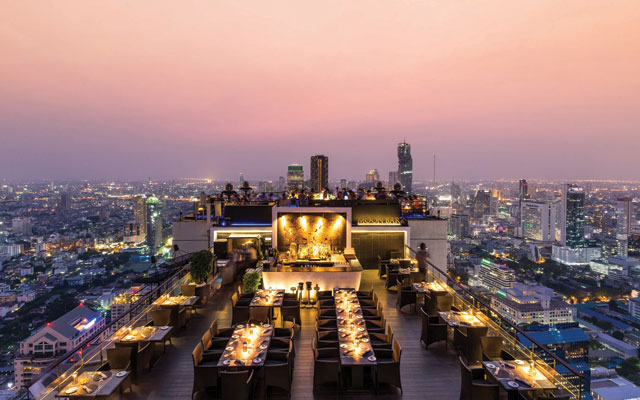
Banyan Tree Bangkok has reopened its rooftop Moon Bar – which shares the zone with Vertigo Restaurant – after a series of extensive renovations.

The bar has undergone a complete transformation, and now sports new features such as a diamond-form bar, as well as a Moon Walk, which is a glass “bridge” vista point on the 61st storey where guests can enjoy breathtaking views of the Thai cityscape.

Planners can book out the entire Vertigo and Moon Bar, where the maximum capacity for sit-down dinner is 250 pax, while cocktail-standing capacity is 400 pax. Private functions for the whole venue require a minimum F&B spend of 2.7++ million baht (US$85,300++) per function from 18.00 to 22.30. The price includes a back-up venue in case of inclement weather.

Should a smaller private drink reception be required instead, there is also the New Neptune. This area requires a minimum F&B spend of 450,000++ baht per function from 18.00 to 22.30, and it can hold 70 pax for a sit-down dinner, or 100 pax in standing cocktail.

Staff can also create a corporate-branded cocktail upon request. Otherwise, choose from one of the Moon Bar’s new cocktail offerings ranging from the vodka- and rum-based #VertigoStorm to the The Moonwalk featuring the Chandon Brut Sparkling Wine and Grand Marnier Cordon Rouge.

ACTE currently in transition, but assures it’s business as usual

0

The ACTE (Association of Corporate Travel Executives) is undergoing a leadership reshuffle following the resignation of its US-based global executive director Greeley Koch last month, as well as the departure of Asia regional director Benson Tang and senior executive Jeffrey Chan, both based in Hong Kong.

Koch was with ACTE since 2012, while Tang joined seven years ago.

Holden is ACTE’s interim Asia director

However Singapore-based John Holden, interim Asia regional director, assured members it was “business as usual” and that he will be leading the April 26 Bangalore Education Forum, followed by the May 7 Singapore Education Forum. Both forums will have about 100 participants.

Holden is an industry veteran with 18 years of experience, and was previously global travel operations head of Goldman Sachs. He was most recently ACTE Asia regional head of business development and a member on the ACTE Asia Regional Council from 2014 to 2017,

In addition, ACTE’s managers in India and China will continue to work with members in the region. Holden shared with TTGmice that Edward Fong has already been appointed as ACTE’s representative in Hong Kong.

“The appointment of the new global director is expected to be announced next month. Once he or she is on board, a decision will be made on the location change for ACTE’s regional office from Hong Kong to Singapore,” Holden added.

The immediate focus over the next two to three months, Holden said, was the development of the Macau Global Summit programme, which will take place on August 26 and 27.

Aventri launches marketplace for event planners

0

Event management software (EMS) company Aventri has unveiled Aventri Marketplace, a one-stop portal for events.

Marketplace partners on the Aventri platform encompass everything from event promotion and budget management to staffing, ground transportation, payment processing and more.

How the Aventri Marketplace portal looks like

The partners, classified into eight categories on the Aventri Marketplace, are:

  • Attendee Engagement – Sciensio artificial intelligence Eventbots
  • Event Promotion – InGo for word-of-mouth/social media promotion
  • Budget Management – Eved centralised platform to better manage spend
  • Ground Transportation – Uber for Business, miMeetings and EmpireCLS, enhancing service, as well as savings and budget control
  • Onsite Services – Swiftium modern solutions to improve lead retrieval, session tracking, ticketing, registration and access control
  • Reservation Software – Meetingmax for faster, more accurate room block management
  • Payment Processing – CardConnect streamlined payment solutions
  • Event Staffing – Plannernet, a pool of 1,500 meeting and event specialists in 70 countries

This includes Aventri’s newest partner, Uber for Business. This web-based tool allows organisers to easily create and manage campaigns online by setting parameters for pickup, drop-off, timeframe and ride costs. They pay only for Vouchers their attendees redeem. Plus, this will enable companies to better predict and control transportation costs.

In addition, Aventri has a robust pipeline of future providers. The company will evaluate companies and roll out new partners on an ongoing basis.

“Aventri technology assists planners throughout the event lifecycle,” said Michael Burns, global head of sales and marketing, Aventri.

“Marketplace builds on our promise to customers. The aim is to present top-notch providers that enhance every corner of event planning and management. Using Aventri Marketplace, planners will save time and money, while optimising their events.”

Reviews

The Ritz-Carlton, Bangkok

The newly-opened Ritz-Carlton, Bangkok anchors the One Bangkok development with cosmopolitan elegance. Featuring the city's largest ballroom and a spectacular new penthouse suite, it delivers exceptional hardware and deeply authentic, soulful service for business and leisure travellers alike

Mama Shelter Zurich

Behind the imposing, Brutalist concrete that defines Zurich’s Oerlikon district lies a surprising secret. While its exterior honours the neighbourhood’s industrial roots, stepping inside Mama Shelter reveals a vibrant, neon-soaked world that is a far cry from its rigid shell

Hyatt Regency Kuala Lumpur at KL Midtown

A polished urban retreat designed for business travellers, Hyatt Regency Kuala Lumpur at KL Midtown combines thoughtful design, seamless service, and exceptional facilities.