Ho Yoke Ping, who was part of the founding team of the Malaysia Convention & Exhibition Bureau (MyCEB), is now the new executive director of the Malaysian Association of Convention & Exhibition Organisers & Suppliers (MACEOS).
She will inject fresh perspectives and more than two decades of industry experience into the long-standing association of 29 years. Her crucial role will entail enhancing the profile of MACEOS in the business events industry through strategic plans including communications, government relations as well as partnership and collaborations.
Ho Yoke Ping
A MACEOS statement noted that under Ho’s leadership, MyCEB “has grown leaps and bounds especially in positioning both the Bureau and country internationally” in the global business events space.
Vincent Lim, president of MACEOS, said: “Her reputation in the industry is formidable and it is an honour to have her on board the Association. With her, we are in the strong opinion that MACEOS will be able to strategically move forward as not only her experience counts, but her ability to harness the support of many parties through her consistent good work will be in favour to grow the Association to the next level”.
Ho has also served various organisations on her own accord over the past years, such as chairperson for the ICCA Malaysia committee and key roles in the Malaysia Society of Association Executives and Business Events Council of Malaysia.
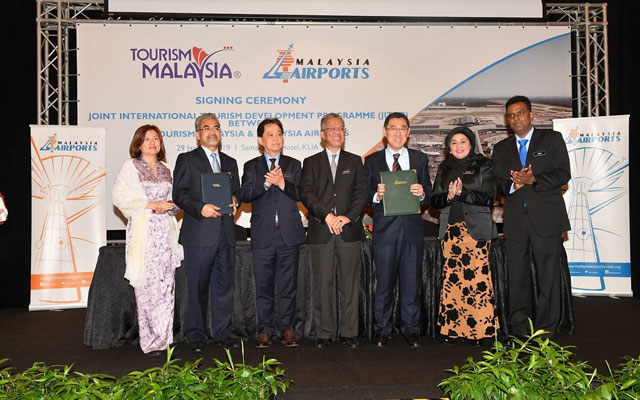
From left: Malaysia Airports’ Emelia Tay Ling Imm; Tourism Malaysia’s Musa Yusof; Minister of tourism, arts & culture Malaysia Mohamaddin Ketapi; Ministry of Transport Malaysia’s Kamaruddin Jaafar; Malaysia Airports’ Raja Azmi Raja Nazuddin; Ministry of Tourism, Arts & Culture Malaysia’s Haslina Abdul Hamid; and Ministry of Transport Malaysia’s Jana Santhiran
Malaysia Airports Holdings (MAH) and Tourism Malaysia have sealed an MoU for an enhanced version of the Joint International Tourism Development Programme (JITDP), which aims to increase inbound arrivals by incentivising airlines and charterers on their Malaysia campaigns and tacticals.
Following the successful launch of the pilot project last year, the programme’s budget has been increased by another RM5 million (US$1.2 million) this year, bringing it to a total of RM20 million, which will be shared equally between the two government entities.
From left: Malaysia Airports’ Emelia Tay Ling Imm; Tourism Malaysia’s Musa Yusof; Minister of tourism, arts & culture Malaysia Mohamaddin Ketapi; Ministry of Transport Malaysia’s Kamaruddin Jaafar; Malaysia Airports’ Raja Azmi Raja Nazuddin; Ministry of Tourism, Arts & Culture Malaysia’s Haslina Abdul Hamid; and Ministry of Transport Malaysia’s Jana Santhiran
In its second year, JITDP aims to further increase arrivals particularly from medium- and longhaul markets.
Tourism Malaysia director-general, Musa Yusof, is looking at attracting more arrivals from Russia and CIS countries, as well as the Middle East, which are both long-stay markets for Malaysia, with the latter among the top spenders in the country.
While there is no target number set, Musa hopes that all the allocated funds will be used by the end of the year.
To utilise the funds, airlines and charterers will have to submit their plans for campaigns or tacticals for inbound flights to Malaysia, which will be reviewed by both Tourism Malaysia and MAH.
Once approved, the funds can be used to bear 50 per cent of the total cost of marketing and promotions of Malaysia, with the airline bearing the remaining 50 per cent. Last year, 10 airline companies benefited from the programme.
Malaysian Association of Hotel Owners executive director Shaharuddin Saaid, said the onus of success of JITDP rests on Tourism Malaysia.
He told TTG Asia: “Tourism Malaysia has to work hard to promote Malaysia to ensure the flights coming in are full or nearly full. If JITDP manages to attract new airlines, but the flights coming in are half full, there is no point as the airline will not sustain its services for long.”
Uzaidi Udanis, president, Malaysia Inbound Tourism Association also urged local tour operators to actively take part and support JITDP by promoting Malaysia to their overseas partners to stimulate interest, which will in turn attract new airlines and charter flights to consider flying to Malaysia.
“We are going to educate our members on this programme and identify overseas airlines and partners who can benefit,” Uzaidi said.
The investment by ANA heralds the dawn of a new era of growth for PAL, which has embarked on a full-scale expansion programme
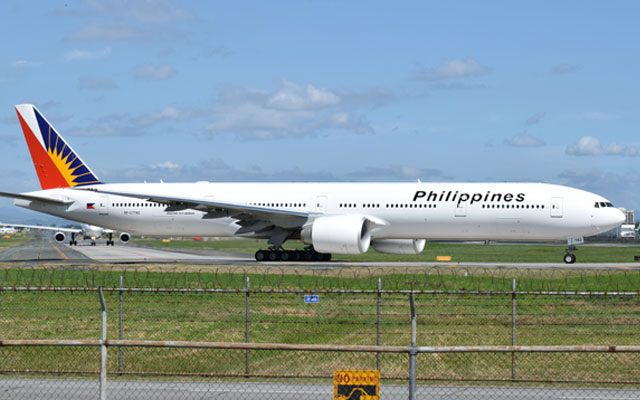
ANA Holdings, parent company of All Nippon Airways (ANA) will be investing US$95 million dollars – equivalent to 9.5 per cent of shares – in Philippine Airlines’ (PAL) parent company, PAL Holdings.
The shares will be acquired from Trustmark Holdings, owned by the Lucio Tan family and the largest shareholder of PAL Holdings. Completion of the investment is subject to certain closing conditions.
The investment by ANA heralds the dawn of a new era of growth for PAL, which has embarked on a full-scale expansion programme
Shinya Katanozaka, president and CEO of ANA Holdings, said: “Asia is a key growth market and we believe PAL is in an excellent operational position to capitalise on both the strong uptick in air traffic growth as well as the vibrant, expanding Philippine economy.”
This investment is in line with ANA Group’s mid-term corporate strategy for FY2018-2022, as it seeks to expand its international group network, and strengthen partnerships with foreign airlines.
This also marks ANA’s second investment in a South-east Asian airline, following its US$108 million stake in Vietnam Airlines in 2016.
Olympia London opens rooftop space
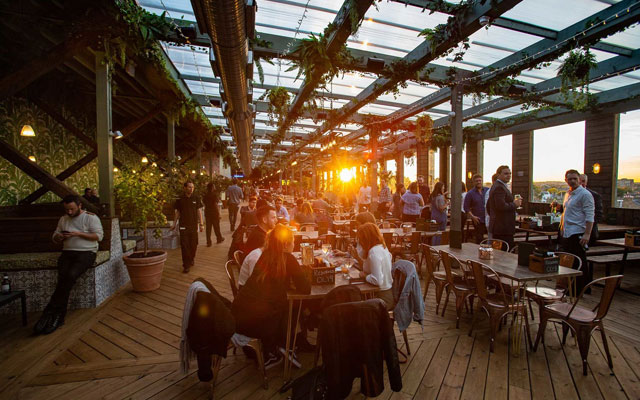
As part of a £700 million (US$918.4 million) overhaul of Olympia London, a rooftop space, named Pergola Olympia, opened at the end of last year. It is the first time the 132-year-old exhibition centre has built a venue on its roof.
Set five storeys up and surrounded by botanical gardens, the space features three restaurants and a bar. The fully-enclosed space – to protect against the British elements – boasts floor-to-ceiling glass and is a a year-round networking and socialising space for up to 500 people.
This latest announcement is part of plans to overhaul the Olympia. Besides the new rooftop bar, there are plans for a 1,500-seat theatre, another performing arts venue, a cinema and two hotels.
Airbnb embeds itself further in business events space
Airbnb has moved further into the business events space with the acquisition of Denmark’s Gaest venue booking platform.
Founded in 2015, the Aarhus start-up offers venue booking options by the hour or daily increments. The Gaest service has listings for some 3,000 venues from hotels to co-working spaces and other rooms will remain operational on its own platform initially at least, although Airbnb has not said whether it will keep the Gaest brand name.
Terms of the deal were not disclosed but it is indicative that Airbnb is expanding into services for the business market.
Last April, Airbnb also launched a tool for meeting planners and group travellers to show Airbnb properties near an event.
Caesars Entertainment to open first US non-gaming hotel
Caesars Entertainment has announced plans to open Caesars Republic Scottsdale, the corporation’s first non-gaming hotel in the US.
Caesars Republic Scottsdale in Arizona will be located adjacent to the Scottsdale Fashion Square, and will be a four-star hotel. The 11-storey glass structure will have 266 rooms will stand at intersection of North Goldwater and East Highland Avenue.
On the second floor, there will be five breakout rooms able to accommodate 40 people or opened out for events up to 200. The second-floor executive board room is capable of seating 16 at a permanent table. There will also be a 650m2 column-free ballroom that is divisible into four and accommodate banquets up to 500. The ballroom can also be opened out onto an adjacent lawn, suitable for outdoor events for up to 600 people.
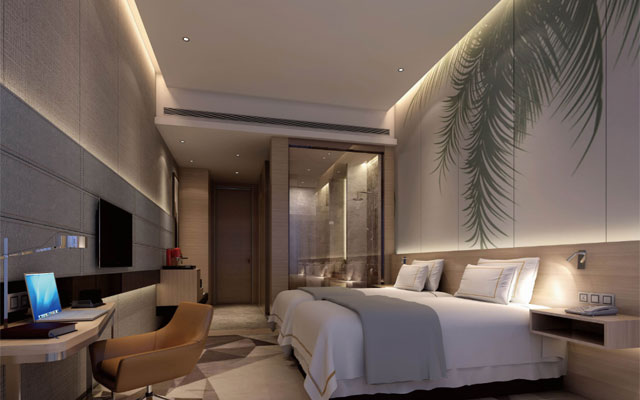
Novotel has made its debut in Haikou, the capital city of China’s Hainan province.
The U-shaped hotel located on Xinbu Island features 141 guestrooms, 15 of which are Deluxe Rooms that come with sea-facing balconies.
Superior Garden View King Room
Dining options include Square with its local and international buffet spread, and a la carte menu choices that span traditional Cantonese, Sichuan and local Hainan cuisine. The restaurant has six private rooms for small gatherings and business meetings. There is also a lobby lounge on-site.
Other function spaces include three meeting rooms, comprising the 800m2 pillarless ballroom that can hold up to 600 guests, and an outdoor terrace.
Recreational facilities include a fitness centre, an outdoor swimming pool, and a tennis court.
The property is a 40-minute drive from the Haikou Meilan International Airport, and 90 minutes by high speed train to Sanya.
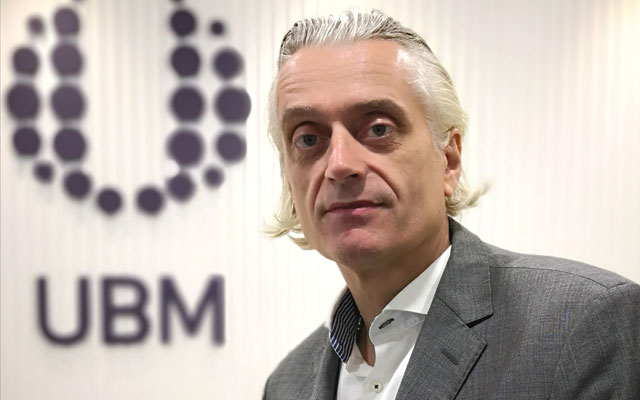
UBM Malaysia has appointed Gerard Leeuwenburgh as country general manager, succeeding Alun Jones who will leave the organisation on January 31, 2019.
Leeuwenburgh will report to Ian Roberts, regional executive director of ASEAN, and is responsible for providing the overall leadership to deliver on the company’s ambition of accelerated growth in Malaysia.
Gerard Leeuwenburgh
Prior to joining UBM, he was with DMG events as vice president Asia. The industry veteran has been in the industry for over 25 years, and has worked for Jaarbeurs, VNU Exhibitions in various leadership roles based in both Europe and Asia.
UBM Malaysia is a subsidiary of UBM Asia which recently became part of Informa PLC, a B2B information services group and the largest B2B event organiser in the world. The organisation has a current portfolio of 30 trade events in Malaysia and South-east Asia.
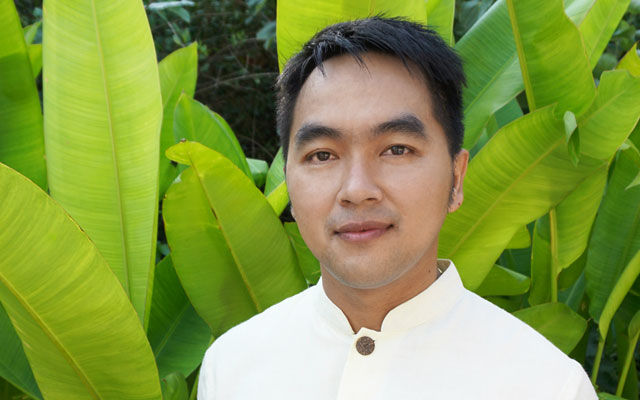
Six Senses Hotels Resorts Spas has appointed Danat Thanoosilp as director of sales, Thailand and Cambodia.
He will oversee Six Senses properties in Samui and Yao Noi, as well as the Six Senses Krabey Island in Cambodia.
Danat joins Six Senses following a five-year tenure as the director of sales and revenue at SLH (Small Luxury Hotels of the World) property Twinpalms Phuket.
Prior to that, he gained hospitality sales experience with stints at Angsana Laguna Phuket, Sheraton Grande Laguna Phuket and The Peninsula Bangkok.
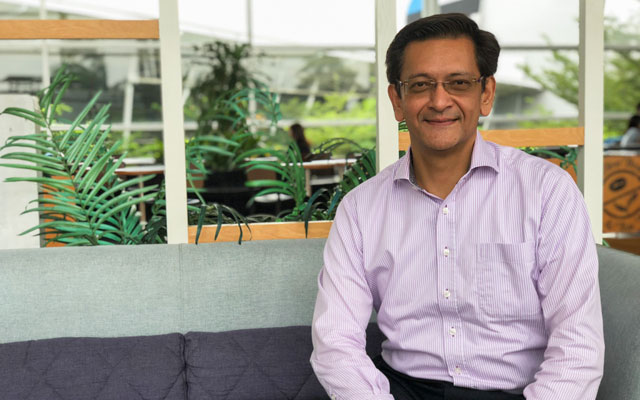
With the renewal of its management of the Singapore Expo Convention & Exhibition Centre (Singapore Expo), SingEx Holdings will shift its focus to form more collaborative and consultative partnerships with its clients, as well as craft “a suite of solutions”, said its CEO.
In an interview with TTGmice, SingEx Holdings CEO, Aloysius Arlando, said: “You can have a range of services, but it’s how you pick and choose the service that (anticipates and meets) the unmet needs of a customer.”
Arlando: new plans have been charted after tender renewal
He revealed that SingEx will “have some investment” channelled into building this area of its business, about which more information will be revealed at a later date.
Besides providing exhibition space, SingEx is also the organiser of the Singapore FinTech Festival.
On the diversification of SingEx’s portfolio, Arlando shared: “As a product, Singapore Expo started off with an exhibition focus. We need to bear in mind what the changing needs and expectations are of attendees and organisers. It’s not just about a space for play, but it has to move towards a solutions focus.”
When questioned about the renewal of SingEx’s management contract, he said: “A key point that we hope worked in our favour was a very clear demonstration of our understanding of the market dynamics and trends, and more importantly, who our customers are.”
Under the renewed agreement, SingEx will continue to operate Singapore Expo for up to 10 years from this month.
New study reveals the macro-trends set to impact the future of business events
Biodegradable meeting spaces, artificial intelligence and serendipity will all play a significant role in the future of meetings and business events, according to PCMA’s Trends of 2019: The Future of Meetings & Events study.
In total, the study identified five trends with the potential in the next five years to dramatically disrupt the business events industry.
The five trends identified by research firm Fahrenheit 212, which conducted the study, were Emotional Intelligence, Orchestrated Serendipity, Multimodal Design; Bigger than Oneself; and Clear Sense of Place.
New study reveals the macro-trends set to impact the future of business events
Emotional Intelligence
One-size-fits-all isn’t enough anymore. Consumers across industries want to feel understood, and to be given experiences that are tailored to their individual needs. At meetings & events, participants can no longer be treated as a homogeneous crowd or a series of behavioural data points, but instead must be recognised as an individual, understood on a deeper emotional level, and treated accordingly.
As companies get smarter with predictive analytics, consumer expectations for personalised, seamless experiences will continue to rise. Meetings & events will need to move past reactive adjustments to adopt a proactive approach to personalised experiences, understanding the needs of participants before they arrive.
Orchestrated Serendipity
Consumers’ lives are more programmed than ever before, and with a constant stream of data and information at their fingertips, scheduling, curation, and prediction are prolific parts of the everyday. As such, the unexpected, unplanned moments now surprise consumers, creating lasting memories and driving meaningful impact. These memorable moments transcend surface-level surprise or delight – they are serendipitous, magical experiences.
Participant attention is at an all time premium, as technology amplifies distraction and enables remote attendance. Experiences will embrace freedom & surprise, freeing consumers from the constant constraint of schedules or agendas. By embracing the unexpected, we can engage participants and leave a lasting impression.
Multimodal Design
Environment is a key element of user experience, and expectations of spaces are changing in consumers’ info-rich, connected lives. People want spaces to be as nimble and fluid as their digital experiences, and design should adapt to support quick change. As such, spaces are being designed to flex and accommodate the different ways that people prefer to interact with the space and with one another.
Every event has a unique objective and audience, and a space must reflect each event’s specific personality and needs. From technological infrastructure, to architecture, to furniture and fixtures, space is critical to any event, and should be designed to adapt to the ways that participants will engage with one another, with the content of the event, and with the space itself.
Bigger than Oneself
Talk is cheap. Now – more than ever – consumers don’t just expect companies to voice their values, but to actually embody their point of view. Consumers recognise that the dollars they spend are a reflection of their values, politics, or choices, and are looking for brands that clearly demonstrate where they stand on certain issues.
Every event must have a message. Participants want to understand what’s important to a business, and experience events that deliver that message down to the smallest detail – allowing them to meaningfully connect with the experience and bringing purpose to their engagement.
Clear Sense of Place
Sterile spaces or generic locations no longer make the cut – consumers are looking for exploration and adventure, and unique locales and authentic experiences are a draw in and of themselves. Consumerised experiences are being traded in for authentic, location-true destinations, where enrichment comes in unexpected forms and through exposure to local cultures.
The thriving experience economy presents a ripe opportunity for events in off-the-beaten-path destinations, encouraging exploration of new environments. The most memorable events celebrate local surroundings.
Those trends, along with others, were discussed by leaders from a wide range of industries. Research participants include Sherrif Karamat, PCMA president and CEO; A Hundred Years’ senior advisor Amy Blackman; Sharebite’s CEO Dilip Rao; Eight Inc partner and chief experience officer Wilhelm Oehl; Local Projects’ creative director and head of visual experience design Elle Barriga; and WeWork’s vice president of product development Cory Clarke.
The study was first presented during 2019 PCMA Convening Leaders Disrupt + Deliver programme that took place earlier in January in Pittsburgh, Pennsylvania.
The newly-opened Ritz-Carlton, Bangkok anchors the One Bangkok development with cosmopolitan elegance. Featuring the city's largest ballroom and a spectacular new penthouse suite, it delivers exceptional hardware and deeply authentic, soulful service for business and leisure travellers alike
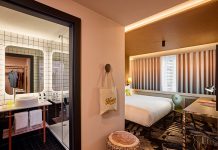
Behind the imposing, Brutalist concrete that defines Zurich’s Oerlikon district lies a surprising secret. While its exterior honours the neighbourhood’s industrial roots, stepping inside Mama Shelter reveals a vibrant, neon-soaked world that is a far cry from its rigid shell
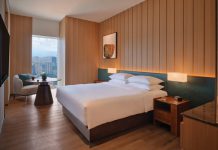
A polished urban retreat designed for business travellers, Hyatt Regency Kuala Lumpur at KL Midtown combines thoughtful design, seamless service, and exceptional facilities.