Asia/Singapore Wednesday, 22nd April 2026
Page 738

Artyzen Sifang Nanjing ready to welcome guests

0

Artyzen Hospitality Group has unveiled the Artyzen Sifang Nanjing, the Group’s first Artyzen Hotels and Resorts property and its second operational hotel in Mainland China.

Located at the foot of Lao Shan National Forest Park, north-west of Nanjing Foshou Lake, the newly-opened hotel is a 68,000m2 masterpiece. The sprawling property currently offers 91 rooms and will gradually add 93 more rooms in 20 one-of-a-kind villas, each designed by a famous architect (think Wang Shu, the first Chinese winner of the Pritzker Prize).

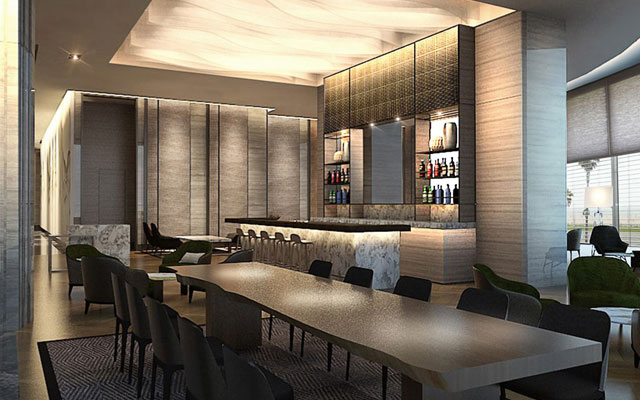
F&B options include Mediterranean restaurant Labbra Rosse; and Chuan Palace which offers Cantonese, Huai Yang and Sichuan cuisines; a lobby lounge, as well as a rooftop bar.

Aside from the 14 private dining rooms in Chuan Palace, event planners may also avail the 6,000m2 of function space across several indoor and outdoor venues.

Artyzen Sifang Nanjing is the sixth hotel to join Artyzen Hospitality Group’s operating portfolio. It has 10 hotels in its pipeline.

Move at a steady clip

0

The Tourism Promotions Board’s (TPB) push to reclaim the Philippines’ claim to fame in hosting meetings stands to benefit metro Manila which, despite its limitations and challenges, remains the hub for this specific segment of business events.

TPB’s deputy chief operating officer for marketing and promotions, Maricon Ebron, remarked: “We start small with top multinational corporations in the Philippines that have monthly, quarterly, semi-annual meetings. Then we will start bidding for their regional meetings”.

Ebron said that from there, they can also court international organisations such as the World Bank or the International Monetary Fund, that have not held their meetings in Manila for a long time.

Manila used to be the leading venue for business events in Asia but has since been taken over by other countries that have invested heavily in meetings hardware, marketing and promotions.

“We are up against competition that keeps on changing,” Ebron said.

Part of drawing more corporate meetings, Ebron pointed out, is asserting the advantages of the country including its English-speaking people, improved infrastructure, and a growing list of venues to choose from.

Admitting that the perks being given to business events are “basic” and “not enough”, Ebron said reviews are now underway while taking budget limitations into consideration.

TPB will also be changing its tack and have a more focused approach to cultivating source markets for business events. For instance, the shorthaul Asian market, which was earlier identified in the Philippines’ MICE roadmap crafted through a collaboration between the government and private sector.

Stakeholders believe that this is a sensible approach as Asia currently makes up 70 per cent of the Philippines’ total arrivals and Chinese, South Koreans, and Japanese are among its fastest growing markets.

Rajah Tours’ president Jojo Clemente opined that metro Manila will always be the capital of business events, as it is the country’s main city and has all the main facilities and infrastructure needed for business events.

But Clemente suggested that investment in newer and bigger facilities in Manila – to attract larger meetings and conferences of 3,000 pax or more – is necessary, as this is a growing trend.

“We still don’t have those kind of facilities and that is our disadvantage when compared to Malaysia, Thailand and Singapore,” he lamented.

Clemente also noted that while the metro’s hotel stock is rapidly increasing, it doesn’t have mega-sized hotels. As such, accommodation is still a problem when a big convention hits town.

“Once you have a big convention in metro Manila or 10 conventions happening at once, hotels are fully booked in the Makati and Manila Bay areas, (and sometimes) even up to Ortigas and Bonifacio Global City (BGC),” he pointed out.

Afro Asian World Events president’s Angel Ramos Bognot added that new developments in Manila, such as the opening of new cities in BGC, the Newport City near the airport, and Entertainment City in the Bay area with hotels and meeting facilities, have helped Manila’s business events sector evolve over the past few years.

Other reasons for the market’s evolution, he said, is that multinationals based in the Philippines are increasingly opting to meet in the metro instead of abroad as the local currency is fast depreciating in value against the US dollar.

Bognot added that the Department of Tourism (DoT) also needs to help investors in business events facilities by giving them advice and training on how to make their spaces more MICE-friendly.

“In some cases, the function rooms are designed more for weddings and social events, but they will be able to win international accounts if they are taught how to improve the technical aspects on sound and lighting for instance,” Bognot said.

And while Bognot supports TPB’s programmes for tapping into the meetings and conferences sectors, she noted that in the MICE roadmap, only exhibitions were mentioned while incentive trips were missing.

Other sources shared that perhaps the omission has something to do with the fact that the report was prepared by PACEOS (Philippine Association of Convention/Exhibition Suppliers). Or that the local association, Movement for Incentive Travel Executives (MITE), was not as active.

On the association meetings front, the Philippine Council of Associations and Association Executives (PCAAE), has an agreement with TPB to help bid for international events to be held in the Philippines, a natural flow given the associations’ international connections.

President and CEO Octavio Peralta said: “While PCAAE has not kept track of international events organised or won by its members as our initial role is one of a linker and facilitator, moving forward, PCAAE plans to proactively encourage its members to bid for international events, as well as monitor and record these events, including the number of participants and speakers from overseas.”

Song Saa Private Island welcomes new executive chef

0

The Song Saa Private Island in Cambodia’s has appointed Jeremy Simeon as executive chef.

Simeon brings with him 25 years of culinary experience, having worked primarily in New Zealand and Australia.

Trained in French techniques as well as macrobiotic cooking, Simeon brings with him a range of gastronomic expertise under his belt from his years at the Hapuku Lodge in Kaikoura, and Minaret Station in Wanaka, in addition to his experience across other luxury properties throughout New Zealand.

CapitaLand’s Ascott gets 70% stake in Indonesia’s Tauzia with US$26m investment

0
Yello Hotel Manggarai Jakarta

CapitaLand’s wholly owned serviced residence business unit, Ascott, is investing US$26 million for a 70 per cent stake in Green Oak Hotel Management, the holding company for Tauzia Hotel Management (Tauzia).

This is Ascott’s first major move into the lodging segment beyond its core serviced residence business and existing business in apartments for corporate lease.

With its investment in Tauzia, Ascott will get an instant boost of close to 20,000 units spanning 122 hotels across Indonesia, Malaysia and Vietnam, half of which are under development. This puts Ascott’s portfolio at more than 94,000 units globally, surpassing its 2020 target of 80,000 units.

Kevin Goh, Ascott’s CEO, said in a statement: “Tauzia’s fastest growing mid-tier business hotels will enable us to capture the ballooning middle-class segment in Asia, which will be home to two-thirds of the world’s middle-class by 2030.

“Prior to our investment in Tauzia, we have 10 business hotels with about 2,000 keys in our portfolio. On top of the units under Tauzia, we see potential to add another 20,000 keys over the next five years across South-east Asia. This will increase our hotel portfolio to over 41,000 keys, constituting about 25 per cent of our 160,000-unit target by 2023.”

The majority of Tauzia’s portfolio are located in Indonesia, with close to 60 per cent in key cities such as Jakarta, Bali, Bandung, Surabaya and Yogyakarta. About 70 per cent of Tauzia’s hotels cater to business and convention travellers, while 30 per cent are targeted at leisure travellers.

Tauzia has six in-house lifestyle brands, comprising the mid-tier Harris Hotels; Fox Harris Hotels; Yello Hotels; economy POP! Hotels; upscale boutique hotels Tauzia’s Préférence brand; and high-end business Harris Vertu Hotels.

In Indonesia, Ascott has 17 serviced residences and more than 3,000 units across Jakarta, Bali, Bandung, Karawang, Makassar, Surabaya and Yogyakarta.

Tourism Australia and China Southern Airlines combine forces

0
Tourism Australia and China Southern Airlines have deepened their partnership

Tourism Australia and China Southern Airlines have signed a three-year Memorandum of Understanding to develop the business event travel sector in China.

This is the first of such an agreement signed between the two organisations. Both organisations will work together to develop marketing campaigns and promotional activities targeting MICE agents and corporate buyers in China, which is now Australia largest source of visitors at 1.4 million (spending worth A$10.9 billion; US$7.8 billion) as of the end of May 2018.

Tourism Australia and China Southern Airlines have deepened their partnership

“Since 2011, China has been the most valuable inbound tourism market and continues to be highly significant to Australia. Our new partnership with China Southern Airlines will enable us to dedicate more efforts to tap into the Chinese business event sector which has great potential for Australia,” said John O’Sullivan, managing director of Tourism Australia.

There were 100,000 business events visitors to Australia from China in the year ending March 2018, an increase of 11 per cent, with a total spend of A$586 million, up 12 per cent on the same period in 2017.

“China Southern highly values Australia as a market offering boundless attractions to entice even the savviest of Chinese travellers which is why we continue to invest significantly in our Australia flights network and in promoting Australia as the must-go destination. The business event sector offers new opportunities for the airlines to expand its operations,” said Tan Wangeng, president & CEO of China Southern Airlines.

China Southern Airlines has about 50 direct flights to Australia weekly.

Shared mobility shifts Avis’ ride-sharing focus up a gear

0
An Avis rental car branch in Manhattan, New York

In an age of collaborative consumption, the booming sharing economy is spurring car rental giant Avis Budget Group to navigate creative ways to grow the size and share of the travel pie through the inking of partnerships with multiple peer-to-peer car sharing players.

The latest to sign a multi-year deal with Avis is ride-hailing company Lyft. Under this partnership, Avis will contribute thousands of vehicles from its fleet of 600,000 to the Lyft Express Drive programme in cities across North America.

An Avis rental car branch in Manhattan, New York

In Asia-Pacific, Avis has launched various strategic initiatives with popular local ride-sharing players, including China’s Didi Chuxing and Singapore’s Grab. Avis Philippines – together with Avis Global and Metro Davao Taxi Association – also developed Hirna, a taxi-hailing app that aims to improve taxi services in key cities outside Manila.

Angeline Tang, Avis’ regional director – leisure travel & partnerships, Asia, told TTGmice: “Ride-hailing companies are our allies, not competitors. The more opportunities consumers have for mobility that do not involve owning their own car, the more we benefit.

“As this decline in ownership continues, the future holds a greater need for more, and more flexible mobility options, which explains why the pie is getting bigger, not shrinking or just being divided up differently.”

On average, Avis reports mileage of some 724km over four rental days, or 177km per rental day. In comparison, on shorter-length rentals – lasting over one to two days – the mileage per day increases, described Tang. Such cases, for which ride-hailing are not economical, are where car rentals come in, she said.

Avis also works with Luxury Retreats, acquired by Airbnb in February 2017, as the official mobility partner of the full-service premium villa rental company.

Further, in 2013, Avis acquired car-sharing network Zipcar, which has more than one million members across the world. This movement is poised to give Avis “a foothold in the rapidly growing world of collaborative consumption”, explained Tang.

She added: “By working with ride-hailing players, we can address the growing demand for transportation in key markets, and further leverage our assets.”

APAC dominates world’s busiest air routes by passenger numbers

0
XXX

In a new study published by Routes, organiser of aviation network development conferences and events, the Asia-Pacific dominates the top 100 busiest routes by passenger numbers, accounting for more than 70% of the world’s total.

Asia-Pacific region will be the biggest driver of passenger demand in the future

Hong Kong – Taiwan Taoyuan is the busiest international route and features as the eighth most popular overall, with 6.7 million passengers flying the 802km journey in 2017. Hong Kong features in six of the top 10 international routes.

With more than 13.4 million people travelling on the shorthaul domestic service, the 450km journey from Seoul’s Gimpo Airport to the island of Jeju off the coast of the Korean Peninsula has once again claimed the title as the most in-demand air route in the world. The route has an average of 180 scheduled flights per day – one every eight minutes.

As well, a total of 13.5 million passengers flew between Seoul and Jeju in 2017, an increase of 9.4% on the previous 12 months when the route was also ranked as the busiest in the world. It carried a staggering 4.4 million more people than the second busiest, Melbourne – Sydney Kingsford Smith.

The study also found that the Thai domestic route of Bangkok Suvarnabhumi – Chiang Mai is the fastest-growing route in the top 100. Two-way passenger numbers grew by 36% year-on-year to almost 2.4 million.

Steven Small, brand director of Routes, said: “This research backs up forecasts that the Asia-Pacific region will be the biggest driver of passenger demand over the next 20 years.”

Banyan Tree opens first Dhawa hotel in China

0

Operated by Banyan Tree Hotels & Resorts, the first Dhawa hotel in China has opened in Jinshanling, a two-hour-drive from Beijing.

Dhawa Jinshanling’s 200 rooms and suites are equipped with modern amenities such as Wi-Fi, widescreen TV, floor heating, and infused with cultural elements.

Valley Rooms are inspired by traditional Chinese architecture and overlook mountainous scenery, while Courtyard Rooms are set around a large communal courtyard with outdoor seating for groups of family and friends. Heritage Rooms occupy classically styled buildings and come with semi-private courtyards or unblocked views of the Great Wall.

Amenities on-site include a lobby lounge, a snack and drink area equipped with a launderette, an all-day restaurant with three private dining rooms, a spa with seven treatment rooms, a fitness centre and a 400m2 ballroom.

A range of activities for those wanting to learn more about the Ming and Qing dynasties can also be arranged. For a more hands-on experience, guests can sign up for various craft workshops or try noodle and jam making classes.

TTGmice scoops PATA Gold Award 2018

0

At the PATA Travel Mart 2018 in Langkawi, The Technology Experience article by Karen Yue was recognised with the PATA Gold Award for Travel Journalism – Industry Business Article award.

This marked another achievement for a TTG publication at the annual awards of PATA, following TTG Asia Luxury’s win two years ago.

Celebrating the award in Langkawi last week were TTG Asia Media managing director Darren Ng and publisher Pierre Quek, accompanied by team members and PATA’s Mario Hardy and Macao Government Tourism Office’s Maria Helena de Senna Fernandes

First Radisson resort makes debut in Vietnam

0

Radisson Blu Resort Phu Quoc, has opened its doors on Vietnam’s Bai Dai beach, as part of an integrated resort.

Standing on Phu Quoc’s north-west coast, the property offers 514 villas, rooms and suites. Rooms start from 45m2 and goes up to the villas at 635m2.

An immense tropical lagoon pool anchors the Radisson Blu Resort Phu Quoc

The villas, along with the executive rooms, executive suites, one bedroom suites and two bedroom suite, offer access to the ALUMI executive lounge.

Aside from the lounge, other F&B establishments on-site include all-day dining restaurant Avenue which can seat 300 indoors and 100 on the poolside terrace. There is also a poolside bar and a lobby lounge.

Executive Suite

Guests will also have direct access to an adjacent complex, where facilities include a 26 treatment-room spa and wellness centre, gym, water park, convention centre, shopping centre, restaurants, theatre and Vietnam’s first casino to permit domestic entry. An amusement park, 18-hole golf course and safari conservation park are also on the resort’s doorstep.

The Radisson Blu Resort Phu Quoc is located 30km from Phu Quoc International Airport.

Reviews

The Ritz-Carlton, Bangkok

The newly-opened Ritz-Carlton, Bangkok anchors the One Bangkok development with cosmopolitan elegance. Featuring the city's largest ballroom and a spectacular new penthouse suite, it delivers exceptional hardware and deeply authentic, soulful service for business and leisure travellers alike

Mama Shelter Zurich

Behind the imposing, Brutalist concrete that defines Zurich’s Oerlikon district lies a surprising secret. While its exterior honours the neighbourhood’s industrial roots, stepping inside Mama Shelter reveals a vibrant, neon-soaked world that is a far cry from its rigid shell

Hyatt Regency Kuala Lumpur at KL Midtown

A polished urban retreat designed for business travellers, Hyatt Regency Kuala Lumpur at KL Midtown combines thoughtful design, seamless service, and exceptional facilities.