Asia/Singapore Saturday, 3rd January 2026
Page 867

A performance through the seasons

0

We-love
A new night musical featuring traditional and modern Japanese culture has opened in the central Tokyo district of Nihonbashi. Sakura: Japan in the Box blends performances of classical dance and Japanese instruments with pop music, martial arts, acrobatics and animation to tell the story of a high school girl’s journey through Japan’s four seasons.

Host theatre company Meijiza Co. created the 70-minute performance specifically to attract overseas tourists, with support from the Arts Council Tokyo.

Hiroya Kimikawa, spokesperson of Meijiza, said the company is working with travel agents abroad to promote the show and develop packages, including those for corporate groups.

Since the musical debuted on September 7, the largest corporate group the theatre has welcomed is a 180-pax group from China.

Kimikawa explained that Meiji-za Theatre has 140 years of hosting traditional performances such as kabuki, the classical Japanese dance and drama, and Sakura: Japan in the Box is a selection of “the best parts of that heritage (with the addition of) pop culture, creating something that overseas tourists would find easy to understand and enjoy.”

Using mostly movement and music, rather than dialogue, to drive the narrative, the show has an app that displays the song lyrics in English, Chinese or Korean.

Sakura: Japan in the Box is scheduled to perform at Meiji-za Theatre most nights until 2020 and costs 6,000 yen (US$58.60) per person.

Sanya steps up MICE chase: Sanya

0

Sanya-City
Panoramic view of Sanya city and Dadonghai Bay

A slew of MICE-ready hotels and a possible subvention programme will move the Chinese destination up the ranks. By Caroline Boey

With Sanya’s 32 new hotels in Haitang Bay – of which 12 have opened and all offering MICE choices galore – and the Sanya Tourism Development Commission’s (STDC) submission of a subvention proposal which is expected to be approved by this year, the destination is making all the right moves to become China’s next hot MICE destination at home and abroad.

Apart from kicking off the first International Island Sanya Forum, focusing on MICE and co-organised by HIMICE Convention and Exhibition Co and MICE China in September, STDC has also become ICCA’s 47th member in China. Further, STDC has stepped up private sector partnership by establishing an eight-member MICE Advisory Board – comprising China’s leading DMCs, consulting companies and the media – as well as hosting the first Sanya International MICE Sourcing Fair. 

According to Wang Feifei, deputy director, STDC, a task force has also been initiated within Sanya Tourism Association to promote MICE and professionalise the industry.

With new regional and international flights operating to Sanya from Frankfurt, Ho Chi Minh City and Kaohsiung in the first half of this year, and the 14 flights that commenced since the beginning of last year from Japan, South Korea, Russia, Thailand, Vietnam, Hong Kong, Macau and Taiwan, Wang said STDC’s priority would be to target those markets.

It harnessed the power of six major social media platforms such as  Facebook, Twitter, Instagram, YouTube, Pinterest to spread its destination marketing messages, and expanded its digital footprint with new websites in Japanese, Korean and Russian.

On a broader scale, Sanya has leveraged its position on the Maritime Silk Road to actively implementing the One Belt, One Road strategy to develop economic and international cooperation in South Asia, West Asia, Central Asia, Central and Eastern Europe, and Russia.

At home, Sanya wants to target the whole of China for MICE.

Other MICE initiatives include the beautification of the destination, establishment of policies that encourage sustainable development and the introduction of the Tourism Police last year.

The inaugural 2016 International Island Sanya Forum attracted more than 300 delegates, including international MICE media and 120 buyers from Beijing, Shanghai, Guangzhou and Shenzhen, while more than 200 suppliers attended the tabletop MICE Sourcing Fair.

Chen Guojiang, executive director, HIMICE, an ICCA member, said three more editions of the forum and sourcing fair have been confirmed.

HIMICE, Hainan’s leading DMC, chalked up US$35 million in sales last year, an increase of about 30 per cent. A spokesman said safety in Sanya, its good natural environment, weather and MICE infrastructure were strong factors in its favour.

“HIMICE will be handling a 3,500-delegate event next year for a US pharmaceutical company, GE already organises many events in Sanya annually, and Sanya is the regional choice among island destinations,” he added.

HIMICE, which also organises sports events, was also picked to deliver a 2,000-pax Mercedes Benz event with teambuilding in October.

As an international MICE destination, Kevin Chen, operation events manager of regional DMC EXO Events, said Sanya could do with more airlift and staff who are better trained, able to speak English and understand the needs of international travellers. Chen’s main markets are the US and Europe.

For Christophe Hazebrouck, general manager, Sofitel Sanya Leeman Resort and area general manager, Hainan, Sofitel Luxury Hotels, “direct flights from Asia, a few weekly flights from key cities in Europe and visa-free access for all countries or visa-on-arrival” are on his wish list.

“While Sanya is under pressure to push its aviation development, there is also the security issue with it being a military base and where the flight corridor is under military control,” Hazebrouck remarked.

Hoss Vetry, general manager, Ritz-Carlton Sanya, Yalong Bay, commented that the challenges and opportunities in Sanya’s MICE development in the last decade are similar to MICE frontrunner Shanghai.

The local government has responded very quickly to feedback on airport infrastructure and capacity, Vetry said, adding: “That the focus in Sanya is on more international busness and is now competing with destinations like Taiwan and Thailand, are signs of the industry maturing.”

For the first time, Sanya made it to ICCA’s 2014/2015 Asia-Pacific city rankings, marking a major milestone.

With the massive development in Haitang Bay – where AccorHotels has planted its first Sofitel beach resort, the Sofitel Sanya Leeman Resort, and where CDF Mall, said to be the world’s largest duty-free store, have opened – Sanya has new products to offer domestic and international MICE groups.

At the MICE forum, Noor Ahmad Hamid, regional director, Asia-Pacific, ICCA, advocated the formation of a CVB to help Sanya conduct research and bid for association events. “Competition is fierce among the first- and second-tier cities in China and associations will be critical because their meetings rotate.

“Sanya can work together with destinations with the same appeal like Jeju, Bali, the Gold Coast and Pattaya, start an alliance of coastal destinations and tap on the others,” he suggested.

Industry players agree Sanya needs to step up its marketing and promotions, stand on its own right and not be branded the “Oriental Hawaii” or the “St Tropez of China”.

Xu Feng, vice president, North Star Events Institute, which handles a number of medical groups and corporate meetings, said the safety and low-risk aspects of Sanya has been gaining attention and should be further highlighted.

Sanya received 18.4 million MICE delegates in 1Q2016 and 16.6 million in 2Q2016. Hotel occupancy rate in 1H2016 was 64.4 per cent, up 0.67 per cent year-on-year.

With STDC in the driver’s seat, increased involvement of the private sector, better connectivity, more attractive room rates and an overall improved product, Sanya is well positioned to reach its MICE ambitions.

Chinese-house
A stately traditional Chinese house can be found in modern
Sanya city

{Developments to Watch}

1Sanya has adopted an aggressive strategy to launch new international air routes targeting destinations within a four-hour, eight-hour and 12-hour flight radius. The priority is to further improve connectivity to Singapore, Malaysia and Thailand in South-east Asia, and Russia. In 1H2016, Sanya Phoenix International Airport welcomed 8.8 million arrivals, a year-on-year increase of 3.9 per cent.

2The Sanya Tourism Development Commission has submitted a proposal to introduce a subvention policy and until this is formally approved, Fan Mu, the commission’s director, said applications for support can be considered on a case-by-case basis.

3Sanya Tourism Development Commission wants the private sector task force to look at strengthening information exchange among members, collect MICE product information, conduct analysis and evaluation, launch joint MICE marketing, organise member participation in various promotional activities, develop MICE tourism standards and practices, promote service quality, develop MICE professionals and conduct MICE business training.

{Talking numbers}

51.7
In millions, the number of MICE delegates who attended national and international conferences and meetings, with between 50 and 2,000 people each, in Sanya last year

3,002
The number of events held in Sanya last year that were shorter than three days in duration, while 2,763 events had lasted longer than three days

200,000
In square metres, the total meeting space available in Sanya, where there are a number of hotels offering column-free ballrooms measuring 1,500m2.

Seven-star Beauty Crown Grand-Tree Hotel Complex

0

7StarBeautyheading7-StartBeauty
Picture by Caroline Boey

Officially opened in January 2016, the property is a massive complex comprising a crown-shaped theatre and several tree-shaped hotel towers.

Concept Run on a club basis, a meeting planner can join as a member for RMB5,000 (US$750) and can book meeting spaces at a 30 per cent discount and rooms starting from RMB98, buffet breakfast for RMB28, buffet lunch for RMB68 and buffet dinner for RMB88.

The one-bedroom suite showcased during the site inspection was spacious. The European décor is reminiscent of the French Riviera and the large balcony offers 180°-views of the surroundings. The suite can be used for small gatherings. About 1,500 of a total 6,668 rooms have opened and a soon-to-be-completed tower will feature “museum-themed” rooms.

MICE application The 10,000m2 standalone Beauty Crown Grand Theater specially built in 2003 to host the Miss World paegent is one of Sanya’s largest spaces.

The International Convention Center, offering 6,600m2 of space in a separate building, comprises the Moringa Grand Ballroom for 1,000 people classroom style, and the Beauty Crown Ballroom for 1,500 people classroom style.

The Moringa Conference Center offers five breakout spaces and the Miracle Conference Center has 17 breakout spaces.

Inspired by the Palace of Versailles in France, Beauty Crown’s Hall of Mirrors leading to the ballrooms and meeting rooms is longer, wider, higher and equally grand.

On site are 48 F&B outlets, 11 cinemas, including an IMAX Cinema, a Spa Center, a soon-to-open International Luxuries Flagship Store, the Beauty Crown Seventh-star Yacht Club and Beauty Crown Boeing 737-800 Idly Club.

The complex has its own bar street.

7StarBeauty-Contact

Sofitel Sanya Leeman Resort

0

SofitelSanyaheadingSofitel-Sanya-Leeman-Resort
Launched in January 2016, this is AccorHotels’ first Sofitel resort hotel to open in Greater China. Located at Haitang Bay, the Sofitel Sanya Leeman Resort is about 10 minutes by road from the massive duty-free CDF Mall.

Rooms The 550m2 two-bedroom Imperial Sky Villa, with a private swimming pool, showcased during a site inspection, was modern and tastefully appointed. Blue is the dominant colour, with white and grey furniture and furnishings, splashes of beige and pops of yellow coming together to create a sense of warmth and elegance. Overlooking the spacious lawn, helicopter parking apron and villas close to the beachfront, the room offers an uninterrupted panoramic view of sea. About 85 per cent of rooms in the hotel are sea-facing.

MICE facilities The hotel features 11 meeting rooms ranging from its 1,100m2 Ballroom to smaller spaces of between 17m2 and 150m2 in size. Several of these offer natural light and can be configured to cater to all kinds of events. The sense of space indoors, where corridors are wider than normal and ceilings lofty, create an air of lightness and not being cooped up.

In addition, the hotel offers a 5,000m2 lawn that be used partially or in its entirety for all sorts of gatherings.

Other facilities The hotel, equipped with a helipad, offers helicopter rides around the bay and horse riding on the beach. A Thai restaurant will open soon to complement the Hainan Pearl Chinese restaurant and International Cuisine restaurant, the Lobby Lounge and Eau Bar pool bar.

SofitelSanyaRoomcount

Adelaide Convention Centre’s East Building to open with advanced technologies and functionality

0

Adelaide Convention Centre’s (ACC) East Building, set to open in 2017, will feature the world’s largest seating drums and a hinged seating stored in the roof space.

ACC’s chief executive Alec Gilbert said the new East Building is in the final stage of creating Australia’s most flexible convention centre.

“New technologies are the hallmark of the A$400 (US$307) million expansion which will set a new benchmark in convention centre design and functionality,” he added.

The two 18-metre revolving drums, which can accommodate seating for 320 people each, is able to rotate 180 degrees within minutes.

The East Building will also feature a new auditorium with hinged seating stored in the roof space, which can be easily lowered to convert an exhibition space to a lecture-theatre style venue.

The drums and hinged seating will work in tandem with fully operable sliding walls, which can be put into place to enclose conference space, or be retracted to open up the Plenary to full capacity.

The Plenary itself allows for numerous possible configurations to suit the requirements of each event, with options for a tiered or flat floor.

As such, the East Building will be able to be subdivided and configured within minutes regardless of whether it is needed as a pre-function space, ballroom, exhibition or plenary.

Mobile technology – more than just a carry on

0

Mobile technology has undergone several disruptions since its usage became widespread, quickly rendering what was once ground-breaking as common-place today. Most do not realise the breakneck pace at which mobile technology is changing until they contemplate how it has transformed the way we work, play and live. For instance, being able to shoot and watch videos on the go, which can be easily taken for granted today, is in fact a remarkable achievement, given mobile data was only introduced less than two decades ago.

The extensive reach of mobile technology in all aspects of our lives has blurred the distinction between work and play, allowing employees to work beyond the physical workplace as well as to better integrate their personal life with their work life. A survey by Global Business Travel Association (GBTA) has shown that business travellers are increasingly seeking greater control of their own travel with the aid of mobile technology. Ranging from wearables to mobile wallets, business travellers are beginning to embrace the flexibility and choice afforded by mobile technology.

Given the plethora of options available in the market place, business travellers may not fully realise how they can best leverage on this technology to better manage their business travel needs. As such, it’s worth brushing up on the latest trends in order to elevate the overall business travel experience.

App-solutely up-to-date

Decision making executives rely on the most updated information on their fingertips in order to make decisions as accurately as possible. This does not change when they travel for work. Travel-centric apps that are able to aggregate vital information such as security alerts, weather, currency rates and booking details gives business travellers the benefit of having information aggregated on one platform. This will enable business travellers to be more productive as they are able to react immediately to any unforeseen circumstances.

Staying up-to-date also contributes to the employers’ duty of care to their employees as it plays a part in ensuring their safety. Notably, travel-centric apps allow employers to monitor their employees’ location and send push notifications in an emergency or by allowing travellers to check-in with their company upon arrival at a destination.

Chatting up business travel

Looking ahead, the mobile experience is set to get more intimate with the introduction of chatbots, or computer programs designed to simulate conversation and address queries instantly. Similar to apps, chatbots are able to assist with all aspects of travel – itineraries, gate changes, driving directions, weather, restaurant recommendations and reservations.

However, chatbots go a step further as they pick up on cues, such as travel patterns and preferences and update travellers accordingly. For example, if it is a traveller’s first time in a particular city, he will receive more information and recommendations than if it was a standing monthly trip. Chatbots are also flexible enough to communicate on common messaging platforms, including Facebook messenger or SMS.

Employers can also stand to gain from this feature by customising the rules and settings, to be in line with a company’s travel guidelines. An instance would be the chatbot sending a reminder to use taxis over other transportation options if the company’s travel policy so dictates.

This is line with the flexibility and intuitiveness that business travellers seek when considering how travel management can add value to their travel experience. Ultimately, business travellers should adopt a holistic travel management solution which ensures there is always the expertise on hand, be it through chatbots or through the human touch.

Lighten your e-wallet

Another common grouse faced by business travellers is keeping track of expenses made during a work trip. In the push for greater flexibility in travel arrangements, business travellers may desire to take over the reins of their corporate spending. However, in doing so, business travellers are then expected to take on the arduous task of tracking all expenses. For this, employers can overcome the issue by embracing mobile expense filing. The process can be as simple as allowing business travellers to snap a photo of their receipt and instantly filing it online as a means of recording their expenses.

Businesses can also consider the use of mobile wallets in a corporate setting. Mobile wallets allow credit or debit card information to be stored digitally on mobile devices, giving rise to the possibility of allowing a business traveller to pay for expenses with a corporate card that has been stored digitally in a company-issued mobile phone. This eliminates the hassle of having to deal with foreign currency while enforcing the company’s security policy.

Wearing your heart on your wrist

While mobile technology may not feature prominently in the work lives of some consumers, most are definitely used to a certain degree of mobile technology in their personal lives. As such, they expect no less but to effortlessly transit from their personal lives to work and vice-versa. For instance, the smart watch allows employees to receive emails instantly while continuing to track vital health statistics such as sleep and activity levels.

The smart watch is an example of wearable technology or wearables, which are typically synchronised to other mobile devices, giving you access to your emails at any time and any place. A smart watch can also help the frequent-flying business traveller shorten travel times as he pulls his boarding pass information from the watch instead of fumbling for the hard copy.

Simply put, wearables are designed to make you as mobile as possible.

Mobile is not a device, it’s a mindset

It is without a doubt that many have jumped onto the mobile bandwagon, relishing the convenience of a mobile-first experience. However, what is lacking is an accompanying shift to a mobile-first mind set by employers.

This calls for creating comprehensive mobile travel policies that truly place the business traveller and mobile technology front and centre, instead of creating rules on a case-by-case basis. In doing so, companies can continue to remain secure while elevating the business travel experience for their employees.

Bertrand Saillet is the general manager for FCM Travel Solutions Singapore, responsible for the South-east Asia region. As a veteran in the travel and technology industry, Bertrand brings with him a wealth of extensive knowledge and experience. Bertrand is tasked to take FCM to the 3.0 travel management sphere – making sure the company delivers amazing travel experience and meeting the needs of all travellers across all generations.

This article is written by Bertrand Saillet

Defence against ad agencies coming into events space lies in accreditation for incentive, conference agencies: ICESAP

0

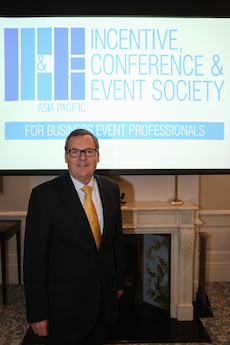
Changing client spend on marketing channels – specifically a shift of more money to below-the-line options from above-the-line ones – will drive the need for accreditation among incentive and conference agencies, opined Nigel Gaunt, president of the Incentive Conference & Event Society Asia Pacific (ICESAP).

In an interview with TTGmice e-Weekly, Melbourne-based Gaunt explained that more businesses are realising that below-the-line options, which range from digital marketing to events, are a “more accountable” way of spending their marketing dollars.


Nigel Gaunt

“You could either spend a hefty amount of money on a newspaper advertisement for your latest product, or you could motivate sales of your latest product through an incentive programme for your dealers. But if your dealers failed to meet targets, the money would not get spent. Advertisements and events both achieve the same objectives, but the latter offer greater accountability,” Gaunt said.

While the change in preference bodes well for incentive and conference agencies, Gaunt warned that global advertising agencies are already starting to fight back, and some event specialists are not ready to defend themselves.

Gaunt said: “Many advertising agencies are hiring events staff who support clients in below-the-line activities. This encroaches into the business events space. The risk to incentive and conference agencies, particularly the small to mid-sized ones, is that advertising agencies are a lot more savvy in promoting themselves to clients and can swing business their way.”

The solution, Gaunt said, is for incentive and conference agencies to be upskilled and accredited.

ICESAP’s Agency Accreditation Program, activating in January 2017 along with its online training module in partnership with globally-recognised William Angliss Institute, focuses on three areas: financial probity check; competency check which assesses if the management and staff have the appropriate expertise to deliver the type of business events they claim to specialise in; and code of conduct.

And should incentive and conference agencies fall short on competencies, ICESAP will direct them to a suitable training course.

Gaunt said pricing for the courses is still being determined, and they will be “fairly priced” and “accessible to all”.

ICESAP’s training programme will debut with introductory courses on incentive and conference management. These will be followed by intermediate courses come early-2018, and degree courses in mid-2019.

Gaunt also revealed intentions to secure a hotel partner in Asia in the near future to run classroom sessions as part of the training programme.

Meanwhile, ICESAP will host its annual conference at The St Regis Singapore from November 30 to December 2, 2016. Visit conference.icesap.org to register.

Going for conference gold: Pyeongchang

0

S-Korea-Page-24
Clockwise from above: Yang Tae Ranch; view of Gangwon’s mountain range; Alpensia ski jump

The 2018 Winter Olympics is putting both Pyeongchang and its province, Gangwon, on the world map for business events. By Paige Lee Pei Qi

Even as Pyeongchang city continues to get ready to host the 2018 Winter Olympics, the city in the Gangwon province already has plans underway to establish itself as a convention city once the games come to a close. 

Songjae Lim, manager of the international media relations team, PyeongChang Organizing
Committee for the 2018 Olympic and Paralympic Winter Games, said: “The games are giving Gangwon the opportunity to acquire and upgrade MICE-related hardware and raise its profile as a MICE city.”

According to Gangwon Convention & Visitors Bureau (GWCVB) assistant marketing team manager, Ji-Sun Jung, while Gangwon province has been actively pursuing MICE clients since the establishment of the CVB in 2013, the province has been attracting largely incentive groups and small meeting groups.

Jung said: “With the games, we are able to increase and upgrade the hotel facilities and also expand our MICE capacity in Pyeongchang by converting some venues into convention centres after the games end.”

Currently, Yongpyeong Resort in Pyeongchang offers the largest venue in the province for corporate gatherings with 2,446 rooms, and the Yongpyeong Dome which can accommodate 3,000 people in their hall.

The Alpensia Convention Centre is also a popular option, with its ballroom having a maximum capacity of 2,000 pax in theatre setting. 

However Jung said it has been “very challenging” to meet requests from large companies who previously wanted to hold conferences for over 3,000 delegates. In this regard, she highlighted that the CVB has plans to convert the indoor sporting venues into a convention centre for 5,000 delegates after the Winter Olympic games.

“It will help to increase the appeal of the city as a serious city for business instead of a venue only for teambuilding and incentive activities,” she said and added that at least 70 per cent of MICE activities come from the incentive sector.

While it will take at least three years to remodel the infrastructure into a convention centre, Jung said the city is already benefiting from being in the international spotlight.

With Pyeongchang becoming the first Asian city other than Japan to stage the 2018 Winter Olympics, Jung said: “We are able to benefit tremendously with all the publicity the city is getting internationally, which boosts the overall appeal of Gangwon. We already see (more interest) to hold international events in our city.”

Jung said just two years ago, almost all events held in the province are domestic ones. However with growing awareness about the destination, international clients now account for almost 40 per cent.

The latest statistics from KTO show that Gangwon hosted 467 MICE events in 2014, bringing a total of 35,705 people to the region.

As a testimony to its growing dominance, Jung pointed out that earlier in 2015, Gangwon won the unprecedented bid to host Pan Asia Hash 2017, an international running event expected to attract about 50,000 participants.

According to the CVB, they intend to bid for international events related to nature and the environment, which align well with the region’s branding on wellness.

Apart from the fresh infrastructure, accessibility to Pyeongchang will also be improved thanks to the Winter Olympics. Pyeongchang, which sits on the northern-most end of the country, is accessible by a two-hour car ride from Incheon International Airport.

With the coming of the games, construction is underway for a new railway which will operate at a maximum speed of 250km per hour. It will connect Alpensia Resort, the venue of the Olympics, with the capital of Seoul in under an hour.

Lim said: “In the past, some may find that travelling to the city is a bit far. The high speed train will remove this problem.”

Also, Gangwon itself has both an international gateway – Yangyang International Airport, which connects with 10 cities in China – and a domestic airport, Wonjo Airport, which offers flights to Jeju.

{Developments to Watch}

1Exclusive to business visitors attending large-scale congresses and events in the South Korea capital, the Seoul MICE Card, is given to event delegates attending qualifying business events in Seoul. These rechargeable and reusable cards come with a 5,000 won (US$4) credit and can be used on public transport including the airport express as well as with selected merchants. This card forms part of the Seoul Metropolitan Government’s meetings Master Plan, aimed at expanding and upgrading the city’s business events services and infrastructure in response to increasing demand for Seoul as a MICE destination.

2

The South Korean government has approved the development of a huge new integrated resort complex at Seoul’s Incheon International Airport, which will cover 3.2km adjacent to the country’s main international gateway.

The integrated hotel-casino resort, which is expected to be completed by 2019, will feature world-class entertainment and hospitality attractions, as well as the only casino-resort anywhere connected to a fixed-base private aviation operation.

3

Mokpo City (Jeollanam-do), located at the southwestern part of Korea, is sprucing up to develop itself as a MICE destination. To attract more local and international associations to hold their MICE events in Mokpo, the city is starting a new tourism project which includes the creation and development of cable cars, marine rail bike, monorail, auto-camping sites, and other tourism infrastructures. It is also planning to educate tourism human-resources in providing MICE services.
Mokpo-City

{Talking numbers}

6000
The number of Aurance Group employees who arrived in Incheon on an incentive trip this year, participating in activities such as a massive beer and fried chicken party. This gives South Korea its largest single tour group

267
The number of international association meetings held in South Korea in 2015, up from 222 in 2014, placing the nation in 13th place in the global rankings of host countries by ICCA

3,000
The number of international delegates who attended the 17th edition of the Korea MICE Expo (KME), regarded as the nation’s top business events tradeshow, at Songdo ConvensiA in Incheon this year

Seamarq Hotel Gangneung

0

SeamarqHotelheadingSeamarqHOTEL
Facing the vast East Sea and located at Gyongpodae, Gangneung, the Seamarq Hotel, designed by world-renowned architect Richard Meier, is positioned as a “luxtige hotel” (luxury + prestige) hotel featuring superior facilities. The hotel has been newly rebuilt as part of the region’s revitalisation ahead of the 2018 Winter Olympics in the neighboring city of Pyeongchang.

Rooms I was treated to a panoramic view across the open sea from my balcony, which was quite a sight to behold, what more with the sun emerging gently from the clouds as I awoke in the morning.

The thoughtful, original modern architecture executed by Richard Meier is unmistakably luxurious. I relished in the abundance of natural light, which I understand to be a standout feature of the hotel’s interior spaces. Think floor-to-ceiling windows which allow daylight to stream in, while a subtle but sophisticated material palette of polished stone and timber veneer reflects the light further. Coupled with the vast spaces in the room, I honestly thought I might have caught a tiny glimpse of heaven.

My room was also fitted with a flat-screen TV with cable channels, and they all come with a private bathroom with a hot tub and bath, with bath robes and slippers provided.

MICE facilities As for meeting facilities, the grand ballroom, which can be divided into two, can accommodate 500 guests in theatre setting. In addition, there are two smaller ballrooms which can sit 288 and 126 delegates respectively in theatre setting. Complimentary Wi-Fi is provided throughout the property as well.

Other facilities One of the signature spaces there include the infinity-edge pool that provides panoramic views of the ocean. There are also two restaurants, a full-service spa, and an indoor pool in this smoke-free hotel.

Seamarq-room-count

K-Style Hub

0

K-Style
Kstyleheading

International delegates to Korea can now explore the best of the nation’s culture all in one place at the new K-Style Hub, an education and experience centre in Seoul.

Designed to be the city’s main tourism promotion facility for the nation, the centre opened in April and offers a range of hands-on programmes – especially food-related – ideal for visiting incentive groups and congress participants.

Concept Located within walking distance to the popular Myeongdong district, the hub is strategically located for business travellers who may be tight on time, but interested in getting a taste of Korean culture, as well as for event planners keen to explore activities for their delegates.

MICE application The Korean Culinary Centre in the hub invites overseas delegates to sample traditional Korean fare, and also to learn how to make it themselves. The activity for up to 40 participants at any one time can be customised from 100 minutes to two hours, depending on the type of food the visitors prepare.

The centre also features a food exhibition hall, equipped with a display wall that shows the development of seasonal customs and foods. Other areas of the hub showcase interactive exhibits on themes such as K-Pop and visitors can even try on the Hanbok, the Korean traditional costume.

Service This extensive hub does well in allowing time-strapped business events delegates to get a comprehensive 101 on the nation’s culture.

Contact-1

Reviews

Hyatt Regency Kuala Lumpur at KL Midtown

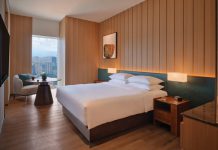
A polished urban retreat designed for business travellers, Hyatt Regency Kuala Lumpur at KL Midtown combines thoughtful design, seamless service, and exceptional facilities.

A versatile powerhouse

Arena @ Expo, a multipurpose concert hall at the Singapore Expo is a flexible space for high octane concerts and lifestyle events.

Amari Bangkok

The five-star property excels in backing its expansive facilities with seamless service and personalised attention, setting the benchmark for luxury in Bangkok.