American Express Global Business Travel (GBT) has inked an agreement to acquire Banks Sadler, an international event management agency headquartered in London, and bring it under the American Express Meetings & Events division.
The transaction is expected to be completed in 3Q2017.
Issa Jouaneh, senior vice president and general manager of American Express Meetings & Events, said the acquisition is strategic for his organisation and a positive development for Banks Sadler and its customers.
Jouaneh said: “Banks Sadler is one of the most respected M&E brands. It brings an extensive range of services and solutions with an independent agency mindset that we will maintain and grow. Combined with American Express Meetings & Events leading capabilities and global footprint, our clients will benefit from an expanded value proposition.”
Banks Sadler was founded in 1982 in London and has offices in York, Windsor, Paris, Dusseldorf and New York. It has approximately 250 employees. Under the leadership of Leigh Jagger, the company has expanded its service and portfolio to multiple marketplaces.
Jagger said: “Though customers will not notice any change, the business is now supported by one of the largest travel and meetings management companies in the world. We will, therefore, continue to offer best-in-class, event planning and management while benefitting from American Express Meetings & Events’ supplier relationships, global scale and expertise of strategic meetings management programmes.”
Steven Curts, American Express GBT’s chief strategy officer, said: “In transient business travel and meetings and events, our focus is always on improving customer experience, product offering and global footprint through strategic acquisitions, partnerships and organic growth. The purchase of Banks Sadler is another important step on our strategic journey.”
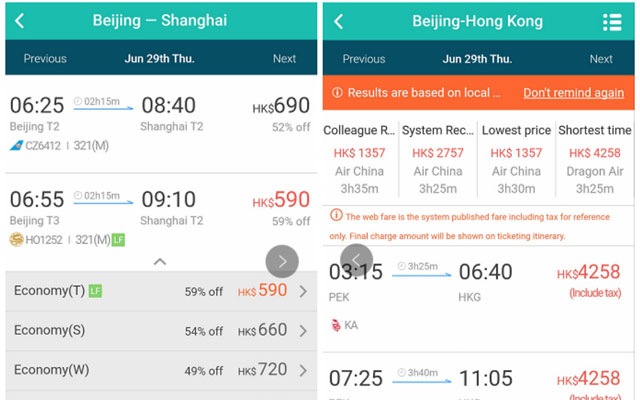
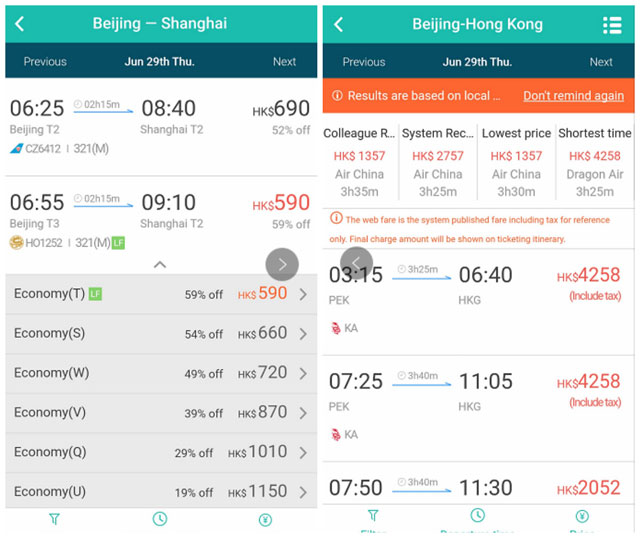
TravelSky has launched Hong Kong’s first business travel management mobile app aimed at providing business-ready travel service based on corporate travel policies for cross-border corporate travel demand.
The app offers three languages – English, Traditional Chinese and Simplified Chinese – and boasts features such as customised flight bookings for each corporate client, trip approvals, flight data, and flight statuses.
CozyGo
It allows the traveller the automony to manage his/her own bookings and approval processes with just a few clicks, without the need to spend extra time on internal communications for approval. The app also stores frequent flyer information to provide convenience for repeated bookings.
Peng Bo, general manager of TravelSky’s global distribution system unit, said: “ CozyGo is our flagship product for travel management companies in China, which achieved 120,000 downloads in 2016. We aim to capitalise on Hong Kong’s high-potential market to capture market share in the corporate travel sector here.”
Hong Kong’s large SME sector in particular is known for frequent cross-border business travel. According to TravelSky, bookings with Chinese commercial airlines increased by almost 12 per cent from around 449 million in 2015 to around 502 million in 2016. In the first two months in 2017, domestic flight bookings with Chinese commercial airlines recorded a YOY increase of nearly 14 per cent, to around 75 million.
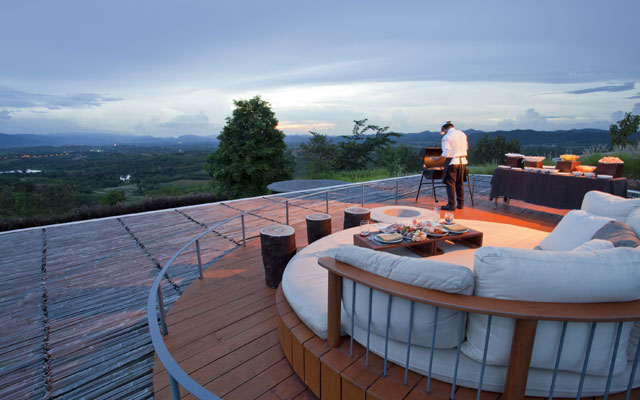
Sala Khaoyai, Sala Hospitality’s boutique resort, is offering a summer buyout promotion.
The property, located three hours from Bangkok, has a total of seven rooms and pool villas. Guests will have full access to the grounds, and obtain full support from the on-site staff team.
Sala Khaoyai
Amenities on the property include a rooftop terrace, an infinity fool, and the Hilltop Restaurant and Bar. Meanwhile, the surrounding region can be explored via winery tours, golfing or hiking through the national park.
Prices start from THB70,000++ ($2,060) for the entire property.
What do you love most about your area of specialisation in this hospitality industry?
What I love most about my area of specialisation is that I get to enjoy working in a dynamic environment, and one that is full of creative teamwork. In boutique hotels, we have more flexibility, so we can go the extra mile and exceed guests’ expectations.
What’s the first thing on your plate as the new corporate director of sales and marketing?
There are two things on my to-do list. First, I must ensure each market segment has a good balance of market mix distribution. Second, I must position Shinta Mani as a luxury boutique hotel brand in the market.
Shinta Mani has a strong commitment to responsible tourism. How do you intend to contribute towards this personally?
I personally seek to reduce the use of plastics in my daily life. Every year, I also get involved in charity programmes that support an orphanage.
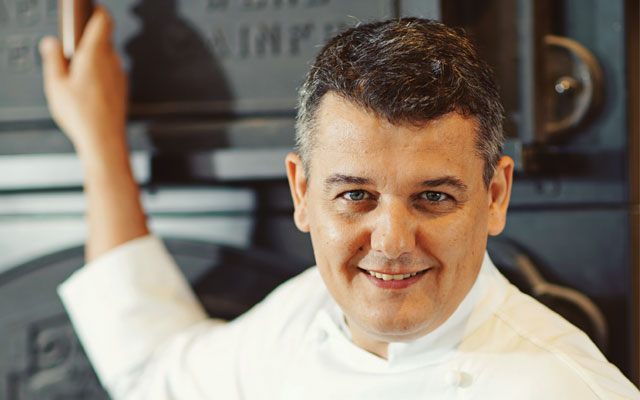
Sofitel Singapore City Centre has appointed Jean-Charles Dubois as its executive chef. The French-born culinarian has earned several accolades, including the title of Chevalier de l’Ordre du Merite Agricole from the French Ministry of Agriculture for promoting French cuisine to the world.
Dorsett Hospitality International has promoted David Wong to general manager – Silka Hotels, Malaysia, who now takes charge of three Silka hotels. He was last hotel manager of Silka Cheras Kuala Lumpur and has been with the group since 2012.
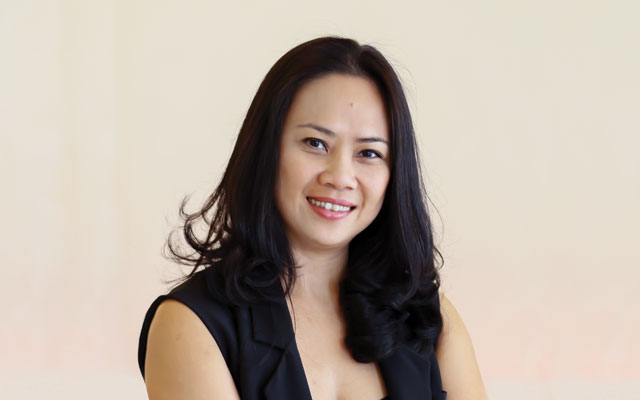
Vasikan Karnchananan is now Absolute Hotel Services Group’s director of sales for Asia. She has over 18 years of hospitality experience. Prior to joining Absolute, she was cluster director of sales for Park Hyatt Siem Reap and Hyatt Regency Phuket Resort.
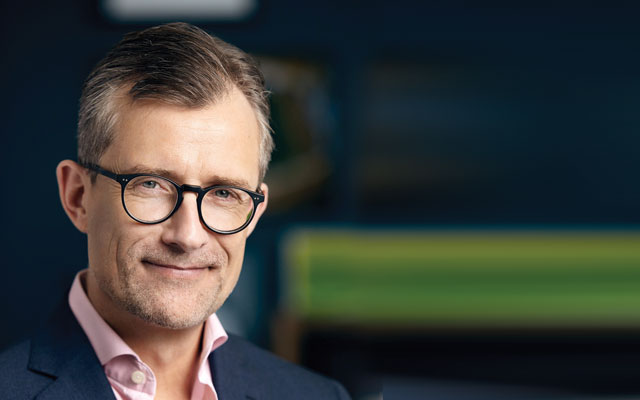
Shangri-La Hotels and Resorts has named Oliver Bonke as president and COO. Bonke will be based at Shangri-La’s headquarters in Hong Kong. He has nearly 30 years of experience in the hospitality industry, most recently with Loews Hotels & Co as chief commercial officer.
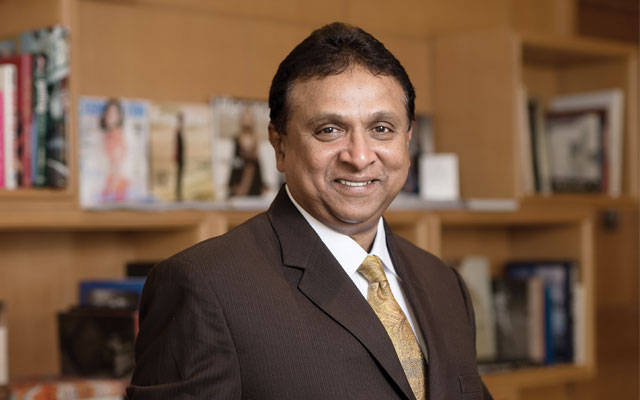
Augustine Silva is now chief development officer with Lanson Place Hospitality Management. Based in Kuala Lumpur, he will be responsible for driving the group’s strategic growth in South-east Asia and Australia.
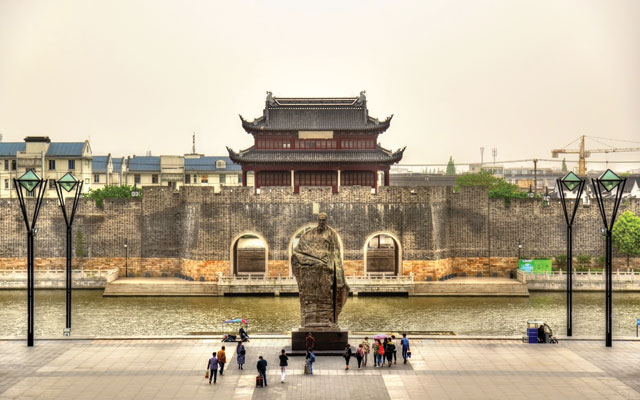
Statue of Fan Zhongyan and Pingmen Gate in Suzhou, China
Suzhou’s standing as an international association meetings destination is rising, evident from the number increasing by 50 per cent in 2016 compared to the previous year, and for hosting the third highest number of delegates in China, according to ICCA.
Statue of Fan Zhongyan and Pingmen Gate in Suzhou, China
For Suzhou to grow, Noor Ahmad Hamid, regional director, Asia-Pacific, ICCA, said the destination must position itself as a business city and knowledge hub, and authorities must understand the importance of attracting investments.
At the same time, he added that Suzhou must “talk about how to be different from other Chinese cities, and start working with doctors, professors and universities as medical meetings still make up a chunk of all Suzhou’s meetings”.
While Suzhou does not have its own airport, the city has easy access from Shanghai’s Hongqiao and Pudong International Airports – 88km and 133km away respectively – as well as Sunan Shuofang International Airport, 22km away in north-west Suzhou.
Infrastructure-wise, Suzhou is well equipped for meetings. The addition of the 50,000m2 Jinji Lake International Convention Centre (JLICC), housing Asia’s largest pillarless banqueting hall, complements the 152,000m2 Suzhou International Expo Centre (SIEC).
Numerous international five-star hotel brands such as Elements, Kempinski, Renaissance and W have opened, or are opening this year in Suzhou. The destination also has historic and cultural offerings – including nine UNESCO-designated classical gardens – while being up to 40 per cent cheaper compared to Shanghai depending on the season, making it attractive.
Kanbur Lee, general manager of W Suzhou, opening on August 1, 2017, wishes for Suzhou to have its own international airport.
“Eighty-five per cent of Suzhou MICE is mainly domestic business from Shanghai and Beijing in the corporate meetings sector – manufacturing, IT, automotive, pharmaceuticals and construction. This number grew in 2016 and 1Q2017, boosting demand for corporate conferences, products launches and training events. Incentive travel also saw a resurgence in 2016 and 1Q2017, with rising budgets and the use of a greater variety of destinations for the hosting of such events,” said Lee.
Sam Lay, senior director of Shanghai-based BCD Meetings and Events, sends many domestic groups to Suzhou to attend trainings.
He commented that Suzhou was “a good alternative to Shanghai”, and this demand was driven by his clients.
Although it is not yet a top international business events destination for Pacific World’s main markets US and Europe, its Shanghai-based MICE manager, Violet Wang, agreed it works well for domestic groups.
Wang said: “Suzhou’s government is investing a lot in promoting the destination as a World Heritage site, and putting measures in place to provide a sustainable, clean environment. The choice of international five-star hotels is better than before,” she commented.
Meanwhile, the Suzhou MICE & Travel Promotion Centre is targeting more international manufacturing and medical events, and hopes to serve Fortune 500 companies in the Suzhou Industrial Park (SIP), according to Jerry Yuan, its deputy director.
Yuan noted: “We have the hardware, history, culture, beautiful lakes and gardens, and we are taking steps to professionalise the meetings industry by forming the Suzhou MICE Association.”
In Suzhou’s favour, Kris Van Goethem, director, inbound and MICE, Thomas Cook China, said the old city has been cleaned up, the water in the canals has been “purified” and there are more pedestrian areas.
Van Goethem added: “The new high-speed rail station in north Suzhou helps to relieve the congestion at the Suzhou Railway Station, there are more tunnels to divert traffic, and SIP offers a green zone.”
Julien Delerue, general manager and founder of bidding platform 1000meetings, said the number of hotels in Jinji Lake has increased compared to seven years ago.
“Corporate meetings and incentive groups will pick Suzhou because of the expanding hotel supply, and for the seasonal cost savings. As a city, it is also well balanced with outdoor spaces. Delegates can rent bicycles or go sailing in the lake,” Delerue added.
Erren Zhang, vice general manager, SIEC and JLICC, said there were about 50 exhibitions and 125 conventions in 2016 compared to 40 exhibitions and 35 conventions in 2015. For 2017, there are about 50 exhibitions and 90 conventions booked so far. Exhibitions account for 60 per cent of business, and conventions the remainder.
“The biggest exhibition in 2016 was the 5th Chinashop 2016 at 80,000m2 and 100,000 visitors. The biggest convention in September 2016 was the Herbalife (China) Anniversary Event taking up 34,000m2 with around 15,000 delegates,” Zhang noted.
Romain Chan, Pan Pacific area general manager – China and general manager – Suzhou, said: “In 2016, MICE was 18.6 per cent of total hotel revenue. However, 1Q2017 saw a decline to 16.3 per cent as many MICE planners chose Shanghai after the Hongqiao Convention & Exhibition Center opened.
“While MICE enjoys a healthy growth, most activities take place in SIP where there is demand for large ballrooms that can accommodate 1,000 guests or more. Moreover, competition is fierce with new hotels offering state-of-the-art MICE facilities.”
To remain competitive, the 481-room Pan Pacific underwent a refurbishment of its rooms, the ballroom, meeting rooms and Chinese restaurant in May 2016. The hotel has 1,900m2 of event space with a 500m2 grand ballroom and 17 function rooms.
Chan added: “Suzhou needs an airport. Not having one is a draw back for some event organisers.”
ICCA’s Noor further advised: “Service standards in second- and third-tier Chinese cities lag behind primary destinations like Beijing and Shanghai where staff speak better English and services like translation are easily available. Perhaps Suzhou needs to look at the Japan Smart City concept where there is free Wi-Fi for delegates to access translation and other services. It will help delegates get around with ease.
“I also hope to see a strong convention bureau set up. With the right people and the full support of the government, this can make a lot of difference when it comes to positioning Suzhou as a top-of-mind meeting place regionally and internationally,” he concluded.
Oakwood Premier Raffles Place Singapore brings serviced apartment-style accommodation to the heart of the city's financial district, offering business and leisure travellers a base within walking distance of the CBD and key attractions.
Just 10 minutes from Phuket International Airport on the serene northern coast, this 178-key, Bill Bensley-designed resort offers delegates a quiet, tropical paradise steeped in Phuket’s tin-mining heritage
The newly-opened Ritz-Carlton, Bangkok anchors the One Bangkok development with cosmopolitan elegance. Featuring the city's largest ballroom and a spectacular new penthouse suite, it delivers exceptional hardware and deeply authentic, soulful service for business and leisure travellers alike