


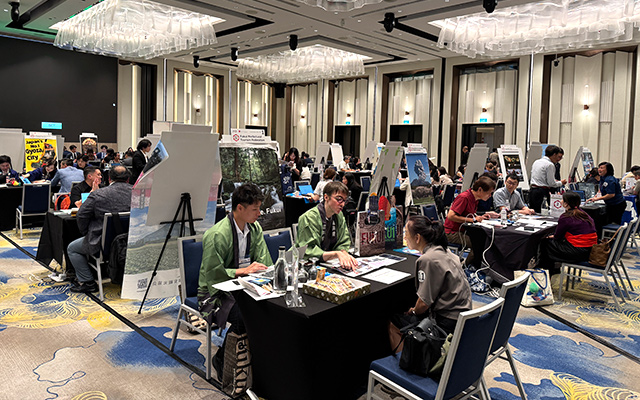
Japan continues to hold its position as a top destination for outbound corporate incentives from Singapore, backed by a universally positive brand image, strong safety record, and rich cultural draw, according to buyers interviewed at yesterday’s Japan Incentive Travel Roadshow 2026 in Singapore.
For Adeline Kang, director Japan, China, Asia-Pacific operations with pharmaceutical company MSD International, Japan serves as a motivator and a preferred alternative to longhaul destinations.
“Our top 100 sales performers used to fly to New York, but feedback showed younger families don’t like travelling that far. Recently, we’ve looked at Japan, particularly with global conflicts making staying within the Asia-Pacific region a more attractive option and safety being a top priority,” she told TTGmice.
“Singaporeans are mesmerised by everything Japan, and it enjoys a very positive image in the Singapore mindset,” noted Sam Tan, director of sales for International Event Planners.
Destination support is also a major driver. Both Tan and Felicia Teng, general manager of The Meeting Lab, praised the Japan National Tourism Organization (JNTO) and local city convention bureaus for being supportive of corporate groups.
Twin-city itineraries are also gaining traction among Teng’s clients. She described how holding formal conferences in primary hubs before moving to satellite cities for smaller group meetings works well as a strategy to pivot away from overcrowded hotspots. Teng also noted that secondary destinations like Okinawa are already well-prepared to host international meetings.
However, despite Japan’s magnetic appeal, buyers report that rising ground costs, air connectivity bottlenecks, and operational limitations in secondary cities create hurdles that complicate execution for planners.
“When a client chooses a destination, there is an upper and lower budget limit. For Japan, US$1,500 per person on a twin-share basis for three nights is typical. But when the market is soft, budgets are reduced, favouring regional alternatives. Costs of hotels and food in Japan remain higher than China and South Korea (in this scenario),” Tan said.
When asked about moving out to the more affordable smaller cities, Tan highlighted the constraints around flight access and travel time. “The challenge of selling Japan’s smaller cities is limited by the duration of the trip. Most incentive itineraries are only 5D4N or 4D3N long,” he explained, adding that he managed to bring a corporate group to lesser-visited Shikoku only because the client gave him nine days to work with.
In secondary cities, service readiness and language also barriers remain key concerns. “Secondary cities have a lot of attractions suitable for MICE groups, but the language challenge persists,” Teng observed. “We often end up using suppliers from Tokyo or Osaka who are more comfortable managing international groups.”
In addition, strong global demand has left Japanese vendors with abundant business, making room inventory tight and preferential rates harder to secure. To navigate this, Kang advised corporate buyers to lock in their plans well ahead of time.
“Japanese suppliers have no lack of business – it’s a supplier’s market, and securing inventory can be very hard,” Kang cautioned. “Planning early is crucial. Smaller cities often lack English speakers, so having capable Japanese leaders to assist is essential.”