The Borobudur Archaeological Park Complex has undergone a major spatial restructuring to better accommodate business, cultural, and corporate events while restoring the site’s heritage integrity.
As part of a National Strategic Project, the revitalisation replaced concrete surfaces with native trees and relocated commercial markets and car parks away from the sanctuary core. In their place, the park management introduced a selection of versatile outdoor venues, each set against the backdrop of the ancient monument.
Central to the new offerings is Marga Utama, a grand pathway on the western side that serves as a high-capacity corridor for 1,000 to 5,000 guests with an unobstructed view of the temple. For large gatherings such as the annual Vesak celebrations, music concerts, and gala dinners, the newly expanded lawns of Taman Lumbini can host 300 to over 1,000 attendees.
“Lumbini has been around for a while, but we expanded the lawn area,” said Muhammad Syaiful Adnan, sales staff at park manager InJourney Destination. “Previously, there were gardens, but we expanded them into an open field so that we have a larger event space.”
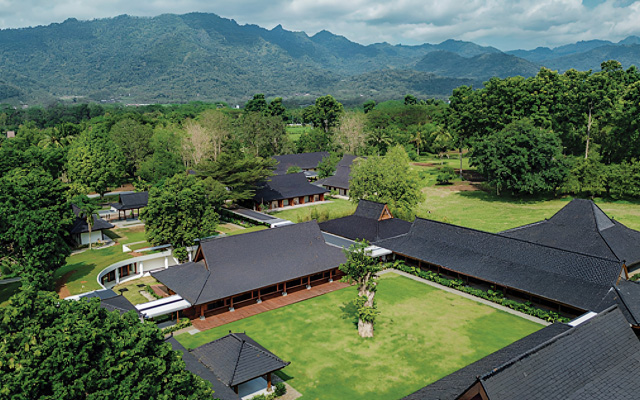
Nearby, the former Manohara Hotel Borobudur has been transformed into the Manohara Borobudur Cultural Center. The upgraded hospitality hub offers accommodation, meeting rooms, the Lalita Restaurant, and a rear garden event venue facing the temple.
For smaller, high-end gatherings, Bukit Dagi offers a hilltop setting tailored for picnic breakfasts and performances overlooking the complex. At the base, the new Eco Culture Park – built over the former souvenir market and car park – provides an expansive open field dedicated to eco-friendly events and cultural activities.
The project aims to elevate visitor comfort and expand the site’s green footprint while preserving Borobudur’s spiritual, historical, and cultural core for future generations.