Anantara Siam Bangkok Hotel has completed a major top-to-toe, US$50 million revamp, with an official launch scheduled for next week.
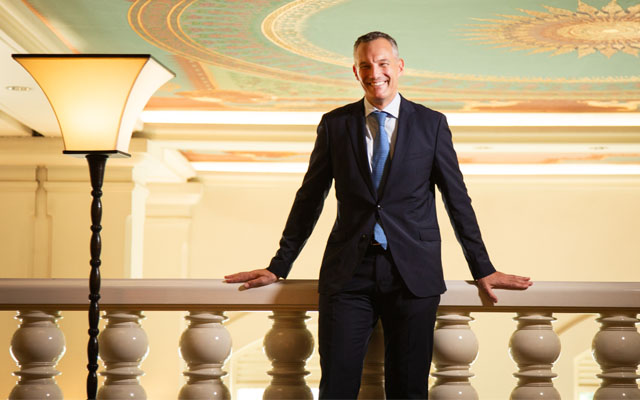
Speaking to TTGmice on the sidelines of Thailand Innovative Meetings Exchange 2026, Torsten Richter, general manager of Anantara Siam Bangkok Hotel, explained that the multi-million-dollar investment aligns with Minor Hotels’ global expansion, reinforces the property’s flagship status, and showcases its deep Thai origins.
“Anantara Siam Bangkok will add to the city’s hotel choices, as most newer hotels these days are high-rise buildings. It is one of our unique features that it has a strong Thai feeling from the moment you arrive,” he stated.
The 43-year-old property – which operated under brands including The Peninsula Hotels, Regent Hotels & Resorts, and Four Seasons before rebranding as Anantara Siam in 2015 – underwent extensive works in phases without closing its doors.
A central priority of the project was preserving the hotel’s Thai artwork and hand-painted ceiling murals. “We restored all the artwork on the walls and ceilings, and reupholstered the furniture. We also gave it a timeless colour scheme,” Richter said.
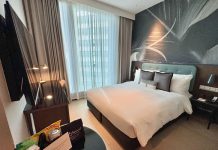
Beyond aesthetic enhancements, the hotel revamped its guest bathrooms and integrated modern technological conveniences, such as electronic smart toilets, which Richter noted are “highly appreciated by the Japanese and Middle Eastern markets”.
In addition, the property features 16 upgraded event venues, anchored by an 814m2 Grand Ballroom with capacity for 800 guests.
“Before, our meeting areas lacked distinct character. Now, we have added dedicated spaces like a screening room and a brand-new business centre,” Richter elaborated.
These revamped facilities are set to capture interest across key longhaul and regional markets. According to Richter, the US remains a primary driver for corporate events, supported by strong Asian markets like Singapore, Japan, and Malaysia, while India continues to show strong business events growth.
Addressing current booking lead times, Richter observed a distinct split in market behaviour. “The South-east Asian market is still operating on shorter lead periods compared to longhaul.”
Conversely, longhaul travel and large-scale international events are returning to extended planning cycles. “We have business on the books that has been nearly a year in the planning for this December – a complete buyout takeover of the hotel for 335 rooms in relation to a large conference taking place in Bangkok.”
Looking at the destination as a whole, Richter expressed strong confidence in Bangkok’s positioning as a world-class business events hub. He pointed to several catalysts driving international momentum, including the city’s global culinary reputation, and its bid to host the Formula 1 street race starting in 2028.
Additionally, major international gatherings are set to generate significant demand across the capital. “The 2026 Annual Meetings of the International Monetary Fund and the World Bank Group conference (October 12 to 18) is a milestone event for the financial sector… We anticipate welcoming 15,000 to 25,000 participants to the city.”
“Bangkok has made some great moves and will continue to be a highly relevant and competitive player on the global MICE market,” he concluded.