Asia/Singapore Wednesday, 8th April 2026
Page 1080

Hilton Worldwide grows its carbon offset programme

0

CONRAD Bali and Hilton Bandung has joined Hilton Worldwide’s Carbon Offset Program in Southeast Asia, bringing the total number of participating properties in the region to 13.

Since its launch on October 1 last year, the programme has offset more than 4,500 tonnes of carbon emission, an amount equivalent to taking 470 economy class flights around the world.

According to a press statement from Hilton Worldwide, the progamme has been popular among corporate clients. Around 70 per cent of events and meetings offset were from this segment.

Offered at no additional cost to customers, the programme measures carbon generated by events and meetings, and offsets these through the purchase of carbon credits, which are used to fund the Borneo Rainforest Rehabilitation Project and Cambodia Cookstove Project.

William Costley, vice president, operations – Southeast Asia, Hilton Worldwide, said: “The exceptional results from the first six months of the Carbon Offset Program in Southeast Asia demonstrate the meaningful contribution an organisation can make to the environment and communities it operates in.”

“The Carbon Offset Program in Southeast Asia has definitely drawn great interest from our customers, and there is a growing trend for companies to conduct events, and other aspects of their business, in environmentally responsible ways. The programme offers a competitive edge for clients that take sustainability seriously and provides them with an avenue to give back to the environment,” said Heinrich Grafe, general manager of the Conrad Centennial Singapore.

A supporter of the programme, Rain Toh, event manager-corporate division, MCI Singapore, said: “At MCI, we have an obligation to grow our business sustainably and responsibly in a way that supports communities and safeguards the environment.”

SMX enhances delegate experience with new services

0

SMX Convention Specialist Corp, which operates convention centres in Manila and Davao, has unveiled a set of new services to boost event registration and communication efforts for show organisers.

Offered under the label SMX i-Connect, one of the two new services is an event registration system that will generate QR codes on delegate badges which can be used by show organisers to track attendance and to enable the exchange of business information between exhibitors and trade buyers at shows.

The second service is a push advertising platform that delivers show information to participants via SMX-developed event microsites. The platform will carry exhibitor listing, event schedules, floor map of the event and useful concierge information.

SMX i-Connect services are available to show organisers for a fee.

The event registration system costs 60,000 pesos (US$1,455) for exhibitions with up to 300 exhibitors and 3,000 badges or for conventions with no more than 1,000 delegates and 1,500 badges.

A joint convention and exhibition package with 1,000 delegates, 300 exhibitors and 3,000 badges will cost 90,000 pesos.

Charges apply for additional participants.

The push advertising platform alone costs 80,000 pesos, inclusive of Wi-Fi service. When contracted with the event registration system, charges for the communications service will be reduced to 60,000 pesos.

“These are value-added services for our clients, and to our knowledge no one (in the Philippines) has (provided such an event registration system) so far,” said Marivic Marquez, assistant vice president for sales and marketing at SMX Convention Specialist Corp.

Marquez said the event registration service would greatly facilitate business lead retrieval, while the push advertising package, which includes design and development of an event microsite, would allow show organisers to generate more revenue and give their sponsors greater exposure.

The company expects acquisition of the new services to come in July, and is offering a 20 per cent discount to its first 10 clients.

Besides SMX i-Connect, SMX is also helping to put event organisers in touch with accedited teambuilding and public speaking specialists and travel and tour service providers, and offering special rates for recreational facilities within the SM Mall of Asia which sits next door to SMX Convention Center in Manila.

Sukosol Hotels to develop MICE muscle in China

0

FOLLOWING successes in catering to group series, Sukosol Hotels has started to train its sights on business events, says a representative of the Thai-based chain.

“Our MICE focus for now is on China, as it is the largest international source market for the group. We had a 60 per cent increment in overall Chinese business last year,” said Tan Yuewu, assistant sales manager with the flagship property, The Sukosol Bangkok, who also leads the group’s sales efforts in China.

Recognising that Sukosol Hotels “lacks a brand presence” in China’s MICE sector, Tan said the team would have to conduct sales calls and sales missions, and step up participation in Chinese MICE trade shows to do well.

“I’ve met several MICE clients in China and realise that while our facilities are on par with some international business hotels in Thailand, we tend to lose out because few have heard of us. Intensive face-to-face sales meetings in China will hopefully raise clients’ awareness of the Sukosol brand,” said Tan.

Tan pointed out that the group has ready hardware to support business events from China and other markets.

“Most of our properties are suitable for business events of different scales. For corporate meetings, The Sukosol Bangkok and Siam Bayshore Pattaya are most suitable due to their range of function rooms and guestroom inventory,” he said.

“The Bayview Pattaya may be smaller (in terms of meeting facilities), but we have been able to cross-sell and combine both Siam Bayshore Pattaya and The Bayview Pattaya for larger corporate groups, ” said Tan, adding that Sukosol Hotels will augment its Pattaya portfolio with the end-May opening of the 21-key Wave, a luxury art deco boutique hotel.

Tan reckons that the group’s 39-key The Siam, an all-suite resort in Bangkok’s historical Dusit district, will also attract small-sized, deep-pocketed incentive groups, although the property currently draws mostly holiday-makers.

“We are making good headway so far, with five MICE groups from China now in the bag. They are from Shanghai, Beijing and Yunnan. The start of the year is usually slow for business events, so we expect bookings to pick up as we move into the year,” he said.

There are, however, no plans yet to establish a sales office in China, according to Tan.

Delegate promotion for the 15th IPC

0
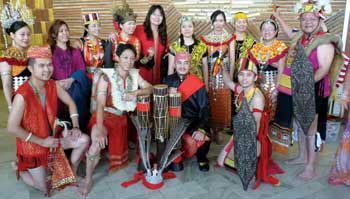
Dressed in traditional costumes, members of MPS went to Stockholm to promote Sarawak’s IPC in 2006.

The Malaysian Peat Society overcomes budget limitation and brings a showcase of Sarawak to Stockholm as part of its efforts to attract delegates to the 15th IPC in 2016, writes S Puvaneswary


Work was not over for the Malaysian Peat Society (MPS) even it won the bid to host the 15th International Peat Congress (IPC) in 2016 in Kuching, Sarawak.

The triumphant announcement came in 2010 after the bidding presentations were made in Jyvaskyla, Finland. Malaysia was competing for hosting rights against the Latvian Peat Producers Association.

According to Lulie Melling, congress general for the 15th IPC, the win was a meaningful one for MPS as it would be the first congress to be held in an Asian city. IPC has always rotated in Europe and North America.

The congress will be themed Peatlands in Harmony – Agriculture, Industry and Nature.

Melling said: “The congress will provide an excellent forum for researchers, academics and practitioners to congregate, share information and discuss their scientific results and experiences, with particular reference to peat and peatlands in the tropics.”

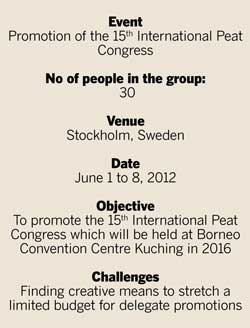
With the win in the bag, MPS must work to generate interest among scholars and scientists. To achieve that, MPS decided to use the 14th IPC in Stockholm in June 2012 as a platform to present scientific papers and promote Malaysia as the next congress destination.

Melling said: “We wanted to create a huge and positive impact at the 14th IPC.  Most participants were from Europe and had not been to Sarawak. We wanted to show them what the country had to offer in terms of infrastructure, facilities and recreational enjoyment, such as nature, adventure and colourful cultures.

“We received a budget from the Sarawak Convention Bureau for the 15th IPC, and we apportioned a part for delegate promotion. We also raised funds through sponsorship to cover airfare, accommodation and registration fees for 30 members who would be presenting eight papers on tropical peat at the congress, as well as promotional materials such as leaflets, brochures, Sarawak pepper, caps, T-shirts, stuffed toys such as the iconic Orang Utan which is synonymous with Sarawak’s conservation efforts.”

To keep expenses down, the committee decided to bring their own food to Stockholm instead of dining out.

She explained: “A simple meal (in Stockholm) would cost RM30 (US$9.70), four times more than what it would be in Malaysia. Thus, we decided to bring a rice cooker, rice, sambal ikan bilis (anchovy sauce), canned food and instant noodles to make our own breakfasts and dinners at the backpackers inn we stayed at.”

To avoid exceeding the airline’s baggage allowance, each delegate was allowed only 10 kg of personal belongings in their checked luggage. The rest of the allocated space went to traditional costumes, promotional materials and food.

Before the mission in Stockholm, the group took lessons on traditional dance at the Ministry of Social Development and Urbanisation Sarawak, which also loaned the participants costumes and musical instruments.

“We also borrowed a gong from the Tun Jugah Foundation and learnt how to play it. Everyone had to turn up for practice or they would not be allowed to go on the trip. There were no exceptions, not even for my husband,” she said.

At the congress in Stockholm, some members of the committee presented scientific papers while others manned the booth. Sarawakian music was played, and a gong was struck during lunchtime to draw congress attendees to the booth. Leaflets and brochures were handed out, and delegates were invited to Sarawak.

“It is important to promote the destination to get delegates excited and curious enough to want to come to the congress in Kuching. We are in the midst of planning a delegate promotion exercise during the 20th World Congress Soil Science from June 8-13, 2014 in Jeju, South Korea.

“MPS believes delegate promotion (must be done) continuously to (build) publicity and create awareness and interest for the 15th IPC,” she declared.

TTG Great Cook Out

0

Staff of all ranks swop their sales kits and laptops for mortars and pestles for an afternoon of team bonding in a fancy cooking studio. Karen Yue joins her mates for some fun


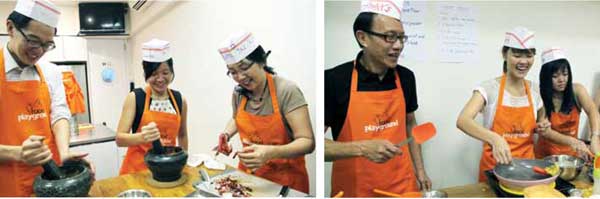
Food Playground, a new cooking studio in a beautiful conserved shophouse that sits in Tanjong Pagar, hosted 14 staff members of TTG Publishing Travel Trade business group on March 25 this year.

Although launched in 3Q2012, Food Playground has hosted 20 corporate teambuilding events prior to the TTG Great Cook Out. The cooking studio’s managing director, Daniel Tan, expects to host another 25 to 30 corporate events between now and mid-2013.

The TTG Great Cook Out, which took place on a Monday afternoon, comprised two parts – a product marketing challenge and a cooking competition.

Tan said: “Our teambuilding programme is much more than the usual corporate cooking event. The kitchen represents a microcosm of the working world, with deadlines, decision-making and collaboration necessary to succeed, so we make it a point to incorporate fun team activities and challenges such as a product marketing contest to unleash creativity and improve communication and teamwork among participants.”

A mix of sales, marketing and editorial staff members was placed in two teams and tasked to create a tourism product that would appeal to visitors, using things such as raw broccoli, carrots and cherry tomatoes as well as coloured paper, toothpicks and paperclips. Teams must then make an enticing sales pitch to sell the product.

Explaining the choice of the activity, Tan said: “The contest has a tourism focus as it is a ‘product’ that every TTG team member is familiar with. This way, everyone can chip in regardless of their seniority and job title, so this activity is a great leveller!”

Part two of the programme saw the teams whipping up roti jala, curry chicken and ondeh-ondeh under the patient and animated guidance of culinary instructors Lena and Helen.

Explaining the choice of dishes for the cooking challenge, Tan said Food Playground’s specialisation in local, Asian-fusion, Thai and North Asian cuisines allowed participants, be they leisure tourists or business event delegates, to learn more about Singapore’s diverse food culture.

“We give our clients a lot of flexibility in deciding what they like to learn because they will enjoy the fruits of their labour at the end of the event. That said, we will recommend dishes based on participants’ dietary preferences, group size, duration of the programme and fun factor. Dishes on our menu are all tried and tested to be fun to make and tasty, yet challenging enough to keep everyone engaged,” Tan said.

According to Tan, teambuilding programmes are all customised to achieve clients’ desired results. Suggested activities will be pitched to the client and adjustments will be made to ensure suitability.

Tan noted that the menu and use of ingredients had to be tweaked for the TTG Great Cook Out, as several participants had food allergies and dietary restrictions.

As activities are held in a kitchen, Food Playground is committed to safety and has an accident-free record.

The winning team was eventually declared based on the uniqueness of the product sales pitch, and the taste and presentation of the cooked dishes. Victors were presented with a framed group photo as a keepsake.

In the days that followed, Food Playground provided all participants a link to an online photo gallery where memories of the day could be downloaded.

Robin Lokerman

0

Witness to the evolution of the American and European association management industry over the past 22 years, MCI Group CEO tells Karen Yue he is ready for changes in Asia


How did you begin your adventure in the association management industry?

It all started when I was a staff member with a not-for-profit organisation and had thought to myself that there must be a more efficient way to run these organisations. So I started GIC Management in Europe in 1991, managing associations on a professional basis.

In 2003, I merged GIC Management with MCI Group. I wanted to grow my business into Asia, and knew it would be difficult to do that on my own. At that time, I had 50 staff members in Brussels, and MCI Group had 200 in France, the UK and Switzerland.

In 2005, Roger Tondeur (president of MCI Group) and I opened an office in Singapore – MCI’s first office outside of Europe. Two years later I moved to Asia to be based in Singapore, a decision I made to show that MCI Group is truly committed to being a global company.


Why were you keen on Asia?

During my career in Europe, I saw the professionalisation of European associations, which were becoming powerful, getting bigger budgets, holding larger conferences and starting to hire more staff and create new value propositions for their members. Associations were being managed like they were mini businesses.

That’s the change that took place in the 70s-80s in the US, and 80s-90s in Europe.

I moved to Asia because I knew that trend would spread to this region. And it is slowly happening now – you see more associations establishing offices, hiring staff and forming more permanent relationships. Before that, a lot of associations were very loose federations, with conferences that rotated in the region but were managed locally rather than centrally. Today, more are centralising their conference management by working with a core PCO to organise (regular, rotating) events, as opposed to using a new local PCO each time.

This change is, however, taking place slower in Asia than in Europe because Asia is so diverse, with differences in culture, language and religion. But we believe that Asia-Pacific associations will grow in prominence because many international scientists want to publish their findings in Asia where there is increased funding for research and healthcare, for instance. So this is a market with many opportunities.

What are the most pressing issues facing Asia’s association management industry today, seeing how it is still in its early stages of growth, and which are hardest to tackle?

Staff competency and employers’ ability to find staff who are well trained and aligned to the needs of the company. In a rapidly evolving workplace, especially in Asia where the economy is growing and a lot of young people are coming into the market, continuing education is needed. Associations will grow in Asia because they are the providers of continuing education for their respective industry. In Singapore, the government leads a lot of that. But in other countries, it is the private associations that are the key providers of education and certification programmes for industry professionals.

Rising costs must be an issue too, I’m sure, as not all associations are hugely profitable.

Well, associations must have activities that are profitable. A well managed conference should bring profit, which will be reinvested in more activities. This is why we believe that centralising conference management is very important.
If conferences were managed locally, profits from the event would go into the pockets of the local association and sometimes (the money) could disappear because of corruption or vague financial structures. Or that profit could get reinvested in one-off events in that country that might have limited lasting impact. And every year, the (local association) would have to reinvent the wheel by finding a new database and sponsors.

When European associations started to professionalise, they centralised their conference management. It was no longer the national chapter, but the international board, that took ownership of the meeting. So the international board would work with both the local chapter and an international PCO year after year, and thus get more consistent relationships with the industry and delegates, making it easier for communications.

For instance, one of MCI Group’s biggest clients is the European League Against Rheumatism. We have been working with it for 15 years. When it first came to us, it had a 3,500-pax conference. Today there are 16,000 people in attendance. Profits from the conference is huge, and that amount goes back into funding a more professional infrastructure, more research and new education programmes. The conference is an important revenue source.

Unfortunately, you don’t see enough of that in Asia. Associations here are still too splintered. Local chapters often have a bigger influence because of the diversity of countries in this region, but I think it is very important that associations start centralising some of their management.

How is MCI Group coping with the diversity in Asia?

MCI Group has 15 offices across Asia, which allows it to be local all over the world.

The local chapter has a key role to play in organising a conference. For instance, a conference in India will have a distinct Indian feel, with Indian professionals being more involved in the programme. You need to have a small team in India to work with these people, but at the same time have other teams in Singapore or Hong Kong to manage other aspects of the conference.

MCI Group has teams that are close to both the central and local offices, ensuring a mix of localised and centralised efforts. Delegate registration and project management can be managed centrally, while hotel reservations can be done locally. Sponsorship management is often a mix of both, depending on where the sponsors are located.

To be really effective in attracting new audience, you have to localise marketing efforts. So we have set up a delegate boosting team in China, India and the Middle East last year, and in Brazil, South Korea and South-east Asia this year. We have locals to take the marketing messages of our international association clients and localise that content and distribute them through popular and relevant local media channels.

One event that has benefitted from our delegate boosting effort is the World Congress of Cardiology, which we have worked with for the past three shows. It was held in Buenos Aires in 2008, Beijing in 2010 and Dubai in 2012. It will go to Melbourne next year. It is a big meeting with 13,000 to 14,000 cardiologists. We did delegate boosting in the Middle East, India and China by localising marketing messages and working with local partners such as hospitals. The target number of delegates from these three countries was 1,500 but we got more than 3,500.

I cannot emphasise enough how important it is to localise some aspects of conference management in Asia because the countries in this region are so diverse.

How else can associations grow profits from their events?

By milking the content of their events and using it before, during and after the conference to gain maximum reach. Associations can repackage and sell the content to people who were not able to travel all the way to the conference or who were unable to afford the registration fee.

Some clients are still afraid of repackaging content and selling it to people who were unable to attend the conference, thinking that once you do that, more would skip the live event.

Now, consider a soccer match played by Manchester United. Although the game can be caught on TV, many people want to experience the match being played live at the stadium. To some people, attending a congress is a premium experience. Associations just have to enhance that personal experience offered by their events, by bringing in greater content and making it sexy.

Let’s talk about Asian MICE sellers that want to attract association events. What should they be mindful of?

Too many sellers tend to see association meetings as a tourist activity. Tourism appeal is becoming less important in this sector, as people chose to attend a conference for its content.

Not all Asian CVBs are mindful of this too. I’ve attended fam trips that put incentive buyers and association secretariats on the same programme, touring tourist attractions and fancy resorts. But I was impressed with Northern Territories’ industry-specific fams – in July 2011 it brought buyers from the emergency response sector on a programme that included a health forum and visits to hospitals and a kidney dialysis centre.

Compared to some European cities like Barcelona and Vienna or Australian cities like Melbourne, the CVBs in Asia are still immature and sometimes too focused on leisure tourism. That may be due to the fact that many Asian CVBs are part of the national tourism authority, so their focus is naturally on destination promotion.

CVBs need more active ambassador programmes, more subvention and a bigger vision to build the association business, and to understand that the objectives of an incentive buyer are very different from that of association buyers. They need to pay attention to client needs, and that need is not to see yet another hotel, yet another bathroom. The client is more interested in the scientific development in the country, for instance, so the Northern Territories is very smart.

Differentiation of market by type of buyers still has room for refinement in Asia.

Which Asian destinations are doing it right and will be hot for association conferences this year?

Singapore, Kuala Lumpur and South Korea – the latter especially. The South Korean government has made the MICE industry in general one of the 12 or 14 economic priorities of the country. It realises that MICE, especially association congresses, is a fantastic way to generate economic wealth and stimulate local industries and professionals through learning from global thought leaders who come to the country to share their knowledge. The government is also building congress infrastructure across South Korea and providing subvention support for association congresses coming into the country.

Having said that, Singapore will still be the major centre (for association events), although it is becoming very expensive. Kuala Lumpur is promising too, due to good infrastructure that are priced a third of what’s offered in Singapore. Hong Kong is also still popular, but very expensive and facing limited capacity.

Chinese cities, not just Beijing and Shanghai, but also the second- and third-tier ones are starting to attract the attention of associations. However, they (second- and third-tier cities) require more destination promotion and infrastructure improvement.


Get smart with Accor

0

ACCOR has launched a Smart Meetings campaign that slashes 20 per cent off rates for rooms, breakfasts and meeting packages at more than 100 hotels across Asia.

The campaign joins other dedicated efforts by Accor to better serve meeting planners, including the revamp of its dedicated meetings website and the launch of a new e-brochure that assists clients in selecting the right hotel for their budget and event needs.

Kerry Healy, director of sales – leisure, meetings and events for Accor Asia-Pacific, noted a surge in the number of business and incentive travellers to Accor properties last year.

“This healthy trend is continuing into this year and we expect our Smart Meetings offer to drive even more business. We believe this offer will encourage meeting planners to experience our great range of conference and event hotels in key destinations across the region,” said Healy.

CWT rolls out solution to tackle cost of travel stress

0

Recent research by CWT has found that traveller-focused policies, taking into account the impact of trip-related stress, can help companies improve traveller well-being and raise productivity levels by up to 32 per cent.

The global stress survey, which drew participation from 6,000 business travellers from nine companies across the world, discovered three main categories of stress: lost time, surprises (an unforeseen event such as lost or delayed baggage) and routine breakers (inability to maintain daily habits).

Following on from this study, CWT has developed an algorithm-based tool, called the CWT Travel Stress Index (TSI), which measures the financial impact of lost productivity incurred through trip-related stress.

Using the TSI, CWT Solutions Group can now assess a company’s trip-related stress levels, benchmark it against industry norms and provide recommendations to help clients tackle the hidden costs of business travel while addressing their duty of care responsibilities. For example, the possible lost time for a company taking an average of 5,000 trips per year represents US$3.3 million; of this, US$1.1 million can be saved through improved traveller productivity.

Vincent Lebunetel, head of CWT Solutions Group, Europe, Middle East and Africa, said: “By identifying which stressors are causing the most pain for a particular segment of travellers, we can recommend specific solutions to enhance the traveller experience and improve productivity. It could be advising on connectivity solutions for each stage of a trip or recommending a specific carrier based on on-time or lost-luggage performances.”

Business events now on the radar of Ramada Khao Lak

0

RAMADA Khao Lak Resorts and Spa is making its foray into the meetings sector by announcing a new package aimed at driving demand during low season and promoting the destination as an alternative to an increasingly overcrowded Phuket.

The Andaman resort, about an hour’s drive north of Phuket, recently launched the Boardroom Talks and Jungle Walks package to tap higher-end MICE groups coming to Thailand’s south, said general manager Michael Vorderleitner.

“Khao Lak is not really a MICE destination,” Vorderleitner said. “But we want to show people that it can take longer to drive to a meeting in the south of Phuket than it does to get to Khao Lak. There’s less travel time (to get here), less stress and you can have your meeting surrounded by nature.”

The two-night/three-day package, which runs from May 1 to September 30 and cost 4,400 baht (US$151) per pax, marks the seven-year-old resort’s first efforts to promote its MICE business. Providing clients with flexibility rather than a prescriptive itinerary is a key aim.

“We don’t have specific programmes or activities,” he said. “We want clients to tell us what they want, we’ll then tailor a programme for them… the more creative and out of the box, the better.”

Programmes can range from barefoot meetings on the beach to walks though mangrove forests or teambuilding activities in the nearby Khao Sok National Park. Restaurants and other facilities can be converted into meetings venues for clients who do not want to use the larger-scale facilities.

Vorderleitner expects Australia, Singapore and Hong Kong to be key source markets for the MICE promotion.

Phoenix Voyages appointed travel manager for Myanmar’s first major summit

0

MYANMAR will pass a significant milestone in June when it hosts its first major summit, the World Economic Forum on East Asia.

Organising the event would not be without its challenges given the country’s lack of MICE experience, said the official travel agent for the conference.

Phoenix Voyages has been appointed the official agent responsible for managing flights, accommodation and transportation for the forum – which runs from June 5-7 and will be attended by 1,200 participants, including 10 heads of state, 12 ministers and 40 senior directors from around the world – and will be working in partnership with PubliscisLive, a Geneva-based media and events agency.

Jean Michel Romon, managing director of Phoenix Voyages, said the challenges of organising the first event of such magnitude in the country were amplified by the lack of infrastructure in the capital, which was only relocated from Yangon to Naypyidaw in 2005.

“We’re very excited (about winning the contract) and very motivated to make this event happen, but it won’t be easy as there’s never been anything like this in Myanmar,” he said.

“The main challenge is manpower. We’ll have more than 50 local staff in Naypyidaw and more than 20 in Yangon, as well as 80 foreign staff who will come over to support the event.

“The capital is also very new, so we’ve had to book more than 24 hotels and will have to send around 80 coaches and cars from Yangon and Mandalay (to transport delegates around the city). In Naypyidaw there are no restaurants so we must arrange everything at the convention centre and in the hotels. Besides the main forum there are more than 20 special events each night.”

To date Phoenix Voyages has scheduled 13 charter flights from Bangkok and Yangon to Naypyidaw. It is also organising a gala dinner to be attended by all participants, and more than 40 side dinners during the first two evenings, which will supported by a 500-strong waiting staff.

Reviews

The Ritz-Carlton, Bangkok

The newly-opened Ritz-Carlton, Bangkok anchors the One Bangkok development with cosmopolitan elegance. Featuring the city's largest ballroom and a spectacular new penthouse suite, it delivers exceptional hardware and deeply authentic, soulful service for business and leisure travellers alike

Mama Shelter Zurich

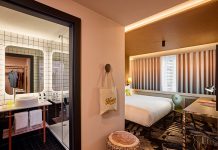
Behind the imposing, Brutalist concrete that defines Zurich’s Oerlikon district lies a surprising secret. While its exterior honours the neighbourhood’s industrial roots, stepping inside Mama Shelter reveals a vibrant, neon-soaked world that is a far cry from its rigid shell

Hyatt Regency Kuala Lumpur at KL Midtown

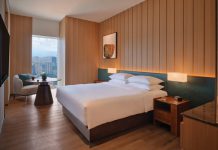
A polished urban retreat designed for business travellers, Hyatt Regency Kuala Lumpur at KL Midtown combines thoughtful design, seamless service, and exceptional facilities.