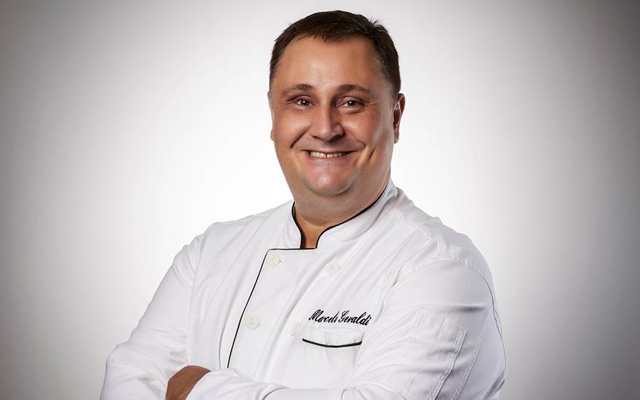
The Reverie Saigon has appointed Marcelo Geraldini as its new executive chef.
The Brazilian-born chef now oversees all of the hotel’s F&B options, ranging from the recently-launched Italian fine dining restaurant Da Vittorio Saigon to The Royal Pavilion, known for its dim sum. He first joined The Reverie Saigon as executive sous chef in 2017.
Geraldini’s sharpened his knives at one-Michelin-star restaurant, The Hardwood Arms in London, as well as at other highly-respected restaurants in England, and his hometown of Sao Paulo.
He first arrived in Vietnam in 2016 and played an active role in several restaurant pre-openings and renovation projects for WMC Group, the management company of The Reverie Saigon.
Following a two-year hiatus due to the pandemic, the annual TTG Travel Awards returned yesterday evening with its 31st edition that commemorated 41 exceptional travel and tourism players across Asia-Pacific.
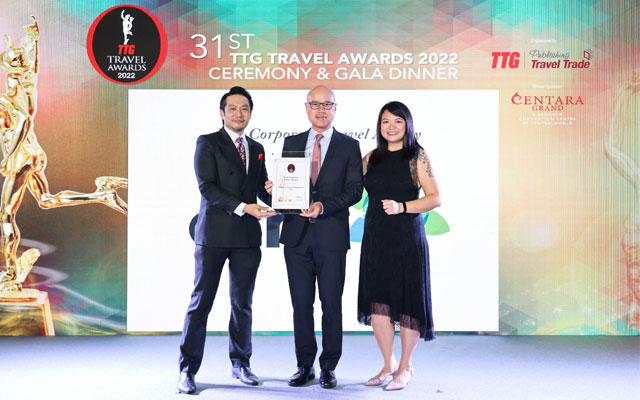
This year, Corporate Travel Management Asia broke CWT’s eight-year winning streak, swooping in to clinch the Best Corporate Travel Agency award. Other BT-MICE recipients that successfully defended their titles include Centara Grand & Bangkok Convention Centre at CentralWorld (Best Meetings & Conventions Hotel), and Cvent (Best Events Technology Provider).
Corporate Travel Management Asia’s Larry Lo (centre) receives the Best Corporate Travel Agency award
Industry veterans Resorts World at Sentosa (Best Integrated Resort) and Frasers Hospitality (Best Serviced Residence Operator) also earned consecutive wins of their titles. Other winners include Anantara Desaru Coast Resort & Villas (Best Beach Resort), Qatar Airways (Best Full Service Carrier) and Parkroyal Collection Pickering, Singapore (Best City Hotel -Singapore).
Amid fierce competition, 11 awardees marked their resurgence. Having previously been awarded in 2015, both Grand Hyatt Macau and Thailand Convention & Exhibition Bureau made an incredible comeback in their respective categories – Best City Hotel – Macau, and Best Convention & Exhibition Bureau, respectively.
The Outstanding Achievement Awards category – the only non-voting segment of the awards, with winners determined by TTG’s editorial team for their remarkable contributions to the industry – recognised the Philippines as Destination of the Year; Tourism Australia for the Best Travel Marketing Effort awards; and Accor for the Most Sustainable Travel Company award.
The gala event was held at Centara Grand at CentralWorld, and coincided with IT&CM Asia and CTW Asia-Pacific double-bill event in Bangkok from September 20-22.
Japan will resume visa-free entry for individual travellers from October 11, announced prime minister Fumio Kishida yesterday in New York. This brings the country’s border rules close to pre-pandemic norms for the first time after nearly two and a half years of strict Covid-19 restrictions.
Kishida was in New York for the United Nations General Assembly when he made the long-awaited announcement.
Japan’s border rules are returning to pre-pandemic norms
In addition, Japan will remove the cap on the number of people entering the country, which is currently capped at 50,000.
The government also hopes to boost the economy through inbound tourism by launching a nationwide travel discount programme starting from October 11.
Kishida hopes that people will utilise the programme to “support the travel, entertainment and other industries that have been struggling during the coronavirus pandemic”.
To date, there are no updates made on vaccine or testing requirements.
Thailand’s 10 MICE Cities are all geared up to host both domestic and international business events, but some cities like Bangkok and Phuket remain more popular than others.
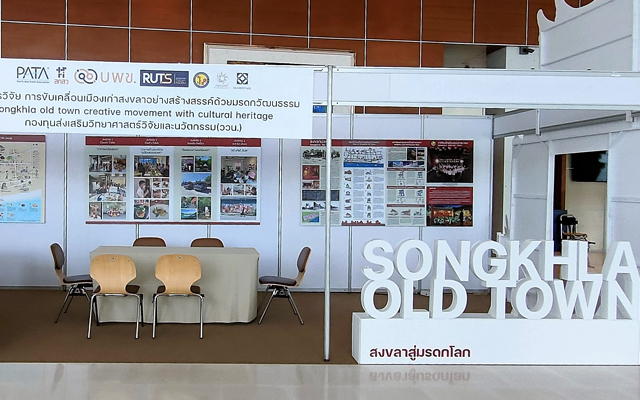
This year, two up-and-coming cities have come to the fore – Khon Kaen, in the medical and palaeontological fields, and Songkhla, which recently hosted the PATA Destination Marketing Forum 2022 and will welcome a bioscience conference in December.
Songkhla Old Town booth at PATA Destination Marketing Forum 2022
Designated MICE Cities must meet eight hosting criteria: accessibility; support programme from the city or city package; a variety of attractions beyond meeting activities; accommodation and amenities; venues and facilities; image and reputation; environment and hospitality; and risk, safety and security.
“For some factors, Thailand Convention and Exhibition Bureau (TCEB) can support the destinations directly, such as upskilling services, standardisation and promotion.
But we must also influence the government to support certain factors like infrastructure, an international airport and more budget support,” said Supawan Teerarat, senior vice president – development and innovation, TCEB.
She said TCEB supports cities in bidding and when won, the organisation will also help to promote and develop the business events.
“Bringing national and international MICE events to the destination will promote and increase the reputation of the city to the world, and uplift our Thai entrepreneurs to learn new knowledge, and innovation and technology,” she noted.
Some planners, however, have cited challenges in some locations. These include insufficient flights and poor international connections; limited hotel, venue and restaurant choices of international standard; and a shortage of skilled staff who understand business events.
Kris Srisatin, founder and managing director, Stream Events Asia, commented: “Khon Kaen is now well-known for exhibitions – both international and domestic – and corporate meetings.
“For Songkhla, after hosting PATA this year, it has found interest with new facilities, activities and products as well as community-based tourism. It is suitable for neighbouring (markets) Malaysia and Singapore, as well as domestic MICE groups.”
Sumate Sudasna, managing director, Conference & Destination Management, said: “Programmes go to destinations that appeal; those that lack the right ingredients will not attract planners.
“That is why destinations need to develop indigenous elements which could be of interest in terms of history, culture, produce, arts and crafts, nature and community. Of course, accessibility and accommodation are prerequisites,” he said.
In order to secure a solid tourism rebound and stimulate the Greater Mekong Subregion (GMS) economy at the same time, developing a sustainable tourism sector is crucial.
Catherine Germier-Hamel, chief executive of Destination Mekong (DM), said in the wake of the pandemic, the organisation is focused on promoting a more sustainable way of assessing, measuring and monitoring the success of tourism destinations, experiences and practices.
Germier-Hamel: spread positive impacts around
Germier-Hamel shared: “It is true that communities need economic security and viability, but they also need social, cultural, and environmental sustainability. All positive impacts from tourism need to be better distributed all throughout the region.”
As a membership organisation, DM goes beyond national tourism bodies to offer innovative thematic and interest-based focus. As the region builds back after the pandemic, the marketing organisation also plays a crucial role in promoting the region on domestic, inter-regional and international levels.
“As the core purpose of DM is to champion sustainable and inclusive tourism in the region, we represent and coordinate with the private sector to generate value, impact, and opportunities for all, keeping in mind the well-being of local communities,” she added.
To help push tourism rebound within the GMS, DM is curating a raft of programmes that benefit micro and small tourism businesses in particular, as these businesses are the ones that form the backbone of the industry.
Germier-Hamel told TTGmice: “Through our bottom-up approach, we intend to provide smaller suppliers with supportive networks and collaborative frameworks in order to strengthen their independence and resilience, since they usually do not need large national programmes and schemes to thrive.”
In addition, DM is helping to build resilience within the tourism industry by promoting cooperation that benefits not only its members, but also micro-businesses, SMEs and social enterprises.
“We hope that larger organisations internationally, as well as development agencies, can see the potential we have to foster sustainable and inclusive growth in the region and leverage the transformative power of tourism both for residents and visitors,” noted Germier-Hamel.
Another element key to a strong tourism rebound is through collaboration with the private sector.
“We believe there is a very large potential to strengthen the region, if all efforts are coordinated and steered in the same direction and leveraged through concerted action.”
Incentive travel to Japan, particularly from Asia, is showing signs of rebound, buoyed by the pending announcement of Japan’s full opening this October.
Asian incentives are expected to return in significant numbers from September to March, to experience the koyo (autumn leaves) views and winter season.
Hokkaido (pictured) is a popular destination for incentives
Staff at Sapporo Convention Bureau (SCB) are fielding new enquiries and rescheduling incentives that have been postponed for more than two years.
The strongest interest for travel this year is coming from South-east Asia, for groups of up to 100 pax, while South Korean clients are mainly seeking snow and onsen travel from early 2023.
“We can feel their eagerness to travel and to reward their stakeholders with a long-expected Hokkaido trip as soon as possible,” said Yumeki Kaneuchi of the incentive and corporate events team at SCB.
In addition to a day of snow sports, planners are also keen on new experiences, such as Hokkaido’s ice hotel and ice carousel. Requests for activities that incorporate “refreshment and wellness” are also on the rise, added Kaneuchi.
Marico Ogi, MICE director of the SCB, said the organisation is noticing a shift in requests for sustainability, wellness, personalisation, and space-conscious content, prompting staff to respond with programmes that are more immersive and catered for smaller groups.
Fukuoka Convention & Visitors Bureau (FCVB) is also seeing an uptick in confirmations, particularly from South Korea and Indonesia, following a rapid rise in enquiries since June.
“While we are still far off the pre-Covid number and size of groups, we are encouraged to see huge interest in Japan and Fukuoka as international incentive travel destinations,” Sayaka Kashiwabara, assistant manager MICE sales at FCVB told the Daily.
Etsuko Kawasaki, executive director of the Japan Convention Bureau, said she expects high demand for incentive trips to Japan because such activities are a great motivator for employees and “cannot be replaced by other things such as gifts or online events”.
Companies looking to make up for the prolonged disruption to work interactions are intensifying their teambuilding and performance recognition events, say event planners at IT&CM Asia 2022.
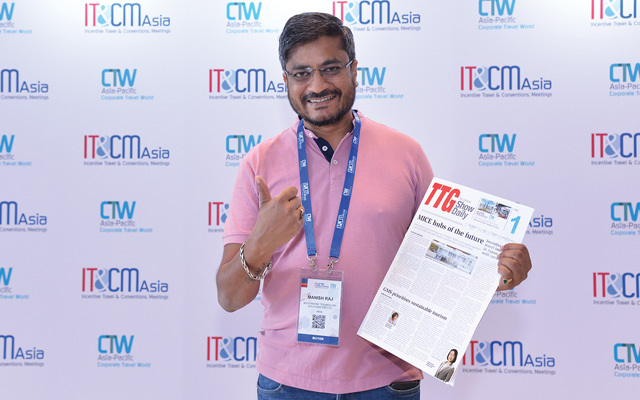
Manish Raj, vice president – global sales & new initiatives with India-based Moveinsync Technology Solutions, said the remote work culture that has taken root in the country has made teambuilding opportunities even more precious.
Raj: need to bring new and existing staff together
“Many companies in India have yet to reopen their offices (post-lockdown) for staff to return, and the work-from-home movement is set to stay since organisations are realising the economic and personal benefits of such arrangements.
This means that many new employees are joining companies without opportunities to meet their colleagues,” Raj told TTGmice.
“The need to rebuild social capital is intense, not just to welcome new hires but also to ensure existing staff continue to feel connected with each other after two years and more of interaction on online platforms like Zoom and MS Teams,” he added.
According to Raj, many business events are now focused on social goals – like getting staff aligned with the corporate direction, getting them to interact and bond, and making them feel visible and recognised. Teambuilding and incentive events are therefore leading the business events recovery for India.
Sandeep Khosla, managing director and CEO of 247 Facility Services in India, said his firm has a number of teambuilding events in the pipeline for the coming months, with most coming from IT companies.
“Some companies have only brought 40 to 45 per cent of their staff back to the office, so the need to connect teams is critical,” he said.
Khosla added that his upcoming overseas teambuilding events will involve 80 to 150 participants – the typical staff strength for each project led by his clients.
Most clients are looking at South-east Asian destinations such as Singapore, Vietnam, the Philippines and Thailand, he shared, as the region enjoys good air access from India, and most destinations here have done away with Covid tests and quarantine requirements.
Driven by a similar desire to motivate and bond teams, World Master International Travels Philippines’ president, Leilani C Agana said incentive travel demand has rebounded strongly.
“Companies are determined to show their staff and business partners that everything is back to normal now, so incentive travel programmes that were disrupted in the past two years are being brought back bigger and better,” said Agana, pointing to plusher budgets and elevated accommodation and activity options.
More teambuilding and networking elements are included in these incentive travel programmes too, she shared.
Her company has so far confirmed a 15-pax incentive travel group to Singapore in October, and a 40-pax group to South Korea in March 2023.
Inbound business into Malaysia from markets which contract in US dollars are benefitting from the much-weakened ringgit against the greenback.
Local media in Malaysia reported that the national currency reached an all-time 24-year low of 4.52 ringgit against US$1 on September 14, in line with lower oil prices. The ringgit continues to slide, and as of press time, it stands at 4.55 ringgit against the US dollar.
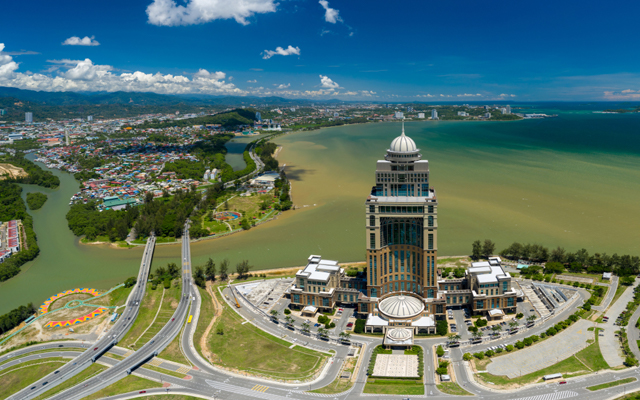
Locations like Kota Kinabalu in Sabah (pictured) are not as well known as Thailand to European clients
Noor M Ismail, general manager at Panorama Destination Malaysia, explained that the weakened ringgit is an added value to overseas organisers and delegates as it partly compensates for high airfares which have not returned to pre-pandemic levels. A weak ringgit against major currencies also gives overseas delegates a stronger purchasing power.
Noor added that he is encouraging clients to lock in the low rates by placing deposits for their future events.
“It also provides us a much-needed cash injection, having not been able to do much business at the height of the pandemic,” Noor said.
At the current exchange rate, a room at a five-star international chain property in Kuala Lumpur’s city centre can be purchased for US$150.
Saini Vermeulen, executive director, Within Earth Holidays, said Malaysia’s value-for-money proposition, coupled with its easy entry requirements, have also encouraged more delegates from longhaul markets to extend their stay in Malaysia.
He shared that some attendees are extending to beach destinations such as Langkawi and Kota Kinabalu with their partners, while others are adding a few more days for a golf game. Compared to 2019, Vermeulen noted there were more bleisure extensions this year.
Buyers at IT&CM Asia who had previously not considered Malaysia, are keen to explore the country’s offerings.
Mihai Luca, director of Travelsmartinfo based in Romania, said clients who have already been to Thailand are now seeking new destinations, and Malaysia fits the bill.
He added: “Sabah and Sarawak in Borneo are exotic destinations that are not as well known as Thailand.”
Luca added that many companies in Romania did not increase their travel budgets post-lockdown, hence Malaysia makes for a very attractive proposition.
That is why he wants to learn more about the country, and is at the show to meet with Malaysian DMCs and hoteliers.
Similarly, Sabina Pe, managing director of Bridges Travel based in the Philippines, agreed that the weakened ringgit provides added value to outbound packages.
As such, she is also looking for Malaysian DMCs to establish connections with at IT&CM Asia, as well as obtain advice on incentive programmes and activities.
For her market, Singapore and Thailand are already popular outbound destinations in the region. On the contrary, more information was needed about Malaysia’s business events offerings, and more marketing activities are needed to be held in the Philippines to increase its awareness.
Incentive travel demand to Europe from Indonesia remains high, but according to local planners, shorthaul trips within Asia are more feasible due to the rising cost of travel, the ease of access, and the availability of seats.
Stephanus Suharli, the owner of Xpert Indonesia, told TTGmice that Thailand, Japan, and South Korea currently rank highly for his clients.
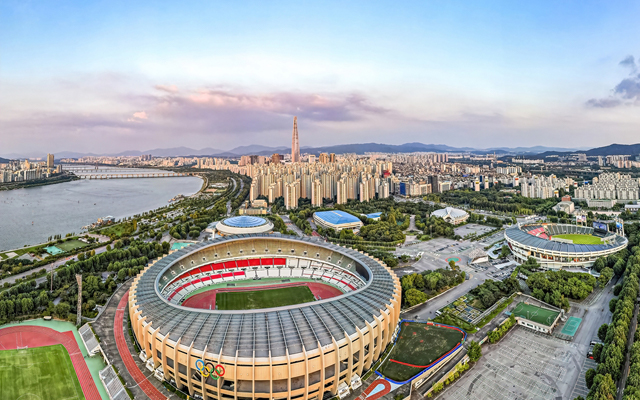
An aerial view of the Seoul Olympic Stadium in South Korea
And although Europe remains in high demand for incentive travel, Stephanus shared that obtaining seats and visas have been progressively more difficult since June 2022 as more countries reopened.
“There are many enquiries for incentive travel, but meeting clients’ expectations of travel time, itineraries, and budgets, are the challenges we face today in securing the business,” he lamented.
Moreover, prices have risen across the board. In 2019, a ticket to Japan including taxes cost around 7.2 million rupiah, (US$486), but today the airfare alone is eight million rupiah while taxes alone cost seven million rupiah.
“Although the land arrangement prices remain the same, the overall package is now very costly. Even as groups agree to the increase, seats may not be available,” Stephanus said.
These days, to materialise the business, Xpert Indonesia asks their clients to pick a destination, and the company will help them find the dates where airline seats are available.
“Only when we managed to secure the seats and clients agree on the budget that we move on to creating the programme,” Stephanus said.
Rudy Techrisna Satyadi, managing director at Multi Holiday Travel, agreed: “In the past, we discussed the destination, the land arrangement and dates of travel with the clients before booking the flights. Now, it is the other way around.”
His clients are similarly looking at Thailand and Japan, as well as Vietnam.
Rudy also noted that clients tend to prefer mono destinations, and are avoiding domestic flights. To provide clients with fresh experiences, attractions are now located within easy reach of their chosen destination.
Rudy added that incentive travel budgets will inevitably need to be increased.
Meanwhile, for Orange Incentive House, under Panorama JTB Tours, Europe continues to appeal as it offers multiple destinations that make the incentive trip more value-for-money. Moreover, ground arrangements in places like Thailand, have also gone up.
If clients choose to spend it regionally, however, Vidya Hermanto, chief experience officer of Panorama, shared that Singapore appeals because it provides a multi-destination option as it has cruises that also call at ports in Malaysia, Thailand, and Vietnam.
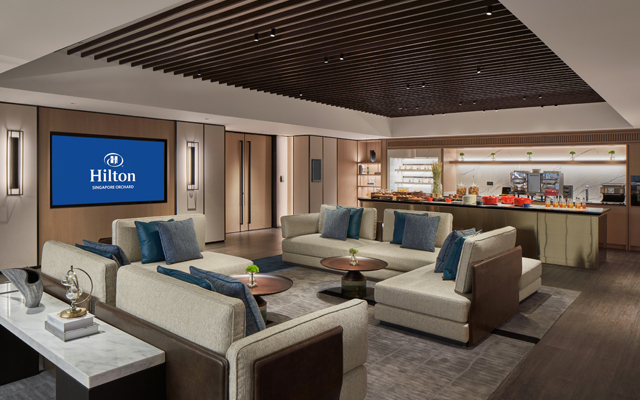
Hilton Singapore Orchard has unveiled the Smart Oasis, a unique meeting space located on Level 5 of the hotel that comprises seven function rooms and two breakout areas.
Large with a residential feel, Smart Oasis is a flexible, porous space that is ideal for boardroom meetings or midscale business seminars for up to 185 guests with seven separate conference rooms and breakout spaces. Previously part of the hotel’s carpark, the space was creatively converted into a meeting area by design firm Avalon Collective.
Meeting rooms are named after different local tree species such as Tembusu, Ficus, Rhu and Mahogany, and are equipped with the latest technology including oversized LED screens for hybrid meetings and screenings. The majority of rooms offer two LED screens for additional content and flexibility, custom-built conference tables with built-in plugs and USB ports, and ergonomic chairs.
Event and catering options are highly customisable. The hotel’s events team can also work to create unique experiences such as art jamming, culinary demonstrations, yoga, and bespoke breakout corners to make guests feel at home, with exceptional food and drink to inspire connection.
Reserved exclusively for the Smart Oasis is an always-on Butler’s Pantry, stocked with refreshing homemade beverages, as well as healthy snacks that attendees can help themselves to throughout the day.
In total, Hilton Orchard Singapore boasts over 2,415m2 of function and meeting spaces across 16 versatile venues, including two pillarless ballrooms good for 900 guests.
Just 10 minutes from Phuket International Airport on the serene northern coast, this 178-key, Bill Bensley-designed resort offers delegates a quiet, tropical paradise steeped in Phuket’s tin-mining heritage
The newly-opened Ritz-Carlton, Bangkok anchors the One Bangkok development with cosmopolitan elegance. Featuring the city's largest ballroom and a spectacular new penthouse suite, it delivers exceptional hardware and deeply authentic, soulful service for business and leisure travellers alike
Behind the imposing, Brutalist concrete that defines Zurich’s Oerlikon district lies a surprising secret. While its exterior honours the neighbourhood’s industrial roots, stepping inside Mama Shelter reveals a vibrant, neon-soaked world that is a far cry from its rigid shell











Japan will resume visa-free entry for individual travellers from October 11, announced prime minister Fumio Kishida yesterday in New York. This brings the country’s border rules close to pre-pandemic norms for the first time after nearly two and a half years of strict Covid-19 restrictions.
Kishida was in New York for the United Nations General Assembly when he made the long-awaited announcement.
In addition, Japan will remove the cap on the number of people entering the country, which is currently capped at 50,000.
The government also hopes to boost the economy through inbound tourism by launching a nationwide travel discount programme starting from October 11.
Kishida hopes that people will utilise the programme to “support the travel, entertainment and other industries that have been struggling during the coronavirus pandemic”.
To date, there are no updates made on vaccine or testing requirements.