offer event professionals easy way to organize multi-city hybrid meetings more effectively
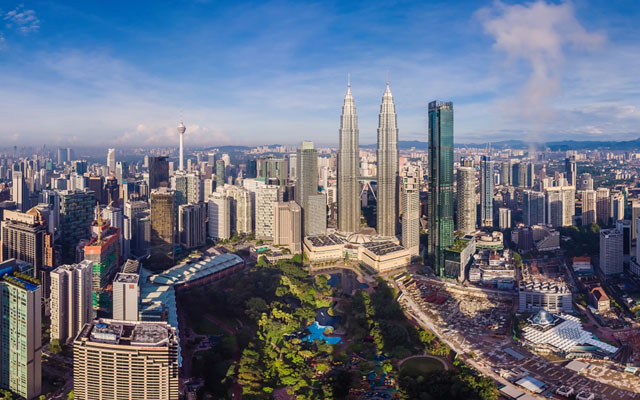
The Malaysia Convention & Exhibition Bureau plans to strengthen its business events position by getting four cities in Malaysia to join the Hybrid City Alliance.
The four cities are Kuala Lumpur, Penang (Penang Convention & Exhibition Bureau), Kuching (Sarawak Convention Bureau) and Kota Kinabalu (Sabah Tourism Board).
The alliance promises to offer event professionals an easier solution when it comes to organising multi-city hybrid meetings
“MyCEB is thrilled to join the like-minded global convention bureaus in the Hybrid City Alliance, to work as a team for the recovery of the meetings industry, share our passion and resources and actively collaborate to attract more business events in our city and the region.
“With this new international alliance, Malaysia’s business events industry is even more prepared to advance feasible digital solutions which will resonate well with our Malaysia Business Events Strategic Marketing Plan 2021-2030,” said Abdul Khani Daud, CEO of MyCEB.
Launched in December 2020, the Hybrid City Alliance offers international events organisers a solution when organising hybrid events regionally and internationally. The city partners in the Alliance are ready to act as one point of contact to streamline and simplify the clients’ interaction with multiple cities regarding one hybrid event.
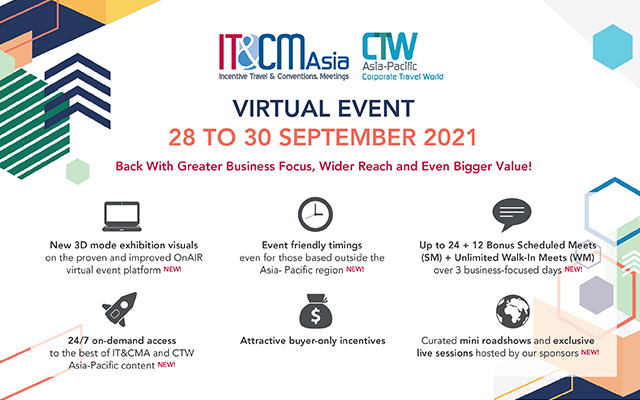
Amid ongoing travel restrictions, the double-bill trade event, IT&CM Asia and CTW APAC, will return virtually for a second year running.
Organised by TTG Asia Media in partnership with Official Technology Partner EventsAIR, the three-day event will be held from September 28-30, 2021.
The event will feature virtual and interactive exhibitions booths that buyers can access 24/7; flexible business meeting arrangements that allow for mutually requested scheduled slots and walk-ins; destination and corporate brand presentations; insights into buyers’ procurement motivations; and networking activities.
Delegates can also immerse themselves in the various knowledge sessions helmed by industry partners, thought leaders and experts. These will be made available on-demand from the first day of the event.
Buyers will also be able to earn attractive rewards by completing event sessions and missions.
The integrated approach promises a whole new kind of event experience
Every paradigm shift creates new buzzwords – and for the post-pandemic business events industry, they’re ‘hybrid’ and ‘integrated’. One needs only to glance at the flurry of industry articles from the last few months to know that these types of events are looming in marketing and event professionals’ minds as they look forward to Covid-19 receding and their work ramping up again.
The problem is, their meanings seem too often conflated. Is an offline event with a livestream ‘hybrid’, or ‘integrated’? How about an event that includes distinct programmes of both offline and online elements?
The integrated approach should see the creation of different, but equitable, activities that flow into a shared experience for both online and offline audiences
Events like those just described may be common, and perhaps could be called ‘hybrid’ – but they are certainly not ‘integrated’, as they each comprise two separate audience experiences, not one. It is an important distinction to make, because ‘integrated’ is where the industry and market are actually headed.
Confused? Let’s break it down to show just what integrated means, and what to aim for in an integrated event.
Defining the challenge
Events are supposed to engage audiences, and they do that by immersing them in experiences that impress them with messages. If the experience can be personalised – through interaction and/or customisation – it becomes more relevant and impactful to the individual. It becomes ‘sticky’.
Achieving this is relatively straightforward at an in-person event, where audience members can engage in the message and brand face-to-face through their choice of touchpoints. But importantly, all these ‘personalisation’ choices are part of a single shared experience.
For obvious reasons, the pandemic drove many brands and event professionals to attempt to recreate the above online. However, many of the most valued aspects of in-person events simply don’t translate to online formats. Those attending online events may not even have the same intentions or priorities as offline event attendees.
But as the pandemic also taught us, online events have a value all their own. Their audience reach is potentially unlimited, as is the endurance of their online presence. They also present a whole range of new avenues for brands to connect with different audiences.
As the pandemic recedes, brands will want events that are effective in engaging both audiences – online and offline – with a single, shared experience. Making this intersection of platforms and audiences seem seamless and natural is one of the biggest challenges faced by event professionals, but it is the essence of integration.
Experiences – different but equal and shareable
This analogy may explain it almost perfectly. Think of the two audiences at an integrated event as the petrol and electric motors in a hybrid car. Both work differently and have their own needs and characteristics, but when brought together, they create one integrated driving experience.
In an integrated event, then, two distinct audiences are not forced together into shared experiences that suit neither; instead, each is offered their own optimised means of engagement – different, but equal in impact and value. While this may sound like the makings of two parallel events, it isn’t: the key to integration is to enable the two audiences to cross over and interact in each other’s worlds.
Example: The NBA brings an online audience courtside
Facing the challenge of playing to empty stadiums during Covid-19, the NBA used 17ft video screens, Microsoft Teams’ ‘Together’ mode and a new app to create an engaging experience for players and online fans alike.
Fans using the app could not only watch games in real-time on their mobile devices, but be seen on the courtside screens by the players. The app’s ‘tap to cheer’ button enabled fans to respond to the game action – and generate cheers in the game venue to which players could react. Using the app’s ‘Together’ mode – usually used for video meetings – fans could interact with each other against a common backdrop as well.
Korean boyband BTS employed a similar strategy for their MAP OF THE SOUL ON:E concert. Features like live chat enabled interaction between online fans, who were themselves displayed on massive screens surrounding the physical stage. Fans could also wave virtual versions of official BTS placards and glowsticks.
Content – diverse and interactive
Anyone who can remember sitting through interminable university lectures will understand that even the richest, most intriguing content can be undermined by dull, uninspired delivery. This is even more true at online events, as audience members are free to leave, switch off or just zone out at any time.
So how do you keep them watching? The key is to ensure that can do more than just watch. Deliver the content as a dialogue that gives the audience options in how they engage and react. Peppering the delivery with live polls, surveys and quizzes can help emphasise content whilst entertaining and motivating the audience. These gamified elements can even yield valuable audience data and generate leads. Like other elements of an integrated event, the gamification should be optimised for both audiences – while offering opportunities for cross-over.
Example: Gamifying the digital entertainment leadership forum
Pico’s scratch-built virtual platform for this event helped to keep the online experience as engaging as it was informative. Visitors could view the exhibition’s start-up booths and click them for access to company videos and websites, or arrange one-on-one live chats with company reps. The platform also allowed for networking between visitors, and even featured mini-games and challenges that encouraged participants to explore further whilst earning their way to various prizes.
Make it personal – online and offline
Creating scope for personalisation at an offline or an online event takes imagination and hard work; at an integrated event, it’s even more challenging.
Again, the key is to avoid the temptation of creating a single, standard strategy for both audience groups. Instead, exploit the characteristics of both worlds to create different but equitable activities that flow into a shared experience.
Example: Customised avatars attend Hydeout
Though not an integrated event, the Hydeout virtual concert offers some idea of how online audiences can approach events in a personal way. Users can not only customise their avatars with unique outfits and dance moves, but can party with other avatars with the ‘HydeTribe’ while watching the concert.
Conclusion
The integrated approach promises a whole new kind of event experience in which the true venue is neither physical nor virtual, but in a confluence of both – an immersive zone in which audience members can slip fluidly from online to offline, interacting with brands, content and each other.
For brands and other clients, it truly offers the best of both worlds: the immediacy and immersiveness of an in-person event, and the potentially vast audience found online, unlimited by time or place.
Gregory Crandall is the senior vice president, global activation team with Pico Group.
Crandall’s professional life began in the Silicon Valley, where he spent 15 years specialising in content and event services. Relocating to Asia for 20 years, he founded his own agency, worked with the Pico Group and led several media companies. In 2017, Gregory rejoined Pico to spearhead Pico+ Hong Kong.
Since 2020, he has been entrusted with overseeing the group’s global activation team focusing on sports marketing, IP creation, World Expo and Olympics projects, brand festivalisation, project management and design of museums. In this role, he drives solutions ranging from data analytics, business intelligence, audience tracking, social media, to e-Commerce, in-store and interactive technologies, face recognition, virtual events, virtual reality, augmented reality, artificial intelligence, and theme park design and operations.
By using IAPCO’s network to raise Japan’s profile among congress organizers worldwide, we aim to bring even more international conferences to Japan.
The Japan National Tourism Organization (JNTO) and the International Association of Professional Congress Organisers (IAPCO) have agreed to a destination partnership.
This is Japan’s first partnership of this nature, and IAPCO’s – an international organisation with approximately 140 members – second destination partnership within Asia.
JNTO plans to tap into IAPCO’s network to raise Japan’s profile among congress organisers worldwide; Tokyo pictured
For the next 18 months, JNTO will participate in IAPCO’s network and actively engage with prominent PCOs, providing them with information about Japan’s potential as a destination for international conferences by highlighting the diverse options, facilities, and services of their convention cities.
This is as JNTO aims to make Japan the number one destination in Asia for international conferences by 2030.
Martin Boyle, IAPCO’s CEO, said in a statement: “IAPCO and JNTO have been collaborating for some time now through the development and delivery of IAPCO EDGE Seminars and regular Advisory Board Meetings.
“This new partnership between our organisations is a testament to the strength of conviction and commitment we both share for the further advancement of the meetings sector and of the skillset of meeting professionals in Japan.”
Japan is the seventh destination to form a partnership agreement with IAPCO, joining Hamburg, Melbourne, Toronto, Dubai, Hong Kong and Rwanda.
CWT has appointed Cheng Meng Hwang as head of Global Market Management & Development (GMD) Asia Pacific.
Based in Singapore and reporting to Belinda Hindmarsh, senior vice president of GMD, Hwang will be responsible for ensuring customer expectations are met within the region, whilst steering the CWT APAC business forward and leading local expansion.
A 25-year veteran in the global distribution system and travel IT industry, Hwang has spent almost half his career overseas, managing business units in China, India and the United States of America.
Global and regional leadership positions he previously held in Amadeus and Abacus (now Sabre) include commercial sales, business development, strategic corporate planning, customer engagement, operations and partner management to consultancy advisory services.
The Travel Corporation (TTC) has appointed Nicholas Lim as its new Asia CEO, effective August 16, 2021.
In this role, Lim will report to Gavin Tollman, TCC president, and will focus on the transformation of TTC’s distribution of key brands. He will work with each of the global brand executives to execute the brand strategies and set the direction to fuel further growth for the region, in particular, the luxury travel market for international outbound leisure travel.
Lim is no stranger to TTC having headed TTC Asia as managing director from 2018 to 2020, and before that, as president (Asia) for Trafalgar from 2011 to 2018. Prior to his appointment as CEO of TTC, Lim was general manager of Norwegian Cruise Lines in Asia.
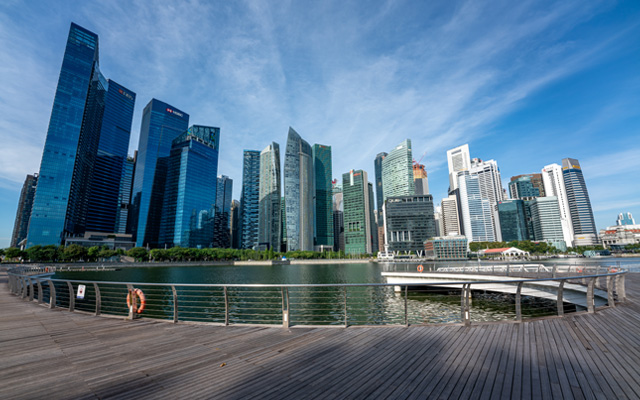
Fully-vaccinated Singapore residents will begin to enjoy greater social freedom from August 10, as the city-state moves into the first phase of her four-step transition to becoming a Covid-19-resilient nation.
Fully vaccinated individuals will be allowed to gather in groups of five, up from the current two. This applies to F&B settings. They can also take part in live performances and events, which will be allowed to host up to 500 fully vaccinated individuals.
Singapore relaxes restrictions on residents and travellers as national vaccination rate climbs
Singapore will continue to ease restrictions, with permitted event capacity expanding to 1,000 fully vaccinated individuals come August 19 if conditions remain good.
According to health minister Ong Ye Kung, who is one of the chairs of Singapore’s Covid-19 multi-ministry task force, this initial phase will run from August 10 till early-September, when 80 per cent of the Singapore population is likely to be fully vaccinated. With a higher rate of vaccination, Singapore’s economy will be further opened up, with more social activities allowed and travel made possible, he said.
The task force also announced plans to offer greater quarantine flexibility for fully vaccinated travellers from Australia, Austria, Canada, Germany, Italy, Norway, South Korea and Switzerland.
From August 20, travellers from these eight countries will be allowed to serve their 14-day stay-home notice (SHN) at their own places of residence instead of a dedicated facility.
To qualify for this scheme, travellers must have remained in the approved countries for the last 21 consecutive days before leaving for Singapore, and must either be staying alone or with other fully vaccinated household members who are under SHN for the same duration and with the same travel history.
All travellers must show proof of approval to serve SHN at their place of residence when they arrive in Singapore. They will be required to wear an electronic monitoring device to ensure compliance, and legal action will be taken against those who breach SHN requirements or make false declarations, said the Ministry.
Travellers who opt for this scheme will have to utilise and pay for specially designated transport services to and from their place of residence.
These latest measures are expanded from an ongoing allowance for travellers from New Zealand, Brunei, mainland China, Hong Kong, Macau and Taiwan to serve SHN at their place of residence.
Ong also revealed plans to establish travel lanes with selected countries, where frequent Covid-19 tests will replace quarantines.
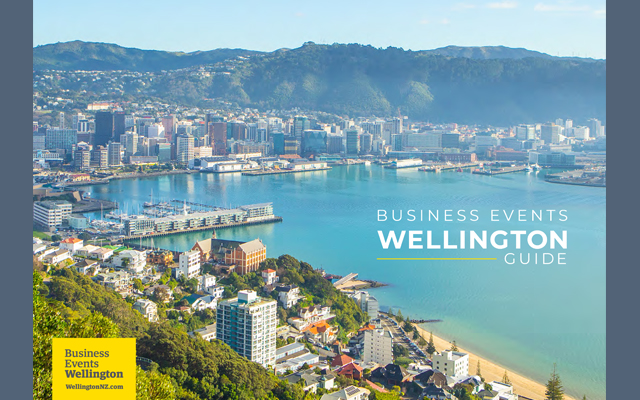
Wellington – New Zealand’s capital city – has published a new, comprehensive Business Events Guide created by Business Events Wellington.
The guide provides meeting and conference planners with up-to-date information about Wellington’s amazing array of venues, event services and accommodation options, as well attractions and incentive activities.
The cover of the new MICE guide
It’s designed to help with every step of the planning process, including a detailed city map, information on getting to and around the capital, and a list of must-do experiences that will ensure an event is unforgettable.
WellingtonNZ general manager David Perks said despite the challenging year for the business events industry, it was encouraging to see 22 per cent of all business events that took place in New Zealand were in Wellington.
“That market share figure shot up to 27 per cent between January and March this year. We expect to see further growth so having an easy-to-use guide for businesses, associations and event planners will make planning an event in the city a breeze.”
World Dining, one of Almond Hospitality Group’s affiliated companies, has signed an exclusive catering service agreement with Peng Huoth Group to manage and operate its catering services at the soon-to-open PH Grand Hall.
World Dining will provide and cater local and international cuisines, including but not limited to Yi Sang’s Cantonese roast duck and Kulen pig, Kanji’s premium beef and sashimi, Sevensea’s lobster sashimi, Uy Kuyteav and Kroeung Garden’s signature Khmer dishes and World Dining’s mix of Singaporean, Vietnamese, Italian and French cuisines.
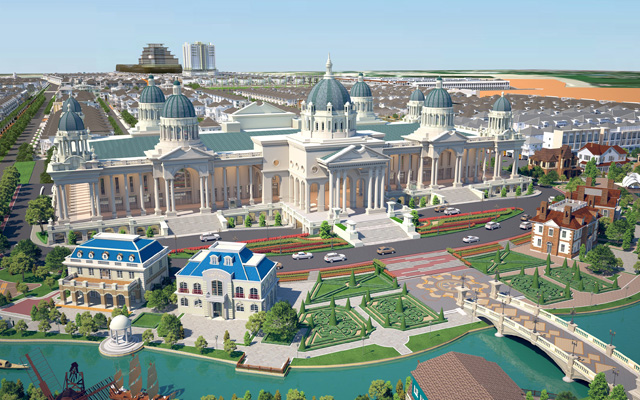
A rendering of the PH Grand Hall in Cambodia
The signing ceremony took place last week between World Dining and Almond Hospitality Group’s CEO Luu Meng and Peng Huoth Group’s chairman, Oknha Thay Chea Huoth.
PH Grand Hall is situated along National Road No 1, Sangkat Nirouth, Khan Chbar Ampov within the 400ha The Grand Star Platinum development. The building, set to be the country’s largest convention hall, has been designed with a combination of Khmer and European architectural styles, and will focus on hosting events of more than 3,000 people.
Scheduled to open in early 2022, the space features column-free meeting spaces, decked with state-of-the-art and modern audiovisual equipment. There will also be a fully-fitted commercial kitchen to cater to a wide variety of cuisines.
PH Grand Hall also marks Peng Huoth Group’s first foray into the business events sector.
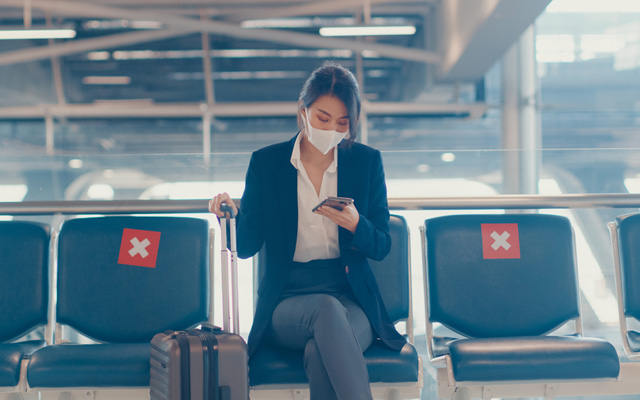
As organisations prepare for a safe return to business travel, ISO 31030 sets an international benchmark for companies to create and review their TRM programmes
Since the beginning of the pandemic, travel on both a business and leisure front has proven challenging due to the diverse and rapidly changing rules, regulations and border closures imposed by governments across the world.
With vaccination programmes gradually beginning to be rolled out in the region, talk of new travel bubbles, and a gradual relaxation of travel restrictions from certain markets – for instance Hong Kong reducing quarantine requirements from 21 days to seven or 14 days for fully vaccinated travellers from certain locations – leisure and business travellers alike are starting to prepare for a return to travel.
As organisations prepare for a safe return to business travel, ISO 31030 is an international benchmark for companies to create and review their travel risks management programmes
In fact, a recent survey of Collinson’s Priority Pass members revealed that 77 per cent of those journeying in Asia Pacific expect to travel more over the next 12 months.
Yet even when travel returns, Covid-19 will have changed the landscape for the foreseeable future – creating a heightened risk agenda. From an increase in fraud and scams to ever-changing travel restrictions and resulting travel complications, Covid-related complications are inevitable.
Businesses must therefore continue to ensure that their Travel Risk Management (TRM) programme is robust and fit for purpose, taking into account both pre-pandemic ‘normal’ travel-related risks, and those which are new and unique to the pandemic era.
This is why the advent of a new international standard, ISO 31030 Travel Risk Management Standard, could not have come at a better time. TRM is firmly on the C-suite agenda, to the extent that travel requests often require board-level approval.
As organisations prepare for a safe return to business travel, ISO 31030 sets an international benchmark for companies to create and review their TRM programmes – helping them to not be blinkered by Covid, and ensuring Duty of Care requirements are being met, at a time when the new risk agenda is more challenging than ever before.
Taking a holistic approach to risk ISO 31030 reinforces the importance of organisations taking a more holistic ‘before, during and after’ approach to business travel.
Unfortunately, the changes brought about by the pandemic have meant that many of the solutions used in the past may no longer be appropriate.
For example, destinations that were previously deemed to have good quality infrastructure, which traditionally presented a ‘lower risk’ to travel, may now present new considerations because of the additional strain being placed on the market’s medical infrastructure, and the reduction of medical support and resources due to Covid-19.
The solutions:
Ahead of a trip, an organisation’s travel manager should provide the employee with a checklist of requirements for the journey, from risk assessment forms to tests and vaccination support. An updated emergency evacuation plan should be in place for each destination on the trip, with proximity to the nearest clinic and airstrip included. Contingency plans are essential in pre-planning, to allow for any unexpected turn of events.
During the journey, companies must continue to monitor all of the points mentioned above, to ensure a swift response in the event of unexpected changes. For long-term business secondments, a constant review of the medical care available is also needed, taking into account medications which could be in short supply, or not available in that country, and regular psychological health checks – such as counselling – are also key to reassuring employees in their working environment.
Afterwards, organisations should continue to ensure that employees have access to tools that support their physical and mental wellbeing. Detailed post-trip reports from the employee can provide key learnings on elements such as the effectiveness of the assistance programme and feedback regarding transport and accommodation, which could help with future planning.
Focus on the specific requirements of your organisation and its travelling employees Every organisation and itinerary is different. The needs and details associated with each one therefore have to be considered accordingly, with appropriate planning and permissions in place.
It’s vital to understand what is needed for your employees – and to remember that the pandemic poses a greater threat to certain individuals with pre-existing medical conditions.
The solutions:
Due diligence is required for each trip, which should be assessed on its own merits, and must ensure that the right measures have been considered for a safe and seamless journey, based on the needs of each individual employee.
The best TRM programmes will not presume to be a ‘one-size-fits-all’ solution. Given the variance in destinations, TRM programmes must be able to adapt accordingly, in order to meet the needs of both the employee and the company. Travel managers should ensure that they leverage third-party expertise to help with the more complex aspects of TRM, and that both the organisation and the individual have all the up-to-the-minute information and support they need.
Empower your people Employees that need to travel for work should be able to do so with confidence, knowing that their company is providing them full support.
A survey we conducted of business travellers prior to the pandemic revealed that while half of them knew their employer had invested in some form of travel programme to support them on the road, 51 per cent of those weren’t sure what it actually meant or entailed. Of those who knew they had this support, only a fifth actually felt confident using those services in the event of something going wrong while abroad.
The solutions:
Tracking solutions, combining itinerary and geo-location tracking, should be part of a robust TRM programme, to ensure employees receive critical support should an unexpected event or emergency occur. Finding the right balance between protecting employees’ privacy and ensuring they have essential protection is essential. Companies must ask permission before putting tracking measures in place and make it clear that in the case of geo-location, employees are not being monitored 24/7.
Employee privacy can also be adhered to on the health front, by enlisting the services of a third-party medical provider to evaluate their medical history. In doing so, details on any pre-existing medical conditions remain private, while the employee is granted the protection they deserve ahead of a business trip.
Actively involving employees in a robust travel risk management programme is key to success. Communication is an essential part of this, allowing the employee to understand the support mechanisms in place, so they can be better equipped to deal with travel in the COVID-19 era and handle issues that may arise on a business trip – from lost luggage to a major medical emergency.
Getting business travel back on track will require a strong focus on employee wellbeing. In addition to having adequate support, employees must also clearly understand what resources are available, so they have the confidence they need to feel safe to travel.
Although it may take a while, business travel will no doubt return to Asia-Pacifc, whether in part or in full; and when it does, companies need to be ready.
Covid-19 has underlined the importance of health and safety in the workplace; this should also be extended to travelling employees. With the imminent arrival of the new ISO 31030 TRM standard, now is the time for companies to make sure their travel risk management programmes are up to standard.
Todd Handcock is president Asia Pacific at Collinson, a provider of traveller experiences including medical and security assistance, and travel medical services.
He has over 25 years’ experience in managing complex businesses, supporting regional and global travel and hospitality, banking and retail clients.
Prior to joining Collinson, Handcock held senior leadership roles with Kognitiv Corporation, Williams Lea Tag and BT Global Services.
The newly-opened Ritz-Carlton, Bangkok anchors the One Bangkok development with cosmopolitan elegance. Featuring the city's largest ballroom and a spectacular new penthouse suite, it delivers exceptional hardware and deeply authentic, soulful service for business and leisure travellers alike
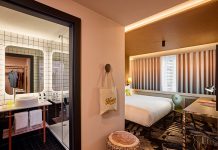
Behind the imposing, Brutalist concrete that defines Zurich’s Oerlikon district lies a surprising secret. While its exterior honours the neighbourhood’s industrial roots, stepping inside Mama Shelter reveals a vibrant, neon-soaked world that is a far cry from its rigid shell
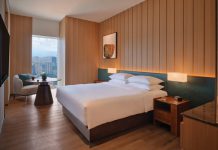
A polished urban retreat designed for business travellers, Hyatt Regency Kuala Lumpur at KL Midtown combines thoughtful design, seamless service, and exceptional facilities.




 Gregory Crandall is the senior vice president, global activation team with Pico Group.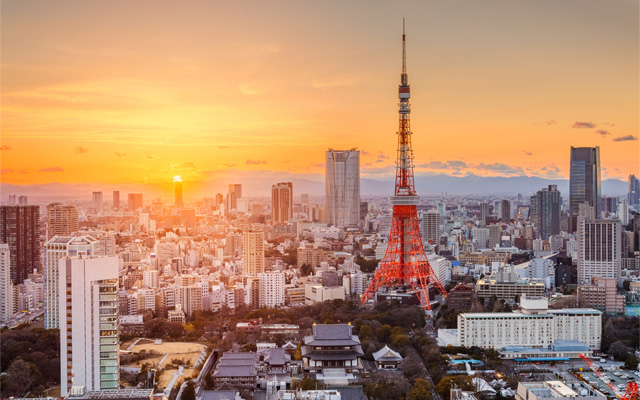

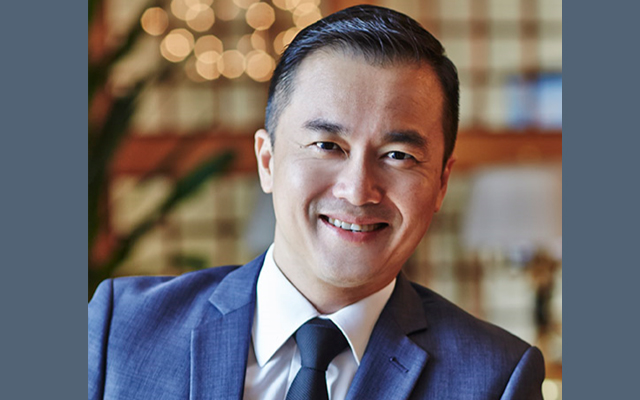
 Todd Handcock is president Asia Pacific at Collinson, a provider of traveller experiences including medical and security assistance, and travel medical services.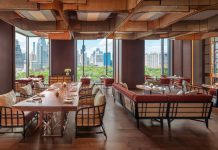


Fully-vaccinated Singapore residents will begin to enjoy greater social freedom from August 10, as the city-state moves into the first phase of her four-step transition to becoming a Covid-19-resilient nation.
Fully vaccinated individuals will be allowed to gather in groups of five, up from the current two. This applies to F&B settings. They can also take part in live performances and events, which will be allowed to host up to 500 fully vaccinated individuals.
Singapore will continue to ease restrictions, with permitted event capacity expanding to 1,000 fully vaccinated individuals come August 19 if conditions remain good.
According to health minister Ong Ye Kung, who is one of the chairs of Singapore’s Covid-19 multi-ministry task force, this initial phase will run from August 10 till early-September, when 80 per cent of the Singapore population is likely to be fully vaccinated. With a higher rate of vaccination, Singapore’s economy will be further opened up, with more social activities allowed and travel made possible, he said.
The task force also announced plans to offer greater quarantine flexibility for fully vaccinated travellers from Australia, Austria, Canada, Germany, Italy, Norway, South Korea and Switzerland.
From August 20, travellers from these eight countries will be allowed to serve their 14-day stay-home notice (SHN) at their own places of residence instead of a dedicated facility.
To qualify for this scheme, travellers must have remained in the approved countries for the last 21 consecutive days before leaving for Singapore, and must either be staying alone or with other fully vaccinated household members who are under SHN for the same duration and with the same travel history.
All travellers must show proof of approval to serve SHN at their place of residence when they arrive in Singapore. They will be required to wear an electronic monitoring device to ensure compliance, and legal action will be taken against those who breach SHN requirements or make false declarations, said the Ministry.
Travellers who opt for this scheme will have to utilise and pay for specially designated transport services to and from their place of residence.
These latest measures are expanded from an ongoing allowance for travellers from New Zealand, Brunei, mainland China, Hong Kong, Macau and Taiwan to serve SHN at their place of residence.
Ong also revealed plans to establish travel lanes with selected countries, where frequent Covid-19 tests will replace quarantines.