Asia/Singapore Tuesday, 21st April 2026
Page 474

Pumping out support

0

The island of Jeju has found a strong pillar of support in its local CVB, which has kept busy with transformational tools, subsidy schemes and venue campaigns to promote the safe and effective return of hybrid events to the destination.

For instance, Jeju CVB introduced a slate of support programmes to strengthen businesses in its ecosystem, enabling them to establish digital foundations such as a company cloud drive, a wireless office network and hybrid meeting technology applications. As further backing for the rise of hybrid events, it has also widened the scope of its special support programmes to include streaming technology, online platforms and digital content for meetings and exhibitions.

Grand Hyatt Jeju is one of the latest openings with a pleathora of business events facilities

“In the new-normal era, hybrid meetings and virtual events are growing so fast. (Accompanying) this change, local providers in the Jeju MICE Alliance need to be prepared for the digital working environment and renovate their marketing tools to catch up with new trends,” said Changdeog Ko, secretary general, Jeju CVB.

He added: “(The support schemes have) helped them to be ready for the non-contact business market. To prepare local exhibition providers – such as PCOs and PEOs – for meeting technology, we plan to provide educational learning programmes and marketing skills in virtual events.”

For in-person events, organisers must now consult the Jeju MICE Event Prevention Guide released early last year. Local providers have also been participating in regular meetings with Jeju CVB to receive updated prevention measures and guidelines for each industry.

Ko shared: “This year, we are running a prevention support programme for meetings. All delegates of meetings of more than 100 pax are given personal hand sanitiser, and we provide an exclusive shuttle bus to minimise contact between delegates and the Jeju locals. Lastly, we sterilise meeting rooms before, during and after the event.”

With robust measures and support in place, Jeju has remained confident in promoting notable venues in its ecosystem. Last year, its CVB spotlighted eight sustainable activities ranging from teambuildings to tours. These are designed for small groups of 30 attendees, and to last for three to four hours.

It has also handpicked 13 unique venues – such as Camellia Hill, Jeju Folk Museum and Jeju Hwanswang Forest Park – to award a maintenance fund with professional consulting in preparation for in-person events. These venues are now “well-prepared to hold various types of events, from exclusive incentive groups to large meetings, which will be expected to be held in Jeju this year”, expressed Ko.

Infrastructure on the island has continued to evolve, with the emergence of more hotels that promise a fully kitted-out meeting experience. In December 2020, Grand Hyatt opened its largest Asia-Pacific property 10 minutes from Jeju International Airport, offering 1,600 rooms and suites, eight residential-style meeting spaces and 14 restaurants and bars. This year, Grand Josun Jeju opened its doors in January, and is a refreshing offering for groups hankering for a luxury resort experience.

To push its latest offerings out to the Chinese market, Jeju CVB has clocked its attendance at virtual events, such as IT&CM China and IT&CM Asia, while rolling out promotional materials and updated information through its tourism offices in Beijing, Shanghai, Guangzhou, Chengdu, Shenyang and Taiwan. This comes on top of regular Zoom conferences sharing the latest insights about the Chinese market and discussion of sales strategies. From the beginning of June, the CVB also plans to upload MICE content targeting the Chinese market on its social media channels.

Trio of leadership transitions at Swire Hotels

0
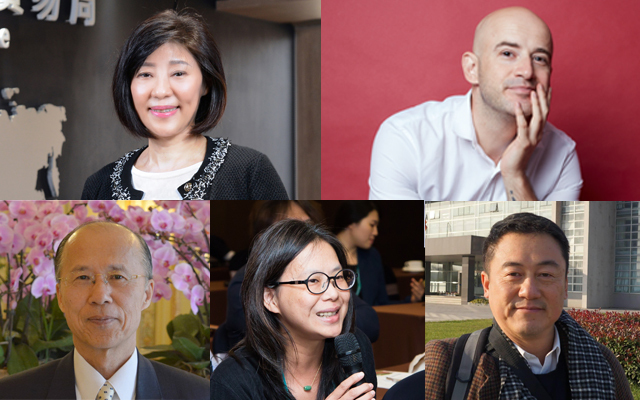
From left: Giovanni Beretta; Kristina Snaith-Lense; and Olivier Dumonceaux

Swire Hotels has announced a trio of promotions in its senior management team across The House Collective and East brands.

First up is Giovanni Beretta, who will be relocating with his family to Hong Kong as the new group director of operations. In his new role, Beretta will oversee all of the brand’s hotels and restaurants in Hong Kong, mainland China and Miami.

From left: Giovanni Beretta; Kristina Snaith-Lense; and Olivier Dumonceaux

With over 25 years of hospitality experience, Beretta first joined the brand as the general manager of East Miami and vice president of Swire Hotels in the US in 2015.

Meanwhile, rising to the position of general manager, Kristina Snaith-Lense will oversee all aspects of The Upper House and Pacific Place Apartments.

Snaith-Lense has worked with the brand for nearly 10 years, starting her career with the company as the assistant director of guest experience at The Upper House in 2012. In 2017, she spearheaded the pre-opening operations of The Middle House in Shanghai as the hotel manager, before returning to Hong Kong in 2019 to take on the role of hotel manager at The Upper House.

Last but not least, Olivier Dumonceaux will step into his new role as general manager at The Opposite House.

Starting his hospitality journey in Lyon, France, Dumonceaux has worked across nine countries. Following the success of The Opposite House’s renovation, where he has been the hotel manager since 2018, Dumonceaux was promoted to become the property’s general manager earlier this year.

He joined the Swire Hotels team in 2014 as the director of R&B at The Temple House, and was then promoted to executive assistant manager after working to secure the success of the property’s opening.

Singapore reduces stay-home notice for travellers from higher-risk locations

0
Travellers entering Singapore from higher-risk locations need only serve a 14-day quarantine starting June 24

Singapore will shorten the stay-home notice period for travellers from higher-risk countries or regions from 21 days to 14 days, starting June 24.

These travellers will be required to test themselves on days three, seven and 11 of their arrival in Singapore with self-administered antigen rapid test (ART) kits, said the Ministry of Health (MOT). This is in addition to the existing polymerase chain reaction (PCR) tests they have to take on arrival in Singapore, and on day 14, before their stay-home notice ends.

Travellers entering Singapore from higher-risk locations need only serve a 14-day quarantine starting June 24

This is “to identify potential infection cases early and provide infected travellers with appropriate medical care as soon as possible”, given the higher transmissibility of new variants of concern, MOT added.

The new testing requirement will be implemented for travellers who arrive from 23.59 on June 27.

All countries and regions are considered higher-risk except Australia, Brunei Darussalam, Hong Kong, Macau, mainland China and New Zealand.

Meanwhile, travellers arriving from Taiwan and Israel will be able to apply to serve their 14-day stay-home notice at their place of residence instead of a dedicated facility. They must apply before arrival and must have spent the last 21 days prior to travel in Taiwan or Israel to be eligible.

Travellers must also be occupying their place of residence alone or with household members with the same travel history who are also serving the same stay-home notice duration. They will also have to undergo testing using the same regular self-administered ART kits and PCR tests.

FCM launches proprietary tech platform in China

0
The launch reinforces FCM’s strategic commitment to the Chinese market

FCM has rolled out its new proprietary technology platform in China, which features unique localised features and content developed specifically for the Chinese market and their traveller needs.

Working closely with Chinese business travel vendors, FCM will be able to offer content add-ons, integration or extensions to customers beyond what is currently available in the corporate travel space. They include content from airlines (especially non-GDS and low-cost carriers), hotels and online car booking, to all prevailing HR and expense management systems in China.

The launch reinforces FCM’s strategic commitment to the Chinese market

Calvin Xie, general manager of FCM Travel China, said: “Post-pandemic, we have seen an increase in requirements from MNCs and Chinese national companies to achieve flexibility in their travel programmes.

“Through joint efforts with these local players, we will continue to build our vision in making FCM a one-stop shop for customers, with the aim of equipping them with tools they need to manage a travel programme efficiently through one simple, powerful and effective experience. At the same time, we will continue to engage actively with our long-term travel partners like TravelSky, Concur, Cloud Helios and Airplus who are important to our Chinese customers.”

The platform will also provide seamless crossover between devices, air and rail comparison options, and self-service functions that include rebooking or changes in the itinerary. Travel managers will have access to a slew of solutions including greater travel policy control, comprehensive approval processes and heightened risk and safety controls. In addition, travellers will also be ensured of always available assistance, via live chat with an agent or via FCM’s mobile chatbot Sam which has evolved into a digital assistant across the entire platform.

Xie added: “China remains a critical market for FCM Travel globally and we have chosen to launch FCM Platform in China as we believe this new platform will benefit MNCs, national companies and business travellers significantly in this market.

“At the moment, there is a relatively low percentage of companies in China who uses a TMC to manage their travel programme. This is a clear signal that managed travel still has far-reaching opportunities in China. FCM’s new platform will be invaluable in enabling current as well as new customers to be highly agile in the ever-evolving travel landscape post-covid, as well as support them through their company expansion plans.”

FCM expects its first pilot customers to start using the platform in July.

Regional interdependency essential for MICE industry to rise above the crisis

0
Panellists at the Coopetition - Building Competitive Alliances For Expedient Regional Market Recovery session

While regional collaboration between various business events destinations in Asia-Pacific is not a lofty aspiration, many are still not ready as they first have to tackle challenges at the national level.

Andrew Hiebl, CEO of Association of Australian Convention Bureaux, said: “We’ve all been so focused on allowing events to occur in our own backyards. (For Australia), that approach is being led by our states and territories which each have their own rules and processes impacting the business events industry.”

Panellists at the Coopetition – Building Competitive Alliances For Expedient Regional Market Recovery session

However, there is now a far greater need for destinations to share how they have been working with their respective governments and exchange information on what solutions are speeding up recovery, Hiebl opined.

Tourism New Zealand’s international business events manager, Leonie Ashford, said: “I’ve copied some of the initiatives in lobbying the government for more recognition (for the business events sector) from some destinations (in Asia-Pacific) that have done it well. So, sharing best practices and showing how valuable the sector is (would help).”

One way to get the government to listen is by building a national alliance and speaking with a united voice.

Alicia Yao Hong, founder of IME Consulting, relayed how various associations in China are helping the business events sector to get back on its feet, with the domestic meetings and exhibitions sector having recovered to about 80 per cent.

Yao added that non-governmental associations in China have also come together, such as food and hotel associations, to help drive recovery.

Amelia Roziman, acting CEO of Business Events Sarawak, also shared how “industry heads in the sector came together to form the Sarawak Business Events Association”.

“(One way the various regions can work together) is getting governments to speak to governments – as they are on the same level – to convince them how business events can help develop the future economy,” she added.

“By coming together and showing a united front has been a success factor from our engagement with the government, and has opened doors for us,” shared Hiebl.

With their backyard relatively spruced thanks to strong association alliances already in place, Thailand has taken the lead in spearheading a regional alliance.

Nichapa Yoswee, senior vice president, Thailand Convention and Exhibition Bureau (TCEB), said: “We are in the process of forming an Asian convention alliance, where the proposed founding members are China, Japan, Taiwan and Singapore.”

This alliance would help in developing more substantial lead generation, and work towards easing travel arrangements between member nations. Nichapa also proposed the concept of joint conventions, where member countries would take turns to host a rotating convention.

In addition, Nichapa revealed that TCEB has initiated a “very promising dialogue” with the Seoul Convention Bureau, and a conversation with Malaysia is next in line. She added she was looking forward to working with stakeholders in New Zealand and Australia as well in the near future.

Agreeing with the idea, Hiebl said: “I think there’s real opportunity for governments in Asia-Pacific to invest in start-up conferences, in particular industries that we specialise in. There’s also an opportunity for us to create events and not just attract events because the region is of a significant size, and (is home) to a large population.”

Chinese corporates seek greater support, assurance from TMCs, travel suppliers

0
Many companies remain uncertain about sending out their corporate travellers in a post-pandemic world

Chinese corporates that are reviving business travel in a post-pandemic world are now expecting their appointed Travel Management Company (TMC) and suppliers to support their need for greater duty of care to their travellers.

In turn, business travel specialists have responded with enhanced information communications and round-the-clock support for clients, shared panellists speaking at the CTW China 2021’s Safe Travel of the Future: How Will It Look? online session.

Some companies are still uncertain about sending out their corporate travellers, while such travellers have also come forth with new concerns about health and safety 

Harry Guo, head of account management – China, FCM Travel, detailed the need for accurate and up-to-date travel information that is accessible by the traveller online and offline. This must come hand in hand with a TMC that can offer a trusted global partnership network and round-the-clock support service.

Guo noted that safe travel requirements are not new, as pre-pandemic travellers have had to deal with severe weather conditions, natural disasters, airline strikes, political instability and terrorism.

“But for our post-pandemic travellers, Covid-19 restrictions and testing requirements, quarantine policies of each country, and the desire to be protected against the virus in enclosed aircraft cabins have all come together to pose greater challenges for every trip,” he remarked.

At CITS American Express Global Business Travel, client support has evolved during the pandemic to focus on three areas: traveller care, travel programme resource provision, and round-the-clock travel counsellor support.

Henni Hu, the company’s head of marketing – China, said a CITS American Express Global Business Travel study on the pandemic’s impact on Chinese business travel found that 60 per cent of companies are still uncertain about travel in a post-pandemic world.

“This uncertainty is normal because the pandemic is a first for many of us, and many travellers now have different requirements and needs due to changing travel confidence and desires,” Hu explained.

While a business trip could be sorted out with one phone call before the pandemic hit, today the same itinerary requires eight to 10 calls to flesh out. Most of the calls would be for information on changes to airport safety protocols, inflight mask requirements, safety precautions at the hotel, and more, shared Hu.

To support concerned customers, CITS American Express Global Business Travel has built a Covid-19 website that details travel advisories for over 140 countries as well as Chinese provinces. The website is updated daily by a team of professionals who track airlines, hotels and government pandemic measures. The same information is shared with customers on WeChat. Supporting this tool is a team of travel consultants who will speak to customers and provide assurance.

“Allowing our customers to seek clarifications and assurance from our service staff via calls helps to build travel faith,” said Hu.

Rebuilding travel confidence requires the effort of all tourism partners, opined Guo. As such, FCM Travel now screens suppliers to ensure they have high standards of health and safety.

Recognising the new concerns of travellers today, Judy Liu, general manager – corporate & partner sale China, Delta Air Lines, said her company has invested heavily into comprehensive health and safety measures, covering more than 100 criteria throughout the customer journey.

Liu highlighted two outstanding initiatives by Delta – it was the first airline in the world to establish an international cleaning department, responsible for formulating and implementing innovative safety and cleaning standards, and to employ a chief health officer who directs new technology adoption in health and safety initiatives.

Furthermore, the airline has chosen to block the sale of all middle seats, cutting inflight capacity to 60 per cent while other US airlines continue to fill all seats.

“For us, ensuring the safety of our customers and giving them peace of mind is more important. We gave up income now in hopes that when international travel resumes, more customers will choose us over other airlines,” said Liu.

Philippines’ stakeholders ready to meet new Chinese needs

0
Island properties with a good mix of meeting facilities and leisure opportunities are expected to be a hit with the Chinese; El Nido in Palawan pictured

Island properties that front the sand and sea, and have ample meeting spaces with highly-digitalised facilities will be the order of the day when Chinese and regional corporate groups return to Philippines, predict stakeholders in the destination’s business events sector.

Brian Connelly, general manager of Marco Polo Plaza Cebu, told TTGmice: “The islands will be first to benefit from the initial inbound (wave of) regional corporates, particularly those which (corporates know about and have had good experiences at).”

Resorts with a good mix of meeting facilities and leisure opportunities are expected to be a hit with the Chinese; El Nido in Palawan pictured

Connelly added that “planners will also look for venues with outdoor spaces” to ensure that the daily programme will not be confined to an “enclosed function room”. He also opined that most meetings will have a “digital component” tagged to it.

In anticipation, Marco Polo Plaza Cebu has updated its digital systems, spruced up its outdoor venues, and renovated its premier rooms.

Similarly predicting that the Chinese will be interested in resort environments with digitalised meeting facilities, the Bluewater Sumilon Resort in Oslob, south of Cebu, “has repurposed an area where meetings can be held in its natural settings”, shared Bluewater Resorts’ vice president sales and marketing, Margie F Munsayac.

Other trends she has noticed include smaller group sizes due to health and safety protocols, as well as the mixing of business with leisure when travelling in the future.

Munsayac also revealed some “very promising MICE prospects”, where companies are exploring staff incentives that benefit the whole family.

“After a long hiatus (of being stuck indoors), people want to get out (and head to) the best beaches in destinations such as Boracay, Cebu, Bohol, and Palawan,” pointed out Carmela Bocanegra, Chroma Hospitality vice president sales and marketing.

Chroma’s properties, she said, have “strong and stable telecommunications and internet access to conduct MICE events”. Chroma also has rolled out a Sales Travel Concierge that can assist confirmed guests with additional pandemic requirements such as a Covid-19 swab test and QR codes for health certificates.

Meanwhile, Mike Perez, operations manager of 365 Wonders Booking Reservations Service, is pitching the white sands of Calatagan in Batangas to corporate groups from China.

“They love the beach and Calatagan, just a few hours drive from Manila, is a mini-Boracay with ample choice of resorts for bleisure,” he said.

Global leaders believe business travel will be more important than ever

0
During the global lockdowns, companies have experienced the direct impact of no travel or in-person meetings on their business functions and operations.

As restrictions ease globally, built-up anticipation for business travel is clear, with 81% of global leaders indicating that business travel will be more important than ever to driving success, according to new research from VistaJet and WSJ Intelligence.

This was derived from new research entitled For The Future of Business Travel, which surveyed over 200 high-level company executives in the US, EMEA and APAC about the essential role and value of travel in their professional lives.

During the global lockdowns, companies experienced the direct impact of no travel or in-person meetings on their business functions and operations

During the pandemic, travel has been limited for 90% of companies surveyed, and almost all (97%) said their businesses experienced negative impact directly related to those restrictions. Nearly one-quarter (24%) indicated massive or substantial disruptions across all eight areas measured, and 87% cited massive or substantial disruption in at least one area. More than a third (37%) said international business development and product launches took a hit due to a lack of in-person presence.

VistaJet has seen a surge of 49% in corporate interest around the world since the start of the pandemic. The main benefits of taking private flights for business travel are reported by those surveyed, in order, as flexibility, efficiency, safety and privacy. The two top priorities for trips are visiting partners and vendors and going to industry events, each at 34%. Managing current relationships and building new ones are also key drivers.

Among respondents who take eight or more private flights a year, 60% plan to significantly increase in-person meetings.

However, the return to business travel largely hangs on regulations – 46% of respondents are waiting for destinations to reopen; 42% want updated Covid-19 data and rules for destinations; 36% seek support in case Covid-19 regulations change during a trip; and the same number await relaxation of their own company’s travel policies.

VistaJet has also recently launched a new corporate membership, offering speed and maximum flexibility with payment in arrears, unlimited flying hours, guaranteed availability of additional aircraft, and streamlined travel logistics.

For the full findings of The Future of Business Travel report, and to download a copy, click here.

SingEx-Sphere announces new brand

0
Jean-François Quentin will head Constellar

SingEx-Sphere Holdings has unveiled its new name, Constellar, heralding the beginning of a new chapter for the recently-merged entity.

Earlier in February, Temasek and Singapore Press Holdings (SPH) entered into an agreement to merge their respective MICE subsidiaries, SingEx Holdings and Sphere Exhibits, to form SingEx-Sphere Holdings (SingEx-Sphere).

Jean-François Quentin will head Constellar

The entity will also be welcoming a new group CEO in the coming weeks. Jean-François Quentin, a 20-year veteran of the exhibitions and media industry who has served in senior leadership positions in the industry, will be assuming the position on August 1.

Constellar aims to connect a global eco-system of businesses and consumers through a holistic portfolio of brands in the business events sector, including events management, venue management and consultancy businesses. This portfolio will expand via both organic curation and inorganic investments.

Robin Hu, chairman of Constellar Holdings, said in a statement: “ The Constellar brand name and logo reflect our vision to become a global leader in the MICE experience space by activating impactful networks that connect our partners to global marketplaces for sustainable growth.”

Singapore rolls out SG SafeEvent Certification

0
En-terprises attaining the certification will provide a mark of assurance to their customers and stakeholders and inspire greater consumer confidence.

A pioneering group of companies has attained the SG SafeEvent Certification at an industry briefing – organised by Singapore Association of Convention and Exhibition Organisers and Suppliers (SACEOS) – earlier this month.

The SG SafeEvent Certification Programme will ensure that enterprises such as venue operators, organisers, and suppliers will uphold the highest standards of safe management practices to deliver confidence to visitors and organisers in the Conduct, Construct and Compliance of safe events in Singapore.

Enterprises attaining the certification will provide a mark of assurance to their customers and stakeholders and will inspire greater consumer confidence; Singapore’s skyline pictured

Currently, 10 companies have come onboard, where six were issued the Certification after being assessed independently by a panel of approved certifying bodies, while the remaining are in the process of completing the auditing process.

Patrick Lim, director, leisure, hospitality & education, Enterprise Singapore, said in a statement: “The SG SafeEvent Certification will provide international visitors the added assurance that event organisers, venue operators and suppliers in Singapore have complied with international standards on hygiene and sanitisation, safe distancing and emergency management.

“The companies involved in the pilot have gone beyond the mandated Safe Management Measures to develop capabilities in customising large scale events safely, containing the risk of virus spread and implementing a thorough disinfection plan. As more enterprises are certified, this will instil greater confidence in Singapore’s MICE and events industry – a key consideration in helping the industry recover.”

Don Tsai, managing director of event management company First Wave, added: “Adopting SG SafeEvent Certification gives clarity, consistency, confidence to stakeholders internationally and locally. It tells them that we are organised, trained and prepared to reopen events. It provides a consistent quality of standards for MICE and event organisations to be able to implement events in a safe manner.”

The SG SafeEvent Certification Programme was launched in April during the Tourism Industry Conference organised by the Singapore Tourism Board.

The Events Industry Resilience Roadmap, which was launched last year as an operational handbook for the MICE and Events industry, laid the foundation through the SafeEvents Standards based on the prevailing government guidelines such as STB’s Safe Business Events framework. To date, over 1,500 SafeEvent Ambassadors have been trained and operationally ready to be deployed at events.

Interested enterprises in the business events and tourism ecosystem who wish to be certified or who wish to enquire about the certification can register their interest for a briefing with SACEOS at secretariat@saceos.org.sg.

Reviews

The Ritz-Carlton, Bangkok

The newly-opened Ritz-Carlton, Bangkok anchors the One Bangkok development with cosmopolitan elegance. Featuring the city's largest ballroom and a spectacular new penthouse suite, it delivers exceptional hardware and deeply authentic, soulful service for business and leisure travellers alike

Mama Shelter Zurich

Behind the imposing, Brutalist concrete that defines Zurich’s Oerlikon district lies a surprising secret. While its exterior honours the neighbourhood’s industrial roots, stepping inside Mama Shelter reveals a vibrant, neon-soaked world that is a far cry from its rigid shell

Hyatt Regency Kuala Lumpur at KL Midtown

A polished urban retreat designed for business travellers, Hyatt Regency Kuala Lumpur at KL Midtown combines thoughtful design, seamless service, and exceptional facilities.