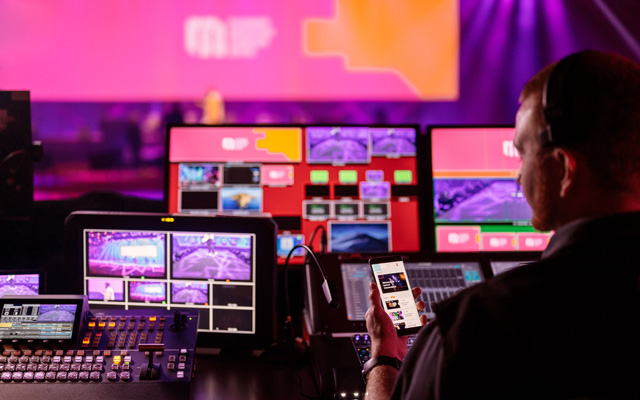
The Korea Tourism Organization will be holding a new, hybrid travel expo from June 29 to July 13, 2021, bringing four tourism events under one umbrella for the first time.
The Korea International Travel Expo (KITE 2021) will kick off on June 29 with an opening ceremony at the Paradise City Hotel in Incheon. The programme line-up will include keynote speeches by Berlin Tourism and Congress CEO Burkhard Kieker and Singapore Tourism Board assistant chief executive Chang Chee Pey, a performance by Korean longboarder Ko Hyojoo as well as a night-time drone show.
The official poster for KITE 2021
The event will kick off with the Korea MICE Expo from June 29 to July 2, featuring a roadshow, CVB showcase, and an exhibition on meeting technologies.
This will be followed by the Korea Travel Mart from July 5-7. Highlights include discounted Korean products, early-bird flight ticket prices to South Korea, a live travel talk show with a K-pop star, and an online fam tour for overseas buyers.
Taking place from July 8-9, the Korea Luxury Travel Mart will feature a tourism conference, as well as a virtual fam tour showcasing luxury tourism and related products.
Wrapping up the expo will be the Korea Medical Wellness Tourism Fair from July 12-13, featuring a conference, virtual wellness programme, and medical consultations for overseas delegates.
Delegates can expect to obtain the latest information on South Korean tourism in relation to the four sectors, engage in one-on-one video business consultations with Korean sellers through a new online platform, and gain insight into post-Covid-19 tourism in South Korea. Over 1,500 domestic and overseas buyers, as well as thousands of visitors, are expected to attend.
Nearly one-third of business events professionals doing business in Australia, New Zealand, and South-east Asia said that they are unable to estimate in-person registration numbers for an event this year until they get closer to its planned date, while more than one-third are making the go/no-go decision on an in-person event in 2021 within two months of the event date.
These were some of the findings from the most recent PCMA APAC Dashboard Survey conducted from April 13-26, of 184 respondents.
Nearly 70% of participants in the survey said they are making broadcasting facilities a criterion for future events in their site-selection process, with 74% prioritising broadcast quality virtual event and studio spaces. Photo credit: PCMA / Syafiq AB
Respondents to the survey were both business event professionals (66%) and suppliers (34%), who do the majority of their business in Australia and New Zealand (38%), followed by South-east Asia (36%). The largest percentage work in professional services (32%), followed by independent planners and agencies representing clients in a variety of industries (27%).
On how they were feeling at this point, one-third said their mood was hopeful, 16% are feeling inspired and creative, and 15% said they were determined, sort of a middle ground. A collective 36% expressed a less positive outlook, saying they were doing their best to get by, anxious about the future, or exhausted and burned out.
Around half of respondents (52%) said they are focusing their reskilling efforts on designing live experiences in post-Covid-19 physical environments, slightly down from 55% of respondents who identified this as an important new skill in a PCMA APAC survey conducted last July. And only 57% of respondents said that they are focused on designing digital event experiences, compared to 74% of planner respondents to the 2020 survey.
A possible interpretation of this data point may be that respondents to the recent survey have become more proficient in digital event design in the nine months between the two surveys, and/or they are focusing more of their efforts on convening small face-to-face events safely.
In fact, 82% of respondents were planning an in-person event this year, with the largest contingent (44%) scheduling events for 4Q2021.
They do expect their in-person events, however, to look very different than in pre-Covid times. Sixty per cent estimate that the rise in the use of digital-event technology will have a high or extensive impact on face-to-face attendance at 2021 events, slightly higher than predictions in last year’s survey — slightly more than half of planners said they anticipated a high or extensive impact this year. Looking ahead to 2022, only 39% foresee a high or extensive impact on attendance, with the largest percentage (44%) planning their 2022 events for the first quarter.
And while only 15% of respondents described their mood as determined, pulling off their events with anticipated quick turnarounds will certainly require grit. More than one-third said they are making the go/no-go decision on planning an in-person event within two months of the event date, the shortest window offered among the survey options.
That the post-Covid-19 environment remains fluid and uncertain is also backed up by respondents’ estimates for in-person registration numbers: Nearly one-third say they were unable to estimate until they got closer to the event date. Of those hazarding a guess, 46% expected declines of up to 50% or more in attendance for their 2021 in-person event vs the same event held in pre-pandemic times. The largest percentage — 46 % — do not anticipate any overseas delegates attending these events. In mid-May, government officials confirmed that Australia will remain closed to the rest of the world until mid-2022.
The most popular scenario for the recovery of face-to-face meetings, chosen by 36% of respondents, is that smaller local and regional events will thrive before national and international groups gather.
While 30% of participants expect that people will travel to regional and domestic events in 3Q2021 and 4Q2021, 28% acknowledged that despite a pent-up demand for in-person events, organisations will avoid assuming risks associated with business travel, and 23% cited budget cuts, the economy, and job insecurity as playing a key role in limiting attendance.
Respondents are pursuing several different models of hybrid events — they are almost evenly split between holding a simultaneous in-person event with streaming video and a separate online programme for a virtual audience (37%) and the same offering but without separate online content for digital participants (38%). The vast majority (79%) see interaction between the in-person and digital audiences as an important aspect of a hybrid event.
That event professionals are pursuing a hybrid approach to their events is also evidenced by the fact that nearly 70% of survey participants are making broadcasting facilities a criterion for future events in their site-selection process, with 74% prioritising broadcast quality virtual event and studio spaces and 68% looking for facility staff with experience in running digital events. Of course, costs are a deciding factor as well, cited by 70% of respondents.
Finally, events professionals’ resourcefulness comes through in their responses to the question, How has your event/s business model changed? In almost equal percentages, survey respondents said they had become less reliant on face-to-face event registrations and/or sponsors (49%) and had changed the frequency of their events (48%). Thirty per cent have adopted a hub-and-spoke model with regional gatherings and a virtual audience and 31% have found ways to monetise the digital audience by becoming more data driven.
The
EEAA is continually revising its risk and safety management program in light of legislation
and COVIDSafe practices, and continues to invest in ongoing education and professional
development to further promote safety within the industry.
The Exhibition and Event Association of Australasia (EEAA) has rolled out a pilot programme to provide Risk and Safety training and consultancy services through Beaspoke Safety, a specialist risk and safety consultancy.
The EEAA continues to invest in ongoing education and professional development to better the industry’s safety standards
Staff and volunteer management; Contractor inductions
Training on Risk Management, COVIDSafe protocols and plans, and Manual handling
This is the next step in EEAA’s comprehensive risk and safety management programme, following the release of the Safe Operating Framework in 2020, a national guide for Organisers and Suppliers ensuring the COVIDSafe operation of exhibitions and events.
EEAA chief executive, Claudia Sagripanti said in a press statement: “The EEAA is continually revising its risk and safety management program in light of legislation and COVIDSafe practices, and continues to invest in ongoing education and professional development to further promote safety within the industry. We are delighted to launch this pilot in 2021 with Beaspoke Safety for the provision of WH&S services to EEAA members at a preferential rate, and to maintain the focus on safety and risk management.“
Beaspoke Safety’s director and principal consultant, Bea Tomlin, added: “We are not just about creating a set of documents that sit on a shelf gathering dust, we create true and real documentation that represents an organisation’s work practices that are workable and achievable. Our ultimate goal is for the individual land the team to develop a risk mindset,
so it becomes part of the everyday process of the business.”
EEAA members interested in accessing this service need to contact the EEAA office, and will deal with Beaspoke Safety directly for the provision of services.
Sabre Corporation has partnered with travel risk management platform Gopass Global to help deliver its Covid-19 biosecurity risk analytics capabilities to the travel industry.
Gopass Global solutions leverages advanced analytics to deliver a single view of all of the biosecurity risk elements of a trip, thereby boosting traveller confidence.
Gopass Global solutions deliver a single view of all the biosecurity risk elements of a trip
Under the deal, travel agents across the globe now have access to Gopass travel risk management capabilities via the Sabre Developer Partner platform. By integrating with Sabre’s shopping APIs, Gopass populates a quantifiable risk score onto each travel option and displays the information to agents, who are then able to better advise their customers.
Powered by machine learning and artificial intelligence, Gopass Travel Risk Optimizer provides travellers with an end-to-end analysis of all aspects of travel and their risk exposure in the cycle of travel. Gopass Global data also looks at country conditions such as infection rates, government policies and data reliability. Putting this all together, agents can obtain a risk score out of ten per flight itinerary, enabling them to clearly identify the lowest risk rates overall.
“For the travel industry to open up, recover and grow, it is vital that we are able to reduce and mitigate the risk of travel so we can instil renewed confidence in travel for both the leisure and corporate traveller,” said Mark Radford, CEO, Gopass Global.
“It’s clear leisure travellers want to know about potential travel risks so they can avoid or mitigate them. But this is especially critical for corporate travel as we learn to live with this pandemic. Companies need to ensure they are taking their duty of care to employees seriously when it comes to travel. It’s essential, therefore, that travel agents, and ultimately travellers, have all of the critical information they need at their fingertips when planning their trip to make the decisions that are right for them.”
The World PCO Alliance has elected officers for the upcoming term at its annual general meeting on May 26, 2021.
Nancy Tan, managing director of Singapore-based Ace:Daytons Direct is the Alliance’s new president, taking over from Noel Mitchell of Keynote PCO.
Nancy Tan
André Vietor, managing director of Spain-based BCO Congresos is the new vice-president, while Sumate Sudasna, managing director of Thailand’s Conference and Destination Management will serve as treasurer. The new officers will serve two-year terms, beginning July 1, 2021.
Kaoru Shibuta, executive managing director, Congrès Inc. was re-appointed as the Alliance’s secretary-general and the secretariat will continue to be managed by the company, based in Japan.
Founded in 2009, the World PCO Alliance provides leadership in meeting management through the delivery of streamlined and effective meetings around the globe. The organisation comprises 20 leading PCOs in the meetings industry from around the world.
CapitaLand’s wholly-owned lodging business unit, The Ascott Limited (Ascott), has opened lyf Tenjin Fukuoka, Ascott’s first lyf-branded property in Japan.
The coliving property offers 131 rooms, ranging from 12m2 to 16m2, and are equipped with high-speed Wi-Fi and a mobile access key. On-site facilities include a social kitchen, cafe, and laundry area, and guests will be able to participate in curated social programmes such as baseball and billiards nights.
One of a Kind Plus room
Lyf Tenjin Fukuoka is located in Tenjin, the major shopping and recreational centre of Fukuoka, and is near the business district as well. It is the first of six lyf properties slated to open this year, and openings to follow include two in Singapore, and one each in the cities of Hangzhou, Shanghai and Xi’an.
Ascott currently has a total of 15 lyf properties with over 3,000 units in 12 cities and eight countries, comprising three properties that have opened and 12 under development. Between 2022 and 2024, seven more lyf properties are slated to open in Beijing, Cebu, Danang, Kuala Lumpur, Manila, Melbourne and Shanghai.
Mandarin Oriental, Singapore has appointed Cindy Kong as hotel manager.
In her new capacity, Kong will spearhead initiatives to drive operational excellence and ensure high levels of guest satisfaction.
A veteran in the hospitality industry, Kong has amassed over 20 years of experience with Mandarin Oriental Hotel Group, with her most recent role being the hotel manager of The Landmark Mandarin Oriental, Hong Kong.
The Malaysian is no stranger to Mandarin Oriental, Singapore, having worked here in 2000 as a guest services executive, before taking on the role of guest services manager three years into her term.
After her six-year stint in Singapore, Kong moved on to Mandarin Oriental, Kuala Lumpur where she held managerial roles in the Front Office department, and later took the helm of the hotel’s rooms division as director of rooms before joining Mandarin Oriental, Macau in the same capacity.
A screenshot from the recently-launched dedicated website
The Hybrid City Alliance has added five new members to its ranks, released a whitepaper exploring the design, sustainability and risks of hybrid and multi-hub hybrid events, as well as launched a dedicated website.
The five new members are Costa Rica Convention Bureau, Fukuoka Convention & Visitors Bureau (Japan), Liverpool Convention Bureau (UK), Quito Tourism Board (Ecuador), and Tourism Winnipeg (Canada).
These additions bring the total membership to 17 cities from 12 countries across six continents. Meanwhile, Fukuoka Convention & Visitors Bureau joins Seoul Convention Bureau and Business Events Sydney as the only three Asia-Pacific bureaus on the list.
A screenshot from the recently-launched dedicated website
The free whitepaper, entitled Your Ultimate Guide to Multi-City Hybrid Events, was produced from the output of four global workshops in January and February 2021 attended by congress organisers, convention bureaux, and suppliers such as hotels and AV companies.
The whitepaper sets out to:
Define what it means to run a multi-city hybrid event – this includes the challenge of seeking a definition of hybrid events and identifying where they sit in the industry’s wider offering and vernacular.
Help choose whether or not to organise an in-person, digital or multi-hub hybrid event, including the various challenges and benefits of each.
Provide ideas and guidance on the design of a successful multi-hub event with an awareness that this can mean creating separate live, digital and hybrid experiences with content appropriate to each as a stand-alone offering and the wider event as a whole.
Consider the sustainability of multi-hub hybrid events, measure their impact on the world and apply appropriate actions to mitigate damage.
Identify the risks associated with hybrid events, in particular those areas where risk to an event’s success is increased by a switch to the hybrid and multi-hub formats.
Highlight health and safety challenges, particularly in light of an ongoing global pandemic.
Bridget Chisholm, director of conferences at the International Leadership Association, said: “The Hybrid City Alliance is poised to provide invaluable partnerships, making it easier for planners to move forward with hybrid and multi-hub events. This creative alliance offers the opportunity for associations to grow membership not only in areas that have historically not had the resources to travel but also in existing markets keen to stay put.
“When we are able to cast this wider net of participation, the space is created for the advancement of new knowledge, innovative practices, and cutting-edge theory which benefits not only members but also the larger global community.”
GDS aims to to provide destination marketing and management organisations with high quality, unique and specialised learning and development experiences about regenerative tourism and events
The International Congress and Convention Association (ICCA) has partnered with Global Destination Sustainability (GDS) to support ICCA members as they create and implement sustainability changes.
One immediate benefit of this partnership is that ICCA members can register for GDS Academy – which launched on June 9, 2021 – to earn the GDS – ICCA Certificate in Regenerative Destination Management.
GDS aims to provide destination marketing and management organisations with specialised learning about regenerative tourism and events
By accessing the expertise of GDS, ICCA members worldwide can ensure they meet the increasing demands for sustainable events and develop innovative strategies that will help the industry drive the global sustainability movement.
The GDS-Academy offers education as open-enrollment online classes for professionals, and online/hybrid learning for organisations and destinations. The ultimate goal of the academy is to enable positive social, environmental and economic regeneration through tourism and events based on a refreshed understanding of what it takes for a sector to thrive.
“Sustainability is simply essential for the future of our industry. As such, it is vital that the association meetings community takes an active role in developing and implementing sustainable event strategies that are of the highest standards and fully aligned with the UN’s Sustainable Development Goals,” said ICCA’s CEO Senthil Gopinath.
SME association leaders are reporting an uptick in managed travel
SME association leaders say their members will be at the front of the line when business travel can resume, but creating a “hybrid business model” and finding a better balance between the use of technology and face-to-face meetings is the way forward.
During the June CAPA Live panel discussion on The SME business travel market is heating up – so, how to win it?, Danny Lau, life honorary chairman, Hong Kong Small and Medium Enterprises, was optimistic small businesses were more “flexible” about meeting overseas clients and would consider “being quarantined for seven days”.
SME association leaders are reporting an uptick in managed travel
Agreeing with Lau on the eagerness of SMEs to travel, Pascal Struyve, president, Belgian Association of Travel Management, said an uptick would have to be based on an “efficient and reliable framework” and an environment where flight schedules, quarantine and vaccination rules do not keep changing, and travel is easy again.
Struyve opined that the industry has to create a new baseline as “2019 levels are not coming back any time soon”.
Calling it a “reset for the economy, how we travel and do business”, Struyve commented there would be “20 per cent to 30 per cent less travel – and some believe it will be more”, adding that more SMEs would probably move to “more managed travel” and professional channels”.
With a high chance of flight cancellations over the last 18 months, Lau noted members were turning to travel agents for help to find direct services, avoiding multiple detours and quarantine information.
Tui McKeown, president, Small Enterprise Association of Australia and New Zealand, pointed out that when airlines change their business model to keep in mind that companies with one headcount, and nano enterprises with a few heads, are seeking “a simple answer”.
She added that more members were turning to their “local travel agents” so that there is somebody they “trust” and can go to when there is a problem.
On the SME hybrid model, Struyve noted that businesses will continue to use digital solutions, move to more managed travel and there will be new demand for “professional channels” to make travel easier.
The newly-opened Ritz-Carlton, Bangkok anchors the One Bangkok development with cosmopolitan elegance. Featuring the city's largest ballroom and a spectacular new penthouse suite, it delivers exceptional hardware and deeply authentic, soulful service for business and leisure travellers alike
Behind the imposing, Brutalist concrete that defines Zurich’s Oerlikon district lies a surprising secret. While its exterior honours the neighbourhood’s industrial roots, stepping inside Mama Shelter reveals a vibrant, neon-soaked world that is a far cry from its rigid shell
A polished urban retreat designed for business travellers, Hyatt Regency Kuala Lumpur at KL Midtown combines thoughtful design, seamless service, and exceptional facilities.