Recognising that upskilling and reskilling have become critical conditions for business events professionals to get through the current downturn and well into the altered future of corporate gatherings in a post-Covid-19 world, Professional Convention Management Association (PCMA) has expanded its support for members’ education.
In an interview with TTGmice, Sherrif Karamat, president and CEO of PCMA, revealed that the association of 7,000 global business events strategists has provided almost US$1 million in scholarships to help members in 2020.
PCMA’s Sherrif Karamat says the crisis is resulting in innovative solutions and capability expansion among business events strategists
That effort will continue this year through a commitment by chairman Stuart Ruff-Lyon to provide complimentary membership as well as free access to all PCMA online and offline events to members who have been displaced as a result of the travel and tourism crisis that has also impacted the business events industry.
“We also have various communities online that support and mentor (displaced members) so that they can get back into the workforce,” added Karamat.
Since the disruption of business events in early 2020, PCMA has held more than 150 community conversations around the world, mostly for small, targeted groups of 40 to 50 people, but also some larger ones for 300. Karamat said these conversations brought people together to address critical concerns and help them navigate “this challenging period that none of us, no matter what region we are from, has ever experienced in our lifetime”.
Karamat regarded the growing need for upskilling and reskilling as an opportunity presented by the crisis, as industry professionals will now acquire new capabilities to operate in an omni-channel environment – a reality of business events today as they evolve into online and offline hybrid formats to remain accessible to a global audience that is hampered by travel restrictions.
Noting that crises force one to innovate and work at solutions, Karamat said another opportunity borne from the pandemic was the creation of different business models that are operable even when scale and profitability are different.
When asked what the different geographical regions could learn from each other to revive business events, Karamat said the world could reference Asia-Pacific, which “is coming out from this crisis faster than the rest of the world”.
“(We need) solutions that are local before they (are customised and adapted to) become national, regional and international,” he said.
He also underlined the need for more research on the demand side, as better understanding of business events demand will enable it to grow and in turn benefit the suppliers.
While he expects the business events industry to “continue to be challenged in 2021”, he also believes that the vaccine programmes will bring hope for tomorrow.
MICE players need to start experimenting and futureproofing through hybridisation and digitalisation just as
Optimism on corporate travel recovery in early 2021 has been muted, as infection surges, new Covid-19 mutations, and border restrictions continue to have a stranglehold on the Asia-Pacific MICE industry.
We take a look at how industry stakeholders across three countries – Malaysia, Thailand, and Japan – are weathering the fallout from the prevailing global crisis.
MICE stakeholders have been dealt another blow, making the road to recovery even longer
MALAYSIA
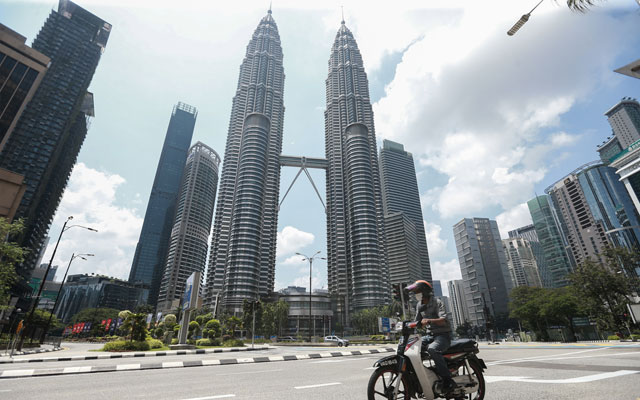
Business events in Malaysia have once more fallen casualty to the rising number of Covid-19 infections in the country, with the federal government calling for a temporary cease of in-person meetings from January 13-26.
However, this is subject to further risk assessments to determine if an extension is needed before the two-week period ends on January 26.
Francis Teo, president, Malaysian Association of Convention and Exhibition Organisers and Suppliers, said that stricter measures were necessary.
He said: “It is better to take action now, in January, which is a traditionally quiet period for business events. We hope this action will enable the business events industry in Malaysia to recover sooner.”
However, Teo pointed out that many industry players are struggling to stay afloat, and expressed concern as to how long these companies could hold out.
As such, Teo urged: “We seek the government’s consideration to extend our proposed wage subsidy structure of 50 per cent for employees with the inclusion of those earning RM6,000 (US$1,483) and below to sustain non-essential industries’ operations and workforce during these trying times.”
He also urged the government to allow production crews in a dedicated studio to be able to work, so as to provide technical support and continue delivering virtual events in MCO-affected areas while observing strict procedures.
And while Mona Abdul Manap, founder and CEO at Place Borneo Business Events, notes that business events could still be done virtually, she felt the impact would not be as great as in-person events.
Currently, Mona is undecided whether to carry on with her inaugural Gardenscapes Sarawak, a gardening and farming expo, scheduled to be held in late February.
She added that the sudden lockdown decision made by the Malaysian government does not bode well for the business events industry as “event organisers will lose confidence in the destination”.
While the long-term outlook remains unclear, Mona retains hope, and will continue to bid for international conventions from 2024 onwards, certain that by then, “this pandemic would have subsided and things would have normalised”. – S Puvaneswary
THAILAND
Amid the throes of a fresh Covid-19 outbreak – spawned in early December 2020 by migrant workers slipping illegally between the northern Thai-Myanmar border, and local gambling dens in Rayong – the Thai MICE industry has been hit with a slew of postponements.
At this point, the Thai government is doing its best to avoid a full country lockdown, and is working to get the situation under control by end-January.
Meanwhile, alternative measures include locking down only the hardest-hit provinces (currently, Samut Sakhon, Chonburi, Rayong, Chanthaburi and Trat), while 23 other provinces including Bangkok are considered “highly controlled areas,” with at-risk venues forced to close.
Exhibition halls, convention centres and hotel meeting facilities in “highly controlled areas” are allowed to remain open, but under strict disease control measures.
Although there have been no formal announcements from the Thai government regarding new restrictions on conferences and in-person events, the public sentiment on health and safety has already curtailed many events.
Sumate Sudasna, managing director at CDM – Conference & Destination Management and president of the Thailand Incentive and Convention Association, said: “Public sentiment on health and safety is so strong that any move (the government) makes is sure to be criticised and, most of the time, overblown.”
While acknowledging that a second lockdown would be a further blow to the local MICE industry, he stressed that “a hard-line (stance) to handle the spread is the right thing to do”.
Loy Joon How, general manager of IMPACT Exhibition and Convention Centre, stated that a lot hangs on how well the government can curb the second wave.
“During the first wave in early 2020, it took about three months for our industry to see a gradual recovery. We will have to wait and see in a month or two if the current outbreak situation improves or not,” he said.
“(A second lockdown) would hurt the Thai MICE industry. However, it is imperative that these actions be taken so that they can help the industry recover. It is a bitter pill for the industry to swallow, but things can only get worse before it gets better,” Loy elaborated.
Meanwhile, Max Boontawee Jantasuwan, founder of Events Travel Asia, pointed out that the domestic incentive travel market has also been impacted by the current situation.
“We were going to pitch a few projects with international clients based in Thailand. Even though we haven’t reached a lockdown phase, the projects including all the presentations – which were for events next quarter – have been put on hold,” he lamented. – Anne Somanas
JAPAN
Japan’s business events industry is coming under further strain with the tightening of measures to bring Covid-19 under control in the country.
The number of infections nationwide has hovered around 6,000 for the past several days, with the most rapid increase seen in urban areas. The detection of a new, more contagious variant of the coronavirus in four travellers who arrived in Japan in recent days has added to the concern.
The government has extended the state of emergency covering Tokyo and its three neighbouring prefectures of Chiba, Kanagawa and Saitama to include Osaka, Kyoto and Hyogo, Aichi, Gifu, Tochigi and Fukuoka prefectures. Under the declaration, residents in those areas are being asked to avoid all non-essential outings.
The state of emergency, which is in place until February 7, is a further blow to the hard-hit hotel and restaurant industry, particularly in the prefectures under the declaration.
A Tokyo hotel that spoke on condition of anonymity said they have received a significant number of cancellations. Furthermore, they have received no new bookings for enkai parties (Japanese work parties) or receptions since the government’s announcement and do not expect to receive any until at least after February 7.
Still, some facilities are receiving bookings for the latter part of 2021. A restaurant who declined to be named said they are receiving bookings for corporate group lunches and dinners in the summer, autumn and winter. The spokesperson said they believe this is because customers feel more confident about being able to hold events later in the year.
Those who rely on the international MICE market, meanwhile, have been largely unaffected by the tightening of infection countermeasures.
Jarrod Stenhouse, CIS, managing director of destination management company Destination Asia Japan, said “the majority of our main source countries are doing much worse than Japan in containing the virus so overseas clients still look favourably towards Japan, especially when they compare the numbers here to their own country.” – Kathryn Wortley
Business travel has a long, multi-year recovery ahead
Corporate travel managers have reacted with “cautious optimism” to the global rollout of Covid-19 vaccinations, saying little has changed and they will continue to face challenges in 2021 and 2022.
Florence Robert, regional travel manager Asia-Pacific, Ericsson, commented: “There are no changes for the time being and we have no intention to make any changes until the situation is clearer.
Business travel has a long, multi-year recovery ahead
“Many countries have not yet started vaccinations. Those that have are still far from having 70 per cent of the population vaccinated.
“Also, no country has announced a mandate to be vaccinated for travel to their country either and this won’t happen until the majority of countries are materially able to comply. Perhaps we may see some changes in 2H2021, but we are still very far from it.”
Jane Sim, commodity manager ASEAN, Siemens, added approval was still restricted to essential travel, while domestic trips were taking place for projects in Malaysia, Thailand and Vietnam.
Sim noted: “Airline schedules continue to change based on market conditions and since 2020 we have had to explore other transport options. If there are cost and time savings, my colleagues in China are moving to replace air with high-speed rail.”
A Shanghai-based buyer in charge of the global travel programme at a European retail giant, added: “For the first time in 2020, ground transportation – car rentals and rail – more than doubled compared to air, even though domestic lift steadily climbed back to around 50 per cent of pre-Covid between June and November last year.”
With duty of care being paramount last year, he said the company put aside cost savings to help stranded employees and their families repatriate and some times paid as much as four times for air tickets.
With overall travel demand depressed, the company managed to stay within budget, was watchful of ticket prices and cut the number of partners for its hotel programme in 2020 by 20 per cent, he added.
For 2021, Sim said Siemens had increased the cost savings target by two per cent because business recovery was patchy and business targets remained conservative.
Meanwhile, a regional travel manager in the pharmaceuticals sector shared it was foregoing rebates to ensure vendor teams providing services were not affected and that Covid-19 protocol standards implemented, some of which are hard to audit, are maintained.
ICCA is proud to be launching this certification programme for its membership and the industry to meet the challenges of the need for new business models, enhanced professionalism and standards in the industry
ICCA has unveiled its latest business events industry initiative, ICCASkills, the association’s eponymous certification programme.
Courses are set to begin in 3Q2021, and the curriculum will be developed and delivered by industry experts – including inspirational business leaders, academics and ICCA members – through on-site and online learning environments.
ICCA hopes that the programme will be able meet the challenges of the need for new business models, enhanced professionalism and standards in the industry
The first two available courses will be the Certified International Convention Specialist (CICS), designed for member employees aiming for their first management position; and Certified International Convention Executive (CICE), created for managers with at least three years’ experience.
ICCA will grant recognition to an industry professional who has met certain predetermined qualifications specified by the association.
Certification will:
• Identify qualified professionals
• Ensure recognition of expertise
• Enhance credibility and prestige to individuals in the industry
• Provide a vehicle for professional development
The certification programme will be guided by a diverse Certification Committee, including implementing standards, requirements and course content approval. An Academic Curriculum Sub-Committee comprising university representatives and ICCA members will support these activities to guarantee relevancy and rigour.
GainingEdge, an ICCA member, has also come forward to provide logistical and operational support during the initiative’s preliminary phases. Other ICCA consultant members will be an integral part of the programme development.
Over the coming months, ICCA will be inviting members to contribute to the programme by submitting content and assisting in course delivery. Information on registration, fees, synopsis of courses, and assessment requirements will be available during 2Q2021.
IMEX Group has announced the cancellation of IMEX Frankfurt this year due to the pandemic.
The event was scheduled to happen from May 25-27 at Messe Frankfurt in Germany, and this is the second consecutive year it has been cancelled.
IMEX Frankfurt 2019
In a statement, IMEX said that they “still believe wholeheartedly that a resurgence will come”, but it will not happen in time for the organisers to “deliver a strong and successful event in May”.
This is because the tradeshow is reliant on international travel routes being open in coming weeks to allow buyers and exhibitors – hailing from over 150+ countries – to confirm their participation.
However, IMEX group remains “genuinely positive about the future”, with the rollouts of vaccines and improvements in rapid testing programmes.
As such, they are confident they will be able to deliver IMEX America in Las Vegas from November 9-11, 2021, as well as the IMEX Frankfurt 2022 from April 26-28).
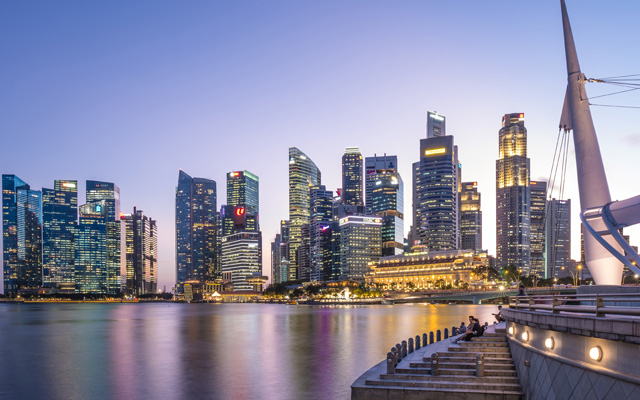
Kimes: 2021 will be a challenging year for hotels in Singapore; Singapore skyline pictured
Kimes: 2021 will be a challenging year for hotels in Singapore; Singapore skyline pictured
The Singapore hotel industry will continue to struggle in 2021 or at least until border restrictions are fully lifted. Given that border restrictions are unlikely to be lifted until vaccines are widespread, it looks like a rather gloomy year ahead. Unlike most other countries, Singapore does not have a large domestic market, so having tight border restrictions have made it extremely challenging for hotels to maintain previous levels of profitability.
During 2020, stay-home notice and quarantine business, along with housing displaced workers, proved to be a godsend for participating hotels since it provided a base business (albeit at a much lower rate than usual) that allowed hotels to at least cover most of their costs. This, combined with government salary support, helped immensely.
During the circuit breaker, hotels were not allowed to offer staycations, but this restriction was eased in July for approved hotels. As you might expect, the demand for staycations varies based upon hotel location, with hotels in a more ‘resort-like’ environment experiencing higher demand. In addition, some hotels were able to benefit from the limited green lane travel and also by accommodating flight crews.
Many hotels also developed innovative ways of generating revenue such as restaurant delivery, retail sales and workcations. For example, Four Seasons, Regent Hotel, Holiday Inn, Pan Pacific Hotel and W Hotel, among others, all offer delivery from their restaurants. Other hotels such as Fairmont, Intercontinental and the Fullerton Hotel offer workcations in which customers who don’t want to work at home can go.
Given that Singapore borders are mostly closed for the foreseeable future, Singaporeans can’t satisfy their travel itch and are instead focusing on rediscovering Singapore.
Since (the launch of Singapore Tourism Board’s SingapoRediscovers Vouchers scheme on) December 1, more than 300,000 Singaporeans have spent their vouchers, and bookings have accounted for nearly S$36 million (US$27.2 million) in vouchers and payments. This has been a big help for struggling hotels and attractions.
Promising developments ahead Back in September 2020, Keith Tan, CEO of STB, stated “there is a long road to recovery ahead” and “frankly, I am not sure I see any light at the end of the tunnel”. Even though the outcome for 2021 still looks pretty grim, there are some promising signs including the World Economic Forum (WEF) in late May, the deployment of hybrid meeting technology, and the expanded green lane business initiative.
The WEF has traditionally been held in Davos, Switzerland, but due to the rapid spread of Covid-19 in Europe, the WEF organisers decided to move the event to Singapore. The WEF typically brings in about 3,000 dignitaries from around the world as well as a significant number of media representatives.
Hosting the WEF is a major opportunity for Singapore and is a recognition of the confidence that WEF has in the country’s management of the pandemic. It also represents a wonderful opportunity to highlight Singapore’s MICE capabilities. Hosting the WEF will bring in a substantial amount of business, receives very strong international media coverage, and will help build interest in Singapore as a place to do business and to visit once the pandemic is over.
The new Ministry of Trade and Industry (MTI) initiative for segregated travel lane arrangements for business travellers throughout the world is scheduled to begin in late January 2021, and is another promising development. This initiative will allow short-term business travellers from all countries (as opposed to the current limitations placed on approved green lane travel) to enter the country without facing quarantine restrictions.
These short-term business travellers will be transported to dedicated facilities which will be equipped with meeting facilities that allow the travellers to meet with local business people as well as other international business travellers, through specially designed floor-to-ceiling air-tight glass panels. Travellers will be regularly tested while in Singapore and at the end of their meetings, and transported back to the airport.
In a related area, several initiatives in the MICE industry are extremely promising. The MICE industry typically provides 32 per cent of tourism revenue, but with the closed borders, this has essentially gone away. The Event Industry Resilience Roadmap (IRR) – a joint initiative from the STB, Singapore Association of Convention & Exhibition Organisers & Suppliers (SACEOS) and Enterprise Singapore (ESG) – has helped the MICE industry develop SafeEvent Standards as well as hybrid technologies that can be used to host virtual and hybrid meetings. Singapore has been recognised as a leader in this space.
For example, Marina Bay Sands, in conjunction with STB, launched a hybrid event studio at the Sands Expo and Convention Centre in August and in November, adding mixed reality technology to the studio. Since then, a number of successful events have been hosted there.
Conclusion While 2021 doesn’t look particularly promising for the Singapore hotel industry, the pandemic has given the Singapore hotel and tourism industry an opportunity to reposition for the future.
As STB’s Tan stated in November: “Covid-19 is the biggest crisis we have ever faced in travel and tourism… The journey to reimagine travel has already started in Singapore, and we want to continue this journey with those whose voices matter – our community in Singapore, and our partners here and around the world.” I have every confidence that the Singapore hotel industry will emerge even stronger than it was in the past.
Sherri Kimes is a visiting professor in the Department of Analytics & Operations at the National University of Singapore (NUS) Business School.
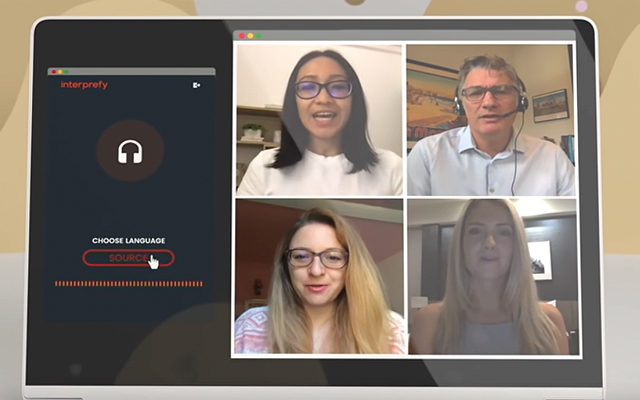
Interprefy has made its new Interprefy Select desktop app available, which allows meeting and event organisers to add real-time interpreting to Zoom, GoToWebinar, Webex and any other web conferencing, virtual events or live streaming platform.
Participants just need to select their preferred audio language in the app alongside their event. As soon as the interpreter is speaking, the app will instantly auto-mute the original speaker to stream live interpreting with low-to-no latency, while the event is ongoing. When the interpreter stops, the audio will immediately switch back to the original event audio.
A screenshot of the app in action
“The new normal of connecting remotely offers an unprecedented opportunity for event organisers to attract a wider and more diverse audience. And for meeting organisers to democratise access to the conversation, by offering a truly multilingual experience, where everybody listens and speaks in a language they’re proficient in,” said Annett Polaszewski-Plath, CEO at Interprefy.
The Interprefy desktop app is immediately available via the Microsoft Windows app store and through the Interprefy website.
Domestic travel across Malaysia is prohibited from today until January 26 in a bid to arrest the rising number of Covid-19 infections, with potential for extension subject to risk assessments before the ban expires.
Besides a ban on interstate travel, social activities involving mass gatherings are also not allowed in all states except for Sarawak and Perlis – two states that have recorded fewer number of new infections. Social gatherings in the two states are subjected to strict standard operating procedures.
Face-to-face business events are temporarily impacted too.
Majority of Malaysian states as well as the Federal Territories of Kuala Lumpur, Labuan and Putrajaya will return to a lockdown as new infections surge
Residents of Penang, Selangor, Melaka, Johor and Sabah as well as the Federal Territories of Kuala Lumpur, Labuan and Putrajaya face further inter-district travel restrictions as these regions are regarded as “high risk states” and healthcare services are almost stretched to their limits.
The Movement Control Order (MCO) enforced on these states and the Federal Territories is similar to the strict conditions imposed from March 18 to May 4, 2020, where residents were only allowed to move within 10km of their home and only two people were allowed to travel to purchase groceries.
In a televised address to the nation, Malaysia prime minister Muhyiddin Yassin said the government had decided to take these strict measures to break the chain of transmission of Covid-19 infection, thus reducing the number of daily positive cases to a more manageable level.
He said that the country’s healthcare system was “at breaking point”.
“In the Klang Valley, the rate of ICU bed use for Covid-19 patients at the Kuala Lumpur Hospital and the University of Malaya Medical Centre had reached 100 per cent while at the Sungai Buloh Hospital it has reached 83 per cent. The rate of use of ICU beds for Covid-19 patients in Perak, Selangor, Melaka, Terengganu and Sarawak has exceeded 70 per cent,” he elaborated.
Malaysia reported 2,232 new Covid-19 infections on January 11, 2021, and four fatalities, bringing the death toll nationwide to 555.
While travel and tourism leaders expressed understanding for the need to curb infections, they also urged the government to appreciate the resulting impact on an already distressed industry.
Malaysian Association of Hotels CEO, Yap Lip Seng, said: “We need to stress on the need for the government to make the right decision in balancing lives (and) livelihood. With the…MCO implementations, businesses are again expected to lose all revenue streams.
“The government must support the industry and its people. With little or no revenue, businesses will not be able to retain its people, will not be able to pay salaries, and will have no option but to let go of its employees.”
Yap underlined the urgent need for a wage subsidy structure of 50 per cent for employees within a pay structure of RM4,000 (US$988) and 30 per cent for those earning up to RM8,000.
Malaysia Budget Hotel Association national deputy president, Sri Ganesh Michiel, also urged government understanding and assistance.
Meanwhile, Uzaidi Udanis, president of the Malaysian Inbound Tourism Association, advised members to adapt to the new situation, pivot their businesses towards digitalisation, and step up on hygiene procedures to rebuild customer confidence.
Anantara Hotels, Resorts & Spas has made four general manager appointments across its portfolio of luxury properties in Asia-Pacific.
From left: Sarah Moya, Pitak ‘Chin’ Norathepkitti
Taking the helm at Anantara Quy Nhon Villas and sister property Avani Quy Nhon Resort, both in central Vietnam, is Sarah Moya, who holds more than 25 years’ experience in the hospitality industry. Moya’s career started in her native Philippines where she climbed the sales and marketing ladder to lead teams for Hyatt, first in Manila and then on to Siem Reap in Cambodia.
Her journey continued at the Shinta Mani Luang Prabang hotel before joining Anantara in 2018 as general manager of Anantara Angkor Resort in Cambodia.
Meanwhile, Pitak “Chin” Norathepkitti, a Thai-born part-time university lecturer, joins Anantara Angkor Resort from Sofitel Luang Prabang and 3 Nagas Luang Prabang, both in Laos, where he rose through the ranks to become cluster general manager. Prior to his new role, Chin held various executive management positions in sales and business development at several luxury hotels in his hometown of Bangkok.
From left: Emanuel Grosch, Stephan Moonen
Over in Thailand, Emanuel Grosch has stepped into his new role at Anantara Lawana Koh Samui Resort. His journey with Anantara began in 2019 as resort manager of Anantara Riverside Bangkok Resort in the Thai capital, before travelling south to Anantara Bophut Koh Samui Resort.
An international hospitality professional with 15 years’ experience in upscale and luxury hotels and resorts, Grosch has also spent time learning the ropes under Capella Group.
Finally, Stephan Moonen joins the flagship resort Anantara Peace Haven Tangalle Resort in Sri Lanka, after a 10-year journey with Marriott Hotels in the UK. Moonen started his 15-year career in F&B in his native country, the Netherlands, and has since taken on leadership roles for global brands in rooms and F&B, gaining experience in Europe, China and the Middle East.
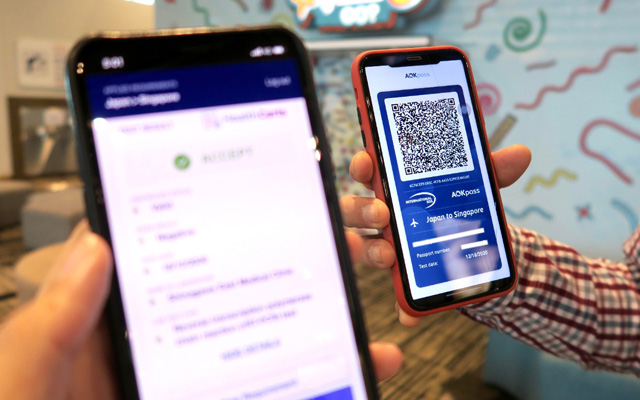
Pilot use of the ICC AOKpass. Photo credit: Affinidi
Digital health passes and certificates can play a pivotal role in tourism recovery by boosting consumer confidence when travelling during the Covid era, highlighted a recent report by GlobalData.
The analytics company noted that several stakeholders of the travel and tourism industry, including destinations, airlines and associations like IATA, are exploring the option of digital passes and health certificates.
Pilot use of the ICC AOKpass. Photo credit: Affinidi
These digital passes and certificates intend to lower the risk of Covid-19 infection by providing accurate details on the health status of passengers.
Since May 2020, Singapore has been testing ICC AOKpass, a digitally verifiable Covid-19 health certificate for entrance to the country. It is backed by health and security services provider International SOS, International Chamber of Commerce and AOKpass. In line with this, all travellers from Indonesia and Malaysia can make use of the facility that will be made available to other international travellers in a phased manner.
AOKpass is also being used on flights between Abu Dhabi and Karachi/Islamabad as well as Rome and New York City/Atlanta. Another similar digital pass, CommonPass, has been tested on flights between New York and London. Additionally, IATA is also working on a Travel Pass.
Animesh Kumar, director of travel & tourism and automotive consulting at GlobalData, said: “Digital passes help passengers prove that they adhere to the health entry requirements of their destination and enhance the safety of international travellers. Since these can be stored in and used through a mobile application, they are easy to use. The app securely stores and authenticates the negative Covid-19 PCR test results. The passes can also facilitate faster clearances if airports have dedicated immigration counters, similar to Changi Airport in Singapore.”
Stressing the urgent need for a framework that brings the passengers, testing labs, local authorities, airlines and immigration authorities on a common platform, GlobalData said that such digital passes/certificates can facilitate that. The use of QR codes, blockchain and decentralised data ensures data accuracy as well as privacy, it added.
A large-scale rollout of such passes would reduce the lag created by the time-consuming processing of paper certificates, which are also susceptible to potential test result frauds.
Kumar concluded: “Digital health passes would help in boosting the consumers’ confidence as they would enhance efficiency, safety, security as well as data privacy and reduce the risks of in-flight infections. There is also a potential for expanding the use of such digital passes for domestic travel as well as entry in concerts and stadiums.”
The newly-opened Ritz-Carlton, Bangkok anchors the One Bangkok development with cosmopolitan elegance. Featuring the city's largest ballroom and a spectacular new penthouse suite, it delivers exceptional hardware and deeply authentic, soulful service for business and leisure travellers alike
Behind the imposing, Brutalist concrete that defines Zurich’s Oerlikon district lies a surprising secret. While its exterior honours the neighbourhood’s industrial roots, stepping inside Mama Shelter reveals a vibrant, neon-soaked world that is a far cry from its rigid shell
A polished urban retreat designed for business travellers, Hyatt Regency Kuala Lumpur at KL Midtown combines thoughtful design, seamless service, and exceptional facilities.