Asia/Singapore Monday, 15th June 2026
Page 523

Riding the tide of change

0

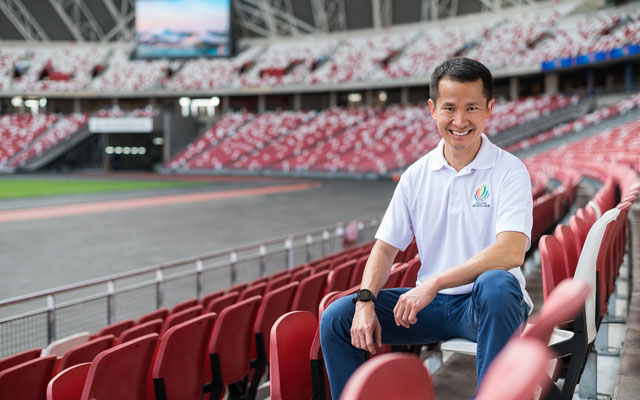
How was your transition from tourism chief into the private sector, and now as you make inroads into sports and events?
I’ve enjoyed tackling new challenges and learning new things at the Singapore Sports Hub (SSH). My experience at the Singapore Tourism Board (STB) has also come in useful. In the public sector, the general aim is to create an enabling environment for growth and success, whereas in the private sector, we are (aiming) for that growth and success under serious resource and commercial pressures.

A common thread throughout my roles at SSH, STB and even Grab is the key strategic priority: to maintain relevance in a fast-changing environment, and consistently engage with the internal team and external stakeholders as we navigate change.

What lessons about tourism demand and consumer behaviour glimpsed from your time with STB could translate into your work at SSH?
There are a few similarities in driving tourism demand and running a sports and lifestyle venue. For one, staying attuned to consumer trends by recognising short-term or seasonal preferences and behaviours is the key to staying relevant. For instance, this pandemic has led consumers to shift towards seeking familiarity and predictability. In response, SSH has organised activities that invoke that sense of normalcy that Singaporeans crave during this time.

Technology plays an increasingly important role in both tourism development and venue management. Leveraging key tech innovations is therefore necessary to keep up with the pace of change, improve services, enhance operational efficiency and elevate the customer experience.

What does SSH have planned for the year ahead?
We have plenty of discussions abuzz for the second half of 2021, as we are in the midst of building our events calendar and providing our event partners the support they need. Following the successful execution of safety protocols for Project Dorm – where we provided quarantine facilities for thousands of migrant workers – and ONE Championship in the past year, we have confidence in our ability to hold more live events, particularly in the latter half of this year. We are excited to unveil these to the public in due course.

Being able to support the training of our national athletes is also an important priority and we are glad that we have been able to reopen many of our facilities for this purpose.

For a public-private partnership like the SSH project, success can only be achieved if all partners are aligned and working together.

How do you foresee the concept of massive community and sporting events will change in the post-Covid era, even after the majority of the local population has been vaccinated?
When it is safe again, we will want to gather as social beings to play, celebrate, cheer, bond and form great memories. These are deep human instincts and desires, and the demand for such experiences will always be there. SSH aims to be able to curate and host these experiences through entertainment, sporting and community events.

The safety aspect of events will definitely have to be tightened to ensure that they run smoothly and efficiently. The judicious application of technology can help us here. Hybrid events that combine both the virtual and physical worlds will also likely be prevalent in the post-pandemic world, and event organisers will want to leverage on the strengths of online and physical engagement.

Singapore had its fair share of such “phygital” events in 2020. What lessons have you learned from these activities that can be applied to SSH’s “phygital” events?
A key observation is that standing out from the multitude of phygital events available in the market has become all the more critical. The variety of events available online means patrons can easily switch between virtual events at the last minute. This is behaviour that can impact our business. Therefore, it’s imperative that we are able to engage viewers well enough that they feel strongly about our programmes and events, and stick with them.

The key to keeping patrons engaged with phygital events is to focus on building a sense of community both online and offline, and across the participants on either platforms. Physical meet-ups can supplement the online ones, (while) online engagement allows the community to remain connected even after the physical event. If sustained over a period of time, a community can be even more connected and build even stronger bonds than (with) a pure online or offline experience.

As businesses pivot towards domestic markets now, what considerations do you have to keep in mind when planning events?
First and foremost, safe management measures should be the most important consideration in any event plan. Patrons need to be assured of their safety when attending events. We ensure this by carefully and thoroughly executing safety protocols across various teams. Externally, we also clearly communicate the safety procedures that event attendees must undergo, and manage their expectations of what the new experience will be like.

We also make it a point to be discerning of the type of programmes we organise. As mentioned previously, Singaporeans desire meaningful experiences during these challenging times, which is why we have been focused on activities that matter to our local audiences as well as help drive greater community engagement.

In the near term, we hope to be able to host our usual suite of marquee sporting and entertaining events via careful selection of international acts and sporting events that can be sustained by domestic demand.

What challenges do you foresee awaiting and how might you overcome them?
Balancing commercial ROI with capacity limits is one of the challenges that we foresee. Even in the future, we can expect restrictions on large crowds and gatherings, therefore, tapping into phygital events to draw a larger crowd online is definitely vital. We are working on enhancing these hybrid virtual events to engage with audiences.

We also want to ensure that we hold physical events responsibly and safely, hence, coming up with solutions for crowd monitoring and control will be very important. In order to ensure that all these new processes run smoothly to support the future of events at the SSH, reskilling staff to carry out hybrid events will be a top priority.

TTG Conversations: Five Questions with Mieke De Schepper, Amadeus

0

Changing travel patterns and reduced traffic throughout the pandemic have forced changes in travel distribution, driving in particular a greater need for flexible bookings, altered products and consolidation of operations to cope with strained resources.

In this new episode of TTG Conversations: Five questions video series, which kicks off the 2021 February season, Mieke De Schepper, managing director Asia-Pacific and executive vice president online travel at Amadeus, said travel suppliers would have to be quick to tune their business to opportunities and focus on the way forward.

She also spoke of available technology that could help the travel and tourism community rebuild traveller confidence and evolve their operations for the better.

An opportunity to game on

0

Event brief
The Games Market Bootcamp digital miniseries was created as a virtual offering to keep the global video games industry connected during this pandemic, especially since major gaming events around the world were unable to take place in 2020, including gamescom asia’s very own main event that was to debut in Singapore in October 2020.

The Games Market Bootcamps are monthly virtual webinars that focus on a different video games market (country) in Asia-Pacific. Each month, the series covers a fast-growing, yet under-explored games market in the region to give the global community an insider look into the country’s market situation, gamer behaviour, trends and untapped opportunities and governmental support & initiatives.

The countries covered/to be covered are: Philippines, Indonesia, Singapore, Australia, India, Thailand, Malaysia, and Vietnam.

Prior to the Singapore event, two episodes on Philippines and Indonesia took place virtually in October 2020 and November 2020 respectively.

Suppered by new regulations announced by the Singapore government that allowed an increase in attendees for business events up to 250 pax, organisers decided to hold the third episode of the bootcamps as a hybrid event.

Other reasons included that the main gamescom asia event’s host country is Singapore, and organisers wanted to co-locate an event with the upcoming Singapore Media Festival to showcase Singapore’s homegrown talent in video games.

Event highlights
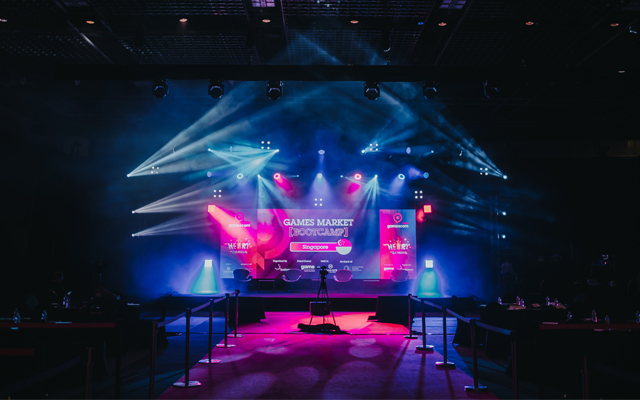
Organisers decided on holding the event at Suntec’s Hall 406, which had been set up as a hybrid studio that could accommodate up to 120 pax.

Adhering to strict regulations, attendees had to be zoned in five cohorts of 20 pax with five persons per table in each cohort. Furthermore, attendees could only mingle within their assigned cohort.

The whole event was to take place physically and cross-streamed virtually simultaneously. Local speakers would be invited to present in-person at Suntec, while organisers arranged for overseas speakers to dial in on-site and put on the big screen.

The objective was to allow engagement between the physical segments and online segments through the deployment of various tools, as opposed to simply streaming it online.

Organisers managed to successfully switch between live, in-person stage presentations, to online broadcasts, then back to in-person by working very closely between Suntec’s appointed production team – Unearthed Productions, and virtual platform provider Tulula.

This event brought back the Singapore videogames industry together for the first time in almost a year. Live attendees were elated to meet friends and colleagues in person again – although in cohorts of 20 pax and with Safe Management Measures in place.

Meanwhile, international attendees got a glimpse of Singapore’s bustling videogames market and community, as well as the country’s successful management of Covid-19. This provided trust and confidence that live events can happen in Singapore, in a slow, safe and calibrated manner.

Challenges
There were only two weeks to attain approval from the Singapore Tourism Board and Ministry of Trade and Industry to hold the bootcamp as a physical event as well as to convert the episode from the initially planned digital format to a hybrid one.

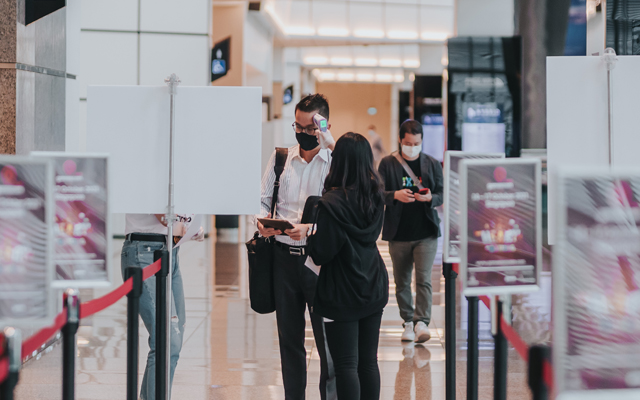
Attendees also had to undergo three levels of checks, 1) to verify that they were an attendee of an event at Suntec (venue regulations), 2) Temperature taking and TraceTogether scanning (TraceTogether is the Singapore government official app for Covid-19 contact tracing) at the event registration counter, and 3) to be assigned a cohort at the time of arrival.

Ample queue poles, floor stickers, signage, hand sanitiser points were placed along the route to remind attendees to social distance and follow safe management measures.

Organisers also pre grouped attendees into two groups – A or B, including giving them staggered arrival timings. At the counter, each attendee was issued a coloured lanyard that matched a coloured cohort/zone in the hall. This way, seats were filled from a front-to-back sequence, hence avoiding intermingling between different coloured cohorts.

Another challenge was to sync Q&A between the live and virtual channels as there is usually a delay between live and online streams. Onsite, organisers wanted to avoid using handheld mics due to concerns over cleanliness, sanitisation, and transmission.

Instead, they deployed the Pigeonhole tool. During each Q&A, Pigeonhole was put up on screen for all live attendees to see, key in more questions and upvote their favourites.

For virtual attendees on Tulula, organisers did not want to direct them to another site to enter questions. Instead, we encouraged online attendees to use the platform as they normally would and upvote questions on the Tulula platform. Organisers then had someone from the organising team pump those questions into Pigeonhole for live attendees to see and for speakers to answer live. This helped greatly to obtain engagement on both ends of the event.

Event Gamescom asia’s Singapore Games Market Bootcamp
Organiser Koelnmesse
Venue Hall 406, Suntec Singapore Convention & Exhibition Centre
Dates November 30, 2020
Attendance 100 (physical), 300 (virtual)

Driving deeper engagement with virtual events

0
Jim Sharpe

What challenges are there when It comes to networking for meeting professionals nowadays?
In-person meetings present many opportunities for attendees to connect. There are receptions, coffee breaks, small workshops, immersive showrooms, chance encounters in hallways and more.

This isn’t the case for remote attendees sitting in front of their computers. They face endless interruptions: emails, video streaming services, family members, deliveries, pets, and more. Amid all the distractions, meeting professionals have a hard time facilitating meaningful interactions during virtual events.

What’s more, online event platforms often don’t provide the right tools to enable fruitful conversations between attendees. Many solutions lack capabilities for one-on-one meeting scheduling, private video calls and chat within sessions. Or, they don’t have recommendation engines to pair up attendees with similar interests and event goals.

Networking with exhibitors poses a different set of challenges. With existing solutions, attendees must use calendar tools, messaging bots and lead generation forms. Then, they often wait hours in a queue before connecting with an expert. Sponsors and exhibitors spend part of their meetings manually qualifying leads. This leaves them with less time to address prospects’ needs.

Some of the main reasons people attend events are to meet subject matter experts, gain industry insights and find products they need to do their jobs better. If exhibitors can’t talk to prospects promptly, they miss opportunities to drive leads and generate a solid return on investment (ROI).

Against this backdrop, it’s easy to see why deeper engagement is the number one way organisers want to improve their virtual events, cited by 68 per cent of respondents in a new survey by Aventri and Bizbash.

For many meeting professionals, the biggest challenge is creating meaningful online networking experiences.

Tell us more about Aventri Digital Lead Capture. How does it work, and whether it can address these challenges you outlined above?
Aventri Digital Lead Capture brings immediacy to networking between remote exhibitors and attendees. In this way, it mirrors the dynamic showroom experience at in-person events.

This solution combines tools for chat, lead qualification, video conferencing, content delivery and reporting, all in one platform.

Using Digital Lead Capture, attendees click on exhibitor booths in a virtual showroom and quickly connect with experts. They get prompt answers to questions in personalised, one-on-one conversations – just like they do at in-person events.

Virtual sponsors and exhibitors enjoy focused, face-to-face conversations with qualified leads. They can also follow up immediately, using content pre-loaded into the system. With personalised online conversations, exhibitors can shorten the sales cycle and generate more revenue from events.

Digital Lead Capture integrates with Aventri and other registration and virtual event platforms. It also works seamlessly with customer relationship management (CRM) and marketing automation software. Sponsors and exhibitors can upload their event leads directly to streamline event follow-up and strengthen their marketing programs overall.

How different is Aventri Digital Lead Capture from regular video or text chatting?
Aventri Digital Lead Capture goes beyond traditional video and text chat functionality. In addition to chat, the solution provides these features below to bring virtual exhibitors and attendees together for productive conversations.

• Instant lead qualification – The technology captures more data, faster than filling out forms manually and using an external calendaring tool. Attendees answer a couple of quick questions, so exhibitors know what prospects want before getting on calls.

• Personalised video conferencing – Attendees and exhibitors talk one-on-one during live video calls. Thanks to lead qualification, discussions focus on the products and topics prospects have identified as their top priorities.

• Robust reporting – Aventri Digital Lead Capture also tracks key performance metrics, such as meetings scheduled, booths visited, dwell times, questions, comments and downloads. Organisers can analyse the data to see which conversations turned into qualified opportunities and demonstrate ROI. Sponsors gain insights on buyer preferences and pain points to customise event follow-up and improve future sales and marketing.

• Round-the-clock lead generation – Unlike conventional lead retrieval tools, Aventri Digital Lead Capture enables engagement 24/7, regardless of timezones. Prospects can request meetings, leave messages, read pre-loaded content and get into a queue during off-hours. They can receive timely responses, as soon as a sales rep logs into the system.

It is said that face-to-face meetings will return. What will be of this product when that time comes?
Aventri Digital Lead Capture enhances engagement for virtual attendees, while keeping in mind a future with hybrid events.

The solution works in tandem with the Aventri Lead Retrieval Solutions for face-to-face events. Sponsors and exhibitors can use one system across their entire events portfolio. They get a centralised database for event leads – captured in person or virtually – to improve immediate and future follow-up.

Why is a focus on hybrid events essential?
We believe hybrid is the industry’s future. This format combines in-person and remote speakers, exhibitors and attendees. For example, you might host 500 people at a venue and also share content with 5,000 remote participants worldwide.

Not surprisingly, a recent survey by Aventri revealed that 89 per cent of global meeting professionals say virtual components will continue to play a role even after the pandemic shutdown ends.

The reasons: Hybrid events welcome participants who can travel as well as those who cannot due to health or financial concerns. This format also creates new sponsorship opportunities and more ticketing options. For example, an attendee might spend two days at an in-person conference and attend a few sessions virtually on the third day.


Kempinski makes a new promise with latest MICE campaign

0
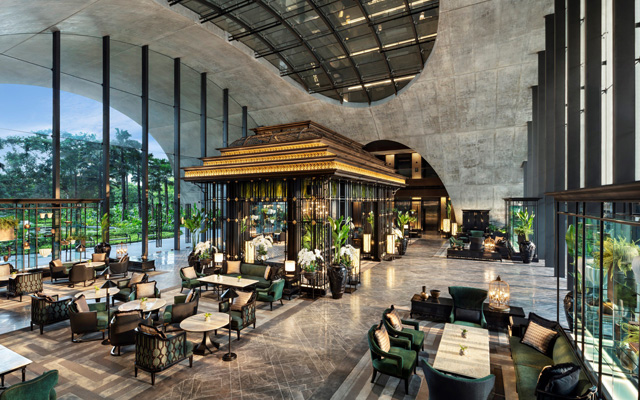
Sindhorn Kempinski Hotel Bangkok's lobby

Kempinski Hotels has unveiled a new global MICE campaign, Our Meetings Promise, which features more flexibility in bookings and cancellations due to Covid-19 and improved benefits for bookers.

Key elements of the new offer include free cancellation up to 30 days before the start of the event, 12 per cent commission on nett room sales and 12 per cent discount on any further booking at the same hotel within 18 months.

Sindhorn Kempinski Hotel Bangkok’s lobby

Events can also be cancelled free up to 30 days prior to event date. Other perks include five per cent commission on pre-booked F&B, and one complimentary room for every 12 paid rooms, up to a maximum of four rooms.

Under the new campaign, meeting planners will also receive a voucher for two nights in a suite for two people, including breakfast at a Kempinski hotel of choice, based on a qualifying event.

All of the offers are supported by the Kempinski White Glove Services, which includes several procedures which are specific to meetings, conferences and other events, from separate areas dedicated to group arrivals, to cleaning and disinfection of meeting areas throughout the day. This is in addition to strict adherence to all local and national health and safety requirements.

For instance, contact points will be reduced, seating configurations will sport minimum distance between attendees, tables being kept apart, as well as added floor markings for social distancing.

Ron Cusiter, vice president global sales and the Americas, Kempinski Hotels, said that this new campaign is to help “keep the risk for organisers as low as possible” by extending as much “flexibility” as possible to the customer.

“We are confident that our industry, and therefore the business around meetings and events, will recover in the near future with the global distribution and implementation of vaccinations and rapid testing,” added Cusiter.

BTMPC to be part of ITB China Special Edition 2021

0
The first Business Travel MICE Procurement Convention in 2019

Co-organized by China BT MICE and ITB China, the Business Travel MICE Procurement Convention (BTMPC) will take place as part of this year’s ITB China Special Edition – a newly designed event format that combines core trade show with convention elements.

ITB China is scheduled to be held in Beijing from May 7-8, 2021, and the 10th edition of the BTMPC will take place on the second day on May 8. It’ll feature in-depth discussions on industry practices and new trends that will shape the future of MICE events.

The first Business Travel MICE Procurement Convention in 2019

More than 500 MICE professionals, including MICE and corporate buyers, hotels, domestic and international destinations, and representatives from across the industry are expected to attend BTMPC.

The event will include forums on MICE and corporate travel, a dedicated booth area for brand and product launches, matchmaking meetings, and the award ceremony “The Miracle Workers”, an award which recognises the most successful companies in the MICE industry over the past year.

Lenny Jia, CEO and founder of China BT MICE, said that BTMPC is “representative of the general trend of “micro-crossover” integration in the current market, contributing to mutual and respective advantages in terms of professional resources while supporting the survival and further development of the MICE industry in the new market environment”.

TeeVid introduces online event platform

0
Stop sharing your slides & screens. Start delivering engaging TV-like content equipped with audience interaction features such as polling, Q&A & live chats.

Chicago-based visual conferencing provider has revealed TeeVid Events, an online event platform that enables users to create, produce and broadcast immersive experiences.

The platform features a web studio providing video production tools; multi-channel streaming across major platforms such as Facebook and YouTube, and chat rooms for delegates; and even allowing moderators to select VIPs to have higher control of the floor.

TeeVid wants to help planners deliver engaging TV-like content equipped with audience interaction features such as polling, Q&A and live chats

To increase audience retention and interaction, TeeVid’s producer panel also enables moderators to select attendees that use the hands up feature to participate with the host on the live stage. Moderators can then manage the stage by dragging and dropping participants into a variety of screen layouts.

Event planners meanwhile, are able to easily rebrand the surface, and make use of storyboards.

TeeVid is also able to integrate to any event management software and web event service, enabling vendors to deliver end-to-end solutions to their customers and attendees.

Melbourne gets a W Hotel

0

W Hotels has opened its second Australian property in Melbourne, as part of the Collins Arch mixed-use precinct.

The luxury property offers 638m2 of total event space, over six function spaces. The largest, Great Room, is a 426m2 pillarless ballroom with an abundance of natural light and a 4m x 5m LED Wall. It can be further divided into two rooms.

The 294-key hotel also boasts 29 suites, including four WOW Suites, as well as the Extreme WOW Suite on the 15th floor complete with a 40m2 balcony and views of the Yarra River. It is also possible to book the Extreme WOW Suite for more intimate corporate events.

Events can also be held at WARABI, a 30-seater Japanese restaurant that also boasts a private dining room for 10. Other F&B options are all-day restaurant Lollo, and two watering holes – Curious and Culprit.

Other amenities include a fitness facility, an indoor pool with poolside bar and DJ booth, both on level 14.

Marriott going strong in APAC

0

Marriott International will be growing its Asia-Pacific footprint with plans to open 100 properties across the region this year.

In 2020, the company celebrated its 800th hotel opening in the region, with 75 properties added to its portfolio during the year. Nearly 27,000 rooms were added to the region’s development pipeline in 2020 alone, in addition to the signing of Marriott’s largest branded residences project.

JW Marriott Shanghai Fengxian will mark the group’s 400th hotel in Greater China

Greater China has led the global recovery to date, and the company expects to soon celebrate its 400th hotel in Greater China and its 50th hotel in Shanghai with the opening of JW Marriott Shanghai Fengxian in spring 2021.

The group will also strengthen its luxury portfolio across mainland China, with expected openings in 2021 such as W Changsha, W Xiamen, St. Regis Qingdao and The Ritz-Carlton Reserve Jiuzhaigou.

On the back of strong post-pandemic demand for leisure bookings at Marriott’s properties across mainland China, the company is introducing more additions across its brand portfolio, with the expected opening of Sheraton Mianyan in the Sichuan province, and the anticipated opening of The Westin Nanjing Resort & Spa.

Beyond Greater China, Marriott continues to strengthen its footprint, with several expected brand debuts across Asia-Pacific in 2021. In Japan, W Hotels is expected to debut with the opening of W Osaka, while The Luxury Collection is also slated to debut in Australia with the opening of The Tasman in Hobart. Elsewhere, the Ritz-Carlton brand is expected to celebrate its debut in the Maldives in early summer.

Further expanding the group’s presence in resort destinations, the JW Marriott brand is slated to make its way to Jeju Island in South Korea with the planned opening of JW Marriott Jeju in late 2021. The company’s signature wellness brand, Westin, is also set to debut in one of India’s top beach destinations, Goa, this summer.

To support domestic travel in Japan, the company plans to open six additional Fairfield by Marriott hotels throughout 2021 along Michi-no-Eki roadside stations. Japan expects to have more than 30 Fairfield by Marriott hotels by the end of 2023.

Meanwhile, Australia’s Melbourne is expected to see the opening of the country’s second W Hotel with W Melbourne in spring and the opening of Melbourne Marriott Hotel Docklands in early 2021.

Jean-Philippe Jacopin joins Parkroyal Collection Pickering

0

Pan Pacific Hotels Group has appointed industry veteran Jean-Philippe Jacopin as general manager of Parkroyal Collection Pickering.

Jacopin hails from a family of hoteliers, and his thirty-year career has seen him hold senior management positions for some of the world’s leading hospitality brands in Europe and Asia-Pacific.

A 22-year stint with Hilton International took the French national from the UK and Ireland to Japan, South Korea and China before joining Shangri-La Hotels and Resorts in Xi’An.

Jacopin went on to manage The Pavilions Hotel Resorts in Thailand for two years and, most recently, was general manager of Orchard Hotel Singapore.

Reviews

The Slate Phuket

Just 10 minutes from Phuket International Airport on the serene northern coast, this 178-key, Bill Bensley-designed resort offers delegates a quiet, tropical paradise steeped in Phuket’s tin-mining heritage

The Ritz-Carlton, Bangkok

The newly-opened Ritz-Carlton, Bangkok anchors the One Bangkok development with cosmopolitan elegance. Featuring the city's largest ballroom and a spectacular new penthouse suite, it delivers exceptional hardware and deeply authentic, soulful service for business and leisure travellers alike

Mama Shelter Zurich

Behind the imposing, Brutalist concrete that defines Zurich’s Oerlikon district lies a surprising secret. While its exterior honours the neighbourhood’s industrial roots, stepping inside Mama Shelter reveals a vibrant, neon-soaked world that is a far cry from its rigid shell