Asia/Singapore Sunday, 26th April 2026
Page 577

Indonesia’s government rolls out courses focused on virtual events

0
These virtual events-targeted courses aim to help event professionals upgrade during this downtime

Indonesia’s Ministry of Tourism and Creative Economy has rolled out a virtual events short course programme, designed to aid trade members in upgrading their professional knowledge, during the Covid-19 pandemic.

In partnership with the Australian Marketing Institue, there will be two learning courses that span three weeks starting from May 1. Topics include marketing and virtual event management for 100 participants.
These virtual events-targeted courses aim to help event professionals upgrade during this downtime

During the course, participants will also be challenged by creating virtual event idea proposals. The best six proposals will then receive support from the ministry to hold their virtual event.

Each proposal will be assessed based on creativity and the level of absorption of the workforce event, where the target for each selected event is to absorb 20 workers.

Rizki Handayani, deputy of tourism products and events at the Tourism and Creative Economy Board explained that the virtual event programme is one of the stimuli to help Indonesian event workers upskill during this downtime.

Rizki elaborated: “We are willing to help event organisers, and want to collaborate with industry players. We need to work together from now on, and start thinking about recovering from the impact of Covid-19.”

Tiara Hasibuan, project manager at Damia Convex, applauded the ministry’s initiative was timely and opined that technology and online solutions were going to be the new normal after Covid-19.

“Investing in digital or hybrid events will fuel our development even when the industry recovers. It will be a new opportunity because there is an immediate need for it,” she said.

To ensure the initiative will benefit even more industry players, Tiara put forth a suggestion to the ministry to create specific digital short courses, such as how to create an attractive virtual event, or how to become a reliable webinar operator. The ministry can also look at topics for designers, to help them design and visualise te real world in 3D or 4D animations.

However, for Firda Yahya, account director at Dyandra Communications, the programme does not seem as interesting because there are no experts from Indonesia in the speakers’ line-up.

“Although the material provided will help to increase knowledge, the ministry should have included experts from Indonesia as one of its speakers, as they can provide input on what is suitable for the (Indonesian) market,” noted Firda.

This is because she feels that event companies require insights about the local market conditions before they decide to shift to hybrid events.
China will take time to bounce back from Covid-19: GlobalData

0

China’s inbound tourism market will take a long time to recover from the coronavirus as the country must work on repairing its brand image, which has been marred due to negative narrative in international media as well as its close ties to the virus outbreak, according to GlobalData.

Pre Covid-19, China was predicted a steady CAGR of two per cent between 2016 and 2020, reaching 63.9 million international arrivals, found the study.

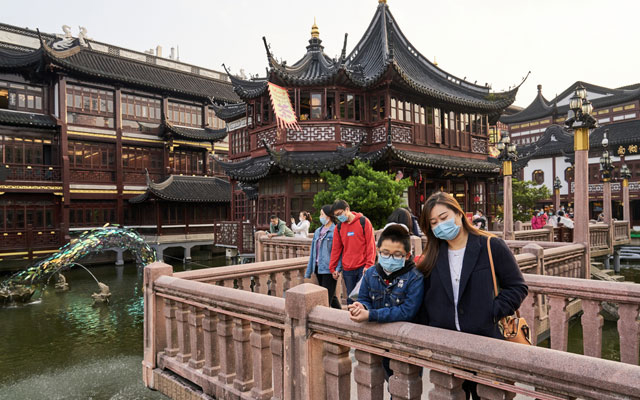
China needs to work on repairing its brand image and assuring tourists that the country is a safe destination: GlobalData; tourists wearing medical masks in Yu Garden, Shanghai this April pictured

However, the fallout from the global pandemic which originated in China has severely impacted China as a tourism destination as well as Chinese travellers.

China outbound tourism is a significant contributor to the global tourism industry, accounting for 159 million global outbound travellers in 2019, according to GlobalData.

Moreover, the Chinese outbound market had the second-highest spending last year, with an expenditure of US$275 billion. As such, the introduction of travel restrictions impacted not only China as a tourism destination, but also many other destinations that rely on high-yielding Chinese visitors.

Amber Barnes, travel and tourism analyst at GlobalData, said: “China as a tourist destination will not be able to rebound quickly and it is uncertain how long it will take the tourism industry to recover. Additionally, the brand image of China as a destination may be damaged. This is due to the virus starting in China which means tourists may have fear of the destination.”

GlobalData’s latest report, Case Study: Impact of Covid-19 on Destinations, revealed that the predicted forecast of 64 million international arrivals in 2020 will be impacted due to Covid-19. International arrivals were predicted to increase from the 62.6 million international arrivals which China received in 2019.

Barnes continued: “This steady increase will change to reflect a slowdown in 2020. The uncertainty of Covid-19 indicates tourism destinations will take time to recover and travellers will have doubts and fears about travelling in the future.

“Tourism organisations and authorities must promote and reassure tourists that China is a safe tourism destination to attract tourists once Covid-19 is controlled.

“China does have the potential to recover as a destination. The country previously has shown robustness to recover from a pandemic. This was severe acute respiratory syndrome (SARS) which originated in China and quickly spread globally in 2002. This emphasises that although a lengthy process, the brand image and tourism destination can be restored, provided the relevant DMOs engage travellers with effective campaigns.”

Make use of virtual solutions to add value to an event

0

There is no denying that the meetings and event industry has been deeply impacted by the coronavirus pandemic. With gatherings across the globe temporarily halted due to social distancing regulations, industry professionals are grappling for solutions and are looking for a path forward.

And during this time, I believe there is a need for organisations to be flexible and be willing to adapt when the unexpected – like a global health crisis – arises.

Virtual events may not involve venue sourcing and onsite planning, but the same care and attention as face-to-face meetings needs to be paid

At Cvent, we’re working hand-in-hand with our clients and remain agile in our approach to help them pivot from in-person events to virtual experiences. We’ve had clients successfully move their marquee spring conferences to entirely virtual events, and they’re actually seeing greater attendance than before.

Industry professionals are beginning to understand that virtual events can still drive engagement, uncover new business opportunities and help build a strong sales pipeline. On our part, we’re doing whatever we can to help them maximise these opportunities.

While virtual events don’t involve venue sourcing and onsite planning, they require the same care and attention as an in-person event.

Even with virtual events, you need to effectively promote the event, engage your attendees, create memorable moments for attendees, and prove event success. By thinking of virtual events not as small one-off presentations, but as value-adding, engagement-driven experiences, one can create an impactful event that extends well-beyond a computer screen.

There are four main types of virtual events that we’re seeing around the world right now: Webinars, Virtual Conferences, Internal Hybrid events and External Hybrid events.

Here is a quick low-down on what makes them unique:

  1. Webinars – Webinars typically last somewhere from 45 to 80 minutes and allow attendees from around the world to join in and listen as a speaker presents their content. However, with shortened attention spans, even 15-20-minute webinars can be impactful. Live Q&A post-webinar drives engagement and offers a more interactive experience.
  2. Virtual Conferences – Much like in-person conferences, virtual conferences are built around a live, complex agenda that includes keynotes, sessions, breakouts, and more. Virtual conferences allow attendees to view keynotes in real-time, build their own agenda from relevant, on-demand content, and interact with others.
  3. Internal Hybrid Events – These can be sales kick-offs, company-wide events, trainings, department meetings, and more. For organisations that span the globe, internal hybrid events are used to share a message to the entire company when employees are not all gathered in one place.
  4. External Hybrid Events – These events are held for those outside of your organisation. They can be user or industry conferences. These events require a higher level of video production so that virtual attendees are provided an experience like in-person events.

So, how does one work towards planning a virtual event and making it a success?

A virtual event is built around great content and attendee engagement; the same things that drive successful in-person events. It’s just as critical to analyse event data, set business goals, and measure your results against pre-defined metrics.

The value of face-to-face interaction will never go away, but there are times when going virtual is a necessary part of any event programme. Event organisers are a savvy, tough group, and they are looking at this period to identify new opportunities that will help them enhance their event programmes in the future.

The entire industry is adjusting to a new normal, and it is an opportunity for all of us to focus our energy on working together to make the most of the current situation and prepare now for the better times ahead.


As director of sales, Will Kataria oversees Cvent’s Asia-Pacific sales of the event management solutions division and the mobile app solutions division. He helps shape the strategy and direction for the Asia-Pacific market in terms of product roadmap, marketing initiatives, operational efficiencies and global expansion.

Kataria started with Cvent in 2006, and currently holds 14 years of industry experience. He was one of the top producing sales reps and helped to expand Cvent’s footprint in the Middle East, Africa, UK, Europe and South-east Asia region.

CWT makes several changes to leadership team

0

CWT has made two changes within its executive leadership team (ELT), with Michelle McKinney Frymire named chief finance & strategy officer, and Patrick Andersen as chief commercial officer and president of RoomIt.

The changes are prompted by the planned departure of David Falter, formerly president of RoomIt by CWT. All three changes are effective May 1, 2020.

From left: Michelle Frymire and Patrick Andersen

Frymire was appointed to the ELT in January 2019 upon joining the company and was formerly the company’s chief financial officer.

She has 18 years’ travel industry experience, with chief financial officer roles at Starwood Vacation Ownership and Delta Technology (a division of Delta Airlines), and financial leadership roles with Continental Air Lines and Delta Air Lines. In addition, she held chief financial officer positions at several private equity portfolio companies before joining CWT.

Patrick Andersen was appointed to the ELT in October 2013 and was formerly the company’s chief strategy and commerce officer.

He joined CWT in 2008 and has over 30 years’ experience in global travel & logistics, with various international leadership roles at Deutsche Post Worldwide and DHL.

Commenting on the changes, Kurt Ekert, CWT’s president and CEO said: “By combining the Commercial and RoomIt teams we have created a more practical approach to managing these two complementary functions, and in the new operating environment it is logical to bring together strategy and finance.”

Avani Hotels & Resorts names five new additions

0

Avani Hotels & Resorts has made five appointments for several of its hotels located in Thailand, Indonesia and the Maldives.

Farah Jaber has been named cluster general manager of the two Thailand properties – Avani Ao Nang Cliff Krabi Resort and Avani+ Koh Lanta Resort (the latter is scheduled to open by end-2020).

From left: Farah C Jaber; Stephan Moonen; and Karun Cornell

Jaber started his career with Minor Hotels in 2013 as an executive assistant manager at Anantara Rasananda Koh Phangan Villas. In 2016, he was promoted to resident manager of Anantara Sathorn Bangkok Hotel and Oaks Bangkok Sathorn before moving to Vietnam as general manager of Anantara Mui Ne Resort in 2017. More recently, he spearheaded the successful opening of Anantara Quy Nhon Villas as cluster general manager along with Avani Quy Nhon Resort also under his leadership.

As well, Stephan Moonen and Karun Cornell have been appointed Avani+ Khao Lak Resort general manager and director of sales & marketing, respectively. The resort is also scheduled to open later this year.

Moonen boasts 15 years’ experience within the hospitality industry, where he first started out as an assistant hotel manager in a luxury hotel before joining Intercontinental Hotels Group. In 2011, he joined Marriott International in the UK, and undertook senior leadership roles at the Edinburgh Marriott and the Residence Inn Edinburgh, and The London Marriott Hotel and Executive Apartments Canary Wharf. His most recent role was general manager at the London Marriott Park Lane.

Meanwhile, Cornell brings more than 10 years of hospitality experience to the resort. He started his career with Bandara Hotels & Resorts, before joining Fair House Group in Koh Samui as a group director of sales & marketing.

From left: Marlon Abeyakoon and I Made Subrata

Over in the Maldives, Marlon Abeyakoon has been appointed general manager of the 200-key Avani+ Fares Maldives Resort that will open in 2021.

Abeyakoon has spent almost two decades in hospitality with multiple international hotel brands in UAE, the UK, Sri Lanka, the Maldives and Fiji. He started his career with One&Only in Dubai in 1999 before moving to the UK with GLH Hotels and Hilton in 2013 as hotel manager at DoubleTree London. In 2018, he moved to Sri Lanka to helm Reethi Beach Resort as general manager. Prior to joining Avani+, he was general manager of the Sheraton Fiji Resort.

Lastly in Indonesia, I Made Subrata has been named general manager of Avani Seminyak Bali Resort, which is scheduled to be rebranded this year.

Made began his career in hospitality on his home-island Bali as the pre-opening team of InterContinental in 1993. In 2004, he joined Conrad Bali as guest activities manager and worked his way up to rooms division manager. He then moved to Sheraton Bali Kuta Resort as executive assistant manager, before joining The Elysian Boutique Villa Hotel as resort manager.

Guiding woes

0

On a hot and humid midday in March, a tour guide leads a pack of visitors to Singapore’s famous Merlion Park. He rattles off a template description of the fabled sculpture, then herds the visitors towards a nearby jetty, enticing them to fork out a fare for a “scenic cruise” under the noon glare.

Unknown to these visitors, the ride is more enjoyable in the cool evening; and for every person who boards the boat, the guide pockets a handsome commission. He stays on shore after sending the group off on a tour without a story.

“These guides care about making money, not about providing good service to the client. I’ve been on tours where, the moment the tour guide gets on the bus, it’s about selling key chains and demanding tips – and he doesn’t even get off the bus (with the group at the attractions),” said Stanley Foo, founder and managing director, Oriental Travel and Tours.

This way of guiding may have gone unquestioned for the last ten or more years, but it is no longer satisfactory for today’s well-heeled travellers, who have carried their demands for personalised service and authentic experiences into the corporate space.

Foo expressed: “We are targeting a very niche market, not big group tours. We need someone who is very passionate and concerned about the welfare of the guests.”

Yet, Singapore’s guiding market is still dominated by lacklustre guides, opined Foo who estimated that they make up 95 per cent of the talent pool, and the remaining few are coveted by the country’s growing number of tour providers. Of the thousands of guides in the market, Oriental Travel and Tours’ roster comprises less than ten.

The test of time
The demand for passionate guides with a modicum of good service is growing even greater, as tours centred on niche themes like architecture, gastronomy, local businesses and fading industries gain popularity as elements within pre- and post-event or meeting programmes. These new concepts, however, are not addressed in the Singapore Tourism Board’s guiding examination, which is mandatory for guiding certification in Singapore.

TY Suen, founder & CEO of Monster Day Tours and UBE Singapore, expressed: “The (tourism) school only teaches guides about the standard attractions, history and culture. It’s good, but 5,000 guides can do this type of tour. We have programmes that not all guides can do.”

Monster Day Tours specialises in cultural walks, and UBE Singapore caters to the country’s burgeoning events segment with business-focused tours such as the Silicon Valley of Singapore Insider Tour, which dives into innovation parks one-north and JTC Launchpad.

Instead, the onus of training falls onto the tour operators, who must bear the resources of developing new hires into field experts. For instance, each guide taken in by Oriental Travel and Tours must undergo at least two training sessions per itinerary, including observation and trial runs.

Xperience Singapore provides a comprehensive brief detailing its tours, including key points that guides must address during each tour.

The rigorous process has bottlenecked supply, with DMC Diethelm Travel (Singapore) failing to secure popular tours due to a lack of trained guides. Judy Lum, its director, shared: “I have gotten very good reviews for Wok n’ Stroll’s Michelin food tour, but it is not easy to make a booking because they only have three guides available.”

Emphasis on service
While Singapore’s new breed of tour operators are willing to bear the responsibility of training, they are urging the creation of a curriculum that recognises Singapore’s changing tourism landscape and current tour formats, as well as a sharper focus on service and accountability.

Suen said: “I think the school should place more emphasis on character building and conduct, not just on content and knowledge, which guides can come out and learn.”

Looking for change, the trade has banded together to push growth in this area. The National Association of Travel Agents Singapore (NATAS) is developing a series of travel-specific service quality courses with the Singapore Management University’s technology college.

IT&CM China and CTW China go virtual for 2020

0
The physical format will be swapped for an online version this year

In light of the unprecedented global pandemic, organisers of IT&CM China and CTW China, TTG Asia Media, will move the tradeshow and exhibition online.

The dates remain the same for this year, August 3-5, and will stay true to its value proposition of delivering business, learning and networking opportunities between international and Chinese suppliers, buyers and industry professionals, albeit online.

The physical format will be swapped for an online version this year

Meetings, peer-sharing, and collaboration are more vital than ever before in leading this industry on its road to recovery.

Details on the virtual event will be released by June. Organisers will be in touch with confirmed and interested participants to support their transition to this year’s virtual show format, as well as the 2021 event.

Next year’s physical event is scheduled to take place from March 23-25, at the Shanghai World Expo Exhibition and Convention Center.

Japan’s tourism industry sinks deeper ahead of Golden Week

0
Japan’s tourism industry takes a further hit with the extension of the state of emergency nationwide; tourists in Kiyomizudera temple in Kyoto pictured

Japan’s struggling tourism industry has been dealt a fresh blow ahead of the Golden Week holidays, as the government declared a nationwide state of emergency on Friday, in response to the continued rise of new coronavirus cases.

The country-wide “soft lockdown” until May 6, is a widening of the state of emergency declaration – covering Tokyo and six other prefectures – that was introduced on April 7.

Japan’s tourism industry takes a further hit with the extension of the state of emergency nationwide; tourists in Kiyomizudera temple in Kyoto pictured

It follows pleas from prefectures to be included, as well as calls to curb domestic travel during Golden Week. The week-long series of national holidays between late April and early May is usually a peak period for Japanese travel, providing vital income to tourism suppliers.

With many prefectural governors now asking residents to refrain from non-essential outings and non-essential travel between prefectures, the travel trade has been dealt a second major blow, following the drying up of international business.

In Kagoshima Prefecture, which has seen six Covid-19 cases as of April 17 according to the Statista Research Department, Shozo Kikunaga, CEO of travel agency and bus tour company GSE, said that revenue is down 90 per cent.

Over in the prefectures of Kagawa and Okayama, which have reported 24 and 18 Covid-19 cases respectively, Benesse Art Site Naoshima has shuttered its 18 art facilities and one hotel in response to the declaration.

“We had lots of cancellations from overseas guests earlier in the year due to the crisis, particularly for our hotel,” said Sanae Oota, the organisation’s spokesperson. “We also had fewer domestic bookings for Golden Week compared to previous years, and now those bookings have to be cancelled.”

Japan hotels are also bracing for a further hit. STR reported 64.8 per cent occupancy in February, which dipped to 30.5 per cent in March.

Attractions across Japan, including Hiroshima Peace Memorial Museum, Kyoto National Museum of Modern Art, Nara National Museum and Sapporo Maruyama Zoo, have also been closed until further notice.

Singapore extends circuit breaker to June 1 as tally tops 9,000

0

Singapore’s circuit breaker measures holding all non-essential businesses and community activities on lockdown will be extended for another month to June 1, announced prime minister Lee Hsien Loong on Tuesday.

This comes as the city-state saw 1,111 new Covid-19 cases on Tuesday, bringing the tally to 9,125.

Singapore extends its circuit breaker period by another month; Marina Bay Sands skyline pictured

While the vast majority of these cases were detected in migrant worker dormitories through methodical testing – only 20 of them were Singaporeans and PRs – Lee asserted that the extension was necessary to “prevent new clusters from forming and bursting out of control”.

He said: “Unfortunately, the number of unlinked cases has not come down, and this suggests that there is a larger, hidden reservoir of Covid-19 cases in the community that we have not detected. We must press on to bring down the number of daily cases to a single digit, or even, zero.

“The government will continue to help our businesses and workers cope during the extended circuit breaker period. Provided we have brought the community numbers down (by June 1), we can make further adjustments and consider easing some measures.”

IMEX blasts off with new out-of-this-world virtual platform

0
A screenshot from the PlanetIMEX Youtube video

The IMEX team has created a brand-new virtual experience, PlanetIMEX, for the international business events, meetings, and incentive travel industry that will launch on May 6.

The site is slated to run for several months, and will feature 3-D, interactive islands, each created using principles borrowed from the world of online gaming. There is a beach-themed Community Island; a forest-inspired Education Island and a Networking Island characterised by canyons, mountains and valleys.

A screenshot from the PlanetIMEX Youtube video

Visitors to PlanetIMEX will be granted unlimited, free access to a variety of content and activities on the three islands, although registration is required for both education content and IMEX Introductions.

Both Community Island and Education Island (developed by Cvent) will open to industry visitors on May 6, while education programming starts on EduMonday May 11 with a day of education and interactive content, starting with a keynote by Guy Bigwood, managing director of the Global Destination Sustainability Index. Bigwood is also the lead on the IMEX Nature Talking Point research, supported by Marriott International, and set to be launched later this year.

May 12 will then be IMEX Community Day, with content delivered by a range of IMEX’s association and other partners. It will also include the IMEX-MPI Future Leaders Forum.

Then on May 14, IMEX Introductions will encourage industry buyers and suppliers to explore potential new business relationships and one-to-one conversations.

After which, on May 18, PlanetIMEX will provide specialist content aimed at specific buyer communities, including a new interpretation of Exclusively Corporate, the Agency Directors Forum and Association Focus.

Carina Bauer, IMEX Group CEO, said in a statement that instead of switching to a one-off online event, they decided on this fresh concept and combined it with education, community, and business introductions.

The intention behind PlanetIMEX is to help keep the spirit of IMEX alive by allowing visitors to explore, reconnect, talk future business and continue learning in the company of friends and colleagues from the global business events community.

Over time the IMEX Group plans to expand the content, programmes and engagement opportunities on PlanetIMEX.

Reviews

The Ritz-Carlton, Bangkok

The newly-opened Ritz-Carlton, Bangkok anchors the One Bangkok development with cosmopolitan elegance. Featuring the city's largest ballroom and a spectacular new penthouse suite, it delivers exceptional hardware and deeply authentic, soulful service for business and leisure travellers alike

Mama Shelter Zurich

Behind the imposing, Brutalist concrete that defines Zurich’s Oerlikon district lies a surprising secret. While its exterior honours the neighbourhood’s industrial roots, stepping inside Mama Shelter reveals a vibrant, neon-soaked world that is a far cry from its rigid shell

Hyatt Regency Kuala Lumpur at KL Midtown

A polished urban retreat designed for business travellers, Hyatt Regency Kuala Lumpur at KL Midtown combines thoughtful design, seamless service, and exceptional facilities.