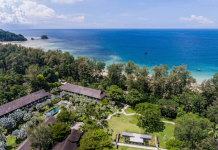
Six Senses Hotels & Resorts has appointed Eric Hallin as general manager and Hannah Loughlin as director of sales and marketing of Six Senses Con Dao.
With more than 40 years of international hospitality experience, Hallin’s management expertise spans an impressive list of countries, including France, Greece, Maldives, Spain and Thailand.
From left: Eric Hallin; and Hannah Loughlin
Aside from contributing to the success of properties such Six Senses Samui in Thailand, Hallin has also held leading positions in PATA, chambers of commerce and Skål.
On the other hand, Loughlin began her sales and marketing career in 2002 at London’s Grosvenor House before moving on to join Design Hotels, and spearheading the field team of prestigious hotels including Sofitel London St James, InterContinental, and Anantara Angkor Resort & Spa.
The British national was most recently leading the sales, operations and finance team in Cambodia as general manager for Trails of Indochina, a luxury inbound agency across Indochina.
Recent years have seen the meteoric rise in large industrial warehouses, museums and libraries pivoting as venues, spurring convention centres across Asia-Pacific to stand out in an increasingly competitive business events sector.
What has resulted are both hardware improvements – such as innovative modular spaces and the addition of a go-kart circuit – and software upgrades such as sustainability policies and a locally-focused menu offering.
VERSATILITY EDGE
IMPACT – a commercial complex in Bangkok, Thailand comprising an arena, convention centre and exhibition halls – hosts over 490 events and 15 million people annually, but Loy Joon How, general manager of Impact Exhibitions Management, told TTGmice that sometimes creativity meant taking events outside.
“In keeping up with creative requirements from event planners and clients, we are constantly looking beyond our private function spaces, especially at outdoor or non-conventional indoor venues that we can use to support unique meetings,” said Loy.
Aside from its 140,000m2 of indoor space, the complex is also home to an outdoor waterfront area, sports club, tennis academy, and electric go-kart racing circuit. These spaces can be arranged for private use.
Over in Singapore, Resorts World Sentosa (RWS) has chosen to bring the outside in. Its junior ballroom now sports a zen garden patio.
A number of its medium-sized function rooms have also been reconfigured, and can now be combined into a junior ballroom, with a capacity of 420 guests in a round-table setup.
Such enhanced spaces will cater to an emerging style of “experiential business-leisure events”, accompanied by “more demand for inspirational ‘TED Talk’ style conferences over conventional technical content or keynote sessions”, described an RWS spokesperson.
TECHNOLOGY BOOST
As the Covid-19 pandemic forces events online and encourages hybrid online/offline events to take root, it is no surprise that venues are boosting their technology capabilities.
As part of RWS’ ongoing transformation into RWS 2.0 – a S$4.5 billion (US$3.2 billion) mega expansion project, the Resorts World Convention Centre has welcomed Singapore’s largest 270-degree projection screen in the Resorts World Ballroom, and state-of-the-art large venue projectors with the widest colour spectrum in the industry.
Also in Singapore, SingEx Venues – the venue operator of Singapore EXPO and MAX Atria – introduced a suite of new facilities and services in January 2020.
These include smart, sustainable and acoustically-treated modular spaces FleX; as well as high-tech plenary hall ApeX with customisable audiovisual and digital elements, telescopic seating and a 54x5m configurable screen. The venue’s F&B has also been upgraded with research and development capabilities, while its central production kitchen able to cater for more than 1,000 guests concurrently.
SingEx Venues has also evolved beyond its initial function as a venue provider to provide Xpert, an in-house event planning service for event organisers.
Across the causeway in Malaysia, Angeline van den Broecke, director of global business development and marketing at Kuala Lumpur Convention Centre, shared that technology adoption and integration has always been a “major investment priority”.
She indicated this commitment to remaining agile has been “particularly advantageous in current times”, where there is a growing demand for virtual audience participation and remote access to content, event programmes and digital communication tools.
MULTISENSORY PUSH
For years, convention centres have realised that they have to be more than just venues, and intensified competition from unique spaces has made this reality even more true.
Darwin Convention Centre has chosen to find its way to delegates’ heart via the belly. It launched its Seven Seasons menu, based on cultural practices by the traditional owners of the Darwin region. The concept moves beyond Aboriginal food to include a visual and sound experience for a sensory cultural immersion.
Similarly, Melbourne Convention and Exhibition Centre (MCEC) has also evolved its dining to offer EAT stations that theatrically displays food options so that charcuterie can “literally fall on your plate”.
The stations are a more sophisticated version of elevated food platters that echo cafe or street food, with a goal of transporting guests to Chinatown or Melbourne’s laneways.
Meanwhile, Kuala Lumpur Convention Centre serves up a Malaysia on a Plate culinary experience, featuring authentic local flavours both on its events menu as well as at its F&B outlets, Parkview Cafe and Cafe88.
In addition, Van den Broecke shared that the Centre is part of the Malaysia Iconic Experience in Kuala Lumpur with KLCC Property Holdings, which “promotes the integrated precinct as a tourism destination with several attractions and recreational facilities”, helping to expand the visitor experience beyond a conference programme.
RWS too, is aiming for a similar integrated precinct selling point. As part of RWS 2.0, the resort is enhancing its existing attractions such as Universal Studios Singapore and S.E.A Aquarium, and will be introducing a new waterfront lifestyle complex with two new destination hotels and an adventure dining playhouse.
GOING EVEN GREENER
In terms of sustainability, Australia’s convention centres have pushed the boundaries by having more than sustainability policies in place.
MCEC and ICC Sydney both appointed a full-time sustainability staff to demonstrate their commitment to the cause.
“Sam’s brief is simple,” said MCEC’s CEO Peter King of his recently-appointed sustainability manager Samantha Ferrier.
“To seek out best practice in green, eco-friendly options and make it easier and more cost-effective for customers to incorporate eco-friendly practices into their events.”
To that end, Ferrier shared that MCEC has appointed Australia’s first 100 per cent tree-to-cup carbon offset coffee company as their official supplier. “We’ve (also) installed 36 permanent Food Cubes on our courtyard that will become an event focal point. Each cube can grow 25kg of produce and will be used to grow herbs and other food for (our cafe),” she elaborated.
Meanwhile, ICC Sydney’s commercial kitchens are being serviced by solar hot water, while event planners are given a Sustainable Event Guide checklist that helps them work towards environmental goals, such as a plastic-free event.
Adelaide Convention Centre and Gold Coast Convention and Exhibition Centre have made their environmental credentials known by becoming joint winners of the first venues in the world to achieve the coveted EarthCheck Platinum Certification.
Adelaine Ng, Pamela Chow, S Puvaneswary and Anne Somanas contributed to this article
New Zealand’s prime minister Jacinda Ardern announced yesterday (June 3) that gatherings of any scale can start taking place in the country starting from next week.
Conventions and Incentives New Zealand chief executive Lisa Hopkins said the industry is pleased to be accelerating the return to business, starting with a domestic audience.
The New Zealand government has lifted number restrictions on business events; Auckland pictured
“We want people to understand business events are the safest type of event you can hold, because they are highly organised and managed by professionals who work under strict codes of practice.
“Our message is it is safe to hold a conference, seminar, workshop, incentive travel event and gala dinner under already-developed and enhanced track, tracing, health and hygiene standards. We will also be working with the broader events sector to develop a voluntary code, to support New Zealand’s efforts in the key area of public health,” ,” Hopkins said in a statement.
Industry heads have also spoken positively about the move.
Brett Jeffrey, general manager, Australasian (NZ) Society of Association Executives, commented: “This is a positive step forward and will go a long way to providing much needed reassurance that planning for association conferences can begin in earnest.”
Arna Wahl Davies, chair of the CINZ Approved Professional Conference Organisers (PCO) Group added: “As accredited event professionals, we will be voluntarily working to ensure the highest possible standards of hygiene, tracking and tracing to ensure business events are safe now and in future.”
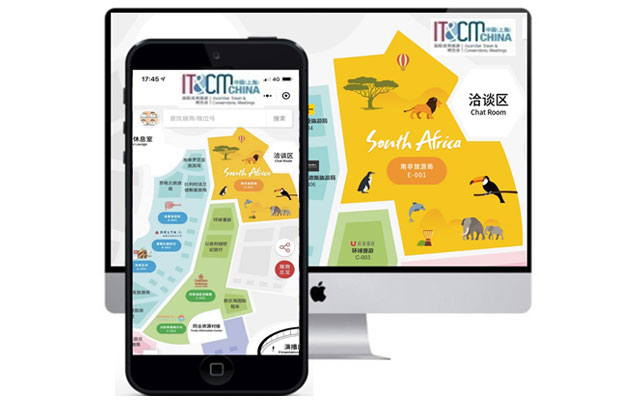
Dragon Trail Interactive is IT&CM China & CTW 's first Official Virtual Partner
Organiser of IT&CM China and CTW China, TTG Asia Media, has partnered with Dragon Trail Interactive (DTI), as it prepares to host its first fully virtual tradeshow this August.
DTI’s The Next Travel Market (TNTM) platform will have an English-Mandarin interface that can be accessed via a PC, mobile or a WeChat mini programme, providing a single-entry access for both international and China-based delegates.
Dragon Trail Interactive is IT&CM China & CTW China’s first Official Virtual Partner
Delegates visiting the exhibition section will be able to meet suppliers from across China and the world. Users will be able to download sales resources, view product presentations, swap e-business cards, leave messages, schedule an appointment or even hop onto a walk-in meeting. Video calls, text, and voice chat will also be made available. Each exhibitor or buyer will receive up to 24 x 20-min pre-scheduled appointment slots over two days.
There will also be a new Buyer Procurement Showcase segment, which will see business, association and corporate buyers sharing their procurement requirements with relevant and interested destination and supplier leads. Each showcase is 20 minutes in duration.
Participating destinations and corporate brands will also be giving updates and developments in 20-minute presentations under the Brand Showcase section, and there will be daily opportunities to engage with prolific industry experts to talk about this year’s hot topics.
After a hard day’s work, delegates will be then able to stretch their social muscles and participate in virtual conversations, ice-breakers and interactive games.
Swire Hotels has appointed three members of its senior management team into new roles.
Brian Williams, Toby Smith, and Dean Winter have all worked with the company for over a decade, each contributing to the launch and growth of EAST Hotels and The House Collective brands.
From left: Toby Smith; Dean Winter
Toby Smith will replace Brian Williams as deputy chairman, while Dean Winter will take over from Smith as managing director. Following 14 years at Swire Hotels, Williams will take up the role of senior advisor to the brand on a part-time basis from his new base in the UK.
As deputy chairman, Smith will lead Swire Hotels’ growth strategy for both Swire Properties-owned developments and hotel management agreements with third-party owners.
Smith joined the Swire group as a management trainee in 1991, and has since held positions within the group’s shipping and aviation sectors, taking him to countries across the globe including Papua New Guinea, Vietnam, Australia, Turkey, Sri Lanka, France, Singapore and Hong Kong.
On the other hand, Winter has over 25 years of experience as a hotelier and restaurateur across London, Hong Kong and Singapore, and will oversee the day-to-day operations of the hotel and restaurant businesses.
Winter came onboard Swire Hotels in October 2006 to concurrently manage operations and pre-opening preparations for The Opposite House in Beijing, The Upper House and EAST in Hong Kong, before opening The Upper House as general manager in 2009.
Williams originally joined Swire Hotels as managing director before becoming deputy chairman, and will now relocate to the UK to take on his new role. He will continue to support the development plans of the group, as well as act as a brand ambassador to raise the profile of EAST and The House Collective globally.
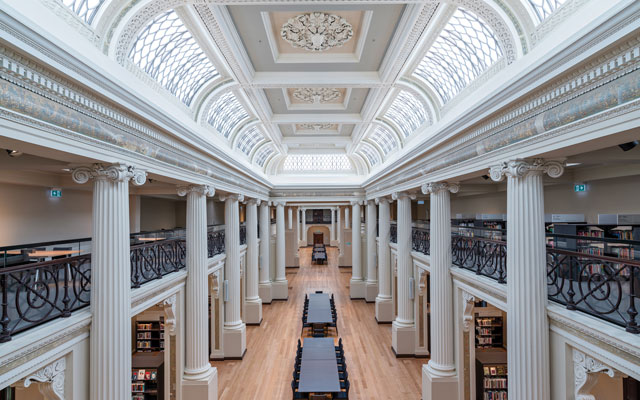
The Ian Potter Queen’s Hall offers a unique event space inside Victoria’s historic State Library. Both regal and glamourous, the venue is one of Melbourne’s newest for events after being closed to the public for 16 years, following a redevelopment last December as part of an A$88.1 million (US$57.8 million) project.
State Library Victoria
1 of 2
The Ian Potter Queen's Hall
La Trobe Reading Room
The space now functions as a 1,019m2 public reading room by day and is home to the library’s Australian literature, chess and bridge collections. After 17.00 daily, it offers events a special space rich in heritage architecture and 19th-century design featuring Corinthian pillars, ceiling skylights and 1920s murals.
Its high ceilings and timber floor have been carefully restored to reveal the original grandeur of the hall that first opened in 1856. The overhead skylights have also been revealed after temporary measures to protect it following a dramatic thunderstorm that shattered its glass in 1901 blocked out the light.
Now hailed as the crown jewel of the State Library, the reactivated Ian Potter Queen’s Hall is also connected to the stunning La Trobe Reading Room, a reopened space surrounded by a panopticon of six tiered levels topped with its famous dome. Around 220 guests can be hosted within at the long oak tables, which surround a raised platform that emcees can use. The reading room can also serve as a breakout room with wow impact on entry or a space for mingling, good for 450 in cocktail-style.
• Complex custom clearance may now take three hours prior to flight
• Technology can speed up processes and encourage people to fly again
• Destinations with efficient immigration clearance will be most favoured among travellers
As governments begin to lift barriers to cross-border movement during the pandemic, attention to immigration clearance procedures at airports come to the fore.
In Malaysia, passengers have been advised to arrive at the airport three hours before their flight – compared to the usual two – to complete new safety and clearance procedures, which include temperature screening.
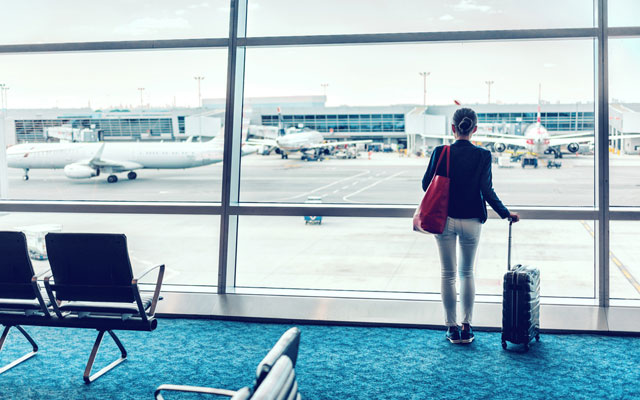
Travellers departing from airports may need to begin custom clearance three hours ahead of their flight
The extent of security and health screening processes to be expected at Singapore’s Changi Airport remains uncertain, as the citystate begins its phased resumption of business and public activities only today (June 2).
Manila in the Philippines has more tedious immigration clearance procedures for arrivals than for departures, but as of press time, it is yet unknown whether these procedures will be retained once the airport is reopened to commercial flights.
Departing passengers are only required to have their temperature taken, while arriving passengers must undergo a swab test and a 14-day quarantine which could be shortened to three to five days should the test result prove negative.
In an online joint business assembly of PATA Philippine Chapter and Philippine IATA Agents Travel Association (PIATA), Ed Monreal, general manager of Manila International Airport Authority, said it could take passengers three hours now to be cleared for international flights.
There have been talks in the travel industry that airport security clearance in a post-Covid-19 world could take between four and six hours. A Forbes report published on May 10 suggested that the process, which could in the near future include sanitation of passengers and luggage, would take up to four hours.
Monreal emphasised that milling around the pre-departure area must be prevented, as that violates social distancing requirements. As such, a three-hour airport security clearance should suffice and be made possible by fully-manned check-in counters and reliance on online processes to minimise interaction between passengers and airline staff.
Grifton Medina, port operations division chief, revealed that paper arrival cards would be replaced with digital versions, allowing the Philippine immigration system to see in real time when the passenger checks in from the port of origin and use the data for faster contact tracing.
It isn’t just the responsibility of airports and immigration authorities to develop smooth clearance procedures for passengers. Airlines have a role to play too, at the ticketing and check-in as well as embarking and disembarking stages.
To minimise cross-contamination during airport check-in and clearance processes, AirAsia has implemented a fully contactless check-in procedure that allows passengers to use their smartphones to interact with self-check-in kiosk via QR codes to print their boarding passes and bagging tags.
Santisuk Klongchaiya, CEO of Thai AirAsia, said: “We’ve also made it possible so that after immigration, travellers do not have to come in contact with anything else before they get on the plane; at the boarding gate, they only need to show the code on their smartphones to the staff.”
Tech assistance
Digital technologies and automation deployed by airports and airlines for arriving and departing passengers may well be the key to a smoother return to travel in the post-Covid world.
Real-time data, biometric check-in and other contactless solutions may climb in priority, as they could shorten total passenger clearance time; a much-needed compensation when aviation hubs may have to account for lengthier health and safety protocols.
Patel: passengers will demand easy-to-use solutions from airport operators as custom clearance gets complex
Sumesh Patel, SITA President, Asia Pacific, predicts that when faced with increased complexity in customs clearance, passengers will “increasingly demand easy-to-use solutions” from airport operators, who should be ready to harness real-time data that includes “knowledge of where a ticket was bought, the nationality of a passenger, purpose of travel, past travel, transit and embarkation information”.
Not only will automated and contactless processes be able to fulfill the new need for social distancing in airports, but they will also serve to shorten what is likely to become a longer journey for passengers.
Patel described: “Digital technologies and automation will play a critical role in meeting these new requirements. Contactless, self-service technologies at every step will facilitate passenger flow, cutting queues while ensuring a social distancing-friendly passenger experience.”
A possible obstacle to travel rebound
While industry players are unanimous about the need for safe and efficient measures at airport clearance to encourage travel recovery, they baulk at possible lengthy waits to clear immigration procedures.
Laurent Kuenzle, CEO of Asian Trails, said lengthy processes would “not be conducive for travel”.
Should this become the norm, he predicts people will travel less and stick to annual holidays.
Kuenzle said: “Personally, I think four-hour airport clearances are ridiculous and there must be a more efficient way to make passengers feel safe.”
Stephan Roemer, CEO of Diethelm Travel, said how destinations handle the immigration and clearance procedure would play a huge role in revitalising their tourism sector.
He noted: “Those who are able to handle tourism adequately will be the ones where tourists will like to travel to. It is in the hands of the countries how they want to welcome tourists.”
Kuenzle agrees, and said that tourism authorities must lobby for the most efficient airport clearings.
He said: “The challenges will come if one country handles procedures fast and efficiently, and another doesn’t. The efficient airport and country will have a clear advantage. People will want to feel safe or they won’t travel, but there must be an efficient way to implement it.”
Roemer added that clear communications, timelines and outlooks from authorities are also essential for recovery, while Raaj Navaratnaa, general manager, New Asia Holiday Tours & Travel believes that travel agents will also be expected to detail to customers the health and safety measures enforced in destinations they sell.
A poll conducted among the audience at the Aviation Discussion for Business Events Industry webinar, organised by the Thailand Convention and Exhibition Bureau on May 21, found that respondents were least looking forward to the longer airport procedures (55 per cent) and the requirement to wear masks throughout the flight (25 per cent), no food or drinks served throughout the flight (11 per cent), and not being able to select seats due to social distancing requirements (10 per cent).
At the same time, 50 per cent voted overall hygiene standards as the key factor that will revive air travel the fastest.
A majority (48 per cent) said their next fight would be for a domestic leisure trip while only 19 per cent would take a domestic business trip right away. – Additional reporting by Anne Somanas, Rosa Ocampo, Marissa Carruthers and S Puvaneswary
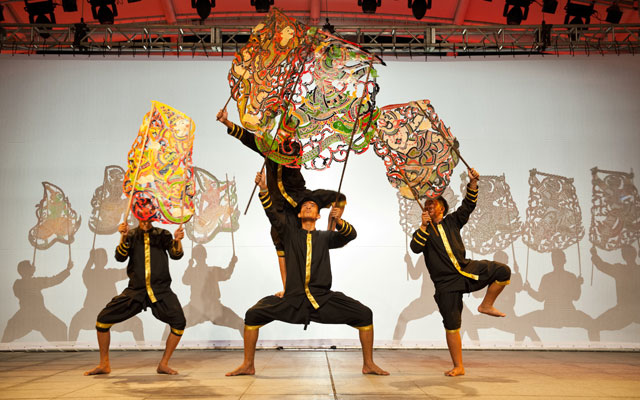
Nang yai is a form of shadow play found in Thailand
The Thailand Convention and Exhibition Bureau (TCEB) has helped local event organisers stage virtual events over the past few months since the onset of the pandemic which has decimated MICE activity.
TCEB’s assistance comes in the form of tools such as the TCEB MICE Intelligence Centre’s Virtual Meeting Space, a platform that accommodates up to 10,000 online participants in a single session.
Nang yai is a form of shadow play found in Thailand, one of the performances hosted by the Harmony World Puppet Channel
Nichapa Yoswee, senior vice president – strategic marketing and business development at TCEB, said: “TCEB is on hand to provide continuous support as events make the temporary transition from physical to online. The support includes a virtual platform for webinars as well as one-to-one engagement for exhibitions, so that attendees and audience can stay engaged, stay active, and also stay entertained with business events and world festivals.”
Beneficiaries of TCEB’s support include the Harmony World Puppet Channel (Harmony of World Puppet Festival), which addresses social issues through the art of storytelling. The online event attracted 6,164 participants from Thailand, Japan, India, Bangladesh and Laos. The audience tuned in remotely, clocking up 201.5 total watching hours over four days in April and three in May.
Fungjai and Nylon Thailand, the co-founders of The Bangkok Music City, also invited its audience to stay entertained while at home, by providing artist content online. Renamed the At Home Festival, the event reached a domestic audience of 120,757, as well as 1,828 people from 45 countries across the globe. Through live streaming on platforms like Facebook and YouTube, the event was able to reach concerts, pubs and theatres that are currently deprived of primary revenues and contact between content creators and the audience.
Another event, Thailand Toy Expo 2020, offered a new type of online experience through Virtual Tour 360 and Live Stream from May 28 to 31. More than 50 international and local artists used the online platform to present their latest collections, enabling fans to get in touch with their favourite toy brands and designers.
Meanwhile, mass participation mobility event Move Asia is working towards a virtual transformation that will be called the Home Marathon 10KM.
Companies wanting to ensure their employees are looked after and feel safe on the road when restrictions ease off should prepare now and consider what they can do to strengthen their duty of care
For the past three months, most countries have gone through a partial or complete lockdown due to the Covid-19 pandemic. As a result, many employees have had to cancel or postpone business trips, attend conferences virtually and work from home.
Almost four months since the initial outbreak, governments across the world are starting to emerge from lockdown. To strengthen economic recovery, it is important to slowly restore travel and trade links safely. Some countries in Europe and the Asia-Pacific region have started to re-open business and relax safe distancing measures.
In early May, the Singapore Government also announced that it is working on guidelines with four other countries to resume flows of goods, services and personnel. This multilateral effort would allow essential cross-border travel for purposes such as maintaining global supply chains.
The future of travel
Domestic travel will likely be the first to restart and will be the litmus test of efficacy of measures by the local governments before they open international routes.
Gradually, governments will implement ‘travel corridors/bubbles’ to facilitate essential travel on certain routes. While tourist and business travel should eventually resume to pre-pandemic levels, the way we travel will now require a lot more planning and managing of risks in safety and wellbeing.
A balancing act between safety and resumption of travel
This starts with a need for organisations to thoroughly review and implement the necessary policies and procedures to balance the necessity of domestic and international business travel with the potential medical and security risks.
Decision making complexities that many organisations are facing include – when is the right time to resume travel and to which destinations; how to ensure their staff are adopting appropriate due diligence when assessing the risks associated with each trip; how to ensure their travellers are taken care of in the event of a medical or security incident while overseas, and what to do if travellers are symptomatic upon return.
It is important for organisations not to merely react to these problems. By adopting robust travel policies, organisations can proactively mitigate the risks, optimising productivity as well as ensuring compliance with Duty of Care obligations.
While the risk threshold for each organisation and the safety guidelines by the authorities of each location varies, there are some best practices we observed in supporting our clients where business travel is essential. It is about access to a dynamic and granular assessment of the medical and security risks of the destination, awareness of all travel restrictions, and the vulnerabilities of the individual traveller.
Organisations have to ensure a ‘mobile bubble’ for their travellers, which means putting in place a set of strict measures that shields the individual in transit, from personal protective equipment, to validated ground transportation or accommodation with stringent measures against Covid-19. Organisations also need to ensure compliance with certain medical regulations.
To this end, International SOS has partnered with the International Chamber of Commerce to launch an app called ICC AOKpass, with a view towards ensuring Covid-19 medical compliance during travel.
To help our clients assess the potential risks of their planned trips, we developed a Covid-19 country scorecard, which includes risk factors from infection rates to medical infrastructure. In some locations, there are also underlying in-country security risks because of the local Covid-19 situation.
We hence overlay the medical risk assessment with a security risk assessment of risks like xenophobia, reversals of restrictions, social unrest driven by growing economic and social grievances, general public panic, resource scarcity, security force actions, misinformation and more.
During the trip, equipping business travellers with tools like the International SOS Assistance App for round the clock medical and security situational updates, assistance and location tracking, ensures that they stay informed and supported if a situation arises. Our app is underpinned by our 26 Assistance Centres worldwide. One call puts the affected staff in touch with doctors, security and logistics experts, anytime and anywhere.
Upon return, organisations also need to implement necessary precautions like quarantine and medical pre-access screening procedures for returning travellers, in compliance with guidelines and standards outlined by local governing authorities.
Managing employee concerns and fears
It is also critical to manage and assuage the fears of the travelling workforce, which is likely to manifest in various ways – they might fear exposure to the virus while in transit, during meetings, or even staying in hotels.
Others might be fearful of the uncertainties and risks in other countries which can range from uneven relaxation of restrictions, international and local transport restrictions, xenophobia, anti-government protests, and access to medical care in an unfamiliar place.
The uncertainties about a global economic recession have also given rise to fears about job security. While employees might harbour concerns about resuming travel, they could also be hesitant of voicing their fears with their managers and organisations. Employees will be wary of how their reluctance to travel might compromise their job security or career progression.
In consideration of all these concerns, companies need to be prepared to support the travelling workforce emotionally and restore confidence that staff safety is their utmost priority.
This could involve running educational campaigns for employees to communicate the return to operations plan and organising employee Q&A sessions to address lingering doubts. Companies can also arrange pre-trip briefings to help their travellers prepare for the security or health risks in their destinations, either conducted by their in-house medical and security colleagues, or in partnership with workforce risk management providers.
Providing business travellers with 24/7 access to remote medical and security advice and assistance while they are away, would also be helpful in allaying employee concerns.
Preparing for the future of business travel
Ultimately, the resumption of travel does not rely solely on lifting travel restrictions, nor does it signal the end of the pandemic. The gradual easing of restrictions provides an opportunity for organisations to review their plans for business travel and help employees adapt to and be confident while travelling in a post-pandemic world. Organisations that implement the correct measures will have the greatest chance of success in returning to work.
Aditya Luthra is based in Singapore. He leads client engagements around Asia and Australasia, developing bespoke solutions in support of organisations and managing their travel risk mitigation strategies, policies and procedures.
He has overseen the team’s development of actionable intelligence to incident management teams and clients on the ground during crises and emergencies, notably during the elections and ensuing violence in Papua New Guinea (2017), the Resorts World Manila attack (2017), the Islamic State-inspired attacks in Dhaka and Jakarta (2016), in the aftermath of the earthquake in Nepal (2015) and Super Typhoon Haiyan in the Philippines (2013), and during the political turmoil in Bangladesh and Thailand (2013-14).
Informa Markets will move ConnecTechAsia – an Infocomm Media and Technology event organised in partnership with Singapore’s Infocomm Media Development Authority – onto a virtual platform during the same dates, September 29 to October 1, 2020.
Conference delegates can expect to engage at live keynote, Q&A and breakout sessions during the three-day event, while the virtual exhibition floor will enable companies to showcase their vertical-specific products to registered attendees.
A screenshot from the ConnecTech Asia website
ConnecTechAsia, incorporating BroadcastAsia, CommunicAsia, SatelliteAsia and co-located with TechXLR8 Asia, will thereafter turn into a 24/7, 365 days interactive marketplace.
Ivan Ferrari, event director, tech, media & entertainment Events, Informa Markets, said: “The permanent addition of a 365 days virtual platform to ConnecTechAsia’s offering will enable a seamless, powerful, continuous engagement within our industry and unlock additional, measurable value for audiences in the community we serve. I am convinced that this significant investment in virtual will bring about a fresh experience that they will appreciate and gain from.”
More details of the virtual format will be made available in coming weeks. This shift to a virtual event is in response to the dynamic situation of the Covid-19 pandemic, where travel and physical restrictions are still in effect globally.
ConnecTechAsia will resume its live event next year, from June 9-11, 2021, at the Singapore EXPO and MAX Atria.
Just 10 minutes from Phuket International Airport on the serene northern coast, this 178-key, Bill Bensley-designed resort offers delegates a quiet, tropical paradise steeped in Phuket’s tin-mining heritage
The newly-opened Ritz-Carlton, Bangkok anchors the One Bangkok development with cosmopolitan elegance. Featuring the city's largest ballroom and a spectacular new penthouse suite, it delivers exceptional hardware and deeply authentic, soulful service for business and leisure travellers alike
Behind the imposing, Brutalist concrete that defines Zurich’s Oerlikon district lies a surprising secret. While its exterior honours the neighbourhood’s industrial roots, stepping inside Mama Shelter reveals a vibrant, neon-soaked world that is a far cry from its rigid shell











 Aditya Luthra is based in Singapore. He leads client engagements around Asia and Australasia, developing bespoke solutions in support of organisations and managing their travel risk mitigation strategies, policies and procedures.