Four Seasons Greater China Collection has launched its Great Group & Meeting Value package.
The offer includes one complimentary guest room or accommodation upgrade to the next room category based on minimum paid rooms per night; and complimentary function room based on catering spend.
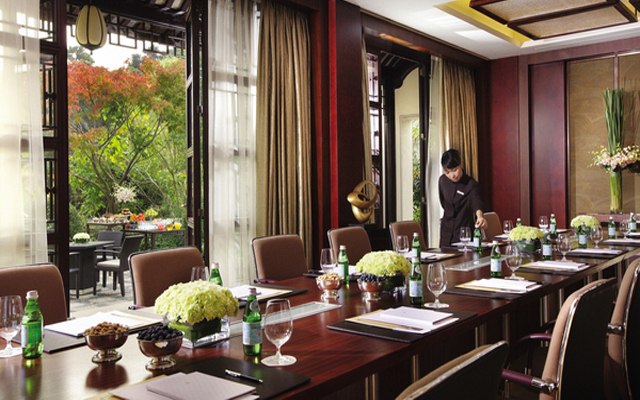
The Willow meeting room at Four Seasons Hotel Hangzhou at West Lake
These terms and conditions are subject to a specific property. Some benefits may not be available at every hotel. Four Seasons hotels are located in major Chinese gateway cities, such as Tianjin and Shenzhen.
The promotion is valid until August 31, 2020, and is only applicable for in-house groups of 10 rooms and above. It is also subject to space and date availability, and for new bookings only. Terms and
Arna Wahl Davies has been appointed chair of the Conventions and Incentives New Zealand (CINZ) Approved Professional Conference Organisers (PCO) Group, taking over from Ali Copeman.
She is co-founder and director of Composition, a PCO which manages mid- to large-size conferences throughout New Zealand, and brings to the role over 20 years’ experience in event management.
Arna Wahl Davies
Early in her career, Davies was initially a chef working in international hotels and then moving into event management. Before starting her own business a decade ago, she spent over seven years with a leading New Zealand conference organiser, learning the art and craft of being a PCO, and managing events of up to 1,500 delegates.
CINZ chief executive, Lisa Hopkins, said the 18 companies accredited to the CINZ Approved PCO Group are qualified to handle the most complicated of domestic and international association conferences.
“Not only are CINZ Approved PCOs required to meet strict criteria, they are bound by a Code of Ethics, Rules and Responsibilities determined by CINZ,” said Hopkins.
Most innovative & award winning cruise line As the leader in cruise line innovation, Royal Caribbean ships are built for businesses. We deliver incredible value, ease of planning and a unique event experience. Our commitment and dedication to creating extraordinary events has earned us numerous MICE industry awards including Prevue Visionary Award for ROI, Smart Meeting’s Smart Stars Award and Incentive Magazine’s Platinum Partner Award.
Exceptional onboard offerings Royal Caribbean delivers one-of-a-kind adventures with cutting-edge ingenuity. From first-at-sea thrills like the FlowRider surf simulator, RipCord by iFLY and the onboard Zip Line; to awe-inspiring performances including ice skating, aerial shows and hit Broadway musicals such as Mamma Mia and Grease. Guests can embark on a culinary journey with cuisine created by celebrity chefs, recharge at the Vitality Spa and enjoy inclusive amenities in our luxurious Royal Suite Class.
Unique event spaces Every ship has multiple customisable venues with capacities that accommodate events of all sizes, from an intimate gathering of 25 to a large group of 1,400 pax. Our theatres, lounges and outdoor spaces are all equipped with state-of-the-art technology and audiovisual services. Book one of the distinct neighborhoods onboard our Oasis Class, wow your clients with an event at the Boardwalk or host an evening reception under the stars in the Solarium.
Dedicated conference facilities fleetwide
When it’s time to get down to business, our state-of-the-art conference rooms can accommodate 18 to 400 guests. Each room can be configured to fit the needs of any meeting setup. In addition to the advanced technology and complimentary audiovisual equipment offered, catering is available upon request. Customize the perfect dining experience for your event.
High tech on the high seas It’s full steam ahead with VOOM, the fastest Internet at sea. Guests will enjoy instant streaming, real-time sharing and 24/7 connectivity from anywhere in the world on every ship in the Royal Caribbean fleet.
Let Royal Caribbean’s team of skilled event planners craft the perfect, customised event to your requirements. We’ll help you curate every detail —from culinary choices to team building activities and event venue space. Deliver a one-of-a-kind event with personalised beverage packages, specialty restaurant buy-outs, exciting shore excursions and much more.
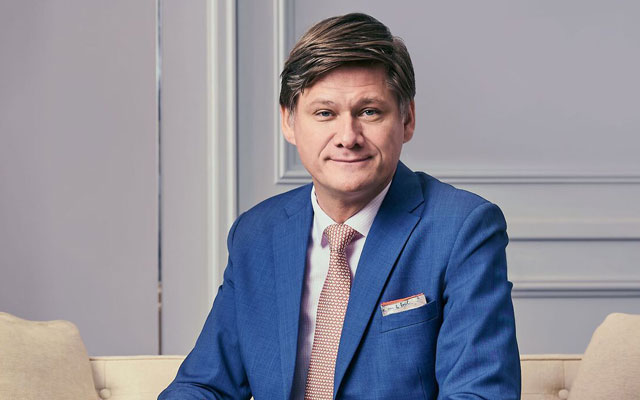
Marcel Holman has been named managing director of The Langham, Hong Kong and regional vice president, operations – China for The Langham Hotels and Resorts.
In his new role, he will drive the strategy, operations and processes for all China hotels under the luxury brand.
With over 25 years’ experience, Holman was most recently the vice president, China for The Sukhothai Hotels & Resorts, and general manager of The Sukhothai Shanghai.
Prior to that, Holman held leadership roles at Shangri-La hotels for more than 11 years. In 2015, he was instrumental in the conceptualisation, preparations and execution of Shangri-La’s first external food and beverage complex (MEGA 50), comprising three lifestyle venues and a ballroom. During his time with the group, he also assumed the leadership role of general manager – projects for the Shangri-La Hotels & Resorts properties in Singapore, Shanghai and Jakarta.
The Dutch national started his international hospitality career in 1993, dabbling in various operational roles, followed by consecutive assignments at InterContinental Hotels Group, Rotana Hotels, and Shangri-La Hotels & Resorts in Australia, Greater China and the UAE.
Phatsalawadee Pimpila has been named Meliá Koh Samui’s director of sales and marketing.
The Thai national was previously director of sales for Kanda Residences, another five-star hotel situated on Koh Samui, Thailand.
Pimpila has also worked as the managing and sales director for O-Pa Television, that she co-founded, focused on travel and leisure television production. She also served as a presenter for a weekly show the company produced for a Thai digital TV channel.
Other roles she has assumed in her two-decade-long career in sales and marketing include senior sales management roles for Hua Hin-based hotel Unico Sandara Cha-Am, production company Capital TV, and developer Celadon Land Asia Pacific.
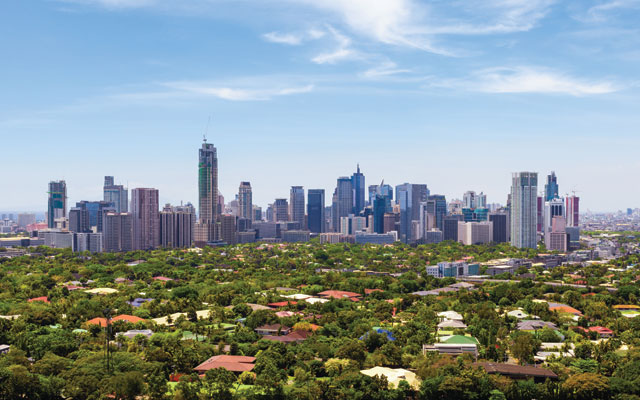
Covid-19 has damaged the MICE industry but there are plans to lure groups back when travel restrictions are lifted; Manila’s skyline pictured
While the future is still hazy – as of press time – as to how the Covid-19 crisis will be resolved, the post-pandemic scenario for Philippine’s business events sector can be divined based on its performance – or non-performance – earlier this year.
Covid-19 has damaged the MICE industry but there are plans to lure groups back when travel restrictions are lifted; Manila’s skyline pictured
Orly Ballesteros, business events organiser at Ex-Link Events, placed losses at a “conservative” 500 million pesos (US$9.8 million) for the January to March period for PACEOS’ (Philippine Association of Conference/Exhibition Organizers and Suppliers) members alone.
Events were cancelled, and business was rudely interrupted, bringing about massive accumulated losses. Philippines was eventually placed on complete lockdown in mid-March.
“The MICE and tourism industry stakeholders (and their staff) need financial aid from the government. Most of the industry players are small and medium enterprises that have limited funds and have been affected by the current pandemic”, Ballesteros said.
He is reaching for help in higher places, by speaking with various government agencies such as PACEOS and the Tourism Congress of the Philippines to provide financial aid to cushion the impact of the pandemic. But whether the assistance recommended comes through remains to be seen.
Short of cash subventions, also envisaged are perks and sweeteners to resurrect numerous business events that were put on hold this year, and lure more foreign corporate groups in the meantime.
Former tourism secretary and events organiser Mina Gabor proposed adding value for event organisers – such as upgrading participants to five-star hotels, throwing in experiential post-event tours, or providing well-thought-out souvenirs – for events scheduled to take place in 2H2020 and 2021.
A second look at Philippines’ MICE Roadmap 2020-2030 is also on the cards.
“If you really want to tap the MICE market and the roadmap specifies targeting Asia and the Middle East, we need to develop these markets. We need to look at how far we have gone in meeting the goals and timeline,” said Angel Ramos Bognot, owner of Afro Asian World Events.
And once Covid-19 blows over, the task of rebuilding the sectors falls on the shoulders of Tourism Promotions Board’s new chief operating officer, Maria Anthonette Velasco-Allones, who assumed the plum post in early February. However, as the lawyer and public servant is inexperienced in tourism, marketing and promotions, it would be interesting to see how Allones tackles the worst global crisis in years.
Heritage attractions
The heart of Manila is its heritage, which pre-Covid-19, was revamped considerably. Top of the list is the Walled City of Intramuros – seat of the Spanish colonial government for three centuries – which now has extended opening hours till 23.00. The attraction is now well-lit, and safer for tourists to stroll alongside its arched gates, gardens and fountains.
Meanwhile, new attractions in the area include the Dungeons of Fort Santiago where 600 were tortured and killed during the WWII; Museo Filipino for a glimpse of pre-colonial Philippines and little-known heroes; and last but not least, play a round of golf at the 18-hole Club Intramuros, from 15.00 to midnight.
To experience old and new Manila, hop on an air-conditioned ferry. The Pasig River Cruise starts from the Guadalupe ferry station in Makati, and the 45-minute cruise will pass by attractions such as the Malacanang – the presidential palace, before arriving at the end-point, Escolta in old Manila.
Rejuvenate in Rizal
Bucolic and unpolluted Rizal Province just a few hours overland from Manila beckons with its arts offerings and multifaceted landscape.
Pinto Art Museum in Antipolo is a feast for the senses with its display of paintings, sculptures and other worthy pieces of contemporary Philippine artists. The place is whimsy and quirky, while the meandering gardens and outdoor spaces are delightful and refreshing.
Another artsy area is Angono, home to some of the country’s art luminaries, art museums and art galleries, and the Higantes Festival – a parade of towering papier-mache giants.
From modern to stone age art, cadge a detour to the Angono Petroglyphs of 127 human and animal figures carved in rock walls. They’re the oldest work of art in the Philippines dating to the late stone age.
The highlight at Rizal is a vista of the Sierra Mountain ranges, ravines and waterfalls, jungles, rivers and unusual rock formations. But the trip won’t be complete without a stop at the vast Masungi Georeserve in Baras for some trekking or climbing. Teambuilding activities can be arranged, alongside a fine-dining experience at the Silayan Dining Room.
Opened last year for corporate groups, the dining room was built to blend with its surroundings and serves up seasonal and organic produce from the area.
Tagaytay and Batangas post-eruption
For the adventurous, head off to Tagaytay to see how the destination is doing after the eruption of Taal Volcano earlier in January.
While the main island which the volcano sits on has changed physically and is now strictly off limits, Tagaytay’s beauty is unmarred, while areas where volcanic ash fell have been cleaned. Some of the country’s best restaurants and boutique hotels are here.
From Tagaytay, it’s just a short drive to Batangas province where one can laze on the many beaches that dot the province’s endless shorelines, join heritage tours, visit pilgrimage sites, and splurge in luxury farm stays and wellness treats.
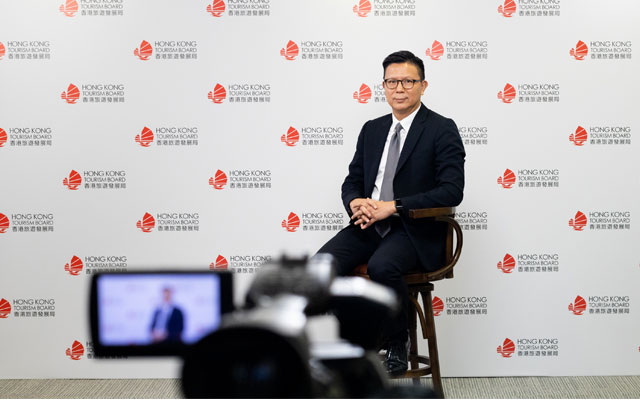
Wong: getting all the groundwork laid out so that Hong Kong can jump at the chance to be first-movers in overseas markets
On May 25, Meeting & Exhibition Hong Kong (MEHK) outlined recovery plans and developed a host of targeted promotions for the various business events segments to restart a sector that has been held captive by the Covid-19 pandemic.
These include some brand-new initiatives like Asia’s first-ever virtual business networking platform for destination promotion; a new campaign; a new hotel funding scheme; as well as fresh itineraries with a focus on CSR and wellness activities.
Wong: ensure groundwork is laid out so that Hong Kong can jump at the chance to be first-movers in overseas markets
For instance, the MeetON@HK campaign was created, and to complement this, a new online business events matching platform will be launched. This online marketplace will be a place for business events stakeholders will be invited to promote their products, as well as make appointments with potential buyers.
So far, the platform boasts over 70 hotel partners and Cathay Pacific, featuring products such as meeting packages for small business events groups. There will be flight offers by Cathay Pacific, alongside hospitality offers from attractions.
MEHK also believes that incentive travel will continue to be a motivating tool in the post-Covid-19 business environment, although event planners are predicted to favour shorter trips, as well as CSR and wellness themes.
New themed itineraries that were specially developed for incentive groups include agricultural tours in Tai O, Lantau Island; guided forest bathing or tea pairing in Taipo; a floating party at sea; or having dim sum in the dark to support the visually-impaired.
MEHK has also set up a new funding scheme for over 300 licensed hotel partners to capture small-size corporate meeting and conventions. It will be rolled out in June.
According to Kenneth Wong, Hong Kong Tourism Board’s (HKTB) general manager, MICE & cruise and regional director, Europe, no concrete timeline has been announced for the launch of the recovery plans, as there are a number of conditions that MEHK needs to monitor.
These include watching the number of confirmed Covid-19 cases, quarantine requirements, border controls, lockdown measures, air capacity, etc.
Wong said: “We are now focused on planning ahead and getting all the groundwork done. When the time is right, we want to have first-mover advantage, head to overseas markets, start our promotions, and try to recover our business as quickly as possible.”
Judging from the current situation, Wong pointed to Mainland China, and shorthaul markets like Taiwan, South Korea, and Thailand, will most likely be the first few markets to recover. As such, these initial destinations are where HKTB is planning to resume business events promotions.
As Hong Kong was hit by a double whammy of social unrest and Covid-19, overnight business event arrivals registered a drop of 14.2 per cent to 1.7 million, and over 70 events have been postponed or cancelled – representing a loss of 370,000 visitors – this year.
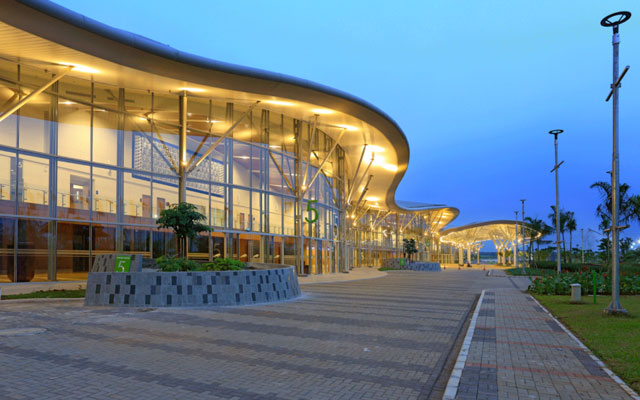
Indonesian business events stakeholders are optimistic that exhibitions are able. to return soon, with safety protocols in place; Indonesia Convention Exhibition pictured
Exhibition organisers in Indonesia are confident that business will resume in September, as the government eases large-scale social restrictions (PSBB) next month, and plans to restart economic activities.
The Greater Jakarta authority has announced that June 4 could be the last day of PSBB, depending on the results of the third phase of Jakarta’s PSBB.
Indonesian business events stakeholders are optimistic that exhibitions are able. to return soon, with safety protocols in place; Indonesia Convention Exhibition pictured
Febriana Wiriadi, vice chairman of the Indonesian Exhibition Companies Association (IECA), indicated this was a “very positive signal”. He cautioned the industry will be entering a new normal, where activities are limited, but remained confident the situation will gradually improve, with the exhibition industry returning to normal in September.
Currently, many Indonesian PEOs are eager to restart businesses, although some are hesitant as the government permits are still unclear, Febriana shared.
Based on a recent IECA survey, at least 40 organisers have confirmed that they are planning to hold an exhibition in 3Q and 4Q2020. Several shows that have announced intentions to proceed include the Indonesia International Furniture Expo, Jakarta Indonesia Pet Show, Inacraft, Gaikindo Indonesia International Auto Show (GIIAS), Allpack Indonesia, Allprint Indonesia, and Sial Interfood.
Romi, president director of Seven Events, is confident that GIIAS will be held this year, pending permits from the authorities. The event was originally planned for August 7-17, but has been pushed to October 22 to November 1.
Romi expressed: “With the easing of the PSBB (in June), we hope by July 2020, the new normal (would have begun), and slowly the economy will come back, so that in October, GIIAS can be held as planned.”
As it preps for the show, Seven Events have contacted all exhibitors to reconfirm their participation.
“While most have confirmed they will continue to participate, some have requested for a reduction in exhibition booth space, and have indicated they will not be launching a new car,” he revealed.
When asked whether sales will be affected, Romi shared that they have had experience in holding motor shows during a state of crisis, such as the 2019 election.
“People predicted a decline in purchasing power due to the election, but GIIAS’ transactions actually exceeded the target. Surprisingly, people have been enthusiastic to visit the exhibition, seeing it as a recreational (activity),” he said.
Similarly, another exhibition organiser, Mediatama Binakreasi, is also awaiting on an all-clear permit by the government to hold Inacraft, one of the biggest arts and craft exhibitions in the country. If green-lit, Inacraft will take place from September 2-6.
As the new normal will have numerous precautionary and preventative measures to ensure the safety of exhibitors and attendees, both Seven Events and Mediatama Binakreasi have been kept busy.
Umi Noor Wijiati, president director of Mediatama Binakreasi, shared that as 10 per cent of exhibitors have pulled out of Inacraft, the exhibition layout has been revised for the safety of visitors. Paths have been enlarged, and distances between booths, widened.
“We will also arrange visitors’ movement flow so that the crowd does not build up,” Umi said.
On the other hand, Romi added that his company has coordinated directly with the Global Association for the Exhibition Industry to get a reference of what should be considered in an exhibition in a new normal. Aside from looking into technology, other health and safety protocols will also be implemented.
Meanwhile, IECA is also developing a set of health protocols to renew confidence in the industry. These include the use of masks in the exhibition area, strategic placement of hand sanitisers, increasing booth areas, limiting booth activities, and leveraging e-payments.
These protocols will be developed in collaboration with the Jakarta city government, and will adhere to WHO standards. This will also become a reference for organisers to carry out activities in the new normal.
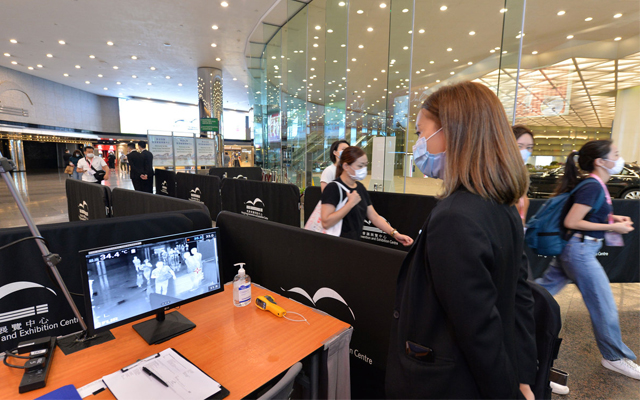
The Hong Kong Convention and Exhibition Centre (HKCEC) recently hosted the city’s first exhibition since the Covid-19 outbreak, the 98th Hong Kong Wedding Fair from May 22-24, with a series of preventive measures in place.
The Hong Kong Convention and Exhibition Centre (Management) (HML) team partnered with the organiser to implement preventive measures such as floor plan design, queuing logistics at washrooms, ticket counters, and F&B outlets, etc. All arrangements complied with the requirements imposed by the local authority, and made reference to industry guidelines and best practices.
Temperature screening was required for all visitors, exhibitors, contractors and staff before entering the HKCEC
All visitors, exhibitors, contractors and HML staff members were also required to wear face masks at all times and had their body temperature screened before entering HKCEC.
In addition, sanitation and disinfection were carried out by HML staff regularly to ensure venue hygiene. Public facilities and furniture such as escalator handrails, doorknobs, lift panels, tables and chairs in the exhibition stands, etc. were sanitised frequently. The exhibition hall was disinfected at the end of each show day.
Monica Lee-Müller, HML’s managing director, is excited about the industry’s recovery.
She said in a statement: “HML is all set to welcome events back to the HKCEC. Health, safety and well-being of staff members and visitors have always been our top priority. The HML team has been working closely with organsiers to reschedule events impacted by the pandemic, and to implement necessary measures to address health and hygiene concerns.
“With the success of the Hong Kong Wedding Fair, we can demonstrate our commitment of providing professional services and customer care for event organisers and attendees.“
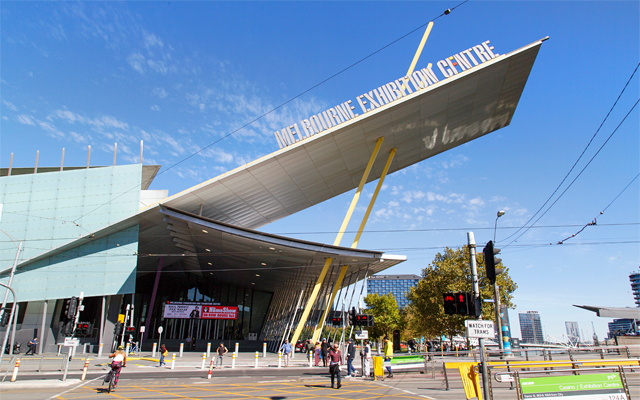
Melbourne Convention and Exhibition Centre (MCEC) is turning its focus to the future to ensure the business is set up for ongoing success post-Covid-19.
This includes exploring new business models, products and revenue streams across local, national and international markets.
MCEC is preparing to restart its business events
To lead these efforts, MCEC’s chief executive Peter King has appointed Helen Fairclough to the role of director of business relaunch in the interim.
Formerly acting chief operations officer, and prior to that director of people, culture and improvement at MCEC, Fairclough has been with the organisation for close to six years and is a board member of the Victorian Chamber of Commerce and Industry.
“Like many in the event sector, we have found ourselves in the position of not being able to perform our core business at this time, and the immediate loss of revenue has proved challenging,” King said.
He added that Fairclough has been given “the licence to be unrestrained in what we explore as a business”.
“This is an exciting time to navigate through the change ahead. Even when MCEC is able to reopen its doors, we must accept that the world has and will continue to change. For this reason, MCEC must change too,” said Fairclough.
While the Business Relaunch is in early stages of exploration, in the coming months MCEC will be inviting customers and partners across the industry to collaborate.
“We hope to have many updates to share with you about new projects and initiatives over the coming months,” Fairclough said.
MCEC is a major contributor to Victoria’s economy, with more than A$1 billion (US$664.4 million) in economic impact last year alone.
Just 10 minutes from Phuket International Airport on the serene northern coast, this 178-key, Bill Bensley-designed resort offers delegates a quiet, tropical paradise steeped in Phuket’s tin-mining heritage
The newly-opened Ritz-Carlton, Bangkok anchors the One Bangkok development with cosmopolitan elegance. Featuring the city's largest ballroom and a spectacular new penthouse suite, it delivers exceptional hardware and deeply authentic, soulful service for business and leisure travellers alike
Behind the imposing, Brutalist concrete that defines Zurich’s Oerlikon district lies a surprising secret. While its exterior honours the neighbourhood’s industrial roots, stepping inside Mama Shelter reveals a vibrant, neon-soaked world that is a far cry from its rigid shell




 Dedicated conference facilities fleetwide