Asia/Singapore Tuesday, 5th May 2026
Page 739

Meetings get smarter with PPHG

0

Pan Pacific Hotels Group (PPHG) has launched a new offer entitled Smart Meetings, targeted at meeting organisers and event planners who hold events at Pan Pacific and Parkroyal properties worldwide.

A Full Day Residential Meeting Package will include five per cent savings on the catering and banquet bill (excluding taxes); use of meeting room from 08.00 to 17.00; meeting setup with flipchart, whiteboard, markers and bottled drinking water; Wi-Fi access; morning and afternoon tea breaks including two refreshments with coffee/tea; and buffet or set lunch with free flow soft drinks. Note there is a minimum booking of 15 delegates and 10 guestrooms.
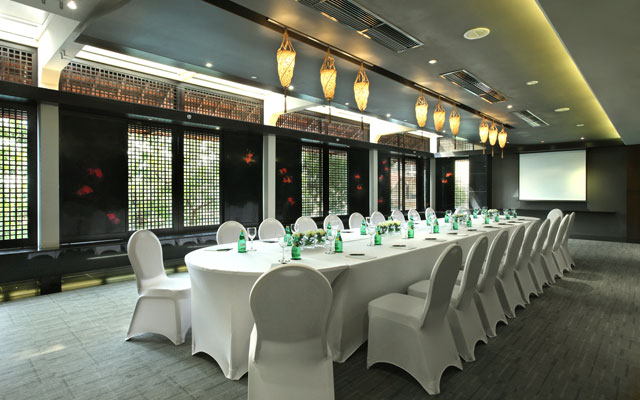
Pan Pacific Hanoi’s Hoi An meeting room

In addition, if event planners were to book a next meeting to be held within the next 12 months from the last meeting date, they will be able to save an additional three per cent on the catering and banquet bill (excluding taxes) at the next hotel.

Meeting organisers will be rewarded with a complimentary one-night stay before or after the meeting, and a complimentary room upgrade with Club access and benefits for the entire stay. For hotels without Club, a complimentary breakfast and a two-category room upgrade is offered.

A host of other privileges are also being offered, and the more rooms booked and delegates hosted, will increase the number of privileges. For instance, 10 rooms and 15 delegates will entitle planners to select one privilege, while 50 rooms and 65 delegates will entitle planners to four privileges.
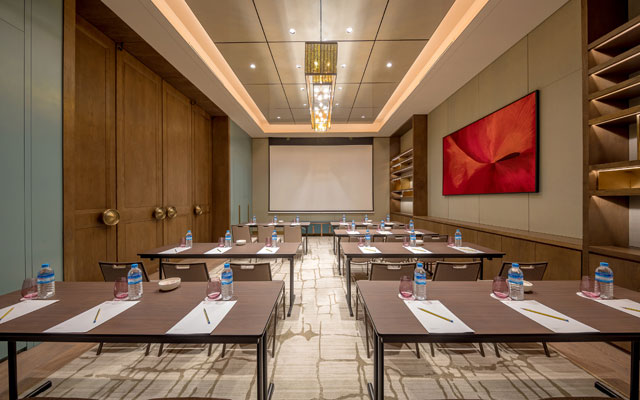
One of the meeting spaces in Pan Pacific Yangon

Privileges include two local hotel-specific privileges such as complimentary parking or airport transfers; one complimentary room for every 20 paying rooms (maximum two rooms per night); one complimentary delegate for every paying 35 delegates (up to three delegates per group); one complimentary room upgrade to the next category for every 20 paying rooms (maximum three rooms per night); one complimentary delegate for every paying 25 delegates (up to three delegates per group); a 50 per cent savings on breakout room rental for minimum of 45 delegates; a 20 per cent savings on dining for all meeting delegates; and complimentary one hour cocktail including canapés, beer and house wine (minimum 25 rooms and 50 delegates).

Organisers are also automatically included in PPHG’s new corporate loyalty programme, Pan Pacific Connections, where they earn points for that can be used to redeem rewards.

Smart Meetings run from now until March 31, 2019, and for meetings and stays held before December 31, 2019. This is subject to availability and black-out dates may apply. Other terms and conditions apply.
First five-star hotel opens in Indonesia’s Komodo

0
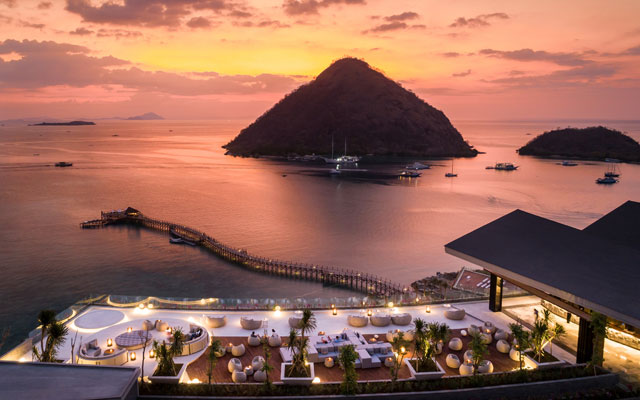
Resort and pier

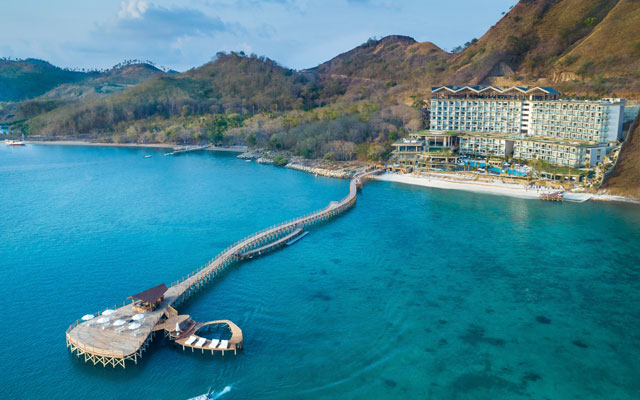
Located on Labuan Bajo, Waecicu Beach, the only five-star hotel in Komodo has opened with 13 suites and 192 guestrooms, each offering ocean views.

Facilities on the 1.4-hectare Ayana Komodo Resort, Waecicu Beach, in southern Bali includes six F&B venues, a spa with five treatment rooms, gym, two swimming pools, a children’s pool, and a kids’ club. There is also a grand ballroom that can hold up to 220 pax reception-style, as well as several meeting rooms.

In addition to the new resort, the resort will also launch a 54m-long and 11m-wide, nine-bedroom phinisi ship named Ayana Lako di’a. The ship will take guests around the island for short explorations of approximately two to three nights per trip.

Wharf Hotels names GM for Marco Polo Shenzhen

0

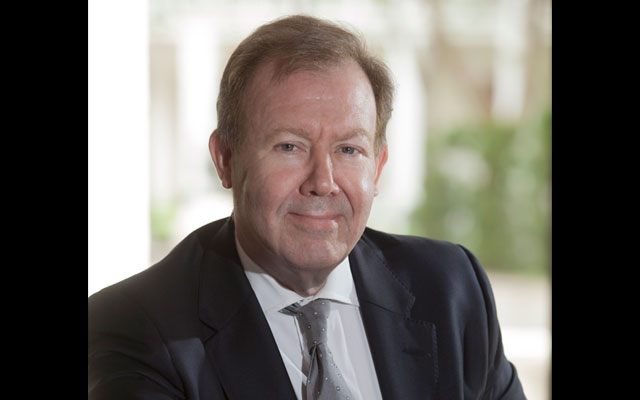
Wharf Hotels has appointed Stephen Antram as general manager of Marco Polo Shenzhen.

Prior to this appointment, Antram was the general manager of Intercontinental Beijing Beichen.

The experienced hotelier has over 40 years of knowledge in the hospitality industry, with over 25 years in Asia. He possesses a track record in operations management, business development and talent development across Europe and Asia with international luxury hotel companies.

New hotel manager for Hilton Garden Inn hotels in KL

0

Shane Christopher Ingram has been appointed as hotel manager for Hilton Garden Inn Jalan Tuanku Abdul Rahman North and Hilton Garden Inn Jalan Tuanku Abdul Rahman South.

Ingram most recently served as director of operations at Hilton Colombo Sri Lanka, where he began his hospitality career with, working in various departments such as housekeeping, the executive floor and the front office.

The 28-year hospitality veteran went on to hold various positions in Hilton, locally and internationally, such as a revenue manager in Hilton Colombo Sri Lanka, and later in Hilton Petaling Jaya as the director of business development and director of operations.

Going traditional

0
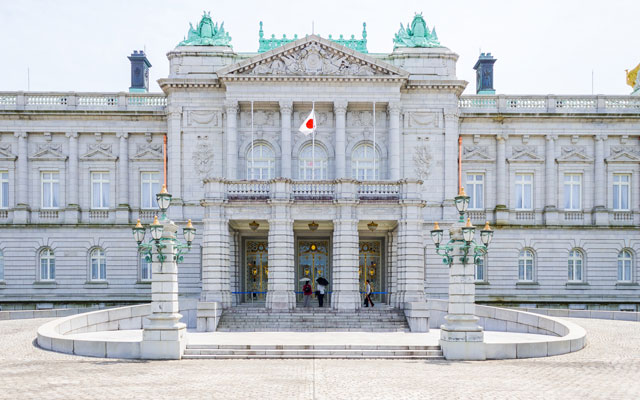
Akasaka Palace by Kakidai

Buoyed by bookings of its traditional venues, first made available for business events in 2016, Tokyo is focusing on promotion of these venues and the addition of new ones in 2018.

Incentive visitors to Japan doubled year-on-year in 2017, according to the Japan National Tourism Organization (JNTO) and, as unique venues are an important consideration for incentive groups, Tokyo hopes to entice more business with its efforts.

Akasaka Palace by Kakidai

The largest growth in 2017 over 2016 was from China and Singapore, which brought double the number of group – as well as larger groups. Globally, the peak season for incentive travel to Japan is October and November, but March is also popular among South-east Asian countries due to the cherry blossom season.

Venues in demand usually offer a unique experience, showcasing Japanese culture, tradition or way of life.

They include one of Japan’s most revered buildings, Akasaka Palace, which provides accommodation for official guests of the Japanese government, as well as the Tokyo Metropolitan Art Museum, Edo-Tokyo Open-air Architectural Museum, Nogi Shrine and Daikyo Temple.

More sites are being made available regularly. Following the success of an inaugural business event at Tokyo’s 300-year-old Hamarikyu Gardens in 2017, the site became popular as a unique venue in 2018.

The garden, which once belonged to Japan’s most powerful samurai lord, is “a perfect location for evening parties and drink receptions,” thanks to its location among many of the city’s four- and five-star hotels.

According to Hironobu Fujimura, director of sales on the business events team at Tokyo Convention & Visitors Bureau (TCVB), the TCVB and Tokyo Metropolitan Government (TMG) see maximising Tokyo’s distinctive venues as key to bringing more business events to the capital. And expectations of incentive buyers are high.

“Year after year, the needs of the parties at such exceptional venues are increasing, especially for the incentive travel market. They always need the ‘Wow’ factor and a once-in-a-lifetime experience for their attendees,” explained Fujimura.

In response, the TCVB launched a booklet, Tokyo: More Ideas for Meetings & Incentives, in November 2017. It divides incentive opportunities in the capital into five areas: CSR, culture, teamwork, enterprise and technology, while offering Tokyo as a city in which to connect, learn and contribute.

Incentive groups can engage in a wide range of activities, from pruning bonsai trees with a world-famous expert and doing yoga in a temple. On offer are also visits to successful Japanese companies for learning opportunities or for a sneak preview of cutting-edge technology.

“Increasingly, incentive groups visit Tokyo to gain insight that they can apply to their own companies,” said Fujimura, adding that the five topics covered are those that the TCVB get the most enquiries about.

TCVB also launched a new website to introduce areas in Tokyo that are convenient for business events planners due to their concentration of venues, hotels, restaurants and shops. According to the website, Roppongi is a popular option because its “luxury hotels and unique venues are perfect for holding incentive events”.

Building on this, the TCVB and TMG launched a Unique Venue Service Center in May 2018, to encourage the use of unique venues in Tokyo.

Staff at the centre, near Shinjuku, will introduce designated unique venue facilities, propose event plans, provide coordination support with appropriate administrative agencies required for running events in these spaces, and provide information about venue operators, catering and other services.

Meanwhile, JNTO is continuing to host the Japan Best Incentive Awards to recognise and share best practice in incentive travel.

“One of last year’s attendees presented a tour in which teambuilding activities for a group of 360 participants included tasting unrefined sake in a sake brewing workshop, and a kimono photo competition using Instagram, which landed them the Best Creative Planning Award,” shared Etsuko Kawasaki, executive director of the JNTO.

New openings in recent months are making options for incentive planners more plentiful. They include luxury shopping complex Ginza Six, which has more than 10 high-end restaurants, a banquet hall, a 480-seat Noh Theater and a 4,000m2 rooftop garden.

With Japan hosting the Rugby World Cup and G20 Summit in 2019 as well as the Olympic and Paralympics in 2020, a host of new venues, products and experiences are expected to be launched in Tokyo. The capital’s business events market is also getting ready for the likely rise in demand.

According to Kawasaki, JNTO has already received some enquiries from event professionals who aim to organise meetings related to these global events.

First Kempinski-brand hotel in Singapore to open

0
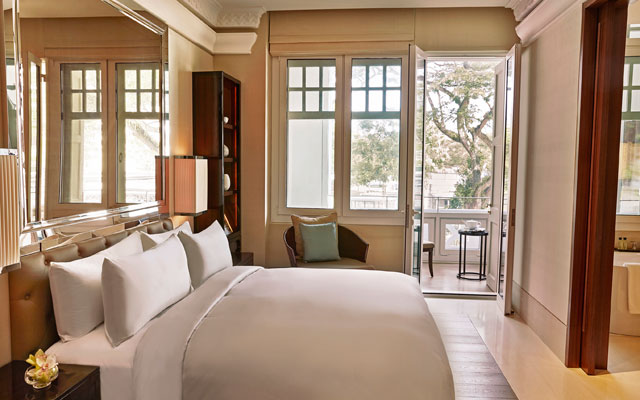
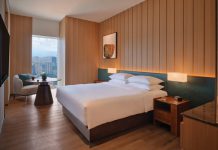
Grand Deluxe Room

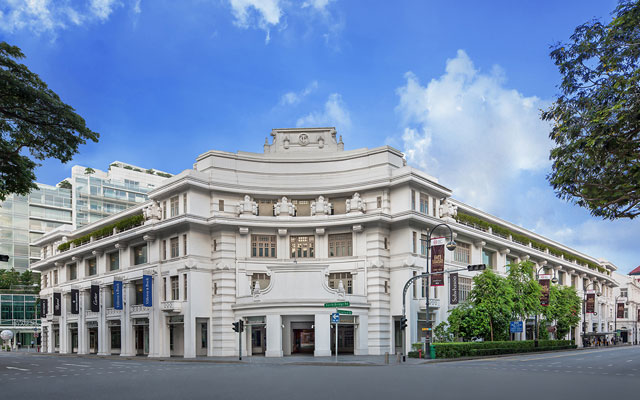
The first Kempinski in Singapore will be opening its doors to guests for stays from October 1, 2018.

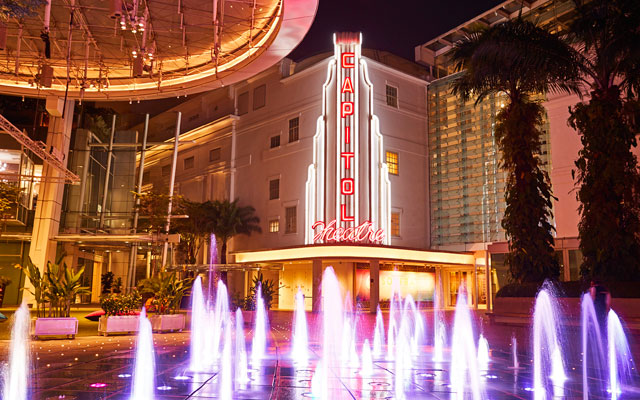
Located in the downtown Civic and Cultural District stands the The Capitol Kempinski Hotel Singapore, part of Capitol Singapore which comprises a 39-unit residential tower, a retail mall, and the Capitol Theatre.

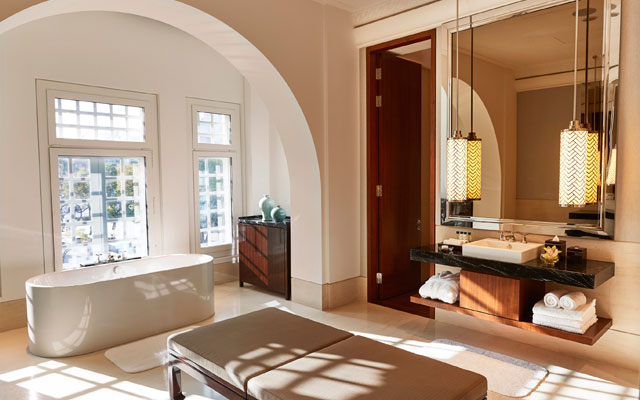
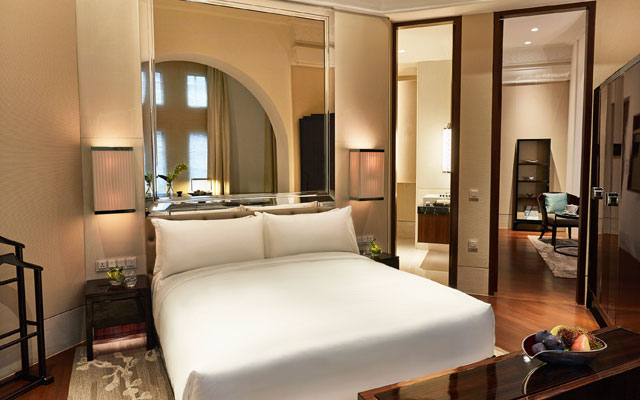
The hotel offers 157 guestrooms and suites, spanning almost 50 unique configurations as the building. In all eight room categories however, guests can expect regular mod-cons such as a Sonos audio system, complimentary Wi-Fi, complimentary non-alcoholic beverages, and a generous work desk area. For suite guests, a stay includes complimentary daily breakfast.

For meetings and events, the property offers event spaces ranging from the Private Room, good for 12 guests, to the Salon, which can hold 220 pax theatre-style.

Other facilities include a spa, gym, and saltwater pool. The Capitol Kempinski Hotel Singapore will also have several F&B offerings in the months to come, anchored by its signature restaurant that has been conceptualised by a three-Michelin-star chef.

Longhaul buyers look beyond mainstream Asian destinations

0
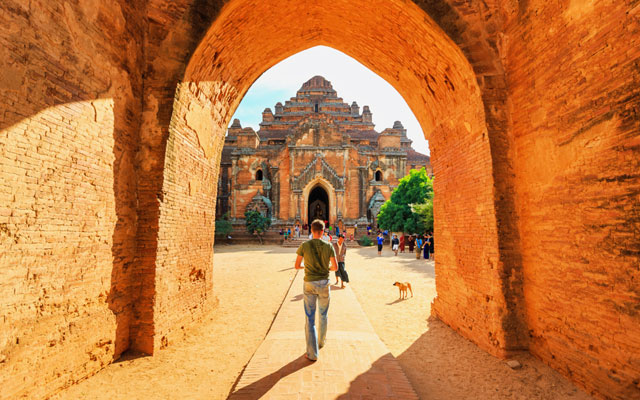
Myanmar is rising in popularity as an incentive destination for Dhammayangyi Temple in Bagan pictured

Longhaul demand for Asian incentive holidays is spreading beyond the usual favourites to destinations such as Vietnam and Myanmar, according to buyers at IT&CM Asia.

Ben Gosman, managing director of Netherlands-based FreeStyle Incentives, said Vietnam is becoming an increasingly attractive alternative to the long-popular Thailand.

Myanmar is rising in popularity as an incentive destination for buyers from Europe; Dhammayangyi Temple in Bagan pictured

“The euro is weak compared to the dollar. It used to be at 1.5 dollar per euro, now it’s 1.1 – we lost 40 per cent,” he said. “Compared to the Thai baht we also lost 40 per cent in the last three years. With the euro down, Thailand gets more expensive, and Vietnam becomes very, very attractive.”

In Vietnam, Phu Quoc is an emerging destination for Gosman although mass tourism and construction on this island are becoming growing concerns.

This is also one of the reasons behind the change in FreeStyle Incentives’ Thailand programmes in recent years, with Hua Hin now offered as the beach leg in place of Phuket and Koh Samui.

“We used to offer Phuket and Koh Samui, but two or three years ago, we cut those out. It saves us a flight, and these areas are too crowded. We try to stay away from mainstream destinations.”

Meanwhile, Vietnam and Myanmar are also rising in popularity at Italy’s Ita Events, although Thailand remains the main South-east Asian destination for incentive tours, said Sandro Saccocio, senior project manager.

“Clients like South-east Asia for the food experience. They also like to (get hands on), so local cultural activities such as painting, fruit sculpting and weaving keep clients interested,” he said.

Udo Landow from Show D’Vision Germany is on the lookout for destinations with the “wow appeal”. He added: “In Malaysia, we look for lesser-known islands that are not so commercialised but have good convention facilities to support corporate groups.”

Nevertheless, classic destinations like Bali and Bangkok still rank highly on meeting and incentive planners’ radar.

“I am interested particularly in Bali because there is a new flight that will directly connect with (Moscow). I am also exploring Phuket and Pattaya to see if there are new hotels and activities for me to bring incentives and meetings over.” – additional reporting by Paige Lee Pei Qi

Corporate groups look to Japan as a learning destination

0
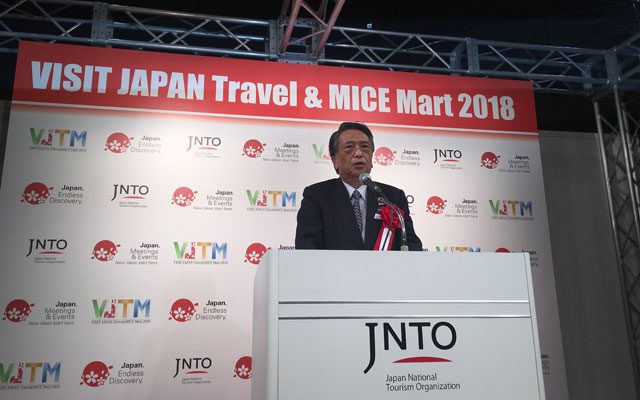
Kiyono Satoshi, JNTO's president, addressing the crowd the opening ceremony, where making Japan appealing for learning was noted

A rising number of unique learning opportunities for business groups is stimulating interest in Japan as an international business events destination.

Industry officials and corporate buyers at Visit Japan Travel & MICE Mart, held over 20-22 September at Tokyo’s Big Site, shared that the country is increasingly seen as a place where corporate visitors can grow professionally.

JNTO’s president Satoshi Seino addressing the crowd at VJTM’s 2018 opening ceremony, where the making of Japan appealing for learning was highlighted. Photo credit: Kathryn Wortley

According to Etsuko Kawasaki, executive director of the Japan Convention and Visitors Bureau, a 2016 study on why people chose Japan as a business events destination shows that the ability to “gain flashes of insight”, and its location as a place “where knowledge and talent meet”, were two of the top responses. Others were its safe, clean cites and track record in providing quality experiences.

In 2018, Japan is adding more centres for learning to its portfolio of unique venues, including Yamagata Museum of Art, which opened in February 2018, and Aichi Museum of Flight, which showcases airplanes made in Japan.

Officials are hopeful that these venues will be successful, due to the growing number of business visitors to other museums nationwide.

For example, the Toyota Commemorative Museum of Industry and Technology in Aichi Prefecture welcomed 460,000 visitors in 2017, up from 420,000 in 2016. About 20 per cent of visitors were from overseas, from companies in South-east Asia that are Japan-owned.

Toshihide Narita, deputy director and curator of the museum, said South-east Asia is a growing market for the museum because more Japanese companies are establishing operations there and want their staff to have an understanding of Japanese industry and technology. The museum tour is usually part of their staff training.

“Our museum promotes the spirit of studiousness and creativity,” he said, adding that it “shows how challenges have been overcome through R&D”.

Meanwhile, Tokyo-based tour operator Hanatour Japan began offering tours of hospitals for business groups from the Philippines in March 2018. According to Lo King Yin of the company’s international business department, most attendees are doctors or nurses seeking first-hand insight into Japan’s medical practices and hospital management.

Travel managers come up with solutions to tighten belts

0
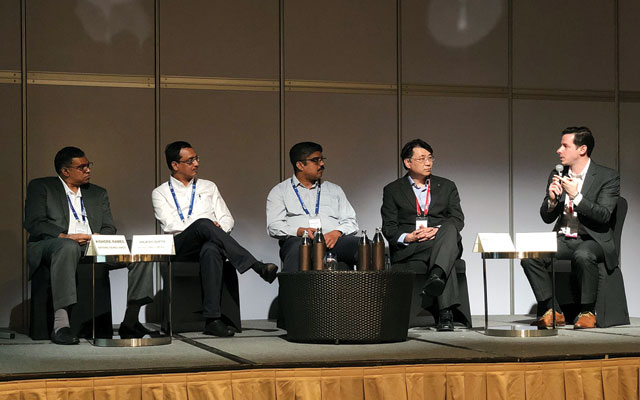
From left: National Oilwell Varco's Kishore Rames; Eli Lilly and Company's Rajesh Gupta; Accenture's Manjunath Shetty; Japan Airlines's Derek Ho; and CWT Asia Pacific's Michael Valkevich

In the face of rising airfares and room costs, travel managers are turning to consolidators and digital tools to tighten corporate travel spend, revealed speakers at the CTW Asia-Pacific Keynote and Forum, part of IT&CM Asia.

Airfare prices are expected to rise by an average of 3.2 per cent and room rates by 5.1 per cent per annum, shared Michael Valkevich, vice-president global sales and programme management, Asia Pacific, Carlson Wagonlit Travel.

From left: National Oilwell Varco’s Kishore Rames; Eli Lilly and Company’s Rajesh Gupta; Accenture’s Manjunath Shetty; Japan Airlines’s Derek Ho; and CWT Asia Pacific’s Michael Valkevich

In response, companies such as Accenture are looking at “new and innovative ways to negotiate and tweak policies to optimise” internal spending, said Manjunath Shetty, its associate manager – travel management.

For example, the company is working with its consolidator to achieve better hotel prices, such as negotiating for a city rate on hotels within certain geographical parameters, as well as funnelling all corporate travel claims to a single TMC or booking tool for successful reimbursement. It has also mandated the lowest airfare available for a route, but allow separate baggage add-ons.

Rajesh Gupta, consultant – global travel and meeting services for Eli Lilly and Company India, said his company has implemented technological solutions such as Yapta’s Room IQ and Fare IQ to control flight and room spend.

Tightening measures are also in place for the booking of sharing economy and other standalone accommodation, as cheaper options surface with the rise of Airbnb and independent boutique hotels.

“We do take bookings for standalone properties, but with caution. The first level of auditing is done by our consolidator based on our given parameters. We zero in on a few (accommodations) and leverage our global security teams to conduct hidden random audits for safety, especially for our female employees,” explained Shetty.

Meanwhile, other companies like National Oilwell Varco are remaining strictly against shared or gig economy spend “due to security and safety” concerns, said Kishore Rames, its travel manager Asia Pacific.

Business events a catalyst to quicken Kamaishi’s recovery

0
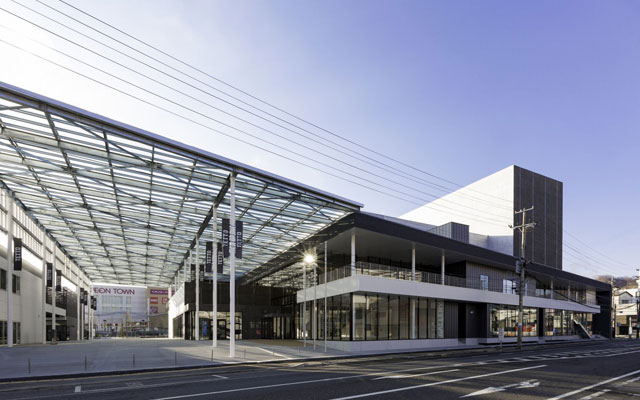
Kamaishi Civic Hall. Photo credit: Aat+Makoto Yokomizo Architects

Iwate Prefecture’s Kamaishi, which was devastated by the Great East Japan Earthquake and Tsunami of 2011, is looking towards the business events market as part of its ongoing recovery.

In the port town, where 30 per cent of homes and 60 per cent of businesses were damaged or destroyed, facilities for meetings and activities for incentive groups are rising in attractiveness.

Kamaishi Civic Hall. Photo credit: Aat+Makoto Yokomizo Architects

For example, Cosmos Park – a repurposed municipal park that housed the homeless following the disaster – was transformed from an old factory and wasteland into a play park, garden, activity centre and restaurant. The facility now welcomes about 10 incentive groups, numbering 20 pax each, per year.

“Our pizza-making experience is our most popular experience because it’s a great teambuilding activity that connects people and nature; some members pick the tomatoes from the garden, while others tend to our on-site pizza oven,” shared owner Satoru Fuji.

Meanwhile, Osaki 100 Nengakusha, a local organisation aiming to preserve nature, culture and fishing jobs in the area for 100 years, set up eco tours to showcase the coexistence of people and the marine environment. The fishing boat ride around the bay, barbecue lunch of oysters – which were wiped out in 2011 – and beach litter pick package has attracted repeat incentive groups, mostly from Tokyo and Taiwan.

“Participants enjoy eating fresh seafood with views of the ocean it came from, and giving back to the community,” said tour leader Shinya Kubo.

As well, Tetto or Kamaishi Civic Hall opened in April 2018, complete with two halls, a gallery, seven meeting rooms, three studios, two Japanese tatami mat rooms, and a lobby suitable for indoor and outdoor events. Next door, the newly-opened Pit boasts a stage and standing or seating suitable for product launches, shows and conferences.

The Ryokan Yakume also added banquet and meeting rooms for business groups as part of its refurbishment of its first and second floors, which were inundated by the tsunami.

As Kamaishi is a host town of the Rugby World Cup 2019, facility and activity providers are expecting further growth, as corporate groups add local activities to their fixtures’ corporate hospitality packages.

Reviews

The Ritz-Carlton, Bangkok

The newly-opened Ritz-Carlton, Bangkok anchors the One Bangkok development with cosmopolitan elegance. Featuring the city's largest ballroom and a spectacular new penthouse suite, it delivers exceptional hardware and deeply authentic, soulful service for business and leisure travellers alike

Mama Shelter Zurich

Behind the imposing, Brutalist concrete that defines Zurich’s Oerlikon district lies a surprising secret. While its exterior honours the neighbourhood’s industrial roots, stepping inside Mama Shelter reveals a vibrant, neon-soaked world that is a far cry from its rigid shell

Hyatt Regency Kuala Lumpur at KL Midtown

A polished urban retreat designed for business travellers, Hyatt Regency Kuala Lumpur at KL Midtown combines thoughtful design, seamless service, and exceptional facilities.