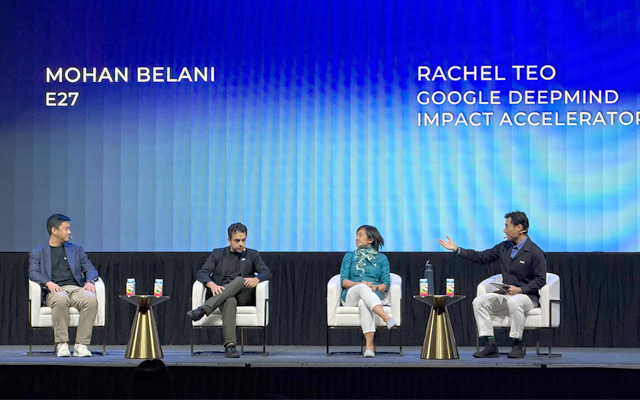
At last week’s Singapore MICE Forum 2026, the pervasive rise of artificial intelligence took centrestage during a panel titled Lazy or Liberated – Has AI Made Us Think Less, or Freed Up Space to Do More?
Zachary Wang, co-founder of Level3AI, opined that AI lowers barriers to starting businesses by solving labour and efficiency bottlenecks. However, he emphasised looking at what type of work AI replaces and where that labour shifts to create new opportunities.
While AI can streamline collating post-event surveys, he argued it cannot analyse or interpret those results as effectively as a human – meaning such roles will evolve rather than disappear.
Mohan Belani, CEO and co-founder of e27, weighed in on how business events companies are adopting the technology. He noted that larger organisations hold a distinct advantage by leveraging dedicated in-house teams.
“Those efforts are centralised, so there’s more structure, planning, and organisation in terms of the execution of AI within those organisations. Because data is a large part of what they’re doing, having a dedicated team to manage that across the organisation can benefit the outcomes way more significantly.”
Smaller companies, in contrast, risk falling behind due to a lack of infrastructure and organised execution, stated Belani.
Rachel Teo, APAC alliances lead at Google DeepMind Impact Accelerator, highlighted data ownership and trust. Drawing parallels to the science sector, she explained that ultimate ownership remains with human experts, as only real-world specialists can validate AI outputs.
The panelists unanimously agreed that conversations around data privacy, guardrails, and zero data retention policies must happen more frequently. Belani called for urgent AI training and upskilling given the vast amounts of data the business events industry handles, warning businesses to watch for algorithmic biases that could impact customer service.
Summarising the session, Wang left the audience with a reminder: “You can outsource your thinking, but you can’t outsource your understanding.”