Indian corporate groups plan late by habit, and Indian business events planners say there are times when Thailand wins their business because of its inherent flexibility, turning a cultural trait that other destinations resist into one of its sharpest edges in the market.
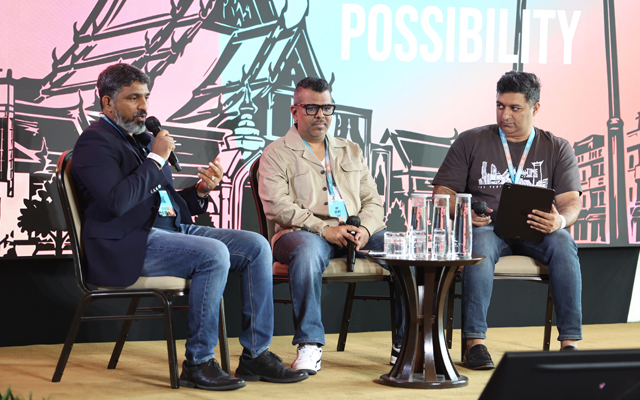
The point was made during the Beyond one-size-fits-all: Decoding India’s corporate buyer session at the Thailand Convention and Exhibition Bureau’s (TCEB) Thailand Innovative Meetings Exchange (TIME) 2026.
Om Prakash Rao, head of the MICE and travel division at Travelogy in Bengaluru – whose 8,000-strong firm handles corporate movements for large enterprises – said that for the Indian market, late briefs are cultural rather than a operational failing to be managed around.
“In India, we have a habit of doing everything at the last minute. We love that. We love surprises. We love pressure. We do not plan one or two years ahead. Culturally, Indians do everything at the last minute, and that can be good or bad,” he said.
Rao pointed to how Indian corporate budgets are released. “The budget allocation happens at the very last minute, and then we have a short time frame to finish it off,” he explained.
That trait rewards a destination willing to work with short lead times, and panel moderator Nitin Sachdeva, TCEB’s representative in India, said Thailand shares the same operational instinct.
“We are creative here; we can do things at the last moment, and we always say, ‘no problem, let’s do it’,” Sachdeva said.
He drew a contrast with Singapore. “Singapore is process-oriented. In a challenging situation, their first instinct is to say no,” he said, adding that Thai suppliers have learnt about the Indian market well enough to make Thailand “a second home for Indians”.
Rao added: “In Thailand, you can get things done even at the last minute. For example, I am flying 2,300 people to Thailand in one month. I cannot do that in Singapore.”
He shared how the brief for that employee incentive group had reached him in late August 2026 while he was travelling in Australia, with the client wanting the movement committed within 48 hours.
“If my boss told me to run Dubai in 40 days, I would say it is not possible. In Thailand, even 10 days out, it is possible. We always think that in Thailand, anything is possible, even at the last minute,” he stated.
Sachdeva commented that operating in Thailand is often easier than managing a domestic destination within India.
“The airlines are ready to give you a fare, and we have so much inventory here. It is a buyer’s market,” he noted.
However, operating on tight lead times leaves planners vulnerable to sudden regulatory shifts. Policy swings – such as re-implementing visa-free travel for India while simultaneously floating a potential new 450-baht (US$13.70) per-head tourism entry tax within the space of a couple of months – force planners to rework large-group budgets on the fly.
To protect this competitive edge, Rao called on the Thai government to establish a fixed, predictable policy horizon. If regulatory stability is guaranteed, Thailand’s readiness to say yes when others say no will keep it ahead of its regional peers.