While transit disruptions in Middle Eastern hubs have impacted European arrivals to South Asia, shifting regional travel patterns present a new opportunity for Sri Lanka to strengthen its position as a business events destination.
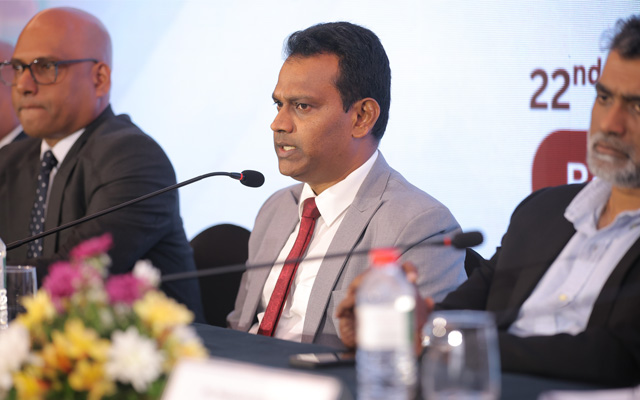
“We are currently targeting more MICE events from India using the restrictions in the Middle East as an opportunity to draw more events to Sri Lanka,” said deputy tourism minister Ruwan Ranasinghe during a media briefing in Colombo. Officials clarified that his comments reflected the troubled situation in Dubai, which was a magnet for business events from India and is now restricted due to geopolitical tensions and travel constraints.
These Middle Eastern transit disruptions have contributed to softer overall numbers for Sri Lanka, with European travellers affected. Total visitor arrivals for this year are projected at 2.5 million – below the initial three million target, but still up from the 2.3 million recorded in 2025.
To capture this market, Sri Lanka is gearing up for the sixth edition of the Sri Lanka MICE Expo, scheduled for October 5 to 9, 2026. The event was formally launched at the briefing, where organisers confirmed it will host 104 international buyers from 24 countries – with Indian delegates comprising 40 per cent of attendees – alongside 17 journalists from 11 countries.
Malkanthi Welikala, marketing manager of state-run Sri Lanka Convention Bureau (SLCB), noted that the 104 buyers were chosen from 587 global applications, prioritising new entrants over past participants. “Sri Lanka is a strategic location with diversified compactness (making it idea) for a pre-or-post event fam tour for MICE. Another advantage is the free visa for 40 countries,” she said.
SLCB’s chairman Dheera Hettiarachchi added that investment in the annual Expo is delivering measurable returns, with business events visitors projected to account for 11 per cent of total arrivals by late 2026, up from five per cent in 2024. To support this growth, the SLCB allocated 110 million rupees (nUS $333,201) for this year’s event, up from 100 million rupees last year.
Responding to a question from TTGmice on the tourism policy vis-à-vis numbers versus value, Ranasinghe said they were controlling and not chasing numbers to preserve natural resources and avoid over-visitation.
Sri Lanka is targeting a maximum of five million arrivals and annual revenue of US$10 billion by 2030, while seeking to raise the current daily spend of US$148 per day to US$200 per day.