Auckland is leveraging global uncertainty by positioning itself as a safe, stable destination, with new opportunities emerging for the city as international event organisers seek reliable locations for their business events.
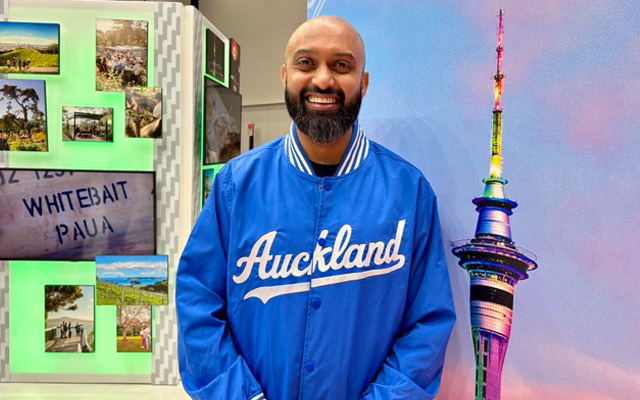
While geopolitical tensions and aviation disruptions have created challenges across global travel markets, Auckland Convention Bureau’s head Ken Pereira said organisers have remained measured in their response, with no significant change in event enquiries or bookings.
Instead, Auckland has used the period to sharpen its positioning in international markets and highlight the certainty it can offer organisers. Pereira said the city was seeing growing interest from Asia, as buyers evaluated alternatives to destinations affected by ongoing uncertainty.
“We are being looked at more favourably,” Pereira said. “We’re presenting ourselves to the market as a stable country and welcoming, and that’s very important.”
India is emerging as one of Auckland’s strongest growth markets. Pereira pointed to strengthening government-to-government engagement, including a recently signed free trade agreement, as creating opportunities for deeper business ties and future association and incentive business.
That interest is already translating into business, according to Abhishek Sonthalia, founder and managing director of Turtle Down Under, which serves clients from Asian markets including India, Sri Lanka, and the Philippines.
“Business to New Zealand has increased, especially in the incentive space,” Sonthalia said. “Many of these incentives were heading towards Europe, but because of the political and social situation out there, many corporates are moving towards New Zealand as an alternative.”
Sonthalia estimated demand for New Zealand incentive programmes had increased by 45 to 50 per cent over the past year, with groups of 300 to 400 delegates increasingly considering the destination. Auckland was securing much of that business as New Zealand’s primary international gateway.
He told TTGmice many groups were now concentrating programmes in the North Island, as limited hotel availability in Queenstown, and the added cost of domestic flights made South Island itineraries more challenging for large incentive groups.
Chinese buyers have also signalled that they are considering Auckland’s appeal more favourably.
“We’re close to converting some business out of the Chinese market, so things are looking better than before,” said Pereira.
Jin Ling, secretary general of the MICE & TMC Committee of the Shanghai Tourism Trade Association, said Chinese corporates were also reassessing destination choices, with geopolitical stability now a key consideration for corporate risk management teams.
“Due to recent geopolitical tensions and surging travel costs, our clients now view Auckland as a promising MICE destination,” said Jin. “New Zealand boasts a stable society with minimal travel risk, making it a reliable long-haul option.”
In her assessment, Auckland also compares favourably on hotel and conference costs with major convention cities, including New York, Paris, and Singapore, while offering distinctive natural and Māori cultural experiences.
However, Jin said New Zealand’s biggest challenge was an awareness gap regarding what the destination offers.
“The biggest bottleneck right now lies in destination marketing,” she said, adding that compared with Singapore and Australia, New Zealand invested less in targeted promotion for business events. As a result, many corporate planners still associated the country primarily with leisure tourism and had limited knowledge of Auckland’s conference capabilities, competitive pricing, and team-building experiences.
Another constraint for Sonthalia is aviation capacity, particularly from India and the Philippines.
“If there is more connectivity from the subcontinent to New Zealand, you will see a far greater increase,” he said.