


In an overcrowded event landscape, tradeshow organisers are competing for relevance in a saturated market – whether through intimate, hyper-local buyer programmes or mega-scale efficiency

Corporate travel budget cuts and an overcrowded calendar have forced event planners to become far more selective about any tradeshow they are invited to attend.
With basic product specs, rates, and venue details just a click away, traditional B2B tradeshows can no longer get away with padding out delegate counts or relying on static rows of booths.
To hold onto their market share, organisers are being pushed to prove two things – actual Return on Time (ROT) and undeniable Return on Investment (ROI).
The buyer’s mandate
For hosted buyers, schedule fatigue and low-value appointments are immediate deal breakers.
“The quality of the exhibitors is the most important factor; it determines whether the show is truly MICE-focused or more suited for the mass market,” stated Angela Lee, co-founder at Singapore-based Event & Marketing Solutions MICE.
Lee added that rigid schedules packing back-to-back meetings, poor hotel placements, non-refundable fees, and invasive application forms turn top buyers away.
Patrick Lim, director at The Agency Team in Singapore, echoed this sentiment, emphasising that “quality of the networking sessions with sellers and the quality of exhibitors” dictate whether an event stays on his calendar.
Both buyers note that while mega-shows like IMEX and IBTM remain essential for global reach, matchmaking technology must empower rather than dictate. Automated diary systems and AI tools work only when buyers retain control over their appointments. For buyers focused on proving ROI, meeting quality takes precedence over sheer volume.
“AI matching is useful when implemented well, but buyers must have the opportunity to review and replace mismatched meetings,” said Lee. “I would rather have highly relevant meetings than 50 unproductive ones.”
Active sourcing and destination immersion
To land high-yield decision-makers, regional organisers and tourism boards are removing passive online forms in favour of direct, targeted outreach.
This year, Experience Gold Coast (EGC) put this into practice for its annual This is Gold Coast hosted buyer programme through a multi-tiered recruitment model. Following AIME, EGC’s acting director of business events Andrea Molnar, and her team, deployed a targeted recruitment strategy to refresh their buyer pool.
Half of the hosted buyer pool was hand-picked through direct outreach, targeting qualified “lapsed” leads who had not visited the Gold Coast in over a decade. The remaining half was vetted through an open Expression of Interest process requiring real group purchasing power. Furthermore, EGC expanded its geographic scope by inviting Asia-Pacific buyers from Malaysia and India for the first time.
“We needed buyers to see how much the Gold Coast has transformed so they can confidently represent us to their clients,” Molnar explained.
EGC also overhauled its post-show tours, working with hotel partners and suppliers to activate their products instead of merely showing them. For instance, the programme featured a teambuilding activity along the shores of Surfers Paradise, allowing delegates to experience the destination’s iconic sun, sand, and surf while completing interactive checkpoints.
The move has converted buyers like Esther Loo, sales director at Malaysia-based ATA World Travel. She told TTGmice: “I haven’t been to the Gold Coast in over a decade. After experiencing it firsthand and holding B2B meetings with suppliers, I think it’s a great destination to propose to my incentive clients.”
Similarly, the Korea MICE Association (KMA) uses multi-channel verification to vet Korea MICE Expo buyers.
Kyuree Kim, KMA’s senior project manager in charge of buyer selection, uses open-source intelligence – cross-checking applicants’ LinkedIn, Facebook, and Instagram profiles – combined with notes taken face-to-face at international tradeshows.
“I verify hosted buyer applicants through as many channels as possible,” Kim told TTGmice. “Keeping detailed notes on buyers met in person over time has become our most powerful screening tool to ensure genuine purchasing power.”
Off the showfloor, KME replaces traditional hotel banquet dinners with partnerships across neighbourhood restaurants near the venue, encouraging buyers to experience local food and culture first-hand.
Mega tradeshows prove ROT at scale
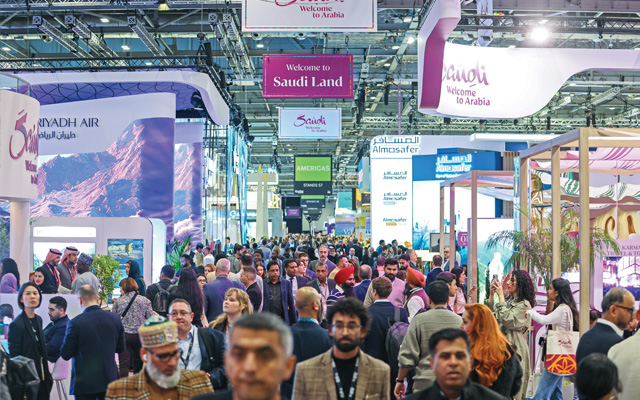
While regional shows focus on localised experiences, global mega-shows leverage scale. By consolidating tech, business events, corporate travel, and aviation into a single platform, they deliver maximum ROT in just a few days.
David Ruetz, senior vice president of travel & logistics at Messe Berlin, stated that ITB Berlin offers an efficiency engine that corporate budget cuts cannot displace. “ITB Berlin helps companies achieve in three days what would otherwise require many individual trips, meetings, and market visits,” he said.
Beyond the invitation-only ITB Buyers Circle of 1,300 top decision-makers, 82 per cent of ITB’s trade visitors hold direct purchasing influence. To keep the showfloor from feeling like a generic grid of booths, ITB Berlin breaks up floors into specialised clusters – such as Luxury, Travel Tech, and Medical Tourism – paired with thought-leadership hubs to keep content central.
Similarly, World Travel Market (WTM) London builds its platform around pre-scheduled efficiency through WTM Connect Me, while encouraging spontaneous floor connections.
Chris Carter-Chapman, event director at WTM London, noted that by integrating live activations – such as WTM TrendFest, the Wanderlust Stage, and peer-to-peer Campfires – WTM turns the showfloor into a content hub where informal chats turn into commercial deals.
In an era where attendance must be justified line-by-line, the message is clear: whether through mega-scale efficiency or deep destination immersion, organisers that put quality control and delegate experience at the heart of their strategy will be the ones that continue to command a spot on buyers’ calendars.