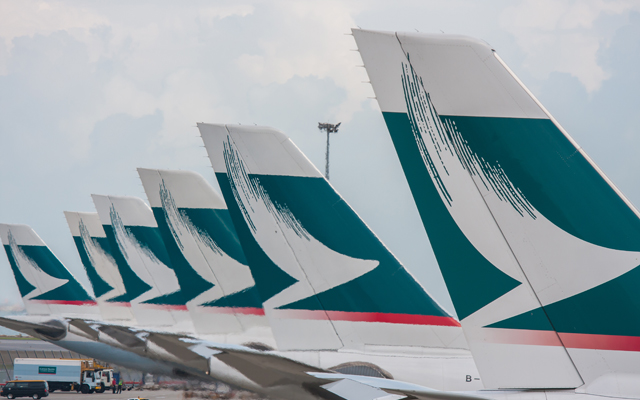
Cathay Pacific is launching what is said to be Asia’s first corporate Sustainable Aviation Fuel (SAF) programme, to bring corporate clients the opportunity to cut their carbon footprint from business travel or airfreight.
Joining the airline on this programme are eight launch customers – AIA, Airport Authority Hong Kong (AAHK), DHL Global Forwarding, HSBC, Kintetsu World Express (KWE), PwC China, Standard Chartered, and Swire Pacific.
Cathay Pacific’s new corporate SAF programme allows clients to cut their carbon footprint from business travel
Cathay Pacific CEO Augustus Tang said the airline is moving towards “more substantial use of SAF, especially in Asia”.
In 2021, the airline was among the first carriers in the world to announce a target of 10 per cent SAF for total fuel use by 2030.
“We have made significant progress since then and are pleased that uplifting SAF from HKIA (Hong Kong International Airport) is now a reality with the strong support of the local authorities and fuel suppliers,” aid Tang.
There has been “enthusiastic response from other corporates” towards the corporate SAF programme, according to Tang, who added that “climate change is a global challenge and we need to work together to tackle it”.
“We see the launch of this corporate SAF programme as an important step for us to engage other like-minded organisations, and a first step in sending an important demand signal to the SAF supply chain that there is firm interest in the region, not only from airlines, but also the aviation value-chain all the way to end users for both passenger and cargo transportation,” he said.
The SAF used for the launch of this programme is made from used cooking oil and animal fat waste, with fuel supplies coming from PetroChina and Shell.
Domestic business travel across India is fast gaining pace, driven by IT, FMCG and banking companies.
The strong uptick in corporate movements has enable Thomas Cook (India) & SOTC to close its March business at 90 per cent of 2019 levels, revealed Indiver Rastogi, president & group head – global business travel.
Renewed zest for domestic business travel in India is led by eased travel restrictions, gaining economic momentum and hybrid work arrangements
“Corporate travel is witnessing a definitive acceleration (due to) easing of travel restrictions and economic growth gaining momentum,” he said.
According to some Indian hoteliers, the hybrid work arrangements undertaken by Indian companies are helping to fuel the rise in domestic business travel demand.
Sarbendra Sarkar, founder & managing director, Cygnett Hotels and Resorts, said the “hybrid style of working…has opened the doors for cross-city meetings”.
Sarkar is confident that business travel bookings will continue to gain pace and “reach a high by year-end”.
Clear signs of improving business, according to Sarkar, are the “good ADRs” commanded by hotels now as well as rising airfares.
Key metro cities like New Delhi and Mumbai are leading the demand for corporate travel.
Rastogi also pointed out that while uptick is evident across key Indian hubs, Mumbai is witnessing the fastest recovery for his company’s business travel segment.
Sarkar noted that business travel is a critical component of the hospitality business, as it “eases the pressure of inconsistent leisure traffic”.
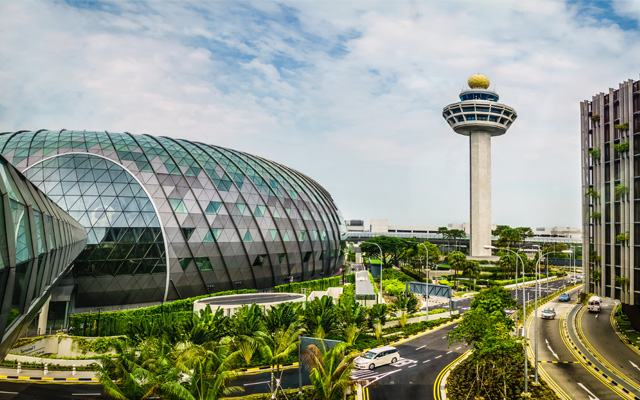
Singapore to expand its vaccinated travel lane (VTL) scheme following success of the VTL for Brunei and Germany; Changi Airport pictured
Travellers fully vaccinated against Covid-19 will no longer need to take any Covid-19 tests to enter Singapore from April 26, as the country lowers her Disease Outbreak Response System Condition (DORSCON) alert levels.
This decision by the Ministry of Health follows on from the launch of the new Vaccinated Travel Framework, which has allowed all fully vaccinated travellers to enter Singapore without serving a Stay-Home Notice (SHN) or applying for entry approvals.
Singapore lowers her disease outbreak alert level, facilitating the removal of more travel and social restrictions from April 26
Entry requirements for non-fully vaccinated travellers remain unchanged, with the exception for non-fully vaccinated children aged 12 and below. Non-fully vaccinated travellers must clear a pre-departure test two days before departure for Singapore, undergo a seven-day SHN, and take a PCR test at the end of their SHN period.
Singapore’s move to lower her DORSCON level from orange to yellow is a reflection of the improving local Covid-19 situation. The orange level – the second highest alert – was triggered on February 7, 2020.
The DORSCON yellow level comes with the removal of several restrictions, including group size limits at private gatherings, safe distancing measures, and capacity limits for large-scale events of more than 1,000 people, with effect from April 26.
Check-in at venues and facilities using Safe Entry and TraceTogether tokens will also no longer be required from April 26.
Even as tradeshows, corporate meetings and exhibitions make a face-to-face comeback, the popularity for virtual events has not waned, where in certain instances, companies and organisations have chosen to create virtual environments instead.
“We’ve seen a significant increase in the number of customers coming to us wanting to replicate their in-person environments in the metaverse. Whether that be individual offices or entire corporate campuses for large organisations, businesses want to replicate their brick-and-mortar spaces in the metaverse, to allow them to host events and conferences in familiar environments,” Danny Stefanic, CEO of MootUp, shared with TTGmice.
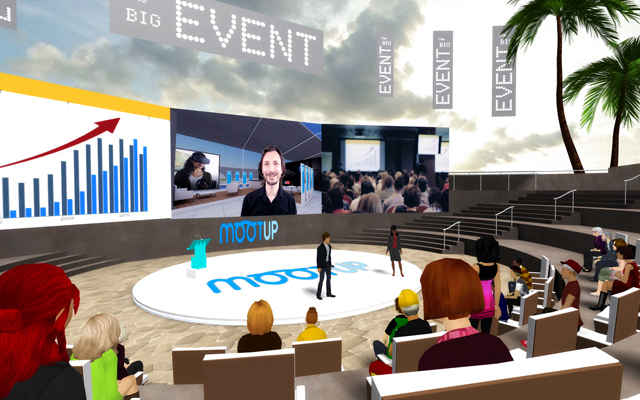
MootUp sees growing interest among companies wanting to replicate their brick-and-mortar spaces in the metaverse, to allow them to host events and conferences in familiar environments
MootUp is a metaverse virtual events platform, which is able to create virtual worlds to host meetings and events in the metaverse, providing an immersive, 3D experience. Within the platform are over one billion avatar-style combinations, with a large library for different skin, hair and eye colour, allowing attendees to create an avatar that can show their personality more accurately.
“Businesses are shifting to remote working practices, but they still need that central space where colleagues can meet up, engage and collaborate.
“It’s what I call ‘un-remote working’. While we might not be physically in the same room or building, we can still be in the same virtual room – this is the very essence of the metaverse concept,” he elaborated.
MootUp was born in June 2020 when Stefanic noticed a gap in the virtual reality market. It is a spinoff of LearnBrite – a platform that allows the creation of 3D simulations, experiences, learning modules, micro-learning and instructor-led training.
MootUp’s launch was also buoyed by the pandemic, as organisations and event planners searched for new and creative ways to host events and keep its stakeholders engaged.
One of the biggest challenges, however, is “overcoming the public’s general misunderstanding of what the metaverse actually is”, opined Stefanic.
“Businesses like MootUp have a responsibility to ensure the public can access the metaverse and embrace virtual reality – just like they did when the Internet first launched. Importantly, we are also showing how the metaverse can be practically used by companies across all sectors and industries.”
That is why, unlike other platforms, MootUp does not require users to download software or rely on specialised devices. It runs on a browser and on any device, with users able to access the metaverse with a single click on a web link.
“The majority of metaverse platforms required users to download additional software in order to access virtual environments. This was a significant stumbling block for many people navigating the metaverse for the first time,” he explained.
Stefanic: businesses must ensure the public can access the metaverse easily, without the need to download software or rely on specialised devices
Aside from a wider audience reach and being able to attend a conference in the comfort of one’s living room, another key benefit is the metaverse’s “ability to improve inclusivity”.
“For instance, we can host events in more than 50 different languages, meaning there are no barriers for attendees joining from different countries. We also found that 3D avatars can help users who are sometimes reluctant to speak up in real life feel more comfortable doing so in a virtual space. These benefits cannot be underestimated.”
Moreover, virtual event hosts and organisations will be able to obtain keener insights into attendee engagement and participation, which is “data that can be leveraged when securing sponsorships”.
There is also the case for sustainability, as concern over personal carbon footprints are on the rise, so “having a suitable virtual reality alternative that requires no travel is important”, Stefanic opined.
When asked about MootUp’s future plans, Stefanic shared the company’s top priority at the moment is the launch of Hyperspace.
Hyperspace is the 3D engine that powers MootUp and is the first native web 3.0 Metaverse for Business platform. It offers a suite of customisable tools, which also includes LearnBrite and Universal Avatars – a service offering globally unique WebXR avatars for use on the Internet.
The company has also launched its Digital Twin capability, which will allow users to recreate their physical locations in the metaverse using scanning technology.
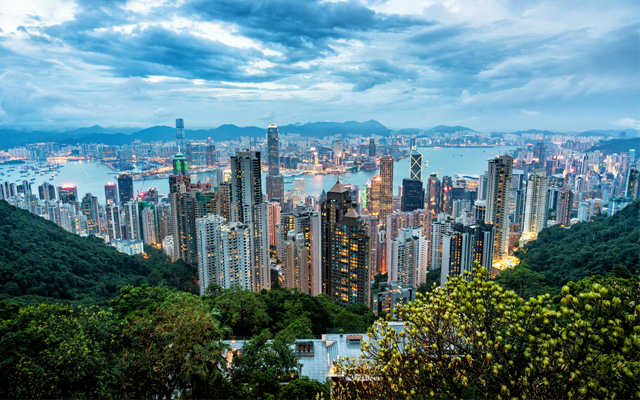
Singapore and Hong Kong are finalising details of the air travel bubble
Foreigners who are non-residents of Hong Kong will finally be allowed to enter the special administrative region of China from next month.
They will be subject to the same arrival procedure as residents, which calls for a quarantine of seven days.
Hong Kong will allow non-residents in, but with a seven-day quarantine condition attached
The government also said in a statement on April 22 that airlines carrying infected Covid-19 patients will face a shorter suspension of five days, down from the current seven.
Hong Kong’s borders have been tightly shut since the pandemic hit in 2020, and her reopening stance has remained cautious even as the rest of Asia moved to resume international travel.
The latest revisions are part of Hong Kong’s progressive reopening which started on April 1, 2022.
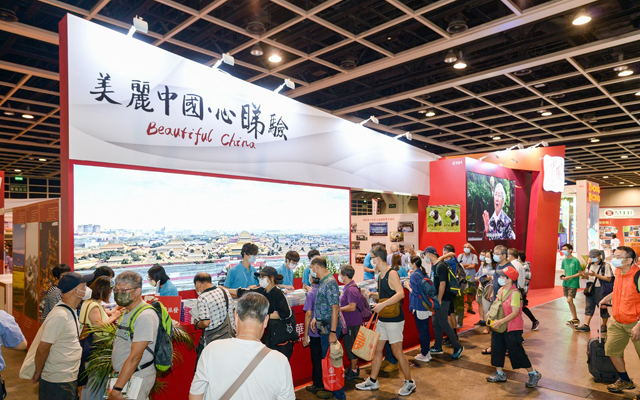
Hong Kong’s fifth wave of Covid infections have forced International Travel Expo (ITE) 2022 to move from June to August 18-21.
ITE 2022 incorporates the 36th ITE (Leisure) and the 17th MICE Travel Expo.
ITE 2021 attracted over 100 exhibitors, spurring confidence in show organiser of an even more successful event this year
Prior to the postponement, ITE 2022 had secured participation by repeat and new exhibiting national and regional tourism boards and companies from destinations such as Japan, Thailand and Canada.
Show organiser, TKS Exhibition Services, expects stronger exhibitor interest as more destinations waive quarantine requirements for fully vaccinated international travellers.
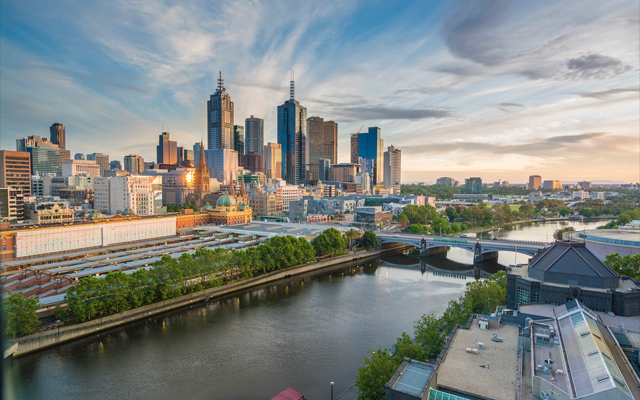
Evolve 2022 will take place in Melbourne on June 29 and 30, and has opened the show for registration.
Delivered by Meetings & Events Australia (MEA), the country’s association for meetings management professionals, and supported by major partners Melbourne Convention Bureau, Accor and EventsAIR, Evolve 2022 will feature an education programme and networking opportunities.
Melbourne will play host to MEA’s Evolve 2022
Attendees can expect a blend of plenary sessions and breakout streams across three pillars: Building Confidence, Best Practice, and Future Leaders. Speakers will hail from the events sector and other industries. Headlining the speaker list is former Disney head of innovation, Duncan Wardle.
MEA CEO Peter McDonald said the event would “refresh everyone’s minds about the value of our national community after a three-year hiatus of coming together face-to-face”.
He added: “MEA wants to lead by example and show the nation how it’s possible to gather safely for events and in large social groups. We’re hoping that Evolve will be the inspiration or impetus for other event holders to hit the ‘go’ button and drive the sector’s resurgence.”
Julia Swanson, CEO of MCB, said: “It’s time to reconnect and engage at business events – get the energy and magic of face-to-face interactions back again. With that front of mind, we look forward to seeing the events sector convene here in vibrant Melbourne at the live hub of Evolve 2022.”
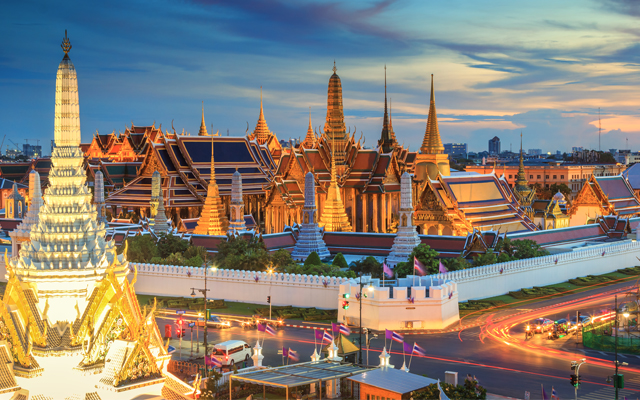
Thailand is further lowering entry barriers for international travellers, with on-arrival PCR tests being scrapped and minimum Covid insurance coverage being cut from US$20,000 to US$10,000.
The latest round of changes will come into effect on May 1.
Thailand to remove on-arrival PCR test and proof of negative pre-arrival PCR test for vaccinated travellers from May 1
However, international travellers will still be required to register for a Thailand Pass with a Certificate of Covid-19 Vaccination and proof of insurance coverage. With this, they will be allowed entry and are free to go anywhere in the Kingdom.
International travellers who are unvaccinated or are not fully vaccinated will also no longer need to show proof of a pre-arrival negative PCR test nor undergo an arrival test.
They are required to register for a Thailand Pass with a five-day hotel booking and an insurance policy with coverage of no less than US$10,000
– reduced from US$20,000.
Upon arrival in Thailand, they must be quarantined for five days and take a PCR test on the fifth day of their stay.
Exception is made for unvaccinated travellers who are able to upload proof of a negative PCR test within 72 hours of travel via the Thailand Pass system. With this, they will be allowed entry and are free to go anywhere in Thailand.
The latest measures follow the removal in March of a pre-departure test requirement.
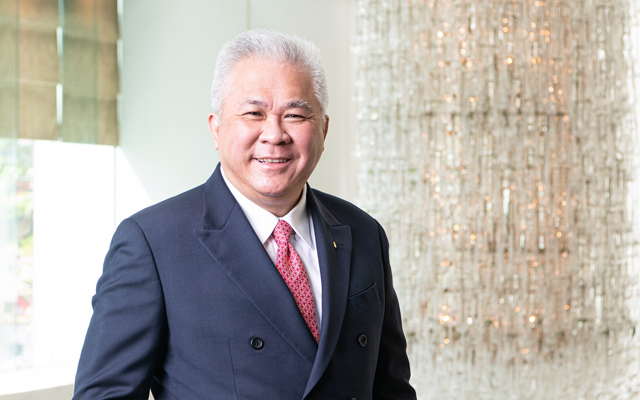
Island Shangri-La, Hong Kong has appointed Christopher Chia as general manager of Island Shangri-La with immediate effect.
In his new role, Chia will oversee the daily operations of Island Shangri-La, and Aberdeen Marina Club.
A seasoned hotelier with a career spanning over 30 years with the Shangri-La Group, Chia possesses extensive managerial experience overseeing flagship properties, including Shangri-La Hotel, Singapore; Edsa Shangri-La Hotel, Manila and Shangri-La Hotel, Beijing, and developing new projects under the Group’s portfolio across the North China region.
His most recent position was vice president at Shangri-La Hotel International Management Limited, a role which he had held since 2014, while concurrently taking on the role of General Manager at China World Hotel from 2016 to 2019, followed by a short stint outside of the Group and then a two-year sabbatical.
Dusit International has appointed Prateek Kumar as senior vice president – operations, in addition to this current role as general manager of Dusit Thani Dubai.
In his new role, Kumar will oversee the operations of properties in EMEA, India, the Philippines, Singapore, the Maldives, Japan, and selected properties in Thailand. He will be responsible for enforcing brand quality standards, enhancing customer satisfaction, and delivering optimum financial returns at each property under his supervision.
Kumar first joined Dusit 14 years ago, in 2008, as general manager of Dusit Thani Manila. In January 2013, he became the general manager of Dusit Thani Dubai. Two years later, he was promoted to area general manager – UAE, followed in 2017 by his most recent role: regional vice president – EMEA.
During his career, he has worked in senior management positions for the former Starwood Hotels and Resorts and Renaissance/Marriott Hotels in Australia. Prior to joining Dusit, he worked for Raffles Hotels and Resorts and was responsible for the preopening of Ascott Raffles Place, Singapore.
Just 10 minutes from Phuket International Airport on the serene northern coast, this 178-key, Bill Bensley-designed resort offers delegates a quiet, tropical paradise steeped in Phuket’s tin-mining heritage
The newly-opened Ritz-Carlton, Bangkok anchors the One Bangkok development with cosmopolitan elegance. Featuring the city's largest ballroom and a spectacular new penthouse suite, it delivers exceptional hardware and deeply authentic, soulful service for business and leisure travellers alike
Behind the imposing, Brutalist concrete that defines Zurich’s Oerlikon district lies a surprising secret. While its exterior honours the neighbourhood’s industrial roots, stepping inside Mama Shelter reveals a vibrant, neon-soaked world that is a far cry from its rigid shell









Domestic business travel across India is fast gaining pace, driven by IT, FMCG and banking companies.
The strong uptick in corporate movements has enable Thomas Cook (India) & SOTC to close its March business at 90 per cent of 2019 levels, revealed Indiver Rastogi, president & group head – global business travel.
“Corporate travel is witnessing a definitive acceleration (due to) easing of travel restrictions and economic growth gaining momentum,” he said.
According to some Indian hoteliers, the hybrid work arrangements undertaken by Indian companies are helping to fuel the rise in domestic business travel demand.
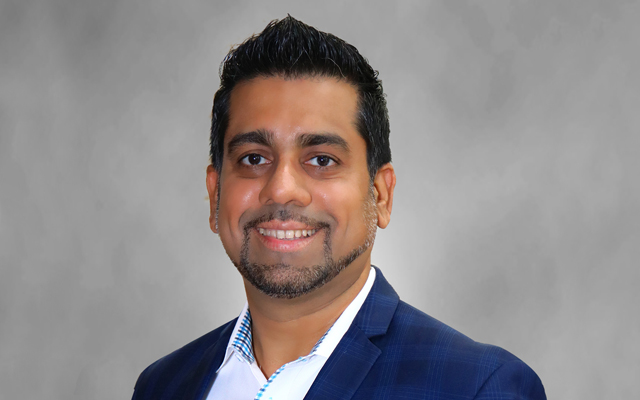
Sarbendra Sarkar, founder & managing director, Cygnett Hotels and Resorts, said the “hybrid style of working…has opened the doors for cross-city meetings”.
Sarkar is confident that business travel bookings will continue to gain pace and “reach a high by year-end”.
Clear signs of improving business, according to Sarkar, are the “good ADRs” commanded by hotels now as well as rising airfares.
Key metro cities like New Delhi and Mumbai are leading the demand for corporate travel.
Rastogi also pointed out that while uptick is evident across key Indian hubs, Mumbai is witnessing the fastest recovery for his company’s business travel segment.
Sarkar noted that business travel is a critical component of the hospitality business, as it “eases the pressure of inconsistent leisure traffic”.