
Kaydee George has been appointed general manager to Wyndham’s flagship property in Fiji, Club Wyndham Denarau Island.
Prior to this move, she was area general manager Gold Coast, based at Wyndham Surfers Paradise.
George first joined Wyndham in 2012 as a conference and events manager in Dunsborough, Western Australia, before being promoted to various resort management roles in Australia and New Zealand.
She is also part of the Queensland Government’s Young Tourism Leaders programme, which provides influential and inspiring role models to encourage young people to consider a career in the tourism industry.
Indonesia has the opportunity to rise and become one of Asia-Pacific’s top business events destinations, but stakeholders have a lot of catching up to do, said speakers at the inaugural ICCA Indonesia Forum in Jakarta.
One reason for this is because association meetings have drifted away from Europe to Asia-Pacific and are chances that Indonesia can capitalise on. In addition, Indonesia has several industry-leading sectors that international business events are interested in.
ICCA Indonesia Forum
1 of 4
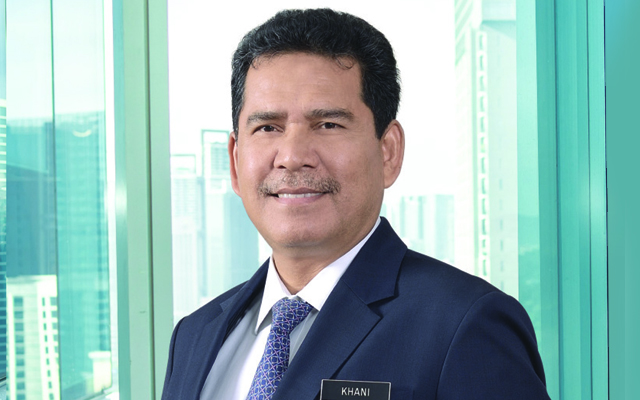
Noor Ahmad Hamid
Aman Pulungan
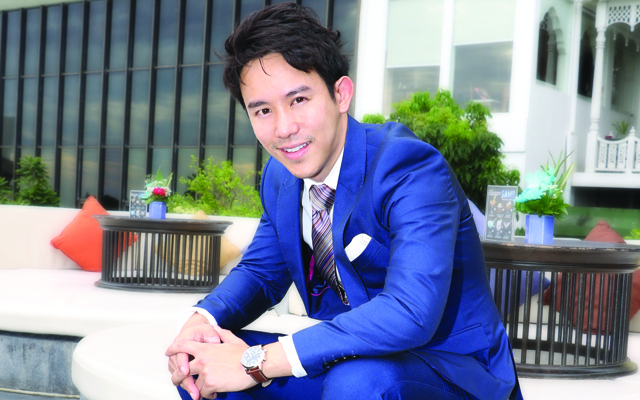
Jason Yeh
Raty Ning, chairman of ICCA Indonesia Committee, said: “(The fact that) more international events are held in Asia-Pacific, while at home, (the government) is now giving more focus to business events sector, is good momentum for Indonesia, which still sits below Malaysia, Thailand and Singapore, in attracting association events.”
Jason Yeh, ICCA’s vice president and chair of Asia-Pacific chapter, added: “The government is in the industrial revolution. With Indonesia 4.0, there is a focus on factory and technology…. (which is where the opportunities for attracting events lie).”
Yeh pointed to leading sectors in Indonesia such as F&B, coffee production, textile and apparel had related international events the country could tap into. “In the automotive industry, for example, there is the International Conference on Automation and Electrical Engineering,” Yeh pointed out.
However, there are challenges the country’s business meetings industry has to overcome.
Aman Pulungan, president of Asia Pacific Pediatric Association and president of the Indonesian Pediatric Society, elaborated: “There are many health societies and associations here. The opportunity is there and the market is big, but it is tricky to host an event in Indonesia. For example, Jakarta was flooded on my way (to this event), and it took me two hours to get here.”
This is as he shared in his address that there were numerous meetings, conferences and symposiums within the pediatric society. In Indonesia alone, there were 26 chapters with an event taking place almost every week, where participants ranged from hundreds to 4,000 when there is a national congress.
Other issues that Aman pointed out were the difficult in obtaining safety guarantees, or assurance from local governments.
For example, two years ago when his association was planning to host a conference in Bali, an earthquake struck Lombok. “We could not get any safety guarantees from anyone to help us decide whether we should continue or postpone. I had to go to Lombok myself to assess the situation, report back, and convince participants the event could carry on.”
“Guarantee and assurance from the government are important as cancelling an event costs (host and organiser) a lot of money,” he noted.
Other issues Aman pointed out include the need for convention centres in appointed business centres
Connectivity is also an issue. Aman elaborated: “I am not just talking about international direct access. Even people in Kalimantan don’t have direct access between cities on the island. Participants from (Balikpapan in East Kalimantan, for example) have to fly to Jakarta to connect to a flight to Banjarmasin in South Kalimantan. This doesn’t make sense!”
He encouraged stakeholders to share all this with the local government, so that it can be “acted upon” and the business will not be wasted.
Meanwhile, Noor Ahmad Hamid, ICCA’s regional director, touched on the importance of being able for the private sector to collaborate with the government, and “speak the same language” so that the goals. are aligned.
He shared: “You cannot do things without government support. If you are bringing 4,000 to 5,000 delegates you have to take them through the immigration counter. Who owns it? The government, so there needs to be collaboration. “
For instance, Noor pointed out the chief minister in Sarawak fully supports business events, hence the convention bureau is funded by the government, while the chief minister ensures that all ministries support the bureau, and understand that business events are not part of the tourism sector.
“Business events are part of the knowledge economy. Every time the bureau goes out for a bid, the respective ministry will give their full support, making it easier for the bureau to bid,” said Noor.
Noor also pointed to using data to help with the bidding process. For example, Japan has many city convention bureaus and to compete internationally, they make use of data to differentiate themselves.
“Kobe, being the K supercomputer city – the fastest computer after China and the US – will bid for events relevant to their city. When talking about snow, (bids) will go to Sapporo, while (education-related subjects) are (channelled) to Sendai as it has the universities with the highest population of international students,” he elaborated
He also suggested that Indonesia create a strategy to develop second- and third-tier cities.
“Not all associations have the funding to go to big cities. Going to the second-, or third-tier cities will also bring benefit. A conference with 400 delegates is small for Jakarta but to Batam and Palembang, you have the whole town for yourselves. That’s the dynamic of an international conference,” he said.
Anxiety has befallen business events stakeholders across Jakarta, following Jakarta governor Anies Baswedan’s decision to temporarily suspend the issuance of permits, and reviewing issued permits, for mass gatherings in the city due to Covid-19.
In response to the governor’s instruction to raise awareness about Covid-19, One-Stop Integrated Services Agency (BPTSP) issued a circular that suspended permits for large-scale gatherings.
Permits for large gatherings in Jakarta are being suspended, currently issued permits will be reviewed
The suspension is not only for outdoor activities, such as bazaar, camps, sports and youth events, but also indoor ones, including business events, – although BPTSP did not mention business events in its circular – according to Cucu Kurnia, head of Jakarta Tourism and Creative Economy Agency.
The governor’s instruction has raised the eyebrows of lawmaker Evita Nursanty. Evita, who has a business events background, argued that the ban could kill the meeting industry and worsen the country’s economy.
And while she agreed the Jakarta administration needed to raise awareness on the risks of the spread of coronavirus, the government also needed to keep the country’s economy alive.
Evita warned that this particular regulation could oppose the policy of Indonesian president Joko Widodo who called for the holding of more business events, especially in regions, to bolster domestic tourism and mitigate Covid-19’s impact on the tourism sector.
Hosea Andreas Runkat, chairman of the Indonesia Exhibition Company Association, said: “We should fight Covid-19 with the spirit of moving the tourism and creative economic sector (forward), avoid pessimism in the business events industry and spread optimism instead.”
He added that instead of terminating all permit issuance, the Jakarta government should allow events – that could fulfil the more stringent requirements set by the Ministry of Health and WHO – to proceed.
Susilowani Daud, president director of Pacto Convex, added: “Indonesia has handled epidemics before. Venues like hotels, convention centres and professional organisers like us will not be reckless under this circumstance and will refer to guidelines set by the government. Therefore, it is not necessary for the governor to bar all types of gatherings. This regulation will just create more fear.”
And as fear is contagious, Susilowani was concerned that other city governments would follow suit.
As for the reviewing of issued permits, Cucu explained to TTG Asia that the Jakarta government has decided that not all business events will be suspended, and low-risk events will still be able to proceed.
“We have created two criteria, high risk and low risk, based on the room space. (The event can proceed) one person has a 1m2 space in the room. For example, if the event has 500 people participating, the room must at least be 500m2. If it is less than 500m2, the event is identified as high risk.”
“But I think that business events will not be in a high-risk category. Events like music concert are in the high-risk category,” he said. Cucu added that business events that are given the green light to proceed also had to implement tighter SOPs, such as providing hand sanitisers, a suitable isolation room, as well as the checking of the body temperature of all visitors. – Additional information by Mimi Hudoyo
UFI releases first global assessment of economic impact Covid-19 is having on tradeshows and exhibitions
UFI, The Global Association of the Exhibition Industry, has released data that reflect how much tradeshow postponements and cancellations are costing both the industry and exhibiting companies.
“Globally, the fact that more than 500 tradeshows have not taken place in recent weeks is creating an escalating ripple effect for whole industries”, noted Kai Hattendorf, UFI managing director / CEO.
UFI releases an assessment of economic impact Covid-19 is having on tradeshows and exhibitions globally
Based on UFI data, the orders that exhibiting companies are currently not securing already add up to €23 billion (US$26.3 billion) globally. Of this, UFI estimates lost orders of around €13 billion euros in Asia-Pacific, and €9.7 billion in Europe. As additional events continue to be postponed, these numbers are expected to rise further in the weeks to come.
As an industry, the exhibitions industry generates a total economic output of €22.9 billion per month globally on average, translating into more than 270,000 FTE jobs.
Based on the current numbers and size of the events not taking place, €14.4 billion of economic output have already been lost. Hardest hit is Asia-Pacific, where the impact is already reaching more than €8.4 billion. In Europe, with an ongoing wave of postponed and/or cancelled shows, the impact is already reaching €5.8 billion. Calculations for other regions are underway.
Many of the events that are not taking place this quarter are being postponed – and rescheduled to take place later in the year. This may help to reduce the mid-to-long-term impact.
“But even short-term postponements have an immediate impact because they delay scheduled business and revenues. This poses an existential risk, in particular for small and medium-sized companies”, said Christian Druart, UFI research manager.
“These numbers stress the critical importance exhibitions play in any economic recovery – market places and meeting places are the fastest fast track to drive any economic recovery”, said Hattendorf.
“We rely on the joint efforts from policymakers and global leaders to ensure that the companies that organise these events, creating those necessary market and meeting places, will be able to continue to fulfil that role in the future. All of these companies are already suffering massively under the current wave of postponements and cancellations”, he concluded.
IT&CM Asia and CTW Asia-Pacific will introduce new initiatives to boost networking among buyers and exhibitors in this year’s edition, scheduled to be held from September 22-24 at the Centara Grand & Bangkok Convention Centre in Bangkok, Thailand.
Built on the basis of last year’s measures, which yielded more than 80 per cent satisfaction among delegates, new initiatives include a thematic knowledge festival with sessions helmed by industry trendsetters – held on September 22 and open to all delegates – as well as a buyer procurement showcase on both days.
IT&CM Asia will be back this year and sport new initiatives
Another debut is the invitation-only Global CVB Leaders Dialogue. Scheduled for September 22, the event aims to facilitate C-level discussions among destination leaders to enhance knowledge exchange, information sharing and collaboration.
Teambuilding specialist Asia Ability has also been roped in to create a real-life exhibition game board that invites delegates to earn points by accomplishing tasks at various stops, driving traffic to participating booths.
Exhibitors can choose to participate at no additional cost, and sponsorship of prizes for players with qualifying and top scores are welcome.
Asia Ability will also take over the popular “Say Hi to Everyone” ice breaker on September 22, where attendees will be given the opportunity to get to know each other better before the exhibition begins.
Well-received initiatives that debuted last year will also make a return. These include brand showcase presentations, exhibition walkabouts hosted by destinations and suppliers, as well as meet-the-corporates.
Under the new Allied Preferred-Buyers Partners programme, exhibitors who wish to leave an impression on their preferred buyers can invite them to enjoy full hosting benefits on IT&CM Asia and CTW Asia-Pacific, subject to terms and conditions.
Buyers who confirm their participation by end-April will enjoy a 20 per cent discount off registration fees and stand a chance to be featured in the double-billed events’ publicity materials.
Wintastar Shanghai is the latest addition to a cluster of theme parks in the Pudong district
Wintastar Shanghai, a mega sports-entertainment complex being developed by Singapore-listed KOP and its two Shanghai partners, is on track for completion in 2022.
Billed as the next “tourism icon” of the city, the 227,000m2 Wintastar Shanghai is set to contain skiing facilities, a waterpark, four themed hotels, 20,000m2 of retail and F&B space, as well as business event venues.
Wintastar Shanghai is the latest addition to a cluster of theme parks in the Pudong district
The centrepiece of the multibillion reminbi project will be an alpine-themed indoor ski resort. Spanning 90,000m2 and touted as the world’s largest of its kind, the ski resort will be equipped with three slopes, including one of Olympics grade, as well as 20 snow play attractions.
Located right next to the ski slopes is an Icelandic-Nordic viking themed waterpark with waterslides and families of business travellers. Visitors can make their way between the park’s two levels through a multi-sensory experience on a river.
Open throughout the year, the 20,000m2 waterpark will also boast a beach club, an infinity pool, as well as hot spring and spa experiences.
Meanwhile, housed within the ski resort is Montigo Luxe – one of the four themed hotels within Wintastar Shanghai – which allow guests to ski in and out of their rooms.
The other three hotels in Wintastar Shanghai are the 16-room Montigo Ice, Shanghai’s first ice hotel; Montigo Hotels; and Montigo Residences. Featuring alpine-themed decor and smart technology, the four hotels will comprise 920 room keys in total.
Ong Chih Ching, executive chairman and executive director, KOP, said the opening of Wintastar Shanghai would be a timely one, with Beijing hosting the Winter Olympics in 2022. “In time to come, we hope that this will be a ‘must-see’ attraction in Shanghai,” added Ong.
This marks KOP’s luxury hospitality brand Montigo Resorts’ first foray into China. Prior to this announcement, the brand’s properties were located in Batam and Bali, Indonesia.
Millennial travellers are driving corporate travel towards a post-digital era in Asia-Pacific, as their exceptionally high use of digital channels is being met by mounting frustrations with existing offerings, according to a new report by Travelport.
Under the report, millennials are defined as those between the ages of 18 and 34.
A high number of APAC’s millennial business travellers use their mobile devices to book and pay for trips
More millennial business travellers in Asia-Pacific use a mobile device when researching (68%) and booking (67%) a trip than in any other region worldwide, found the study. Use is second highest in North America (64% and 55%, respectively) and lowest in Europe (54% and 45%, respectively).
Furthermore, one third (36%) of millennial business travellers in Asia-Pacific claim that they now use mobile devices to both book and pay for “every trip”.
In addition, the research revealed that more millennial business travellers in Asia-Pacific are turning to travel booking sites to help them discover “bleisure” experiences (45%) than in any other region. Once again, North America (41%) ranks second and use is lowest in Europe (26%).
The study also revealed, however, that millennial business travellers in Asia-Pacific have a growing list of pain points with current digital offerings.
Around half said that they are still left frustrated by companies not giving them access to their booking information on all their mobile devices (53%), not using data to remember their preferences (45%), and not giving them the option of booking everything in one place (48%).
Mark Meehan, group vice president and managing director of APACMEA at Travelport, said: “Millennial travellers in Asia-Pacific are now heavily using digital channels in all stages of business travel. This high use, however, is being matched by increasing frustrations with existing offerings, which indicates corporate travel in the region is on the verge of leaving the digital age and entering the post-digital era.”
The notion of a post-digital era was recently addressed by Accenture, which posited that digital is simply the price of admission for doing business, and that it is no longer a differentiation advantage. In the post-digital world, it argued, differentiation comes from applying digital in powerful new ways.
Meehan added: “In this new era, sellers of corporate travel need to use digital channels to deliver value in more modern and sophisticated ways. This could be by solving more complex problems, enhancing personalisation or more proactively meeting millennials’ needs for memorable bleisure experiences.”
Sydney venue operator The Venues Collection has launched a new campaign offering six new deals for organisers hosting events at two of its venues – harbourside dining precinct Campbell’s Stores at The Rocks; and contemporary venue 12-Micron in Barangaroo.
The updated pricing model is available for new bookings for events held before August 30, 2020, with breakfast, lunch and dinner costing between A$40 (US$26) and A$75 per pax respectively. There is also the option of a day conference or cocktail reception, both priced at A$70 per pax.
Private dining can be arranged at 12 Micron Watermans
One highlight among the deals offered is a four-hour, seven-course degustation experience in 12-Micron’s dining room, located on the western end of Sydney Harbour.
Event organisers keen on the dishes being paired with wine will be charged A$220 per pax; while food alone will cost A$140 per pax. Menu items include Paroo Kangaroo tartare with pickled egg yolk puree and sweet potato crisps, pan-seared Albhoros scallops, and Tajima Wagyu striploin with fondant potato.
Taking into account the diverse palates of attendees, a vegan degustation menu featuring dishes such as a portobello tartare with sweet potato puree, as well as a puffed amaranth, raspberry, coconut and dark chocolate mousse, can also be ordered.
Philip Beauchamp, director, The Venues Collection, said the purpose of the campaign was to encourage organisers to continue holding events amid Covid-19, while following the government’s health and safety protocols.
For example, the venue operator has put in place more stringent sanitation measures at its venues, such as requesting for additional servicing from contracted cleaners.
Additionally, event organisers concerned with the uncertainty surrounding Covid-19 are being assured that their deposits will not be forfeited if their event has to postponed to later date in 2020.
Qatar Airways has opened its new premium lounge serving business class passengers at Singapore Changi Airport Terminal 1, operating daily from 07.30 to 02.00.
Designed with the aim of narrowing the gap between business and first-class lounges, the lounge features contemporary Arabic design elements, ultra-luxurious interiors and custom furniture pieces.
Qatar Airways Premium Lounge Singapore
1 of 5
The 700m2 lounge can host 85 passengers at any given time. Guests can relax in one the lounge’s seven different seating areas – including sound-proof, semi-private spaces known as quiet pods – have a tipple at the centrepiece martini bar, where a dedicated mixologist is at hand.
The lounge is also equipped with a full kitchen to prepare food orders on demand, on top of an existing buffet spread offering an international menu.
With the addition of the new Singapore lounge, the airline now operates five international premium lounges with others located in London, Paris, Beirut and Bangkok.
Qatar Airways connects Singapore and Doha with three flights a day on an Airbus A350-1000 aircraft, with each flight offering 46 business class and 281 economy seats.
The Curtis Crest Tree Top Walk is the highest public viewing platform on Penang Hill and offers 360-degree views of the island
Smaller cities that are easily accessible and which can provide authentic, immersive experiences are growing in popularity among business event planners.
Sharing how trends have changed over the years, Koe Peng Kang, senior executive vice president of S P Setia, noted: “Business tourism is no longer just about people going to a destination to attend a conference. It has become a convergence of business events and leisure experiences.”
The Curtis Crest Tree Top Walk is the highest public viewing platform on Penang Hill and offers 360-degree views of the island
And one such destination that is benefiting from such a convergence is Penang, the business hub of Northern Malaysia. Its capital, George Town, was awarded UNESCO heritage site status in 2008, as it was one of the two “most complete surviving historic city centres on the Straits of Malacca with a multicultural living heritage originating from the trade routes from Great Britain and Europe through the Middle East, Indian subcontinent and Malay Archipelago to China”.
And Koe strongly believes in Penang’s lure, adding that the Malaysian city is able to fulfil the different interests of international delegates because of its varied product offerings.
Sadie Yeoh, general manager, Destination Asia (Malaysia), concurred: “International delegates want to be able to take home memorable experiences of the local culture, local cuisine and recreational activities that are unique to the destination. And Penang has all of that. It is a modern city, with elements of yesteryear that can be incorporated into a programme.”
Some examples Yeoh gave include a trishaw ride around George Town, learning to make joss sticks, or enjoying a pre-dinner cocktail while watching the sunset at The Habitat Penang Hill – a prehistoric rainforest dating back 130 million years old that is located a 45-minute drive from the city.
In fact, because Penang has so many experiences to offer, Yeoh’s company is seeing repeat business, especially from clients in Asia-Pacific.
Yeoh believes that planners are also “spoilt for choice” as the city offers several tiers of business hotels, and modern convention centres. A wide-ranging selection of venues and spaces add to Penang’s shine; from clan houses and restored colonial bungalows, to heritage buildings such as Penang’s first theatre circa 1926, the Majestic Theatre, to the Suffolk House, a Georgian mansion built in the 1800s.
Presanth Chandra, managing director of Apollo Conferences, agreed that Penang is “blessed with many unique venues that can be tapped for business events purposes”, and possibilities were only limited to a planner’s imagination.
He recalled: “At the recent Penang International Travel Exchange in October 2019, invitees enjoyed a welcome dinner we organised on Rapid Ferry, where they saw the sights of Penang onboard a moving ferry and watched the sun set over the horizon.”
Moreover, Penang is a year-round destination for business events, opined Presanth.
“Penang is also rich in festivals and there is something interesting happening every month. Some organisers take into account the local festivals when choosing event dates, (so as to allow) delegates to experience the local scene,” Presanth shared.
A local festival worth noting is the annual George Town Literary Festival which is organised by the Penang Convention & Exhibition Bureau (PCEB) for the past four years. The event is said to be the largest world literature festival in Malaysia, and the first literary event in South-east Asia to receive the Literary Festival Award at the London Book Fair International Excellence Awards.
Arokia Das Anthony, director, Luxury Tours Malaysia, pointed out that the event is good for visitors who are interested in literary works and would like to meet renowned authors. Last year, Luxury Tours Malaysia sent two groups to Penang as part of a post-conference tour.
For Yeoh, she has noticed a growing interest in groups asking for Instagrammable sights – such as Penang’s street art and murals – and sustainable eco-tourism experiences.
Sharul Madi, director of sales at Shangri-La’s Rasa Sayang Resort & Spa and Golden Sands Resort, Penang, has also noticed a growing interest in corporate social responsibility (CSR) programmes. As such, both properties have developed nature and community-based programmes to cater to multinational corporations seeking to incorporate CSR as part of their teambuilding activities.
PCEB is also providing an avenue for business events to fulfil their CSR dreams when meeting in Penang. Penang Turtle Cares was launched in December, providing corporate groups an opportunity to assist with turtle conservation efforts at the Penang Turtle Sanctuary – home to the Green and Olive Ridley turtles – on Pantai Kerachut. Study tours of the work done at the sanctuary, planting of Ambung-Ambung trees as shelter for turtles to lay their eggs under, and contributions in kind are some ways to contribute.
With so many points of appeal, Yeoh intends to market Penang to European clients, in particular those in Amsterdam, Belgium and the UK.
Aside from Qatar Airways’ four-times-weekly flights from Doha to Penang making the destination convenient for European groups, Yeoh said: “With a weaker pound, I think there is potential to obtain more incentive business from the UK because of our competitive pricing, as well as our strong ties dating back to colonial times.”
As for Presanth, he has seen increasing interest from the Indian Subcontinent for events in Penang.
He revealed: “Indian organisers who have already held events in Kuala Lumpur and its surrounds are looking for new destinations, and Penang fits their requirements. The destination is easily accessible, and within 30 minutes’ drive from the airport, one can visit The Habitat Penang Hill, enjoy the scenic Batu Ferringhi beach, or visit George Town.”
To help with business conversion, PCEB is dangling curated exclusive support and perks for planners who choose Penang for meetings, conferences or incentives. The bureau has also developed the BE Penang mobile app which packs in a meeting planners guide and calendar showing upcoming events and other supported business events occurring in the city.
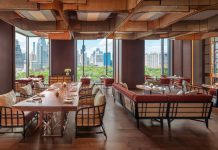
A polished urban retreat designed for business travellers, Hyatt Regency Kuala Lumpur at KL Midtown combines thoughtful design, seamless service, and exceptional facilities.
The five-star property excels in backing its expansive facilities with seamless service and personalised attention, setting the benchmark for luxury in Bangkok.