CAMBODIA
Treeline Urban Resort
The minimalist resort – founded by Cambodian architect Hok Kang – was constructed around the ancient trees that sit on the riverside spot it was built on.
No single-use plastic can be found in any of the 48 rooms, and the property is in the process of eliminating it from back-of-house operations. Instead of plastic or Styrofoam takeaway containers, Treeline uses palm leaf and eco-friendly cardboard boxes.
Solar energy is used to heat water and used cooking oil is donated to local NGO Naga Earth, which is then turned into biodiesel. To ensure the hotel does not contribute to the city’s waste – where infrastructure is lacking – Treeline uses an advanced sewage system and composts food waste onsite.
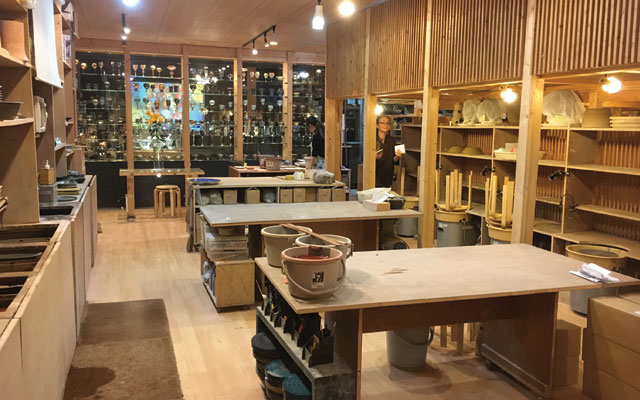
It is also strongly committed to helping communities. All herbs, vegetables and fruit are sourced from organic Happy & Co Farm on the outskirts of Siem Reap; local pottery studio Loyuyu designed the ceramics that dot the property; and spa products are made onsite, with ingredients sourced locally where possible.
Treeline also employs locally where it can. For example, water hyacinth weavers make bin covers; wood carvers craft the palm wood items adorning the hotel; and take-away containers are created by nearby villagers from palm leaves.
The property is also spearheading a tree-planting project along Siem Reap River, which it overlooks, and its staff regularly take part in city clean-ups.
Knai Bang Chatt
The 11-room property opened in 2005 after two years spent restoring several New Khmer Architecture villas. Its owners launched the Hand in Hand programme from the get-go, where the aim was to provide employment to the young people of poverty-stricken communities while preserving the environment of coastal Kep town.
Since then, the project has worked tirelessly to improve the education, health and livelihoods of more than 550 families in nearby Chamcar Bei village by training many of the young in hospitality. These villagers are also employed at the resort and neighbouring Sailing Club.
It is a staunch champion of the sustainable movement, employing a full-time sustainability manager and green team. In 2016, Knai Bang Chatt became the first hotel in Cambodia to be awarded the global Green Growth 2050 gold certification. Outside of the property, daily coastal clean-ups are conducted by staff.
Knai Bang Chatt also boasts an onsite organic farm, with the menu created around what is available at the market that morning and seasonal locally-grown ingredients to reduce carbon footprint. This is supported by a Sustainable Resource Centre that creates compost in the form of bokashi and vermicast.
The centre hosts a series of horticulture and composting workshops, as well as upcycling projects – such as turning wine and beer bottles into glasses – and has set a target to reduce waste sent to landfill to five per cent this year.
– Marissa Carruthers
HONG KONG
Hotel ICON
Wholly-owned by The Hong Kong Polytechnic University, Hotel ICON is not only committed to educating the next generation of hospitality professionals, it is also determined to uphold sustainable practices.
Unlike other hotels, Hotel ICON is a “live research lab” to experiment with and adopt the latest technology in hospitality. For instance, the lobby is home to Asia’s largest indoor vertical garden. Designed by French botanist and artist Patrick Blanc, it houses over 8,600 plants across 71 species.
The hotel’s engineering team developed a water purification process for the vertical garden in close partnership with Blanc. It also touts that it was the first in Asia to champion the ORCA (Organic Refuse Conversion Alternative) technology that turns food waste into water. Since mid-2018, the garden receives all its recycled water and nutrients from an ORCA machine.
In addition, 77 solar panels situated above The Market buffet restaurant generate approximately 20,790kWh annually. The energy supports the illumination and irrigation of the vertical garden as well as heating and cooling needs.
Aside from green hardware, the hotel also hosts sustainably-driven events. For instance, it organised Asia’s first Future Electric Vehicle Leaders Circle 2018 in collaboration with Charged Hong Kong.
Kowloon Shangri-La, Hong Kong
The five-star accommodation started on its sustainability journey back in the 1990s, with the formation of two committees, one overseeing environmental protection, the other food, life and safety.
Aside from featuring sustainably-sourced food and locally and ethically-sourced ingredients in its Rooted in Nature cuisines, the hotel conducts seminars for its suppliers and vendors to ensure they comply with its stringent standards that encompass food safety, environmental protection and no child labour. Random checks and unannounced visits are done to ensure compliance.
In April 2018, the hotel “donated” a guestroom to the Chan Wong Suk Fong Memorial Secondary School, aimed at helping students and locals develop careers in the hospitality industry. The simulated hotel guestroom replicates a room within the Kowloon Shangri-La, Hong Kong, complete with a bathroom and amenities.
Another school outreach was conducted last July, when hotel chefs visited the Caritas Jockey Club Lok Yan School to celebrate the grand opening of the school’s renovated food lab. The special school provides education for wheelchair-bound children who rely on tube feeding. Chefs guided parents and caregivers in preparing a memorable meal for 100 children and guests, as well as excited their senses by seeing, smelling, tasting and touching black truffle, which they learnt about for the first time.
– Prudence Lui
INDONESIA
Bintan Lagoon Resort
The Indonesian resort employs several sustainability measures, such as recycling its material waste – wood is repurposed as furniture or artsy decorations – and supporting the livelihood of local farmers and fishermen through purchases of food supplies.
Bintan Lagoon Resort’s (BLR) community commitment is extended to needy groups. It invites orphanages and the needy for a meal together, and contributes necessary supplies towards these groups. Opportunities to help these communities are made available to corporate groups hosting events onsite. For example, partcipants in a corporate teambuilding session can build bicycles together, which are then donated to the local community. To date, 50 bicycles have been donated.
BLR also runs a Gotong-Royong (which means communal work) campaign where all staff members including the heads, work together to clean the resort.
Alila Seminyak
The push for sustainability begins with the resort’s architecture and design, where its open-plan layout maximises natural cooling – think no air conditioning – in public areas.
Beyond design, Alila Seminyak has implemented a zero waste to landfill initiative. For instance, organic waste in the hotel is processed as compost, while liquid waste is used to water plants around the resort.
Meanwhile, non-organic waste is manually sorted into glass, PET plastics, and recycled where possible. Glass, for example, is crushed and used to make building materials, which can be incorporated into the hotel or sold.
Alila Seminyak also seeks out better alternatives when it comes to its amenities. Straws made out of corn starch, which is 100 per cent compostable and biodegradable, have replaced plastic ones. Takeaway room dining boxes are also made out of eco-conscious material. Meanwhile, vendors are selected in accordance as to how environmentally-friendly they are.
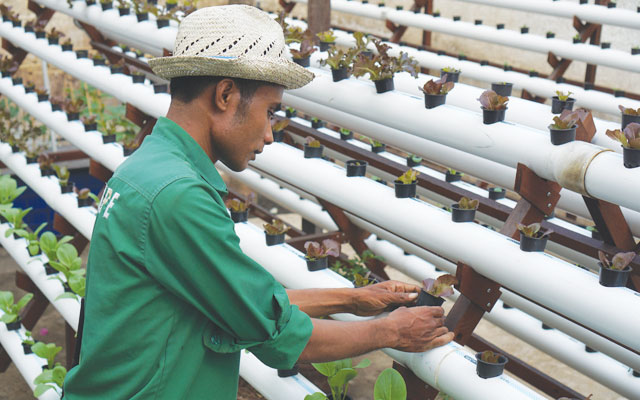
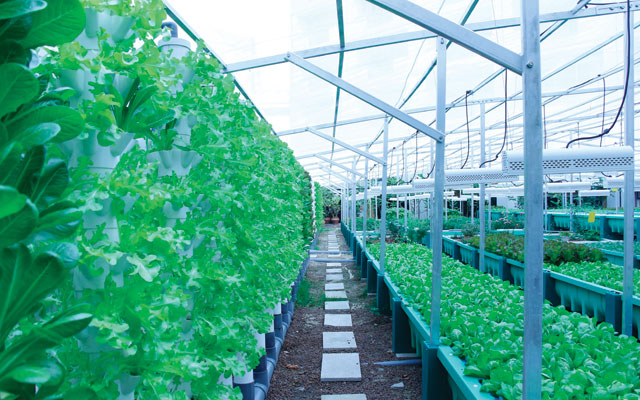
Recently, Alila Seminyak introduced its own hydroponic garden. Compared to soil-based gardening, the hydroponic system allows gardening in limited spaces, and saves water as plant roots will only take up as much water as they need, while the excess is recirculated to other plants in the system. The organic produce is used in the resort’s day-to-day dishes and cocktails, with none going to waste.
Alila Seminyak has also partnered with Bali Sustainable Seafood, a local social enterprise that provides sustainably fished seafood such as skipjack, an Indonesian fish, as opposed to Bluefin tuna.
– Tiara Maharani
JAPAN
Hoshinoya Karuizawa
Located in Nagano Prefecture, this Japanese resort operates under a system it calls Energy in My Yard, which uses clean, local resources.
For starters, it introduced hydroelectric generators to tap the energy from the Yukawa River, which runs from nearby Mount Asama through the property, and geothermal generators to draw geothermal energy from deep underground. Together, these sources supply about 70 per cent of the resort’s total energy needs, and has zero emissions.
It also helps that the resort’s design is energy efficient. For example, small windows are positioned high in the ceiling to bring in cool air during the summer and keep rooms warm in the winter.
One of the property’s latest green initiatives is a toothbrush recycling programme. Staff collect and sort the toothbrushes, which are first sent to a recycling company that turns them into pellets, before being transformed into products such as containers and garden planters.
Hundred per cent of the resort’s waste is sorted into 28 categories and recycled.
Ecotourism is also a large part of the resort’s DNA, with activities available for guests such as the protection of the environment of the Asian black bear.
Kamikatsu Kaitakudan
This glamping resort in rural Tokushima Prefecture, on Shikoku island, was set up to be as sustainable as possible. It comprises Base Camp, which is home to glam tents, and Bar Irori, which offers food and beverage.
As much as possible, local resources are used and reused. The accommodation is located in the small town of Kamikatsu, which is surrounded by mountains and forests, so the baths, for example, are made from local cedar while Bar Irori’s furniture are crafted out of upcycled wood. Other onsite buildings are renovated, rather than built from scratch, to promote sustainability.
In addition, the facility uses water drawn from mountain springs for drinking, cooking and bathing, while its electricity is generated by solar panels. Meanwhile, all heat is generated using local firewood and charcoal when and where necessary, to avoid waste.
The town the resort sits in also has its own green initiatives, which Kamikatsu Kaitakudan operates under. For instance, the property serves only local food and drink to reduce the resort’s carbon footprint while promoting sustainable dining. Drinks are predominantly derived from, or garnished with, local citrus varieties. Single-use plastic is avoided, and staff provide reusable and returnable containers to guests.
– Kathryn Wortley
MALAYSIA
The Frangipani Langkawi Resort & Spa
This four-star, beach-front property in Malaysia with 115 villas was renovated in 2005 using the principles of green design. For instance, clear corrugated plastic roof material can be found on certain buildings – such as the recycling centre, lobby entrance, restaurant deck and staff area – allowing for maximum natural light to enter the space.
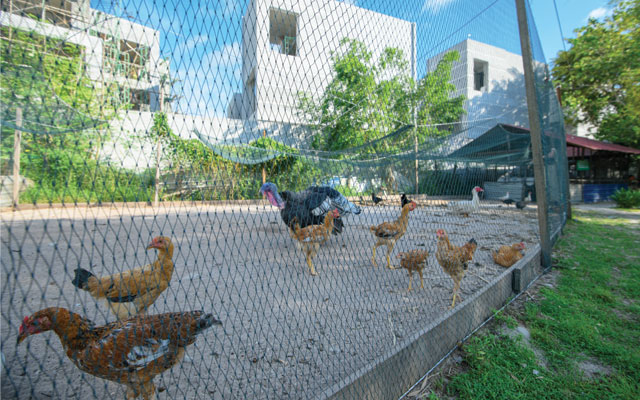
Meanwhile, the villas sport a green roof made from dried leaves while its walls are covered in foliage to reduce heat absorption, both of which help to cool down the living space’s ambient temperature, reducing the need for stronger air conditioning. Solar hot water panels are used to heat water, while energy-saving lights are installed throughout the resort.
The Frangipani Langkawi Resort & Spa passes on eco-friendly know-how to its guests, such as through organic farming courses which are also available to the local community, and daily two-hour-long eco-walks. During the latter, staff introduce guests to green practices that can be adopted in their homes. Ideas include rainwater harvesting to water plants; and using small spaces such as walkways to build vertical gardens to grow certain types of vegetables, fruits and herbs. The resort also rears chickens, ducks and fish for the kitchen.
Borneo Eagle Resort
Located in Sabah, Borneo Eagle Resort believes in identifying and grooming local talents from Sabah as part of its promise to the community, with the aim of developing these individuals to take over senior management positions.
Next, fish served at the resort come from Bayu Aquaculture, a local company, owned by Echo Resorts (also the parent company of the resort). This prevents exploitation of fish from the oceans and reproduces fingerlings from the farm’s own brood stock which are grown for consumption. Additionally, fresh vegetables that are free from pesticides and chemicals are obtained from Green-Os, an organic farm also owned by Echo Resorts.
At the resort, kitchen waste composted for use as plant fertiliser, while fruit peels are used to feed earthworms which create worm casts, a source of nutrients for plants. Fruit peels are also used to produce garbage enzymes through fermentation with sugars and as organic pesticides against garden pests.
Grey water – water discharged from washing and showers, is treated by an anaerobic process with microbes before being recycled for watering plants and flushing toilets. Meanwhile, black water – waste water from toilet flushing – is treated anaerobically before being released back into the ground through seepage.
– S Puvaneswary
MYANMAR
Hilton Mandalay
The 231-room Hilton property in northern Myanmar has two sustainability initiatives in place – both in partnership with Diversey, a service provider with sustainable solutions for cleaning and hygiene.
In 2019, Hilton Mandalay implemented the CoffeeBriques programme, which turns waste coffee grounds into CoffeeBriques, an eco-friendly fuel alternative to normal charcoal, that can be used for cooking and heating. The used coffee grounds are collected, dried, starched and moulded into briquette.
Recycled coffee waste generates up to 80 per cent less emissions than charcoal. The process of making CoffeeBriques also does not require burning, which results in less pollution. This also helps to minimise waste that goes to landfills. Around eight kilogrammes of CoffeeBriques can be used for four hours of grilling.
In Myanmar, charcoal and firewood are still the main sources of fuel for cooking in everyday life. With the CoffeeBriques programme, Hilton hopes to inspire local communities and companies to try making their own or use alternative sustainable sources of fuel.
Hilton Mandalay is also part of Hilton’s soap recycling programme, which is in line with the hospitality company’s Travel with Purpose 2030 goals – the group aims to cut its environmental footprint in half and double its social impact investment by 2030.
Soap is recovered from Hilton Mandalay, which is transported to a local site for recycling through a cold-press method.
New soap bars are then distributed to communities in need, from monasteries to women shelters across Mandalay, Nay Pyi Taw, Ngapali, as well as a fishing village in Ngapali. The project is run directly by local non-profits, and employ underprivileged communities, hence providing livelihood opportunities.
– Rachel AJ Lee
PHILIPPINES
Atmosphere Resorts & Spa
Situated near to the world-renowned Apo Island – home to community-organised marine sanctuaries – Atmosphere Resorts & Spa in Dauin, Negros Oriental, is huge on marine protection and conservation.
Regular underwater and beach clean-ups on its protected house reef form part of Project Aware’s global Dive for Debris database. An in-house marine biologist holds regular educational talks to raise awareness on coral reef conservation, plastic pollution, and other key topics in support of marine conservation.
As part of the Fourth Element, Mission 2020, the resort pledges to eliminate front of house single-use plastics and to continue expanding its sustainability and awareness rising efforts with guests, suppliers and the local community.
Atmosphere’s sustainability goals extends to the terrestrial environment – think solar power-heated hot water; power-cut-off switches in rooms; dual flush toilets and absence of water urinals; use of saltwater in pools that dramatically cuts chemical use; and 40 per cent energy inverters on air conditioning units.
The resort also practices waste segregation, as well as provides complimentary and reusable aluminium water bottles; bamboo and grass straws; and bamboo toothbrushes for guests.
It supports the local community through its boutique where mostly Philippine-made products are sold, such as hand-printed T-shirts made in Negros; food produced by the Bata ng Calabnugan orphanage; handmade, upcycled jewellery from Lumago Designs; and ethical bags from Ecovie.
Amarela Resort
Green ethos have been well thought out since the inception of this eco-friendly resort in Panglao, Bohol.
During construction, trees in the sprawling area were preserved while suitable wood and materials were salvaged from dilapidated structures and turned into delicately-carved furniture pieces with intricate latticework. The architecture and choice of materials for the resort allow for fresh air circulation, keeping the interiors cool during hotter months.
Its restaurant cuts food waste by directing leftover food to local farmers, who return the favour by providing a roast pig for the annual staff Christmas party. Composting is also practiced, with the presence of an organic herb and vegetable garden; harvested ingredients find their way into the kitchen.
Elsewhere on the resort, rooftop solar panels heat water, while recycled rainwater is used for flushing. There is also a reed filtration wastewater treatment in place, where filtered water is used on garden plants and in the kitchen.
Other efforts include the hiring of locals as resort staff, obtaining a supply of soap and shampoo from local artisans, alongside the creation of a 15-hectare marine sanctuary by the resort’s owner.
– Rosa Ocampo
SINGAPORE
Fairmont Singapore and Swissôtel The Stamford
In November 2019, the dual-hotel complex launched the industry’s first urban aquaponics farm. The 450m2 farm supplies various outlets in the hotel complex some 30 per cent of vegetable and 10 per cent of fresh fish needs. Aquaponics combines the cultivation of aquatic fauna (aquaculture) and flora without soil (hydroponics) in a sustainable, pesticide-free solution that requires less water, space and labour.
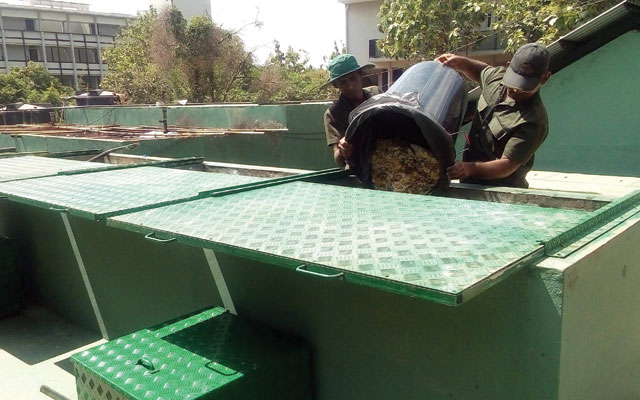
By using an AI system to analyse and minimise food waste, an Eco-Wiz food digester system converts leftover food into water and compost, and through a food waste reduction programme – in collaboration with waste management firm Good For Food – the complex reduces its food waste sent to landfills.
Additionally, Fairmont Singapore’s new South Tower rooms and suites are fitted with Swisspro fresh water taps in place of single-use plastic bottled water.
The complex also sources for sustainable produce and avoid serving endangered fish and sharks’ fin. The hotels work with local oyster farmers to serve oysters at SKAI’s brunch, and finally, unconsumed bread from breakfast service is given daily to local charity, Food from the Heart, which supports families in need.
Grand Park City Hall
During its major refurbishment in 2018, Grand Park City Hall retained 90 per cent of its existing building structure to minimise construction waste.
During the overhaul, the property was fitted with specialised equipment and technology, including a rainwater harvesting system, water- and energy-efficient fixtures, a centralised chilled water system, a high performance air-to-water heat pump and mechanical ventilation fans. These installations contributed to a reduction in water consumption by 61.9 per cent, energy consumption by 58.2 per cent and carbon emission by 58.2 per cent.
Guests can drink from in-room filtered tap that replaces plastic water bottles, and use zero-waste bath amenities handmade with organic ingredients as well as grooming kits made of sustainable materials.
In February this year, Park Hotel Group was awarded a S$237 (US$167) million green loan from United Overseas Bank (UOB) to refinance the hotel’s refurbishment. A first for Park Hotel Group, the green loan is the largest obtained for any hotel in Singapore from a single financial institution, and was issued under the UOB Real Estate Sustainable Finance Framework.
SRI LANKA
Jetwing Lake
Located in Dambulla, over 70 per cent of the energy requirement of 94-key Jetwing Lake resort comes from renewable energy sources.
The property is home to one of the largest solar installations in a Sri Lankan hotel – a 300kW photovoltaic system which comprises a 125kW roof-mounted and 175kW ground-mounted installation – generating more than 40 per cent of the hotel’s daily electricity requirements.
During the day, water is heated through solar panels, while at night it is heated through steam generated by the biomass boiler. Operating on responsibly harvested cinnamon wood, the biomass boiler also provides steam for the laundry, and powers the vapour absorption chiller (VAC). Utilising deionised water as the refrigerant rather than ozone depleting gases in its cooling process, the VAC caters to 100 per cent of the hotel’s air conditioning requirement.
An onsite effluent treatment plant treats 100 per cent of the hotel’s wastewater using a series of biological processes, which is then used as flushing water, while treated black water is used to irrigate the hotel gardens and farm.
Its farm is home to an organically grown a selection of regional fruits, vegetables and herbs for the hotel’s use. Only compost from the composting unit and slurry from the biogas digester is added as a crop fertiliser.
All garden waste is composted and placed back in the gardens as a nutrient-rich soil enhancer, while food waste is added to a biogas digester – which not only serves as an effective solution for food waste treatment, but produces the methane-rich gas which is substituted for liquid petroleum gas in the staff cafeteria.
Aside from replacing single-use plastic items with reusable or biodegradable alternatives, Jetwing Lake also prioritises local employment and local sourcing, investing in livelihood development programmes and building sustainable supply chains.
Anantara Peace Haven Tangalle Resort
The 152-key resort in southern Sri Lanka partners with neighbours and local government institutions to keep the area in pristine condition.
For starters, the property has a sprawling plot to grow its own rice, vegetables, herbs and spices. The rice paddy field is tended to with traditional planting methods, cultivating two local varieties of rice that keep indigenous farming heritage alive. The rice is served to guests, minimising the resort’s carbon footprint. The local community and team members come together to plant and harvest the rice, with a traditional blessing ceremony that guests are invited to join.
Guests are also able to join a guided walk to harvest their own ingredients, while learning about the resort’s various farming efforts. The walk extends through mangroves to the coast, home to endangered sea turtles that the resort helps in their conservation, in partnership with the International Union for Conservation of Nature.
Meanwhile, degradable waste is composted at the garden, which is used to fertilise the gardens and rice field. The team shares compost with local farmers in partnership with the Agriculture Department of Sri Lanka, and in turn purchase produce from them.
– Feizal Samath
THAILAND
Suan Sampran
Located on a 20-hectare plot by the Ta Chine river in Nakhon Pathom province, is Suan Sampran, an eco-culture destination – and third-generation family business – comprising the Patom Organic Village and Farm, a four-star, 140-key hotel, spa, restaurants and meeting rooms.
Third-generation heir, Arus Nawarach, managing director of Suan Sampran, is credited with transforming the business into a vessel for change.
In 2009, Suan Sampran debuted its sustainable food system initiative under the Sampran Model, a supply cycle that highlights principles of inclusive business development. The Sookjai Foundation was established to initiate the Sampran Model by supporting 15 groups of 170 farmers to practice organic agriculture and directly link them with businesses and consumers.
Today, the farmers supply numerous restaurants and hotels such as Sampran Riverside, which purchases around 15,000kg per month or about 70 per cent of all its food ingredients from the collective.
Around 0.4 hectares has also been allocated for the Sookjai Farmers’ Market where organic farmers in the Sampran Model network can engage directly with consumers. A champion of circular economy, the learning destination has banned agrochemicals, recycles oil, and trains all staff in managing food waste and fostering sustainable practices.
Soneva Kiri
The 36 massive villas on the Thai island of Koh Kood have all been constructed from local timber, driftwood and bamboo. Most of the villa’s living spaces, and common spaces like the yoga pavilion, are open-air, with only air conditioning available in bedrooms.
Years ago, close to Soneva Kiri’s founding in 2008, the Soneva chain was one of the world’s first to ban imported bottled water. As such, only glass bottles can be found at Soneva Kiri, filled with water treated and pumped in their own facility.
Electrical needs are powered by the likes of wind turbines, solar panels and water recycling, while vegetables are grown on-site, alongside the production of biofuel. Other green initiatives include a water reservoir to harvest rainwater, and upcycling discarded plastics. The brand also has a Thai Host programme in places, which aims to train local hospitality professionals.
There is also an environmental levy of two per cent of room revenue on each guest’s stay, which goes into the UK-registered Soneva Foundation. The funds are then invested in projects such as providing energy to people in Darfur and Myanmar; supporting indigenous communities through projects such as teaching Maldivian children to swim safely in the ocean; and providing safe drinking water to 750,000 people around the world.
– Anne Somanas
VIETNAM
Mai Chau Ecolodge
Sitting atop a hill in Na Phon village in north-western Vietnam, Mai Chau Ecolodge places locals and the environment at the heart of its operations.
To ensure it keeps with the natural landscape, the ecolodge’s 21 rustic villas were built using natural resources that leave minimal impact on the environment. There is no single-use plastic onsite and organic waste is used in the resort’s gardens.
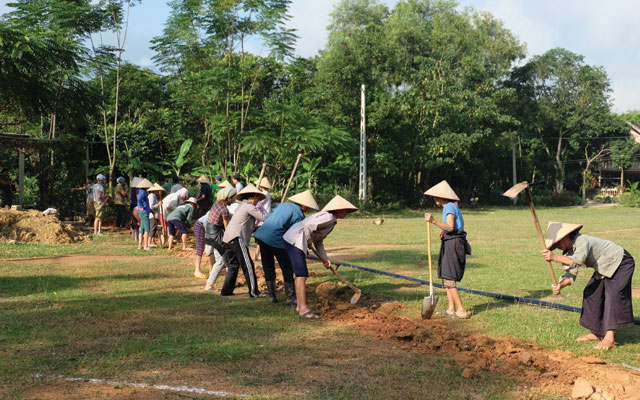
Mai Chau Ecolodge regularly organises community clean ups and social events throughout the valley, and 90 per cent of its staff are trained and recruited locally. To additionally support the locals – predominantly indigenous hill tribes – food produce and property décor are bought from them.
To spread its eco-forward mindset to guests, a Green Team organises a variety of sustainable projects.
Neighbouring communities also provide authentic tours and experiences for guests, providing the tribes with an additional source of income. These range from planting or harvesting crops with farmers, and village hikes led by locals. Various projects to improve the livelihood of villagers are also conducted throughout the year, such as the installation of water pipes.
Six Senses Con Dao
Located in a national marine park on Con Dao island, the resort has transformed the stretch of beach it sits on into a safe haven for sea turtles.
Six Senses Con Dao has ensured endangered sea turtles have prime places to lay their eggs when they head to the island’s beaches between May and October. In collaboration with national park authorities, it has also created an incubation enclosure to monitor and protect eggs to help boost the population. In 2018, a total of 2,904 endangered sea turtles successfully hatched and were released into the wild under the programme.
The 52-villa resort also works closely with the island’s communities, carrying out educational programmes with villages. It provides clean water systems, computers and mattresses to schools, holds English classes thrice a week for children aged three to 14, and runs monthly environmental workshops with kindergarten kids and life-skills activities for villagers.
On top of this, the property features an onsite reverse osmosis plant that provides the resort with still and sparkling water, and sources all materials and ingredients locally.



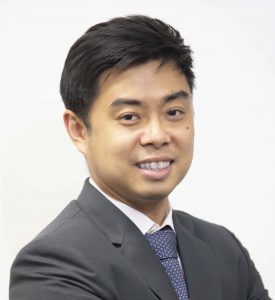 Low Kiang Wei is the medical director for International SOS. He is responsible for clinical governance of all current and new Medical Services projects under the Singapore Division management, as well as ongoing advances in digital projects including telehealth and medical technology solutions in Asia.