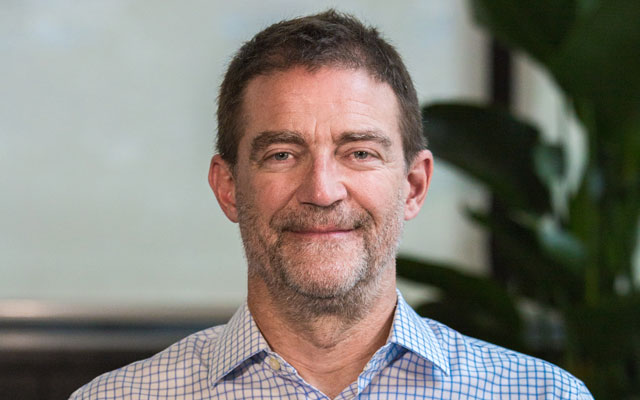
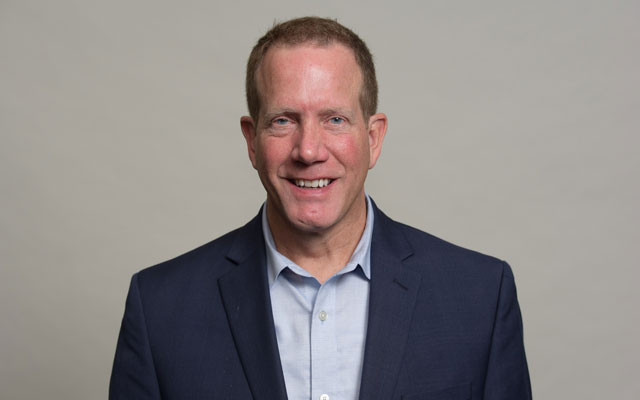
Health and wellness hospitality company Sangha Retreat by Octave Institute has appointed John Reed as COO.
Reporting to chairman and founder of Octave Institute, Frederick Chavalit Tsao, Reed has been placed in charge of the business performance of Octave Institute and developing a sales-driven culture throughout the organisation.
The American brings more than 35 years of experience in the hospitality industry to the table, having worked in various destinations around the globe such as the US, Australia, Thailand, Myanmar, Bali and Bhutan. Reed has a deep knowledge and understanding of the markets in South Asia and Indochina, especially Bhutan, where he spent a significant part of his career building the Aman brand.
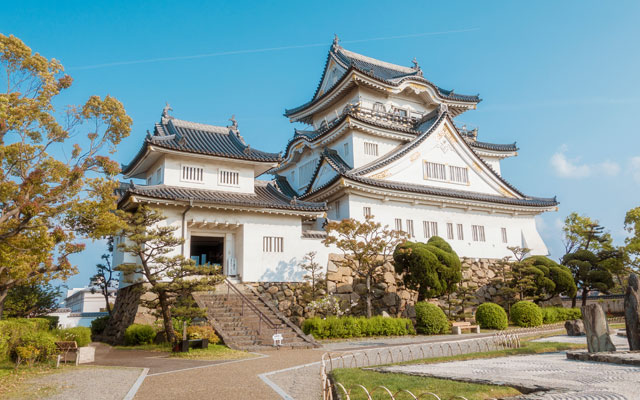
Groups can now hold events on the grounds of Kishiwada Castle
Fresh off the boat after a successful hosting of the 14th edition of the G20 summit earlier in June 2019 – the first G20 summit to be hosted by Japan – Osaka Prefecture is leveraging its improved status to attract more business events.
Asako Shiomi, manager MICE promotion department, Osaka Convention & Tourism Bureau (CVB), told TTGmice that the high-profile economic meeting administers a jab of confidence to event planners considering the city.
Groups can now hold events on the grounds of Kishiwada Castle
“The international market now has confidence in us, after seeing that we can handle such a high-level meeting,” Shiomi said. “We are working to increase the percentage of international MICE business here, to especially attract groups that bring about a large economic impact.”
While she acknowledges that Tokyo has traditionally been the leading city of choice among business event planners, based on its economic scale, that perception may change with Osaka’s track record in hosting the G20 summit.
Currently, the domestic MICE market is very strong for Osaka, especially for the 70,000m2 INTEX Osaka facility, according to its chief sales division, Takako Saito. But she too, is keen to reach out to the international market by shouting about the venue’s experience in delivering the G20 summit.
To strengthen the messaging, INTEX Osaka joined forces with three other private entities – ATC Hall, Hyatt Regency Osaka and Hotel Fukuracia Osaka Bay – to create an informal alliance, Osaka Bay Area MICE, in September 2018. Alliance partners boast a combined inventory of over 70 halls and conference spaces of varying sizes, 1,400 keys, F&B and retail outlets, all situated within walking distance from each other.
Yuji Inoue, business department deputy manager of ATC Hall and the spokesperson for Osaka Bay Area MICE, said: “Our facilities support each other, and we have combined our efforts in sales and marketing to develop international markets such as Singapore, China and Thailand.”
He believes that the formation of the alliance is a “step in the correct direction” and that the partnership enables them “to be bigger” on the back of G20.
In addition to promoting Osaka, a highly urbanised prefecture with 33 cities, Shiomi revealed that the secretariat of G20 also highlighted satellite cities such as Sakai, Kishiwada, Izumisano and Hannan, as the “city centre is already quite popular”.
That is why pilot projects are afoot, where several local governments are working towards renting out unique venues to international groups, such as the Japanese Garden in Sakai City’s Daisen Park, and Kishiwada Castle.
“There are so many castles in Japan, but not many are open for venue hire. For example, Kishiwada Castle grounds can hold 200 pax, and there’s a dojo in front of the castle where a kendo class and demonstration can be conducted for groups,” elaborated Nishikawa Tetsuji, Kishiwada City government’s section chief.
Just next to Kishiwada Castle stands Gofuso, a restaurant which can cater food for events at the castle, or introduce overseas delegates to a traditional kaiseki meal. Dining at the restaurant is also available, as it has 18 private rooms, the largest of which can hold 60 pax, up to a total of 220 pax.
Meanwhile, upcoming business event infrastructure include a soon-to-be-built integrated resort (IR) on Yumeshima Island, and the Setia Izumisano City Center (SICC) mixed development in Izumisano (see sidebar Developments to Watch).
In addition, the opening of the Sakai Performing Arts Center on October 1, 2019, will help address the shortage of business event facilities in Osaka, and help it compete against Tokyo for international gatherings, shared Koji Matsushita, the facility’s section chief.
Shiomi added: “We have very limited space in Osaka, and it’s difficult to find a slot for international groups. We’re very happy to have a new IR and the SICC. We hope to build Osaka’s MICE sector on Setia’s reputation, as our target is Asia. Setia is from Malaysia, and they have good connections in the region.”
But the industry is not without its challenges. For instance, English is still not widely spoken in the sector.
“Sometimes, when I have a potential international lead that I relay (to the other cities in the prefecture), I find that it is hard to communicate. We need more English speakers to welcome and assist these international groups,” Shiomi said.
This is reinforced by Sakai City co-ordinator Sakaguchi Munetsugu, who works for EXSA (Exciting Sakai), a non-profit organisation under the Sakai government.
“We are encouraging companies to translate menus and signs to English to court more foreign visitors, as well as liaising with Osaka Tourism Bureau to improve activities (for MICE groups) in the city,” he added.
For INTEX Osaka’s Saito, she also acknowledged that although the language barrier is a problem, she will usually hire translators to help with international groups.
With the numerous developments and improvements in the MICE space, there is no doubt the kinks will be ironed out in good time.
“We believe we have a bright future ahead. It will all come together in 2025, and I think it’ll be a different atmosphere by then,” Shiomi concluded.
Spurred by increased connectivity and expanding attractions, Los Angeles is ready to welcome more corporate groups and events from Asia, with Singapore being a key target market.
At a trade networking session in Singapore, Los Angeles Tourism & Convention Board’s regional director, Oceania & South-east Asia, Craig Gibbons, revealed that the event was the first of such trade outreach efforts in the market, with plans to return “two to three more times”.
Los Angeles wants MICE visitors from Asia, with Singapore being a key market
Sheena Yu, its destination sales director, Asia Pacific, added that MICE demand from Asia for Los Angeles has been on the rise. “We definitely see this market growing dramatically for incentives, events and meetings. Last year, we hosted the Million Dollar Round Table conference for more than 2,000 attendees from South-east Asia,” she shared.
Other Asian groups that have chosen to host incentives and conferences in Los Angeles include AIA and Amway. Yu added: “More corporate events are now looking for that ‘wow’ factor, and Los Angeles has many unique venues that can provide that.”
For instance, the Million Dollar Round Table, a finance and insurance group, was hosted at the LA Reserve, a historical bank transformed into an events venue. The space was dressed to resemble the early 1900s, and for the welcome ceremony and gala dinner, the large vault in the basement was converted into a ballroom for more than 750 pax.
Many city museums – Los Angeles holds the record for the most number museums in the US – can also be booked and transformed into event venues.
Yu also shared that the Los Angeles Tourism MICE team has made special arrangements for delegates, such as allowing them to flash their event badge at local merchants around the city for discounts.
She said: “We have more than 150 staff in our team. Los Angeles Tourism is going to put more effort into this market and support meeting planners to bring more business into Los Angeles.”
The MICE landscape in the destination is set to flourish, with several new points of interest slated to come online in the coming years. These include The Academy Museum in 2020; the Los Angeles Stadium, which will open in 2020 and host the 2022 Super Bowl; 30 new hotels in the next four years; as well as new and expanded airport terminals before the 2028 Summer Olympic Games.
Despite global political tensions, Los Angeles remains optimistic about its appeal to international travellers.
Gibbbons said: “Our tagline for Los Angeles is, ‘everyone is welcome’. We are the most culturally diverse city in the US where there isn’t a majority ethnicity. California really sets itself apart from what may be happening on the East Coast in terms of politics.”
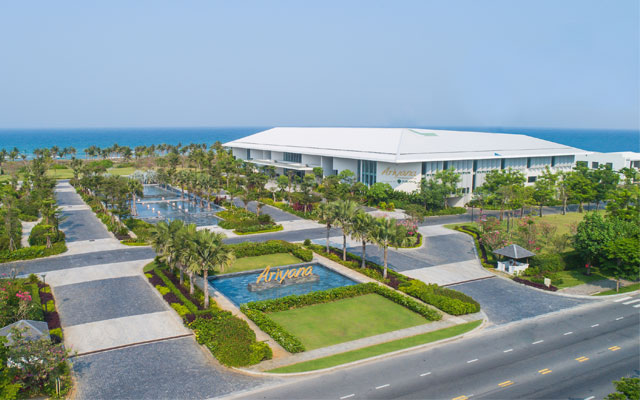
Ariyana Tourism Complex Danang – comprising of Furama Resort and Villas, Ariyana Convention Centre and Ariyana Beach Resort & Suites Danang – is focusing its efforts to grow its Indian and South Korean markets.
The complex recently signed an agreement with IRIS Reps India Company, which will be its sales and marketing representative in India.
Ariyana Tourism Complex Danang is leading the charge in bringing more MICE visitors to Vietnam’s shores
Nguyen Duc Quynh, deputy general director of Ariyana Tourism Complex, shared: “We have welcomed a few B2B companies (from India) to Furama Resort and Villas. Last month, TRL Krosaki Refractories held their annual sales and marketing meeting for 53 people at Ariyana Convention Centre.”
Another Indian market development that is in Danang’s favour, is an MoU inked in August by the Network of Indian MICE Agents (NIMA), Tourism and Travel Association of Andhra Pradesh (TTAA) and Danang Tourism Association.
Under the MoU, NIMA and TTAA will support promotion of MICE products of Danang to the business community in India. Quynh, who is also vice chairman of Danang Hotel Association, shared: “TTAA is cooperating with airlines to open direct flights from Mumbai and Delhi to Danang, as well as two direct flights from Ho Chi Minh City and Hanoi to New Delhi.”
Ariyana Tourism Complex Danang’s move to capture a bigger slice of the Indian market is part of larger efforts by the travel trade in Danang which recognises the huge potential of the Indian outbound market, which UNWTO has predicted will account for 50 million outbound tourists by 2020.
Moreover, new infrastructure is on the way in the form of the 1,400-key Ariyana Beach Resort and Suites Danang set to open late this year.
Meanwhile, despite the leisure South Korean market having declined by 30 per cent YOY in May 2019 (reported by Vietnam Net Global), Quynh is confident the business events segment remains a potential source.
He revealed that a 1,000-pax group from South Korea has been booked for April 2020 – a victory that belongs to the representative office, set up in August this year, in South Korea. He indicated that the office will assist with all MICE market matters moving forward.
However, private stakeholder efforts are not enough, and Danang “needs to enhance its tourism promotions” to South Korea and India. “Not just the capital cities, but also other commercial cities in these countries.”
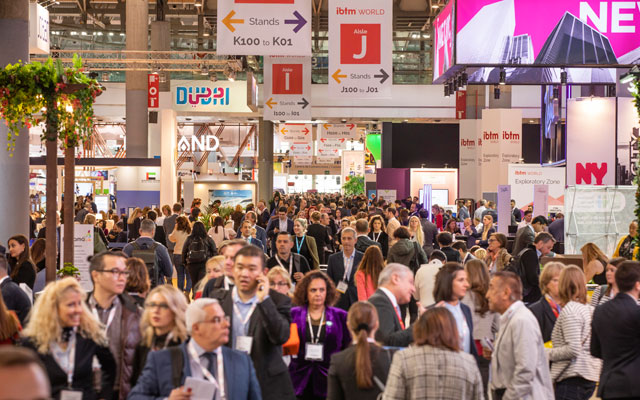
The IBTM World Association Programme this year will feature eight topical sessions addressing some of the key challenges that association event organisers face.
Topics such as driving delegate attendance, raising sponsor and exhibitor revenue, and sustainability for events and cost control, will be delivered through case studies, speeches and panel sessions.
Learn from association experts at this year’s IBTM World
Attendees can look forward to a strong line-up of speakers that includes ICCA’s Senthil Gopinath, The Branded Content Marketing Association’s Gordon Glenister, Diabetes Africa’s Greg Tracz.
Created in partnership with the Association of Association Executives, the programme will conclude with Associations Connect, a peer-to-peer networking event, in association with ICCA.
The Association Programme takes place on the afternoon of November 19, 2019, the first day of IBTM World, in Barcelona.
Applications for The Lord Mayor’s Convention Trailblazer Grant programme, for professionals and researchers in Brisbane, is now open.
The grant offers a share of A$30,000 (US$20,361) to professionals and researchers to attend an international conference in their field, and help Brisbane bid to host the conference in future. Applications close on January 12, 2020.
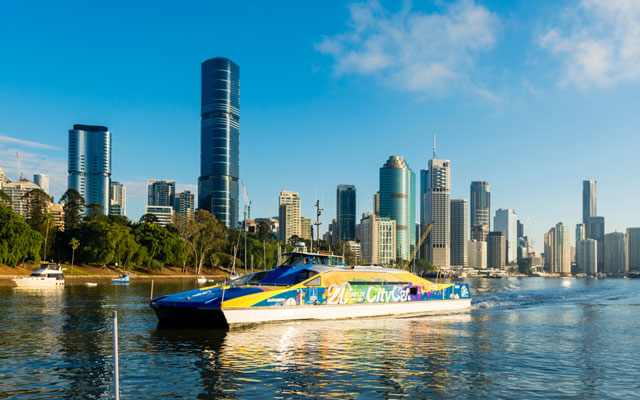
Applications for the The Lord Mayor’s Convention Trailblazer Grant are now open; public transport ferry against the backdrop of Brisbane city pictured
Former recipients, University of Queensland scientists Christina Schroeder and Johan Rosengren, used the grant to attend the 2018 International Peptide Symposium in Tokyo. They then spearheaded a successful bid for Brisbane to host the event for 2021.
Backed by the Brisbane Convention & Exhibition Centre, Brisbane Marketing and Tourism and Events Queensland, the symposium will see about 650 global researchers and experts in peptide science visit Brisbane, delivering an economic boost of over A$2 million.
Another recipient, clinical director of not-for-profit Hear and Say, Emma Rushbrooke, worked with Brisbane Marketing to secure the AG Bell Global Listening and Spoken Language Symposium for Brisbane in 2021, after using the grant to attend the 2018 event in the United States.
As a result, the city will welcome about 500 global experts in paediatric hearing and healthcare, generating over A$890,000 for the economy.
Brisbane’s lord mayor Adrian Schrinner said in a statement: “We want local trailblazers to benefit from attending an international conference where they can build valuable global networks, broaden their knowledge and skills and gain recognition of their work in Brisbane. At the same time, the recipients will work with the city’s economic development board Brisbane Marketing and partners to bid for the conferences to be held in Brisbane.
“Business events are big business for Brisbane, generating an average A$250 million for the economy every year, bringing together word-leading experts and providing opportunities for research partnerships, investment and collaboration,” he noted.
The Lord Mayor’s Convention Trailblazer Grant is run by the city’s economic development board, Brisbane Marketing.
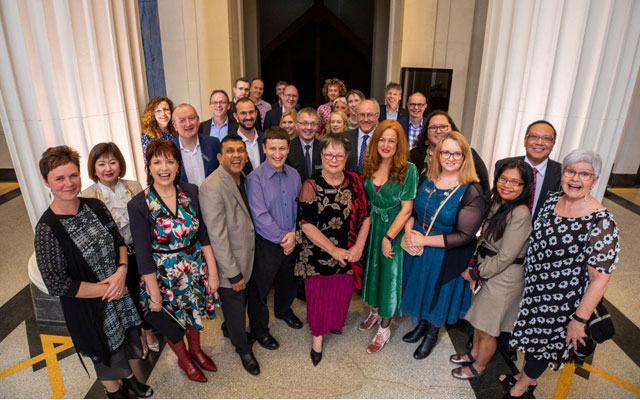
New Zealand’s tourism minister has recognised 27 experts, who have secured large-scale international conferences for New Zealand, at an event in Auckland last week.
They included university academics, industry professionals and medical specialists who have championed their field of expertise such as health sciences, agriculture, earth sciences, IT, aerospace and advanced engineering.
Conference wins include the International Symposium on Microbial Ecology, which is expected to bring 1,800 experts to Auckland in 2022; the World Leisure Congress, which will attract some 1,500 delegates to Dunedin in 2022; and the International Association of Volcanology and Chemistry of the Earth’s Interior (IAVCEI) Conference in 2021 that will bring around 1,000 of the world’s leading volcanologists to Rotorua.
The conference wins celebrated at the event represent an estimated 14,420 delegates and nearly NZ$29 million (US$18.2 million) in economic impact for New Zealand.
Speaking at the event, René de Monchy, Tourism New Zealand’s director of commercial, said: “In the last financial year New Zealand has won 32 events that will contribute an estimated NZ$40.5 million to the economy over the coming years and involve over 19,000 delegates.”
Monchy added that these conferences will “create long-lasting, positive social change in our communities”, and help grow the country’s industry sectors while bettering the lives of New Zealanders.
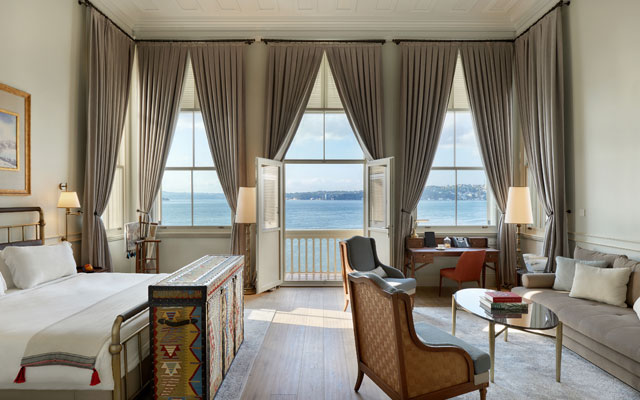
Six Senses opens on Istanbul’s Bosphorus Strait
Six Senses Hotels Resorts Spas has planted another flag in Turkey with its latest opening in the Sariyer district of Istanbul’s European side.
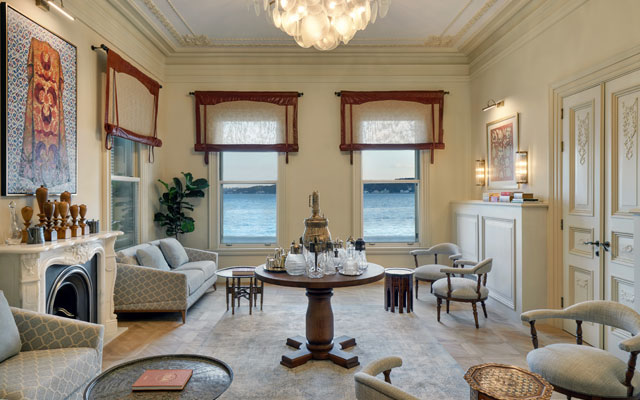
The hotel offers 45 guestrooms and suites, divided between the two restored Ottoman-era mansions. Amenities within the three-storey property include lounges, banqueting and function rooms, a gallery, and gym.
There are two F&B options on-site: Toro Latin GastroBar offers Pan-Latin and Asian cuisines alongside cocktails; and the all-day Kahve café with its pastries and Bosphorus views. A private boat moored in front of the property will be also be available for guests to take sightseeing trips and excursions.
This marks the second Six Senses property in the country, the other being Six Senses Kaplankaya.
St Petersburg extends free visas to international delegates
International MICE delegates from 53 countries visiting St Petersburg will now be able to arrange free e-visas for visits of up to eight days.
The 53 countries include Singapore, The Philippines, China, India, and Japan. Previously, 34 countries already had visa-free entry in Russia.
Qualified visitors need to complete an online process on the website of the consular department of the Russian Foreign Ministry. The application must be made no later than four and no earlier than 20 days before the expected date of entry.
This new initiative follows similar schemes previously introduced for travel to Kaliningrad and the Kaliningrad Region, as well as Vladivostok and airports across the whole of Russia’s Far Eastern Federal District.
Routes Americas flies to Colombia for 14th edition
Routes Americas 2021 will be held in Bogota, Colombia – according to an agreement that was signed between Routes and OPAIN – El Dorado Airport Concessionaire (BOG) of Bogotá El Dorado International Airport, during the 25th World Routes in Adelaide, Australia.
The 14th Routes Americas, the air service development forum for the Americas, will help the country, city and region to raise awareness among the airline industry of the opportunities that Latin America presents.
Colombia is strategically located between the Atlantic and Pacific oceans, and El Dorado has a robust domestic connection with other regions as the country’s main air terminal. Five years ago, Routes America was also held Colombia, in the city of Cartagena.
CWT has appointed John Pelant as executive vice president and chief technology officer with effect from November 1, 2019.
Based in Minneapolis, Pelant will report to Kurt Ekert, president & CEO of CWT, and serve as a member of the CWT Executive Leadership Team.
John Pelant
Formerly CWT’s chief information officer, Pelant will oversee the continued development of CWT’s engineering and technology, innovation and IT infrastructure and operations. He will take over these responsibilities from Andrew Jordan, who has decided to leave the company at the end of 2019 to pursue other interests.
A former vice president of global IT operations, vice president global product development, and vice president Americas IT & global functions, Pelant was appointed senior vice president and CIO of CWT in August 2016.
Oakwood Residence Hanoi has opened, marking the brand’s entry into Vietnam’s capital city.
Oakwood Residence Hanoi is situated in an upscale residential neighbourhood within the West Lake (Tay Ho) District. Guests can choose from 262 studios, one-, two, three-bedroom apartments or penthouses. Each unit comes with a fully-equipped kitchen, washer and dryer, high-speed Internet and hotel amenities.
One-Bedroom Apartment
Guests can also expect a suite of services including round-the-clock guest relations and security, housekeeping services, laundry and dry cleaning services, shuttle bus services, as well as activity programmes. Other amenities include a residents’ lounge, restaurant and bar, fitness centre, children’s play area, as well as the city’s first all-season infinity pool fitted with a retractable glass roof.
Oakwood Residence Hanoi is the brand’s third serviced residence in the country following the debut of Oakwood Apartments Ho Chi Minh City in December 2016 in Ho Chi Minh City’s District 3, and Oakwood Residence Saigon in District 7 in April 2018.
Just 10 minutes from Phuket International Airport on the serene northern coast, this 178-key, Bill Bensley-designed resort offers delegates a quiet, tropical paradise steeped in Phuket’s tin-mining heritage
The newly-opened Ritz-Carlton, Bangkok anchors the One Bangkok development with cosmopolitan elegance. Featuring the city's largest ballroom and a spectacular new penthouse suite, it delivers exceptional hardware and deeply authentic, soulful service for business and leisure travellers alike
Behind the imposing, Brutalist concrete that defines Zurich’s Oerlikon district lies a surprising secret. While its exterior honours the neighbourhood’s industrial roots, stepping inside Mama Shelter reveals a vibrant, neon-soaked world that is a far cry from its rigid shell