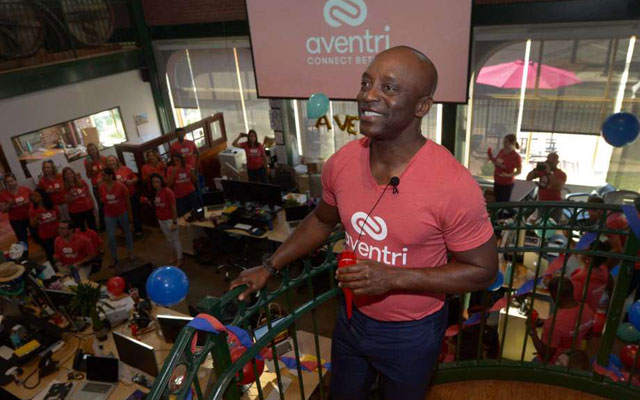
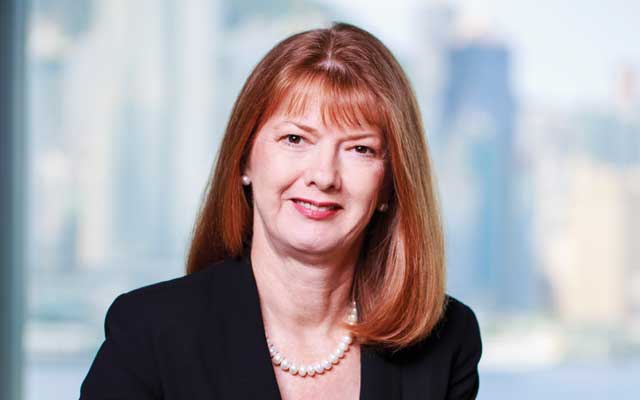
Etouches CEO Oni Chukwu unveils the new corporate brand identity, Aventri, during an announcement
Global provider of innovative event management software solutions, etouches, has rebranded to Aventri.
In addition to the name change, Aventri’s new tagline “Connect Better” conveys the company’s mission to help meeting professionals better and more deeply connect with colleagues, attendees and customers.
Etouches CEO Oni Chukwu unveils the new corporate brand identity, Aventri, during an announcement
“Our rebranding project was ignited by the desire to take our former name and branding to the next level of our successful growth via a more thorough and strategic understanding of what our brand stands for, our commitment to our customers, and how we can be truly differentiated as a company in a highly fragmented and competitive market,” said Chalva Tchkotoua, chief marketing officer of Aventri.
The name Aventri is a result of three ideas; avenue, events, and entry. The combination of these three elements results in an identity that forges a new path by transforming the event experience through products and people, in turn, create a new way to challenge the market.
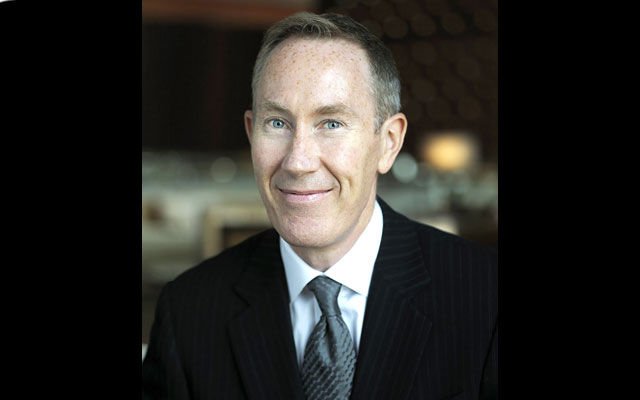
Tchkotoua: rebranding to help bring the company to its next growth stage
The rebrand encompasses three pillars:
Curation: Helping customers navigate the often overwhelming event management software (EMS) industry by curating custom solutions that address their specific needs.
Navigation: Dedication to staying ahead of the innovation curve by helping clients chart a sure-footed path forward.
Connection: Enable high-quality connections to drive ROI in every interaction.
Since 2008, etouches as assisted more than 25,000 event professionals with planning, executing and measuring their events. With four acquisitions in the past two years, Aventri’s growth-focused agenda includes organic growth and targeting complementary strategic acquisitions.
PCMA (Professional Convention Management Association) has launched a new guide for business event strategists on how to confidently handle communications in a crisis.
Based on a 15-point toolkit, the guide aims to be a companion for those involved in planning a range of events. It focuses on the impact poor communications can have on a crisis – or a stressful situation.
Opportunities for the wrong messages to leak out are ever-present, making communications planning an essential part of every event organiser’s role
The actions the guide recommends are grouped in three phases; pre-crisis or day to day business strategic planning; during a crisis – who handles it and how; and post crisis – responsibilities, resources and recovery.
It also stresses the importance of asking ‘what if…?’ across the business, making sure that plans can respond adequately. The guide also addresses the importance of re-building a reputation post-crisis, and talks about how good communication skills are critical throughout the process.
The crisis communications guide will be distributed to PCMA’s network of contacts throughout North America, Asia and EMEA.
Sherrif Karamat, president and CEO, PCMA, said in a statement: “We all need to think about ‘Resilience and Reputation’ – the core of what any business needs to have – and how we build these to counter any threat. What happens at our events has a lasting effect on our brands. This guide helps prepare event organisers to ensure a positive and long-lasting brand reputation.”
The full guide can be downloaded from the PCMA website at pcma.org/crisis.
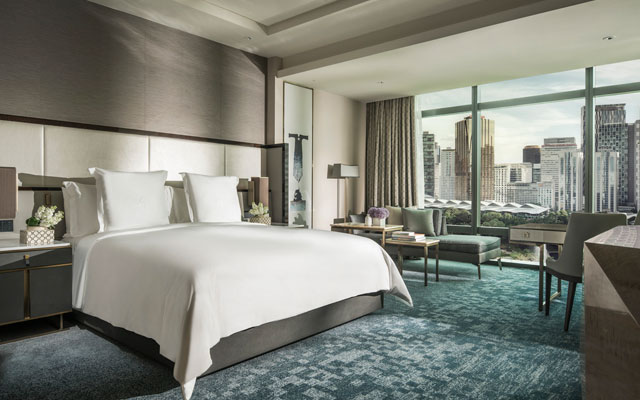
Four Seasons Hotel Kuala Lumpur has opened its doors in a new skyscraper just next to the Petronas Twin Towers.
The 65-storey building houses 209 guestrooms and suites, 27 serviced apartments, and 242 Four Seasons Private Residences.
A guestroom in the Four Seasons KL
Recreational facilities include an outdoor pool complete with private cabanas, a spa with eight treatment rooms, and fitness centre. There are also half a dozen F&B venues, ranging from the Cantonese restaurant Yun House to Bar Trigona. For meetings and events, the hotel offers 1,821m2 of flexible event space over two ballrooms and four meeting rooms.
Directly connected to the hotel and residential tower is a retail podium – The Shoppes at Four Seasons Place – which includes a selection of luxury retail and dining outlets spread over six floors.
Four Seasons Place is part of Kuala Lumpur City Centre, a 40-hectare complex with upscale shopping, fine dining and vibrant nightlife, and next to a 20 hectare urban green park.
The Mantra Albury Hotel has opened in Albury, New South Wales, Australia, and is the first hotel to open in the destination in more than three years.
The A$40 million (US$29.8 million) development took 18 months to build, and stands in the centre of Riverina town’s CBD.
Mantra Albury’s two-bedroom suite
The eight-storey hotel offers 146 one- and two-bedroom studios and suites, where all of the rooms boast floor-to-ceiling windows overlooking Albury and out to the Victorian Alps and Kiewa Valley. Rooms also come furnished with a microwave and fridge.
Amenities on-site include a restaurant and bar called La Tierra, 24-hour reception, an internet lounge, and a fully-equipped gymnasium. There are also conferencing and events facilities that can cater for more than 200 people, and an exclusive Sky Lounge available to hire on the top floor with sky lighting, wet bar and lounge seating.
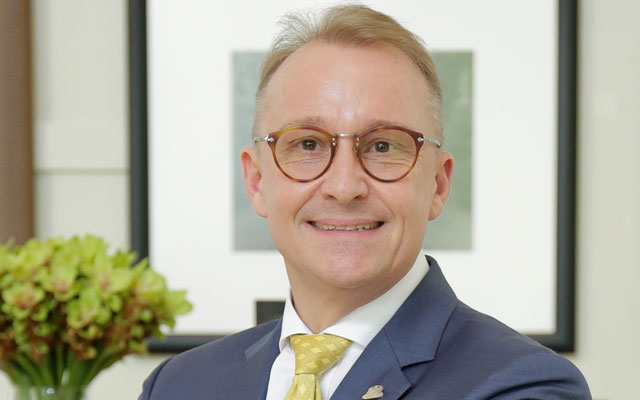
Onyx Hospitality Group has appointed Michael Gaehler as the new general manager of Oriental Residence Bangkok.
Prior to his appointment, Gaehler was group general manager at Regent Hotels and Resorts in Taipei, where he oversaw hotel projects in Vietnam, Taiwan, Indonesia and mainland China.
The Swiss hotelier began his career in his native country as commis de cuisine at Restaurant Frohsinn in Aarau. He rose through the ranks, working in a variety of positions in the hotel industry and was named general manager at Villa il Tesoro, Maremma in Tuscany in 2003.
After another general manager assignment in Switzerland, Gaehler further honed his hotelier experience with pre-opening roles and running luxury hotels of various sizes across Asia.
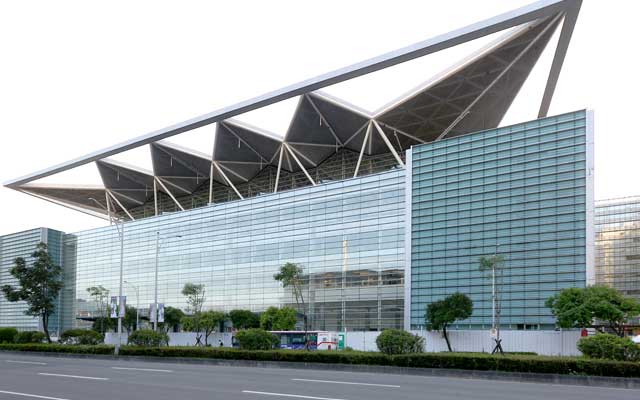
Nangang International Exhibition Centre Hall 2 will open in March 2019
As demand rises for large-scale conferences and exhibitions in Taiwan, the destination’s lack of event spaces has been thrown into sharp relief, reveal industry players there.
Philip T T Huang, executive director of Nangang International Exhibition Centre Hall 2, Taiwan External Trade Development Council (TAITRA), admitted that it has been “difficult for Taipei to bid for big international events and meetings” due to a “shortage” of larger exhibition grounds, conference halls and breakout rooms.
Nangang International Exhibition Centre Hall 2 will open in March 2019
Taipei, the business hub and capital city of Taiwan, is currently home to only two major exhibition venues. The first is Taipei World Trade Centre (TWTC) Exhibition Halls 1 and 3, which can accommodate 1,477 and 365 booths respectively. Hall 1 has five conference rooms, while Hall 3 has just one.
The second is Taipei Nangang Exhibition Centre Hall 1, which can take in 2,467 standard booths across two indoor exhibition showgrounds and has 14 to 18 conference rooms.
The climbing popularity of Taiwan as a business destination has proved challenging for conference owners such as TAITRA, which have had to split up larger events and shuttle delegates between multiple sites.
For example, the 2018 Taipei AMPA Show, a mega international automobile and autotronics exhibition held from April 11-14, had to be divided between Taipei Nangang Exhibition Centre Hall 1 and TWTC Exhibition Hall 1.
In Kaohsiung, demand for the young four-year-old Kaohsiung Exhibition Centre (KEC) is expected to grow further since the city has been granted hosting rights for the ICCA 2020 Congress – an event that has already presented capacity challenges for KEC.
KEC can accommodate 1,500 standard booths, has 15 function rooms and can seat up to 2,000 pax in its largest room. However, this space may not be sufficient or sustainable for future growth, revealed William Liu, vice general manager, Kaohsiung Exhibition Center Corporation.
He explained: “We don’t have enough land to expand our exhibition centre. We have meeting rooms, but they may not be enough for (large) conferences. For instance, for the ICCA 2020 Congress, we will have to use special partitions on the first-floor exhibition space to convert (it) into conference rooms.”
In anticipation of this imminent shortage, the Kaohsiung City Government has tentative plans to build conference centres and smaller meeting venues around the harbour where KEC is located, shared Liu.
Taipei city is banking on the upcoming Nangang International Exhibition Centre Hall 2, the US$240 million expansion to the centre’s Hall 1, to solve the space challenge. Set to open in March 2019, Hall 2 will bring another 34,120m2 of exhibition and meeting space to Nangang. This includes a multifunctional conference hall that can be converted into 14 breakout rooms.
It will raise the centre’s total meeting room count to a maximum of 32, and total booth capacity – indoors and outdoors – to more than 5,000. Both halls will be connected to the metro by an underpass.
Huang expressed: “In the future, Nangang (district) will be the real capital for Taiwan’s MICE industry, thanks to our big exhibition space and conference rooms that can attract international events and exhibitions here.”
Future business events can also seek venue options in Taichung, an industrial city in central Taiwan. The secondary city has begun extensive works on multiple event venues across different districts, namely Houli, Fengyuan, Waipu and Shuinan. These will debut with the 2018 Taichung World Flora Exposition, to be held from November this year to April 2019. It had been originally slated only for the new Houli Horse Ranch and Forest Park Area.
When an endangered endemic leopard cat was discovered there, the Taichung City Council expanded the show to Fengyuan and Waipu, which will also receive new large-scale event venues. These are Fengyuan Huludun Park – which will house Taiwan’s longest waterside floral gallery – and Waipu Park Area.
“As what is now Taiwan’s second-largest city, Taichung is hoping to make its mark on the global map (for business events). One way we’re doing this is by developing our business events landscape, and the 2018 Taichung World Flora Exposition will serve as a good platform to attract more international visitors to Taichung,” shared Sun Chung-Hsing, senior executive officer, Taichung City Government.
After the event, Taichung’s new venues will adopt different uses. Houli Horse Ranch and Forest Park Area will become Asia’s largest equestrian competition venue; Fengyuan Huludun Park will house a pastry museum; and Waipu Park Area will become an international agricultural innovation park.
Sun added: “With this show, we have already begun to construct large facilities in Taichung to accompany the development in Shuinan.”
The Shuinan area of Taichung is concurrently being remodelled into an NT$60 billion (US$2 billion) “smart city” – a flagship project of Taichung’s Industry 4.0 initiative.
The district will soon house the Shuinan Interntional Convention Exhibition Centre, green buildings, green landscaping, automated waste collection system, rainwater recycling system and more.
Absolute Hotel Services has promoted Suchitra Sirirak to general manager of U Chiang Mai.
Suchitra first joined Absolute Hotel Services in April 2015 as a public relations manager at U Sathorn Bangkok, where she rose to the position of executive assistant manager of the property two years later in 2017.
She also possesses extensive experience working in hotel management for organisations such as Centara Hotels & Resorts, The Peninsula Bangkok, and The Siam Luxury Suites and Villas.
Tell us something about Wharf Hotels’ new brand campaign and what it means to the long-established Marco Polo Hotels brand?
No other group can own that prestigious name. It is a wonderful legacy since Marco Polo was an entrepreneur, business traveller and global merchant, whose image fits into China’s current Belt and Road Initiatives.
The new campaign started last year, but advertising just began this year. We then devised the ‘Explore, Discover, Experience’ tagline that reflects who Marco Polo was. We are communicating that we are embedded in the local community, and that this community offers rich and colourful experiences.
Jennifer Cronin
As for business events, when guests come to town it’s not just because of a hotel but for the destination. So a component of local experience must be provided, and that’s where our hotels devise various local experiences that are unique to their destination.
For example, our three hotels in Hong Kong offer walking tours to different parts of town, such as the Flower Market in Prince Edward, and herbal Chinese tea medicine outlets in Mongkok.
How will the new brand campaign support Marco Polos’ overall strategy and goals for business events and corporate business?
In most cases, the brand already has a very strong reputation for hosting events and meetings. For example, our Shenzhen property – which has 36 meeting rooms and is in the financial district – refurbished a number of floors and meeting spaces last year.
We have also done the same with our Beijing property, making sure we are reinvesting in the product, i.e. technology. We are well aware that you can’t start a hotel in this era without ensuring that the technology is first class.
Also, (there are) constant sustainability efforts, (such as) explaining why all bottles of water and drinking straws are gone from meeting rooms. We also have a new F&B head who is focusing on (another aspect of) sustainability – where our food comes from and its carbon footprint.
How does your hotels fit into the needs of event planners and corporate travel managers?
Niccolo Hotels is aimed at the luxury market, and we have seen luxury car launches in Chengdu, and, in Hong Kong, at The Murray, a Niccolo Hotel. Those are the type of events we can own as a brand. Our Niccolos in China all have ballrooms which cars can drive into.
Apart from the Chongqing International Finance Square mixed development, we can display new limos inside, providing a launch site for carmakers’ latest vehicles. Besides (holding events for) fashion brands and banking/financial products, Niccolo hotels aims to establish close rapport with business leaders, and create a seamless experience where everything works. It’s very hard to wow global travellers with flatscreen TVs today; (hence) that’s where the experience and services must be second to none.
How successful was the launch of Niccolo Hotels?
We are delighted at the impact each new hotel had in each market we bought into. Chengdu was the first from a marketshare point of view. The brand soon became the epicentre of big local events. The Chongqing property has already exceeded our expectations from a budget point of view and the events held there. These properties do a lot of well-attended car launches, real estate promos and fashion events. For the Murray in Hong Kong, we are still in soft-opening mode but are already making a great impression.
What are the challenges and opportunities in the foreseeable future?
One challenge is to make sure the digital space provides maximum information and easy access because the meeting organisers now must do all research on their desktops. We’ve invested in the Beijing property, for example, so that all photography can be easily accessed.
The other main challenge for us would be a new look regarding the workspace. Big national companies have changed the way they divide up their office space by putting in lots of open-plan space offices, plus hot desking and meeting rooms. But is this the pattern for every business?
Nevertheless, Hong Kong is moving in this new direction. That’s why when we do new hotel design, we now provide less breakout space.
What’s the game plan and how would you like to see Wharf Hotels grow in next decade?
We are now looking at gateway cities in Asia, specifically Japan and South-east Asia. Because we are a business-oriented hotel group, we are not looking to expand into resorts at this point in time.
It’s possible to have two brands in a city, and we hope to do that in cities of China we haven’t gone into, i.e. Shanghai. Also, we see an opportunity in Beijing for a Niccolo as we’ve got Marco Polo there already. Also, with the economy of Manila showing firm growth we’d love to be part of the inevitable expansion there. But there is definitely no plan for third new brand at the moment.
Wharf’s expansion in the next five to 10 years will always be driven by quality, not quantity. We are not about wanting to put flags in locations for the sake of it, but real hotels we can take pride in for their consistency, service and products.
Waldorf Astoria Bangkok, which will soon open in 3Q, has appointed Simeon Olle as general manger.
Prior to joining Waldorf Astoria Bangkok, Olle served as general manager of Waldorf Astoria Shanghai on the Bund from 2012 to 2016.
The Australian has more than 30 years’ experience in the hospitality sector, and is known for his extensive background in launching luxury hotels, includes the opening of The Address Downtown Dubai, Park Hyatt Beijing and Park Hyatt Seoul.
Corporate Travel Management (CTM) has taken its first steps into Asia with the acquisition of a majority stake in Hong Kong-based Lotus Travel Group Limited (Lotus) worth A$50 million (US$37 million).
The purchase of 75.1 per cent of Lotus will take effect from October 2, 2018, and will result in CTM becoming the largest travel management company in Hong Kong servicing Greater China, with a combined Total Transaction Value of about A$2.5 billion. CTM’s partners in Asia, Ever Prestige Investments Limited (EPI), will acquire the remaining 24.9 per cent through CTM Asia.
CTM forks out A$50 million for a majority stake in Hong Kong-based agency
The acquisition creates optimum scale for the combined entity to leverage technology, support costs and supplier relationships across a wider base to enhance long-term sustainable growth in Asia.
Having operated for more than 60 years, Lotus is a market leader in Hong Kong across the corporate, B2B, wholesale and MICE markets. It employs 400 staff and has offices in Hong Kong and Greater China.
Just 10 minutes from Phuket International Airport on the serene northern coast, this 178-key, Bill Bensley-designed resort offers delegates a quiet, tropical paradise steeped in Phuket’s tin-mining heritage
The newly-opened Ritz-Carlton, Bangkok anchors the One Bangkok development with cosmopolitan elegance. Featuring the city's largest ballroom and a spectacular new penthouse suite, it delivers exceptional hardware and deeply authentic, soulful service for business and leisure travellers alike
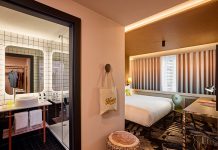
Behind the imposing, Brutalist concrete that defines Zurich’s Oerlikon district lies a surprising secret. While its exterior honours the neighbourhood’s industrial roots, stepping inside Mama Shelter reveals a vibrant, neon-soaked world that is a far cry from its rigid shell